Curated recipes from 193 countries  •  New seasonal Mediterranean issue out now

Overview

Zuger Kirschtorte

Zug Cherry Cake; Zuger Kirschtorte; Cherry Torte From Zug

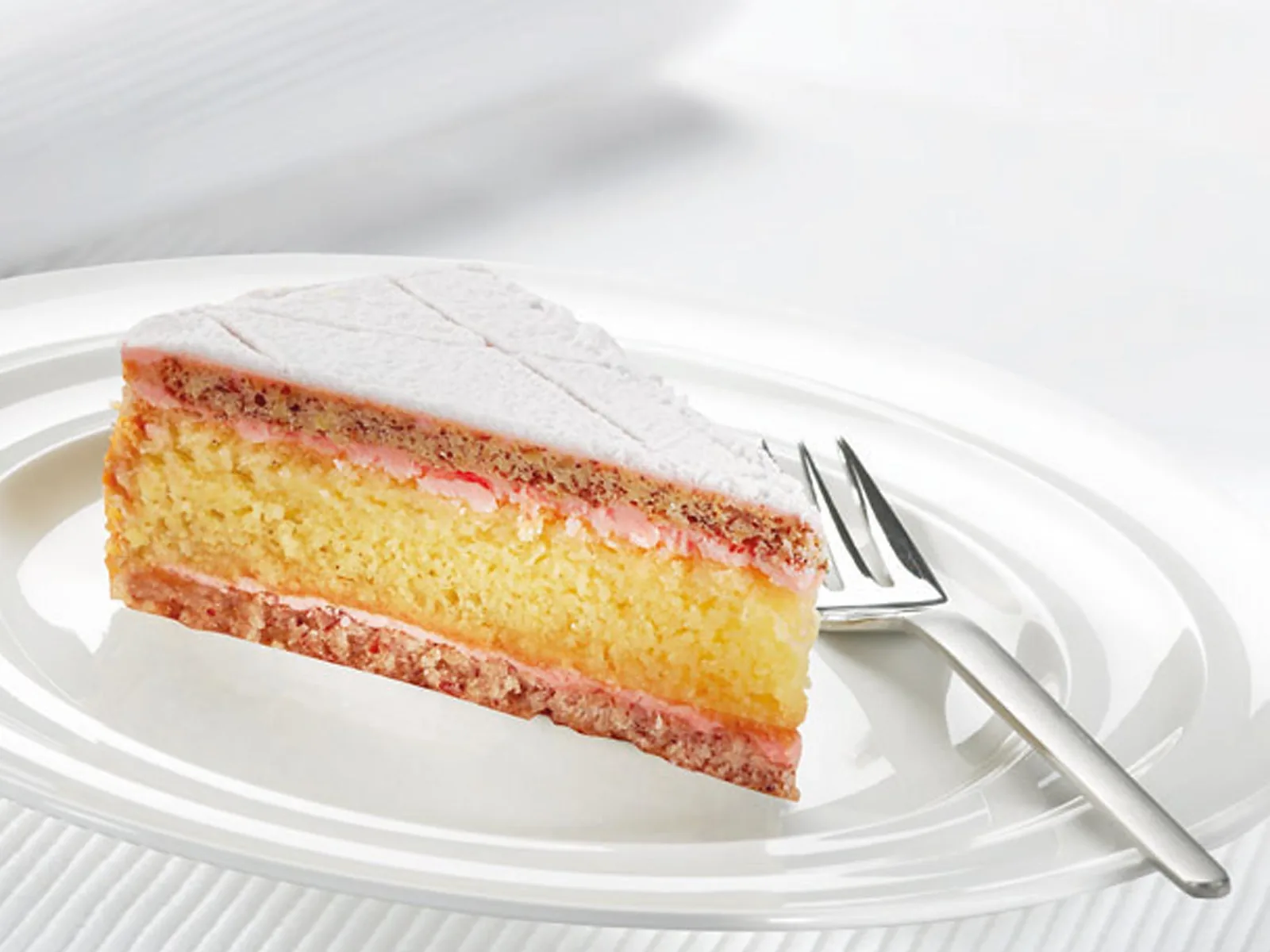
Zuger Kirschtorte is Zug's cherry cake: crisp almond-and-hazelnut meringue discs sandwiching a kirsch-soaked sponge, filled with pale pink kirsch buttercream and dusted with icing sugar. One slice is about 128 g. Unlike Black Forest cake, it has no chocolate and no whipped cream — the kirsch buttercream is the whole point, and the cake is a protected Swiss speciality.

Pastry chef Heinrich Höhn invented the Zuger Kirschtorte in 1921 in the town of Zug, after years of experimenting with the cherry brandy the canton was famous for. He patented his recipe and sold the cake from his bakery, the Konditorei Treichler, which still makes the original today. The cake is now a protected Swiss speciality — Zuger Kirschtorte holds PGI status — and the canton produces around 250,000 of them a year. It is often confused with Black Forest cake, but the two are different: the Zuger cake has no chocolate and no whipped cream, and its flavour comes entirely from kirsch buttercream and nut meringue.

Pairs well with: Serve a thin slice with black coffee or unsweetened tea.

Provenance

Switzerland flag Switzerland

Zug Cherry Classic

Nordic & European

Time Dedication

1h 25m

50m prep • 35m cook

Batch Yield

10 Servings

542 kcal per serving

1 serving ≈ 128 g

Technical Skill

Advanced

Advanced (Three Layers)

Meal Timing & Digestive Fit

Breakfast

Not Advised

Lunch

Inappropriate

Dinner

Inappropriate

Snack & Tea

Ideal Light Bite

Occasions: Afternoon coffee, birthday cake, Swiss National Day (1 August), Zug cherry season (June–July) Cost: Medium — about $3–4 per slice at home
A slice of Zuger Kirschtorte on a white plate — golden sponge, pink kirsch buttercream and nut meringue layers under a dusting of icing sugar.

Zug Cherry Classic

Photo: IG Zuger Chriesi - Ueli Kleeb, CC BY-SA 3.0 de, via Wikimedia Commons

The Heritage Formulary

Measured Ingredients

Estimated cost: Medium — about $3–4 per slice at home (USD)

The meringue discs must be fully crisp before stacking, and the sponge is soaked generously — a dry Zuger Kirschtorte is a failed one.

Execution Methodology & Culinary Technique

Step-by-Step Cooking Guide

Active 1h 25m
P

Prep Stage: Three Parts, Everything Measured

50 Mins • Measuring & Lining

Bring the eggs and butter to room temperature. Line a 20 cm round tin and two baking sheets with parchment, and draw two 20 cm circles on the sheets for the meringue discs. Separate the eggs, keeping the whites spotlessly free of yolk. Measure every ingredient before you start — this cake has three parts that come together quickly.

Maestro Tip: Any trace of yolk in the whites stops them whipping — separate each white into a small bowl first, then add it to the main bowl.

  1. 1

    Bake the Sponge and Slice It in Two

    25 Mins • Hands On Oven 170°C (340°F)

    Heat the oven to 170°C (340°F). Whisk the whole eggs and sponge sugar in a heatproof bowl over simmering water until warm and doubled in volume, about 8 minutes, then whisk off the heat until cool and ribbon-like. Fold in the sifted flour in two batches, then the melted butter. Pour into the lined tin and bake 22–25 minutes until golden and springy. Cool completely, then slice the sponge horizontally into two even layers.

    Do not open the oven in the first 15 minutes or the sponge can sink.

    Done when: Sponge is golden, springs back when pressed, and a skewer comes out clean.

  2. 2

    Bake the Two Nut Meringue Discs

    35 Mins • Hands On Oven 150°C (300°F)

    Heat the oven to 150°C (300°F). Whisk the egg whites to soft peaks, then add the meringue sugar a spoonful at a time, whisking to stiff, glossy peaks. Fold in the ground almonds and hazelnuts gently. Spread the mixture into the two drawn circles on the lined sheets and bake 30–35 minutes until crisp and lightly golden. Cool completely on the sheets.

    If the discs feel soft in the middle, leave them in the cooling oven for 10 minutes more.

    Done when: Meringue discs are crisp all the way through and lift cleanly off the paper.

  3. 3

    Make the Kirsch Buttercream and Syrup

    10 Mins • Hands On Room temperature, about 20°C (68°F)

    While the layers cool, beat the softened butter until pale and fluffy, about 3 minutes. Beat in the sifted icing sugar in two batches, then drizzle in the kirsch a little at a time, beating until smooth and pale pink. For the syrup, warm the water and syrup sugar until dissolved, cool, then stir in the kirsch.

    If the buttercream looks curdled, keep beating — it comes back together as the butter warms up.

    Done when: Buttercream is pale, smooth and holds soft peaks; syrup is clear and cool.

  4. 4

    Stack the Cake: Meringue, Sponge, Cream

    15 Mins • Hands On Room temperature, about 20°C (68°F)

    Place one meringue disc on a serving plate and spread with a third of the buttercream. Lay one sponge layer on top and brush generously with half the kirsch syrup. Spread with another third of the buttercream, add the second sponge layer, and brush with the rest of the syrup. Finish with the second meringue disc and spread the remaining buttercream over the top and sides in a thin layer.

    Brush the syrup on slowly — a soaked sponge is the point, but a flooded one falls apart.

    Done when: Layers are straight and even, with buttercream visible between each one.

  5. 5

    Chill, Dust and Slice

    120 Mins • Hands Off (Chilling) Chill at 4°C (39°F) for at least 2 hours

    Chill the cake for at least 2 hours so the buttercream firms up. Just before serving, dust the top generously with icing sugar and slice with a hot, dry knife, wiping the blade between cuts for clean layers.

    A hot knife is the difference between a clean slice and a squashed one — dip it in hot water and dry it between cuts.

    Done when: Cake is firm, the icing sugar sits in a clean white layer, and each slice shows crisp meringue, sponge and pink cream.

Finishing Touches & Plating

Chill the finished cake for at least 2 hours so the buttercream firms up, then dust with icing sugar and slice with a hot, dry knife for clean layers.

Nutritional Physiology & Benefits

Nutrition

Energy

542

kcal / serving

Protein

8g

Complete AA

Carbs

50g

Complex

Fats

33g

Healthy

Per serving (10 servings · 1 serving ≈ 128 g)
Energy542 kcal
Protein8 g
Carbohydrates50 g
Fat33 g
Fibre2.1 g
Sugar39.9 g
Sodium54 mg
Per 100g
Energy424 kcal
Protein6.5 g
Carbohydrates39.1 g
Fat26.1 g
Fibre1.6 g
Sugar31.1 g
Sodium42 mg

Nutrition values are estimated — calculated from USDA FoodData Central values for the listed ingredients.

Vitamins & minerals: Vitamin E and magnesium (almonds and hazelnuts), vitamin B2 and choline (egg), calcium (butter).

Quick Afternoon Energy

About 50 g of carbohydrate per slice gives a quick burst of energy — which is why Zugers eat it with coffee as an afternoon lift.

Nuts Add More Than Crunch

Almonds and hazelnuts bring fibre, vitamin E and magnesium to the cake, so it is more nourishing than a plain sponge.

Crisp Meringue, Soft Sponge

The crisp nut meringue against the soft, kirsch-soaked sponge is what makes this cake special — two textures in every bite, with no chocolate needed.

Food Pairings

What to Eat With

To optimize nutrient absorption and elevate the sensory depth, pair with these authentic accompaniments:

Drinks

Black Coffee

Black coffee is the classic partner — its bitterness balances the sweet buttercream and the warmth of the kirsch.

Unsweetened Tea

Unsweetened tea cleanses the palate between bites and lets the cherry flavour come through.

Sides

Fresh Cherries

Fresh cherries, when in season, echo the kirsch in the cake and add a tart, juicy contrast to the rich cream.

Lightly Sweetened Whipped Cream

A spoonful of lightly sweetened whipped cream softens the kirsch edge for those who find the cake strong.

Complete menu

Serve a slice of Zuger Kirschtorte with black coffee as an afternoon snack, after a light lunch of soup and bread.

Digestive Guardrails

What NOT to Combine

To prevent digestive distress, sluggishness, or palate clash, avoid pairing the dish with these elements:

Alcohol in the Cake

This cake contains a large amount of kirsch, a cherry spirit of about 40% alcohol. Children, pregnant women and anyone avoiding alcohol should not eat it. The alcohol does not bake off. This is general food-safety information, not medical advice.

Nuts, Egg, Milk and Wheat

The cake contains tree nuts (almonds and hazelnuts), egg, milk and wheat — major allergens. Anyone with a nut allergy must avoid it entirely. This is general food information, not medical advice.

General information only, not medical advice — consult a doctor for personal dietary decisions.

Who Should Eat It

Who Should Eat

  • General adultsA rich, boozy cake — best as an occasional treat with coffee, not a daily dessert.
  • ChildrenNot suitable for young children: the cake contains a generous amount of kirsch, and the alcohol does not all cook off. Save it for adults.
  • ElderlyA small slice with coffee is fine for most older adults; the cake is soft and easy to eat.
  • Pregnant womenBest avoided: kirsch is a strong spirit and the cake is soaked in it. Choose a kirsch-free cake instead.
  • Breastfeeding womenBest avoided while breastfeeding, as the cake contains a significant amount of alcohol. Choose a kirsch-free cake instead.
  • AthletesAbout 50 g of carbohydrate per slice makes it a quick energy source, but the fat and sugar make it a treat, not a recovery food.
  • Weight gainEnergy-dense from butter, sugar and nuts, so it suits a weight-gain goal as a tasty way to add calories.
  • Weight lossRich and calorie-dense with little fibre, so keep to a thin slice, skip a second helping, and balance the day with lighter meals.

Health Conditions — Adjust or Avoid

Conditions

  • DiabetesAbout 50 g of carbohydrate and 40 g of sugar per slice, so blood-sugar impact is high — a thin slice is the sensible choice. Ask your clinician.
  • High blood pressureSodium is low, about 54 mg per slice; the main concern is the sugar and alcohol. Ask your clinician about portion size.
  • Kidney diseasePotassium from nuts is moderate; people with kidney disease should ask their clinician about portion size.
  • GoutNuts are moderate in purines; a normal slice is usually fine, but keep it modest and ask your clinician.
  • Stomach issuesAlcohol and rich buttercream can irritate a sensitive stomach — eat a small slice and ask your clinician if symptoms persist.
  • Cardiovascular diseaseButter makes this high in saturated fat; an occasional thin slice is the sensible approach — ask your clinician.
  • Fatty liverRich in saturated fat, sugar and alcohol, which can add to liver fat — keep it an occasional treat and ask your clinician.
  • Food allergiesContains tree nuts (almonds, hazelnuts), egg, milk and wheat — major allergens. Anyone with a nut allergy must avoid it entirely.
  • Special therapeutic dietsThis is a general-information recipe, not a therapeutic diet. Anyone on a prescribed diet should ask their clinician or dietitian before making it a regular food.

If you have a medical condition, consult your doctor before changing your diet.

Storage & Use

Storage & Use

How to store
Store covered in the fridge; the buttercream keeps the sponge moist.
In the fridge
Keeps 4 days refrigerated in a sealed container.
In the freezer
Freezes well for up to 1 month, wrapped tightly; thaw overnight in the fridge.
How to reheat
Do not reheat — serve chilled or at cool room temperature, taking it out of the fridge 20 minutes before serving.
Freezing recommended
Yes — wrapped tightly in cling film and foil.
Signs it has spoiled
Sour smell, soft or weeping meringue, or mould — discard if any of these appear.

More recipes to explore

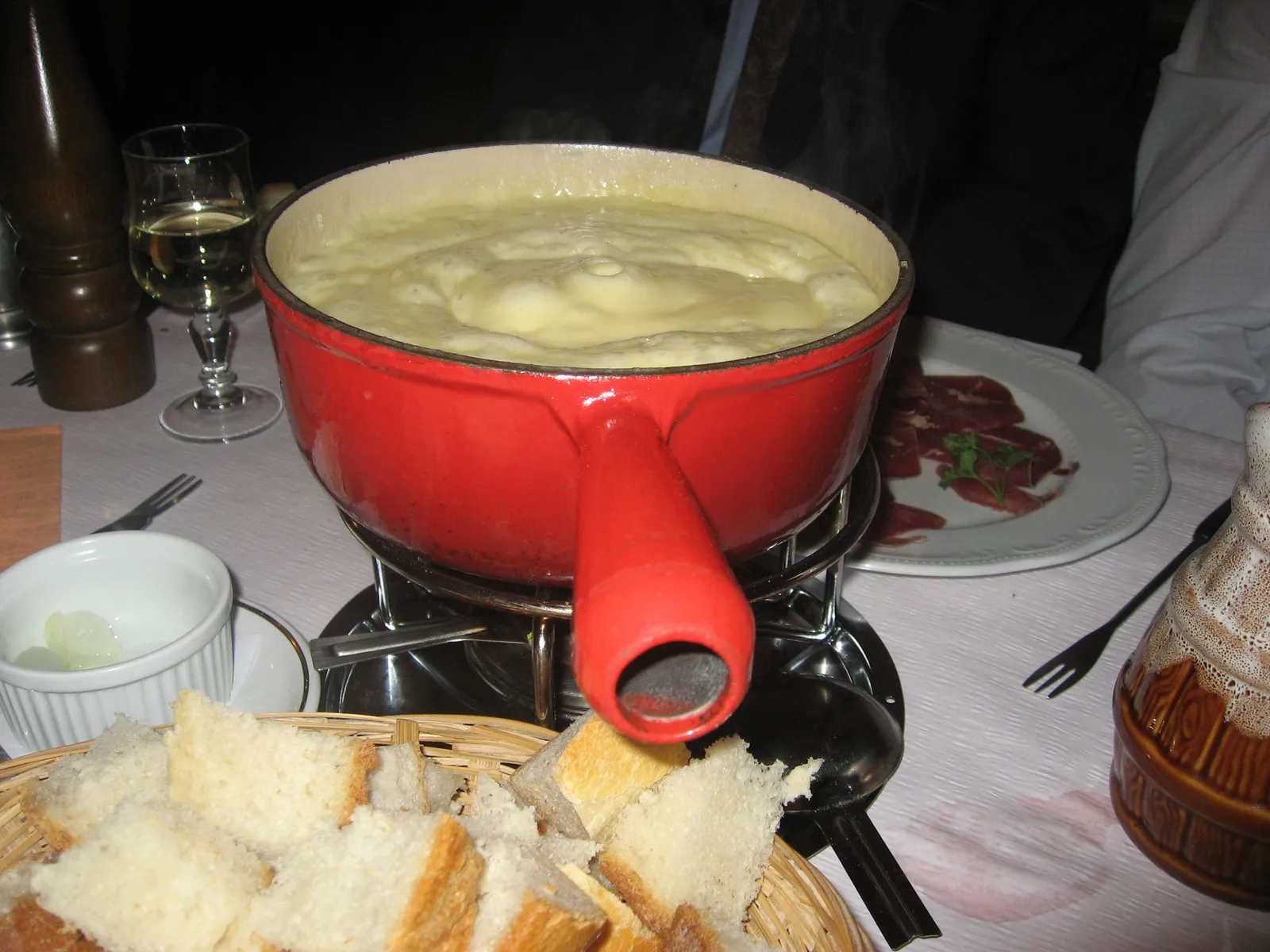
A red fondue pot of melted cheese with bread cubes and a glass of white wine Switzerland flag Switzerland 40m
Dinner •Swiss Alpine Classic

Swiss Cheese Fondue

Swiss cheese fondue is the Alps in a pot: Gruyere and Emmental melted slowly into dry white wine with garlic and a splash of kirsch, kept warm at the table while everyone dips cubes of bread into the bubbling cheese. One serving is about 310 g.

Comfort & Togetherness

Gruyere and Emmental melted in white wine, shared from one pot.

Pairs Well With
Cubes of crusty bread, boiled potatoes and cornichons on the side
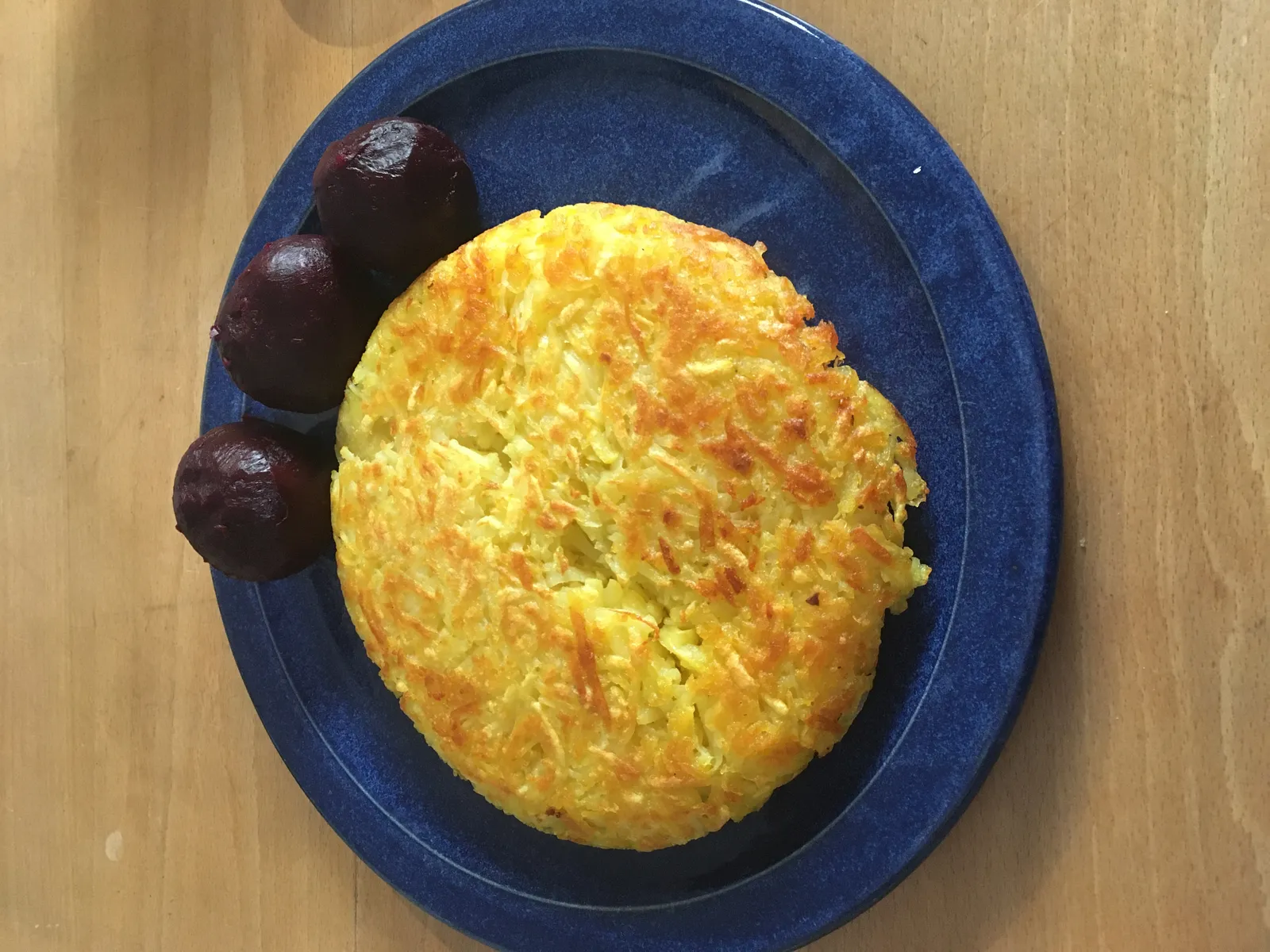
A large golden rosti potato cake on a blue plate Switzerland flag Switzerland 40m
Lunch •Bernese Farmhouse Classic

Rösti

Rösti is Switzerland's crisp potato cake: grated potato pressed into one large golden disc and fried in butter until the outside shatters and the inside stays soft, then topped with a fried egg. One serving is about 240 g.

Simple & Satisfying

One large crisp cake of grated potato, pan-fried in butter and topped with a fried egg.

Pairs Well With
A fried egg on top and a simple green salad with sharp vinaigrette
Quick Prep (<30m)
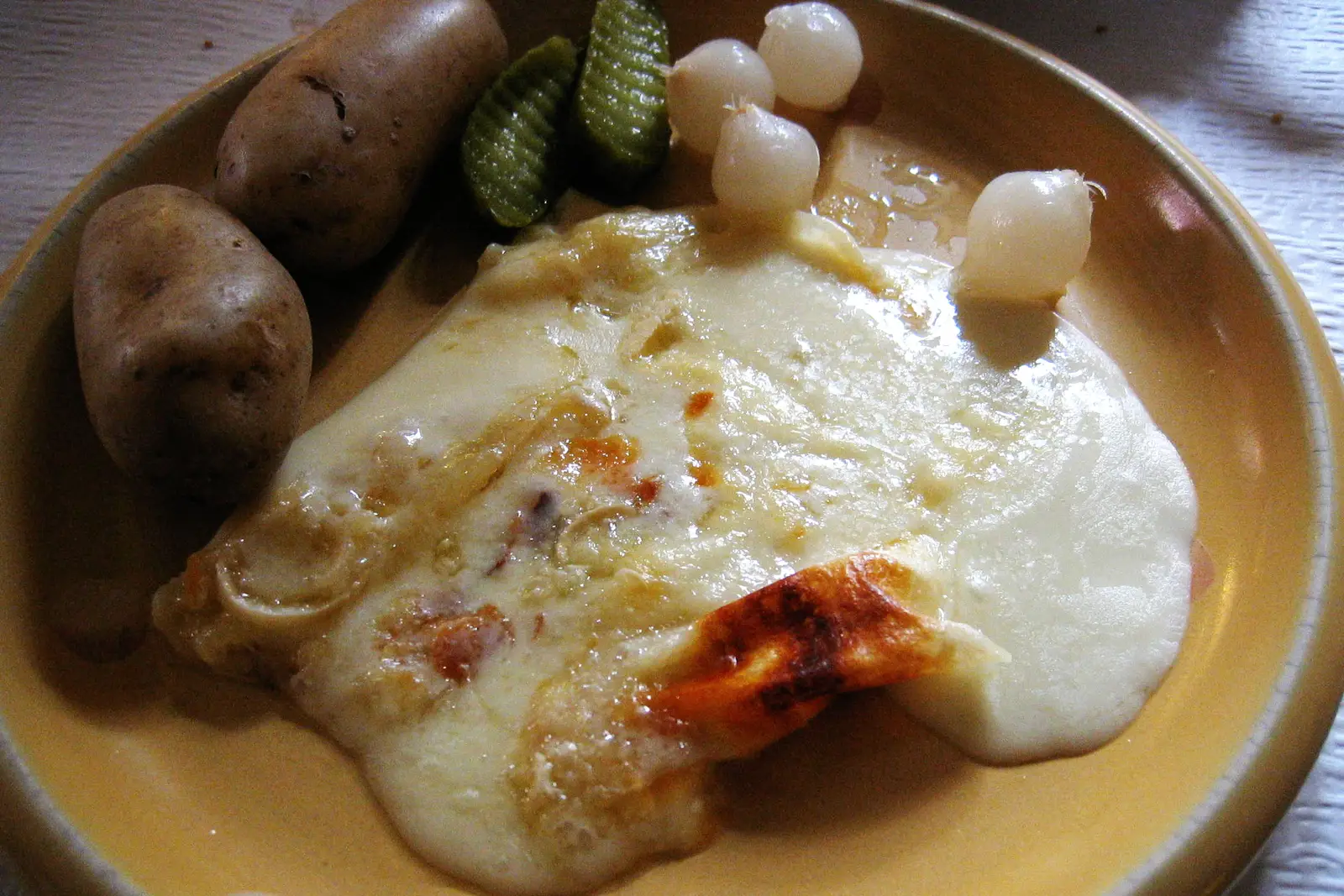
Melted raclette cheese scraped over a plate with boiled potatoes and pickles Switzerland flag Switzerland 40m
Dinner •Valais Alpine Classic

Raclette

Raclette is the Swiss Alps' other great melted-cheese meal: a half-wheel of raclette cheese is warmed until the cut face bubbles, then scraped in ribbons over boiled potatoes, with cornichons and pickled onions to cut the richness. One serving is about 365 g.

Comfort & Togetherness

Melted raclette cheese scraped over boiled potatoes with pickles.

Pairs Well With
Boiled potatoes, cornichons, pickled onions and a green salad
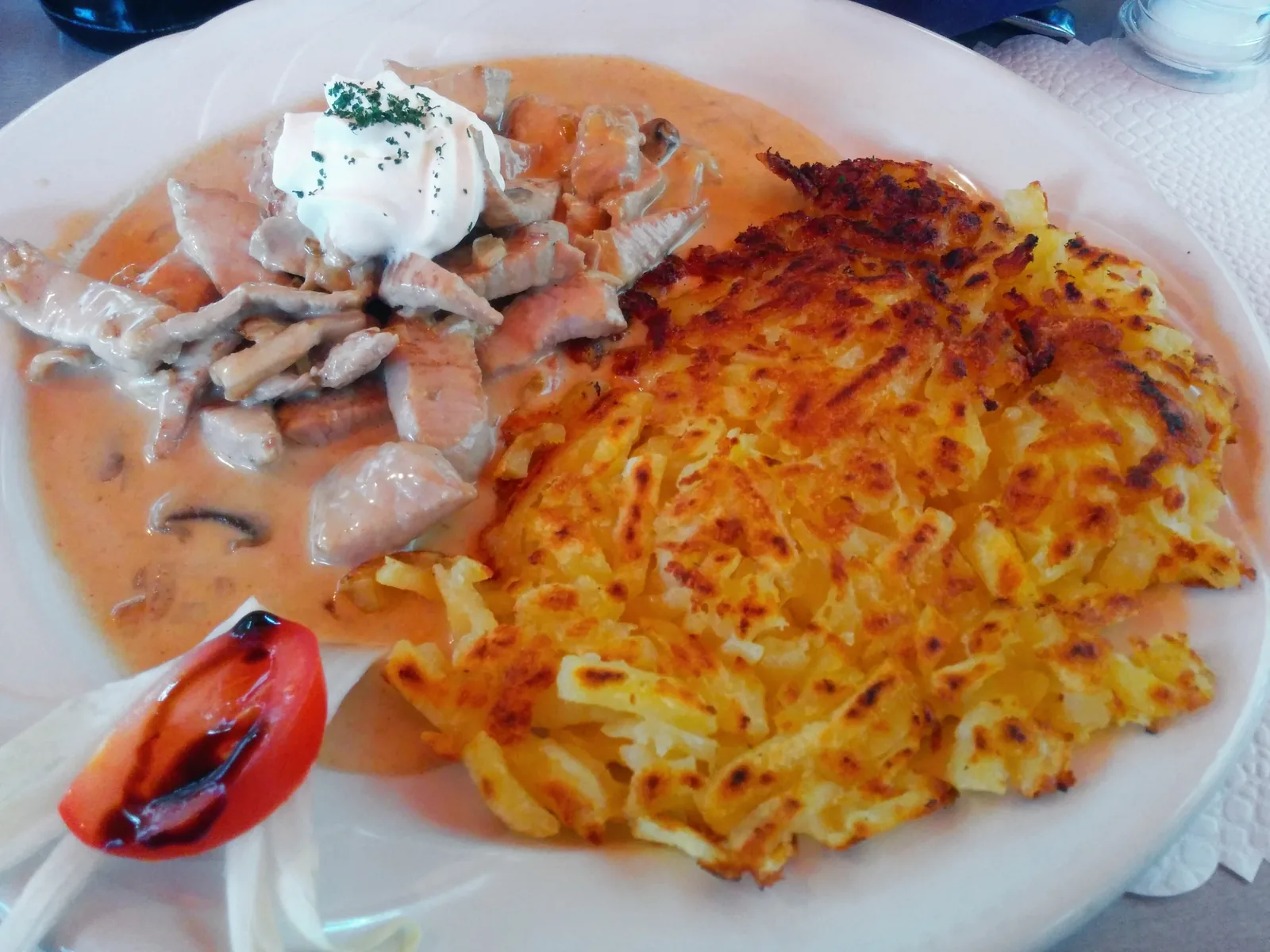
A plate of Zürcher Geschnetzeltes — veal strips in cream sauce with a dollop of cream — beside golden rösti. Switzerland flag Switzerland 40m
Dinner •Zurich Classic

Zürcher Geschnetzeltes

Zürcher Geschnetzeltes is Zurich's signature dish: thin strips of veal quickly seared, then finished in a white-wine and cream sauce with mushrooms and onion. One serving is about 335 g, before the rösti it is traditionally served with.

Rich & Comforting

Tender strips of veal in a white-wine cream sauce with mushrooms — Zurich's classic, with rösti.

Pairs Well With
Serve with golden rösti and a glass of dry Swiss white wine.
High Protein

The Dinner Gazette

Never wonder what’s for dinner again

One email a week with easy dinner ideas from around the world — ingredients, steps and nutrition, tested in our kitchen first.

Delivered every Thursday morning. Unsubscribe anytime.