Curated recipes from 193 countries  •  New seasonal Mediterranean issue out now

Overview

Arroz Carreteiro

Arroz de Carreteiro, Wagoner's Rice, Maria-Isabel Rice

This arroz carreteiro recipe pressure-cooks dried salted beef until tender, shreds it, then fries it with bacon and calabresa sausage before the rice goes in and soaks up all the smoky, savoury flavour in the same pot. It is the wagon drivers' dinner of Rio Grande do Sul: practical, salty, deeply meaty, and finished with grated parmesan and parsley. One serving is about 372 g.

Arroz carreteiro takes its name from the carreteiros, the wagon drivers who crossed Rio Grande do Sul in ox carts carrying goods between towns. With no refrigeration, they carried rice and charque — beef salted and sun-dried until it kept for weeks — and cooked the two together in a cast-iron pot over an open fire, adding whatever sausage, onion and garlic they had. The dish became one of the signature plates of the gaúcho south, and today it is also made with leftover meat from churrasco. In the Central-West and Northeast of Brazil the same dish is known as maria-isabel and is made with carne-de-sol.

Pairs well with: Farofa, vinaigrette salad & chimarrão

Provenance

Brazil flag Brazil

Rio Grande do Sul Classic

Latin America & Caribbean

Time Dedication

1h 40m

15m prep • 85m cook

Batch Yield

6 Servings

575 kcal per serving

1 serving ≈ 372 g

Technical Skill

Intermediate

Easy (One Pot)

Meal Timing & Digestive Fit

Breakfast

Not Advised

Lunch

Hearty Midday Main

Dinner

Ideal Hearty Main

Snack & Tea

Inappropriate

High Protein Occasions: Family dinners, Sunday lunch, churrasco leftovers, winter meals, potlucks Cost: Low — about $3–4 per serving at home
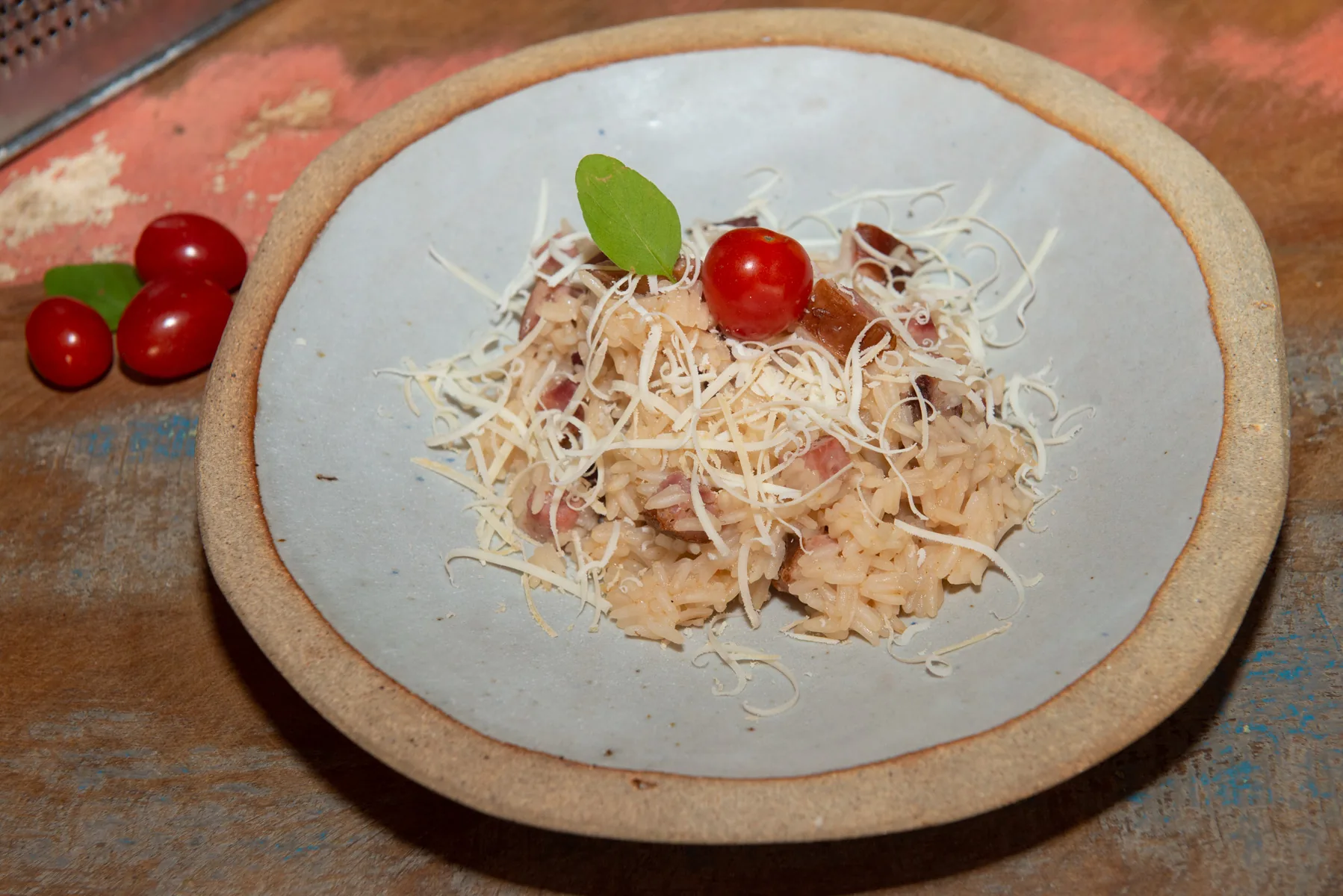
A bowl of arroz carreteiro — rice with chunks of dried beef and sausage, topped with shredded cheese and a cherry tomato

Rio Grande do Sul Classic

Photo: Marcuskuhl, CC BY-SA 4.0, via Wikimedia Commons

The Heritage Formulary

Measured Ingredients

Estimated cost: Low — about $3–4 per serving at home (USD)

A traditional southern Brazilian one-pot rice with dried salted beef, calabresa sausage and bacon, finished with parmesan and parsley.

Execution Methodology & Culinary Technique

Step-by-Step Cooking Guide

Active 1h 40m
P

Soak the carne seca and prep the vegetables

15 minutes

The night before, cut the carne seca into chunks, cover with cold water and leave in the fridge, changing the water 3–4 times to draw out the salt. On the day, drain and rinse the meat, rinse the rice in cold water until it runs clear, then dice the onion, pepper and tomato, mince the garlic, slice the calabresa and dice the bacon so everything is ready before the pot gets hot.

Maestro Tip: Do not skip the overnight soak — unsalted carne seca is far too salty to eat, and changing the water is what makes the dish pleasant instead of punishing.

  1. 1

    Pressure-cook the carne seca

    30 minutes High pressure (120°C / 250°F)

    Put the soaked carne seca in a pressure cooker, cover with fresh water and cook at high pressure for 20 minutes. Let the pressure release naturally for 10 minutes, then open, lift out the meat and let it cool just enough to handle.

    If you have no pressure cooker, simmer the meat in a covered pot for 40 minutes instead — it must be tender enough to shred with two forks.

    Done when: Meat is tender and shreds easily with two forks.

  2. 2

    Shred the beef

    5 minutes No heat

    Pull the cooked carne seca apart into thin shreds with two forks, discarding any hard fat or gristle. Set the shreds aside in a bowl.

    Shred while the meat is still warm — cold dried beef turns stiff and is hard to pull apart.

    Done when: Beef is in thin, even shreds with no large lumps.

  3. 3

    Fry the bacon and calabresa

    8 minutes Medium-high heat (200°C / 400°F)

    Heat the vegetable oil in a large, heavy pot over medium-high heat. Add the diced bacon and sliced calabresa and fry for about 8 minutes, stirring now and then, until the bacon is crisp at the edges and the sausage is browned and has given up its fat.

    Let the meats brown properly before stirring — the browned bits on the bottom of the pot are the flavour of the whole dish.

    Done when: Bacon is crisp-edged, sausage is browned, and the pot smells smoky.

  4. 4

    Soften the vegetables

    6 minutes Medium heat (175°C / 350°F)

    Lower the heat to medium and cook the onion in the same pot for 3 minutes, scraping up the browned bits. Add the garlic, red pepper and tomato and cook for 3 minutes more until soft and fragrant.

    Scrape the bottom as the onion cooks — those browned bits dissolve into the dish and colour the rice.

    Done when: Vegetables are soft, the oil is orange-red, and the pot smells sweet and smoky.

  5. 5

    Add the rice and water

    6 minutes Medium-high heat (200°C / 400°F)

    Stir the shredded carne seca into the pot, then add the rinsed rice and stir until every grain is coated in the fat. Pour in the 700 ml of water, add the black pepper, stir once and bring to a boil.

    Stir only this once — stirring rice while it cooks makes it gummy.

    Done when: Pot is boiling, rice is evenly mixed through the meat and vegetables.

  6. 6

    Simmer until the rice is tender

    20 minutes Low heat (95°C / 200°F)

    Cover with a tight lid, lower the heat to the barest simmer and cook for 20 minutes without lifting the lid. Taste a little rice for salt before serving and add the salt only if it needs it — the carne seca usually seasons the pot on its own.

    If the lid does not seal well, lay a clean tea towel under it to trap the steam.

    Done when: Rice is tender and has absorbed the water; grains are separate, not mushy.

  7. 7

    Rest, fluff and serve

    10 minutes No heat

    Take the pot off the heat and rest, lid on, for 10 minutes. Fluff the rice gently with a fork, spoon generous mounds onto plates and scatter with grated parmesan and chopped parsley. Serve at once.

    Fluff with a fork, never a spoon, to keep the grains separate.

    Done when: Plates are steaming, golden-brown and scattered with cheese and parsley.

Finishing Touches & Plating

Spoon generous mounds of the smoky, meat-flecked rice onto plates, scatter with grated parmesan and chopped parsley, and pass farofa and hot sauce at the table.

Nutritional Physiology & Benefits

Nutrition

Energy

575

kcal / serving

Protein

34g

Complete AA

Carbs

62g

Complex

Fats

21g

Healthy

Per serving (6 servings · 1 serving ≈ 372 g)
Energy575 kcal
Protein34 g
Carbohydrates62 g
Fat21 g
Fibre2.3 g
Sugar4.4 g
Sodium1367 mg
Per 100g
Energy155 kcal
Protein9.1 g
Carbohydrates16.6 g
Fat5.6 g
Fibre0.6 g
Sugar1.2 g
Sodium368 mg

Nutrition values are estimated — calculated from USDA FoodData Central values for the listed ingredients.

Vitamins & minerals: The red pepper and tomato supply vitamin C and vitamin A, the parsley adds vitamin K and folate, and the beef adds iron, zinc and vitamin B12. All nutrition values are estimated.

A filling, protein-rich meal

With about 34 g of protein per serving from the beef, sausage and bacon, one plate works as a complete main meal that keeps you full for hours.

Iron, zinc and B12 from the beef

Carne seca is lean dried beef, so the dish brings iron, zinc and vitamin B12, the nutrients red meat is known for, along with peppers and tomato for vitamin C.

One pot, real ingredients

Everything cooks in a single pot with no sauces or shortcuts — rice, cured meat, sausage and garden vegetables, the way wagon drivers made it.

Food Pairings

What to Eat With

To optimize nutrient absorption and elevate the sensory depth, pair with these authentic accompaniments:

Sides

Farofa

Toasted cassava flour sprinkled over the rice adds a nutty crunch that Brazilians love with one-pot meat dishes, and it soaks up the smoky fat.

Fried egg

A fried egg on top of each serving is a classic Rio Grande do Sul touch — the runny yolk coats the rice and makes the plate richer.

Vegetables

Vinaigrette salad

A sharp salad of tomato, onion and peppers in vinegar and oil adds acidity and crunch that cut through the salty, fatty richness of the rice.

Drinks

Chimarrão (hot mate)

The bitter, grassy hot mate of the gauchos is the traditional drink with carreteiro — its bitterness balances the salt and fat of the dish.

Complete menu

Serve the arroz carreteiro as the main plate with farofa and a vinaigrette salad on the side, a fried egg on top, and chimarrão to drink.

Digestive Guardrails

What NOT to Combine

To prevent digestive distress, sluggishness, or palate clash, avoid pairing the dish with these elements:

Extra salt and salty sides

Arroz carreteiro already carries about 1,367 mg of sodium per serving from the carne seca, sausage and bacon. Adding salt at the table or serving salty cured meats or salty cheese alongside can push sodium far higher, which is a concern for blood pressure. This is general information, not medical advice — ask a clinician about your own sodium limits.

A second heavy meat course

The dish is already rich in meat and fat at about 575 calories a serving. Serving another heavy meat main with it makes the meal very heavy and doubles the saturated fat and sodium, so keep the rest of the plate light.

General information only, not medical advice — consult a doctor for personal dietary decisions.

Who Should Eat It

Who Should Eat

  • General adultsA complete, satisfying meal in one bowl. Enjoy a normal portion and balance the rest of the day with lighter foods.
  • ChildrenFilling and mild, but quite salty — serve children a smaller portion with plenty of salad and skip extra salt.
  • ElderlySoft rice and tender shredded beef are easy to chew. Serve a modest portion because of the salt, and add salad on the side.
  • Pregnant womenFine when the meats are fully cooked through and the dish is served hot. The salt is the main concern, so keep the portion modest; ask your clinician if unsure.
  • Breastfeeding womenA protein-rich, filling dinner that fits well between feeds. Drink water alongside it, as salty food increases thirst.
  • AthletesAbout 34 g of protein and 62 g of carbohydrates per serving make it a strong recovery dinner after training.
  • Weight gainAt about 575 calories a serving, it is an easy way to add energy — a fried egg on top adds more.
  • Weight lossEnjoy a modest serving with a big salad on the side; the rice is filling, so a smaller mound still satisfies.

Health Conditions — Adjust or Avoid

Conditions

  • DiabetesAbout 62 g of carbohydrates per serving come from the rice, so portion size matters and blood sugar should be monitored. A smaller portion with more meat and vegetables helps; ask your clinician or dietitian for a portion that fits your plan.
  • High blood pressureSodium is about 1,367 mg per serving, which is high, so do not add salt and skip extra salty sides. Ask your clinician about your own sodium limits.
  • Kidney diseaseThe dish is high in protein and sodium, so portions should be modest and it should not be eaten often. Ask your clinician or dietitian whether it fits your plan.
  • GoutCured and processed meats are high in purines, so people with gout should keep portions small and not eat this dish often. Ask your clinician for personal advice.
  • Stomach issuesThe dish is rich and fatty, and the onion and pepper can bother a sensitive stomach. Eat a small portion and chew well; ask your clinician if symptoms persist.
  • Cardiovascular diseaseSausage and bacon add saturated fat and sodium, so this is an occasional dish rather than an everyday one. Balance the plate with salad and ask your clinician about your diet.
  • Fatty liverThe rice, sausage and bacon add energy and fat, so a modest portion with plenty of salad is wiser than a large one. Ask your clinician or dietitian for guidance.
  • Food allergiesContains milk (parmesan) and pork; check the sausage label for gluten, as some brands add wheat fillers. Ask a clinician if you are unsure.
  • Special therapeutic dietsNot suitable for vegetarian, vegan or low-sodium diets as written. Ask your clinician or dietitian before adapting it.

If you have a medical condition, consult your doctor before changing your diet.

Storage & Use

Storage & Use

How to store
Cool quickly and store in an airtight container.
In the fridge
3–4 days in the refrigerator.
In the freezer
Up to 3 months in airtight containers; the rice softens slightly after freezing.
How to reheat
Reheat gently in a covered pan or microwave with a splash of water until steaming hot throughout, to 74°C (165°F).
Freezing recommended
Yes, up to 3 months; freeze in single portions for easy reheating.
Signs it has spoiled
Sour or off smell, slimy texture on the meat or rice, or mould on the surface.

More recipes to explore

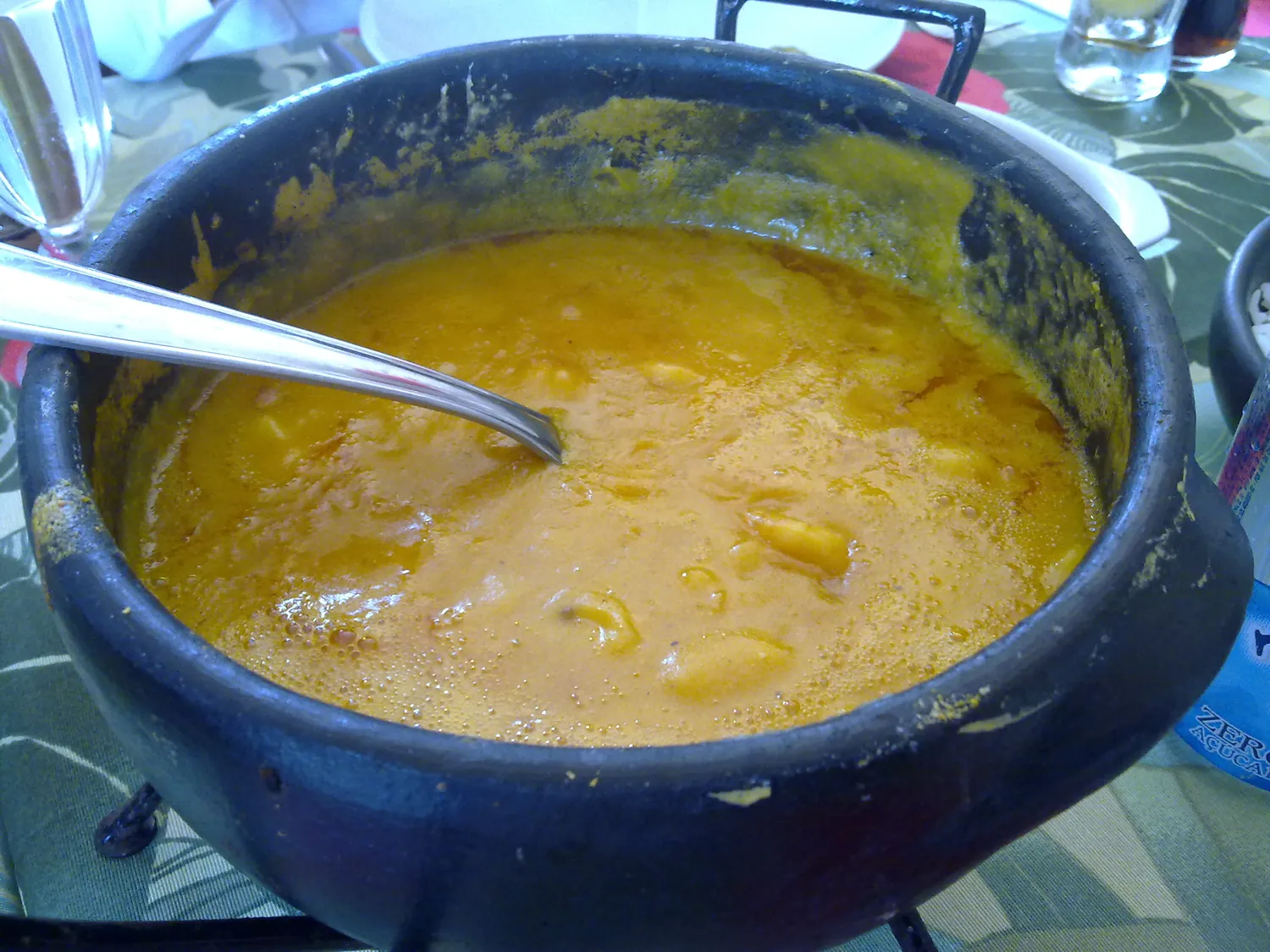
A black clay pot of golden-orange bobó de camarão, a thick cassava cream with shrimp, with a serving spoon Brazil flag Brazil 1h 5m
Dinner •Bahian Cassava Cream

Bobó de Camarão

This bobo de camarao recipe is Bahia's creamy shrimp dish: fresh shrimp folded into a thick purée of boiled cassava blended with coconut milk, coloured golden-orange with dendê oil and finished with lime and cilantro. Unlike a stew, the cassava is blended smooth, so the whole dish eats like a rich, spoonable cream. One serving is about 470 g.

Rich & Comforting

Shrimp folded into a thick, smooth cassava cream made with coconut milk and red palm oil, served hot with rice.

Pairs Well With
Steamed white rice, farofa and a crisp green salad
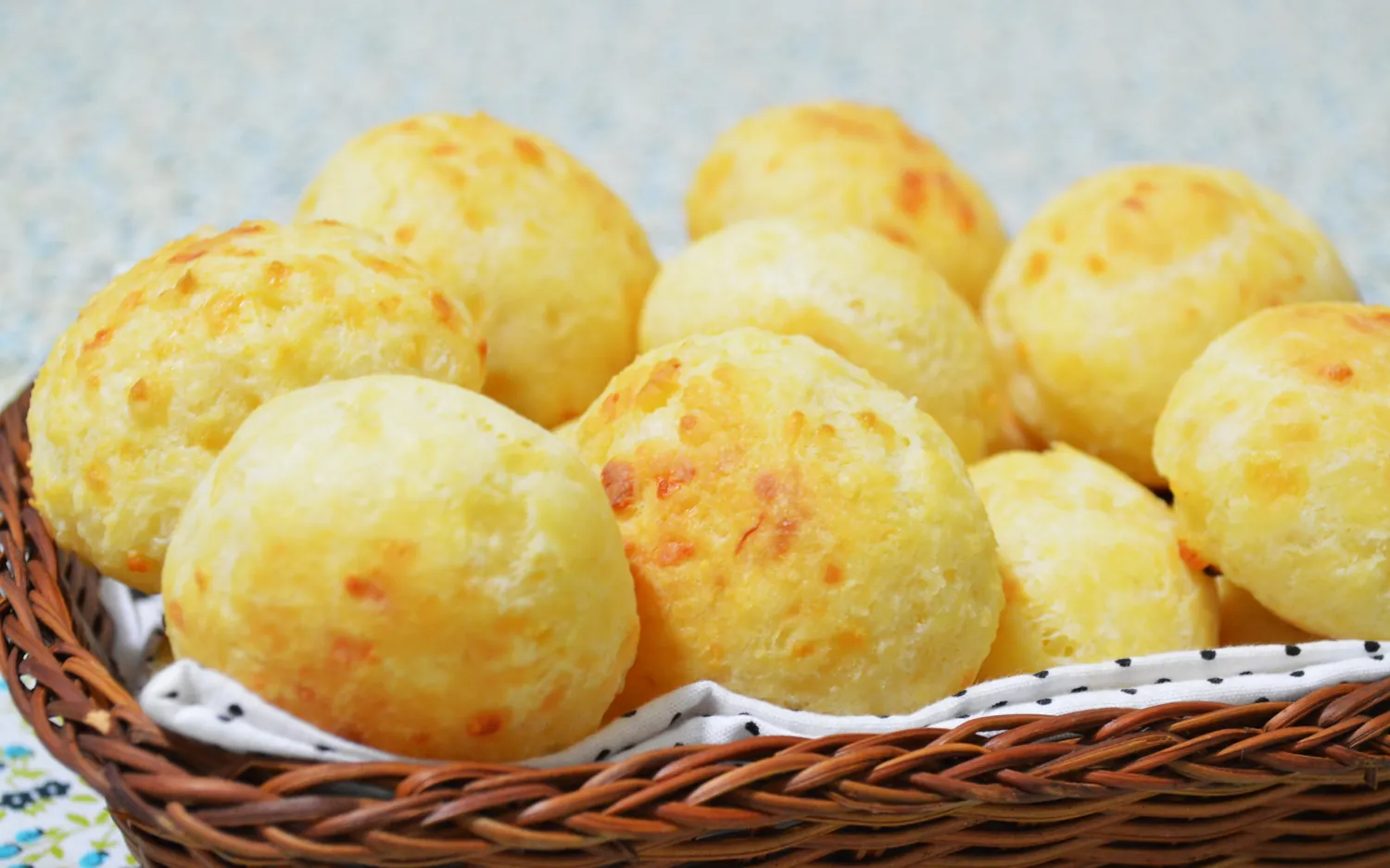
A basket of golden, round pão de queijo, Brazilian cheese bread rolls Brazil flag Brazil 45m
Snack & Tea •Minas Gerais Cheese Bread

Pão de Queijo

This pao de queijo recipe makes Brazil's famous cheese bread: small, golden rolls with a crisp shell and a soft, stretchy, chewy centre, made from tapioca starch, milk, oil, eggs and cheese. There is no wheat flour and no yeast — the rolls puff up on steam in a hot oven. One serving is 4 rolls, about 134 g.

Warm & Chewy Snack

Golden tapioca cheese rolls with a crisp shell and a soft, stretchy centre, baked in under half an hour.

Pairs Well With
Black coffee, fresh fruit, or a light soup
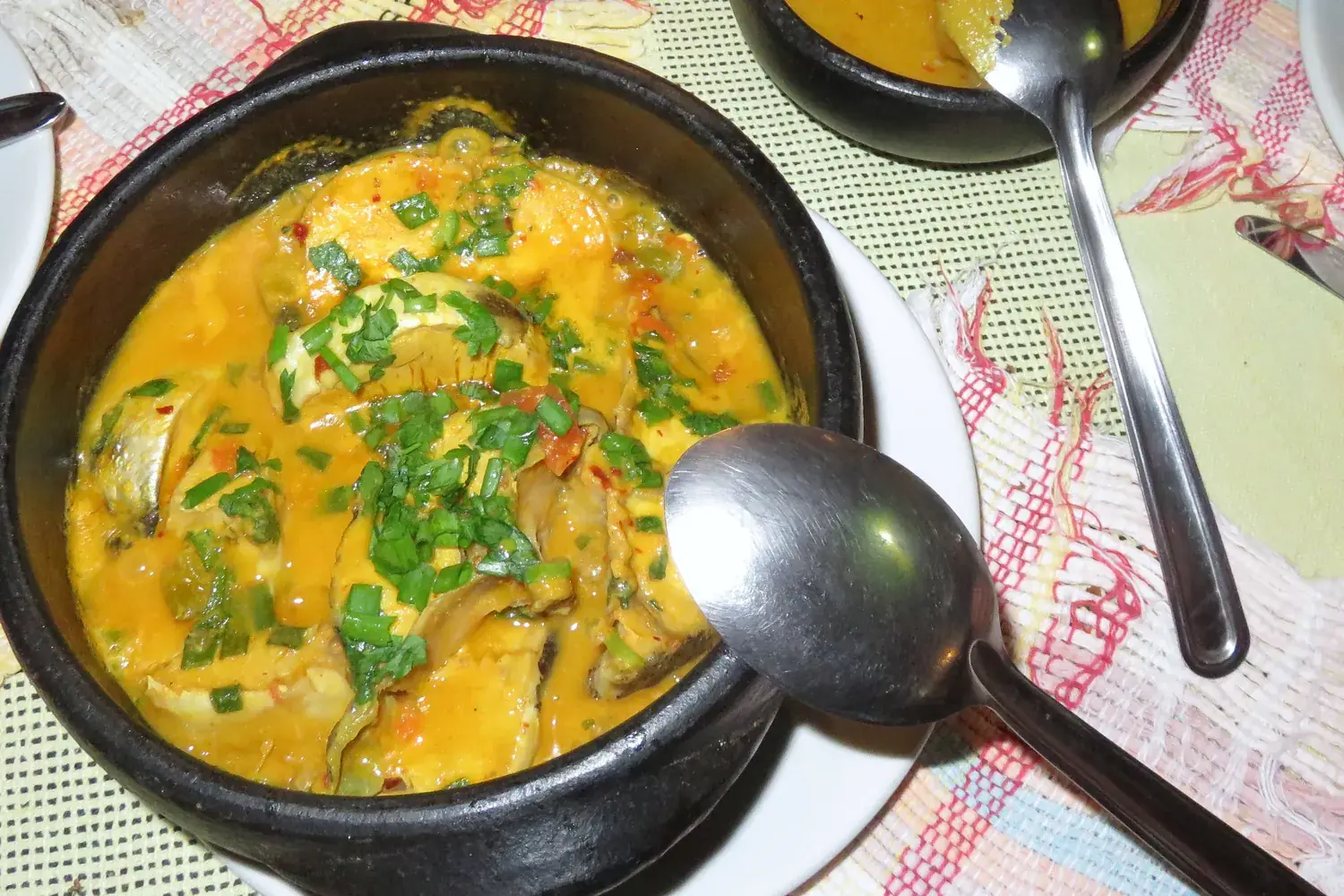
A black clay pot of moqueca baiana, fish chunks in a golden-orange coconut sauce with fresh herbs, beside rice and pirão Brazil flag Brazil 55m
Dinner •Bahian Fish Stew

Moqueca Baiana

This moqueca baiana recipe is Bahia's famous fish stew: thick fillets of white fish layered with onion, peppers and tomato, then simmered gently in coconut milk with dendê oil until the sauce turns golden-orange. The fish stays in whole, flaky pieces in a fragrant broth — a stew, not a purée. One serving is about 450 g.

Coastal & Aromatic

Firm white fish simmered in coconut milk and red palm oil with peppers and tomato, served hot in its clay pot.

Pairs Well With
Steamed white rice, pirão and farofa
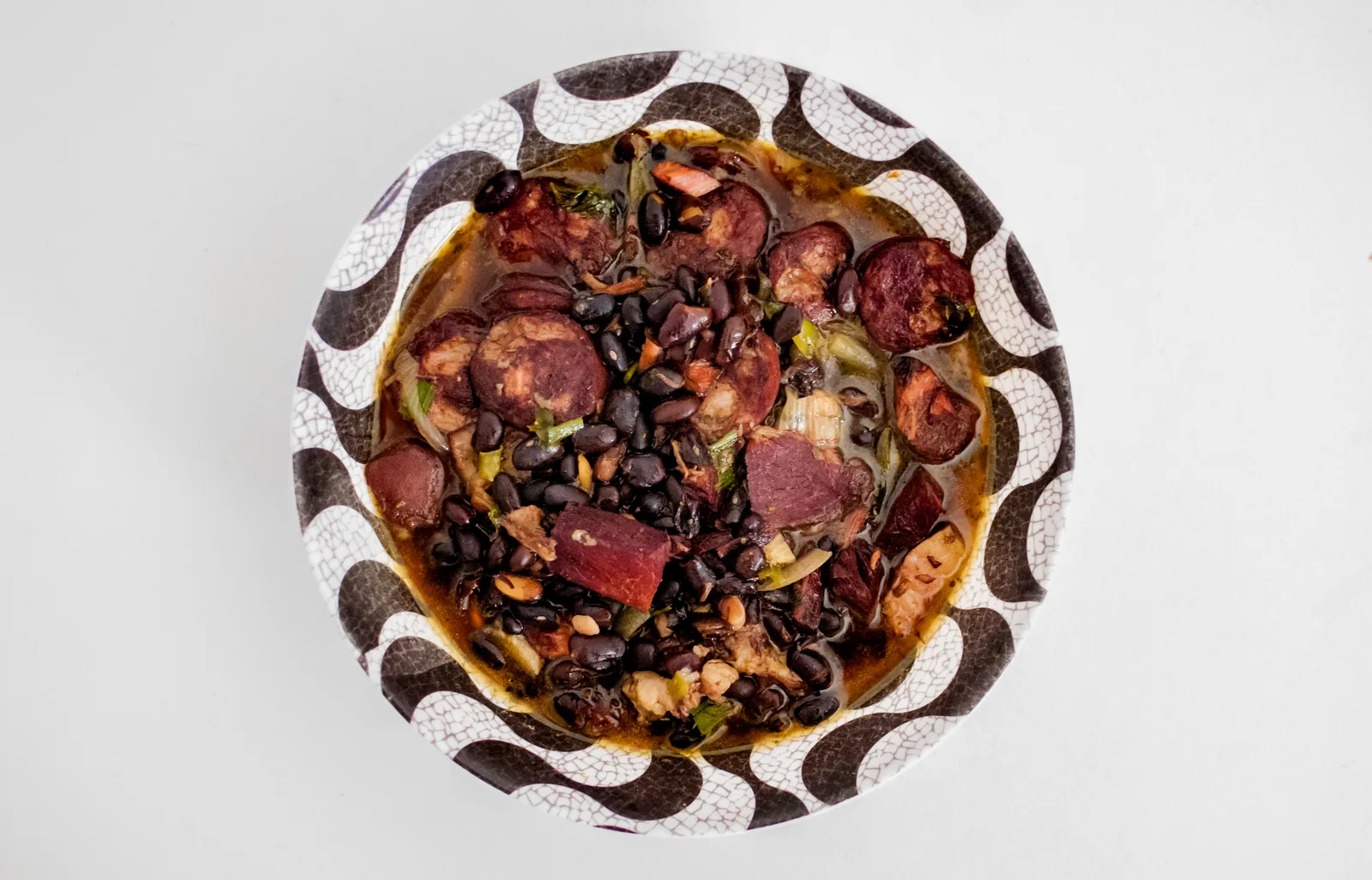
A bowl of Brazilian feijoada — black beans with rounds of sausage and pieces of pork Brazil flag Brazil 3h 30m
Dinner •Brazilian National Dish

Brazilian Feijoada

This Brazilian feijoada recipe is the real Saturday lunch: black beans simmered for hours with pork shoulder, smoky linguiça, bacon and beef until the broth turns thick and dark, then served with white rice, garlicky collard greens, orange slices and farofa. It is a slow, generous pot built for sharing. One serving is about 450 g.

Rich & Hearty

Brazil's national dish — black beans slow-cooked with pork, sausage and beef, served with rice, greens and orange.

Pairs Well With
Serve with white rice, sautéed collard greens, orange slices and farofa.

The Dinner Gazette

Never wonder what’s for dinner again

One email a week with easy dinner ideas from around the world — ingredients, steps and nutrition, tested in our kitchen first.

Delivered every Thursday morning. Unsubscribe anytime.