
Curated recipes from 193 countries  •  New seasonal Mediterranean issue out now

Overview

Brazilian Tapioca

Tapioca Crepe, Beiju de Tapioca, Brazilian Tapioca Pancake

This brazilian tapioca recipe turns hydrated cassava starch into a crisp-edged crepe on a hot pan, filled two ways — melted queijo coalho and sweet coconut with condensed milk. One serving is one crepe, about 163 g, and all four are ready in 25 minutes.

Tapioca takes its name from tipi’óka, the Tupi word for the starchy sediment left when cassava is pressed — a food of the Indigenous peoples of north-eastern Brazil long before the Portuguese arrived around 1500. In the north-east, the wet starch is still made by hand from grated manioc, squeezed through a woven tipiti, and the crepe — beiju — is cooked on a hot pan at street stalls and festivals, filled with cheese, coconut or shredded dried beef. It is naturally gluten-free because it is pure cassava starch, with no wheat at all.

Pairs well with: Strong Brazilian coffee (cafezinho) and fresh tropical fruit

Provenance

Brazil flag Brazil

Pernambuco Street-Food Classic

Latin America & Caribbean

Time Dedication

25m

10m prep • 15m cook

Batch Yield

4 Servings

370 kcal per serving

1 serving ≈ 163 g

Technical Skill

Easy

Easy (One Pan)

Meal Timing & Digestive Fit

Breakfast

Not Advised

Lunch

Inappropriate

Dinner

Inappropriate

Snack & Tea

Ideal Light Bite

Quick Prep (<30m) Occasions: An afternoon snack, a street-food craving, a gluten-free breakfast, a Brazilian coffee break Cost: Low — about $1–2 per serving at home
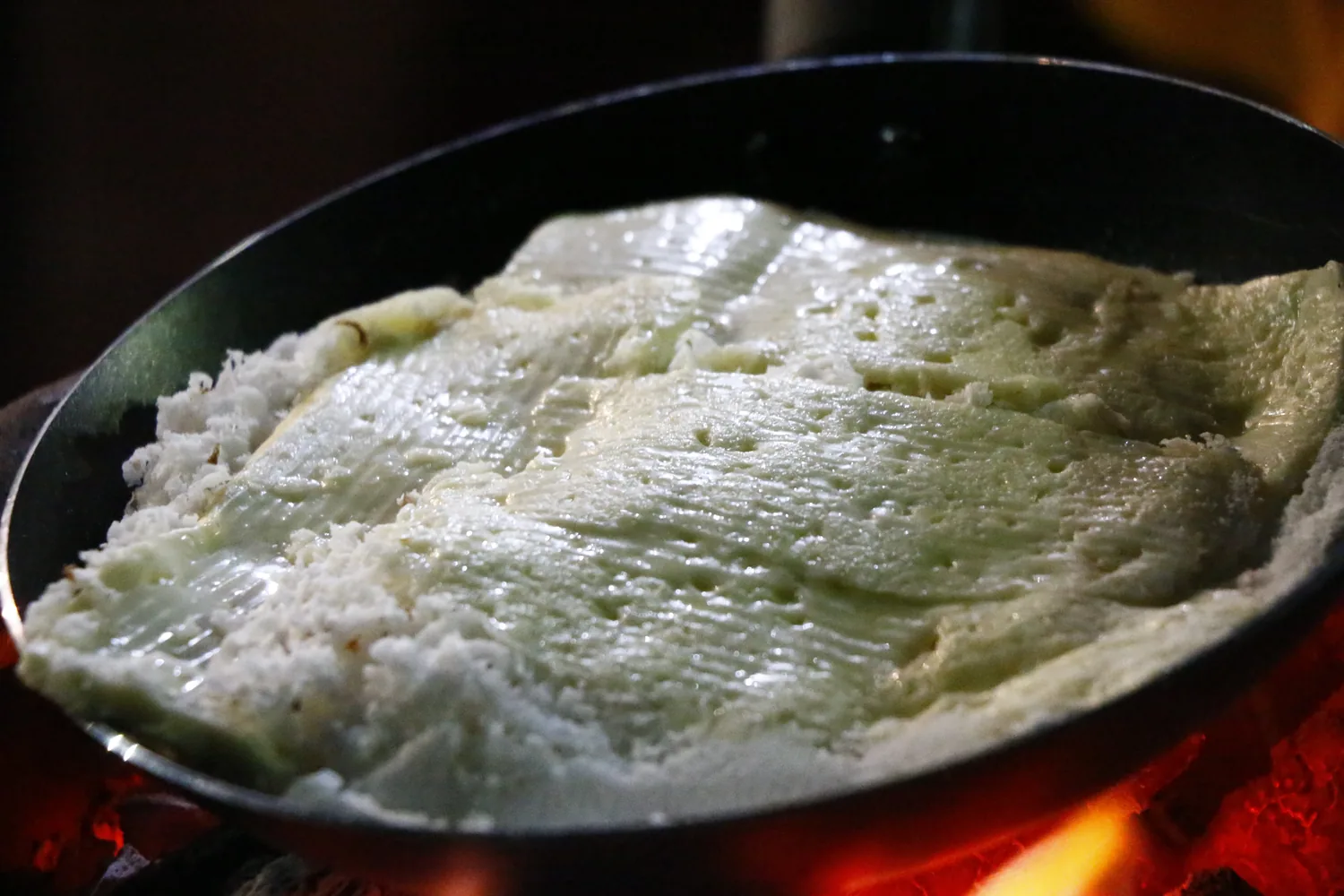
A Brazilian tapioca crepe cooking in a pan, topped with melting cheese

Pernambuco Street-Food Classic

Photo: Prefeitura de Olinda, CC BY 2.0, via Wikimedia Commons

The Heritage Formulary

Measured Ingredients

Estimated cost: Low — about $1–2 per serving at home (USD)

A true Brazilian tapioca is crisp at the edges, soft in the middle, and eaten hot — sift the starch fine and never let the pan get too hot.

Execution Methodology & Culinary Technique

Step-by-Step Cooking Guide

Active 25m
P

Prep Stage: Sift the Starch & Slice the Fillings

10 Mins • Knife Work

Push the hydrated starch through a fine sieve into a bowl and stir in the pinch of salt — it should feel like damp sand, with no lumps at all. Slice the cheese thinly and grate the coconut.

Maestro Tip: Lumps in the starch become holes in the crepe — sifting is the one step you cannot skip.

  1. 1

    Heat the Pan

    2 Mins Medium heat, ~180°C (350°F)

    Heat a dry non-stick frying pan over medium heat for 2 minutes, then brush it very lightly with butter — just a film, not a pool.

    Too much butter makes the crepe greasy and stops the starch binding.

    Done when: The pan is evenly hot and the butter just melts.

  2. 2

    Form the First Crepe

    3 Mins Medium heat, ~180°C (350°F)

    Sprinkle 120 g of sieved starch evenly over the pan in a thin, even layer, right to the edges. Press very lightly with the back of a spoon and cook for 2–3 minutes until the grains melt together into a single sheet.

    Do not stir or flip — the starch binds itself with the heat.

    Done when: The starch has fused into one flexible, white sheet.

  3. 3

    Fill the Savoury Crepes

    4 Mins Medium heat, ~180°C (350°F)

    For the first two crepes, lay 40 g of sliced cheese over one half, fold the crepe in half and cook for 1 more minute until the cheese melts. Slide onto a plate and repeat for the second savoury crepe.

    Fold while the crepe is still in the pan — it stiffens fast once it cools.

    Done when: The cheese is melted and the crepe holds its fold.

  4. 4

    Fill the Sweet Crepes

    4 Mins Medium heat, ~180°C (350°F)

    For the last two crepes, scatter 20 g of grated coconut over one half, drizzle with 15 g of condensed milk, fold in half and cook for 1 more minute. Slide onto a plate and repeat.

    Put the condensed milk on the coconut, not straight on the starch, or it burns.

    Done when: The coconut is warm and the milk has soaked in.

  5. 5

    Serve Hot

    2 Mins Serve hot, ~65°C (149°F)

    Serve the crepes immediately, while they are still hot and pliable — cut each in half if you like, and eat straight away.

    Tapioca firms up as it cools, so do not leave the crepes waiting.

    Done when: The crepes are hot, soft and fold without cracking.

Finishing Touches & Plating

Eat the crepes while they are still hot and pliable — tapioca firms up as it cools, so fold, serve and eat straight from the pan.

Nutritional Physiology & Benefits

Nutrition

Energy

370

kcal / serving

Protein

6g

Complete AA

Carbs

59g

Complex

Fats

13g

Healthy

Per serving (4 servings · 1 serving ≈ 163 g)
Energy370 kcal
Protein6 g
Carbohydrates59 g
Fat13 g
Fibre1.5 g
Sugar6.9 g
Sodium364 mg
Per 100g
Energy227 kcal
Protein3.4 g
Carbohydrates36.4 g
Fat7.7 g
Fibre0.9 g
Sugar4.3 g
Sodium223 mg

Nutrition values are estimated — calculated from USDA FoodData Central values for the listed ingredients.

Vitamins & minerals: Calcium (cheese), iron (tapioca starch), B vitamins (cheese, coconut).

Naturally Gluten-Free

Pure cassava starch with no wheat at all — the crepe is naturally gluten-free, not a substitute.

Quick Energy from Cassava

Cassava starch is almost pure carbohydrate, so one crepe gives fast, easily digested energy — a proper afternoon snack.

Simple, Short Ingredient List

Starch, cheese, coconut and milk — four everyday ingredients, nothing hidden, nothing processed.

Food Pairings

What to Eat With

To optimize nutrient absorption and elevate the sensory depth, pair with these authentic accompaniments:

Drinks

Cafezinho (Brazilian Coffee)

Strong, sweet Brazilian coffee is the classic partner — the bitterness balances the sweet coconut crepe and the richness of the cheese.

More Pairings

Fresh Mango or Papaya

Juicy tropical fruit cuts through the starch and adds freshness and vitamin C to a snack that is otherwise all carbohydrate.

Guava Paste with Cream Cheese

The classic Romeo and Juliet combination — sweet guava paste with cream cheese — makes a third filling that Brazilians love on a tapioca crepe.

Complete menu

Serve the tapioca crepes hot with cafezinho and fresh mango on the side — one cheese crepe and one coconut crepe per person.

Digestive Guardrails

What NOT to Combine

To prevent digestive distress, sluggishness, or palate clash, avoid pairing the dish with these elements:

A Sugary Soft Drink with the Sweet Version

The coconut crepe already carries condensed milk — a sugary soft drink alongside doubles the sugar load in one snack. Water or unsweetened coffee is the better match. This is general guidance, not medical advice.

Eating the Crepes Cold

Cold tapioca turns tough and rubbery within minutes, and reheating rarely restores it. Eat the crepes hot from the pan, or warm them gently in a dry pan. This is general guidance, not medical advice.

General information only, not medical advice — consult a doctor for personal dietary decisions.

Who Should Eat It

Who Should Eat

  • General adultsA warm, chewy snack — sweet or savoury, ready in minutes.
  • ChildrenChildren love the sweet coconut version; cut the crepe into strips for small hands.
  • ElderlySoft, easy to chew and easy to digest; serve the cheese version for more protein.
  • Pregnant womenGenerally suitable — all ingredients are cooked through; keep the cheese version for extra calcium.
  • Breastfeeding womenA quick, filling snack between feeds; the cheese version adds calcium and protein.
  • AthletesA useful fast-carbohydrate snack before or after training — take the cheese version for a little protein too.
  • Weight gainA good choice — take two crepes, one of each filling, with coffee.
  • Weight lossOne crepe is enough — it is almost pure starch, so keep it to one and skip the second helping.

Health Conditions — Adjust or Avoid

Conditions

  • DiabetesOne crepe carries about 59 g of carbohydrate, mostly fast starch — keep to one crepe and ask your clinician about portion size.
  • High blood pressureOne serving carries about 364 mg of sodium — use unsalted butter and less cheese, and ask your clinician about portion size.
  • Kidney diseaseThe dish is moderate in sodium and low in protein — a reasonable occasional snack; ask your clinician about portion size.
  • GoutThe dish is plant-based apart from the cheese and low in purines — a reasonable choice; ask your clinician about frequency.
  • Stomach issuesPlain starch is usually gentle, but go easy on the sweet condensed-milk version if you are prone to reflux, and ask your clinician if symptoms persist.
  • Cardiovascular diseaseCheese, butter and coconut add saturated fat — keep to one crepe and favour the coconut version; ask your clinician about portion size.
  • Fatty liverA high-carbohydrate snack — one crepe, not two, and skip the sweet version most days; ask your clinician about portion size.
  • Food allergiesNaturally gluten-free. Contains milk (cheese, butter, condensed milk) and coconut, which is listed as a tree nut for allergy labelling in some countries — check the labels, and if you have a milk or coconut allergy, ask your clinician.
  • Special therapeutic dietsGluten-free as written, but high in fast carbohydrate — if you follow a prescribed low-glycaemic or low-saturated-fat diet, check with your clinician.

If you have a medical condition, consult your doctor before changing your diet.

Storage & Use

Storage & Use

How to store
Store cooked crepes in an airtight container with baking paper between them; keep fillings separate.
In the fridge
Crepes 1 day.
In the freezer
Not recommended — the starch turns rubbery on thawing.
How to reheat
Warm gently in a dry pan over low heat until pliable; do not microwave on high.
Freezing recommended
No — the texture does not survive freezing.
Signs it has spoiled
Sour smell, stiff or slimy texture, or mould on the cheese.

More recipes to explore

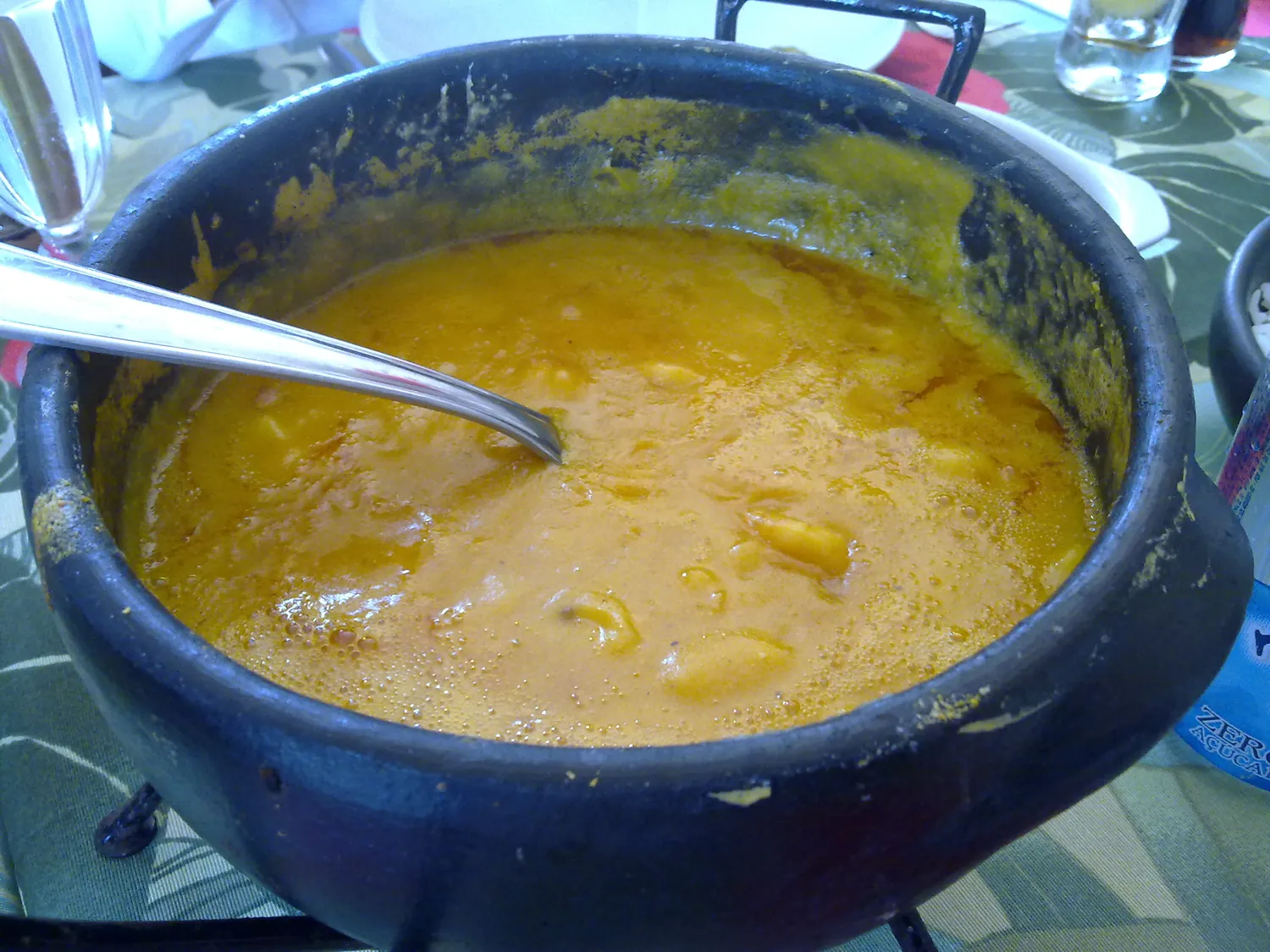
A black clay pot of golden-orange bobó de camarão, a thick cassava cream with shrimp, with a serving spoon Brazil flag Brazil 1h 5m
Dinner •Bahian Cassava Cream

Bobó de Camarão

This bobo de camarao recipe is Bahia's creamy shrimp dish: fresh shrimp folded into a thick purée of boiled cassava blended with coconut milk, coloured golden-orange with dendê oil and finished with lime and cilantro. Unlike a stew, the cassava is blended smooth, so the whole dish eats like a rich, spoonable cream. One serving is about 470 g.

Rich & Comforting

Shrimp folded into a thick, smooth cassava cream made with coconut milk and red palm oil, served hot with rice.

Pairs Well With
Steamed white rice, farofa and a crisp green salad

A basket of golden, round pão de queijo, Brazilian cheese bread rolls Brazil flag Brazil 45m
Snack & Tea •Minas Gerais Cheese Bread

Pão de Queijo

This pao de queijo recipe makes Brazil's famous cheese bread: small, golden rolls with a crisp shell and a soft, stretchy, chewy centre, made from tapioca starch, milk, oil, eggs and cheese. There is no wheat flour and no yeast — the rolls puff up on steam in a hot oven. One serving is 4 rolls, about 134 g.

Warm & Chewy Snack

Golden tapioca cheese rolls with a crisp shell and a soft, stretchy centre, baked in under half an hour.

Pairs Well With
Black coffee, fresh fruit, or a light soup
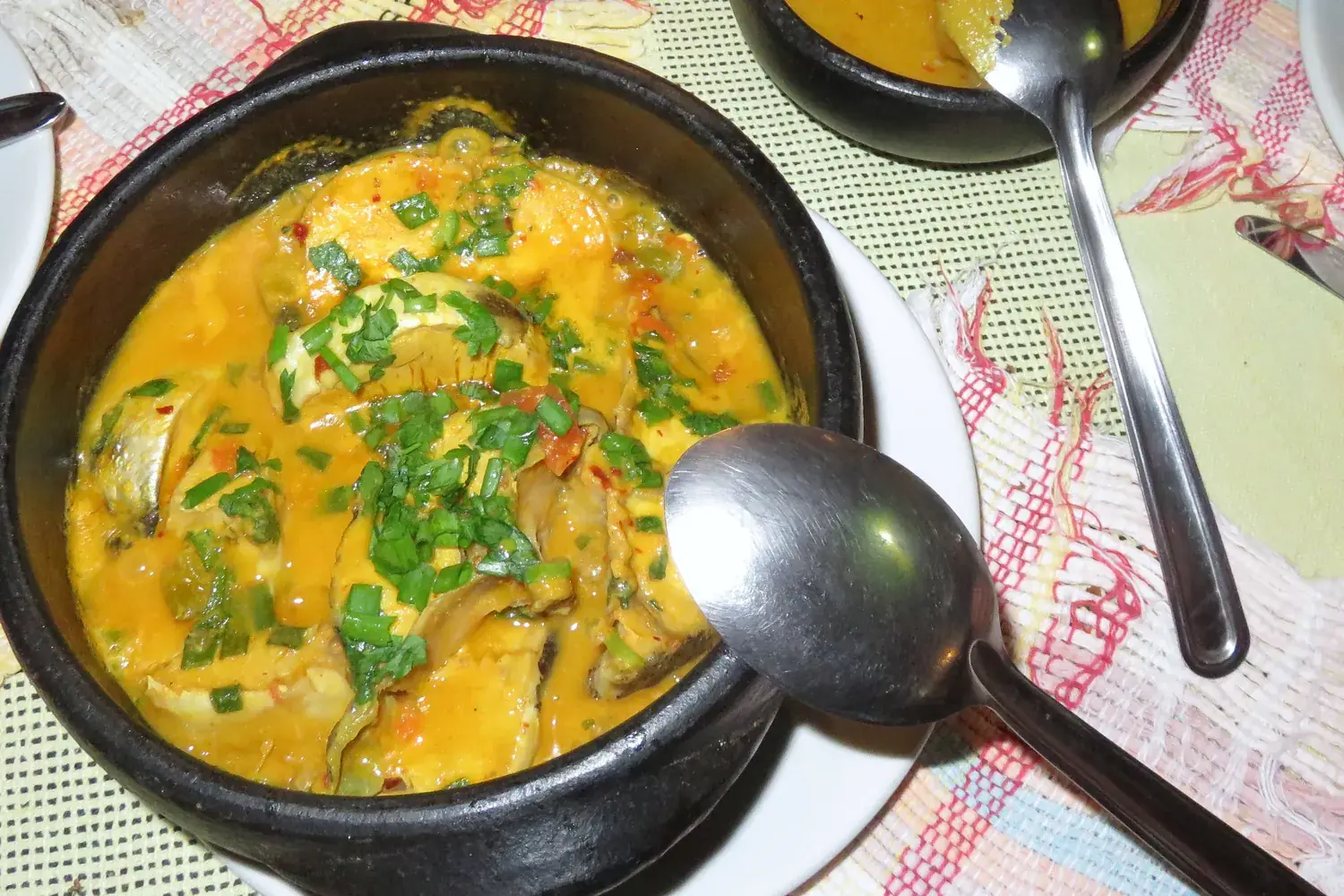
A black clay pot of moqueca baiana, fish chunks in a golden-orange coconut sauce with fresh herbs, beside rice and pirão Brazil flag Brazil 55m
Dinner •Bahian Fish Stew

Moqueca Baiana

This moqueca baiana recipe is Bahia's famous fish stew: thick fillets of white fish layered with onion, peppers and tomato, then simmered gently in coconut milk with dendê oil until the sauce turns golden-orange. The fish stays in whole, flaky pieces in a fragrant broth — a stew, not a purée. One serving is about 450 g.

Coastal & Aromatic

Firm white fish simmered in coconut milk and red palm oil with peppers and tomato, served hot in its clay pot.

Pairs Well With
Steamed white rice, pirão and farofa
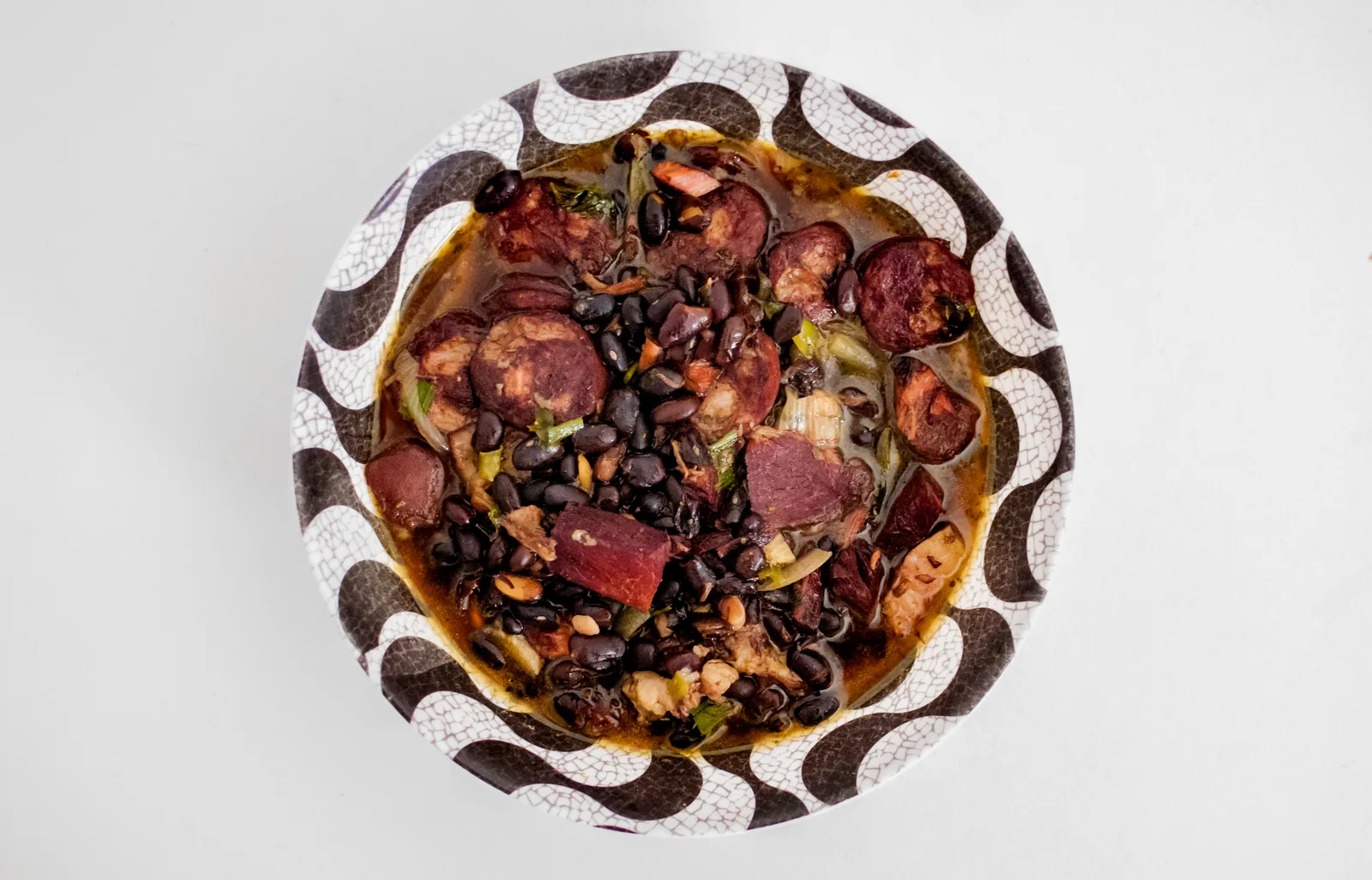
A bowl of Brazilian feijoada — black beans with rounds of sausage and pieces of pork Brazil flag Brazil 3h 30m
Dinner •Brazilian National Dish

Brazilian Feijoada

This Brazilian feijoada recipe is the real Saturday lunch: black beans simmered for hours with pork shoulder, smoky linguiça, bacon and beef until the broth turns thick and dark, then served with white rice, garlicky collard greens, orange slices and farofa. It is a slow, generous pot built for sharing. One serving is about 450 g.

Rich & Hearty

Brazil's national dish — black beans slow-cooked with pork, sausage and beef, served with rice, greens and orange.

Pairs Well With
Serve with white rice, sautéed collard greens, orange slices and farofa.

The Dinner Gazette

Never wonder what’s for dinner again

One email a week with easy dinner ideas from around the world — ingredients, steps and nutrition, tested in our kitchen first.

Delivered every Thursday morning. Unsubscribe anytime.