Curated recipes from 193 countries  •  New seasonal Mediterranean issue out now

Overview

Caneles de Bordeaux

Canelé Bordelais, Bordeaux Rum Cakes

This caneles recipe makes the Bordeaux classic: small fluted cakes with a deeply caramelised, almost burnt-looking crust and a tender, custardy middle flavoured with rum and vanilla. One serving is about 140 g (two caneles).

Caneles come from Bordeaux, in south-west France, where they have been made since at least the 18th century. The story most often told is that nuns at the Convent of the Annonciades baked them using egg yolks left over from clarifying wine, with rum and vanilla arriving from the port trade. They take their fluted shape from copper moulds, traditionally coated with beeswax, and the modern canele was revived in Bordeaux in the 20th century, when it became the city's signature sweet.

Pairs well with: Black coffee, tea or a glass of Sauternes

Provenance

France flag France

Bordeaux Rum Cakes

Nordic & European

Time Dedication

1h 20m

20m prep • 60m cook

Batch Yield

6 Servings

359 kcal per serving

1 serving ≈ 140 g

Technical Skill

Advanced

Hard (Copper Moulds)

Meal Timing & Digestive Fit

Breakfast

Not Advised

Lunch

Inappropriate

Dinner

Inappropriate

Snack & Tea

Ideal Light Bite

Occasions: Afternoon tea, coffee break, French dessert, Bordeaux souvenir baking Cost: Low — about $1 per serving at home
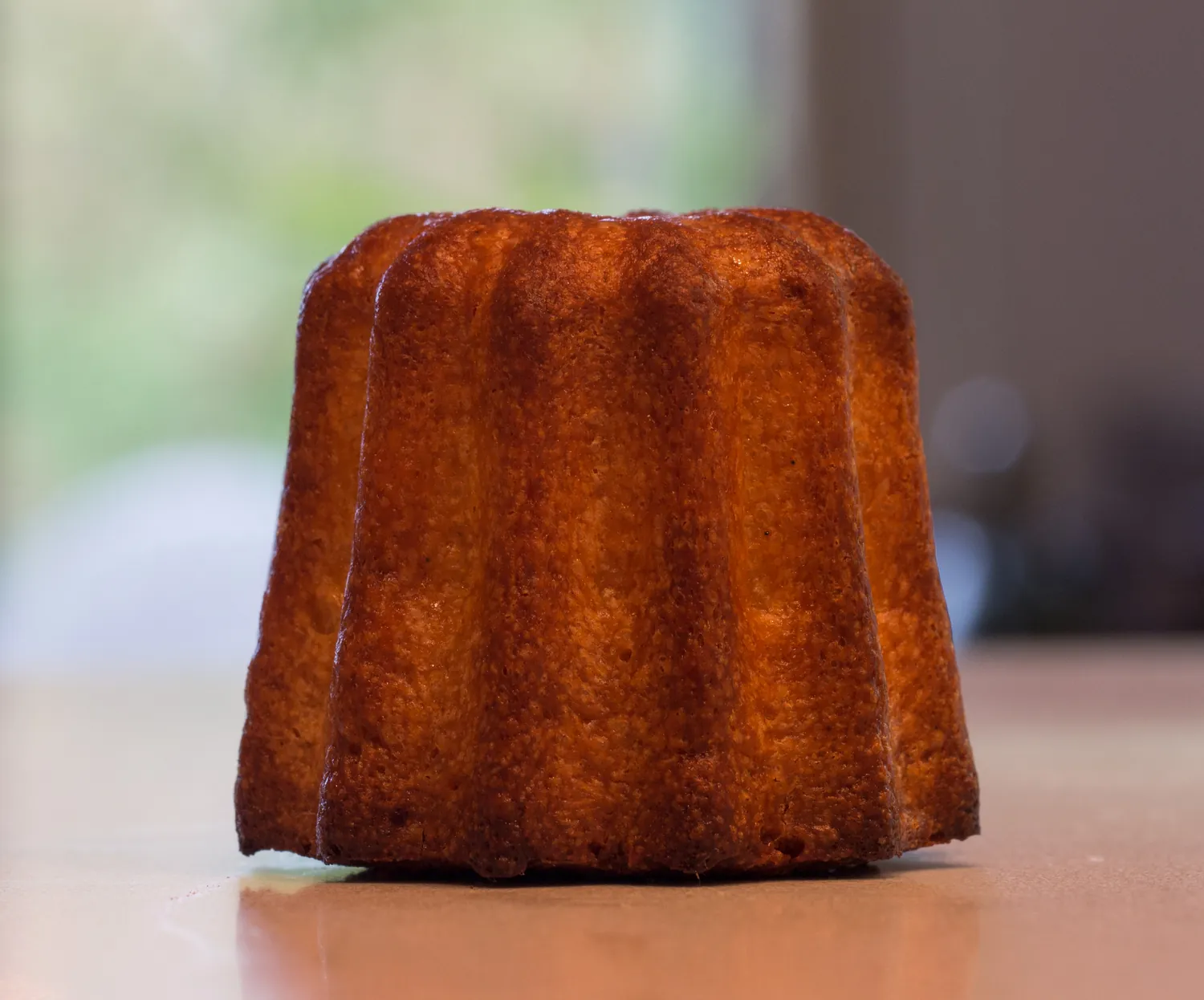
A single golden-brown canele de Bordeaux with a dark caramelised fluted crust

Bordeaux Rum Cakes

Photo: Rhododendrites, CC BY-SA 4.0, via Wikimedia Commons

The Heritage Formulary

Measured Ingredients

Estimated cost: Low — about $1 per serving at home (USD)

A true canele has a dark, almost burnt caramel crust and a soft custardy centre, made from a batter rested for 24 hours; nutrition is estimated from USDA values.

Execution Methodology & Culinary Technique

Step-by-Step Cooking Guide

Active 1h 20m
P

Prep Stage: Scald the Milk and Rest the Batter

20 Mins • Prep

Split the vanilla bean and put it in a saucepan with the milk and 50 g of butter. Sift the flour and sugar into a large bowl. Beat the whole eggs and yolks lightly in a separate bowl — just combined, never frothy. The batter needs a full 24-hour rest in the fridge, so start the day before you bake.

Maestro Tip: Never whisk air into the eggs: bubbles in the batter make the caneles rise unevenly and lose their dense custardy centre.

  1. 1

    Scald the Milk with Vanilla

    10 Mins About 80°C (175°F)

    Warm the milk, vanilla bean and 50 g of butter over medium heat at about 80°C (175°F) until the butter melts and the milk just begins to steam — do not let it boil. Take the pan off the heat and leave it for 10 minutes so the vanilla infuses.

    Boiling the milk scorches it and dulls the vanilla; steam and a few small bubbles at the edge is enough.

    Done when: The milk is hot and steaming, the butter fully melted, and it smells of vanilla.

  2. 2

    Whisk Eggs, Sugar and Flour

    5 Mins No heat

    Stir the beaten eggs and yolks into the sifted flour and sugar with a wooden spoon, mixing only until smooth. Do not whisk — you want a smooth, bubble-free batter.

    A few small lumps are fine; they disappear when the hot milk goes in.

    Done when: A smooth, thick paste with no dry flour visible.

  3. 3

    Combine and Rest the Batter

    24 Hours (passive rest) Fridge, about 4°C (39°F)

    Pour the hot milk into the flour mixture in a thin stream, stirring gently, then stir in the rum and the pinch of salt. Strain the batter through a fine sieve into a jug, cover, and rest in the fridge for 24 hours. This rest is what gives caneles their dark crust and custardy middle.

    The batter keeps for up to 48 hours in the fridge — a longer rest only deepens the flavour.

    Done when: A thin, smooth, vanilla-flecked batter, strained and covered.

  4. 4

    Heat the Oven and Grease the Moulds

    10 Mins 230°C (450°F)

    Heat the oven to 230°C (450°F) with a baking tray inside. Brush 12 canele moulds generously with the remaining softened butter — every flute must be coated, or the cakes will stick. (A traditional beeswax-and-butter coating works the same way.) Stir the cold batter gently and fill each mould to about 2 cm from the top.

    Cold batter into a screaming-hot oven is the secret: it shocks the crust into caramelising before the centre sets.

    Done when: Moulds fully coated, filled just below the rim, oven at full heat.

  5. 5

    Bake Hot, Then Lower

    50-55 Mins 10 mins at 230°C (450°F), then 190°C (375°F)

    Bake at 230°C (450°F) for 10 minutes, then lower the heat to 190°C (375°F) and bake for 40–45 minutes more, until the caneles are a deep mahogany brown — much darker than most cakes — and the tops look almost burnt. Most of the alcohol from the rum cooks off during this long bake, leaving its warm flavour behind.

    Do not pull them early: a pale canele is a soggy canele. The dark crust is the point.

    Done when: Deep mahogany, almost black at the edges, with a crisp shell that holds its shape.

  6. 6

    Unmould and Cool

    10 Mins No heat

    Take the moulds out and turn the caneles out onto a wire rack straight away — if they cool in the moulds they steam and soften. Leave for 10 minutes, then serve the same day, while the crust is still crisp and the centre is soft.

    Tap the mould firmly on the counter; a well-greased canele drops out cleanly.

    Done when: The caneles stand on their own, crisp outside and soft inside.

Finishing Touches & Plating

Serve the caneles the same day they are baked, while the crust is crisp and the centre is still soft and custardy — two per person with black coffee or tea.

Nutritional Physiology & Benefits

Nutrition

Energy

359

kcal / serving

Protein

8g

Complete AA

Carbs

50g

Complex

Fats

14g

Healthy

Per serving (6 servings · 1 serving ≈ 140 g)
Energy359 kcal
Protein8 g
Carbohydrates50 g
Fat14 g
Fibre0.5 g
Sugar37.7 g
Sodium128 mg
Per 100g
Energy256 kcal
Protein5.3 g
Carbohydrates35.9 g
Fat10.1 g
Fibre0.3 g
Sugar26.9 g
Sodium92 mg

Nutrition values are estimated — calculated from USDA FoodData Central values for the listed ingredients.

Vitamins & minerals: Vitamin A and calcium from the milk, butter and eggs, plus B vitamins from the eggs. Nutrition is estimated.

A Satisfying Sweet

About 7.5 g of protein and 50.3 g of carbs per serving of two, so one serving with coffee genuinely fills the gap between meals.

Real Vanilla and Rum

Flavoured with a real vanilla bean and dark rum rather than artificial flavouring — the taste is warm and deep, not one-note sweet.

Small by Design

Caneles are baked in small moulds, so the portion is built in: two small cakes are a treat, not a whole slice of cake.

Food Pairings

What to Eat With

To optimize nutrient absorption and elevate the sensory depth, pair with these authentic accompaniments:

Drinks

Black Coffee

Bitter black coffee is the classic partner — it cuts the caramel sweetness and makes the rum and vanilla flavours stand out.

Sauternes

A glass of sweet Bordeaux wine from the same region echoes the rum and caramel notes of the cake.

Full Menus

As a Bordeaux Dessert Plate

Serve two caneles with coffee and a few fresh berries after a French dinner; the small size suits the end of a rich meal.

Sides

Fresh Berries

Sharp raspberries or strawberries add acidity and freshness against the dark caramel crust.

Complete menu

Serve caneles as the sweet finish to a French dinner, with black coffee and a few fresh berries.

Digestive Guardrails

What NOT to Combine

To prevent digestive distress, sluggishness, or palate clash, avoid pairing the dish with these elements:

Do Not Skip the 24-Hour Rest

Baking the batter the same day gives pale, soft caneles that collapse. The overnight rest is what builds the dark crust and custardy centre. This is general food information, not medical advice.

Do Not Underbake Them

A canele that looks burnt is usually correct — a pale one is underbaked and soggy inside. Bake until deep mahogany. This is general food information, not medical advice.

General information only, not medical advice — consult a doctor for personal dietary decisions.

Who Should Eat It

Who Should Eat

  • General adultsA rich sweet snack — two caneles are about 359 kcal, best as a treat with coffee rather than an everyday snack.
  • ChildrenFine for older children; most of the alcohol cooks off in the long bake, but the rum flavour remains, so it is a grown-up sweet.
  • ElderlySoft inside once the crust is bitten through — easy to eat, though the crust is crisp and chewy.
  • Pregnant womenMost of the alcohol cooks off during the long bake, but a small trace can remain; if you would rather avoid it entirely, use the rum-extract substitute.
  • Breastfeeding womenFine as an occasional treat; most of the alcohol cooks off, and the eggs and milk make them filling.
  • AthletesA quick energy-dense snack — about 50.3 g of carbs per serving — better after training than before.
  • Weight gainEasy to enrich: take two caneles with a milky coffee.
  • Weight lossAt about 359 kcal for two, keep the portion to one canele and enjoy it slowly with unsweetened coffee.

Health Conditions — Adjust or Avoid

Conditions

  • DiabetesAbout 50.3 g of carbs and 37.7 g of sugar per serving — a sweet, sugary cake. Take one canele only, with unsweetened coffee. Ask your clinician about portion size.
  • High blood pressureOnly about 128 mg of sodium per serving. Ask your clinician about your sodium target.
  • Kidney diseaseHigh in sugar and made with milk and eggs; not ideal as a regular food on a restricted diet. Ask your clinician before making them a regular treat.
  • GoutEggs and milk are low in purines, so the dish itself is not a purine problem — the sugar is the bigger issue. Ask your clinician if flare-ups are frequent.
  • Stomach issuesRich, buttery and sweet, with a rum flavour that can bother a sensitive stomach. Take a small portion. Ask your clinician if symptoms persist.
  • Cardiovascular diseaseButter, eggs and sugar make this high in saturated fat and sugar — keep it an occasional treat in a small portion. Ask your clinician about fitting it into your eating plan.
  • Fatty liverA sugary, buttery cake — best kept occasional, one canele at a time. Ask your clinician for personal guidance.
  • Food allergiesContains wheat (gluten), milk, and egg. The rum is an ingredient — most of it cooks off, but a trace can remain.
  • Special therapeutic dietsVegetarian as written. Not suitable for a vegan or gluten-free diet without a full rework of the batter. Ask your clinician or dietitian about your specific plan.

If you have a medical condition, consult your doctor before changing your diet.

Storage & Use

Storage & Use

How to store
Cool on a wire rack and eat the same day for the best crust.
In the fridge
Up to 2 days in an airtight container; the crust softens in the fridge.
In the freezer
Up to 1 month in a sealed bag; thaw at room temperature.
How to reheat
Re-crisp for 5 minutes in a hot oven at 200°C (400°F) until the crust is firm again; heat through to 74°C (165°F) if reheating from chilled.
Freezing recommended
Yes, but the crust is never quite as crisp after freezing.
Signs it has spoiled
Sour smell, a damp or sticky crust, or any mould.

More recipes to explore

Golden butter croissants on a wooden board France flag France 20m
Breakfast •Parisian Boulangerie

Croissant au Beurre & Café

Laminated cultured butter pastry paired with washed Arabica, for a slow, pleasurable Parisian morning — best with a little protein alongside. One serving is about 390 g.

Sustained Focus

Flaky all-butter croissant with café au lait, Comté and green apple.

Pairs Well With
Comté cheese wedge & Green apple slices
Quick Prep (<30m)
Bœuf bourguignon — French beef braised in red wine France flag France 4h
Dinner •Burgundy Terroir

Bœuf Bourguignon

Beef braised gently in red wine until the connective tissue melts into a velvet, gelatin-rich sauce — the classic Burgundy Sunday dinner.

Cellular Repair

Beef braised in red wine until spoon-tender, with mushrooms and pearl onions.

Pairs Well With
Parsnip Purée & Steamed French Haricots Verts
High Protein
A mound of classic ratatouille with eggplant, zucchini, tomato and onion on a white plate France flag France 1h 15m
Dinner •Nice Provençal

Ratatouille

This ratatouille recipe cooks eggplant, zucchini, peppers and tomatoes separately first, so each vegetable keeps its own texture, then brings them together for a slow, fragrant simmer. One serving is about 400 g.

Light & Vegetable-Rich

Slow-simmered summer vegetables in olive oil — light, fragrant and full of fibre.

Pairs Well With
Crusty sourdough bread, grilled fish or a fried egg
A bowl of coq au vin with a braised chicken leg in dark red wine sauce with mushrooms and onions, greens on the side France flag France 1h 40m
Dinner •Burgundy Classic

Coq au Vin

This coq au vin recipe is the Burgundy classic: chicken thighs browned with bacon, then braised in red wine with mushrooms, pearl onions and carrots until the meat is tender and the sauce is dark and glossy. One serving is about 375 g. It takes 1 hour 40 minutes, most of it hands-off while the pot simmers.

Comfort & Warmth

Chicken braised slowly in red wine with mushrooms, pearl onions and bacon until it falls off the bone.

Pairs Well With
Mashed potatoes, crusty bread & Burgundy wine

The Dinner Gazette

Never wonder what’s for dinner again

One email a week with easy dinner ideas from around the world — ingredients, steps and nutrition, tested in our kitchen first.

Delivered every Thursday morning. Unsubscribe anytime.