
Curated recipes from 193 countries  •  New seasonal Mediterranean issue out now

Overview

Chontacuro Asado

Grilled Chontacuro, Roasted Palm Weevil Larvae

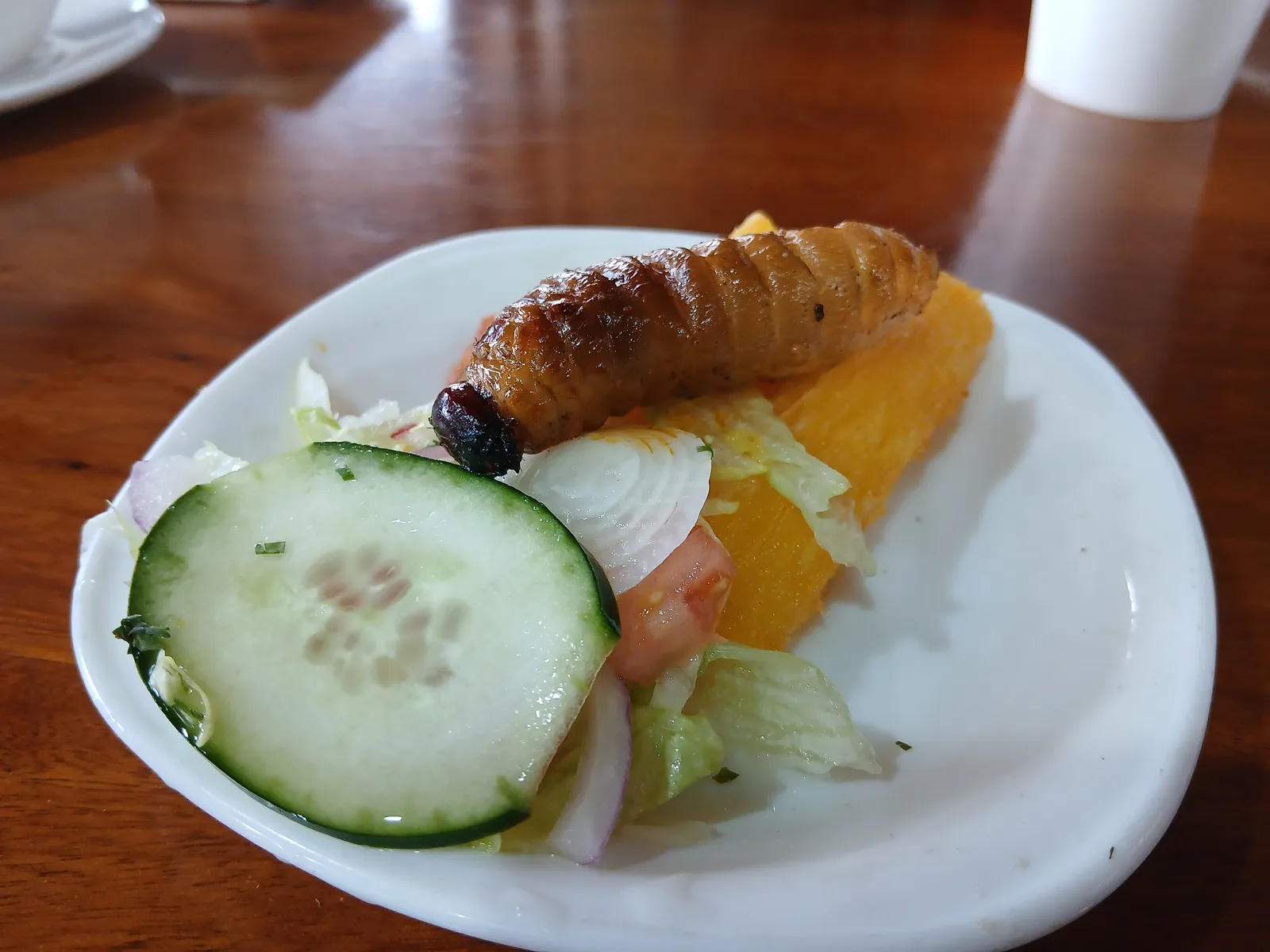
Chontacuro Asado is the famous Amazonian snack of Puyo: plump palm-weevil larvae grilled over coals until golden and crisp, served with boiled yuca and a fresh garden salad. One serving is about 284 g. This chontacuro asado recipe is ready in 45 minutes and serves four, with three grilled larvae, yuca and salad on each plate.

Chontacuro is the larva of the South American palm weevil, Rhynchophorus palmarum, which grows inside the trunks of the chonta, or peach palm, in the Ecuadorian Amazon. Amazonian Indigenous peoples have harvested and eaten it for centuries — roasted on skewers over a wood fire, and sometimes eaten raw, straight from the palm. In Puyo, the gateway town to the Amazon, grilled chontacuro is now a famous market and restaurant snack, served on boiled yuca with a garden salad, exactly as the photo on this page shows.

Pairs well with: Boiled yuca and a crisp garden salad, with aji sauce and a cold glass of chicha or fruit juice.

Provenance

Ecuador flag Ecuador

Amazonian Heritage

Latin America & Caribbean

Time Dedication

45m

20m prep • 25m cook

Batch Yield

4 Servings

352 kcal per serving

1 serving ≈ 284 g

Technical Skill

Intermediate

Moderate (Cleaning the Larvae)

Meal Timing & Digestive Fit

Breakfast

Not Advised

Lunch

Inappropriate

Dinner

Inappropriate

Snack & Tea

Ideal Light Bite

High Protein Occasions: Adventurous snacks, Amazonian food tastings, market lunches in Puyo Cost: Moderate — about $4–6 per serving where larvae are sold
Grilled golden-brown chontacuro larva on boiled yuca with lettuce, tomato, onion and cucumber salad on a white plate

Amazonian Heritage

Photo: Ceibos, CC BY 4.0, via Wikimedia Commons

The Heritage Formulary

Measured Ingredients

Estimated cost: Moderate — about $4–6 per serving where larvae are sold (USD)

A traditional Puyo chontacuro asado, with the larvae cleaned, grilled until golden and crisp, and served on boiled yuca with salad.

Execution Methodology & Culinary Technique

Step-by-Step Cooking Guide

Active 45m
P

Prep Stage: Larvae Cleaned, Yuca Started, Salad Chopped

20 Mins • Knife Work

Clean the larvae — pinch off the heads, squeeze out the gut contents and rinse. Put the yuca on to boil in salted water, then chop the lettuce, tomato, onion and cucumber for the salad and toss with lime juice, oil and salt. Thread the cleaned larvae onto skewers or lay them in a grill basket.

Maestro Tip: Clean the larvae first and keep them cold until the grill is ready — they cook in minutes once the coals are hot.

  1. 1

    Clean the Larvae

    10 Mins • Hands On No heat — prep only

    Rinse the larvae in cold water. Hold each one firmly, pinch off the dark head with your fingers, then squeeze gently from the tail end to push the gut contents out. Rinse again in cold water and pat dry. Keep them cold until the grill is ready.

    Removing the gut contents is what keeps the grilled larvae clean-tasting rather than bitter.

    Done when: The larvae are clean, plump and pale, with no dark heads or gut contents left.

  2. 2

    Boil the Yuca

    20 Mins • Hands On Boiling water 100°C (212°F)

    Put the yuca chunks in a pot of salted water, bring to a boil and cook for about 20 minutes until a knife slides in easily, then drain and keep warm. The yuca can boil while you make the salad and grill the larvae.

    Do not overcook the yuca — it should be tender but still hold its shape on the plate.

    Done when: The yuca is tender all the way through and holds its shape.

  3. 3

    Make the Garden Salad

    10 Mins • Hands On No heat — prep only

    Put the torn lettuce, tomato wedges, sliced onion and cucumber in a bowl. Drizzle over the lime juice and half the oil, add a pinch of salt, and toss gently just before serving so the leaves stay crisp.

    Dress the salad at the last minute — lime juice wilts lettuce fast.

    Done when: The salad is crisp, bright and lightly dressed.

  4. 4

    Grill the Larvae

    10 Mins • Hands On Medium coals, about 200°C (400°F)

    Brush the cleaned larvae lightly with the remaining oil and season with a pinch of salt. Lay them on the grill, on skewers or in a grill basket, over medium coals. Grill for 4 to 5 minutes per side, turning once, until they are deep golden brown, crisp and sizzling. They must be cooked right through — never serve them raw or only warmed.

    A grill basket stops the small larvae slipping between the bars and into the fire.

    Done when: The larvae are deep golden brown and crisp all over, with no pale or soft spots left.

  5. 5

    Plate and Serve

    5 Mins • Hands On No heat — plating

    Put a mound of hot yuca on each plate, lay 3 grilled larvae on top, and add a pile of salad beside them. Serve at once, with the aji sauce on the side for those who want heat.

    Serve the larvae hot from the grill — they lose their crispness as they cool.

    Done when: Each plate has golden crisp larvae on hot yuca with fresh salad beside it.

Finishing Touches & Plating

Serve the larvae hot from the grill on the boiled yuca, with the crisp salad beside them and aji sauce on the side — the plate on this page shows one larva on yuca with salad, the way it is served in Puyo.

Nutritional Physiology & Benefits

Nutrition

Energy

352

kcal / serving

Protein

6g

Complete AA

Carbs

64g

Complex

Fats

9g

Healthy

Per serving (4 servings · 1 serving ≈ 284 g)
Energy352 kcal
Protein6 g
Carbohydrates64 g
Fat9 g
Fibre4.4 g
Sugar5.0 g
Sodium382 mg
Per 100g
Energy124 kcal
Protein2.1 g
Carbohydrates22.4 g
Fat3.1 g
Fibre1.6 g
Sugar1.8 g
Sodium135 mg

Nutrition values are estimated — calculated from USDA FoodData Central values for the listed ingredients.

Vitamins & minerals: Chontacuro larvae are rich in protein and unsaturated fats, with vitamin A, vitamin E and iron reported in published analyses; yuca adds potassium and vitamin C. All nutrition values are estimated.

Protein-Rich Larvae

Chontacuro larvae are about 25% protein on a dry basis, with the fats largely unsaturated — a dense little package of energy and protein.

Fresh Salad on the Side

Lettuce, tomato, onion and cucumber bring crunch, fibre and vitamin C to balance the rich grilled larvae.

Grilled, Not Fried

The larvae are grilled over coals with only a brush of oil, so nothing is deep-fried.

Food Pairings

What to Eat With

To optimize nutrient absorption and elevate the sensory depth, pair with these authentic accompaniments:

Sides

Boiled Yuca

Soft, starchy yuca is the Amazonian staple that belongs beside chontacuro — it soaks up the rich juices and makes a small portion of larvae into a real snack.

Vegetables

Garden Salad

Crisp lettuce, tomato, onion and cucumber cut through the richness of the larvae and keep the plate fresh.

Sauces

Aji Sauce

A spoonful of hot aji wakes up the mild, nutty flavour of the larvae and adds the heat Amazonian tables expect.

Drinks

Chicha or Fruit Juice

A cold, lightly sour drink cools the palate after the rich, fatty larvae.

Complete menu

Start with a bowl of Amazonian fruit, then serve the chontacuro asado with boiled yuca and garden salad, and finish with fresh mango and a glass of chicha.

Digestive Guardrails

What NOT to Combine

To prevent digestive distress, sluggishness, or palate clash, avoid pairing the dish with these elements:

Insect and Shellfish Cross-Allergy

Chontacuro are arthropods, like shrimp — people with a shrimp, crab or dust-mite allergy can react to edible insects, sometimes severely. Anyone with such an allergy should not eat this dish without asking a clinician first. This is general food information, not medical advice.

Never Eat Them Raw

Wild-harvested larvae can carry bacteria and parasites, and raw larvae are not safe to eat. Grill the larvae until they are deep golden brown and cooked right through, and buy only from a trusted seller. This is general food-safety information, not medical advice.

Buy from a Trusted Seller

Larvae collected from palms that have been sprayed, or kept too long after harvest, are not safe. Buy only fresh, live larvae from a seller you trust, and use them the same day. This is general food-safety information, not medical advice.

General information only, not medical advice — consult a doctor for personal dietary decisions.

Who Should Eat It

Who Should Eat

  • General adultsA rich Amazonian snack — about 352 kcal per serving, with the larvae providing most of the fat and protein.
  • ChildrenNot a first food for children — the larvae are an acquired taste and a choking shape; older children who want to try should eat small pieces, cut up, with an adult watching.
  • ElderlyRich and fatty, so a small portion is enough; the soft yuca is easy to chew, but the larvae should be cut into pieces.
  • Pregnant womenOnly eat larvae that are fully cooked through, from a trusted source; raw or undercooked larvae are not safe, and ask your clinician if unsure.
  • Breastfeeding womenEnergy-dense and filling; keep the portion modest and pair it with the salad rather than extra yuca.
  • AthletesEnergy-dense with good protein for its weight, but the serving is small — pair it with a larger meal rather than relying on it alone.
  • Weight gainRich in fat and energy, so it adds calories easily — a natural fit for weight gain in a normal portion.
  • Weight lossVery energy-dense for its size — one larva with plenty of salad is the way to taste it without a large calorie load.

Health Conditions — Adjust or Avoid

Conditions

  • DiabetesAbout 63.5 g of carbohydrate per serving, mostly from the yuca — count it in your meal plan and ask your clinician.
  • High blood pressureSodium is about 382 mg per serving — keep the added salt light and ask your clinician if salt is a concern.
  • Kidney diseaseProtein is modest at about 5.9 g per serving, but the larvae are protein-dense; people with kidney disease should ask their clinician about portion size.
  • GoutInsects contain purines; anyone managing gout should eat a small portion and ask your clinician.
  • Stomach issuesThe larvae are rich and fatty and can sit heavy on a sensitive stomach; eat a small portion with plenty of salad and ask your clinician if symptoms persist.
  • Cardiovascular diseaseThe larvae are high in fat, part of it saturated, so this is a sometimes food; keep the portion small and ask your clinician about overall intake.
  • Fatty liverThe larvae are rich in fat, so a small tasting portion with salad is the safer choice; ask your clinician.
  • Food allergiesContains edible insects (arthropods) — people with shrimp, crab or dust-mite allergy may react and should not eat this dish without asking a clinician.
  • Special therapeutic dietsNot suitable for shellfish-free, insect-free or low-fat therapeutic diets; ask your clinician or dietitian before adapting it.

If you have a medical condition, consult your doctor before changing your diet.

Storage & Use

Storage & Use

How to store
Cool quickly, then store the grilled larvae and the yuca separately in sealed containers; keep the salad undressed in its own container.
In the fridge
Keeps 1 day refrigerated — eat the larvae the same day if you can.
In the freezer
Do not freeze grilled larvae — they turn rubbery and lose their crispness.
How to reheat
Reheat the larvae in a hot dry pan for 2 minutes until crisp again, to 74°C (165°F); reheat the yuca in boiling water for 2 minutes.
Freezing recommended
No — the larvae do not freeze well.
Signs it has spoiled
A sour or rancid smell, slimy larvae, or a grey colour — discard if any of these appear.

More recipes to explore

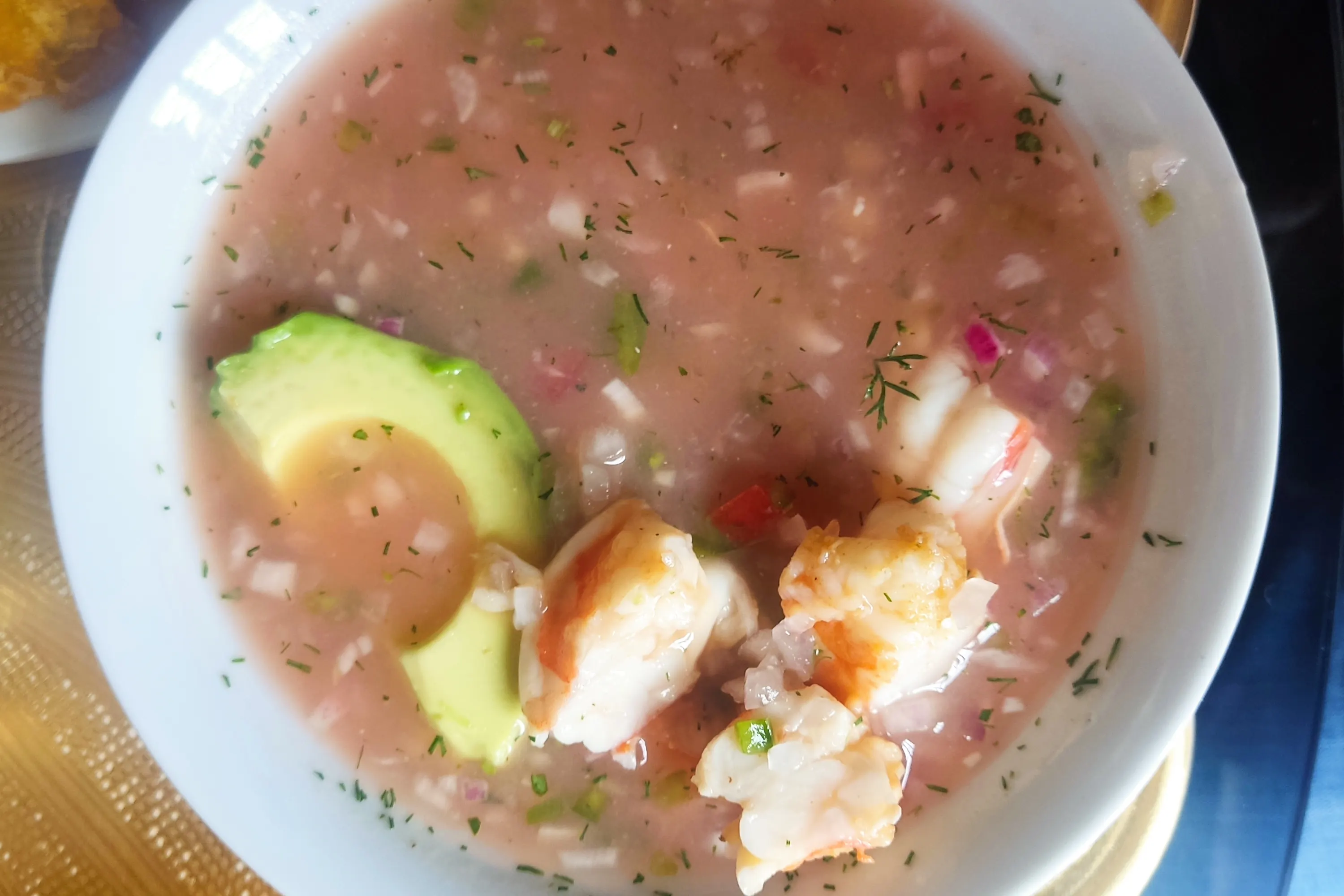
A white bowl of Ecuadorian shrimp ceviche in pink tomato-citrus sauce with cooked shrimp, red onion, cilantro and an avocado slice Ecuador flag Ecuador 30m
Lunch •Coastal Ecuador

Ecuadorian Ceviche

Ecuadorian ceviche is a bowl of poached shrimp in a pink-orange sauce of tomato, lime and orange juice, with red onion and cilantro. Unlike the Peruvian version, where raw fish is cured in lime juice, the shrimp here is cooked first, so the dish is saucy, cold and gentle rather than sharp. One serving is about 341 g.

Light & Fresh

Poached shrimp in a bright lime, orange and tomato sauce, served chilled with crunchy sides.

Pairs Well With
Chifles, popcorn and avocado slices
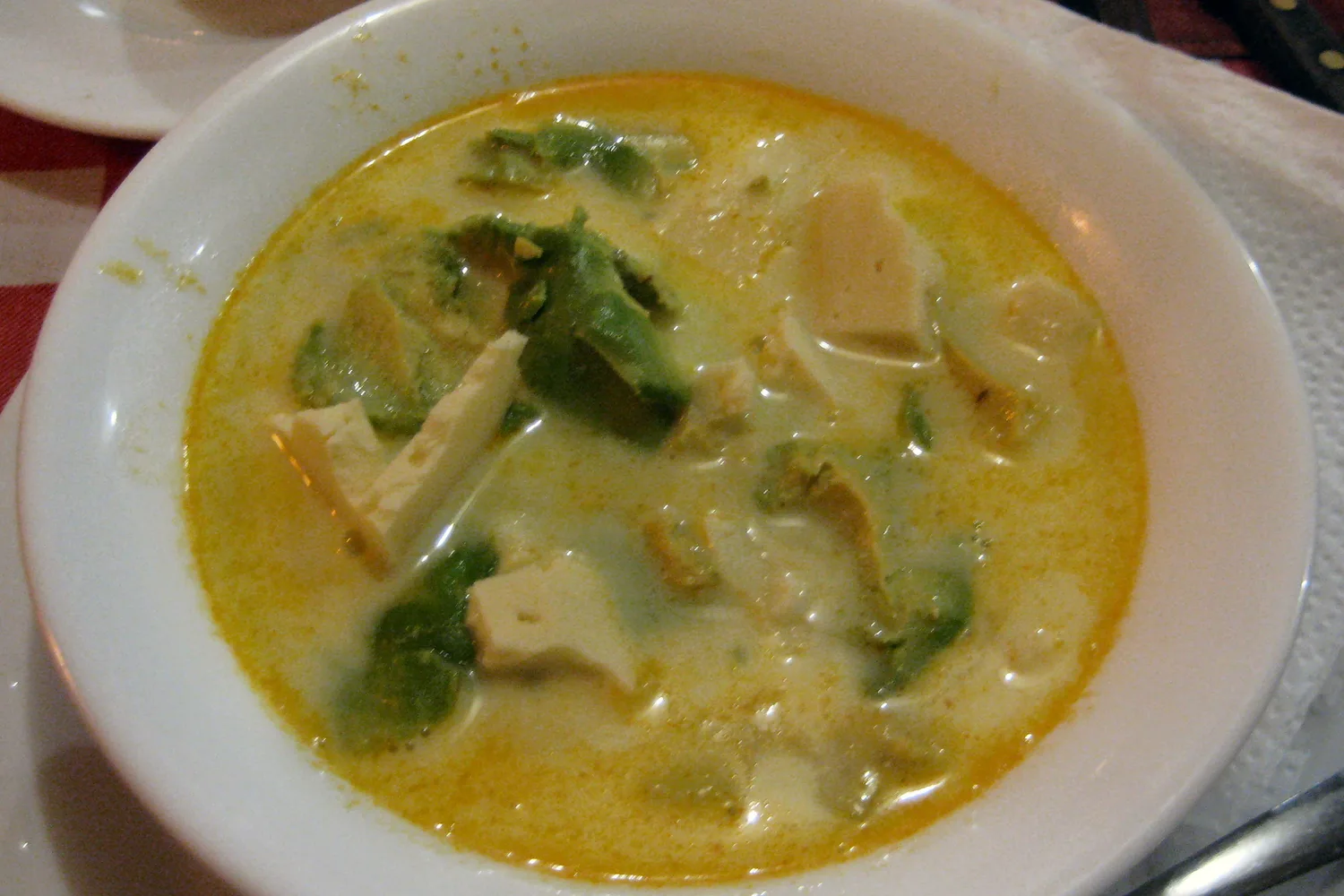
A bowl of golden locro de papa, Ecuadorian potato and cheese soup, topped with avocado chunks and cubes of white cheese Ecuador flag Ecuador 55m
Dinner •Andean Heritage

Locro de Papa

Locro de papa is Ecuador's golden potato and cheese soup, thickened by the potatoes themselves and finished with creamy avocado and crumbled queso fresco. One serving is about 675 g. It is a one-pot, meat-free dinner that tastes like the cool Andean evenings it comes from.

Comfort & Warmth

A thick, golden potato and cheese soup from the Ecuadorian highlands, finished with fresh avocado.

Pairs Well With
Crusty bread and a simple lettuce and tomato salad, with hot panela water or herbal tea to drink.
Soups & Broths
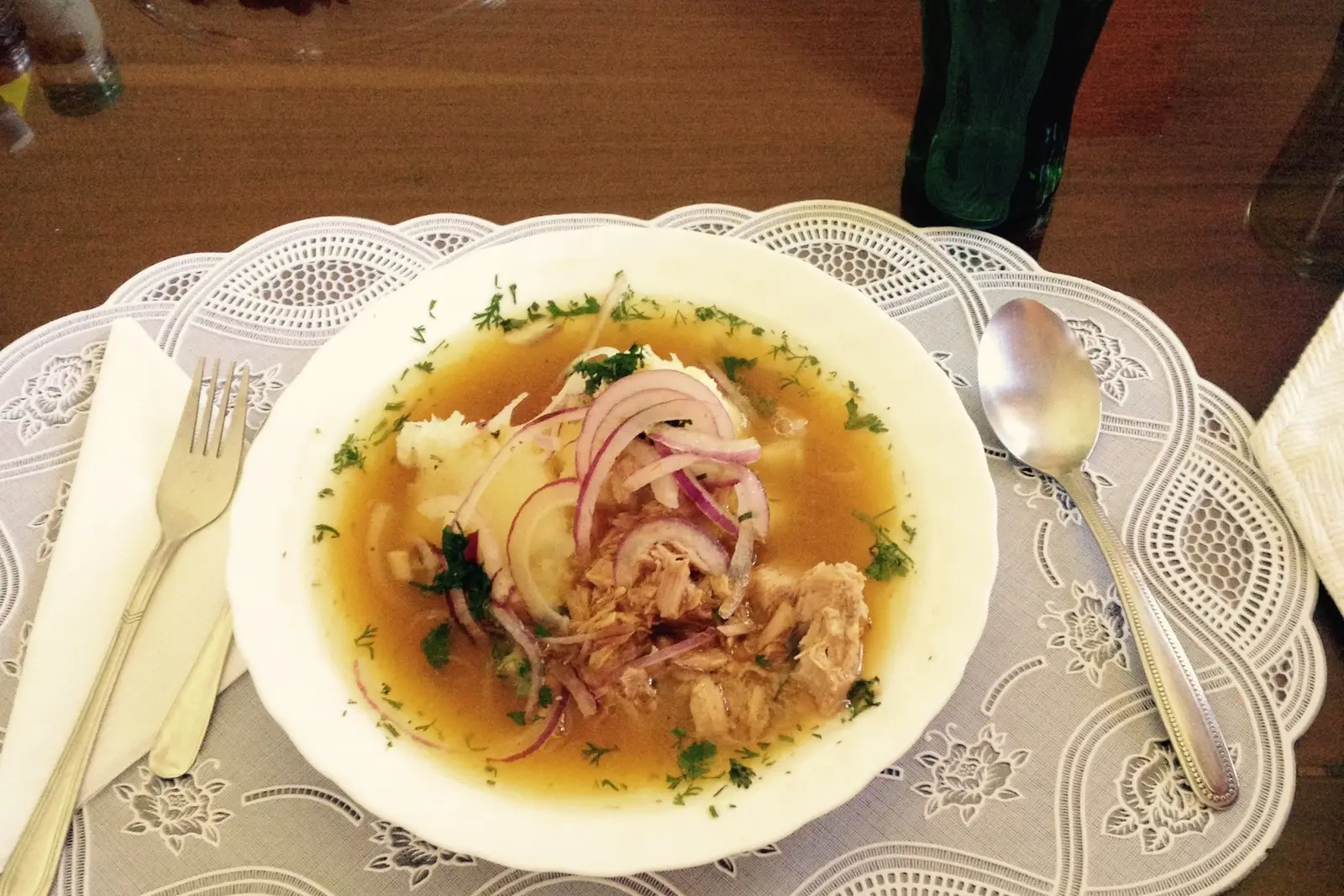
A bowl of encebollado with flaked tuna, pickled red onion rings, yuca and golden broth, sprinkled with cilantro Ecuador flag Ecuador 1h 20m
Lunch •Guayaquil Heritage

Encebollado

This encebollado recipe is Ecuador's beloved coastal soup: fresh albacore tuna simmered in a tomato, onion and cumin broth with tender chunks of yuca, then ladled into bowls under a bright mound of lime-pickled red onion and tomato. The broth is light and savoury, the onion topping is sharp and fresh, and the chifles and tostado on the side add the crunch every Ecuadorian expects. One serving is about 600 g, soup and toppings together.

Comfort & Warmth

Fresh tuna and yuca simmered in a tomato-cumin broth, finished with lime-pickled red onion and crunchy plantain chips.

Pairs Well With
Chifles (plantain chips) and tostado (toasted corn) for crunch, avocado slices, and lime wedges to squeeze over the bowl.
Soups & Broths
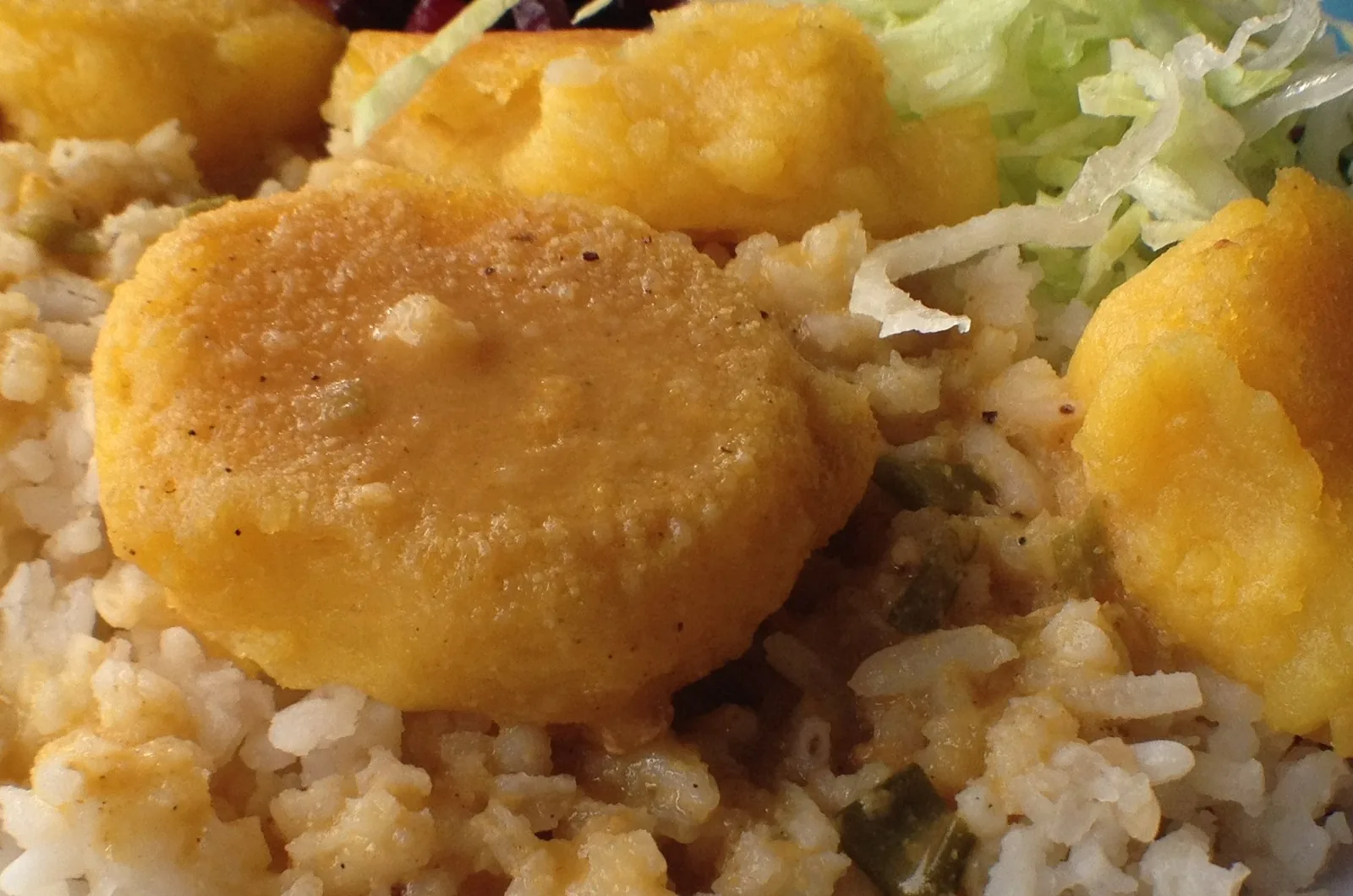
Golden llapingacho potato patties on rice with peanut sauce and shredded lettuce Ecuador flag Ecuador 1h
Lunch •Andean Heritage

Llapingacho

Llapingacho is Ecuador's most loved potato dish: mashed potato mixed with onion and annatto oil, wrapped around fresh cheese, flattened into cakes and fried until the outside is crisp and golden and the centre turns gooey. It is served with a fried egg, peanut sauce and a little salad. One serving is about 464 g.

Golden & Comforting

Mashed potato mixed with onion and annatto oil, stuffed with fresh cheese and fried golden.

Pairs Well With
Fried egg, peanut sauce and a fresh salad

The Dinner Gazette

Never wonder what’s for dinner again

One email a week with easy dinner ideas from around the world — ingredients, steps and nutrition, tested in our kitchen first.

Delivered every Thursday morning. Unsubscribe anytime.