-
1
Boil the Sweet Potatoes
20 Mins
Rolling boil, about 100°C (212°F)
Put the sweet potato chunks in a large pot, cover with cold water, and boil for 18-20 minutes until they are completely soft and falling apart. Drain very well and leave them to steam dry for 2 minutes.
Drain the sweet potatoes thoroughly: extra water thins the paste and makes the set soft instead of firm.
Done when: Sweet potatoes soft all the way through, dry on the surface, breaking apart with a fork.
-
2
Mash and Blend the Purée
10 Mins
Hot purée, about 80°C (175°F)
Mash the hot sweet potatoes until completely smooth, then pass them through a sieve or blend them, a little at a time, until there are no lumps at all. Weigh the purée: you should have about 800 g.
A smooth purée is what makes the finished block glossy and sliceable; any lump shows up as a hard speck in the set paste.
Done when: Purée perfectly smooth, thick and lump-free, about 800 g.
-
3
Bloom the Agar-Agar
10 Mins
Room temperature, about 20°C (68°F)
Whisk the agar-agar powder into 120 ml of the water and leave it to sit for 10 minutes until it thickens slightly. This is the bloom, and it must not be skipped.
Whisk the powder in well: dry clumps of agar never dissolve properly, however long you boil them.
Done when: Agar mixture slightly thickened, no dry powder visible.
-
4
Cook the Paste Down with Cocoa
30 Mins
Medium heat; paste at about 104°C (220°F); agar at a full rolling boil, 100°C (212°F)
Put the sweet potato purée in a wide, heavy pot with the sugar and the remaining 230 ml of water. Stir over medium heat until the sugar dissolves, then sift in the cocoa powder and stir until smooth. Cook, stirring constantly with a wooden spoon, for 25-30 minutes until the paste is very thick, glossy, and pulls away from the sides of the pot in a single mass. It should read about 104°C (220°F) on a thermometer. Stir in the bloomed agar and the lemon juice, bring the whole mass to a full rolling boil, and boil hard for 1 minute, stirring all the time.
Do not stop stirring once the sugar is in: the paste scorches on the bottom of the pot in under a minute. The spoon test is the guide — when the paste holds its shape on the spoon and the pot sides show cleanly, it is done.
Done when: Paste thick and glossy, pulling away from the pot sides, at about 104°C (220°F); agar fully boiled for 1 minute.
-
5
Pour, Cool and Set the Block
10 Mins, plus at least 4 hours chilling
Cool at room temperature, about 20°C (68°F), then chill at 4°C (40°F) or below
Take the pot off the heat and stir in the vanilla extract and the pinch of salt. Pour the hot paste into the lined mould at once, smooth the top with a wet spatula, and tap the mould once on the counter to release air bubbles. Leave to cool for 1 hour, then cover and chill in the fridge for at least 4 hours, or overnight, until completely firm.
Work fast once the paste leaves the pot: it starts to set as it cools, and a half-set pour leaves seams in the block.
Done when: Paste level in the mould, smooth on top, fully cold and firm to the touch after chilling.
-
6
Slice and Serve Vigilante Style
5 Mins
Serve at room temperature, about 20°C (68°F)
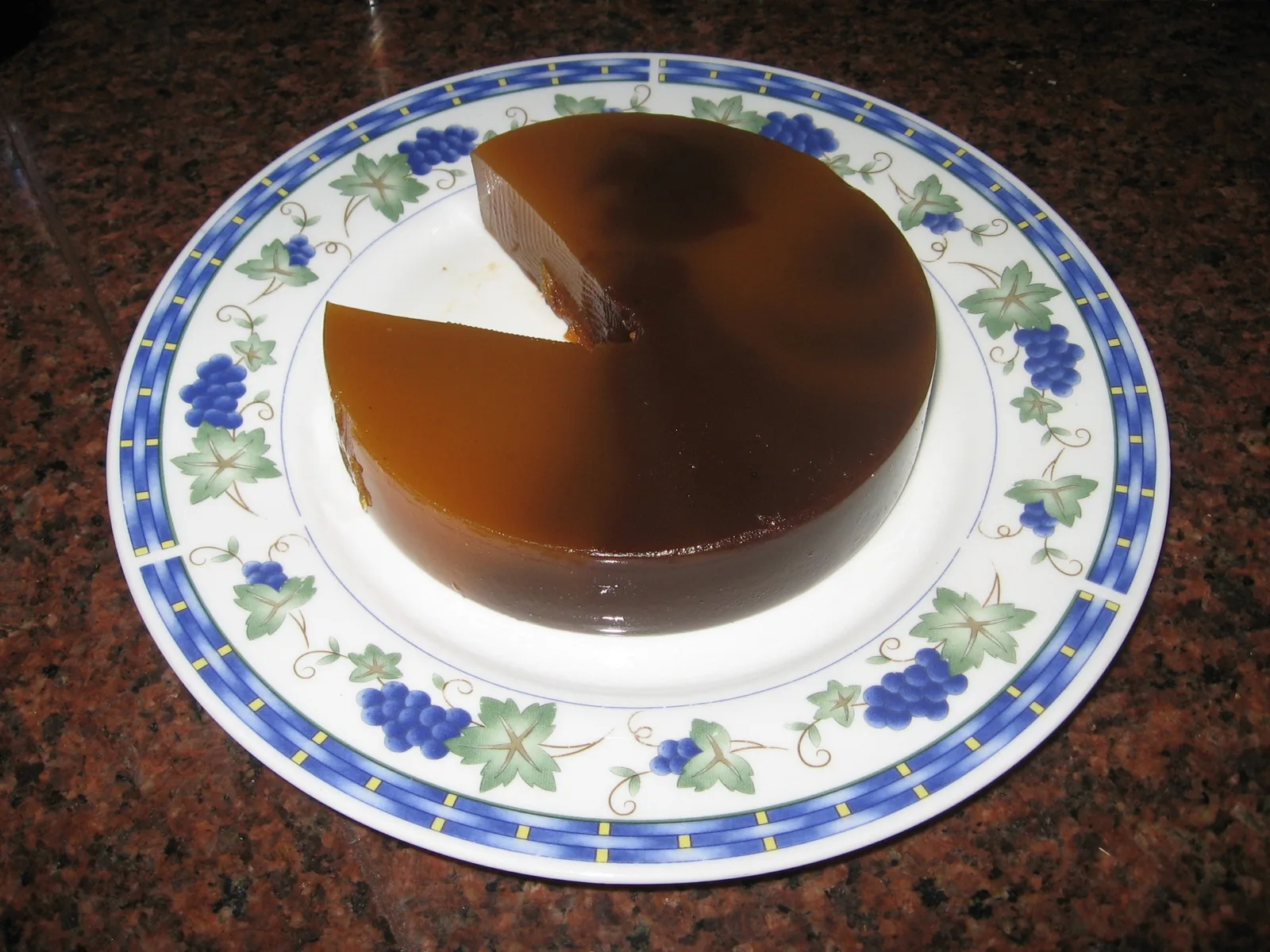
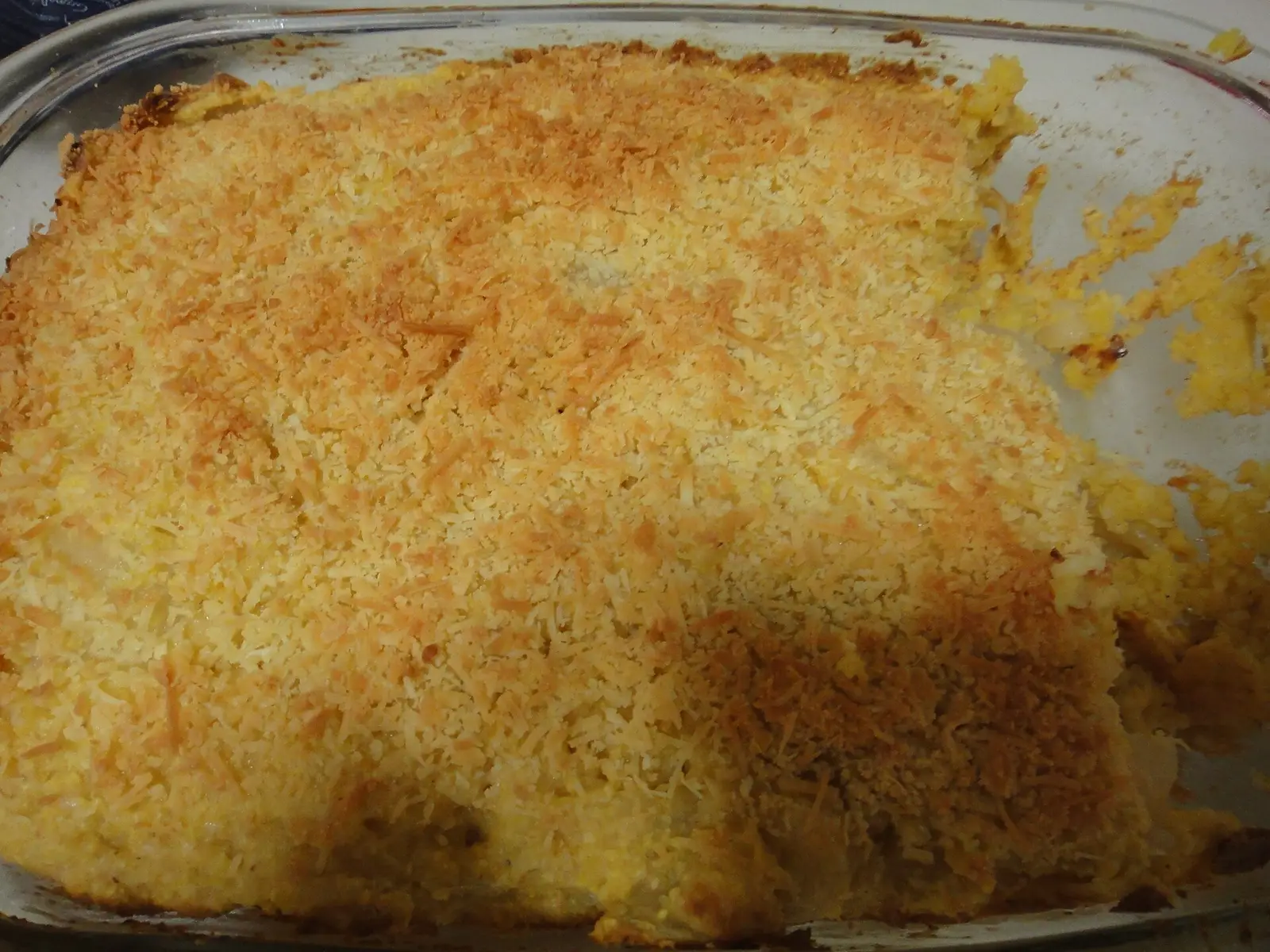
Turn the block out onto a plate and peel off the plastic wrap. Cut it into 10 slabs with a sharp knife, wiping the blade between cuts for clean edges. Serve each slab beside an equal slab of queso Paraguay, as in the photo, where one wedge has already been cut from the round.
A hot, dry knife cuts the cleanest slabs; dip the blade in hot water and wipe it dry between cuts.
Done when: Slabs clean-edged and firm, holding their shape on the plate, the cut surface smooth and glossy dark brown.
auto_awesome Finishing Touches & Plating
Serve the chocolate dulce de batata in thick slabs, about as thick as the slice of queso Paraguay beside it, as postre vigilante. Eat it at room temperature, with the cheese, and a cup of hot black coffee.

 Paraguay
1h 5m