Curated recipes from 193 countries  •  New seasonal Mediterranean issue out now

Overview

Dulce de Tamarindo

Salvadoran Tamarind Candy, Dulces de Tamarindo, Tamarind Sweet Balls

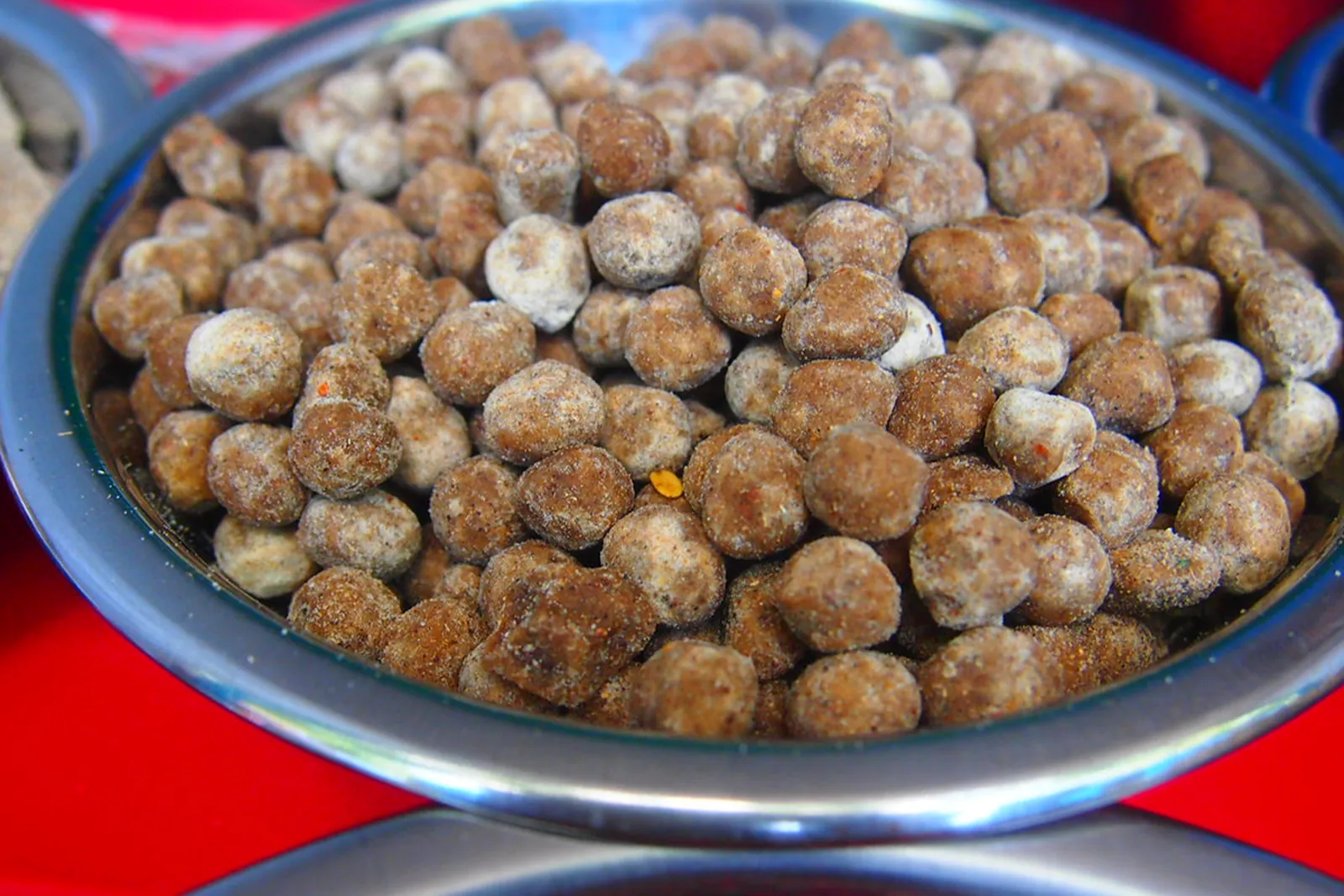
This dulce de tamarindo recipe cooks sticky tamarind pulp with brown sugar, cinnamon and a pinch of salt until it thickens to soft-ball stage, then rolls the glossy paste into 24 little balls and coats them in sugar. The result is intensely sweet-sour, chewy and firm enough to keep for weeks — the candy sold by the piece at Salvadoran markets and fairs. One serving is 3 balls, about 86 g.

Tamarind came to the Americas from Africa centuries ago and took root across Central America, where its sour pulp became a market staple. In El Salvador the pulp is simmered with sugar until it turns into a dark, glossy candy — sold by the piece at markets and fairs, rolled in sugar or, for those who like heat, in chilli. Unlike the raw tamarind balls of the Caribbean, which are kneaded by hand and eaten soft, the Salvadoran dulce is cooked to soft-ball stage, so it sets firm, keeps for weeks and travels well in a pocket or a lunchbox.

Pairs well with: Black coffee, horchata de morro and fresh fruit

Provenance

El Salvador flag El Salvador

Salvadoran Market Sweet

Latin America & Caribbean

Time Dedication

1h 10m

25m prep • 45m cook

Batch Yield

8 Servings

278 kcal per serving

1 serving ≈ 86 g

Technical Skill

Intermediate

Medium (Candy Stage)

Meal Timing & Digestive Fit

Breakfast

Not Advised

Lunch

Inappropriate

Dinner

Inappropriate

Snack & Tea

Ideal Light Bite

Occasions: Afternoon snacks, market days, family gatherings, coffee breaks, festive treats Cost: Low — about $1 per serving at home
Small round tamarind candy balls dusted with sugar in a steel bowl on a red market cloth

Salvadoran Market Sweet

Photo: Vipiak, CC BY-SA 4.0, via Wikimedia Commons

The Heritage Formulary

Measured Ingredients

Estimated cost: Low — about $1 per serving at home (USD)

A Salvadoran market candy: tamarind pulp cooked with brown sugar to soft-ball stage, rolled into balls and coated in sugar.

Execution Methodology & Culinary Technique

Step-by-Step Cooking Guide

Active 1h 10m
P

Prep Stage: Tamarind, Sugar & Bowls

25 Mins

Crack the tamarind pods and pick the sticky pulp free of shells, seeds and tough fibres, then soak the pulp in the hot water until it softens and loosens. While it soaks, measure the brown sugar, coating sugar, cinnamon, salt and chilli powder into separate bowls, line a tray with parchment paper, and have a candy thermometer ready.

Maestro Tip: Pick the seeds and fibres out before soaking — they are much harder to find once the pulp has turned to mush.

  1. 1

    Shell and Soak the Tamarind

    20 Mins Warm water, ~60°C (140°F)

    Crack the brittle tamarind pods and pull the sticky pulp away from the shells and stalks, discarding the shells. Pick out the hard seeds and tough fibres, then put the 400 g of pulp in a bowl, pour over the 300 ml of hot water and leave it to soak for 20 minutes, until the pulp is soft. Rub the pulp between your fingers as it soaks to loosen any seeds or fibres you missed.

    If you bought a block of seedless pulp, break it into pieces and soak it the same way — the soaking still matters, because dry pulp will not cook evenly.

    Done when: Pulp is soft, swollen and coming apart at a touch.

  2. 2

    Strain and Boil Down the Pulp

    15 Mins Boiling, 100°C (212°F)

    Pour the soaked pulp and its water through a sieve set over a heavy saucepan, pressing firmly with a spoon to push all the soft pulp through and leaving only seeds and fibres behind. Bring the strained liquid to a boil over medium heat and simmer, stirring now and then, for about 10 minutes, until it has reduced to roughly 350 ml and looks like a thick, dark sauce.

    Do not skip the straining — a single hard seed in the finished candy can crack a tooth.

    Done when: Liquid is thick enough to coat a spoon and has lost its watery shine.

  3. 3

    Cook to Soft-Ball Stage

    20 Mins 118°C (244°F)

    Stir the 300 g of brown sugar, the 2 g of cinnamon and the 2 g of salt into the reduced pulp and cook over medium heat, stirring constantly with a wooden spoon, scraping the bottom and sides so the sugar does not catch. After about 15–20 minutes the mixture will be very thick, glossy and dark, and a candy thermometer will read 118°C (244°F). Test it without a thermometer by dropping a little into cold water — it should form a soft ball that flattens when you pick it up.

    Do not walk away at this stage — the candy goes from thick to scorched in under a minute once the water is nearly gone.

    Done when: Mixture holds a soft ball in cold water and pulls away from the sides of the pan in a single mass.

  4. 4

    Cool and Roll the Balls

    10 Mins Cooling, ~50°C (120°F)

    Scrape the hot candy onto the lined tray and leave it for about 10 minutes, until it is cool enough to handle but still soft and pliable. Oil your hands very lightly, then pull off pieces of about 29 g — roughly a walnut — and roll each one between your palms into a smooth ball. Repeat until you have 24 balls.

    Roll while the candy is still warm — once it cools completely it firms up and will crack instead of rolling.

    Done when: Balls are smooth, round and hold their shape without flattening.

  5. 5

    Coat in Sugar and Set

    5 Mins No heat

    Roll each ball in the bowl of granulated sugar until coated all over, or in the chilli-sugar bowl (3 g chilli powder mixed with 10 g of the coating sugar) for the hot market-style version. Set the coated balls on parchment paper and leave them uncovered for at least 30 minutes so the outside firms up before packing.

    Coat the balls while they are still slightly warm — the sugar grips the surface and will not fall off later.

    Done when: Sugar clings in an even coat and the balls feel firm on the outside.

Finishing Touches & Plating

Serve three balls per person with black coffee — the sugar coating crackles, then the chewy centre turns sweet, sour and warm with cinnamon, with the chilli-coated ones giving a slow heat at the end.

Nutritional Physiology & Benefits

Nutrition

Energy

278

kcal / serving

Protein

2g

Complete AA

Carbs

72g

Complex

Fats

0g

Healthy

Per serving (8 servings · 1 serving ≈ 86 g)
Energy278 kcal
Protein2 g
Carbohydrates72 g
Fat0 g
Fibre2.8 g
Sugar59.6 g
Sodium127 mg
Per 100g
Energy323 kcal
Protein1.7 g
Carbohydrates83.7 g
Fat0.4 g
Fibre3.3 g
Sugar69 g
Sodium147 mg

Nutrition values are estimated — calculated from USDA FoodData Central values for the listed ingredients.

Vitamins & minerals: Thiamine (vitamin B1) and magnesium (tamarind), potassium (tamarind), iron (tamarind), and small amounts of calcium (tamarind).

Quick Energy in a Small Piece

About 72.2 g of carbohydrates per serving, mostly natural fruit sugars and brown sugar — fast energy in three small balls, which is why the candy is a market snack rather than a meal.

Iron and Magnesium from Tamarind

Tamarind pulp brings iron and magnesium, minerals the body uses for carrying oxygen in the blood and for normal muscle function.

No Fat, No Dairy, No Gluten

The candy is made from fruit, sugar and spices only, so it is naturally fat-free, dairy-free and gluten-free.

Food Pairings

What to Eat With

To optimize nutrient absorption and elevate the sensory depth, pair with these authentic accompaniments:

Drinks

Black Coffee

The classic pairing — bitter coffee balances the candy's intense sweetness and sharpens its sour tamarind edge, and Salvadoran market stalls sell the two side by side.

Horchata de Morro

Cold, creamy horchata de morro cools the mouth after the sour-sweet candy and its cinnamon echoes the cinnamon in the balls.

Sides

Fresh Mango and Pineapple

Slices of mango or pineapple add fresh, juicy sweetness that cleanses the palate between the chewy, concentrated candy balls.

More Pairings

Salted Peanuts

A small handful of salted peanuts gives a salty, crunchy contrast to the soft, sweet-sour balls and turns the candy into a longer snack.

Full Menus

Salvadoran Market Snack

Serve the balls after a light lunch of pupusas or yuca frita, with black coffee, fresh fruit and salted peanuts — the sweet-sour finish to a savoury meal.

Complete menu

Serve the balls as the sweet finish to a light Salvadoran lunch of pupusas or yuca frita, with black coffee, fresh mango and pineapple, and a small bowl of salted peanuts.

Digestive Guardrails

What NOT to Combine

To prevent digestive distress, sluggishness, or palate clash, avoid pairing the dish with these elements:

A Whole Batch at Once

The candy is very concentrated — about 59.6 g of sugar per serving — so eating many balls in one sitting can leave the stomach unsettled and the teeth aching. Three balls is the serving for a reason. This is general information, not medical advice.

A Second Heavy Dessert Straight After

The balls are already intensely sweet, so a heavy cake or ice cream straight after overloads the stomach — fresh fruit is the better finish. This is general information, not medical advice.

General information only, not medical advice — consult a doctor for personal dietary decisions.

Who Should Eat It

Who Should Eat

  • General adultsA sweet-sour market candy — three balls with coffee is a satisfying afternoon bite.
  • ChildrenChildren love the sweet-sour taste; give the plain sugar-coated balls, not the chilli ones, and keep it to two or three because they are very sugary.
  • ElderlySoft and chewy, but very sweet — take one or two balls with coffee and go easy if the teeth are sensitive.
  • Pregnant womenGenerally suitable in a small portion; the tamarind is cooked through. Keep the portion to three balls because of the sugar.
  • Breastfeeding womenGenerally suitable; the quick sugars give fast energy — drink water alongside.
  • AthletesA good quick-energy bite before or after training — about 72.2 g of carbohydrates per serving, but almost no protein, so pair it with something protein-rich.
  • Weight gainA good choice — energy-dense at about 278 kcal a serving in just three small balls.
  • Weight lossTake one ball instead of three and skip the chilli-sugar coating, which tempts you to eat more.

Health Conditions — Adjust or Avoid

Conditions

  • DiabetesVery high in sugar — about 59.6 g per serving. Take one ball only, if at all, and check with your clinician first.
  • High blood pressureLow in sodium as written — keep the salt as measured and skip extra salty snacks alongside. Ask your clinician about portion size.
  • Kidney diseaseTamarind is rich in potassium; eat in a small portion and ask your clinician first.
  • GoutLow in purines, so an occasional ball is usually fine — keep the portion small. Ask your clinician about frequency.
  • Stomach issuesVery sour and sugary, so it can sting an empty or sensitive stomach — eat it after food, not before, and take one ball at a time. Ask your clinician if symptoms persist.
  • Cardiovascular diseaseFat-free but very high in sugar — an occasional treat rather than a regular snack; keep the portion to one or two balls. Ask your clinician about portion size.
  • Fatty liverVery high in sugar — keep it occasional and small, and pair it with fresh fruit. Ask your clinician about portion size.
  • Food allergiesContains no common allergens as written; check the chilli powder label if you have a spice allergy. Ask your clinician if you are unsure.
  • Special therapeutic dietsIf you follow a prescribed low-sugar diet, skip this candy or take half a ball; check with your clinician before eating.

If you have a medical condition, consult your doctor before changing your diet.

Storage & Use

Storage & Use

How to store
Cool completely, then store in an airtight container with parchment paper between layers.
In the fridge
3 weeks in an airtight container.
In the freezer
3 months, wrapped tightly; thaw at room temperature for 1 hour.
How to reheat
No reheating needed — eat at room temperature; if the balls harden in the cold, leave them out for 30 minutes to soften.
Freezing recommended
Yes — the cooked candy freezes well and keeps its chew.
Signs it has spoiled
White mould, a fermented or alcoholic smell, or a sticky weeping surface.

More recipes to explore

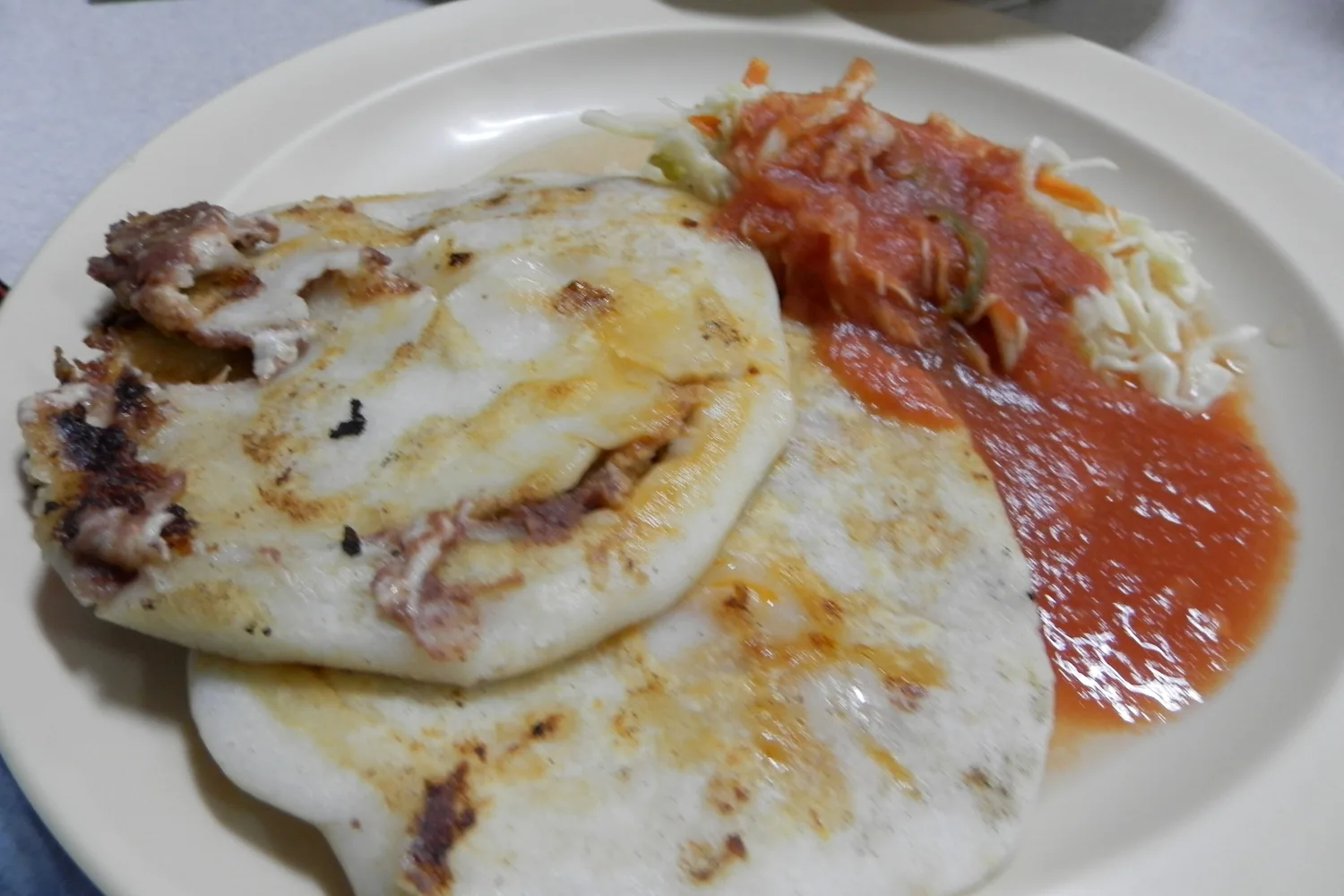
Two golden griddled pupusas on a plate with curtido cabbage slaw and red tomato salsa, melted cheese showing at the edge El Salvador flag El Salvador 1h 15m
Lunch •San Salvador Heritage

Pupusas

This pupusas recipe makes the stuffed corn cakes El Salvador is known for: soft nixtamalized masa wrapped around a molten filling of seasoned pork, refried beans and quesillo-style cheese, then griddled until the outside is golden and speckled and the cheese runs when you bite in. They are eaten hot, straight off the comal, with a pile of tangy curtido cabbage slaw and tomato salsa on the side. One serving is two pupusas, about 330 g.

Comfort & Warmth

El Salvador's national dish: thick corn masa cakes stuffed with pork, beans and melted cheese, griddled on a hot comal and served with curtido.

Pairs Well With
Curtido (pickled cabbage slaw) and salsa roja, with a cold horchata or tamarind drink on the side.
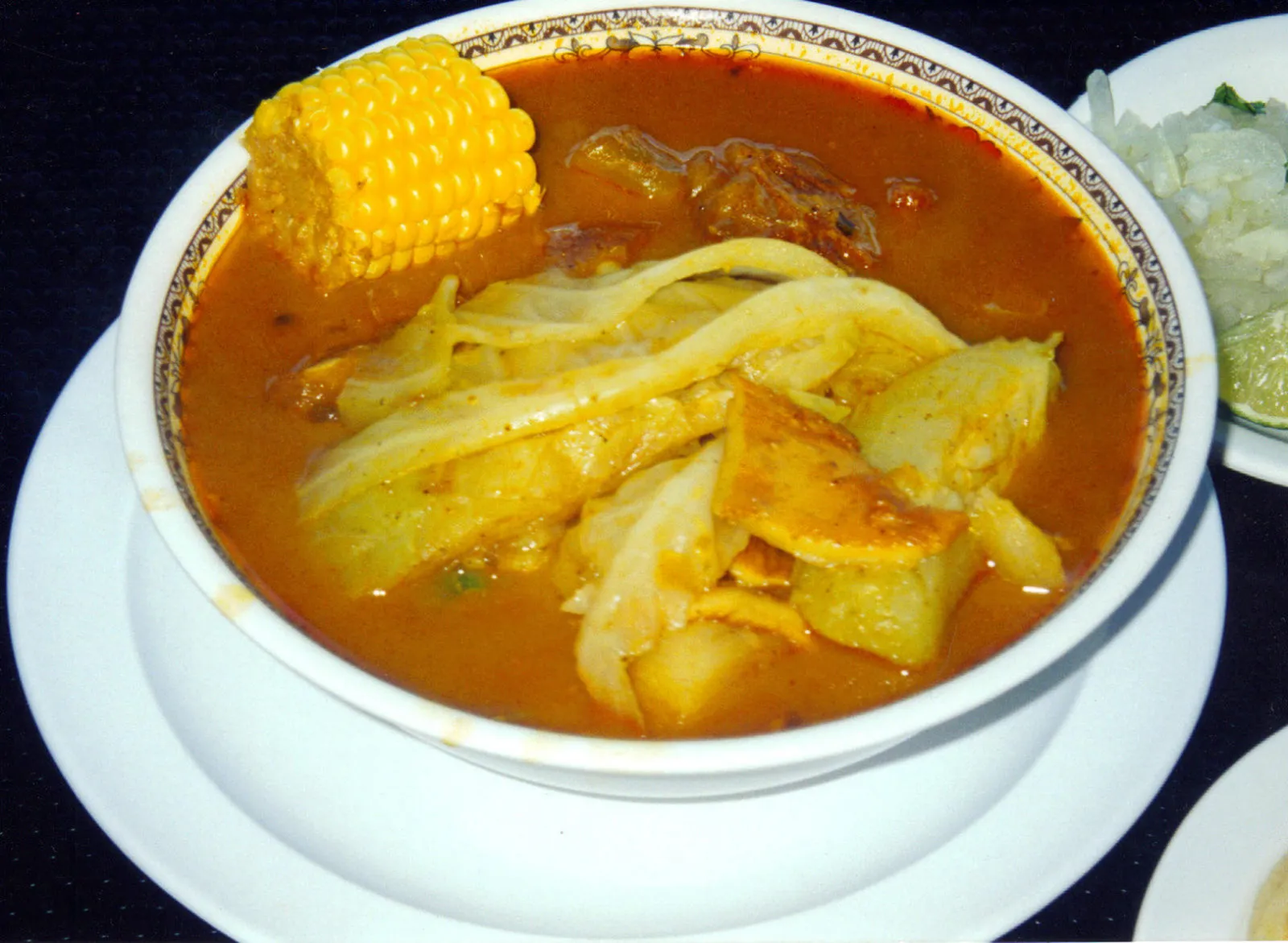
A bowl of sopa de pata, orange-red achiote broth with corn on the cob, cabbage and chunks of yuca El Salvador flag El Salvador 4h 5m
Lunch •Salvadoran Heritage

Sopa de Pata

This sopa de pata recipe is El Salvador's most famous soup: cow's feet and tripe simmered for hours until the broth turns rich and gelatinous, then loaded with yuca, chayote, corn, green plantain and cabbage, and coloured a warm orange-red with achiote. It is a weekend lunch in Salvadoran homes, served steaming hot with lime wedges and warm tortillas for squeezing and scooping. One serving is about 640 g, soup and vegetables together.

Comfort & Warmth

El Salvador's slow-simmered cow's foot and tripe soup, thick with yuca, corn and chayote in a red achiote broth.

Pairs Well With
Warm corn tortillas and lime wedges, with a little chopped onion and cilantro on the side.
Soups & Broths
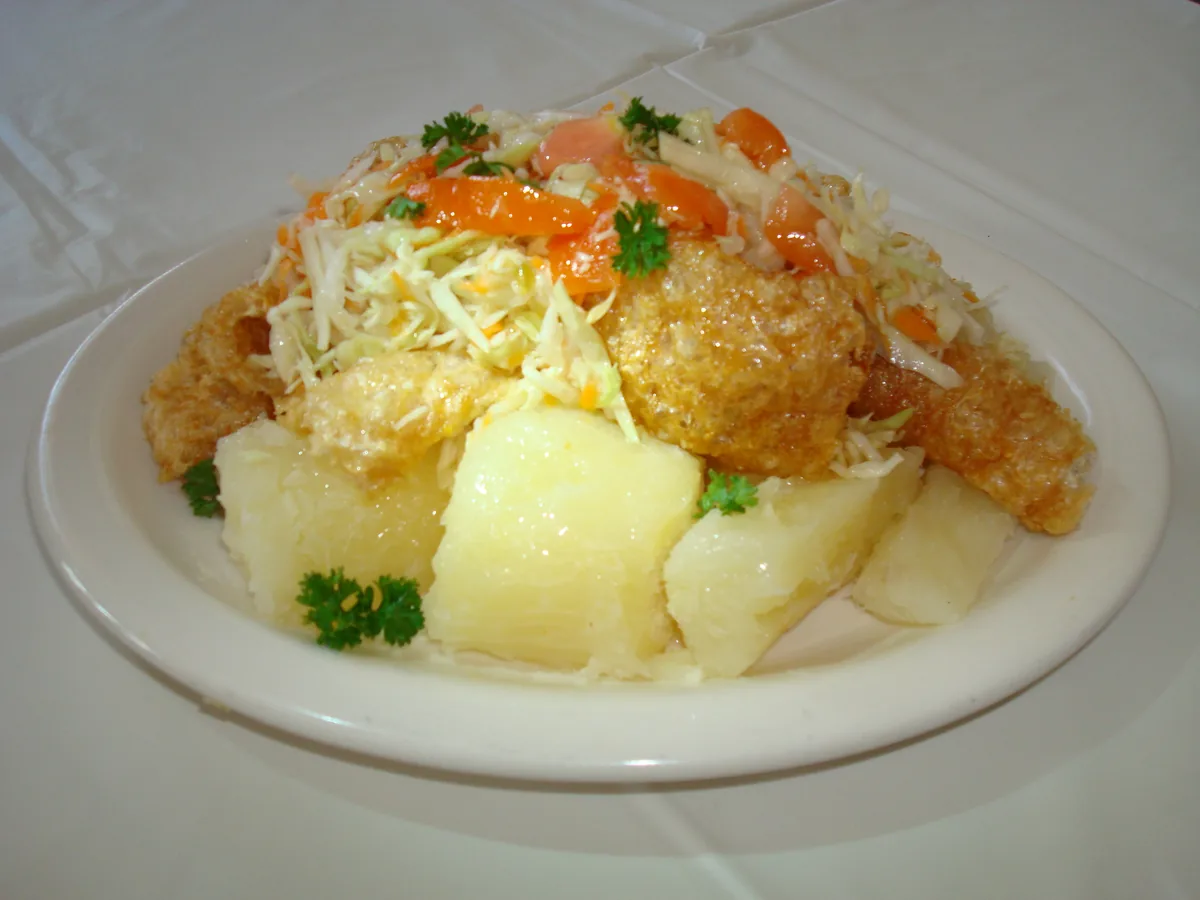
A plate of yuca con chicharron — boiled cassava chunks topped with golden crispy pork cracklings and shredded cabbage, carrot and tomato slaw El Salvador flag El Salvador 1h 35m
Lunch •Salvadoran Street-Food Classic

Yuca con Chicharrón

This yuca con chicharron recipe is the Salvadoran street-food plate: cassava boiled until soft and fluffy, topped with pork belly simmered until tender and then fried crisp in its own fat, with tangy curtido cabbage slaw and fresh tomato salsa on the side. It is the same trio of yuca, chicharron and cabbage slaw that is sold from market stalls across El Salvador. One serving is about 590 g.

Comfort & Energy

Tender boiled cassava with crisp fried pork, tangy curtido and fresh tomato salsa — a filling Salvadoran street-food plate.

Pairs Well With
Warm corn tortillas, fried plantains and a cold horchata or limeade
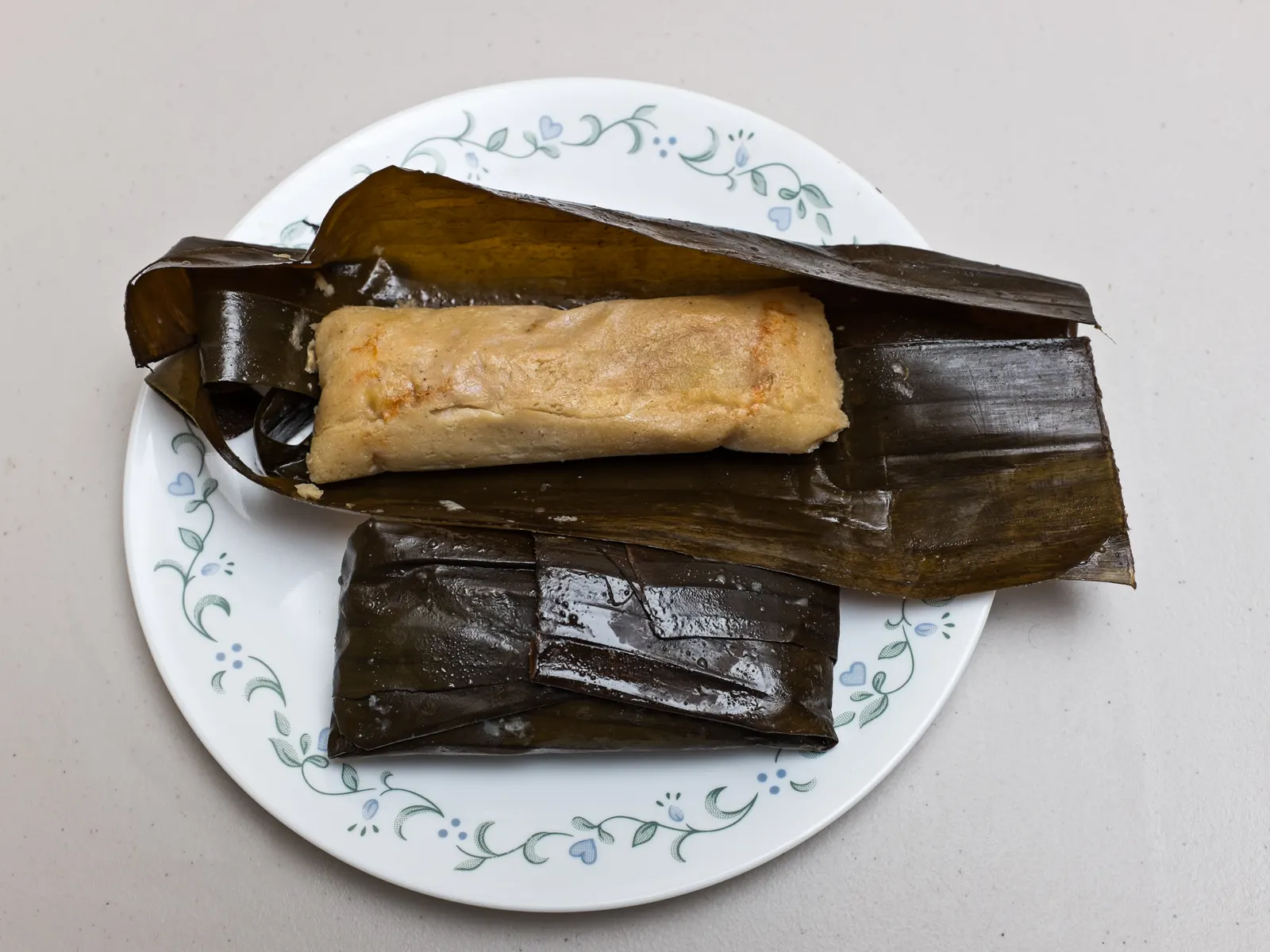
Two Salvadoran chicken tamales on a plate, one unwrapped from its banana leaf showing soft golden masa El Salvador flag El Salvador 3h 30m
Dinner •Salvadoran Heritage

Tamales de Gallina

This tamales de gallina recipe makes soft Salvadoran chicken tamales the traditional way: a pre-cooked corn masa spread on banana leaves, wrapped around shredded chicken, potato, chickpeas, olives and capers, then steamed until tender. One serving (two tamales) is about 458 g. The banana leaf gives the masa a gentle, grassy scent that corn husks never quite match.

Hearty & Festive

A filling, protein-rich festive main built around corn masa, chicken and vegetables.

Pairs Well With
Serve warm with curtido, the Salvadoran pickled cabbage slaw, and a mild tomato salsa.

The Dinner Gazette

Never wonder what’s for dinner again

One email a week with easy dinner ideas from around the world — ingredients, steps and nutrition, tested in our kitchen first.

Delivered every Thursday morning. Unsubscribe anytime.