

Curated recipes from 193 countries  •  New seasonal Mediterranean issue out now

Overview

French Crepes

Crepes, Sweet French Crepes

This crepes recipe makes 12 thin, golden French crepes from a simple batter of flour, milk, eggs and butter, rested for 30 minutes so the flour hydrates and the crepes turn tender instead of tough. They come from Brittany, where crepes are an everyday food, and they take about 20 minutes at the stove once the batter is ready. One serving is 3 crepes, about 200 g.

Crepes come from Brittany in north-west France, where buckwheat galettes were the everyday food and wheat crepes were the sweet version, served for festivals and family gatherings. The thin batter, the swirl of the pan and the quick flip are the same techniques Breton cooks have used for centuries. Sweet crepes spread across France as a cafe and street food, while the savoury buckwheat galette stayed a separate dish — that is why this recipe is sweet, wheat-based, and folded, not filled like a galette.

Pairs well with: Lemon and sugar, salted butter, or jam and fresh fruit

Provenance

France flag France

Breton Classic

Nordic & European

Time Dedication

1h

40m prep • 20m cook

Batch Yield

4 Servings

407 kcal per serving

1 serving ≈ 200 g

Technical Skill

Easy

Easy (One Pan)

Meal Timing & Digestive Fit

Breakfast

Prime Morning Fit

Lunch

Inappropriate

Dinner

Inappropriate

Snack & Tea

Inappropriate

Quick Prep (<30m) Occasions: Weekend breakfast, brunch, pancake day, afternoon snack Cost: Low — about $1–2 per serving at home
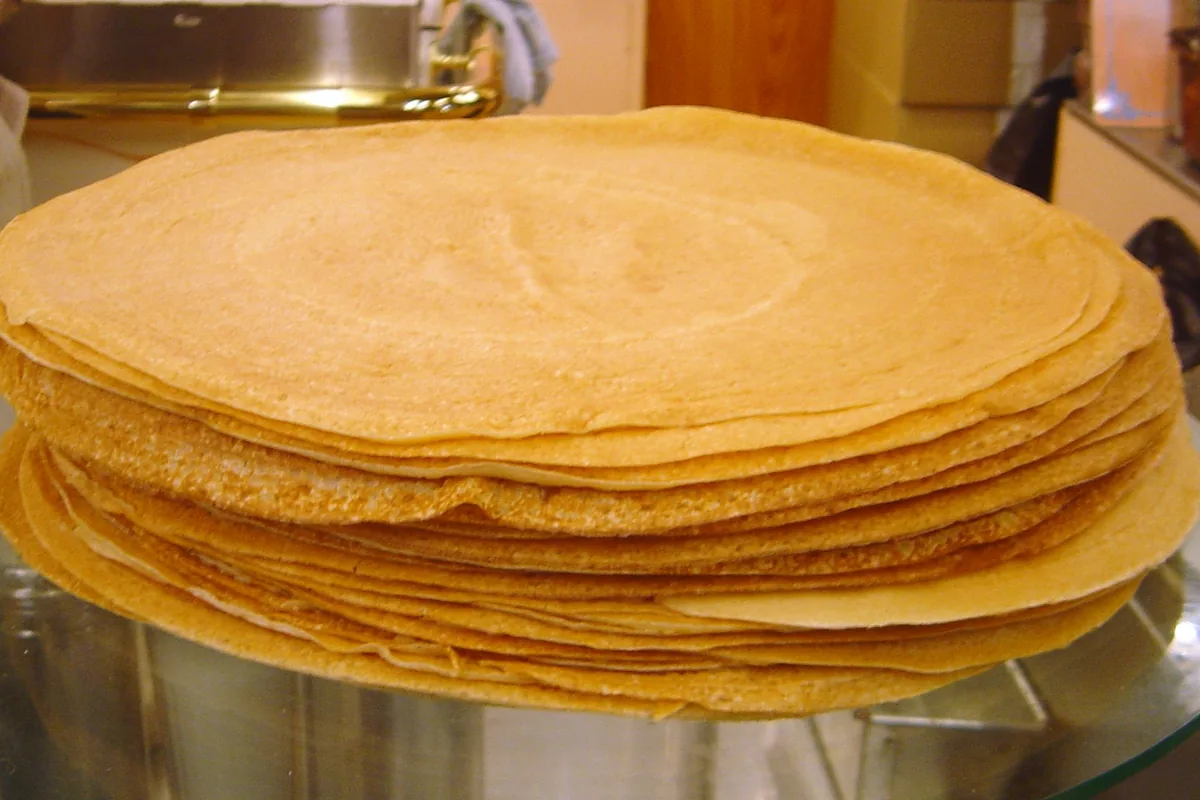
A tall stack of thin golden French crepes on a glass stand

Breton Classic

Photo: David Monniaux, CC BY-SA 3.0, via Wikimedia Commons

The Heritage Formulary

Measured Ingredients

Estimated cost: Low — about $1–2 per serving at home (USD)

Made with plain flour, whole milk, eggs and butter, rested 30 minutes; nutrition is estimated from USDA values.

Execution Methodology & Culinary Technique

Step-by-Step Cooking Guide

Active 1h
P

Prep Stage: Batter Mixed, Then Rested

40 Mins • Blending & Resting

Whisk or blend the flour, sugar and salt with half the milk until smooth, then whisk in the eggs, the rest of the milk, the melted butter and the vanilla. The batter should run off a spoon like thin cream. Cover and rest for 30 minutes at room temperature so the flour hydrates. Stir once before cooking.

Maestro Tip: The rest is not optional — it is what makes crepes tender instead of rubbery, and it lets any bubbles settle so the crepes cook evenly.

  1. 1

    Mix the Batter

    5 Mins No heat — mixing only

    Put the flour, sugar and salt in a large bowl or blender. Add half the milk and whisk until completely smooth, then whisk in the eggs one at a time, the remaining milk, the melted butter and the vanilla. Strain through a fine sieve if you see any lumps.

    Adding the milk in two halves is the trick to a lump-free batter — all the milk at once makes lumps almost certain.

    Done when: The batter is smooth, lump-free, and as thin as single cream.

  2. 2

    Rest the Batter

    30 Mins No heat — room temperature

    Cover the bowl and leave it at room temperature for 30 minutes. The batter will thicken slightly as the flour absorbs the milk; stir it once before cooking and add a tablespoon of milk only if it feels thicker than thin cream.

    Do not skip the rest even if you are in a hurry — it is the difference between tender crepes and tough ones.

    Done when: The batter is slightly thicker, glossy, and free of bubbles on the surface.

  3. 3

    Heat the Pan

    2 Mins Medium heat, about 175°C (350°F)

    Set a crepe pan or a flat non-stick frying pan over medium heat for about 2 minutes. Wipe the surface with a little butter on a folded paper towel — you want a thin film, not a pool.

    Test the heat with a drop of batter: it should sizzle gently and set in seconds, not brown instantly or sit pale.

    Done when: The pan is evenly hot and the butter film shimmers without smoking.

  4. 4

    Cook the Crepes

    15 Mins Medium heat, about 175°C (350°F)

    Pour about 60 ml (1/4 cup) of batter into the centre of the pan and immediately tilt and swirl the pan so the batter coats the base in a thin, even layer. Cook for about 1 minute until the edges lift and the underside is golden, then flip with a thin spatula or your fingers and cook the second side for about 30 seconds. Slide the crepe onto a plate and repeat, wiping the pan with butter every second or third crepe. You should get 12 crepes.

    The first crepe is almost always a practice one — eat it yourself and adjust the heat or the batter amount for the next.

    Done when: Each crepe is thin, golden in patches, flexible enough to fold, and not crisp.

  5. 5

    Fold and Serve

    3 Mins No heat — serve warm

    Fold each crepe in quarters or roll it up, and serve 3 per person while still warm, with lemon and sugar, salted butter, jam, or fresh fruit on the side.

    Keep finished crepes under a clean tea towel or a plate so they stay soft and warm while you cook the rest.

    Done when: The crepes are warm, soft, and ready to fill or fold.

Finishing Touches & Plating

Stack the crepes under a clean tea towel to keep them soft, then fold each one in quarters and serve warm with lemon and sugar or your favourite filling.

Nutritional Physiology & Benefits

Nutrition

Energy

407

kcal / serving

Protein

14g

Complete AA

Carbs

50g

Complex

Fats

16g

Healthy

Per serving (4 servings · 1 serving ≈ 200 g)
Energy407 kcal
Protein14 g
Carbohydrates50 g
Fat16 g
Fibre1.4 g
Sugar11.8 g
Sodium303 mg
Per 100g
Energy203 kcal
Protein7 g
Carbohydrates24.8 g
Fat8.1 g
Fibre0.7 g
Sugar5.9 g
Sodium151 mg

Nutrition values are estimated — calculated from USDA FoodData Central values for the listed ingredients.

Vitamins & minerals: Provides B vitamins and choline from the eggs, plus calcium from the milk. Nutrition is estimated.

Quick Breakfast Energy

One serving gives about 407 kcal with 14.0 g of protein — a proper breakfast that cooks in minutes once the batter has rested.

Simple Pantry Ingredients

Flour, milk, eggs and butter — nothing to buy specially, and the batter comes together in one bowl.

Easy to Fill Your Way

Sweet or savoury, plain or filled — the same thin crepe works with lemon and sugar, jam, fruit, ham or cheese.

Food Pairings

What to Eat With

To optimize nutrient absorption and elevate the sensory depth, pair with these authentic accompaniments:

Sides

Lemon and Sugar

The classic: sharp lemon and a dusting of sugar cut the buttery richness and keep the crepe light.

Salted Butter and Jam

Salted butter melts into the warm crepe and jam adds fruit sweetness — the Breton way to eat them.

Fresh Berries

Berries add freshness and a little acidity, and their juice soaks pleasantly into the thin crepe.

Drinks

Coffee or Cider

A hot coffee or a cold glass of Breton cider is the traditional drink with crepes, morning or afternoon.

Complete menu

Serve the crepes folded in quarters with lemon and sugar, fresh berries on the side, and hot coffee or cold cider to drink.

Digestive Guardrails

What NOT to Combine

To prevent digestive distress, sluggishness, or palate clash, avoid pairing the dish with these elements:

Sweet Fillings Add Up

Sugar, jam and chocolate spread turn a plain crepe into a very sweet breakfast. Keep the filling light, especially for children. This is general food information, not medical advice.

Eggs Must Be Cooked Through

The batter contains raw egg, so cook every crepe until set and golden on both sides, and do not taste raw batter. This is general food information, not medical advice.

General information only, not medical advice — consult a doctor for personal dietary decisions.

Who Should Eat It

Who Should Eat

  • General adultsA quick, satisfying breakfast — one serving of 3 crepes with fruit is a balanced start to the day.
  • ChildrenChildren love crepes; keep the filling simple and watch the sugar in jam and chocolate spread.
  • ElderlySoft, easy to eat and mild — a good breakfast for most older eaters; choose fruit over sweet spreads.
  • Pregnant womenFine when freshly cooked and served hot; the eggs are fully cooked through in the pan.
  • Breastfeeding womenA filling, calcium-containing breakfast; pair with fruit for extra fibre and vitamins.
  • AthletesAbout 49.6 g of carbs per serving gives quick energy; add a boiled egg on the side for more protein.
  • Weight gainEasy to eat and energy-dense — add a second serving or a nut-butter filling for more calories.
  • Weight lossKeep to one serving, choose fruit fillings over jam or chocolate, and use semi-skimmed milk to lighten it.

Health Conditions — Adjust or Avoid

Conditions

  • DiabetesAbout 49.6 g of carbs per serving, plus whatever the filling adds. Count sweet fillings in your portion. Ask your clinician about portion size.
  • High blood pressureAbout 303 mg of sodium per serving as written — modest, but salty fillings like ham add more. Ask your clinician about sodium limits.
  • Kidney diseaseModerate in protein from the eggs and milk. Keep the portion to one serving. Ask your clinician before eating it regularly.
  • GoutLow in purines as written; rich sweet fillings add sugar, not purines. Keep the portion modest. Ask your clinician for guidance.
  • Stomach issuesPlain crepes are gentle on most stomachs; very sweet or acidic fillings can irritate reflux. Keep fillings simple. Ask your clinician if symptoms flare.
  • Cardiovascular diseaseButter and whole milk add saturated fat; use semi-skimmed milk and a lighter hand with the butter. Ask your clinician about saturated fat intake.
  • Fatty liverThe flour and sugar add up; keep the portion to one serving and choose fruit fillings. Ask your clinician about a suitable portion.
  • Food allergiesContains wheat (gluten), egg and milk. Check any filling labels for nuts. Ask your clinician if you have a food allergy.
  • Special therapeutic dietsNot suitable for gluten-free, egg-free or dairy-free diets as written; the flour, eggs and milk are structural. Ask your clinician or dietitian for guidance.

If you have a medical condition, consult your doctor before changing your diet.

Storage & Use

Storage & Use

How to store
Cool the crepes completely, stack with baking paper between them, and wrap tightly.
In the fridge
2–3 days, wrapped.
In the freezer
Up to 1 month, stacked with baking paper between them in a sealed bag.
How to reheat
Warm each crepe in a dry pan over medium heat, about 175°C (350°F), for 20 seconds a side, until hot through.
Freezing recommended
Yes — they freeze very well and reheat in seconds.
Signs it has spoiled
Sour smell, stiff or slimy texture, or any mould.

More recipes to explore

Golden butter croissants on a wooden board France flag France 20m
Breakfast •Parisian Boulangerie

Croissant au Beurre & Café

Laminated cultured butter pastry paired with washed Arabica, for a slow, pleasurable Parisian morning — best with a little protein alongside. One serving is about 390 g.

Sustained Focus

Flaky all-butter croissant with café au lait, Comté and green apple.

Pairs Well With
Comté cheese wedge & Green apple slices
Quick Prep (<30m)

Bœuf bourguignon — French beef braised in red wine France flag France 4h
Dinner •Burgundy Terroir

Bœuf Bourguignon

Beef braised gently in red wine until the connective tissue melts into a velvet, gelatin-rich sauce — the classic Burgundy Sunday dinner.

Cellular Repair

Beef braised in red wine until spoon-tender, with mushrooms and pearl onions.

Pairs Well With
Parsnip Purée & Steamed French Haricots Verts
High Protein
A mound of classic ratatouille with eggplant, zucchini, tomato and onion on a white plate France flag France 1h 15m
Dinner •Nice Provençal

Ratatouille

This ratatouille recipe cooks eggplant, zucchini, peppers and tomatoes separately first, so each vegetable keeps its own texture, then brings them together for a slow, fragrant simmer. One serving is about 400 g.

Light & Vegetable-Rich

Slow-simmered summer vegetables in olive oil — light, fragrant and full of fibre.

Pairs Well With
Crusty sourdough bread, grilled fish or a fried egg
A bowl of coq au vin with a braised chicken leg in dark red wine sauce with mushrooms and onions, greens on the side France flag France 1h 40m
Dinner •Burgundy Classic

Coq au Vin

This coq au vin recipe is the Burgundy classic: chicken thighs browned with bacon, then braised in red wine with mushrooms, pearl onions and carrots until the meat is tender and the sauce is dark and glossy. One serving is about 375 g. It takes 1 hour 40 minutes, most of it hands-off while the pot simmers.

Comfort & Warmth

Chicken braised slowly in red wine with mushrooms, pearl onions and bacon until it falls off the bone.

Pairs Well With
Mashed potatoes, crusty bread & Burgundy wine

The Dinner Gazette

Never wonder what’s for dinner again

One email a week with easy dinner ideas from around the world — ingredients, steps and nutrition, tested in our kitchen first.

Delivered every Thursday morning. Unsubscribe anytime.