
Curated recipes from 193 countries  •  New seasonal Mediterranean issue out now

Overview

Grilled Barramundi with Lemon Butter

Barramundi on the Grill

This grilled barramundi recipe is the fish Australia orders most: mild, buttery fillets with crisp skin, grilled in minutes and finished with lemon butter that melts over the top. One serving is about 181 g. It cooks fast enough for a weeknight and tastes like a Sydney fish-market lunch.

Barramundi takes its name from an Aboriginal word of the Rockhampton region in Queensland, meaning large-scaled river fish. It is farmed in Queensland and the Northern Territory and is the fish Australians order most in pubs, clubs and fish shops. Grilling it over coals, skin on, with lemon is the classic way it is served at the Sydney Fish Market, where the day's catch goes from the stand to the grill in the same morning.

Pairs well with: Steamed rice & a green salad

Provenance

Australia flag Australia

Australian Classic

Oceania & Pacific

Time Dedication

22m

10m prep • 12m cook

Batch Yield

4 Servings

292 kcal per serving

1 serving ≈ 181 g

Technical Skill

Intermediate

Easy (Grill or Pan)

Meal Timing & Digestive Fit

Breakfast

Not Advised

Lunch

Hearty Midday Main

Dinner

Ideal Hearty Main

Snack & Tea

Inappropriate

High Protein Occasions: Weeknight dinners, summer barbecues, Christmas lunch, dinner parties Cost: Medium — about $5–7 per serving at home
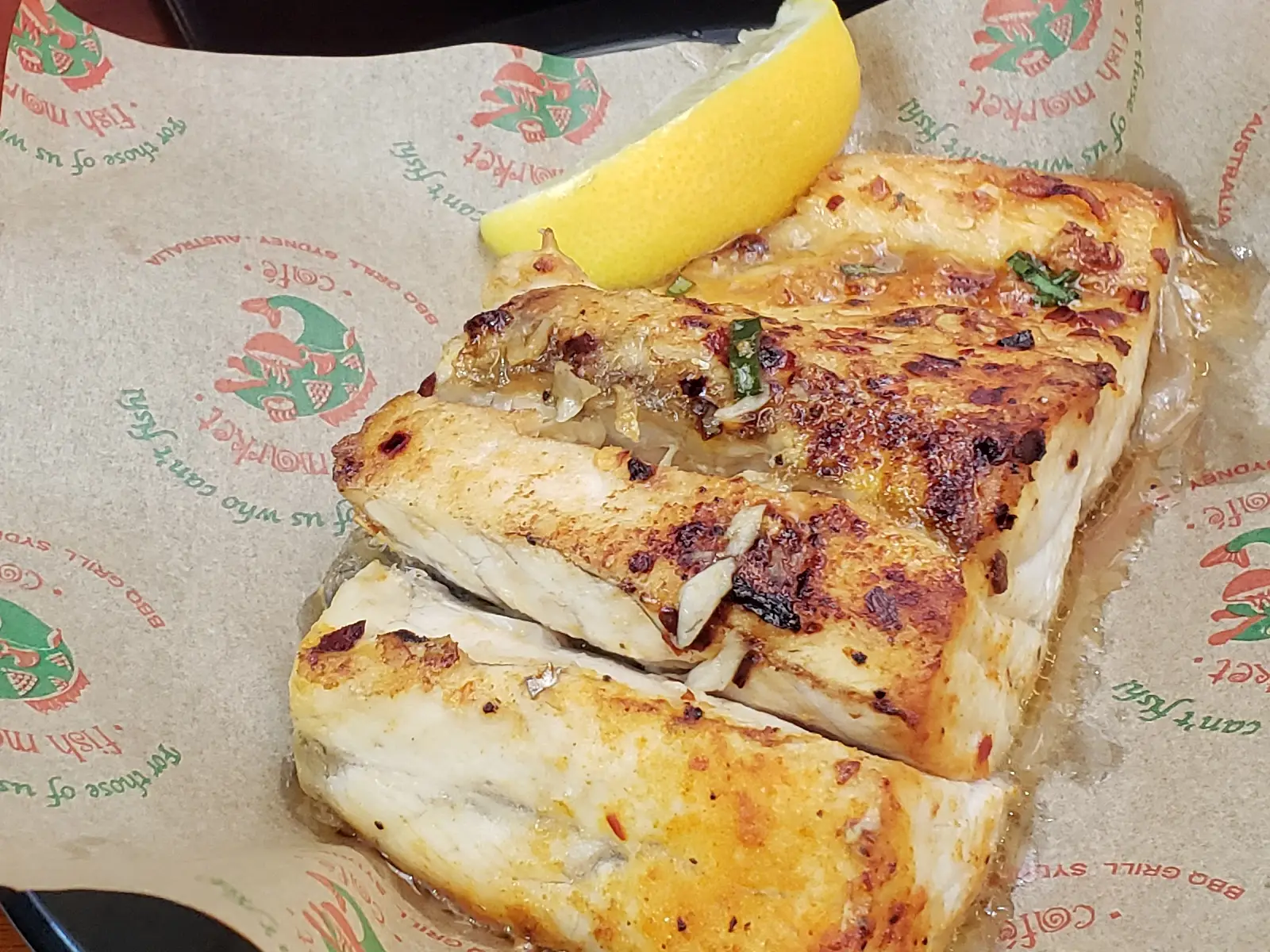
A grilled barramundi fillet with a lemon wedge on printed paper at the Sydney Fish Market

Australian Classic

Photo: Oraola, CC BY-SA 4.0, via Wikimedia Commons

The Heritage Formulary

Measured Ingredients

Estimated cost: Medium — about $5–7 per serving at home (USD)

The skin should be crisp and the flesh should flake cleanly at 63°C (145°F); lemon butter goes on at the last moment, never before grilling.

Execution Methodology & Culinary Technique

Step-by-Step Cooking Guide

Active 22m
P

Prep Stage: Fish, Lemon Butter, Grill

10 Mins • Seasoning, Zesting

Pat the fillets very dry, season the flesh (not the skin) with salt and pepper, and set them on a plate skin-side down. Zest the lemon, juice it, chop the garlic and parsley, and cube the butter so everything is within reach of the grill — once the fish goes on, there is no time to go back inside.

Maestro Tip: Dry skin is the whole secret: wet skin steams and sticks, dry skin crisps and releases.

  1. 1

    Heat and oil the grill

    5 mins Medium-high heat, about 200°C (400°F)

    Heat a barbecue or grill pan over medium-high heat for 5 minutes until it is properly hot. Scrub the grates clean with a brush, then oil them well with a folded paper towel dipped in olive oil, held with tongs.

    Hold your hand 15 cm above the grate: if you can only keep it there for 2-3 seconds, the grill is ready.

    Done when: Grates are clean, lightly oiled and too hot to touch.

  2. 2

    Season the fish

    2 mins Room temperature, about 20°C (68°F)

    Brush the fillets lightly all over with olive oil, then season the flesh side with the salt and pepper. Leave the skin side unseasoned so it can crisp without burning salt.

    Oil the fish, not just the grill: oiled skin releases cleanly from the grates.

    Done when: Fillets are evenly oiled and seasoned on the flesh side only.

  3. 3

    Make the lemon butter

    3 mins Low heat, about 120°C (250°F)

    Melt the butter in a small pan over low heat with the garlic. As soon as it foams, take it off the heat and stir in the lemon juice and zest. It should smell bright and garlicky, not browned.

    Take the pan off the heat before adding the lemon juice, or the butter will split.

    Done when: A pale gold sauce that smells of lemon and garlic.

  4. 4

    Grill skin-side down

    4 mins Medium-high heat, about 200°C (400°F)

    Lay the fillets skin-side down on the hot grill at an angle to the grates. Press each one gently with a spatula for 10 seconds so the skin makes full contact. Close the lid and leave them alone for 4 minutes — do not move them, or the skin will tear.

    If a fillet resists when you nudge it, it is not ready to move; crisp skin releases on its own.

    Done when: The skin is crisp and golden, and the flesh has turned opaque about two-thirds of the way up.

  5. 5

    Flip and finish

    3 mins Medium-high heat, about 200°C (400°F)

    Slide a thin fish spatula under each fillet and flip it in one confident movement. Cook for 2-3 minutes more, until the flesh flakes easily with a fork and the thickest part reaches 63°C (145°F) on an instant-read thermometer.

    Flip once only: every extra flip risks breaking the fillet.

    Done when: The flesh flakes cleanly and reads 63°C (145°F) at the thickest point.

  6. 6

    Rest and serve

    2 mins Room temperature, about 20°C (68°F)

    Move the fillets to warm plates, skin-side up so the skin stays crisp. Spoon the lemon butter over them while they are still sizzling, scatter the parsley, and add the lemon wedges.

    Resting for 2 minutes lets the juices settle; the fish is still hot when it reaches the table.

    Done when: Fillets are glossy with butter, the skin is crisp, and the flesh is moist.

Finishing Touches & Plating

Spoon the lemon butter over the fillets while they are still sizzling, scatter the parsley, and serve at once with the lemon wedges — the skin stays crisp for only a few minutes, so do not let the plates wait.

Nutritional Physiology & Benefits

Nutrition

Energy

292

kcal / serving

Protein

35g

Complete AA

Carbs

3g

Complex

Fats

15g

Healthy

Per serving (4 servings · 1 serving ≈ 181 g)
Energy292 kcal
Protein35 g
Carbohydrates3 g
Fat15 g
Fibre0.7 g
Sugar0.7 g
Sodium400 mg
Per 100g
Energy161 kcal
Protein19.4 g
Carbohydrates1.5 g
Fat8.2 g
Fibre0.4 g
Sugar0.4 g
Sodium221 mg

Nutrition values are estimated — calculated from USDA FoodData Central values for the listed ingredients.

Vitamins & minerals: Vitamin D and B12, selenium and iodine (barramundi), vitamin C (lemon), vitamin K (parsley).

Lean Protein, Big Serve

Each serving carries about 35 g of protein for only 292 calories, which makes this one of the most protein-dense dinners on the site.

Omega-3s and Vitamin D

Barramundi is a source of the omega-3 fats EPA and DHA, plus vitamin D and selenium, which support heart health and normal immune function as part of a varied diet.

Light, Not Heavy

With only about 3 g of carbohydrate per serving, this is a light dinner that still feels satisfying, especially with a salad on the side.

Food Pairings

What to Eat With

To optimize nutrient absorption and elevate the sensory depth, pair with these authentic accompaniments:

Sides

Steamed Jasmine Rice

The soft, fragrant rice soaks up the lemon butter that runs off the fish, so none of the sauce is wasted.

Vegetables

Grilled Asparagus

Charred asparagus echoes the grill flavours and its slight bitterness balances the rich butter.

Drinks

Crisp White Wine

A dry white such as a sauvignon blanc or pinot grigio matches the lemon and cuts through the butter without overwhelming the mild fish.

Full Menus

Pavlova to Finish

Keep the Australian theme going: a light pavlova with passionfruit follows a fish dinner without feeling heavy.

Complete menu

Serve one fillet per person with steamed jasmine rice and a green salad, then finish with pavlova and passionfruit for a full Australian dinner.

Digestive Guardrails

What NOT to Combine

To prevent digestive distress, sluggishness, or palate clash, avoid pairing the dish with these elements:

Very Hot Chilli Sauces

Barramundi is a mild fish, and a fiery sauce will bury its flavour completely. If you like heat, use a little fresh chilli in the butter instead of a bottled hot sauce. This is general information, not medical advice.

Undercooked Fish

Fish that has not reached 63°C (145°F) can carry bacteria that cause food poisoning, so always check the thickest part with a thermometer or a fork — it should flake easily and look opaque all the way through. This is general information, not medical advice.

Heavy Cream Sauces

A thick cream sauce drowns the delicate, buttery flesh and turns a light grilled fish into a heavy dish. The lemon butter is all the sauce this fish needs. This is general information, not medical advice.

General information only, not medical advice — consult a doctor for personal dietary decisions.

Who Should Eat It

Who Should Eat

  • General adultsA light, high-protein dinner that suits most adults; one fillet with rice and salad is a complete meal.
  • ChildrenA mild fish with no strong flavour, so many children accept it; remove any stray bones and serve the fillet in strips.
  • ElderlySoft, flaky flesh that is easy to chew; choose a smaller fillet and serve with soft rice rather than crusty bread.
  • Pregnant womenGenerally suitable when the fish is cooked fully through to 63°C (145°F) and served hot; avoid raw or undercooked fish.
  • Breastfeeding womenGenerally suitable; the protein and omega-3 fats are useful, and the fish should be cooked fully through.
  • AthletesAbout 35 g of protein per serving makes this a strong recovery meal after training, with rice for carbohydrate.
  • Weight gainA good choice — add an extra fillet or a larger serve of rice to lift the calories without extra fat.
  • Weight lossA good choice at 292 calories a serving; keep the butter to the amount in the recipe and fill the plate with salad.

Health Conditions — Adjust or Avoid

Conditions

  • DiabetesVery low in carbohydrate (about 3 g per serving), so it fits easily into most meal plans — ask your clinician about your overall menu.
  • High blood pressureModerate in salt at about 400 mg of sodium per serving; keep the added salt light and ask your clinician about portion size.
  • Kidney diseaseHigh in protein, so people with kidney disease should keep to the serving size in the recipe and ask their clinician about protein portions.
  • GoutA low-purine fish choice compared with oily fish and shellfish, but keep portions moderate and ask your clinician if gout is a concern.
  • Stomach issuesPlain grilled fish with lemon is usually gentle on the stomach; skip the pepper and garlic if they bother you, and ask your clinician if symptoms persist.
  • Cardiovascular diseaseLow in saturated fat and a source of omega-3 fats, which fits a heart-friendly pattern — ask your clinician about your overall diet.
  • Fatty liverLow in fat and carbohydrate with lean protein, so it suits a lighter menu; ask your clinician about fitting it into your plan.
  • Food allergiesContains fish. People with a fish allergy must not eat this dish; check that the grill is clean of other fish if cross-contact is a risk, and ask your clinician.
  • Special therapeutic dietsNaturally gluten-free and low-carbohydrate; check any sauce or side dish against the diet you follow, and ask your clinician or dietitian.

If you have a medical condition, consult your doctor before changing your diet.

Storage & Use

Storage & Use

How to store
Cool the cooked fillets quickly and store in a covered container; keep the lemon butter separate.
In the fridge
2 days, in a covered container.
In the freezer
Up to 1 month; wrap fillets individually. The skin will soften on thawing, so freeze only the flesh if you can.
How to reheat
Reheat gently in a 180°C (350°F) oven for 8-10 minutes until hot all the way through, to 74°C (165°F); the microwave makes the fish rubbery.
Freezing recommended
Not really — best eaten fresh, when the skin is crisp. Freeze only if you must.
Signs it has spoiled
Sour or ammonia smell, slimy flesh, or a dull grey colour — discard, do not taste to check.

More recipes to explore

A slice of golden meat pie with rich beef filling on a plate Australia flag Australia 1h 25m
Lunch •Australian Classic

Australian Meat Pie

The Australian meat pie is a single-serving pie with a shortcrust base, a filling of ground beef simmered in a thick, dark gravy with onion and carrot, and a golden pastry lid. It is the food of football grounds, bakeries and road trips across Australia, eaten by hand with tomato sauce. This recipe makes four individual pies with a proper gravy that stays inside the pie instead of running out. One pie is about 360 g.

Hearty & Satisfying

A hand-held pie with a crisp shortcrust base, a rich beef gravy filling and a golden lid — Australia's most famous food.

Pairs Well With
Tomato sauce & mashed potato
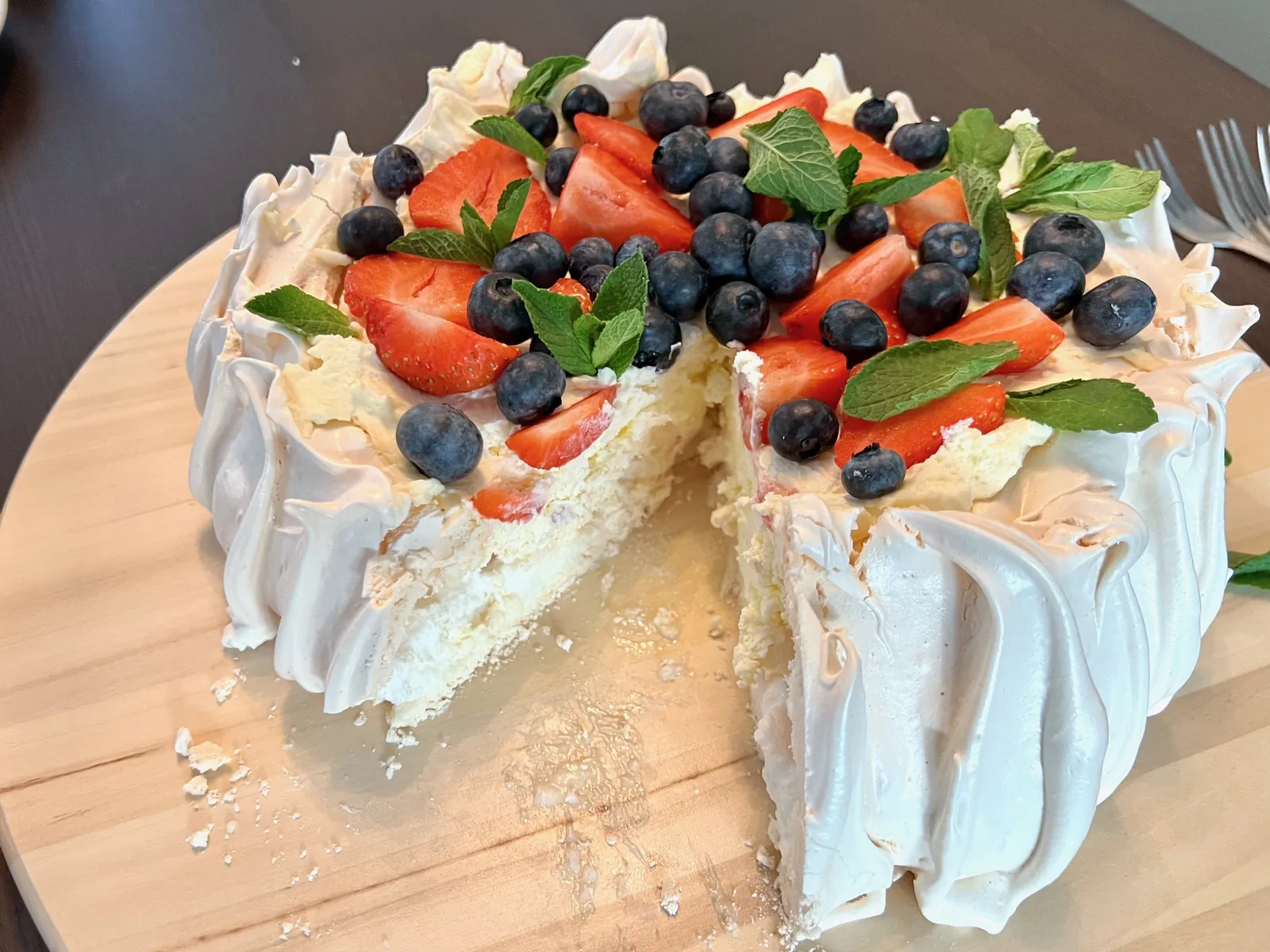
Pavlova meringue cake topped with whipped cream, strawberries and blueberries Australia flag Australia 2h 40m
Snack & Tea •Australian Classic

Australian Pavlova

Pavlova is a meringue cake with a crisp, crackled shell and a soft, marshmallowy middle, crowned with softly whipped cream and fresh fruit. It is named after the Russian ballerina Anna Pavlova, who toured Australia and New Zealand in the 1920s, and both countries claim it — in Australia it is the dessert of Christmas Day and summer barbecues, served with strawberries, kiwi and blueberries. One serving is about 135 g.

Light & Celebratory

A crisp meringue shell with a soft marshmallow centre, piled with whipped cream and fresh fruit — Australia's celebration dessert.

Pairs Well With
Fresh berries & passion fruit
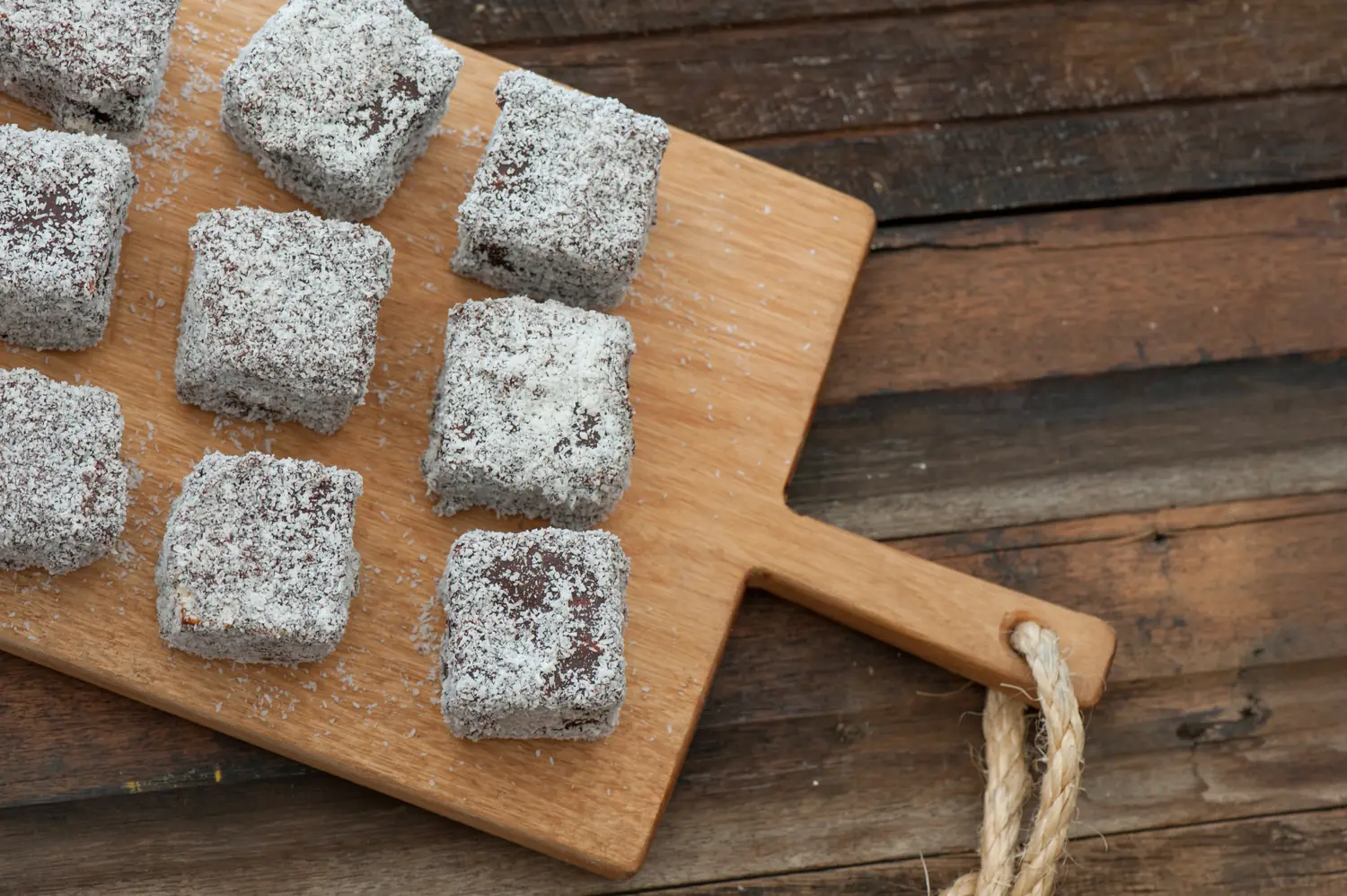
Chocolate and coconut lamington squares on a plate Australia flag Australia 1h
Snack & Tea •Australian Classic

Australian Lamingtons

Lamingtons are squares of light vanilla sponge, dipped in a thin chocolate icing and rolled in desiccated coconut until every side is coated. They are named after Lord Lamington, Governor of Queensland in the 1890s, and they are the cake of Australian school fetes, bake sales and afternoon tea — best eaten the day after baking, when the icing has soaked slightly into the sponge. This recipe makes 16 lamingtons; one serving is two squares, about 155 g.

Sweet & Comforting

Squares of vanilla sponge dipped in chocolate icing and rolled in coconut — the cake Australia eats with its afternoon tea.

Pairs Well With
A cup of tea & fresh berries
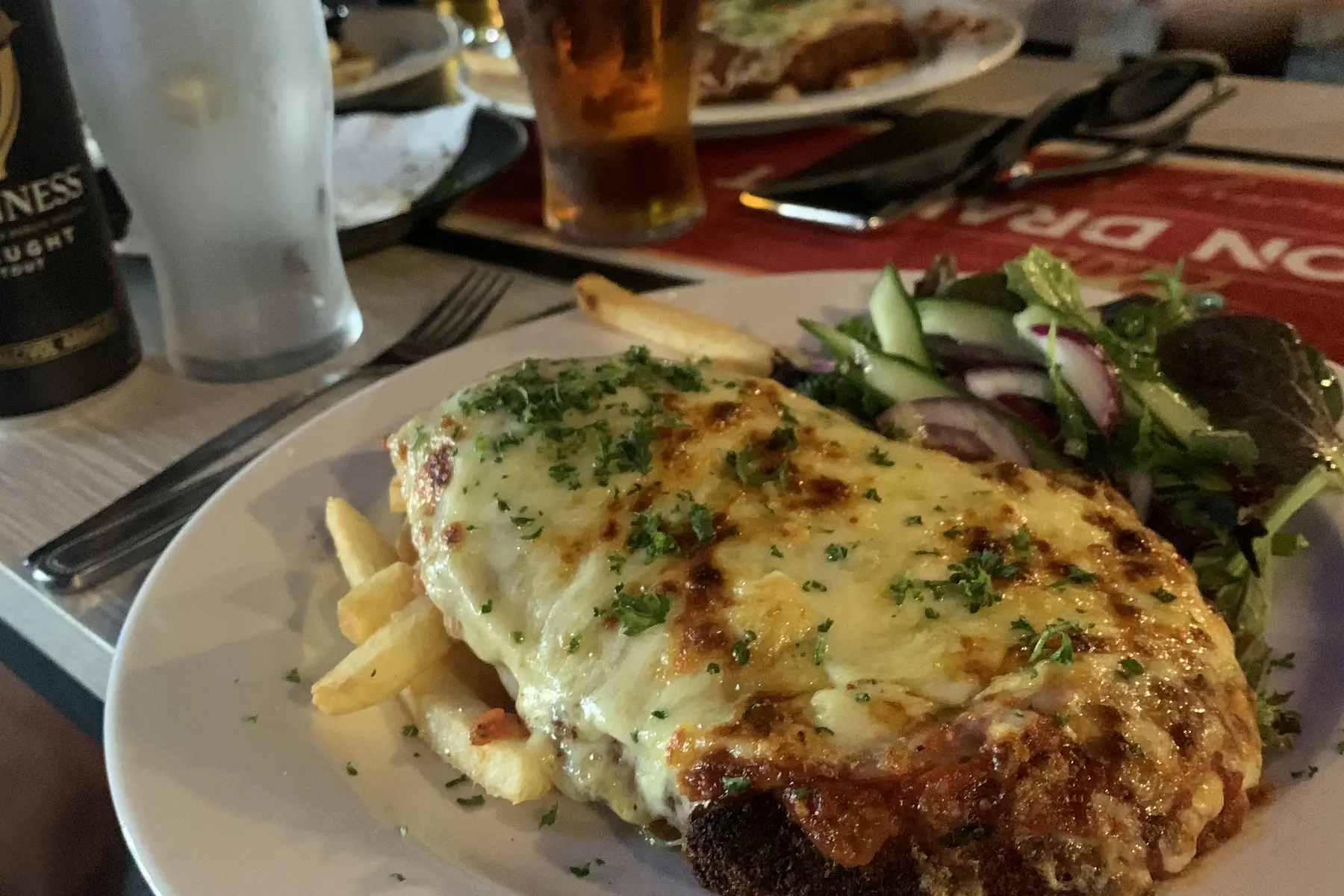
A golden chicken parmigiana topped with melted mozzarella and tomato sauce, served with chips and salad on a white plate Australia flag Australia 55m
Dinner •Australian Classic

Chicken Parmigiana

This chicken parmigiana recipe makes the pub classic Australians call the parma (or parmi, if you are from South Australia): a crumbed chicken breast fried until golden, topped with tomato sauce, a slice of leg ham and a thick blanket of mozzarella, then grilled until bubbling. It is the dish ordered at more Australian pubs than any other, and it cooks at home in under an hour. One serving is about 340 g.

Hearty Pub Comfort

Golden crumbed chicken under tomato sauce, ham and bubbling mozzarella, with chips and salad on the side.

Pairs Well With
Hot chips & garden salad
High Protein

The Dinner Gazette

Never wonder what’s for dinner again

One email a week with easy dinner ideas from around the world — ingredients, steps and nutrition, tested in our kitchen first.

Delivered every Thursday morning. Unsubscribe anytime.