Curated recipes from 193 countries  •  New seasonal Mediterranean issue out now

Overview

Haitian Bread

Pain Haïtien, Pen Ayisyen, Haitian Crusty Bread

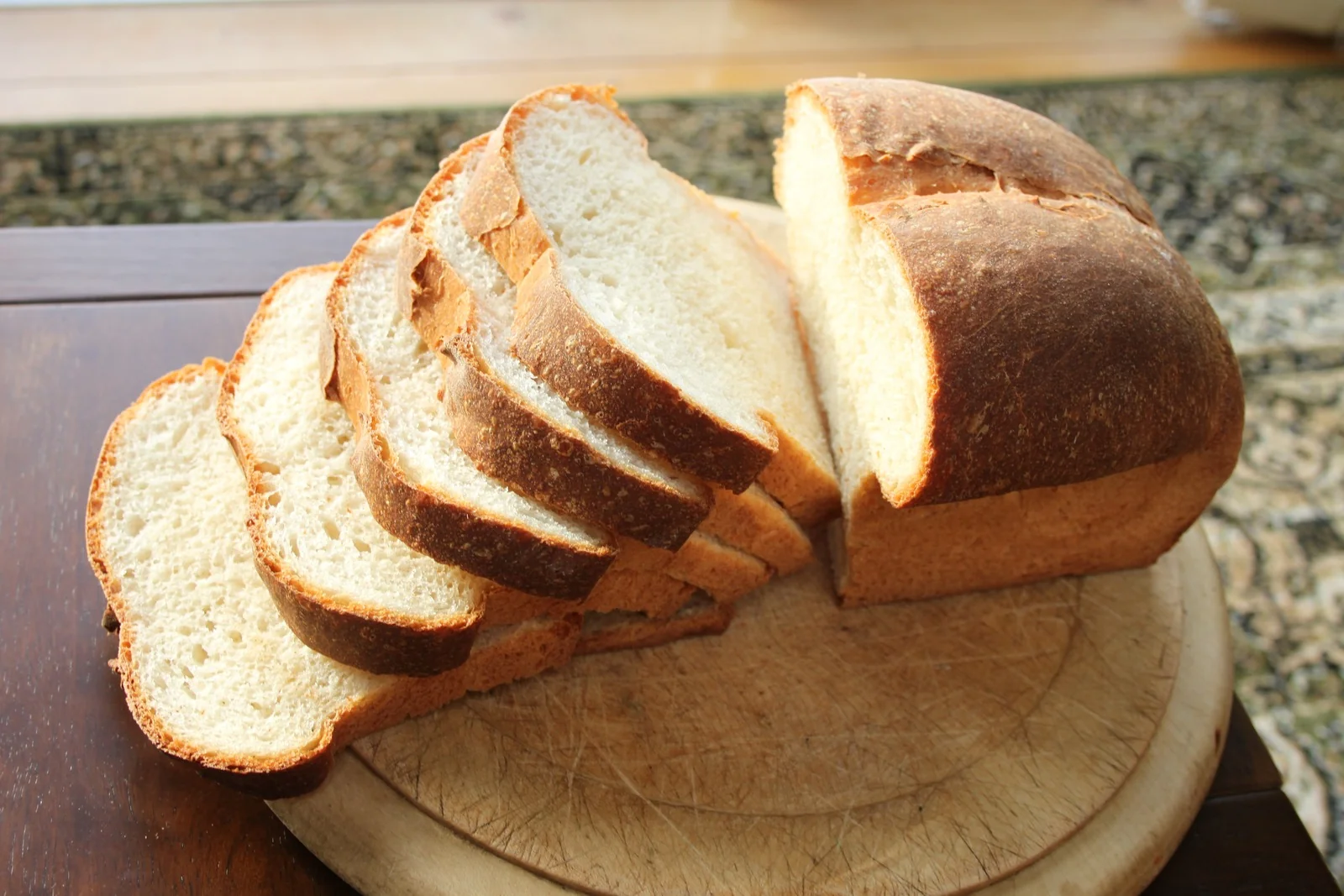
This haitian bread recipe makes the everyday loaf of Haiti, pain haïtien: a crusty white bread with a dense, soft crumb and a gentle sweetness from a spoon of sugar. What sets it apart from a plain white loaf is the cold butter worked into the dough, which keeps the crumb tender, and the tin bake, which gives it a deep golden crust on all sides. One serving is about 100 g.

Bread came to Haiti with French colonial baking and never left: every town has its bakery, and bread sellers still carry loaves through the streets on foot and by bicycle. Pain haïtien is the everyday loaf — a little sweet, a little dense, made to be torn apart warm at breakfast with peanut butter or jam, and just as good the next day toasted. Stale loaves are never wasted: they become crumbs for breading or croutons.

Pairs well with: Warm with butter and jam for breakfast, or with peanut butter and a cup of Haitian coffee.

Provenance

Haiti flag Haiti

Haitian Heritage

Latin America & Caribbean

Time Dedication

2h 30m

120m prep • 30m cook

Batch Yield

8 Servings

307 kcal per serving

1 serving ≈ 100 g

Technical Skill

Intermediate

Medium (Yeasted Loaf)

Meal Timing & Digestive Fit

Breakfast

Prime Morning Fit

Lunch

Inappropriate

Dinner

Inappropriate

Snack & Tea

Inappropriate

Occasions: Everyday breakfast, family mornings, picnics, alongside soups and stews Cost: Low — about $1 per serving at home
A sliced crusty white loaf with a golden-brown crust on a round wooden board

Haitian Heritage

Photo: Mike Finn, CC BY 2.0, via Wikimedia Commons

The Heritage Formulary

Measured Ingredients

Estimated cost: Low — about $1 per serving at home (USD)

Made the Haitian way: cold butter diced into a firm dough, shaped into a log, and baked in a tin until deep golden.

Execution Methodology & Culinary Technique

Step-by-Step Cooking Guide

Active 2h 30m
P

Prep Stage: Dough & First Rise

120 Mins • Mixing, Kneading & Rising

Wake the yeast in warm water, then mix flour, sugar and salt, work in the cold diced butter, and knead until smooth. The dough rises for an hour until doubled, then it is shaped into a log, put in the tin, and left to rise again while the oven heats.

Maestro Tip: Keep the butter cold and diced — it should stay in small pieces in the dough, not melt into it, or the crumb turns greasy instead of tender.

  1. 1

    Wake the Yeast

    10 Mins Warm water, 40°C (105°F)

    Pour the warm water into a small bowl, stir in the yeast and a pinch of the sugar, and leave for 10 minutes until the surface turns frothy. If nothing happens, the yeast is dead — start again with a fresh packet.

    Water hotter than 46°C (115°F) kills yeast, so test it on your wrist: it should feel warm, not hot.

    Done when: A frothy, bubbly surface — the yeast is alive and ready.

  2. 2

    Mix & Knead

    15 Mins No heat

    Put the flour, the rest of the sugar and the salt in a large bowl and stir. Pour in the frothy yeast water and mix to a rough dough, then add the cold diced butter and knead on a lightly floured surface for 10 minutes, until the dough is smooth, slightly sticky and springs back when poked.

    Knead the butter in piece by piece; the dough will feel greasy at first, then come together smooth.

    Done when: A smooth, springy dough that holds its shape when lifted.

  3. 3

    First Rise

    60 Mins Warm place, ~27°C (80°F)

    Shape the dough into a ball, put it in the oiled bowl and turn it once to coat. Cover with a damp cloth and leave in a warm place for about 1 hour, until doubled in size.

    A turned-off oven with the light on is the warmest draught-free spot in most kitchens.

    Done when: Dough doubled, soft and puffy, with a dent that stays when poked.

  4. 4

    Shape the Loaf

    10 Mins No heat

    Turn the dough out onto a lightly floured surface and press it flat into a square. Roll it up tightly into a log, pinching the seam closed, and place it seam-down in the greased loaf tin. Score one long slash down the top with a sharp knife.

    Roll tightly — a loose roll leaves holes in the crumb, and the slash lets the loaf open up as it rises.

    Done when: A neat log in the tin, with one clean slash along the top.

  5. 5

    Second Rise

    25 Mins Warm place, ~27°C (80°F)

    Cover the tin loosely with a cloth and leave in a warm place for 25 minutes, until the dough has risen just above the rim of the tin. Meanwhile, heat the oven to 180°C (350°F).

    Do not let it rise too far — an over-risen loaf collapses in the oven instead of springing up.

    Done when: Dough puffed just above the rim, oven hot and ready.

  6. 6

    Bake Until Golden

    30 Mins 180°C (350°F)

    Bake for 25–30 minutes, until the crust is deep golden brown and the loaf sounds hollow when tapped on the bottom. The inside should reach about 93°C (200°F) on a thermometer.

    If the top browns too fast, lay a sheet of foil loosely over it for the last 10 minutes.

    Done when: Deep golden crust, hollow sound when tapped, soft crumb inside.

  7. 7

    Cool & Slice

    20 Mins No heat

    Leave the loaf in the tin for 10 minutes, then turn it out onto a wire rack and cool for at least 20 minutes more before slicing, so the crumb sets and does not tear.

    A bread knife with a serrated edge cuts clean slices; a straight knife squashes the soft crumb.

    Done when: A firm, sliceable loaf with a crisp crust and a soft, even crumb.

Finishing Touches & Plating

Cool the loaf in its tin for 10 minutes, then turn it out onto a rack and let it cool for at least 20 minutes before slicing, so the crumb sets.

Nutritional Physiology & Benefits

Nutrition

Energy

307

kcal / serving

Protein

8g

Complete AA

Carbs

49g

Complex

Fats

8g

Healthy

Per serving (8 servings · 1 serving ≈ 100 g)
Energy307 kcal
Protein8 g
Carbohydrates49 g
Fat8 g
Fibre1.7 g
Sugar3.9 g
Sodium487 mg
Per 100g
Energy307 kcal
Protein7.9 g
Carbohydrates49.4 g
Fat8.3 g
Fibre1.7 g
Sugar3.9 g
Sodium487 mg

Nutrition values are estimated — calculated from USDA FoodData Central values for the listed ingredients.

Vitamins & minerals: Bread flour supplies B vitamins and iron, and the butter adds a little vitamin A; serve with fruit or eggs for a fuller breakfast.

Steady Morning Energy

About 49.4 g of carbohydrate per 100 g slice, which makes this a solid base for breakfast, especially with protein on the side.

Simple, Honest Ingredients

Just flour, water, yeast, sugar, butter and salt — no preservatives or improvers, and nothing you cannot pronounce.

Soft, Tender Crumb

The cold butter worked into the dough keeps the crumb soft for days, so the loaf stays good sliced and toasted.

Food Pairings

What to Eat With

To optimize nutrient absorption and elevate the sensory depth, pair with these authentic accompaniments:

Sides

Peanut Butter

Peanut butter is the classic Haitian partner for this bread: the nutty richness fills the soft crumb and makes a simple breakfast complete.

Butter & Jam

Warm bread with butter and guava or mango jam is how the loaf is most often eaten at breakfast in Haiti.

Eggs

Fried or scrambled eggs with a thick slice of this bread make a full, satisfying breakfast.

Drinks

Haitian Coffee

Strong, sweet Haitian coffee is the natural match for a slightly sweet bread — the bitterness and the sweetness balance each other.

Full Menus

Haitian Spaghetti

A slice of bread alongside a plate of Haitian spaghetti is a normal Haitian breakfast — the bread catches the sauce.

Complete menu

Serve warm slices with peanut butter, jam and Haitian coffee, or with fried eggs and a plate of Haitian spaghetti.

Digestive Guardrails

What NOT to Combine

To prevent digestive distress, sluggishness, or palate clash, avoid pairing the dish with these elements:

Slicing While Hot

Cutting the loaf straight from the oven tears the soft crumb and lets the steam escape, leaving the bread dry; wait at least 20 minutes. This is general food information, not medical advice.

Storing in the Fridge

Bread kept in the fridge goes stale faster, not slower; keep it in a cloth bag at room temperature or freeze it sliced. This is general food information, not medical advice.

General information only, not medical advice — consult a doctor for personal dietary decisions.

Who Should Eat It

Who Should Eat

  • General adultsA plain, satisfying breakfast bread — about 307 kcal per 100 g slice, best warm with peanut butter.
  • ChildrenChildren love it warm with butter and jam; cut thick slices they can hold easily.
  • ElderlyOlder eaters will find the soft crumb easy to eat, especially toasted lightly with butter.
  • Pregnant womenPregnant women can eat it as part of a varied diet; pair it with eggs or fruit for a fuller breakfast.
  • Breastfeeding womenBreastfeeding women can eat it freely as part of a varied diet; it is a good energy base between feeds.
  • AthletesAthletes get quick carbohydrate energy from the bread; add peanut butter or eggs for protein.
  • Weight gainFor weight gain, eat two thick slices with peanut butter and a milky coffee.
  • Weight lossFor weight loss, keep to one slice and fill the plate with fruit or eggs instead of a second slice.

Health Conditions — Adjust or Avoid

Conditions

  • DiabetesOne slice has about 49.4 g of carbs, so count it as a full carbohydrate portion; a wholegrain version would be steadier. Ask your clinician about portions.
  • High blood pressureSodium is about 487 mg per 100 g slice, mostly from the salt in the dough; keep the spread unsalted. Ask your clinician about portions.
  • Kidney diseaseThe bread is a moderate source of carbohydrate and salt; people with kidney disease should keep portions small and check with their clinician.
  • GoutWhite bread is low in purines, so it is a safe base for a meal; watch the rich toppings instead. Ask your clinician about portions.
  • Stomach issuesFresh warm bread can feel heavy on a sensitive stomach; toasted slices are usually easier. Ask your clinician if symptoms persist.
  • Cardiovascular diseaseThe loaf is low in fat, but butter and jam add saturated fat and sugar quickly; keep the spread thin. Ask your clinician about portions.
  • Fatty liverWhite bread itself is low in fat, but sweet spreads add sugar; choose a thin spread of peanut butter instead. Ask your clinician about portions.
  • Food allergiesContains wheat (gluten) and milk (butter). People with a wheat or milk allergy should not eat this loaf as written.
  • Special therapeutic dietsOn a therapeutic diet, ask your clinician or dietitian whether white bread fits your plan.

If you have a medical condition, consult your doctor before changing your diet.

Storage & Use

Storage & Use

How to store
Cool the loaf fully, then keep it in a cloth bag or bread box at room temperature.
In the fridge
Do not refrigerate — it stales faster in the fridge; keep at room temperature for up to 3 days.
In the freezer
Up to 3 months, sliced and wrapped well; freeze the day it is baked.
How to reheat
Warm slices in a 180°C (350°F) oven for 5 minutes, or toast them; the crust crisps up again.
Freezing recommended
Yes — slice first, then freeze, so you can toast a slice at a time.
Signs it has spoiled
Mould spots, a sour smell or a hard, dry crumb mean it should be thrown away.

More recipes to explore

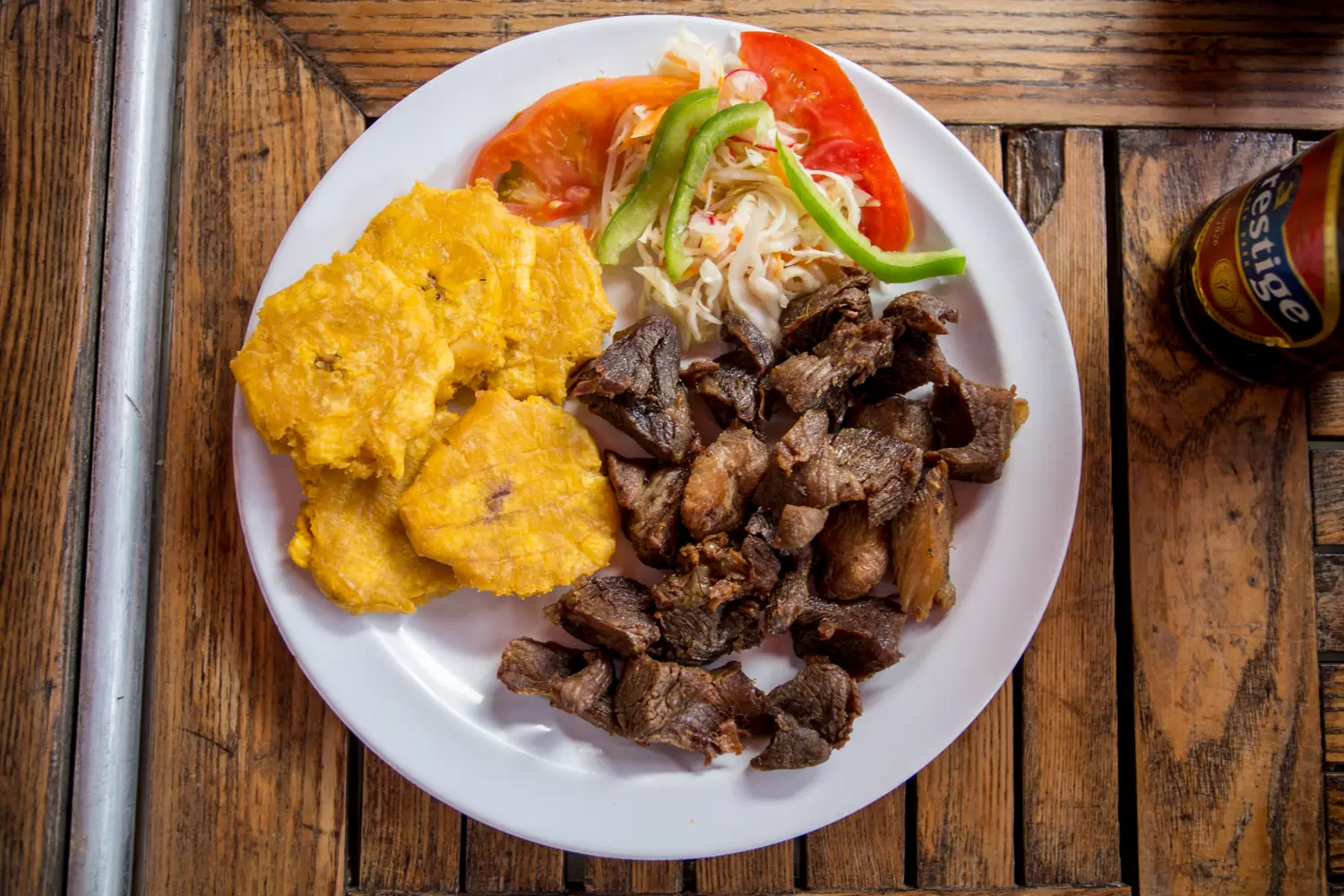
A plate of Haitian griot: dark crisp fried pork cubes with fried plantains and pikliz slaw with tomato and green pepper Haiti flag Haiti 2h 10m
Dinner •Haiti Heritage

Haitian Griot

This Haitian griot recipe starts with pork shoulder rubbed in sour citrus and epis, Haiti's green seasoning paste of scallions, garlic, parsley and Scotch bonnet, then braised in its own marinade until tender and fried in hot oil until the edges turn dark and crisp. It is served with pikliz, a sharp pickled cabbage slaw that cuts through the richness. One serving is about 215 g of crisp fried pork with pikliz.

Hearty & Celebratory

Haiti's most loved party dish: citrus-marinated pork, braised tender, then fried until crisp and served with fiery pickled pikliz.

Pairs Well With
Fried plantains (bannann peze) and rice and beans, with pikliz on the side.
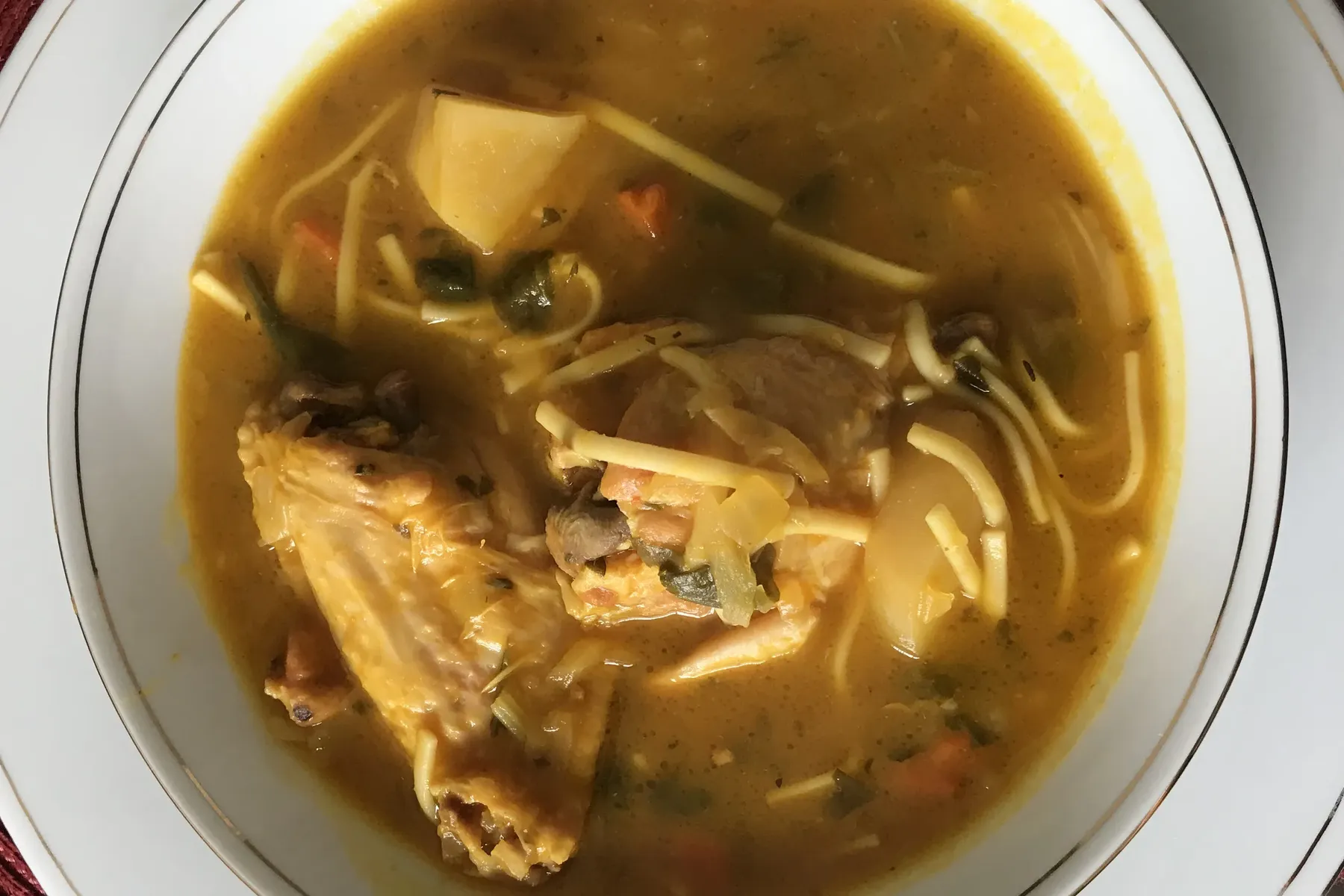
A bowl of Soup Joumou with beef, spaghetti, potato and golden pumpkin broth Haiti flag Haiti 2h 40m
Lunch •Haiti's Independence Soup

Soup Joumou

Soup joumou is Haiti's golden pumpkin soup: tender beef simmered in a thick purée of giraumon squash, with root vegetables, cabbage and spaghetti in a rich, spiced broth. This soup joumou recipe follows the home-cooked method Haitian families use every 1 January, when the soup marks Independence Day. One serving is about 480 g.

Comfort & Warmth

A hot, hearty bowl of pumpkin, beef and vegetables that warms up a family lunch on a cold day or a festive table.

Pairs Well With
Serve hot with crusty French bread for dipping and a spoonful of pikliz on the side.
Soups & Broths
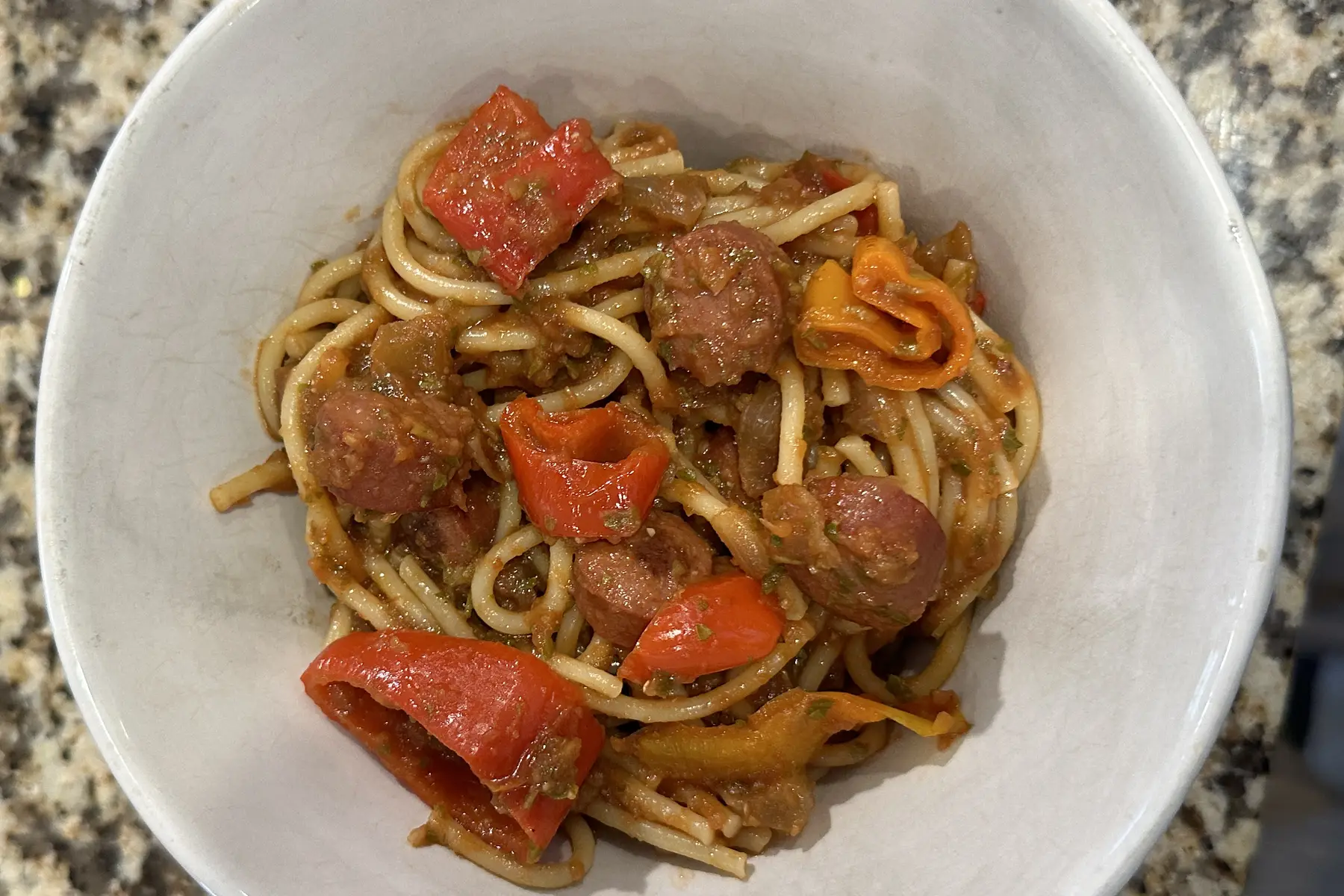
Haitian spaghetti in a white bowl — spaghetti in a rust-red epis and tomato sauce with sliced hot dogs and red peppers Haiti flag Haiti 40m
Breakfast •Haitian Breakfast Espageti

Haitian Spaghetti

This haitian spaghetti recipe is Haiti's beloved breakfast pasta: dried spaghetti cooked in one pot with epis, the green Haitian seasoning base, tomato paste, sweet peppers, onion and sliced hot dogs, until every strand is stained rust-red and full of flavour. It is pantry cooking at its best — cheap, fast and boldly seasoned — and it lands on the table in about 40 minutes. One serving is about 380 g.

Hearty & Comforting

One-pot spaghetti coated in a savoury epis and tomato sauce with sliced hot dogs, peppers and onion — a filling Haitian breakfast.

Pairs Well With
Boiled egg, avocado & pikliz
Pasta & Noodles • Quick Prep (<30m)
A white bowl of Haitian tchaka with corn kernels, red beans and smoked pork chunks in a light broth, garnished with parsley Haiti flag Haiti 3h 20m
Lunch •Haitian Heritage Stew

Tchaka

This tchaka recipe soaks dried corn and red kidney beans overnight, then simmers them for hours with smoked pork, pumpkin and a fragrant epis of garlic, scallion, parsley and thyme until the pot turns thick and hearty. The smoked pork is what gives tchaka its deep, salty flavour, and the Scotch bonnet — left whole so it perfumes the stew without burning — is the quiet heat underneath it all. One serving is about 400 g.

Comfort & Warmth

Dried corn and red beans simmered for hours with smoked pork, pumpkin and epis until thick — Haiti's slow, hearty celebration stew.

Pairs Well With
Crusty bread, pikliz & avocado
Soups & Broths

The Dinner Gazette

Never wonder what’s for dinner again

One email a week with easy dinner ideas from around the world — ingredients, steps and nutrition, tested in our kitchen first.

Delivered every Thursday morning. Unsubscribe anytime.