
Curated recipes from 193 countries  •  New seasonal Mediterranean issue out now

Overview

Tchaka

Tchaka Mayi, Chaka, Tyaka, Tiaka

This tchaka recipe soaks dried corn and red kidney beans overnight, then simmers them for hours with smoked pork, pumpkin and a fragrant epis of garlic, scallion, parsley and thyme until the pot turns thick and hearty. The smoked pork is what gives tchaka its deep, salty flavour, and the Scotch bonnet — left whole so it perfumes the stew without burning — is the quiet heat underneath it all. One serving is about 400 g.

Tchaka is one of Haiti's oldest celebration dishes, a pot of dried corn and beans with smoked pork that simmers for hours while the family gathers. It is cooked for feast days and Vodou ceremonies, where it is also offered to the loa, and for big family Sundays — the long, slow cooking is part of the occasion, not a chore. Every region has its own name for it — tchaka, chaka, tyaka or tiaka — and its own version, but the heart of it never changes: corn, beans and smoked pork, cooked low and slow until thick.

Pairs well with: Crusty bread, pikliz & avocado

Provenance

Haiti flag Haiti

Haitian Heritage Stew

Latin America & Caribbean

Time Dedication

3h 20m

20m prep • 180m cook

Batch Yield

6 Servings

414 kcal per serving

1 serving ≈ 400 g

Technical Skill

Intermediate

Easy (Slow Simmer)

Meal Timing & Digestive Fit

Breakfast

Not Advised

Lunch

Prime Metabolic Fit

Dinner

Ideal Hearty Main

Snack & Tea

Inappropriate

Soups & Broths Occasions: Family gatherings, feast days, celebrations, Sunday lunch, communal meals Cost: Low — about $2–3 per serving at home
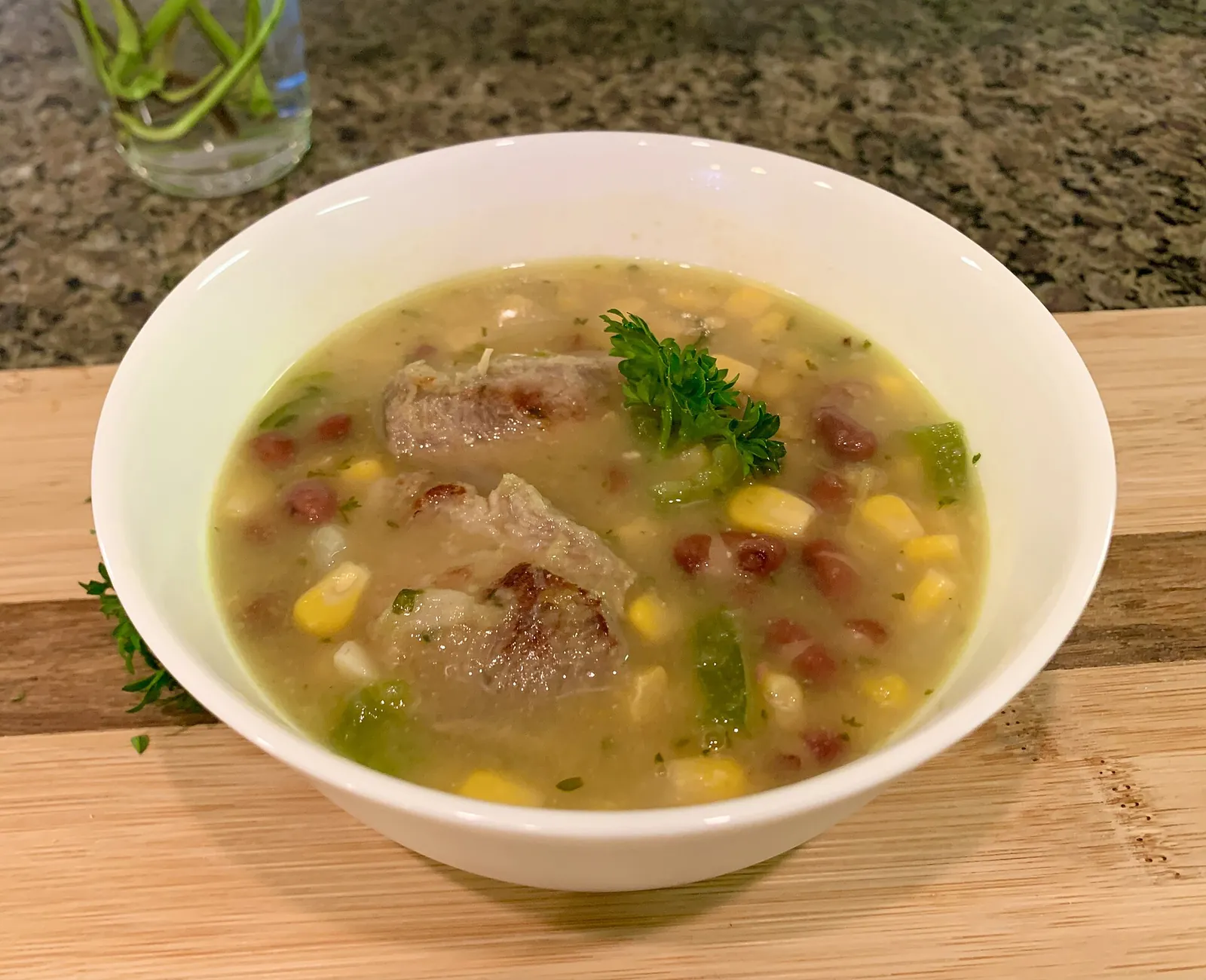
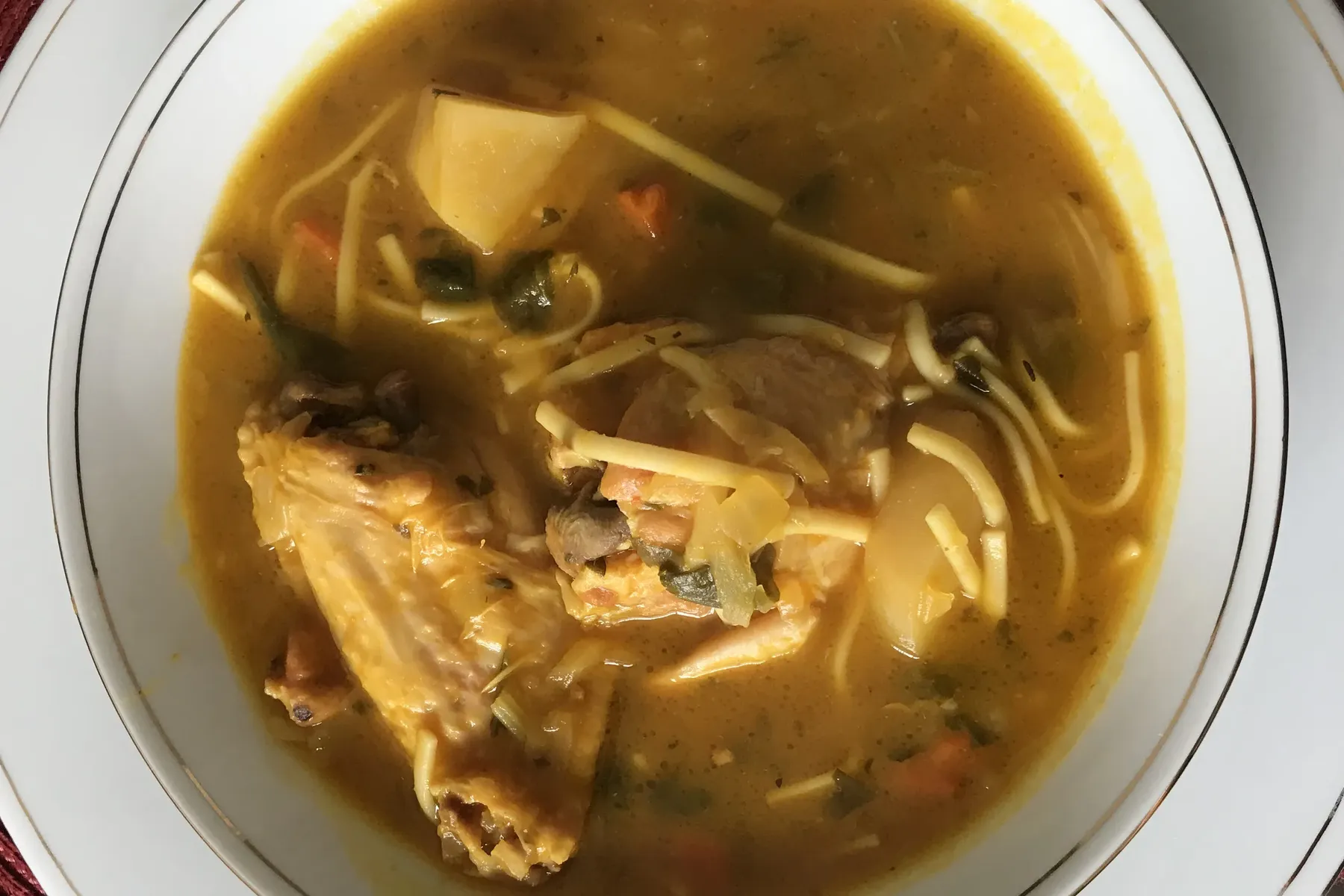
A white bowl of Haitian tchaka with corn kernels, red beans and smoked pork chunks in a light broth, garnished with parsley

Haitian Heritage Stew

Photo: LittleT889, CC BY-SA 4.0, via Wikimedia Commons

The Heritage Formulary

Measured Ingredients

Estimated cost: Low — about $2–3 per serving at home (USD)

A traditional Haitian stew of dried corn, red beans and smoked pork, simmered for hours with pumpkin and epis.

Execution Methodology & Culinary Technique

Step-by-Step Cooking Guide

Active 3h 20m
P

Soak the corn and beans overnight

20 minutes active, plus 10 hours soaking

The night before, rinse the dried corn and the red beans in separate bowls, cover generously with cold water and leave to soak for at least 10 hours. In the morning, drain both. Dice the onion and pepper, chop the scallions and parsley, mince the garlic, cube the pumpkin and cut the smoked pork into large chunks.

Maestro Tip: Do not skip the soak — dried corn and beans need the long soak to cook evenly and turn tender instead of staying hard in the middle.

  1. 1

    Simmer the corn and beans

    90 minutes Gentle simmer (95°C / 200°F)

    Put the drained corn and beans in a large heavy pot with 1.5 litres of fresh water. Bring to a vigorous boil and boil hard for 10 minutes, then reduce to a gentle simmer and cook for about 80 minutes, topping up with hot water if the level drops below the corn and beans.

    Skim off any foam in the first 10 minutes — it keeps the broth clear and sweet.

    Done when: Corn and beans are almost tender but still hold their shape; the water has turned lightly cloudy.

  2. 2

    Brown the smoked pork

    10 minutes Medium-high heat (200°C / 400°F)

    Heat the oil in a wide pan over medium-high heat. Brown the smoked pork chunks on all sides for about 8 minutes, until the edges are golden and the fat has started to render.

    Browning is not just colour — the rendered fat carries the smoke flavour into the whole pot.

    Done when: Pork chunks are golden brown at the edges; the pan has a thin layer of rendered fat.

  3. 3

    Combine everything and simmer

    75 minutes Low heat (95°C / 200°F)

    Tip the browned pork and its fat into the pot with the corn and beans. Add the onion, pepper, scallions, garlic, parsley, thyme, bay leaves and the whole Scotch bonnet. Simmer gently for 60 minutes, then add the pumpkin cubes and simmer for 15 minutes more, topping up with hot water so the pot stays soupy.

    Keep the Scotch bonnet whole — if it bursts, the stew turns fiery. Fish it out at the end if you like it mild.

    Done when: The pot is thick and stew-like, the pumpkin is soft, and the pork is tender enough to pull apart with a spoon.

  4. 4

    Season and finish

    5 minutes Low heat (95°C / 200°F)

    Remove the bay leaves and the Scotch bonnet. Stir in the lime juice and the salt — taste first, because the smoked pork is already salty — and the black pepper. Simmer for 5 minutes more, then take off the heat.

    Season at the end, never at the start: the smoked pork gives up salt as it cooks, and early salting is how tchaka ends up too salty.

    Done when: The stew tastes deeply savoury with a bright lift from the lime; the broth is thick enough to coat a spoon.

Finishing Touches & Plating

Ladle the tchaka into wide bowls while it is steaming hot, making sure every serving gets corn, beans and a good chunk of pork. Scatter a little extra chopped parsley over the top.

Nutritional Physiology & Benefits

Nutrition

Energy

414

kcal / serving

Protein

24g

Complete AA

Carbs

64g

Complex

Fats

8g

Healthy

Per serving (6 servings · 1 serving ≈ 400 g)
Energy414 kcal
Protein24 g
Carbohydrates64 g
Fat8 g
Fibre13.0 g
Sugar4.0 g
Sodium839 mg
Per 100g
Energy103 kcal
Protein6 g
Carbohydrates16 g
Fat2 g
Fibre3.2 g
Sugar1 g
Sodium210 mg

Nutrition values are estimated — calculated from USDA FoodData Central values for the listed ingredients.

Vitamins & minerals: The beans and corn supply B vitamins, iron and magnesium, the pumpkin and peppers add vitamin A and vitamin C, and the pork adds B vitamins and zinc. All nutrition values are estimated.

A filling, protein-rich stew

With about 24 g of protein per serving from the pork and beans, one bowl works as a complete main meal that keeps you full for hours.

Very high in fibre

The beans and corn give about 13 g of fibre per serving, which supports digestion and helps the meal feel satisfying without extra food.

Naturally gluten-free and dairy-free

Corn, beans, pork and vegetables contain no gluten and no dairy, so the stew suits both gluten-free and dairy-free tables as written.

Food Pairings

What to Eat With

To optimize nutrient absorption and elevate the sensory depth, pair with these authentic accompaniments:

Sides

Crusty bread

A thick slice of crusty bread is made for this stew — it soaks up the smoky broth that the spoon cannot reach.

Avocado slices

Cool, creamy avocado balances the heat of the Scotch bonnet and the salt of the smoked pork.

Vegetables

Pikliz (Haitian pickled vegetables)

The sharp, vinegary crunch of pikliz cuts through the rich, salty pork and wakes up the whole bowl.

Drinks

Fresh limeade

A cold, tart limeade refreshes the palate between spoonfuls of the thick, hearty stew.

Complete menu

Serve the tchaka as the main bowl with crusty bread, pikliz and avocado slices on the side, and fresh limeade to drink.

Digestive Guardrails

What NOT to Combine

To prevent digestive distress, sluggishness, or palate clash, avoid pairing the dish with these elements:

Extra salty foods on the side

Tchaka is already salty from the smoked pork. Pairing it with salty cured meats, salty cheese or extra soy sauce can push sodium far higher, which is a concern for blood pressure. This is general information, not medical advice — ask a clinician about your own sodium limits.

Undercooked beans or corn

Dried beans and corn must be fully cooked — hard, undercooked beans are difficult to digest and can cause stomach upset. If the beans are still firm after the long simmer, keep cooking and add hot water until they are completely tender. This is general information, not medical advice.

General information only, not medical advice — consult a doctor for personal dietary decisions.

Who Should Eat It

Who Should Eat

  • General adultsA complete, satisfying meal in one bowl. Enjoy a normal portion and balance the rest of the day with lighter foods, since the stew is filling and salty.
  • ChildrenSuitable from about age 2 in small portions with the pork cut up and the stew cooled a little. Remove the Scotch bonnet and go easy on the salt for young children.
  • ElderlyGood for appetite and protein, and the soft corn and beans are easy to chew. Serve the pork cut into small, tender pieces and keep portions moderate because the stew is salty.
  • Pregnant womenSafe when the pork is fully cooked through and the stew is served piping hot. The salt means small portions are wiser; ask your clinician if you have pregnancy-related blood pressure concerns.
  • Breastfeeding womenA nourishing, energy-dense stew that fits well during breastfeeding. Drink water alongside it and keep portions moderate because of the salt.
  • AthletesGood after a hard session: about 24 g of protein and 64 g of carbohydrates per serving help recovery. Add bread on the side if you need more energy.
  • Weight gainA good choice — energy-dense, protein-rich and easy to eat in a large portion. Add bread and avocado to raise the calories further.
  • Weight lossThe corn and beans are the main challenge at about 64 g of carbohydrates per serving, so take a smaller portion and fill the rest of the bowl with the pork and vegetables.

Health Conditions — Adjust or Avoid

Conditions

  • DiabetesThe corn and beans add about 64 g of carbohydrates per serving, so portion size matters and blood sugar should be monitored. A smaller portion with more pork and vegetables helps; ask your clinician or dietitian for a portion that fits your plan.
  • High blood pressureThis is a very salty stew — the smoked pork is the main source. Rinse the pork before cooking, go easy on the added salt, and keep portions moderate. Ask your clinician about your sodium limit.
  • Kidney diseaseThe stew is high in protein and salt, so people with kidney disease should keep portions small and check with their clinician before eating it regularly.
  • GoutBeans are moderate in purines and the pork is salty, so a moderate portion is the wiser choice. Ask your clinician if you have gout concerns.
  • Stomach issuesThe stew is soft and easy on the stomach once the beans are fully cooked, but the Scotch bonnet and the rich pork can irritate a sensitive stomach. Eat a small portion and remove the pepper early if you have stomach issues.
  • Cardiovascular diseaseThe stew is low in fat but very salty, so a moderate portion with plenty of fresh vegetables on the side is the better choice. Ask your clinician about your salt limits.
  • Fatty liverThe stew is low in fat and high in fibre, which suits a liver-friendly plate, but the salt is the watch point. Keep the portion modest and ask your clinician for guidance.
  • Food allergiesContains pork. The stew is free of gluten, egg, dairy, nuts and shellfish as written, but check the labels of any seasoning blends you use.
  • Special therapeutic dietsThis is a regular family stew, not a therapeutic diet. Anyone on a prescribed low-sodium, low-protein or diabetic diet should ask their clinician or dietitian before making it a regular meal.

If you have a medical condition, consult your doctor before changing your diet.

Storage & Use

Storage & Use

How to store
Cool quickly and store in an airtight container.
In the fridge
4–5 days in the refrigerator; the flavour improves on the second day.
In the freezer
Up to 3 months in airtight containers.
How to reheat
Reheat gently in a pot with a splash of water until steaming hot throughout, to 74°C (165°F).
Freezing recommended
Yes, up to 3 months; freeze in single portions for easy reheating.
Signs it has spoiled
Sour or off smell, slimy texture on the pork, or mould on the surface.

More recipes to explore

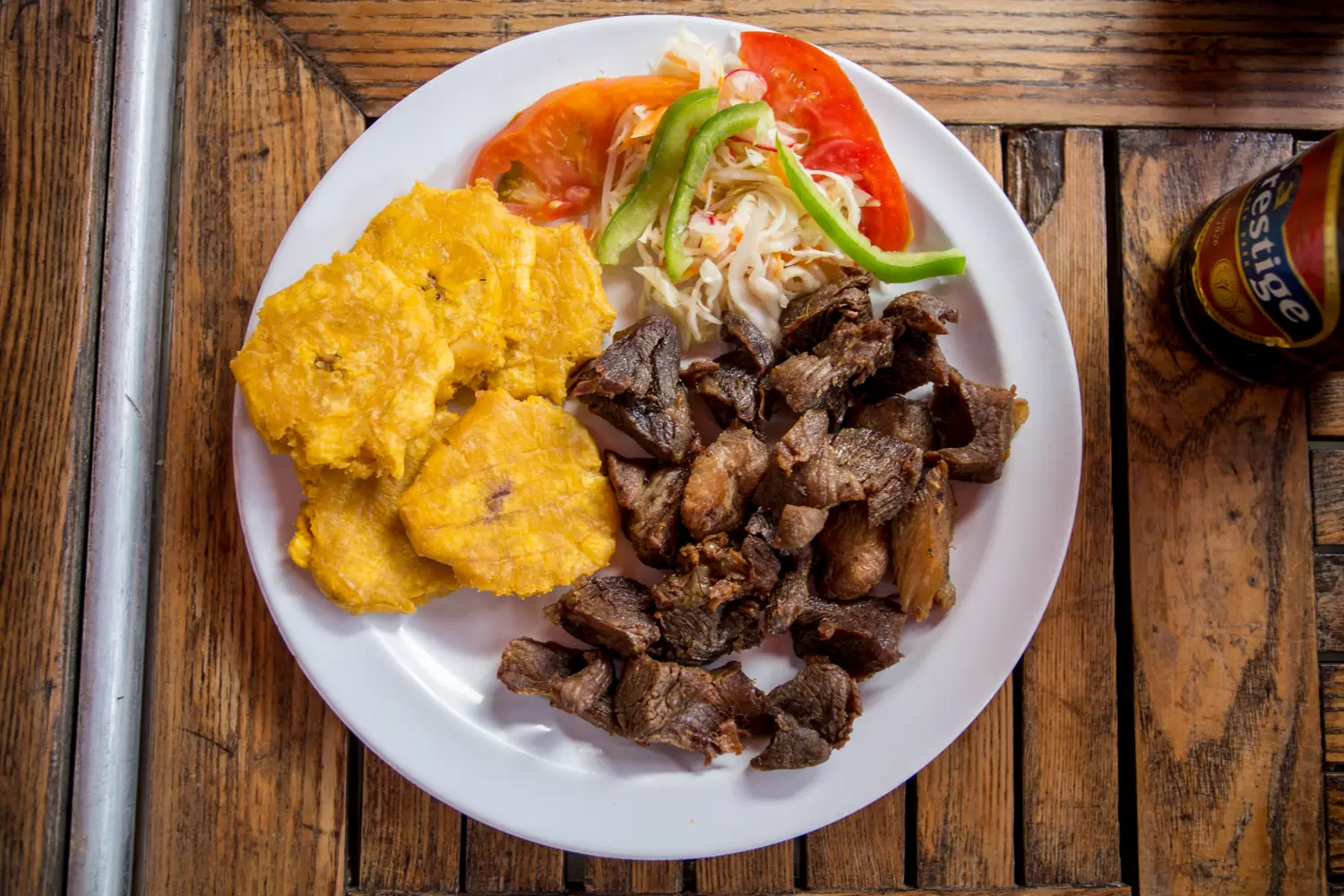
A plate of Haitian griot: dark crisp fried pork cubes with fried plantains and pikliz slaw with tomato and green pepper Haiti flag Haiti 2h 10m
Dinner •Haiti Heritage

Haitian Griot

This Haitian griot recipe starts with pork shoulder rubbed in sour citrus and epis, Haiti's green seasoning paste of scallions, garlic, parsley and Scotch bonnet, then braised in its own marinade until tender and fried in hot oil until the edges turn dark and crisp. It is served with pikliz, a sharp pickled cabbage slaw that cuts through the richness. One serving is about 215 g of crisp fried pork with pikliz.

Hearty & Celebratory

Haiti's most loved party dish: citrus-marinated pork, braised tender, then fried until crisp and served with fiery pickled pikliz.

Pairs Well With
Fried plantains (bannann peze) and rice and beans, with pikliz on the side.
A bowl of Soup Joumou with beef, spaghetti, potato and golden pumpkin broth Haiti flag Haiti 2h 40m
Lunch •Haiti's Independence Soup

Soup Joumou

Soup joumou is Haiti's golden pumpkin soup: tender beef simmered in a thick purée of giraumon squash, with root vegetables, cabbage and spaghetti in a rich, spiced broth. This soup joumou recipe follows the home-cooked method Haitian families use every 1 January, when the soup marks Independence Day. One serving is about 480 g.

Comfort & Warmth

A hot, hearty bowl of pumpkin, beef and vegetables that warms up a family lunch on a cold day or a festive table.

Pairs Well With
Serve hot with crusty French bread for dipping and a spoonful of pikliz on the side.
Soups & Broths
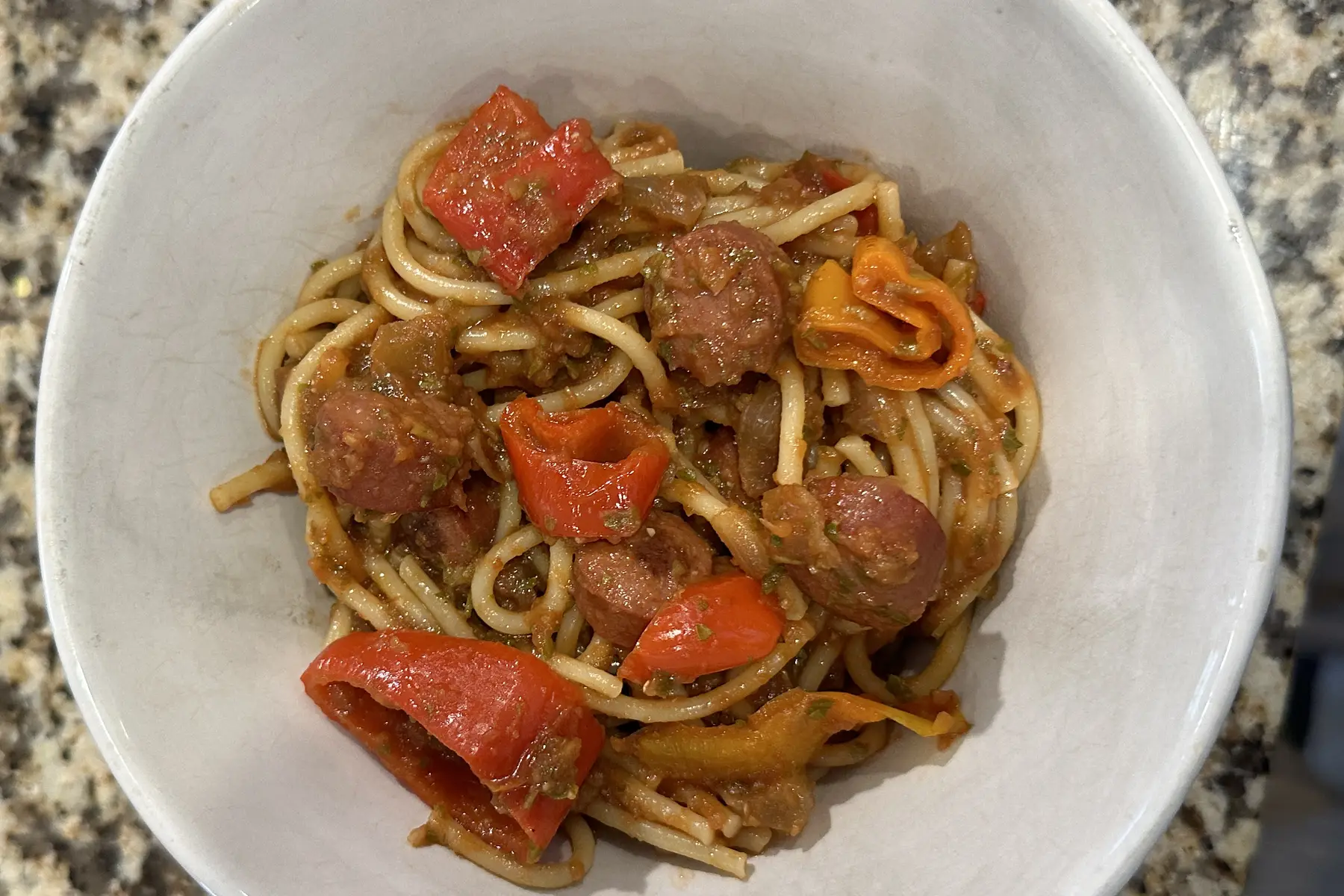
Haitian spaghetti in a white bowl — spaghetti in a rust-red epis and tomato sauce with sliced hot dogs and red peppers Haiti flag Haiti 40m
Breakfast •Haitian Breakfast Espageti

Haitian Spaghetti

This haitian spaghetti recipe is Haiti's beloved breakfast pasta: dried spaghetti cooked in one pot with epis, the green Haitian seasoning base, tomato paste, sweet peppers, onion and sliced hot dogs, until every strand is stained rust-red and full of flavour. It is pantry cooking at its best — cheap, fast and boldly seasoned — and it lands on the table in about 40 minutes. One serving is about 380 g.

Hearty & Comforting

One-pot spaghetti coated in a savoury epis and tomato sauce with sliced hot dogs, peppers and onion — a filling Haitian breakfast.

Pairs Well With
Boiled egg, avocado & pikliz
Pasta & Noodles • Quick Prep (<30m)
Tagliatelle al ragù Bolognese in a bowl with Parmigiano-Reggiano Italy flag Italy 4h 25m
Lunch •Emilia-Romagna

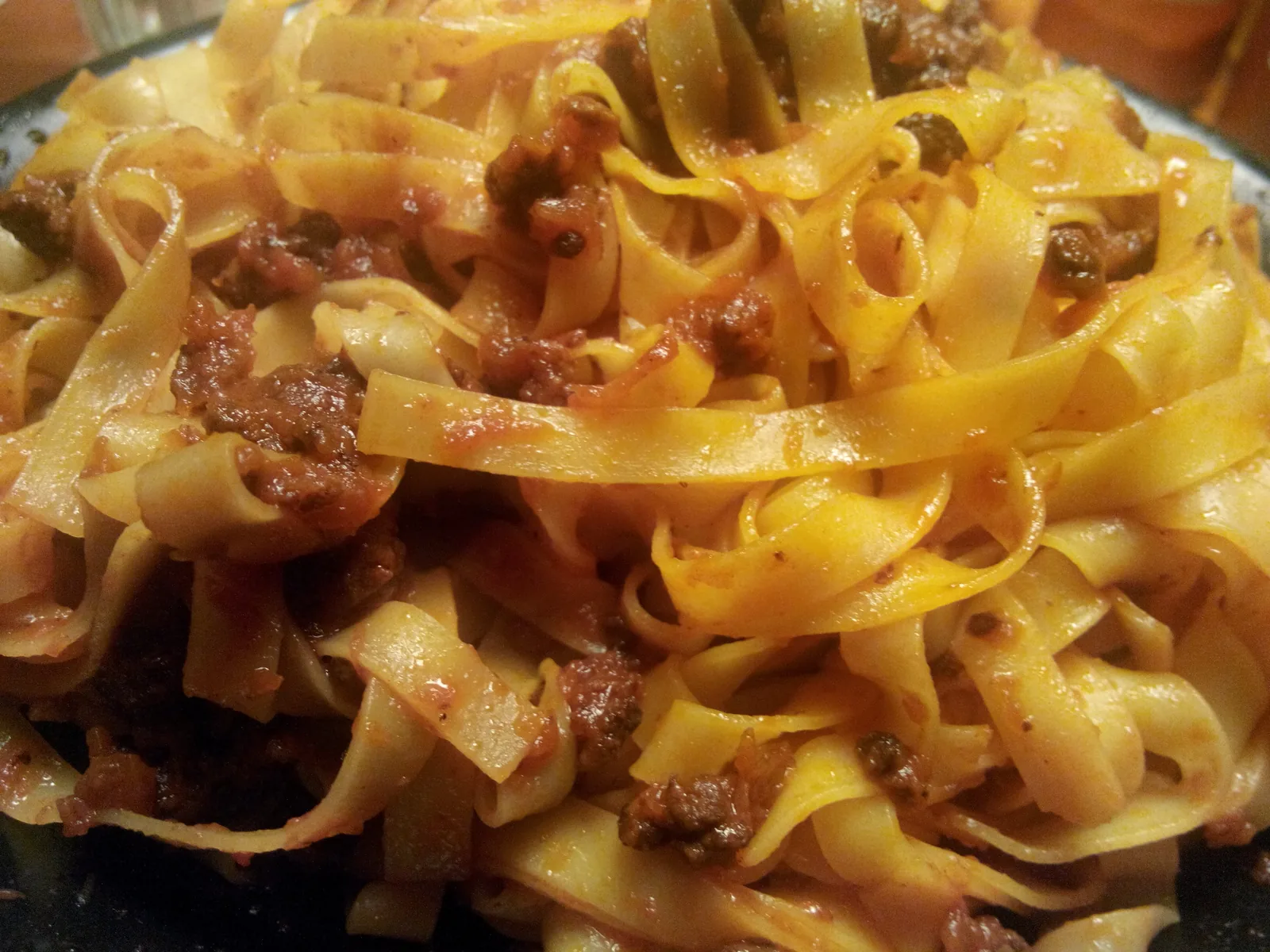
Tagliatelle al Ragù Bolognese

Slow-braised soffritto and coarse ground heritage meats layered over handmade egg yolk dough for mid-day stamina.

Lean Protein

Slow-simmered beef ragù tossed through fresh egg tagliatelle.

Pairs Well With
Bitter Radicchio & Aged Balsamico di Modena
Pasta & Noodles • High Protein

The Dinner Gazette

Never wonder what’s for dinner again

One email a week with easy dinner ideas from around the world — ingredients, steps and nutrition, tested in our kitchen first.

Delivered every Thursday morning. Unsubscribe anytime.