Curated recipes from 193 countries  •  New seasonal Mediterranean issue out now

Overview

Hong Shao Rou

Hóng Shāo Ròu — Chinese Red-Braised Pork Belly

This hong shao rou recipe makes China's red-braised pork belly: cubes of pork belly caramelised in rock sugar, then braised for an hour in soy sauce, Shaoxing wine, ginger and star anise until the sauce turns to a glossy glaze. One serving is about 185 g.

Hong shao rou, red-braised pork, is one of China's most loved dishes, and its home is Hunan province, where the version made with rock sugar and soy sauce became famous across the country. The dish is often linked with Mao Zedong, who came from Hunan and was said to love his family's red-braised pork — the story is told so often that the Hunan version is sometimes called Mao-style braised pork. Whatever the tale, the method is old and settled: pork belly caramelised in sugar, then braised slow in soy and wine until the sauce turns to a red glaze.

Pairs well with: Steamed rice, blanched greens and pickled vegetables

Provenance

China flag China

Hunan Red-Braised Classic

East & South Asia

Time Dedication

1h 45m

15m prep • 90m cook

Batch Yield

4 Servings

1123 kcal per serving

1 serving ≈ 185 g

Technical Skill

Intermediate

Medium (Slow Braise)

Meal Timing & Digestive Fit

Breakfast

Not Advised

Lunch

Hearty Midday Main

Dinner

Ideal Hearty Main

Snack & Tea

Inappropriate

High Protein Occasions: Family dinners, celebrations, Lunar New Year, slow Sunday cooking Cost: Medium — about $4–5 per serving at home
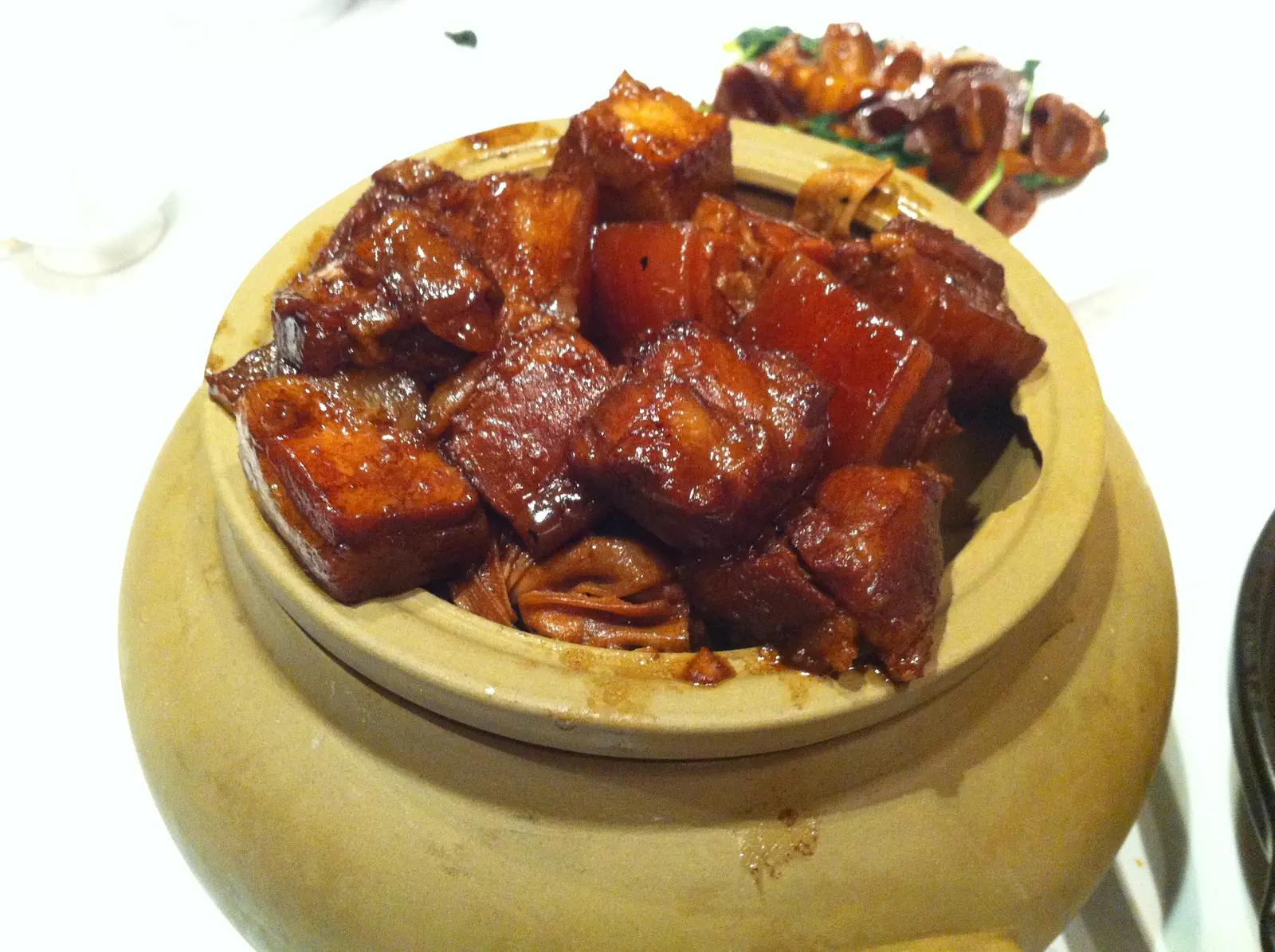
Glossy cubes of red-braised pork belly in a clay pot, coated in a deep reddish-brown caramel soy glaze

Hunan Red-Braised Classic

Photo: N509FZ, CC BY-SA 4.0, via Wikimedia Commons

The Heritage Formulary

Measured Ingredients

Estimated cost: Medium — about $4–5 per serving at home (USD)

A true hong shao rou has pork belly braised in a rock-sugar caramel and soy until the sauce turns to a glossy red glaze — never pale, and never thickened with starch.

Execution Methodology & Culinary Technique

Step-by-Step Cooking Guide

Active 1h 45m
P

Prep Stage: Blanch the Pork and Measure the Braise

15 Mins • Knife & Pot Work

Blanch the pork belly in boiling water for 5 minutes, rinse it clean, and cut it into 4 cm cubes. While it blanches, crush the rock sugar, slice the ginger, tie the spring onions in a knot, and measure the soy sauces and Shaoxing wine into small bowls. Everything must be ready before the caramel starts — melted sugar waits for nobody.

Maestro Tip: Blanching is not optional: it lifts out the scum and the strong porky smell, and it is what keeps the finished sauce clear and glossy instead of cloudy.

  1. 1

    Blanch the Pork

    5 Mins Boiling water, 100°C (212°F)

    Put the pork belly in a pot, cover with cold water, and bring to a boil. Boil 5 minutes, skimming the grey scum off the surface. Lift the pork out, rinse under hot water, and cut into 4 cm cubes.

    Rinse the pork under hot, not cold, water — cold water sets the fat and makes it greasy.

    Done when: Clean, pale cubes with no scum clinging to them.

  2. 2

    Caramelise the Rock Sugar

    3 Mins Medium heat, about 160°C (320°F)

    Heat the oil in a heavy pot or wok over medium heat. Add the rock sugar and stir constantly until it melts and turns a deep amber, like dark honey — about 2 minutes. Do not walk away: sugar goes from amber to burnt in seconds.

    If the caramel smokes or smells bitter, throw it out and start again — burnt sugar will ruin the whole pot.

    Done when: A smooth, deep-amber caramel that smells sweet and nutty, not burnt.

  3. 3

    Sear the Pork in the Caramel

    5 Mins Medium-high heat, about 180°C (356°F)

    Add the pork cubes to the caramel and stir for 3 minutes, turning each cube so the caramel coats it all over. The pork will sizzle and take on a reddish-brown shine. Add the ginger, spring onion knot, star anise, cinnamon and bay leaves and stir for 1 minute.

    Keep the cubes moving — caramel sets hard the moment it cools on one spot.

    Done when: Every cube is coated in glossy reddish-brown caramel, with the spices smelling warm.

  4. 4

    Braise Low and Slow

    60 Mins Low heat, gentle simmer about 95°C (203°F)

    Pour in the Shaoxing wine, light and dark soy sauces and the water — the liquid should just cover the pork. Bring to a gentle simmer, cover with the lid slightly ajar, and cook on the lowest heat for 60 minutes. Check every 20 minutes and top up with a little hot water if the pork starts to peek out. The pork must cook well past 74°C (165°F) inside.

    A bare simmer is the whole secret: a hard boil toughens the pork and clouds the sauce.

    Done when: The pork is tender enough to cut with a spoon, and the sauce has reduced by about a third.

  5. 5

    Reduce to a Glaze

    15 Mins Medium-high heat, about 180°C (356°F)

    Lift out the spring onion knot, star anise, cinnamon and bay leaves. Turn the heat up and boil the sauce for 10–15 minutes, turning the pork often, until it thickens into a glossy glaze that coats the cubes. Skim off any fat pooling on the surface as you go.

    Stop while the sauce still flows — it thickens more as it cools, and over-reduced sauce turns sticky and bitter.

    Done when: The sauce clings to the pork in a shiny, deep-red glaze; the cubes wobble when nudged.

  6. 6

    Rest and Serve

    2 Mins Serve hot, about 70°C (158°F)

    Rest the pork in the pot for 2 minutes, then spoon it into a serving dish with the glaze poured over. Scatter the sliced spring onion on top and serve at once with steamed rice.

    Two minutes of rest lets the glaze settle onto the pork instead of sliding off.

    Done when: Glossy, deep-red cubes in a shining glaze, topped with bright green onion.

Finishing Touches & Plating

Serve it with plain steamed rice and something green and sharp — the rice soaks up the glaze, and the greens cut the richness. This is a dish to eat slowly, one melting cube at a time.

Nutritional Physiology & Benefits

Nutrition

Energy

1123

kcal / serving

Protein

21g

Complete AA

Carbs

15g

Complex

Fats

108g

Healthy

Per serving (4 servings · 1 serving ≈ 185 g)
Energy1123 kcal
Protein21 g
Carbohydrates15 g
Fat108 g
Fibre0.9 g
Sugar10.9 g
Sodium1093 mg
Per 100g
Energy607 kcal
Protein11.3 g
Carbohydrates7.8 g
Fat58.1 g
Fibre0.5 g
Sugar5.9 g
Sodium591 mg

Nutrition values are estimated — calculated from USDA FoodData Central values for the listed ingredients.

Vitamins & minerals: Vitamin B1 (thiamine) and vitamin B12 (pork), iron and zinc (pork), vitamin C (ginger, spring onion), vitamin K (spring onion).

High-Protein Main

Pork belly gives about 21 g of protein per serving, which is why this rich dish anchors a meal rather than floating beside one.

Slow-Cooked Comfort

An hour of gentle braising turns a tough cut meltingly tender, and the warm spices — star anise, cinnamon, ginger — are what make the kitchen smell like a celebration.

A Dish for Gathering

Hong shao rou is the centrepiece of family dinners across China, served in the middle of the table with rice and greens for everyone to share.

Food Pairings

What to Eat With

To optimize nutrient absorption and elevate the sensory depth, pair with these authentic accompaniments:

Sides

Steamed Jasmine Rice

Plain rice is essential — it soaks up the glossy glaze and balances the pork's richness, and a serving without rice is only half the dish.

Pickled Mustard Greens

Sharp, salty pickles reset the palate between bites of rich pork — the classic counterpoint on a Chinese table.

Vegetables

Blanched Bok Choy

Bitter, crisp greens cut through the fat and the sweet glaze; their freshness is what lets you eat a second cube.

Full Menus

Family Dinner Menu

Serve the hong shao rou in the middle of the table with steamed rice, bok choy and pickles; finish with fresh fruit and hot tea.

Complete menu

Serve the hong shao rou in the middle of the table with steamed rice, blanched bok choy and pickled mustard greens; finish with fresh fruit and hot tea.

Digestive Guardrails

What NOT to Combine

To prevent digestive distress, sluggishness, or palate clash, avoid pairing the dish with these elements:

Rushing the Braise on High Heat

A hard boil toughens the pork, clouds the sauce and burns the caramel. Keep the pot at a bare simmer for the full hour — this dish cannot be hurried. This is general information, not medical advice.

Eating It Every Day

This is a very rich dish at about 1,123 kcal a serving, with about 107 g of fat — a celebration food, not a daily one. Enjoy it occasionally, in a modest portion, with plenty of rice and greens. This is general information, not medical advice.

General information only, not medical advice — consult a doctor for personal dietary decisions.

Who Should Eat It

Who Should Eat

  • General adultsA rich, occasional dinner — enjoy a modest portion with rice and greens, as part of a shared family meal.
  • ChildrenChildren can eat the tender pork, but keep the portion small and the sauce light — it is very rich and salty.
  • ElderlyServe a small portion, cut small, with plenty of rice and soft greens; the pork is tender but very fatty.
  • Pregnant womenGenerally suitable if the pork is cooked well past 74°C (165°F) inside; keep the portion modest because of the salt and fat.
  • Breastfeeding womenA protein-rich meal; drink extra water, as the salty-sweet glaze can make you thirsty.
  • AthletesA useful calorie-dense meal after heavy training, at about 1,123 kcal with 21 g of protein; pair it with rice for energy.
  • Weight gainAt about 1,123 kcal a serving this is a genuinely useful calorie-dense meal; add extra rice if you need more.
  • Weight lossKeep the portion small — two or three cubes with a lot of rice and greens — and save the rest for another day.

Health Conditions — Adjust or Avoid

Conditions

  • DiabetesThe sugar and caramel give about 14 g of carbs a serving, but the rice is the bigger factor — keep the rice portion modest and ask your clinician about portion size.
  • High blood pressureMost of the sodium sits in the soy sauces; do not add extra soy at the table. Ask your clinician about a suitable portion.
  • Kidney diseaseLimit the sauce (sodium); ask your clinician about portion size.
  • GoutEat occasionally and in small portions — pork is moderately high in purines. Ask your clinician if you are unsure.
  • Stomach issuesThe rich, fatty pork and sweet glaze can feel heavy; eat slowly and in a small portion. Ask your clinician about your triggers.
  • Cardiovascular diseaseThe dish is very high in saturated fat and sodium, so enjoy it rarely and in a small portion. Ask your clinician.
  • Fatty liverVery high in fat and calories, so keep the portion small and balance it with greens and a lighter meal later. Ask your clinician.
  • Food allergiesContains soy (soy sauces) and wheat only if the soy sauce brand contains it — check the label. Contains pork and alcohol (Shaoxing wine, mostly cooked off).
  • Special therapeutic dietsNot suitable for low-sodium, low-fat or pork-free diets as written; ask your clinician or dietitian before adapting it.

If you have a medical condition, consult your doctor before changing your diet.

Storage & Use

Storage & Use

How to store
Cool quickly and store the pork in its sauce in a sealed container in the fridge; the fat will set on top — lift it off before reheating.
In the fridge
4 days; the flavour deepens on the second day.
In the freezer
3 months, in portions with the sauce.
How to reheat
Warm gently in a covered pan over low heat until steaming, adding a splash of water if the sauce is too thick. Reheat to 74°C (165°F).
Freezing recommended
Yes — it freezes very well for up to 3 months and tastes better the second day.
Signs it has spoiled
Sour or off smell, slimy surface, or grey patches on the pork.

More recipes to explore

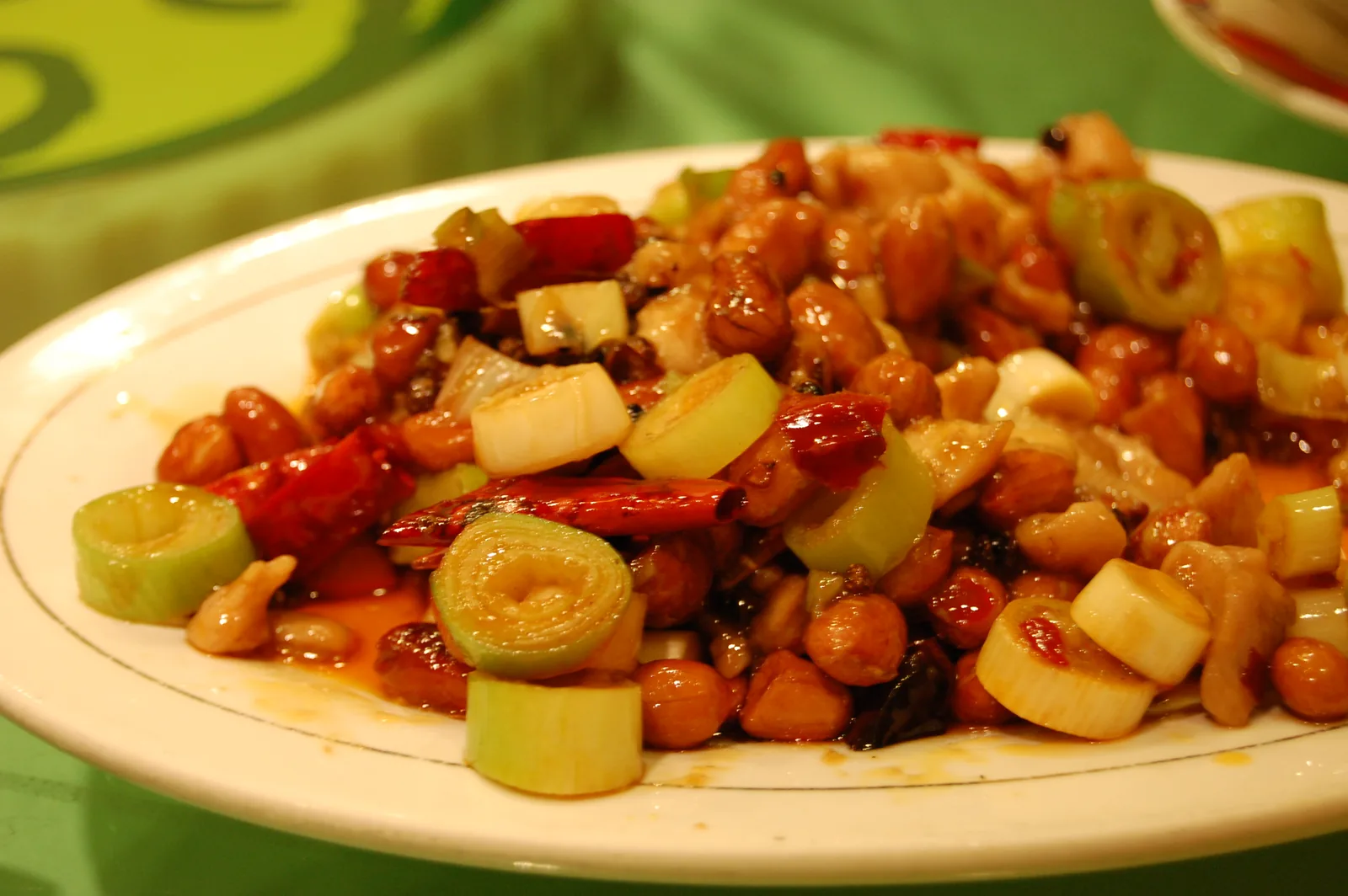
Kung pao chicken in a white dish: diced chicken, roasted peanuts, dried red chillies and scallions in a glossy sauce China flag China 35m
Dinner •Sichuan Heritage

Kung Pao Chicken

This kung pao chicken recipe is the Sichuan original: bite-sized chicken wok-fried with dried red chillies, tingling Sichuan peppercorns, scallions and crisp roasted peanuts, all glossed with a sweet-sour soy and black vinegar sauce. It is hot, numbing, a little sweet and deeply savoury — the mala flavour that defines Sichuan cooking. One serving is about 200 g, served with rice.

Bold & Satisfying

A fast wok stir-fry of chicken, peanuts and dried chillies with Sichuan peppercorns, ready in about 35 minutes.

Pairs Well With
Steamed jasmine rice and a cool cucumber salad to balance the heat.
High Protein • Quick Prep (<30m)
Mapo tofu in a black pot: silken tofu cubes in a bright red mala sauce with minced beef and scallions China flag China 35m
Dinner •Chengdu Heritage

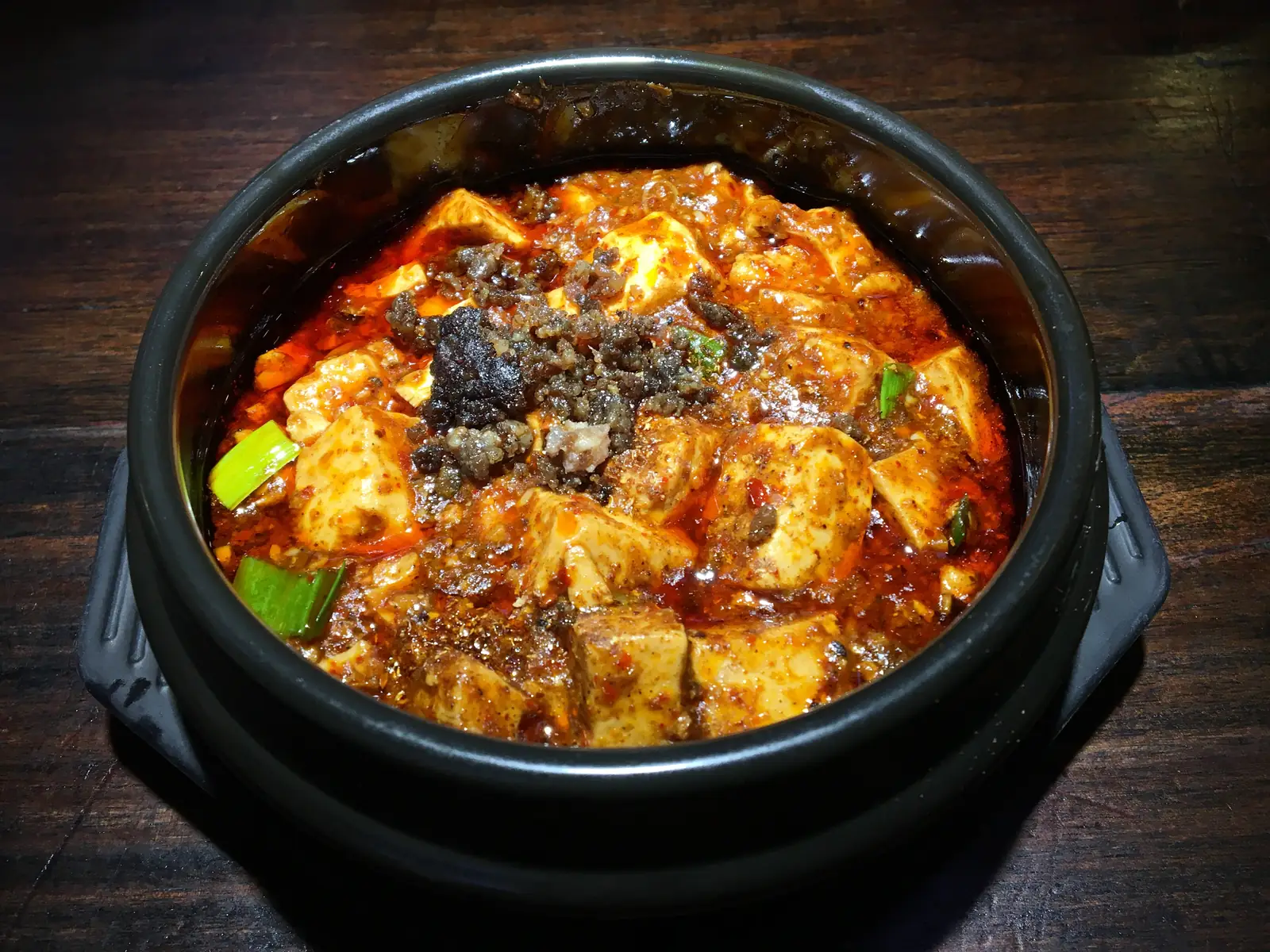
Mapo Tofu

This mapo tofu recipe is the Chengdu classic: cubes of silken tofu simmered in a bright red mala sauce of doubanjiang, fermented black beans and Sichuan peppercorns, with crisp minced beef scattered through it. The sauce is numbing, hot, salty and fragrant all at once — and it is the sauce, not the tofu, that makes the dish. One serving is about 220 g, served with rice.

Bold & Warming

Silken tofu simmered in a numbing-spicy doubanjiang sauce with minced beef, ready in about 35 minutes.

Pairs Well With
Steamed jasmine rice and a cool cucumber salad to balance the mala heat.
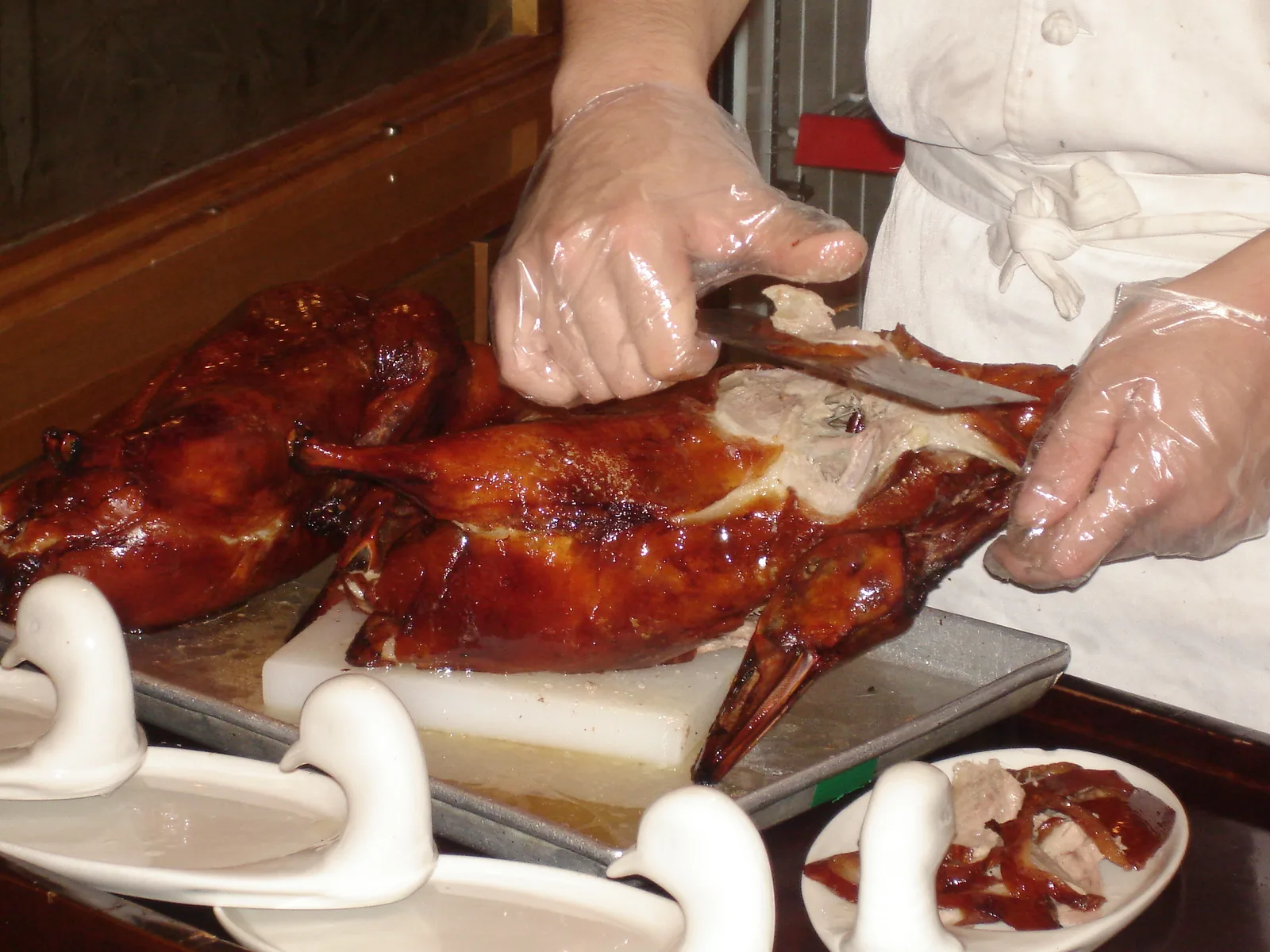
A whole lacquered Peking duck being carved at the table by a chef, with sliced crisp skin on a plate China flag China 2h 20m
Dinner •Beijing Heritage

Peking Duck

This peking duck recipe is the Beijing classic: a whole duck blanched, glazed with maltose and honey, air-dried until the skin is taut, then roasted until the skin turns deep mahogany and shatters like glass. It is carved at the table and eaten wrapped in thin pancakes with hoisin, scallion and cucumber. One serving is about 395 g, duck, pancakes and condiments together.

Celebration & Feast

A whole duck glazed, air-dried and roasted until the skin is lacquered and crisp, carved at the table with pancakes.

Pairs Well With
Thin pancakes, hoisin, scallion and cucumber — the classic wrap.
High Protein
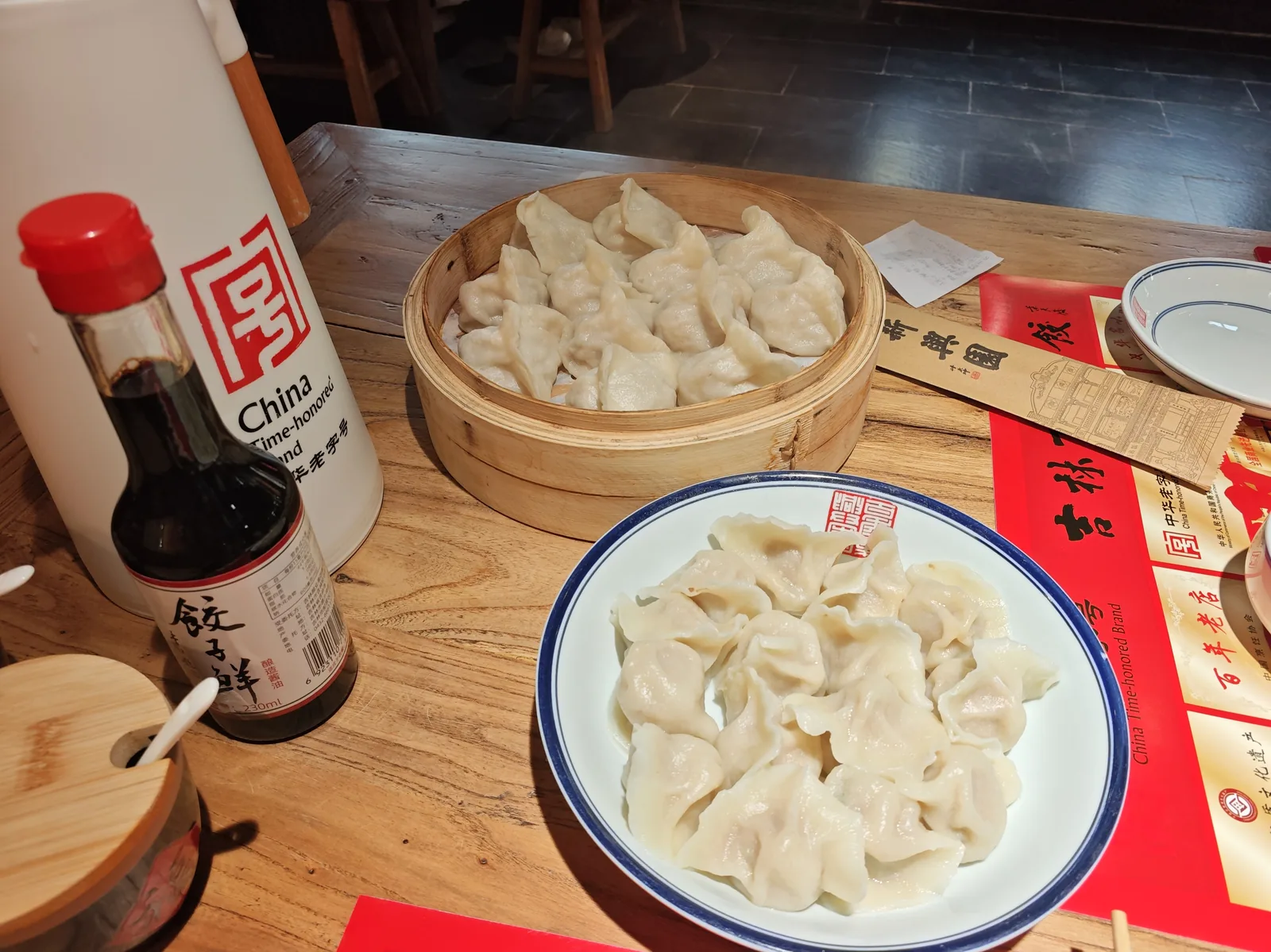
A bamboo steamer of steamed jiaozi beside a plate of boiled jiaozi, with a bottle of black vinegar China flag China 1h 15m
Dinner •Northern Chinese Classic

Steamed Pork Jiaozi

This steamed pork jiaozi recipe shows how to mix and roll the dough, fill it with seasoned pork and Chinese cabbage, and steam the dumplings until the pork is cooked through. One serving is about 275 g — 8 dumplings with dipping sauce.

Comfort & Warmth

Soft, hand-rolled dumplings filled with juicy pork and cabbage, steamed until tender and dipped in black vinegar — a northern Chinese family staple.

Pairs Well With
Hot and sour soup and a pot of jasmine tea

The Dinner Gazette

Never wonder what’s for dinner again

One email a week with easy dinner ideas from around the world — ingredients, steps and nutrition, tested in our kitchen first.

Delivered every Thursday morning. Unsubscribe anytime.