
Curated recipes from 193 countries  •  New seasonal Mediterranean issue out now

Overview

Kasav

Cassava Bread, Casabe, Haitian Cassava Flatbread

This kasav recipe makes 8 thin, crisp cassava flatbreads from grated fresh cassava and a pinch of salt, pressed flat and cooked on a hot griddle until golden and dry. It is the flatbread Haiti has baked since long before wheat arrived — naturally gluten-free and endlessly useful. One serving is about 105 g (one round).

Kasav is the oldest bread of the Caribbean. Long before wheat arrived with European ships, the Taíno people of Hispaniola grated bitter cassava, pressed out the liquid and toasted the meal into thin, crisp rounds on a clay griddle — the bread the Spanish called casabe. Haitian kasav keeps that method alive: the same grated cassava, the same pressing, the same hot griddle, and a bread that stays crisp for days without an oven.

Pairs well with: Break kasav into pieces and scoop up stews and soups, or eat it with avocado, pikliz and a cold drink.

Provenance

Haiti flag Haiti

Haitian Cassava Heritage

Latin America & Caribbean

Time Dedication

1h 20m

40m prep • 40m cook

Batch Yield

8 Servings

221 kcal per serving

1 serving ≈ 105 g

Technical Skill

Intermediate

Easy (Hands-On)

Meal Timing & Digestive Fit

Breakfast

Not Advised

Lunch

Inappropriate

Dinner

Inappropriate

Snack & Tea

Ideal Light Bite

Occasions: Snacks, Everyday meals, Picnics, With stews and soups Cost: Low — about $1–2 per serving at home
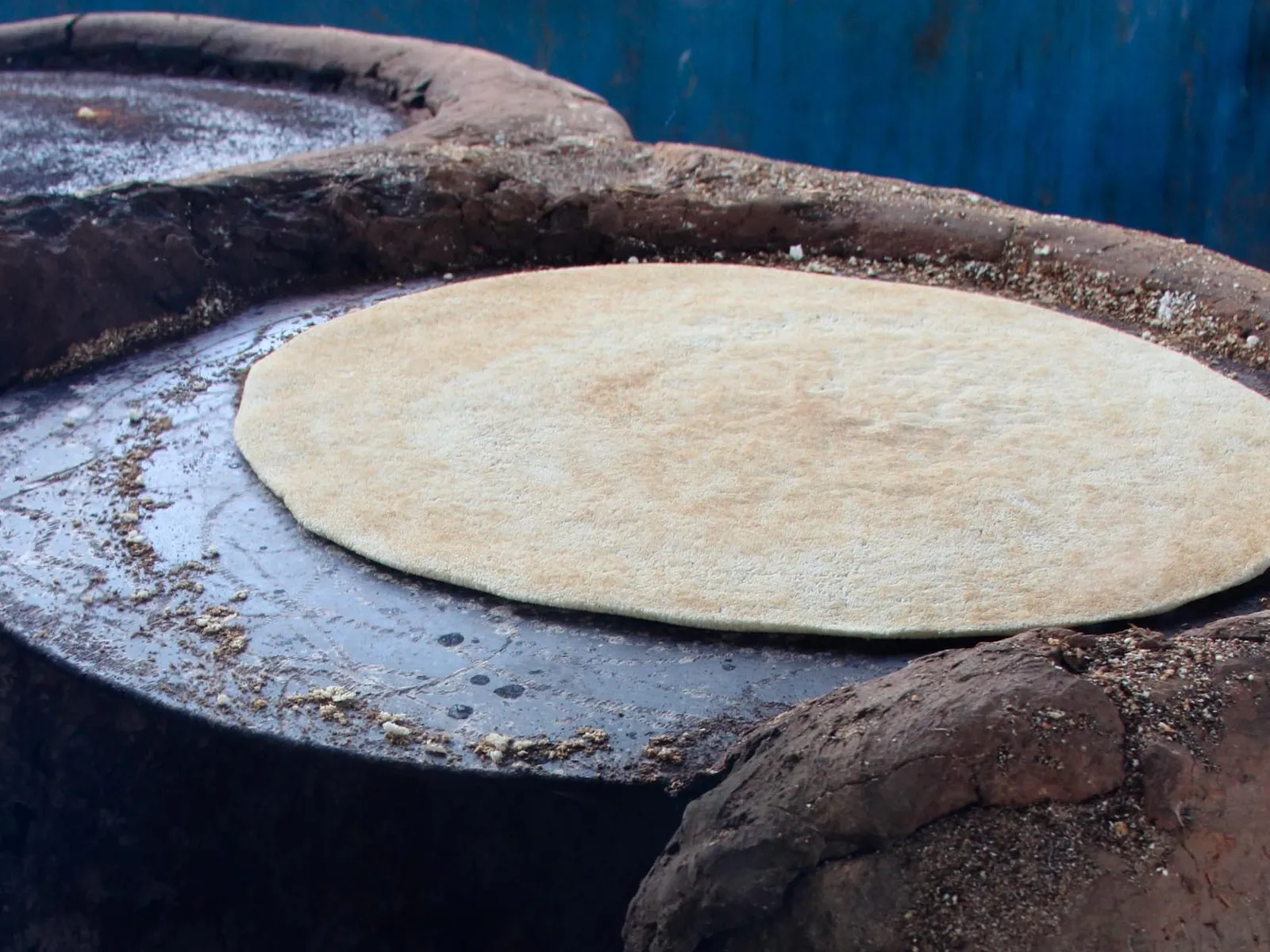
A round golden cassava flatbread cooking on a dark clay griddle

Haitian Cassava Heritage

Photo: Luisovalles, CC BY-SA 3.0, via Wikimedia Commons

The Heritage Formulary

Measured Ingredients

Estimated cost: Low — about $1–2 per serving at home (USD)

A traditional Haitian flatbread made from grated fresh cassava and a pinch of salt, pressed thin and cooked on a hot griddle until crisp.

Execution Methodology & Culinary Technique

Step-by-Step Cooking Guide

Active 1h 20m
P

Grate and Press the Cassava

40 Mins

Peel and grate the cassava, squeeze out as much liquid as you can in a clean cloth, and mix the pressed meal with the salt. The pressing is the whole secret: a dry meal makes a crisp flatbread, and a wet one steams instead of toasting.

Maestro Tip: Squeeze the grated cassava in small batches — a big, wet bundle never gets dry in the middle.

  1. 1

    Peel and Grate the Cassava

    15 Mins 20°C (68°F)

    Peel 1.5 kg of fresh cassava, cut it into chunks and pull out the thin woody core running down the centre of each piece. Grate the flesh finely on a box grater or in a food processor, until you have a damp, fluffy meal.

    Use the fine side of the grater — coarse shreds will not press into a smooth, even round.

    Done when: A bowl of fine, damp, fluffy white cassava meal with no large shreds.

  2. 2

    Squeeze Out the Liquid

    10 Mins 20°C (68°F)

    Scoop the grated cassava into a clean tea towel or cheesecloth, twist it tight and squeeze hard over a bowl until no more liquid comes out. Work in small batches. Let the squeezed liquid sit for 10 minutes, then pour off the watery top and stir the white starch that settles at the bottom back into the pressed meal. You should have about 1050g of pressed meal.

    Never taste or eat the raw grated cassava: fresh cassava must be pressed and fully cooked before eating, and the squeezing and cooking are what make it safe.

    Done when: About 1050g of dry, crumbly pressed meal that holds together when squeezed in your fist.

  3. 3

    Season and Shape the Rounds

    10 Mins 20°C (68°F)

    Mix the 4g of salt evenly through the pressed meal. Divide it into 8 equal balls of about 130g each. Place one ball between two sheets of baking parchment and press it flat with your palm, then roll or press it out into a thin round about 20 cm across and 3–4 mm thick. Repeat for all 8 rounds.

    Keep the rounds the same thickness all the way across — thin edges burn while a thick centre stays damp.

    Done when: 8 even, thin rounds on parchment, each about the size of a dinner plate.

  4. 4

    Cook the First Side

    3 Mins 200°C (400°F)

    Heat a wide, flat griddle or large frying pan over medium-high heat and brush it very lightly with oil. Lay 1–2 rounds on the hot surface and cook for about 3 minutes, without moving them, until the edges lift and the underside is pale gold with light brown speckles.

    Do not crowd the pan — rounds that touch will tear when you lift them.

    Done when: The underside is pale gold with brown speckles and the edges have lifted from the pan.

  5. 5

    Flip and Finish

    3 Mins 200°C (400°F)

    Flip each round carefully with a wide spatula and cook the second side for about 3 minutes more, until it is dry, firm and pale gold all over. The round should feel light and stiff, not soft or damp. Cook the remaining rounds the same way, wiping and lightly re-oiling the pan between batches.

    If a round cracks, press the edges together with the spatula while it is still hot — it will set as it cools.

    Done when: Dry, firm, pale-gold rounds that feel light and stiff in the hand.

  6. 6

    Cool Until Crisp

    5 Mins 20°C (68°F)

    Lift the rounds onto a wire rack and let them cool for 5 minutes. They crisp up as they cool and will snap cleanly when bent.

    Do not stack them while warm — trapped steam softens them again.

    Done when: Cool, crisp rounds that snap cleanly when bent.

Finishing Touches & Plating

Eat kasav warm or at room temperature, broken into pieces for scooping, or topped like a cracker. It keeps for days in a dry tin and crisps up again in a hot, dry pan.

Nutritional Physiology & Benefits

Nutrition

Energy

221

kcal / serving

Protein

2g

Complete AA

Carbs

50g

Complex

Fats

2g

Healthy

Per serving (8 servings · 1 serving ≈ 105 g)
Energy221 kcal
Protein2 g
Carbohydrates50 g
Fat2 g
Fibre2.4 g
Sugar2.2 g
Sodium212 mg
Per 100g
Energy211 kcal
Protein1.8 g
Carbohydrates47.6 g
Fat1.6 g
Fibre2.3 g
Sugar2.1 g
Sodium202 mg

Nutrition values are estimated — calculated from USDA FoodData Central values for the listed ingredients.

Vitamins & minerals: Provides vitamin C and potassium from the fresh cassava, with small amounts of B vitamins and manganese. Nutrition is estimated.

Naturally Gluten-Free

Kasav is just cassava and salt, with no wheat at all, so it suits a gluten-free diet without any special substitutes.

One Whole Ingredient

A single fresh root becomes the whole bread — no flour, no yeast, no additives, just cassava pressed and cooked.

Long-Lasting Energy

Cassava is a starchy root, so one round gives steady, filling energy that keeps you going between meals.

Food Pairings

What to Eat With

To optimize nutrient absorption and elevate the sensory depth, pair with these authentic accompaniments:

Sides

Avocado and Tomato Salad

Creamy avocado and juicy tomato soften the dry, crisp kasav and add freshness that the plain flatbread needs.

Sauces

Pikliz

Haiti's spicy pickled vegetables bring heat and vinegar sharpness that wakes up the mild, earthy flavour of the cassava.

Soups

Haitian Bouillon

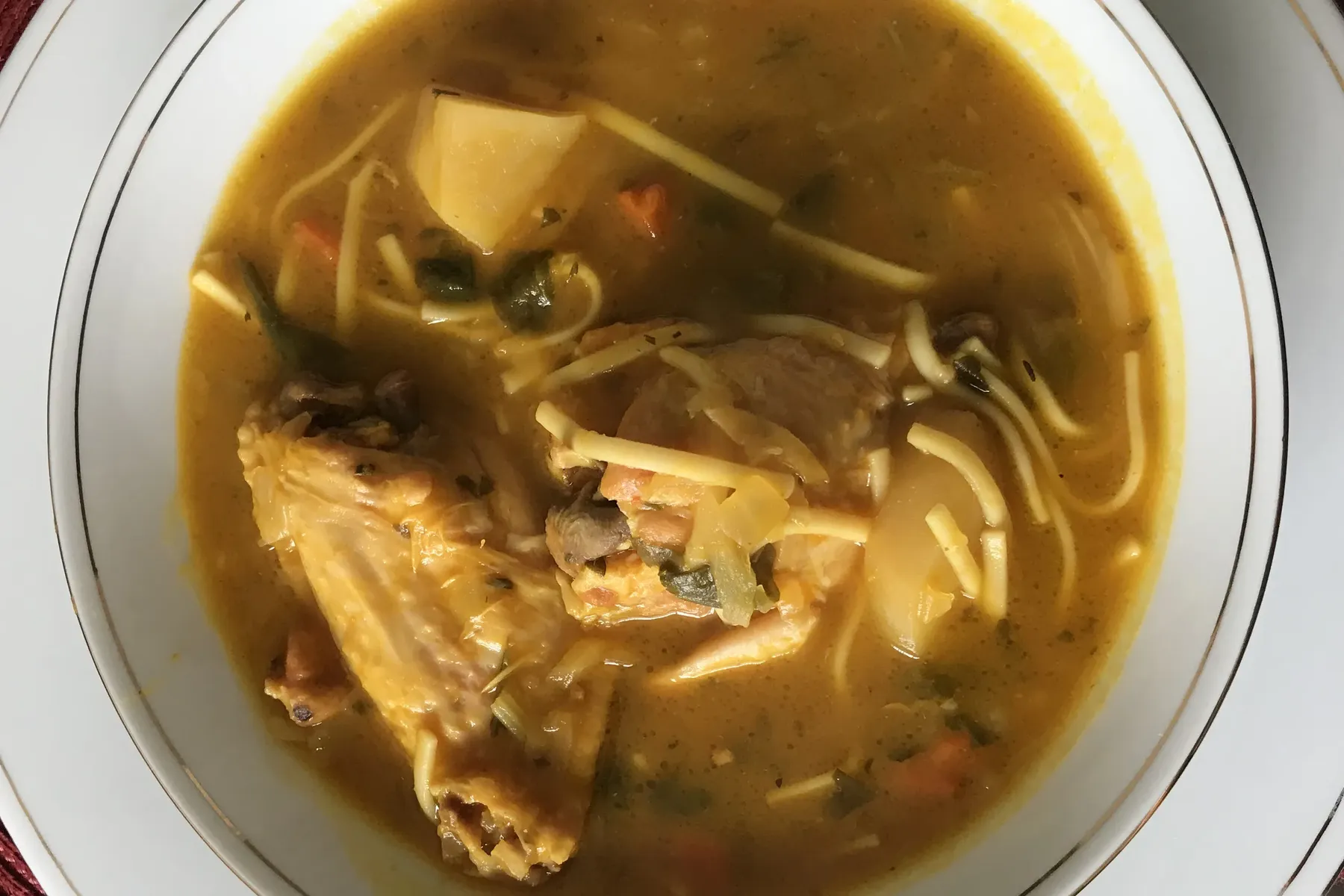
Breaking kasav into a hot, hearty bouillon lets it soak up the broth — the traditional way to eat this bread with a stew.

Full Menus

Kasav Breakfast Board

Serve kasav with avocado, a boiled egg and coffee for a simple Haitian breakfast — the flatbread is the crisp centre of the plate.

Complete menu

Kasav with avocado and tomato salad, a spoonful of pikliz and a bowl of Haitian bouillon makes a complete Haitian meal; finish with fresh fruit.

Digestive Guardrails

What NOT to Combine

To prevent digestive distress, sluggishness, or palate clash, avoid pairing the dish with these elements:

Very Salty Sides

Piling heavily salted fish or cured meats on kasav stacks a lot of salt in one snack, since the bread itself is already salted. Keep salty toppings small and balance them with avocado or tomato. This is general information, not medical advice.

Large Amounts of Rich, Fatty Stews

A dense, starchy flatbread with a very rich, fatty stew can sit heavy and be hard to digest in one sitting. Keep the stew portion modest and let the kasav do the filling work. This is general information, not medical advice.

General information only, not medical advice — consult a doctor for personal dietary decisions.

Who Should Eat It

Who Should Eat

  • General adultsA crisp, filling snack — one round with avocado makes a proper light meal.
  • ChildrenChildren enjoy breaking the crisp rounds and scooping; serve with avocado or mild toppings, not the spiciest pikliz.
  • ElderlyCrisp and dry, so break it into small pieces; it softens nicely when dipped into soup or stew.
  • Pregnant womenA simple, gluten-free snack; make sure the cassava is fully cooked through, as the recipe directs.
  • Breastfeeding womenA filling, starchy snack that is easy to eat one-handed between feeds.
  • AthletesHigh in starchy carbs for refuelling after training; add avocado or an egg for extra energy and protein.
  • Weight gainAt about 221 kcal a round, kasav with avocado and a boiled egg is an easy way to add energy to the day.
  • Weight lossHalf a round with salad and a light soup keeps the crunch with far fewer calories — the bread is filling, so a smaller piece still satisfies.

Health Conditions — Adjust or Avoid

Conditions

  • DiabetesKasav is almost entirely starchy carbohydrate — keep to half a round and ask your clinician about a suitable serving.
  • High blood pressureMost of the sodium is the added salt; use less salt in the meal and keep portions moderate, and ask your clinician if unsure.
  • Kidney diseaseCassava is a source of potassium, so ask your clinician whether kasav fits your diet.
  • GoutKasav is low in purines, so it is generally a gentle choice; ask your clinician if you are unsure.
  • Stomach issuesPlain, mild and easy to digest when fully cooked; eat slowly and avoid the spiciest pikliz if your stomach is sensitive, and ask your clinician if symptoms persist.
  • Cardiovascular diseaseKasav itself is very low in fat, so keep it that way by pairing it with avocado or vegetables rather than fatty meats; ask your clinician about how often it fits your diet.
  • Fatty liverA starchy, energy-dense bread, so half a round with salad is a better choice than a whole round with rich stew; ask your clinician about portion size.
  • Food allergiesContains no major allergens — no wheat, milk, egg or nuts. If you use oil, check that it suits your allergy, and ask your clinician if unsure.
  • Special therapeutic dietsNaturally gluten-free, vegan and egg-free, which suits coeliac, vegan and egg-free diets; for any prescribed therapeutic diet, ask your clinician before adding it regularly.

If you have a medical condition, consult your doctor before changing your diet.

Storage & Use

Storage & Use

How to store
Cool completely, then keep in a dry, airtight tin or bag.
In the fridge
5 days, wrapped — it softens in the fridge, so crisp it again before eating.
In the freezer
2 months, stacked with baking parchment between the rounds.
How to reheat
Crisp in a dry pan over medium heat for 1–2 minutes a side until hot and crisp, about 74°C (165°F) in the centre.
Freezing recommended
Yes — stack with parchment between rounds.
Signs it has spoiled
Soft, damp rounds that smell sour or musty, or any mould.

More recipes to explore

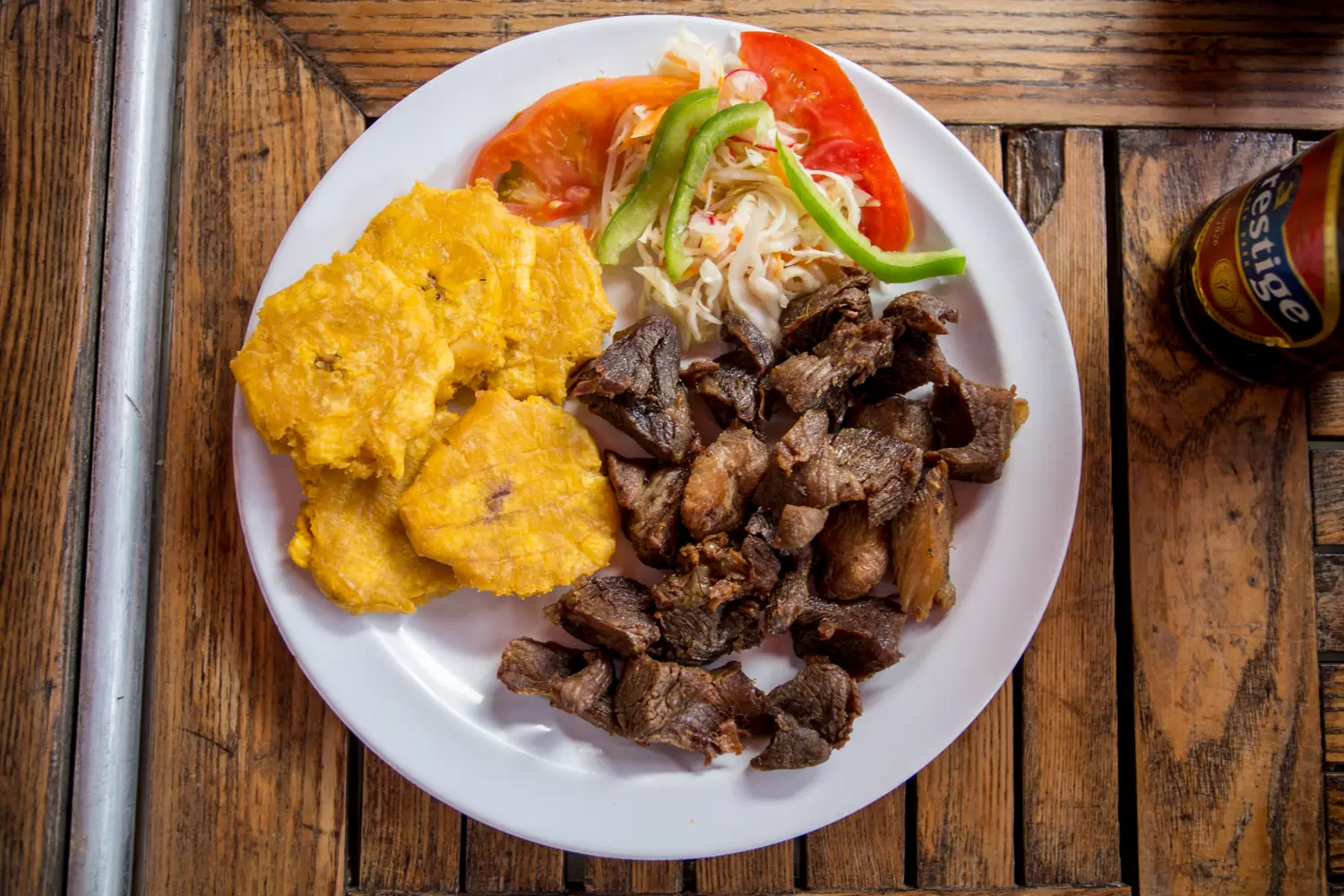
A plate of Haitian griot: dark crisp fried pork cubes with fried plantains and pikliz slaw with tomato and green pepper Haiti flag Haiti 2h 10m
Dinner •Haiti Heritage

Haitian Griot

This Haitian griot recipe starts with pork shoulder rubbed in sour citrus and epis, Haiti's green seasoning paste of scallions, garlic, parsley and Scotch bonnet, then braised in its own marinade until tender and fried in hot oil until the edges turn dark and crisp. It is served with pikliz, a sharp pickled cabbage slaw that cuts through the richness. One serving is about 215 g of crisp fried pork with pikliz.

Hearty & Celebratory

Haiti's most loved party dish: citrus-marinated pork, braised tender, then fried until crisp and served with fiery pickled pikliz.

Pairs Well With
Fried plantains (bannann peze) and rice and beans, with pikliz on the side.
A bowl of Soup Joumou with beef, spaghetti, potato and golden pumpkin broth Haiti flag Haiti 2h 40m
Lunch •Haiti's Independence Soup

Soup Joumou

Soup joumou is Haiti's golden pumpkin soup: tender beef simmered in a thick purée of giraumon squash, with root vegetables, cabbage and spaghetti in a rich, spiced broth. This soup joumou recipe follows the home-cooked method Haitian families use every 1 January, when the soup marks Independence Day. One serving is about 480 g.

Comfort & Warmth

A hot, hearty bowl of pumpkin, beef and vegetables that warms up a family lunch on a cold day or a festive table.

Pairs Well With
Serve hot with crusty French bread for dipping and a spoonful of pikliz on the side.
Soups & Broths
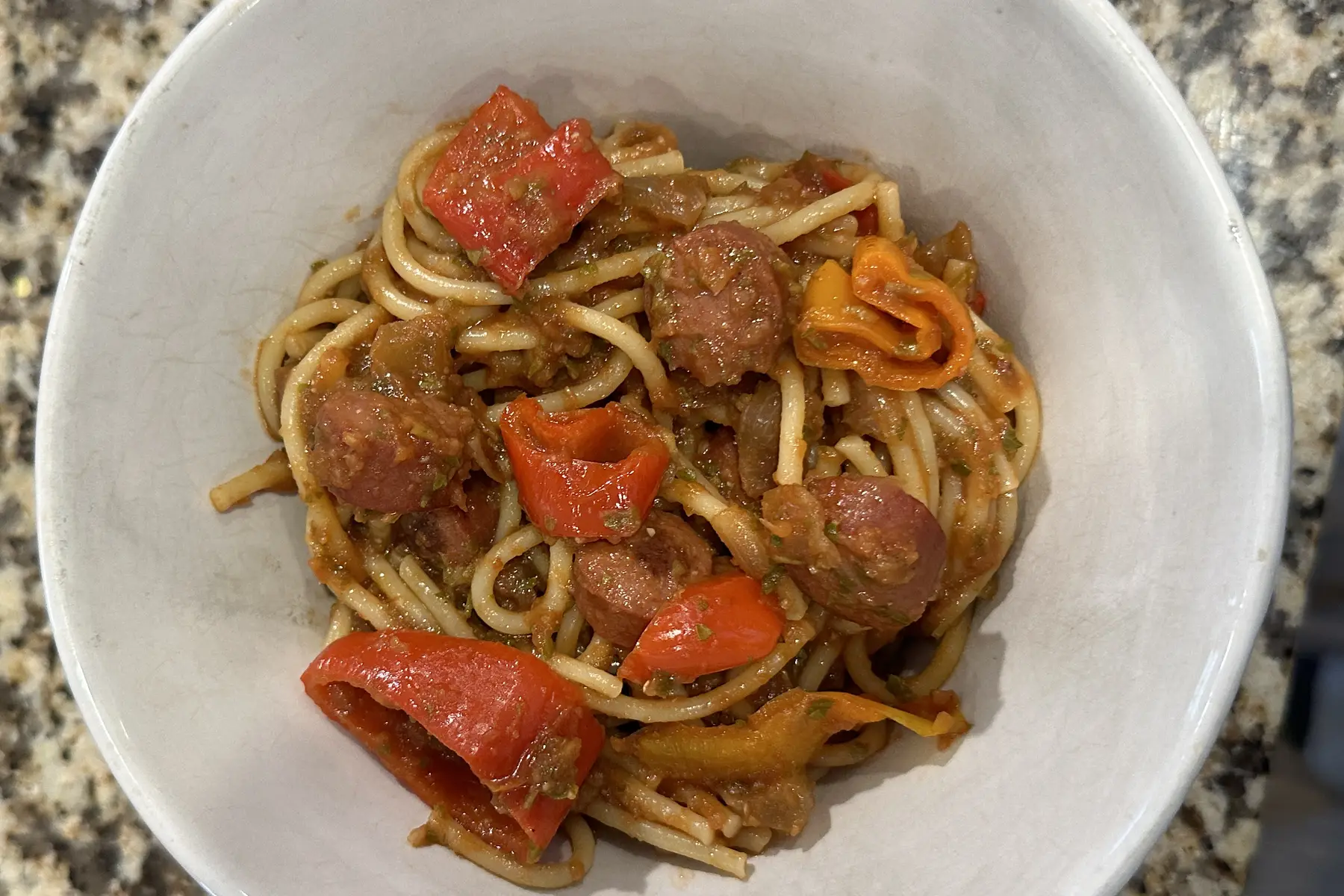
Haitian spaghetti in a white bowl — spaghetti in a rust-red epis and tomato sauce with sliced hot dogs and red peppers Haiti flag Haiti 40m
Breakfast •Haitian Breakfast Espageti

Haitian Spaghetti

This haitian spaghetti recipe is Haiti's beloved breakfast pasta: dried spaghetti cooked in one pot with epis, the green Haitian seasoning base, tomato paste, sweet peppers, onion and sliced hot dogs, until every strand is stained rust-red and full of flavour. It is pantry cooking at its best — cheap, fast and boldly seasoned — and it lands on the table in about 40 minutes. One serving is about 380 g.

Hearty & Comforting

One-pot spaghetti coated in a savoury epis and tomato sauce with sliced hot dogs, peppers and onion — a filling Haitian breakfast.

Pairs Well With
Boiled egg, avocado & pikliz
Pasta & Noodles • Quick Prep (<30m)
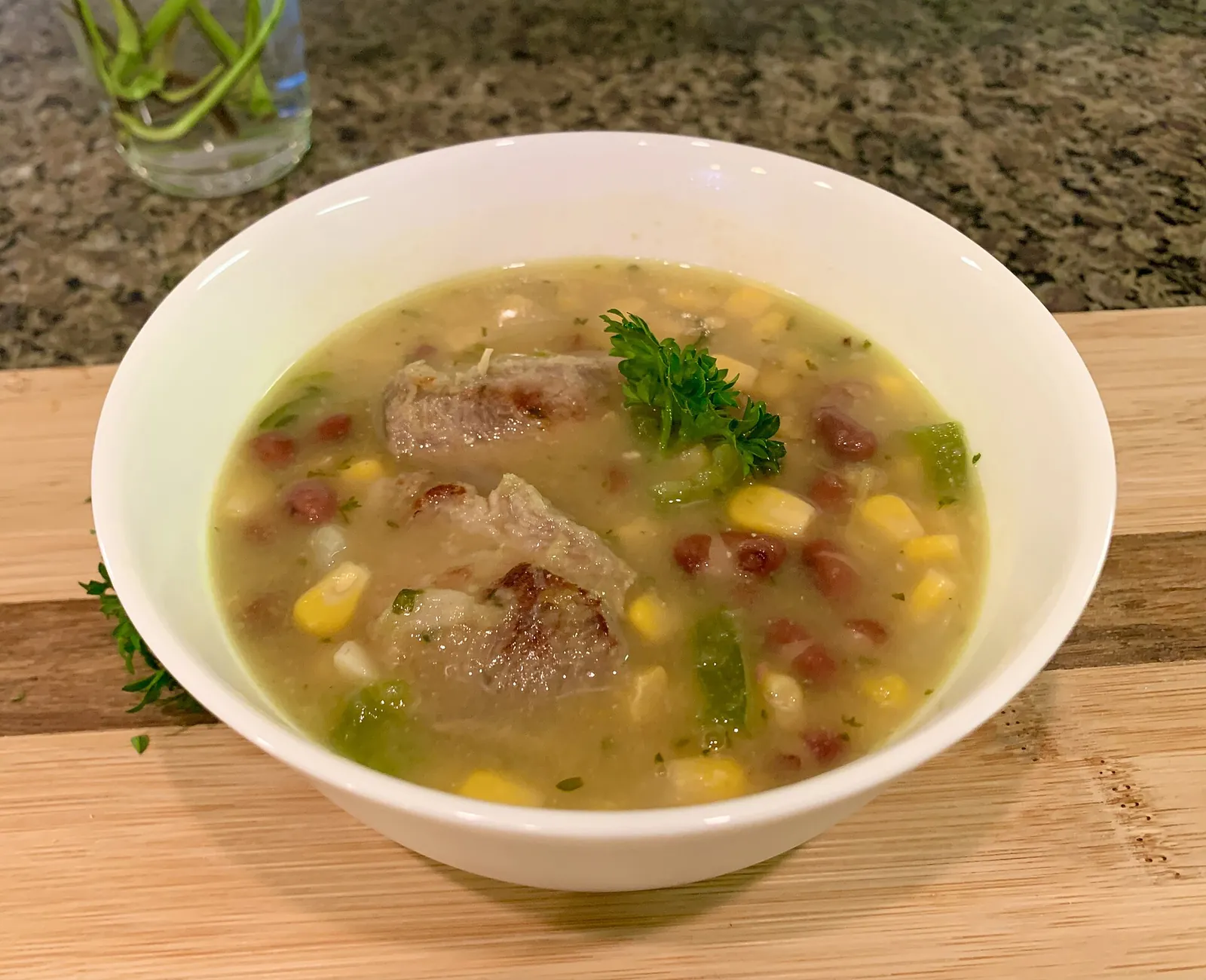
A white bowl of Haitian tchaka with corn kernels, red beans and smoked pork chunks in a light broth, garnished with parsley Haiti flag Haiti 3h 20m
Lunch •Haitian Heritage Stew

Tchaka

This tchaka recipe soaks dried corn and red kidney beans overnight, then simmers them for hours with smoked pork, pumpkin and a fragrant epis of garlic, scallion, parsley and thyme until the pot turns thick and hearty. The smoked pork is what gives tchaka its deep, salty flavour, and the Scotch bonnet — left whole so it perfumes the stew without burning — is the quiet heat underneath it all. One serving is about 400 g.

Comfort & Warmth

Dried corn and red beans simmered for hours with smoked pork, pumpkin and epis until thick — Haiti's slow, hearty celebration stew.

Pairs Well With
Crusty bread, pikliz & avocado
Soups & Broths

The Dinner Gazette

Never wonder what’s for dinner again

One email a week with easy dinner ideas from around the world — ingredients, steps and nutrition, tested in our kitchen first.

Delivered every Thursday morning. Unsubscribe anytime.