Curated recipes from 193 countries  •  New seasonal Mediterranean issue out now

Overview

Kho Bo

Vietnamese Spicy Beef Jerky, Khô Bò, Vietnamese Dried Beef

This kho bo recipe turns lean beef into Vietnamese spicy beef jerky: thin slices marinated overnight in lemongrass, garlic, five-spice, turmeric and chilli, simmered in their own marinade, then dried in a low oven until chewy and deep red. It is sweet first, spicy second, and endlessly snackable — the dried beef sold by weight in Saigon's markets. One serving is about 75 g.

Kho bo is the dried beef sold by weight in the markets of Saigon, where vendors pile deep-red strips in glass jars and weigh out a portion to order. It grew out of the Vietnamese habit of preserving meat with salt, sugar and sun, and the modern version — marinated in lemongrass, five-spice, turmeric and chilli, then dried until chewy — became a favourite beer snack and the essential topping for green papaya salad, gỏi đu đủ khô bò. Every family and every market stall has its own balance of sweet, salty and hot.

Pairs well with: Green papaya salad, pickled daikon and carrot, and a cold lager

Provenance

Vietnam flag Vietnam

Saigon Market Classic

East & South Asia

Time Dedication

3h 30m

30m prep • 180m cook

Batch Yield

4 Servings

400 kcal per serving

1 serving ≈ 75 g

Technical Skill

Intermediate

Medium (Slow Drying)

Meal Timing & Digestive Fit

Breakfast

Not Advised

Lunch

Inappropriate

Dinner

Inappropriate

Snack & Tea

Ideal Light Bite

Occasions: Beer snacks, market food, party platters, picnics and lunchbox treats Cost: Moderate — about $4–5 per serving at home
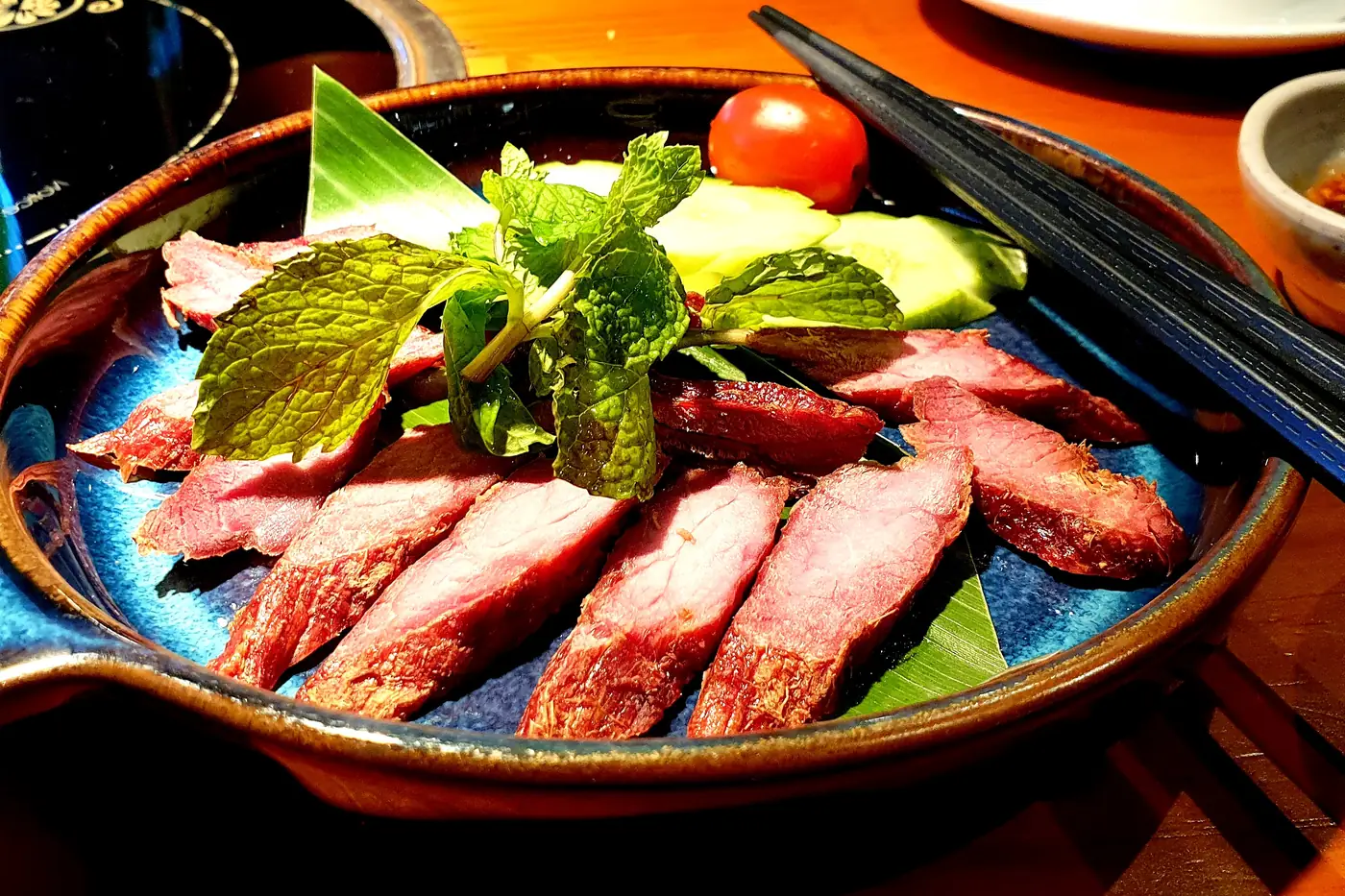
Kho bo — sliced Vietnamese spicy beef jerky with fresh mint, cucumber and cherry tomato on a blue plate

Saigon Market Classic

Photo: Phương Huy, CC BY-SA 4.0, via Wikimedia Commons

The Heritage Formulary

Measured Ingredients

Estimated cost: Moderate — about $4–5 per serving at home (USD)

Good kho bo is deep red, chewy but not tough, sweet first and hot second — never wet, never rock-hard.

Execution Methodology & Culinary Technique

Step-by-Step Cooking Guide

Active 3h 30m
P

Prep Stage: Slice Thin and Marinate Overnight

30 Mins • Hands-On + 8 Hours Marinating

Chill the beef in the freezer for 30 minutes — it must be firm, not frozen solid, so it slices cleanly. Cut it into thin slices 3–4 mm thick, always against the grain, so the finished jerky is tender to chew rather than stringy. Pound the lemongrass, garlic, ginger and chillies into a paste, then mix in the fish sauce, soy sauce, five-spice, turmeric, sugar, honey, pepper, sesame oil, annatto oil and salt. Massage the marinade into every slice, cover, and refrigerate overnight, at least 8 hours. The marinade is not counted in the cooking time — it works while you sleep.

Maestro Tip: Slicing against the grain is the whole secret: cut with the grain and the jerky turns into shoe leather.

  1. 1

    Slice the Beef Thin

    15 Mins • Hands-On No heat

    Chill the beef in the freezer for 30 minutes until firm at the edges. With a very sharp knife, cut it into thin slices 3–4 mm thick, always against the grain — look for the lines running through the meat and cut across them.

    A sharp knife is non-negotiable; a dull knife tears the meat and the slices come out ragged.

    Done when: Even, thin slices, cut across the grain.

  2. 2

    Marinate Overnight

    15 Mins • Hands-On + 8 Hours in the Fridge Fridge, 0–4°C (32–39°F)

    Pound the lemongrass, garlic, ginger and chillies into a paste. Mix in the fish sauce, soy sauce, five-spice, turmeric, sugar, honey, pepper, sesame oil, annatto oil and salt. Massage the marinade into every slice of beef, cover the bowl and refrigerate overnight, at least 8 hours, turning once halfway through.

    Taste the marinade before adding the beef — it should be sweet, salty, hot and fragrant all at once.

    Done when: Beef deeply red, coated all over, smelling of lemongrass and spice.

  3. 3

    Simmer in the Marinade

    20 Mins • Hob Simmer, about 95°C (200°F)

    Tip the beef and all its marinade into a wide pan. Bring to a gentle simmer and cook for 20 minutes, turning the slices now and then, until the beef is cooked right through and the liquid has reduced to a sticky glaze. The beef must reach 71°C (160°F) inside before drying — this is the food-safety step that makes home jerky safe.

    Do not boil hard — a gentle simmer keeps the slices intact and the glaze glossy.

    Done when: Beef cooked through, coated in a sticky red glaze.

  4. 4

    Pound and Flatten

    10 Mins • Hands-On No heat

    Lay the hot slices on a board and pound each one lightly with a rolling pin or meat mallet until it is thinner and slightly flattened. This breaks up the fibres so the jerky is tender to chew.

    Pound gently — you want the slices thinner, not shredded.

    Done when: Thin, flattened slices, still in one piece.

  5. 5

    Dry Low and Slow

    160 Mins • Oven Low oven, 90°C (195°F)

    Lay the slices in a single layer on wire racks set over baking trays, leaving space between them. Dry in a low oven at 90°C (195°F) for about 160 minutes, turning once halfway, with the oven door propped open a crack with a wooden spoon so moisture escapes. The jerky is done when a slice bends and cracks on the surface but does not snap, and no moisture beads when you squeeze it.

    Crowded slices steam instead of drying — give each slice its own space on the rack.

    Done when: Deep red, dry to the touch, bends and cracks without snapping.

  6. 6

    Cool and Store

    15 Mins • Cooling Room temperature

    Cool the jerky completely on the racks, then pack it into an airtight jar or bag. It keeps best at room temperature for a week, or longer in the fridge.

    Packing warm jerky traps steam and makes it go soft — wait until it is fully cool.

    Done when: Cool, dry, chewy jerky ready to pack.

Finishing Touches & Plating

Eat kho bo as it is, torn into strips, or pile it over green papaya salad with pickled carrot and daikon. A cold drink is not optional — the heat builds with every piece.

Nutritional Physiology & Benefits

Nutrition

Energy

400

kcal / serving

Protein

37g

Complete AA

Carbs

30g

Complex

Fats

15g

Healthy

Per serving (4 servings · 1 serving ≈ 75 g)
Energy400 kcal
Protein37 g
Carbohydrates30 g
Fat15 g
Fibre2.6 g
Sugar21.2 g
Sodium1262 mg
Per 100g
Energy533 kcal
Protein49 g
Carbohydrates40 g
Fat20.1 g
Fibre3.5 g
Sugar28.3 g
Sodium1683 mg

Nutrition values are estimated — calculated from USDA FoodData Central values for the listed ingredients.

Vitamins & minerals: Vitamin B12, iron and zinc (beef), vitamin C (lemongrass and chilli), vitamin B6 (garlic and ginger). Nutrition values are estimated.

Protein in Every Bite

About 36.8 g of protein per 75 g serving makes kho bo one of the most protein-dense snacks on the site — a little goes a long way.

Real Spice, No Shortcuts

Lemongrass, garlic, ginger, turmeric and five-spice bring genuine flavour and aroma, with no artificial colouring beyond annatto oil.

Keeps Without a Fridge

Properly dried jerky is a shelf-stable snack — easy to carry, easy to share, and ready whenever hunger strikes.

Food Pairings

What to Eat With

To optimize nutrient absorption and elevate the sensory depth, pair with these authentic accompaniments:

Vegetables

Green Papaya Salad

Gỏi đu đủ khô bò is the classic pairing — the salad's sour crunch and fresh herbs balance the jerky's sweetness and heat perfectly.

Sides

Pickled Daikon and Carrot

Đồ chua adds a sharp, tangy bite that cuts through the rich, sweet jerky and refreshes the palate.

Drinks

Cold Lager

A cold beer is the traditional partner for kho bo — it cools the chilli heat and matches the snack's market-stall spirit.

Full Menus

Saigon Snack Plate

Kho bo, green papaya salad, pickled vegetables and a cold drink make the classic Vietnamese beer snack spread.

Complete menu

Start with kho bo over green papaya salad, add pickled daikon and carrot, and finish with a cold lager — the classic Saigon snack plate.

Digestive Guardrails

What NOT to Combine

To prevent digestive distress, sluggishness, or palate clash, avoid pairing the dish with these elements:

Drying Without Heating the Beef First

Beef jerky must be heated to 71°C (160°F) before or during drying — drying alone at low heat does not reliably kill harmful bacteria. Always simmer the beef in the marinade first, as written. This is general food-safety information, not medical advice.

Eating Large Amounts Every Day

Kho bo is high in sugar, salt and sodium — about 21 g of sugar and 1,263 mg of sodium per serving. Enjoy it as a snack, not as a daily staple.

Fish, Soy and Sesame Allergens

This jerky contains fish (fish sauce), soy and sesame. Anyone allergic to any of these should not eat it as written — ask your clinician about safe swaps.

General information only, not medical advice — consult a doctor for personal dietary decisions.

Who Should Eat It

Who Should Eat

  • General adultsA delicious snack in small portions — a 75 g serving with salad is plenty.
  • ChildrenToo spicy and chewy for young children. Older children can try a mild batch with half the chilli, cut into small pieces.
  • ElderlyVery chewy, so it can be hard on weak teeth — slice it thin and eat it with salad. Keep portions small because it is salty.
  • Pregnant womenSafe when the beef is heated through to 71°C (160°F) before drying, as written. Keep the chilli moderate.
  • Breastfeeding womenNo special restriction. Eat it as a snack in modest amounts and drink plenty of water — it is salty.
  • AthletesAbout 37 g of protein per serving makes it a handy portable snack, but it is high in sugar and salt, so treat it as a treat, not a recovery food.
  • Weight gainEnergy-dense and easy to eat in larger amounts — a useful snack when you need extra calories.
  • Weight lossHigh in sugar and calories for its size, so keep to a small handful and pair it with salad rather than eating it by the bag.

Health Conditions — Adjust or Avoid

Conditions

  • DiabetesHigh in sugar — about 21 g per serving — so keep portions small and check your blood sugar. Ask your clinician.
  • High blood pressureVery high in sodium, so eat it rarely and in small amounts. Do not eat it daily. Ask your clinician.
  • Kidney diseaseHigh in sodium and protein, so it is not a good regular snack. A very small portion occasionally may be possible — ask your clinician first.
  • GoutDried red meat is high in purines, so eat it rarely and in small amounts. Ask your clinician.
  • Stomach issuesChilli, sugar and chewy dried meat can irritate a sensitive stomach — a mild batch in small amounts is gentler. Ask your clinician if symptoms flare.
  • Cardiovascular diseaseHigh in sodium and sugar, so keep it an occasional treat in small portions. Ask your clinician about how often it fits.
  • Fatty liverHigh in sugar, so it is not a good regular snack. Keep portions small and infrequent. Ask your clinician.
  • Food allergiesContains fish (fish sauce), soy and sesame. Do not eat it as written if you are allergic to any of these — ask your clinician about safe swaps.
  • Special therapeutic dietsThe sugar and salt can be reduced, but the result will be a different snack. Check every change with your clinician or dietitian first.

If you have a medical condition, consult your doctor before changing your diet.

Storage & Use

Storage & Use

How to store
Cool completely, then pack in an airtight jar or zip bag with the air pressed out.
In the fridge
Keeps 3–4 weeks refrigerated at 0–4°C (32–39°F) in an airtight container.
In the freezer
Freezes well for up to 3 months in a sealed bag.
How to reheat
No reheating needed — eat it as it is. If you want it warm, heat it gently in a pan, about 75°C (167°F), for 1–2 minutes.
Freezing recommended
Yes for long storage — freeze what you will not eat within a week.
Signs it has spoiled
Any mould, a sour or rancid smell, or a sticky, wet surface means it must be thrown away.

More recipes to explore

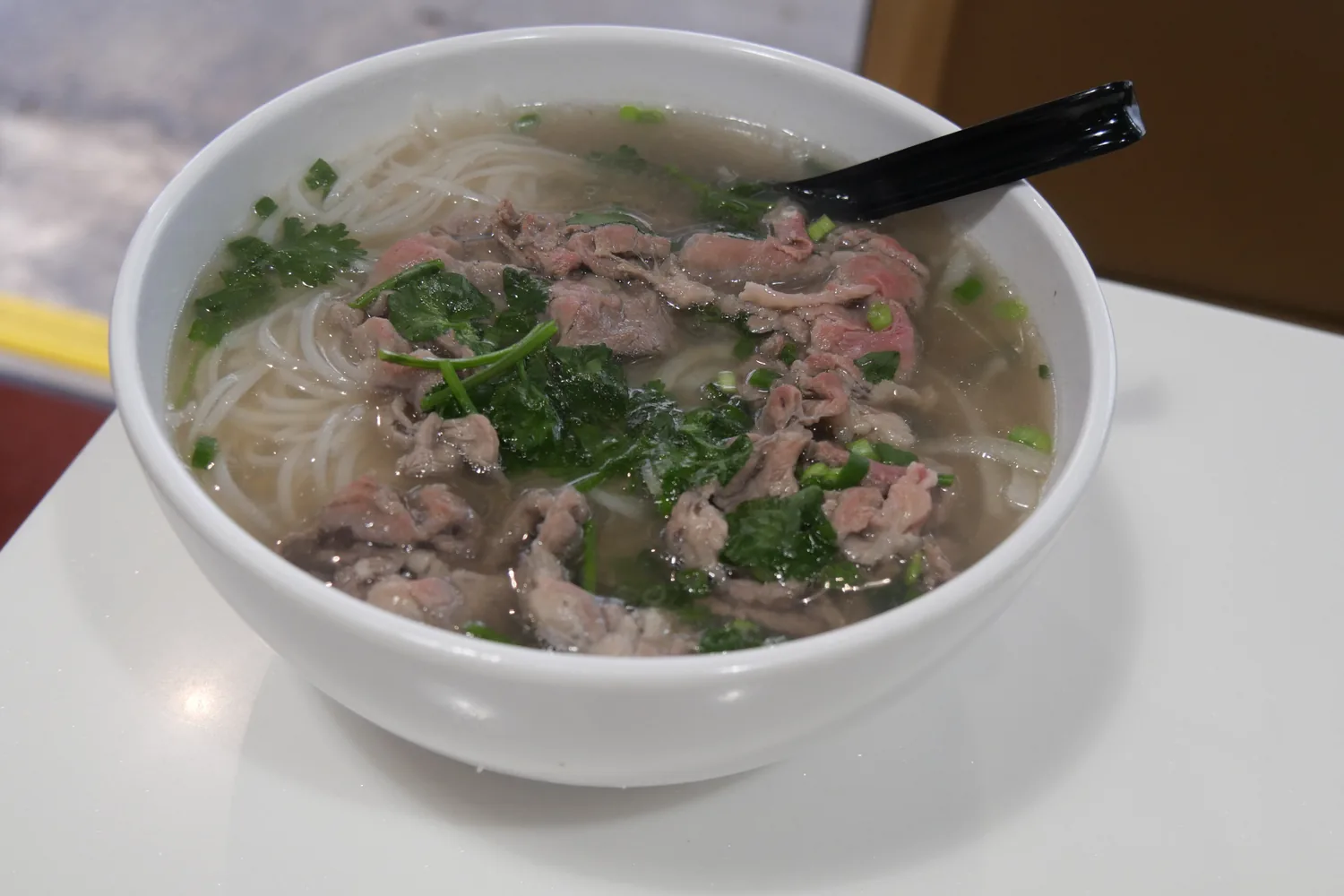
A bowl of Vietnamese phở bò with rare beef, rice noodles and fresh herbs Vietnam flag Vietnam 3h 30m
Breakfast •Hanoi Heritage

Phở Bò Tái Nạm

Slow-simmered star anise and cinnamon bone broth with hand-cut rice noodles, supplying clean restorative warmth and collagen. One serving is about 775 g.

Immunity & Warming

Slow-simmered bone broth with rice noodles, rare beef and fresh herbs.

Pairs Well With
Crispy quẩy, fresh lime & sawtooth coriander
Soups & Broths • High Protein
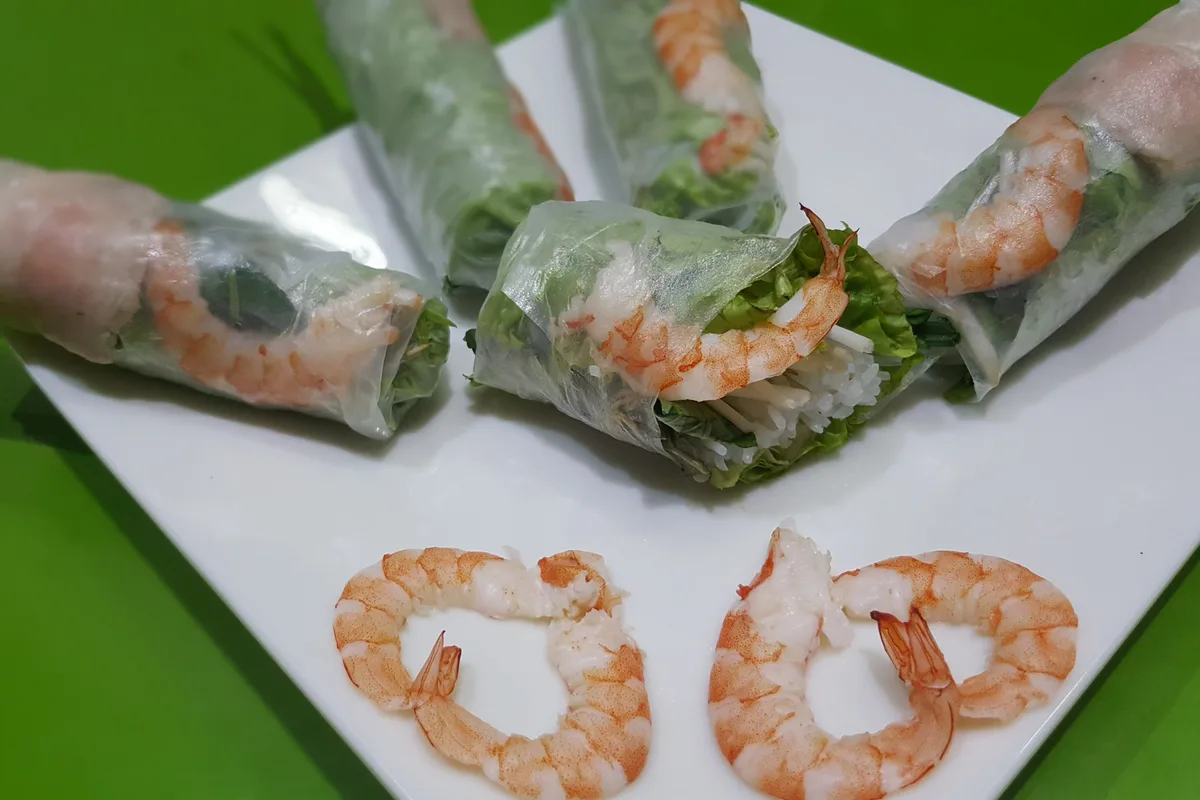
Gỏi cuốn — Vietnamese fresh spring rolls with prawn and pork Vietnam flag Vietnam 1h 5m
Snack & Tea •Saigon Refresh

Gỏi Cuốn Tôm Thịt

Fresh rice paper rolls filled with poached prawns, tender pork, rice vermicelli, lettuce, herbs and carrot, served with a peanut dipping sauce.

Light Digestion

Nothing is fried, so the rolls stay light and fresh — a cool, herb-filled snack for hot days.

Pairs Well With
Artisanal Peanut Dip & Fresh Lotus Root Water
High Protein
Vietnamese braised pork belly with golden eggs in caramel sauce Vietnam flag Vietnam 1h 45m
Dinner •One Pot

Vietnamese Braised Pork and Eggs

Pork belly slowly braised in coconut water and caramel until meltingly tender, with golden eggs that soak up the sweet-savoury sauce — the Vietnamese family dish that tastes better the next day.

Comfort & Sustained Energy

Slow-braised pork belly and eggs in coconut water and caramel.

Pairs Well With
Steamed rice & pickled mustard greens
High Protein
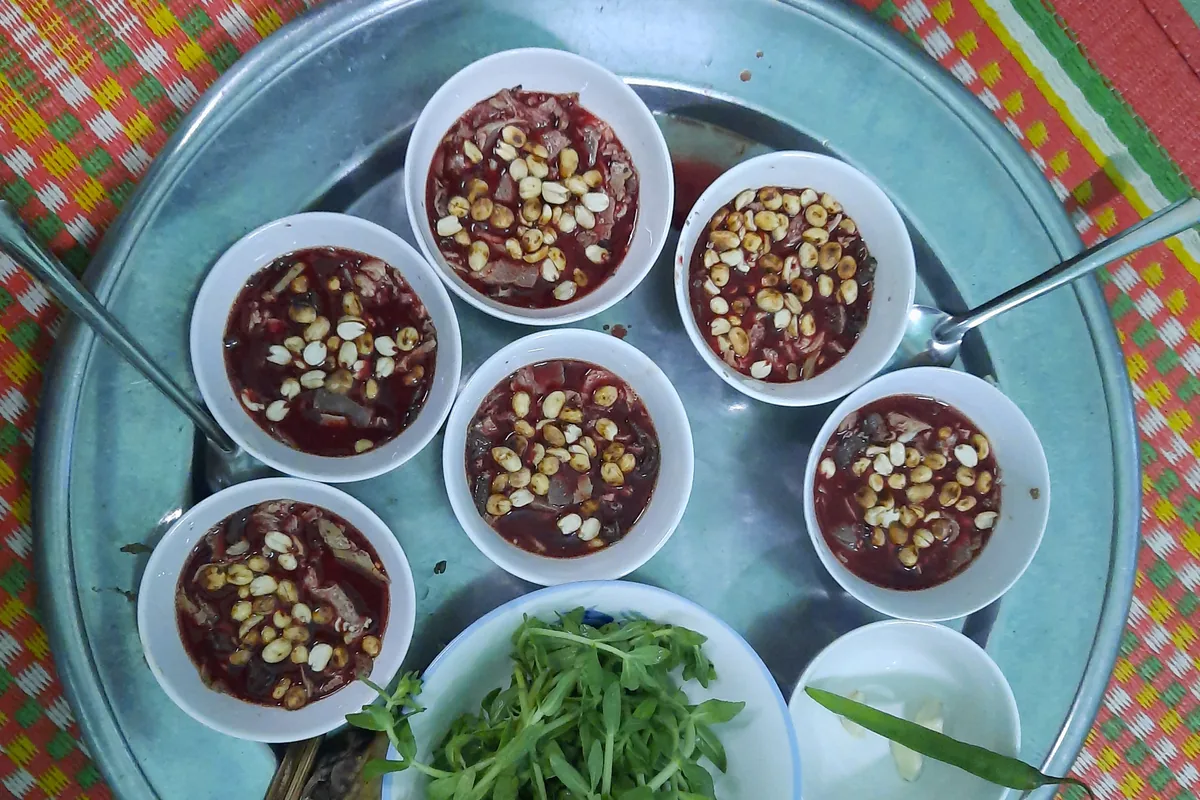
Six small bowls of Vietnamese duck blood pudding topped with roasted peanuts, with fresh herbs and a green chili on a metal tray Vietnam flag Vietnam 1h 10m
Snack & Tea •Hanoi Heritage

Vietnamese Tiết Canh

WARNING: This dish is made from raw duck blood and eating it is NOT recommended. Raw blood can carry Streptococcus suis (which causes meningitis and sepsis — people in Vietnam have died after eating pig-blood tiet canh), avian influenza from duck blood, salmonella and other dangerous germs. Vietnam's Ministry of Health advises against eating tiet canh, and no preparation method — not even blood from a fresh or trusted source — makes raw blood fully safe. This page describes the traditional Hanoi preparation, tiết canh vịt, for cultural knowledge only. One serving is about 241 g: a small bowl of fresh duck blood mixed with fish sauce, poured over finely chopped cooked duck meat and left to set into a soft, trembling jelly, then finished with crushed roasted peanuts, fresh herbs, lime and chili, and served cold.

Cultural Discovery

A traditional northern Vietnamese snack of raw duck blood set into a soft jelly with cooked duck meat, herbs and peanuts — described here for cultural knowledge, with a serious safety warning.

Pairs Well With
Fresh herbs, lime wedges, sliced chili and rice crackers on the side.

The Dinner Gazette

Never wonder what’s for dinner again

One email a week with easy dinner ideas from around the world — ingredients, steps and nutrition, tested in our kitchen first.

Delivered every Thursday morning. Unsubscribe anytime.