
Curated recipes from 193 countries  •  New seasonal Mediterranean issue out now

Overview

Kunefe

Künefe, knafeh — shredded pastry with melted cheese

This kunefe recipe layers crisp, buttery shredded kadayif around a centre of melted mozzarella, bakes it in a round tray until golden, and soaks it with a lemon syrup that keeps the top crunchy. It is the famous cheese dessert of Hatay in southern Turkey, best eaten hot from the tray. One serving is about 225 g (one quarter of the tray).

Knafeh, known as kunefe in Turkish, is a cheese pastry with roots in the Levant, and the city of Hatay in southern Turkey became famous for its version made with a local unsalted white cheese. It is now served across Turkey, especially during Ramadan and at celebrations, and Hatay's kunefe is widely treated as the benchmark for the dish.

Pairs well with: Serve with strong Turkish coffee, unsweetened tea and a few extra pistachios

Provenance

Turkey flag Turkey

Hatay Cheese Dessert

Middle Eastern

Time Dedication

50m

20m prep • 30m cook

Batch Yield

4 Servings

742 kcal per serving

1 serving ≈ 225 g

Technical Skill

Intermediate

Medium (Tray Pastry)

Meal Timing & Digestive Fit

Breakfast

Not Advised

Lunch

Inappropriate

Dinner

Inappropriate

Snack & Tea

Ideal Light Bite

Occasions: Ramadan and Eid tables, family celebrations, dessert after a kebab meal, festive gatherings Cost: Medium — about $3–4 per serving at home
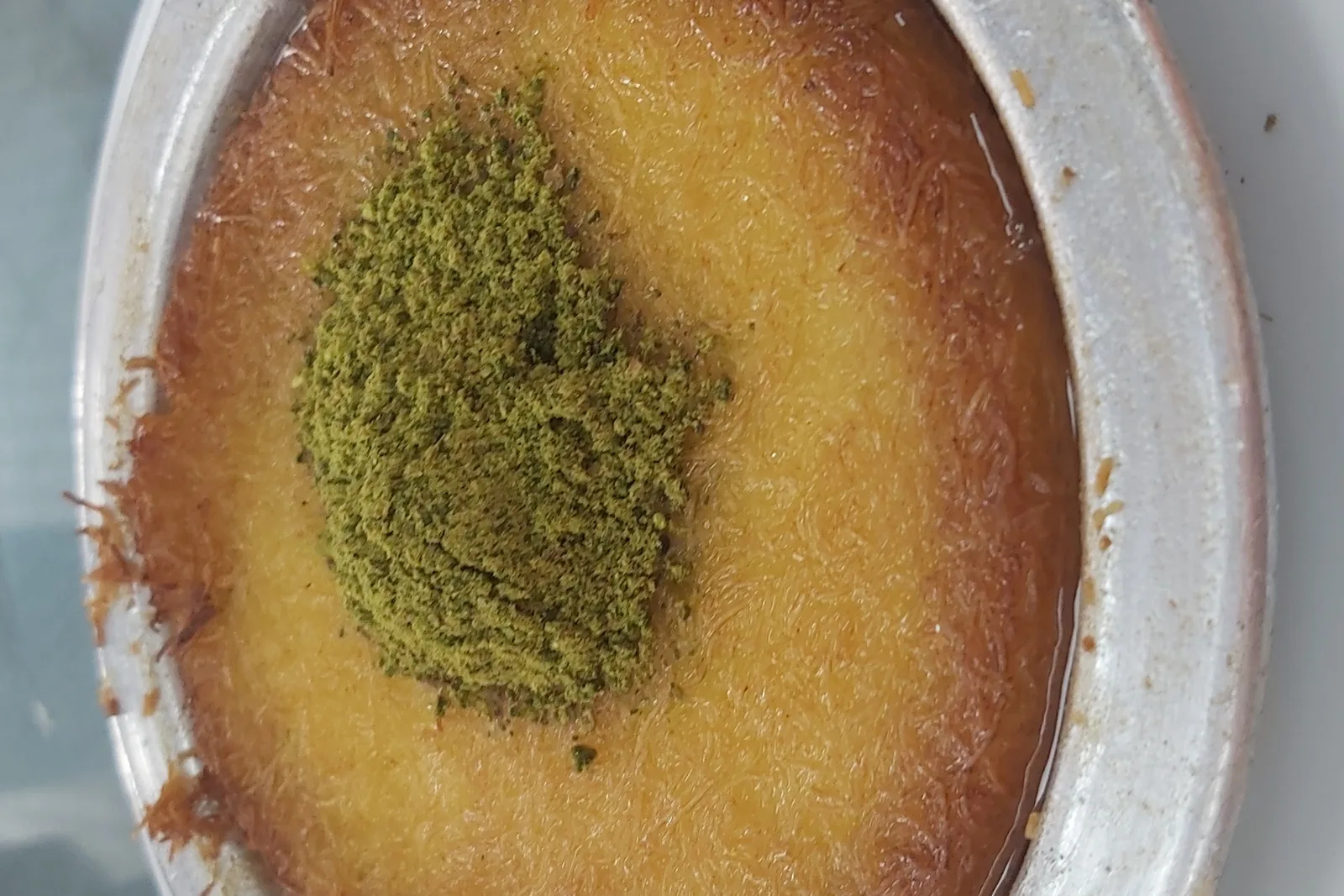
A round golden kunefe in a metal tray, topped with ground green pistachios

Hatay Cheese Dessert

Photo: Basak, CC BY-SA 4.0, via Wikimedia Commons

The Heritage Formulary

Measured Ingredients

Estimated cost: Medium — about $3–4 per serving at home (USD)

Good kunefe is crisp and golden on both sides, with cheese that pulls in long strings and syrup that soaks in without making the top soft — never pale, soggy or dry.

Execution Methodology & Culinary Technique

Step-by-Step Cooking Guide

Active 50m
P

Prep Stage: Syrup, Shreds, Cheese

20 Mins • Pan, Bowl & Round Tray

Make the syrup first so it can cool, pull the kadayif into loose shreds and toss it with the melted butter, and tear the mozzarella into thin strips. Butter a round 22 cm tray well — the pastry must release cleanly so you can flip it out.

Maestro Tip: The syrup must be lukewarm, not hot, when it meets the pastry — make it first and let it cool while you build the tray.

  1. 1

    Make the syrup first

    10 minutes + cooling Boiling 100°C (212°F), then cool to lukewarm about 40°C (104°F)

    Put the sugar (150 g), water (120 ml) and lemon juice (10 ml) in a pan. Bring to the boil over medium heat, stirring until the sugar dissolves, then simmer for 5 minutes. Set aside to cool to lukewarm — it must not be hot when it meets the pastry.

    Cool syrup on hot pastry is the rule: hot syrup on hot pastry turns the shreds soggy.

    Done when: Syrup slightly thickened, clear, and lukewarm to the touch.

  2. 2

    Butter the kadayif shreds

    5 minutes Room temperature 20°C (68°F)

    Heat the oven to 200°C (400°F). Put the kadayif shreds (300 g) in a large bowl, pour over the melted butter (80 g) and rub it through with your fingers until every shred is coated and glossy.

    Rub, do not pour and stir — your fingers separate the shreds so the butter reaches all of them.

    Done when: Every shred coated in butter, no dry clumps, no puddles of butter at the bottom of the bowl.

  3. 3

    Build the tray

    5 minutes Room temperature 20°C (68°F)

    Press half of the buttered shreds into the buttered 22 cm round tray in an even layer, pressing down firmly with the base of a glass. Lay the mozzarella strips (250 g) over the top in a single layer, leaving a small border clear around the edge, then cover with the remaining shreds and press down firmly again.

    Keep the cheese away from the edge — cheese that touches the tray leaks out and burns instead of melting inside.

    Done when: An even, firmly pressed layer of cheese sealed between two layers of shreds, with no cheese touching the edge of the tray.

  4. 4

    Bake, flip and bake again

    30 minutes Oven 200°C (400°F)

    Bake for 25–30 minutes until the top is deep golden and the edges have pulled slightly away from the tray. Slide a knife around the edge, place a plate over the tray, and flip the kunefe out in one confident motion. Slide it back into the tray, uncooked side down, and bake for 5 minutes more until that side is golden too.

    Pale kunefe is underdone and chewy — wait for a proper deep gold before you flip it.

    Done when: Deep golden and crisp on both sides, edges pulling away from the tray, cheese melted inside.

  5. 5

    Syrup, pistachios and serve

    5 minutes Syrup lukewarm about 40°C (104°F)

    As soon as the tray comes out of the oven, pour the lukewarm syrup slowly and evenly over the hot kunefe — it will hiss and bubble. Sprinkle the ground pistachios (30 g) over the top and serve at once, cut into 4 wedges.

    Serve immediately — kunefe is at its best in the first ten minutes, while the cheese still stretches.

    Done when: Syrup absorbed, top still crisp, cheese pulling in strings when you lift a wedge.

Finishing Touches & Plating

Serve the kunefe hot, straight from the tray, cut into four wedges and sprinkled with the ground pistachios. Eat it within minutes — the cheese stretches best while it is still warm.

Nutritional Physiology & Benefits

Nutrition

Energy

742

kcal / serving

Protein

20g

Complete AA

Carbs

84g

Complex

Fats

37g

Healthy

Per serving (4 servings · 1 serving ≈ 225 g)
Energy742 kcal
Protein20 g
Carbohydrates84 g
Fat37 g
Fibre1.9 g
Sugar38.9 g
Sodium694 mg
Per 100g
Energy330 kcal
Protein8.9 g
Carbohydrates37.2 g
Fat16.5 g
Fibre0.9 g
Sugar17.3 g
Sodium309 mg

Nutrition values are estimated — calculated from USDA FoodData Central values for the listed ingredients.

Vitamins & minerals: Calcium and phosphorus from the cheese, and vitamin E and magnesium from the pistachios. Nutrition values are estimated.

Pistachios bring healthy fats

Pistachios on top supply monounsaturated fats, fibre and magnesium — the most nutritious part of a very sweet dessert.

No artificial additives

Kadayif, cheese, butter, sugar and lemon — nothing in this kunefe needs a preservative, a colouring or a flavouring.

Rich, satisfying energy

Each serving carries about 742 kcal with 20.1 g of protein from the cheese, which is why one small slice satisfies a sweet tooth.

Food Pairings

What to Eat With

To optimize nutrient absorption and elevate the sensory depth, pair with these authentic accompaniments:

Drinks

Turkish coffee

Bitter, strong coffee is the classic counterpoint — it cuts the syrup sweetness and resets the palate between bites.

Black tea

Hot unsweetened tea does the same job more gently and is what most Turkish households actually serve with kunefe.

More Pairings

Kaymak or plain ice cream

A spoonful of cold clotted cream or plain ice cream against hot, crisp kunefe is a contrast of hot and cold that works beautifully.

Full Menus

After a kebab meal

Kunefe is the traditional sweet finish to a grilled-meat meal — small, rich and shared from the tray while it is still hot.

Complete menu

Serve kunefe as the sweet finish to a kebab or meze meal, with strong Turkish coffee and a glass of water — one wedge per person is plenty.

Digestive Guardrails

What NOT to Combine

To prevent digestive distress, sluggishness, or palate clash, avoid pairing the dish with these elements:

Pouring hot syrup on hot pastry

Hot syrup on hot kunefe steams the pastry soft instead of soaking in crisp — the syrup must be lukewarm and the pastry hot from the oven. This is general information, not medical advice.

Leaving it to sit in the tray

Kunefe sets and firms as it cools, so leaving it in the tray for more than a few minutes makes the cheese stiff and the base soggy. Turn it out and serve at once. This is general information, not medical advice.

General information only, not medical advice — consult a doctor for personal dietary decisions.

Who Should Eat It

Who Should Eat

  • General adultsA rich dessert — one serving is a proper portion; it is very sweet, so eat it slowly with tea or coffee.
  • ChildrenUsually loved for the sweet, cheesy centre, but it is very sweet and served hot — let it cool a little and give a small piece.
  • ElderlySoft and easy to chew, but the sugar load is high; a half portion with unsweetened tea is the sensible way to enjoy it.
  • Pregnant womenSafe as a dessert in small portions; the only concern is the sugar content, not the ingredients themselves.
  • Breastfeeding womenFine as an occasional treat; keep portions small because of the sugar and fat.
  • AthletesEnergy-dense and quick to eat, so it works as a treat after a long session — not as a recovery meal on its own.
  • Weight gainAn easy way to add energy: one serving with tea is a substantial snack.
  • Weight lossBest kept as a rare treat — a half serving, eaten slowly with unsweetened tea, rather than a full portion.

Health Conditions — Adjust or Avoid

Conditions

  • DiabetesOne serving carries about 83.7 g of carbohydrate and 38.9 g of sugar, so it will raise blood glucose sharply. Best avoided or limited to a few bites, and ask your clinician.
  • High blood pressureSodium is about 694 mg per serving, mostly from the cheese. Use unsalted cheese if you can find it, and ask your clinician about portion size.
  • Kidney diseaseCheese is high in sodium and phosphorus, and the syrup adds a large sugar load. Ask your clinician before eating it regularly.
  • GoutCheese is low in purines, but the sugar adds to the load; keep to a small piece on rare occasions and ask your clinician.
  • Stomach issuesRich, buttery pastry with melted cheese can be heavy on a sensitive stomach; eat a small piece slowly and avoid eating it on an empty stomach. Ask your clinician if unsure.
  • Cardiovascular diseaseHigh in saturated fat from butter and cheese, and high in sugar. An occasional small piece is very different from a daily habit — ask your clinician about frequency.
  • Fatty liverHigh in added sugar and saturated fat, both of which worsen fatty liver. Keep it rare and small, and ask your clinician.
  • Food allergiesContains gluten (kadayif pastry) and milk (butter and cheese). Do not serve to anyone with a milk allergy — the cheese cannot be removed.
  • Special therapeutic dietsNot suitable for gluten-free, dairy-free, vegan or low-sugar diets as written. Ask your clinician or dietitian for an alternative dessert that fits your plan.

If you have a medical condition, consult your doctor before changing your diet.

Storage & Use

Storage & Use

How to store
Keep leftovers covered at room temperature for a few hours, or in the fridge for up to 2 days.
In the fridge
Up to 2 days at 4°C (40°F) in a covered container, though the pastry softens.
In the freezer
Baked, unsyruped kunefe freezes for up to 1 month; thaw, reheat, then syrup it fresh.
How to reheat
Warm uncovered in a 180°C (350°F) oven for 8–10 minutes until the cheese melts again; do not microwave, which makes the pastry rubbery.
Freezing recommended
Only before syruping, up to 1 month.
Signs it has spoiled
Sour smell from the cheese, damp pastry, or visible mould — discard if any appear.

More recipes to explore

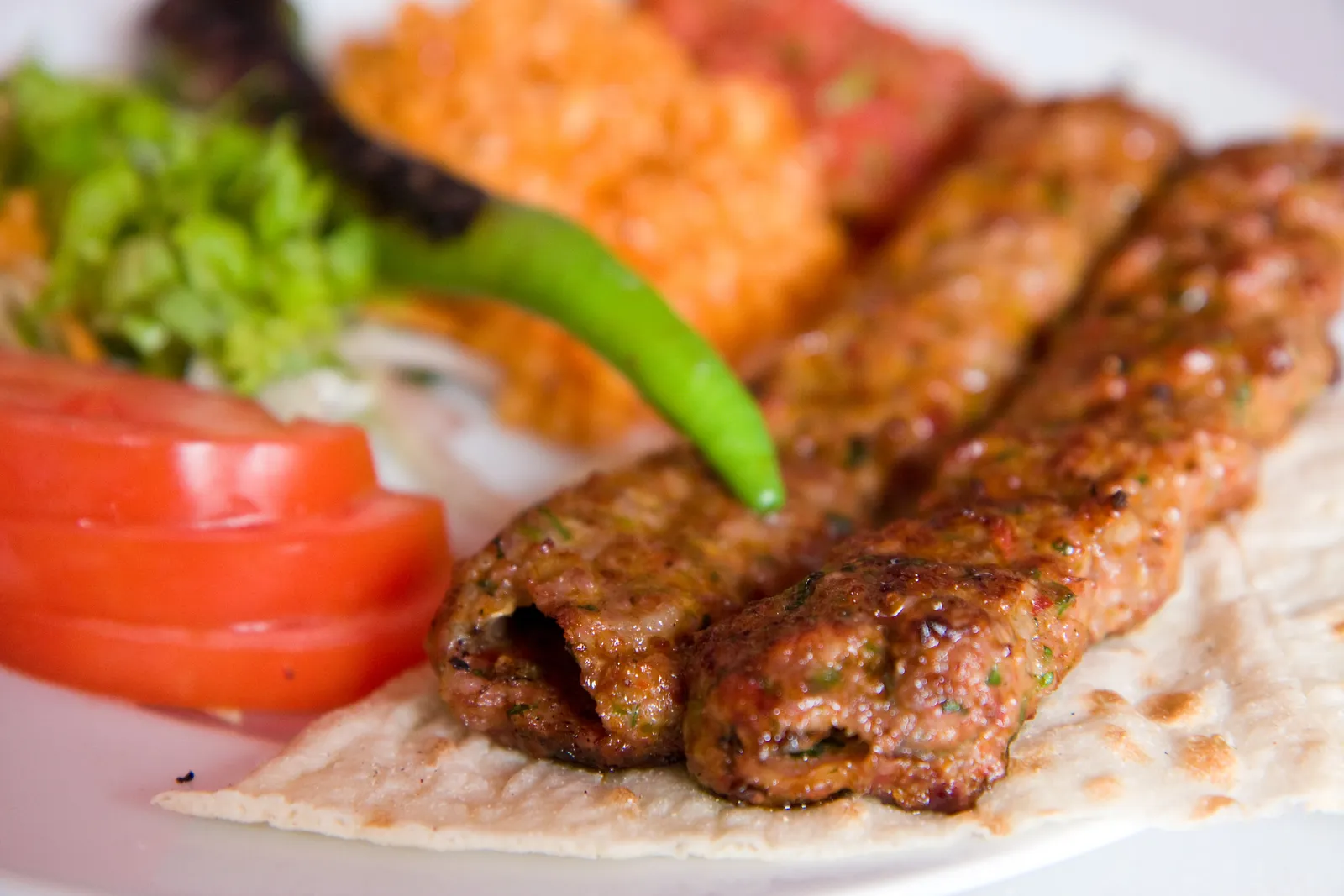
Adana kebab — long grilled minced-meat skewers on lavash with tomato, green chilli and salad Turkey flag Turkey 50m
Dinner •Adana Heritage

Adana Kebab

This adana kebab recipe is Adana's famous charcoal-grilled skewer: hand-minced lamb and beef mixed with lamb tail fat, sweet red pepper and pul biber, pressed onto wide flat skewers and grilled over glowing charcoal until the edges char and the juices run. It is served on warm lavash with grilled tomato, green chillies and a sharp sumac onion salad. One serving is about 439 g.

Adana's Charcoal-Grilled Icon

Hand-minced lamb and beef with tail fat and pul biber, pressed onto wide flat skewers and grilled over charcoal until charred at the edges — Adana's famous kebab.

Pairs Well With
Lavash, grilled tomato & sumac onion salad
High Protein
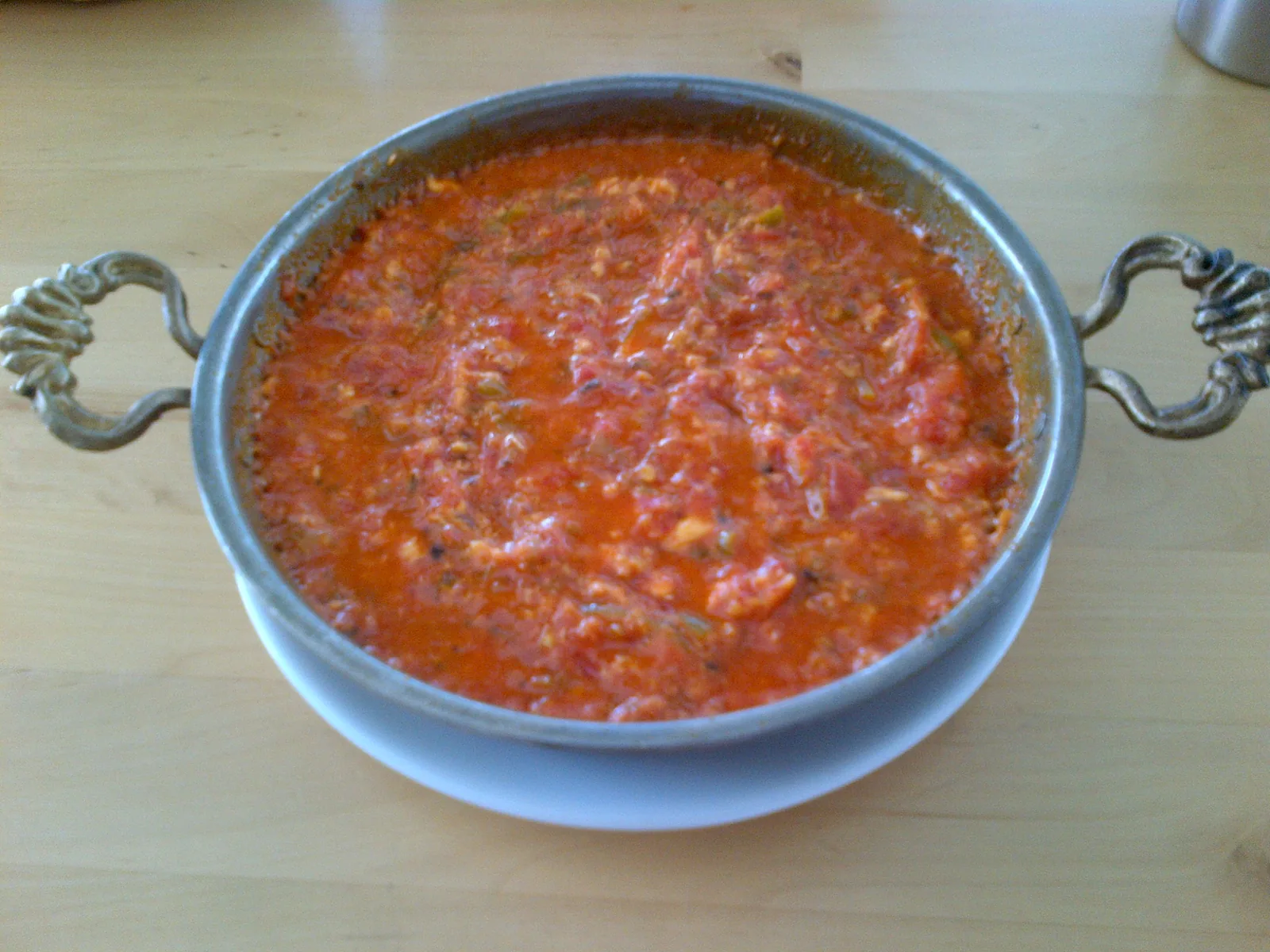
Menemen in a copper sahan pan — soft scrambled eggs stirred through a red tomato and green pepper sauce Turkey flag Turkey 30m
Breakfast •Izmir Breakfast Table

Menemen

This menemen recipe stirs beaten eggs into a soft tomato and green pepper sauce until they set into creamy curds — never poached whole, the way shakshuka does it. Cooked in one pan and served straight from it with bread, it is the classic Turkish breakfast. One serving is about 300 g.

Comfort & Warmth

Beaten eggs stirred into a soft tomato and green pepper sauce, scooped up with warm bread.

Pairs Well With
Crusty white bread, Turkish tea and sliced cucumber and tomato
Quick Prep (<30m)
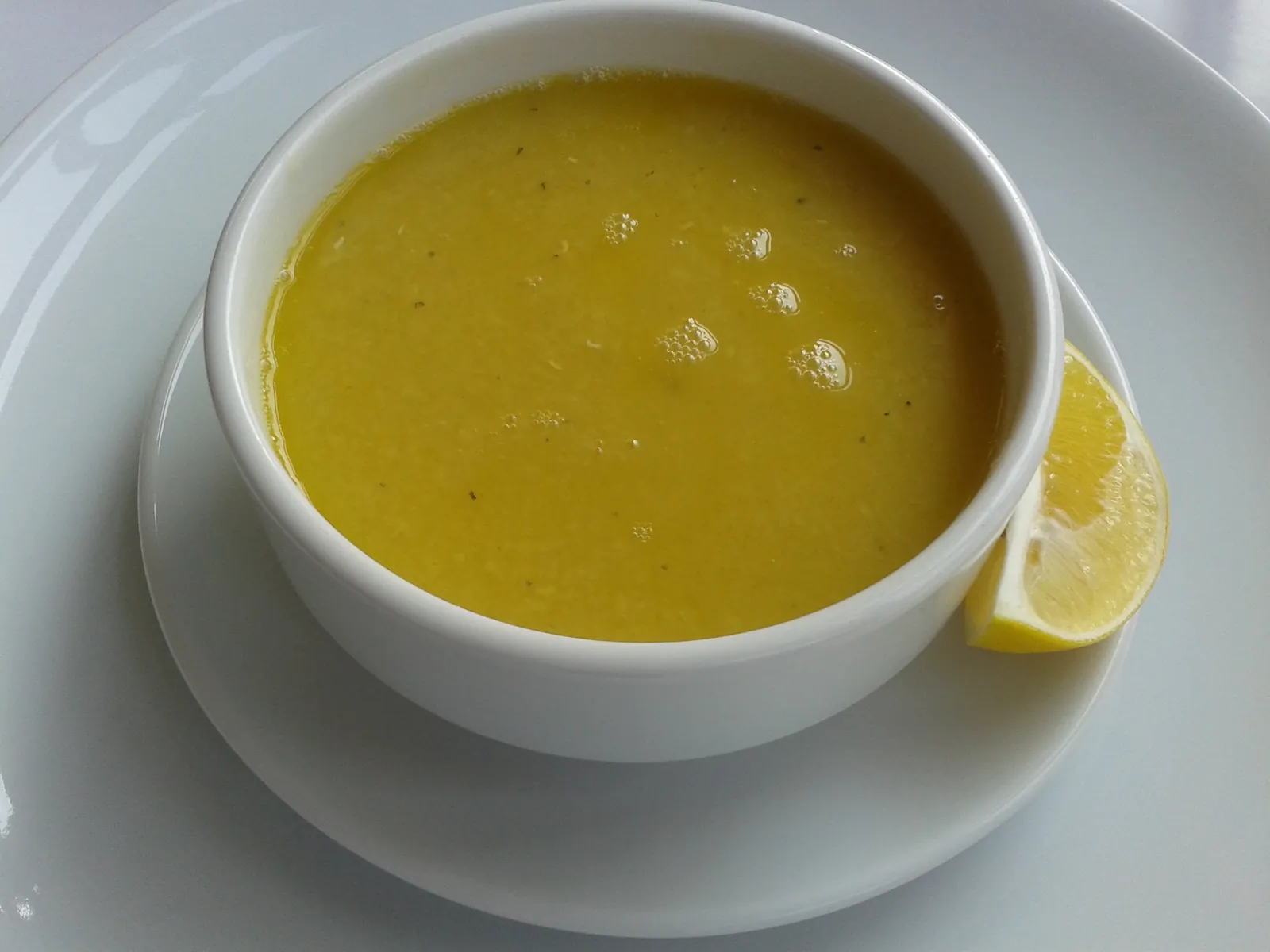
A white bowl of smooth golden Turkish lentil soup with a lemon wedge on the side Turkey flag Turkey 45m
Lunch •Ankara Lokanta Classic

Turkish Lentil Soup

This turkish lentil soup recipe turns red lentils, onion, carrot and potato into a smooth, golden soup, finished with lemon and a drizzle of paprika butter. One serving is about 325 g.

Comfort & Warmth

A silky red lentil soup, light enough for lunch and warm enough for a cold day.

Pairs Well With
Warm pide bread, lemon wedges and ayran
Soups & Broths
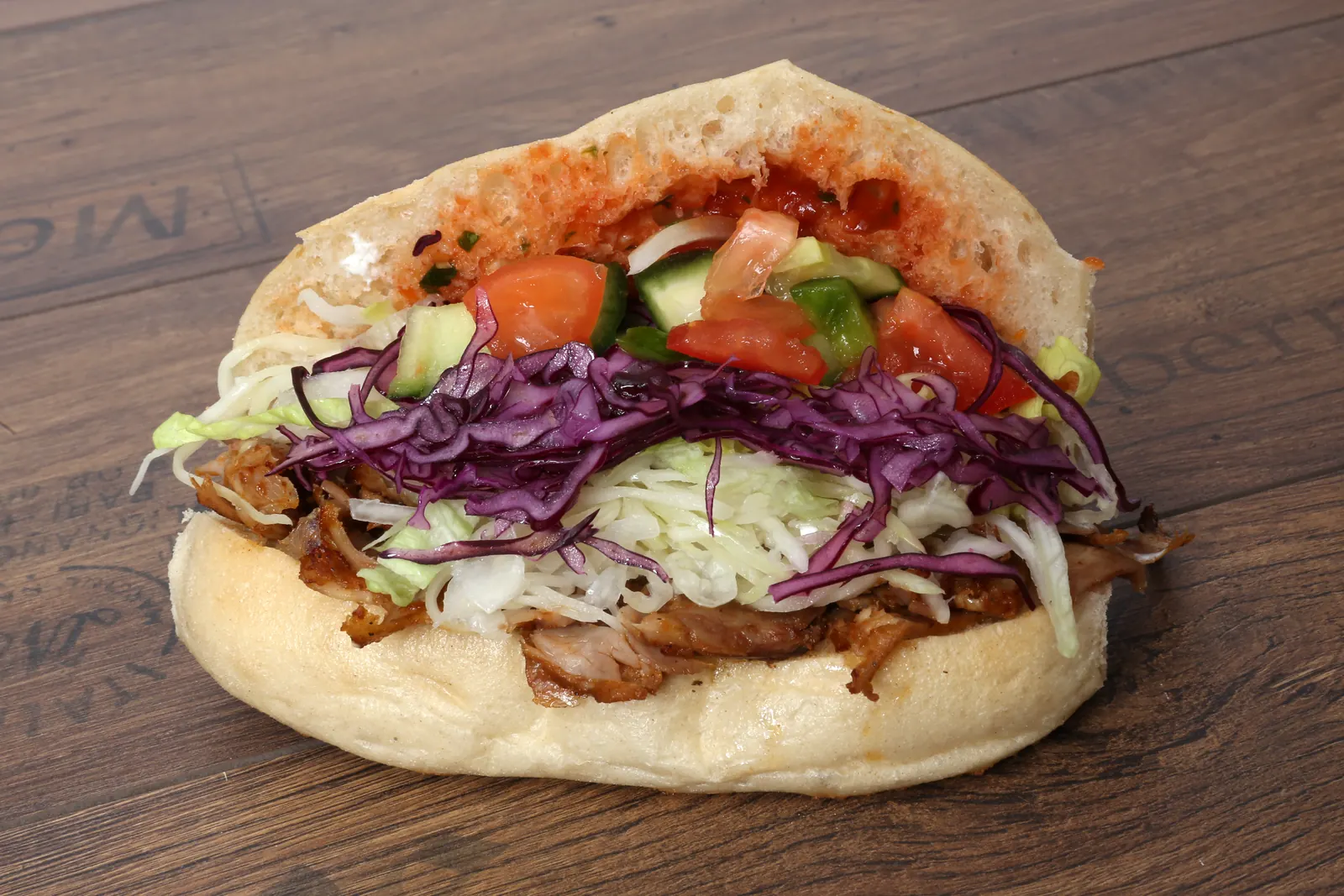
A doner kebab in flatbread filled with sliced lamb, red and white cabbage, tomato and cucumber Turkey flag Turkey 2h 55m
Dinner •Bursa Spit-Roast Heritage

Doner Kebab

This doner kebab recipe brings the Turkish spit-roast home: lamb leg marinated in yogurt, onion and spices, seared until charred at the edges, then sliced thin and tucked into warm pitta bread with crisp salad and a cool garlic yogurt sauce. No vertical spit needed — a ripping-hot pan does the job. One serving is about 415 g.

Charcoal-Grilled & Juicy

Home-style doner kebab — yogurt-marinated lamb, sliced thin and piled into warm pitta with salad and garlic sauce.

Pairs Well With
Serve in warm pitta with salad, garlic sauce and a little chilli sauce.
High Protein

The Dinner Gazette

Never wonder what’s for dinner again

One email a week with easy dinner ideas from around the world — ingredients, steps and nutrition, tested in our kitchen first.

Delivered every Thursday morning. Unsubscribe anytime.