Curated recipes from 193 countries  •  New seasonal Mediterranean issue out now

Overview

Moroccan Lamb Brochettes

Qotban, Qodban, Moroccan Lamb Kebabs

This moroccan lamb brochettes recipe is the Moroccan street grill: cubes of lamb leg marinated in olive oil, lemon, garlic, cumin, paprika and ras el hanout, threaded with red onion, red pepper and zucchini, then grilled fast over hot coals until charred at the edges and juicy inside. One serving is about 270 g and carries 531 calories. Eat them straight off the skewer with flatbread, the way the grill stalls of Jemaa el-Fnaa serve them.

In Morocco, brochettes — known as kebab, qotban or qodban — are a fixture of the street grill: small cubes of lamb marinated in cumin, paprika, garlic and olive oil, skewered and cooked fast over charcoal in a clay or metal brazier called a kanoun. The grill stalls of Jemaa el-Fnaa in Marrakech fire up every evening as the sun drops, and brochettes are a favourite at home too, especially around Eid al-Adha, when families grill with meat from the festival. The cooking is quick and fierce: the coals sear the outside while the inside stays tender, and the fat dripping onto the embers throws up the smoke that gives brochettes their unmistakable aroma.

Pairs well with: Serve hot off the grill with warm flatbread, a chopped tomato and onion salad, and a spoonful of harissa for those who want heat.

Provenance

Morocco flag Morocco

Jemaa el-Fnaa Street Grill

Middle Eastern

Time Dedication

1h 2m

50m prep • 12m cook

Batch Yield

4 Servings

531 kcal per serving

1 serving ≈ 270 g

Technical Skill

Intermediate

Easy (Grill)

Meal Timing & Digestive Fit

Breakfast

Not Advised

Lunch

Hearty Midday Main

Dinner

Ideal Hearty Main

Snack & Tea

Inappropriate

High Protein Occasions: Summer barbecues, Eid al-Adha, street-food nights, family grills Cost: Medium — about $4–5 per serving at home
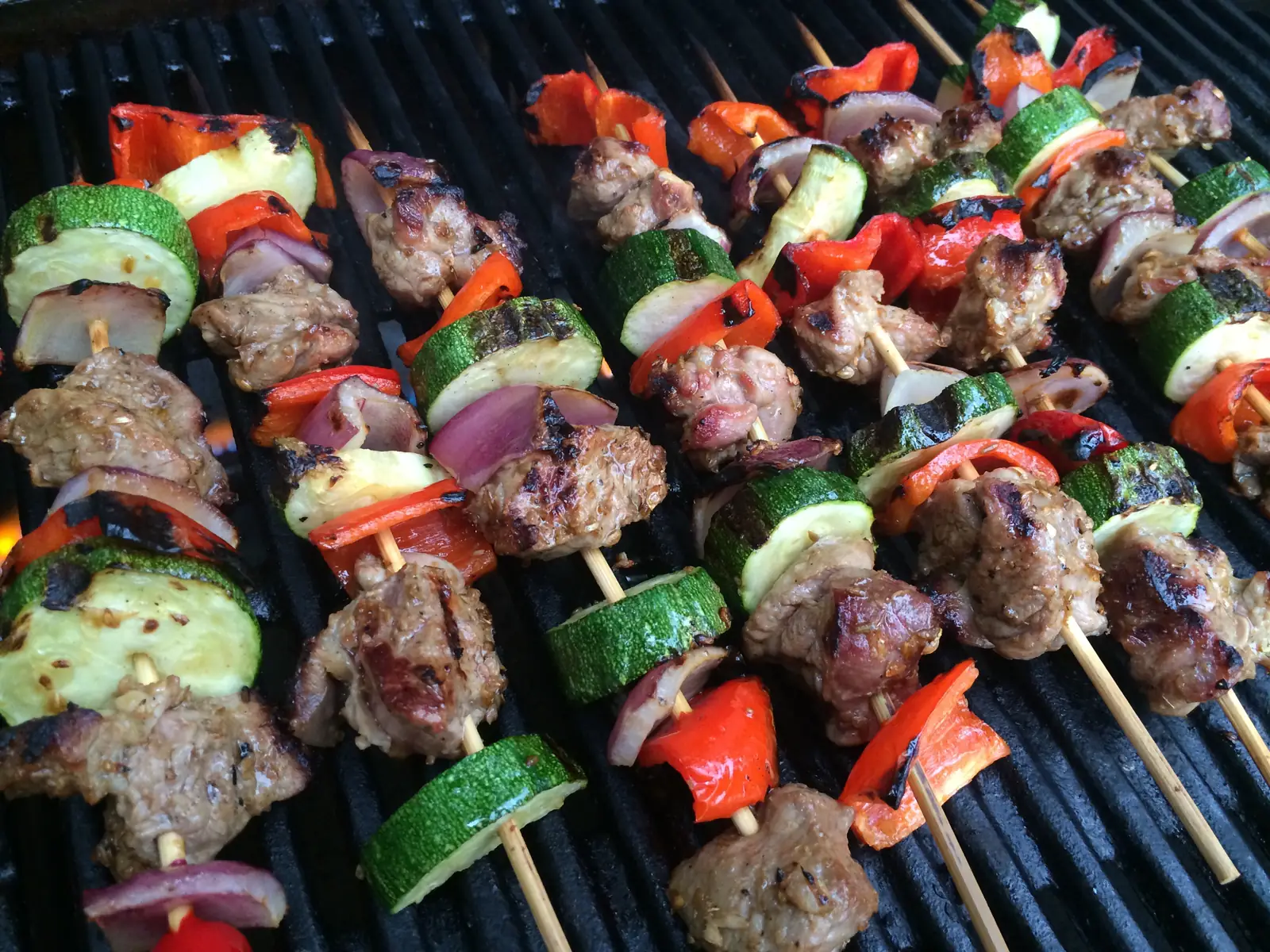
Moroccan lamb brochettes on the grill — charred lamb cubes threaded with zucchini, red pepper and red onion on wooden skewers

Jemaa el-Fnaa Street Grill

Photo: Jeremy Keith, CC BY 2.0, via Wikimedia Commons

The Heritage Formulary

Measured Ingredients

Estimated cost: Medium — about $4–5 per serving at home (USD)

Grill fast over hot coals until the lamb is charred at the edges and reads 63°C (145°F) inside, then rest for 3 minutes before serving.

Execution Methodology & Culinary Technique

Step-by-Step Cooking Guide

Active 1h 2m
P

Prep Stage: Lamb, Vegetables and Marinade

50 Mins • Lamb, Vegetables and Marinade

Cut 800 g lamb leg into even 3 cm cubes and pat dry. Cut the red onion and red pepper into 3 cm squares and the zucchini into thick rounds. Whisk the olive oil, lemon juice, garlic, cumin, paprika, ground coriander, ras el hanout, black pepper, salt and half the chopped parsley and coriander into a paste, toss the lamb in it until every cube is coated, and leave to marinate for 30 minutes at room temperature. Soak 8 wooden skewers in water for the same 30 minutes so they do not burn on the grill.

Maestro Tip: Even cubes are everything — a mix of big and small cubes means the small ones dry out while the big ones are still raw inside.

  1. 1

    Cut the lamb and vegetables

    15 Mins Cold lamb, about 4°C (39°F)

    Cut the lamb leg into even 3 cm cubes, trimming away any hard gristle but leaving a little fat — it keeps the skewers juicy over the coals. Cut the red onion and red pepper into 3 cm squares, keeping 2 or 3 onion layers together, and slice the zucchini into rounds about 1 cm thick. Pat the lamb dry with paper towels so the marinade clings instead of sliding off.

    Cut against the grain where you can see it — the cubes stay tender instead of chewy.

    Done when: A bowl of even lamb cubes and a pile of neat vegetable pieces, all roughly the same size.

  2. 2

    Mix the marinade and marinate the lamb

    5 Mins + 30 Mins marinating Room temperature, about 20°C (68°F)

    Whisk the olive oil, lemon juice, garlic, cumin, paprika, ground coriander, ras el hanout, black pepper and salt into a paste, then stir in half the chopped parsley and coriander. Toss the lamb cubes in the marinade until every piece is coated, cover, and leave for 30 minutes at room temperature. Put 8 wooden skewers in water to soak for the same 30 minutes. If you have longer, marinate the lamb in the fridge for up to 4 hours — bring it back to room temperature for 20 minutes before grilling.

    Do not marinate overnight in lemon juice — the acid starts to 'cook' the surface of the meat and makes it mealy.

    Done when: Every lamb cube is evenly coated in a rust-red, fragrant marinade.

  3. 3

    Thread the skewers

    10 Mins Room temperature, about 20°C (68°F)

    Thread the lamb onto the soaked skewers, alternating each cube with a piece of onion, pepper or zucchini, as in the photo — about 5 or 6 lamb cubes per skewer, with the vegetables between them. Leave a tiny gap between pieces so the heat can reach every side, and push the pieces to the middle of the skewer, leaving a handle at each end. Brush the threaded skewers lightly with any marinade left in the bowl.

    Two parallel skewers per portion stop the cubes spinning when you turn them — but one skewer works if you turn gently with tongs.

    Done when: Eight skewers, each loaded with lamb and vegetables and easy to pick up by the ends.

  4. 4

    Heat the grill

    10 Mins Grill at 230°C (450°F)

    Heat a charcoal grill until the coals are glowing and covered in a light layer of grey ash, or a gas grill to 230°C (450°F) — about 10 minutes. Oil the grates with a folded paper towel dipped in oil, held with tongs. The grill is ready when you can hold your hand 15 cm above it for only 2 or 3 seconds.

    Wait for the flames to calm down before the skewers go on — fierce flames char the outside before the inside is cooked.

    Done when: Hot, oiled grates with glowing coals and no leaping flames.

  5. 5

    Grill the brochettes

    10 to 12 Mins Grill at 230°C (450°F); lamb to 63°C (145°F)

    Lay the skewers across the grates and grill for 10 to 12 minutes, turning every 2 to 3 minutes, until the lamb is browned and charred at the edges and the vegetables are softened and lightly blackened. Check the thickest cube with an instant-read thermometer — 63°C (145°F) is medium and juicy, the way Moroccan grills serve it. Move the skewers to a cooler part of the grill if the vegetables start to burn before the lamb is done.

    Do not press the meat down with a spatula — it squeezes the juices out and dries the lamb.

    Done when: Charred edges, juices running clear, and 63°C (145°F) in the thickest cube.

  6. 6

    Rest and serve

    3 Mins resting Rest at room temperature, about 20°C (68°F)

    Lift the skewers onto a platter and rest for 3 minutes — the juices settle back into the meat instead of running out when you bite in. Scatter the remaining chopped parsley and coriander over the top and serve at once, with warm flatbread and a chopped tomato and onion salad on the side. Eat straight off the skewer, tearing the bread to scoop up the juices.

    Serve the skewers on the platter, not on a cold plate — a cold plate steals the heat in seconds.

    Done when: Juicy, smoky skewers that are hot through, with charred edges and soft vegetables.

Finishing Touches & Plating

Serve the brochettes the moment they come off the grill, scattered with the remaining herbs, with warm flatbread for wrapping and scooping. The lamb should be charred outside and pink and juicy inside, the peppers and zucchini soft and smoky, and the whole plate smelling of cumin and charcoal.

Nutritional Physiology & Benefits

Nutrition

Energy

531

kcal / serving

Protein

43g

Complete AA

Carbs

13g

Complex

Fats

35g

Healthy

Per serving (4 servings · 1 serving ≈ 270 g)
Energy531 kcal
Protein43 g
Carbohydrates13 g
Fat35 g
Fibre3.8 g
Sugar5.4 g
Sodium632 mg
Per 100g
Energy197 kcal
Protein15.8 g
Carbohydrates4.6 g
Fat13 g
Fibre1.4 g
Sugar2 g
Sodium234 mg

Nutrition values are estimated — calculated from USDA FoodData Central values for the listed ingredients.

Vitamins & minerals: Provides iron, zinc and vitamin B12 from lamb, vitamin C from red pepper, and vitamin K from parsley and coriander.

Serious Protein

Each 270 g serving carries about 42.5 g of protein from lamb, which makes this a genuinely filling dinner rather than a light snack.

Iron and B12 From Lamb

Lamb is a rich source of iron and vitamin B12, nutrients that help carry oxygen in the blood and keep energy levels steady as part of a varied diet.

Vegetables On the Skewer

Pepper, onion and zucchini grill alongside the meat, so every skewer brings fibre and vitamin C with the protein, not just meat alone.

Food Pairings

What to Eat With

To optimize nutrient absorption and elevate the sensory depth, pair with these authentic accompaniments:

Sides

Warm Flatbread

Soft khobz or any flatbread is the Moroccan way to eat brochettes — it wraps the hot lamb, soaks up the spiced juices, and turns skewers into a meal.

Vegetables

Tomato and Onion Salad

Chopped tomato, onion and parsley with lemon and olive oil cuts the richness of the lamb with acidity and crunch, the way the grill stalls serve it.

Drinks

Mint Tea

Sweet Moroccan mint tea is the classic finish to a charcoal grill — its sweetness and mint cool the palate after the smoky, spiced lamb.

Full Menus

Jemaa el-Fnaa Grill Spread

Serve the brochettes as the centre of a Moroccan grill spread, with kefta skewers, merguez and grilled vegetables on the same table — the charcoal smoke ties the whole spread together.

Complete menu

Serve the brochettes hot off the grill with warm flatbread, a chopped tomato and onion salad, and mint tea — the skewers are the centrepiece, and the bread and salad turn them into a full Moroccan dinner.

Digestive Guardrails

What NOT to Combine

To prevent digestive distress, sluggishness, or palate clash, avoid pairing the dish with these elements:

Very Sugary Drinks With the Grill

Sweet soda with a rich, salty lamb dinner adds a lot of sugar on top of an already generous meal; mint tea, water or unsweetened drinks are better. This is general nutrition information, not medical advice.

Eating Undercooked Lamb

Lamb cubes must reach 63°C (145°F) inside and rest for 3 minutes before eating; pink is fine at that temperature, but raw, cold centres are not. Use a thermometer rather than guessing. This is general food-safety information, not medical advice.

General information only, not medical advice — consult a doctor for personal dietary decisions.

Who Should Eat It

Who Should Eat

  • General adultsA generous, protein-rich dinner — one serving of two skewers with bread and salad is plenty for most adults.
  • ChildrenChildren usually love skewers; slide the meat off onto their plate, check it is cooked through, and go easy on the harissa.
  • ElderlySoft, tender lamb is easy to chew; serve the meat off the skewer and cut it small if needed.
  • Pregnant womenLamb must be cooked right through to 63°C (145°F) with a 3-minute rest; the iron and B12 are useful, but ask your clinician about portion size if unsure.
  • Breastfeeding womenFine as a hearty dinner; the protein and iron are useful, but it is a rich meal, so balance it with plenty of salad.
  • AthletesAn excellent post-training dinner — about 42.5 g of protein per serving with vegetables on the same skewer.
  • Weight gainAn easy way to add energy and protein — two skewers with flatbread add calories without a large volume of food.
  • Weight lossBest with a smaller portion: one skewer with a big salad instead of two skewers with bread keeps the meal lighter, at about 531 calories a full serving.

Health Conditions — Adjust or Avoid

Conditions

  • DiabetesCarbohydrate is low at about 12.5 g a serving, but the bread on the side adds up quickly — count the flatbread, not just the skewers; ask your clinician.
  • High blood pressureSodium is about 632 mg a serving before bread and sauces, so keep added salt and salty condiments in check — ask your clinician if you are managing blood pressure.
  • Kidney diseaseLamb is high in protein and phosphorus, which some kidney diets limit — ask your clinician before eating it.
  • GoutLamb and red meat are higher in purines than poultry or fish, so keep portions modest and occasional if you manage gout — ask your clinician.
  • Stomach issuesGrilled meat and raw onion can be heavy for sensitive stomachs; eat slowly, chew well, and skip the harissa if it bothers you — ask your clinician if symptoms persist.
  • Cardiovascular diseaseLamb brings saturated fat, so keep brochettes an occasional dinner rather than a daily habit and load the plate with salad — ask your clinician.
  • Fatty liverRich in saturated fat, which fatty-liver guidance usually limits — best kept to occasional, modest portions; ask your clinician.
  • Food allergiesContains no gluten, milk, egg or nuts as written, but the flatbread served alongside usually contains wheat — check the bread and ask your clinician if you are unsure about an allergy.
  • Special therapeutic dietsNot suitable for vegetarian, vegan or low-fat diets as written; a clinician or dietitian can advise on adapted versions, such as chicken or vegetable skewers.

If you have a medical condition, consult your doctor before changing your diet.

Storage & Use

Storage & Use

How to store
Cool the cooked skewers quickly, slide the meat and vegetables off into a sealed container.
In the fridge
3 days in the fridge at 4°C (39°F) or below.
In the freezer
Up to 2 months, in a sealed freezer bag; thaw overnight in the fridge.
How to reheat
Reheat in an oven at 180°C (350°F) for 8 to 10 minutes until steaming hot, 74°C (165°F) inside; do not reheat more than once.
Freezing recommended
Yes for the cooked meat off the skewer; the grilled vegetables freeze less well and go soft.
Signs it has spoiled
Sour or off smell, slimy surface, or grey discolouration — discard it.

More recipes to explore

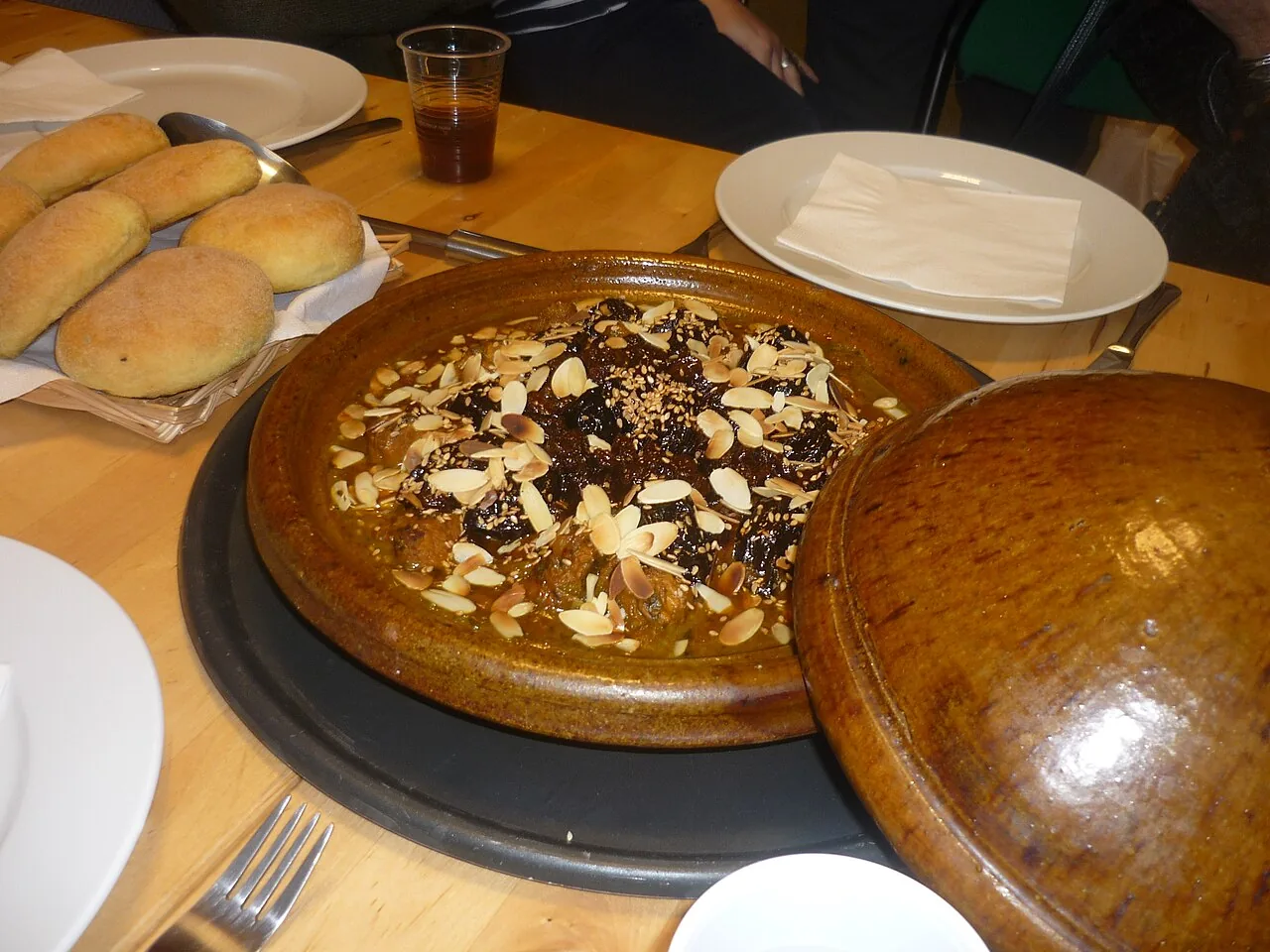
Moroccan lamb and prune tagine with almonds and sesame Morocco flag Morocco 2h 35m
Lunch •Atlas Mountains

Lamb & Prune Tagine

Clay vessel braised lamb shoulder infused with Ras el Hanout, saffron stamens, and natural sun-dried fruit pectins.

Immunity & Warming

Slow-braised lamb with prunes, almonds and couscous.

Pairs Well With
Spiced Couscous & Preserved Lemon Salad
High Protein
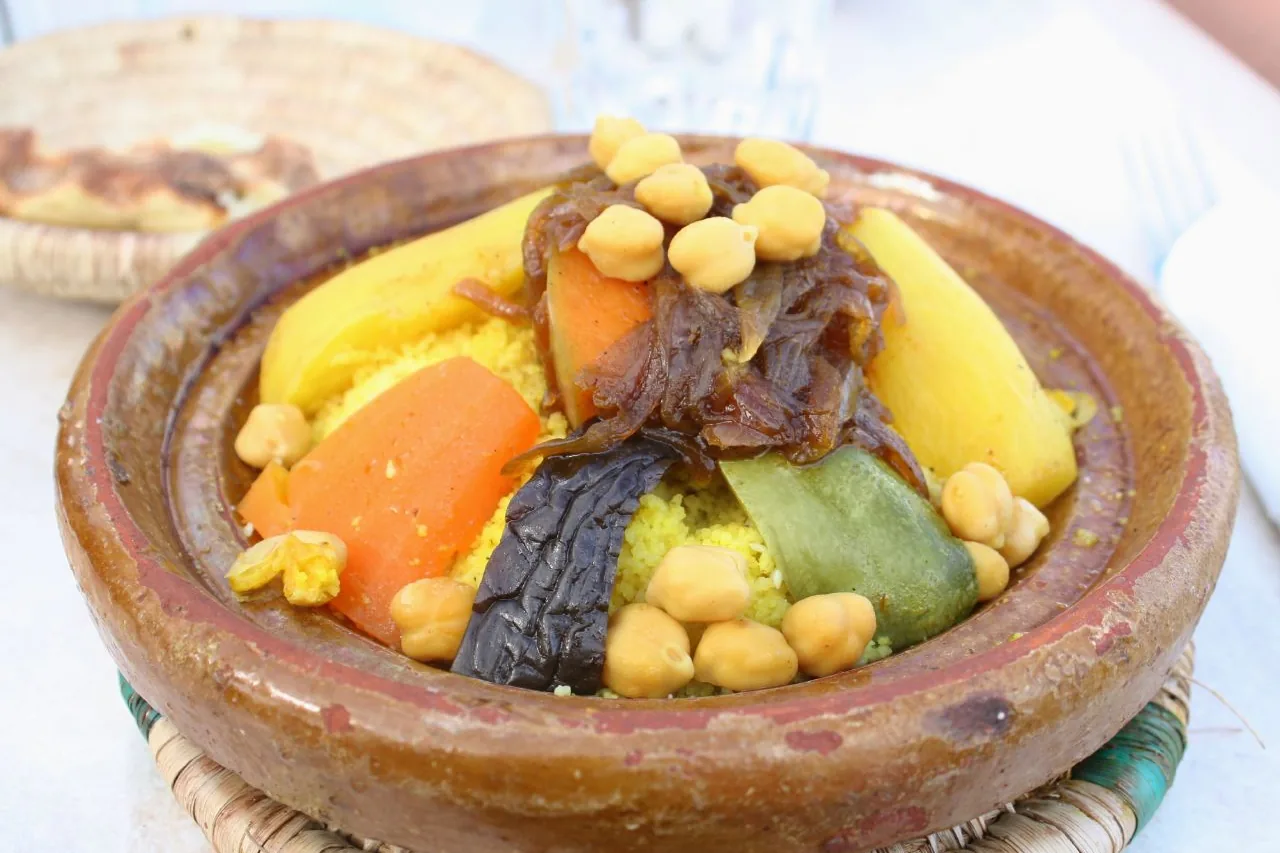
A clay bowl of Moroccan couscous with vegetables, chickpeas, carrot and pumpkin Morocco flag Morocco 1h 15m
Dinner •Maghreb Friday Table

Moroccan Couscous with Vegetables

This moroccan couscous recipe steams fine semolina until fluffy, then ladles over a slow-cooked stew of seven vegetables, chickpeas and warm spices. One serving is about 475 g.

Comfort & Warmth

Fluffy steamed semolina with a slow vegetable stew and chickpeas.

Pairs Well With
Harissa, mint tea and crusty bread
Quick Prep (<30m)
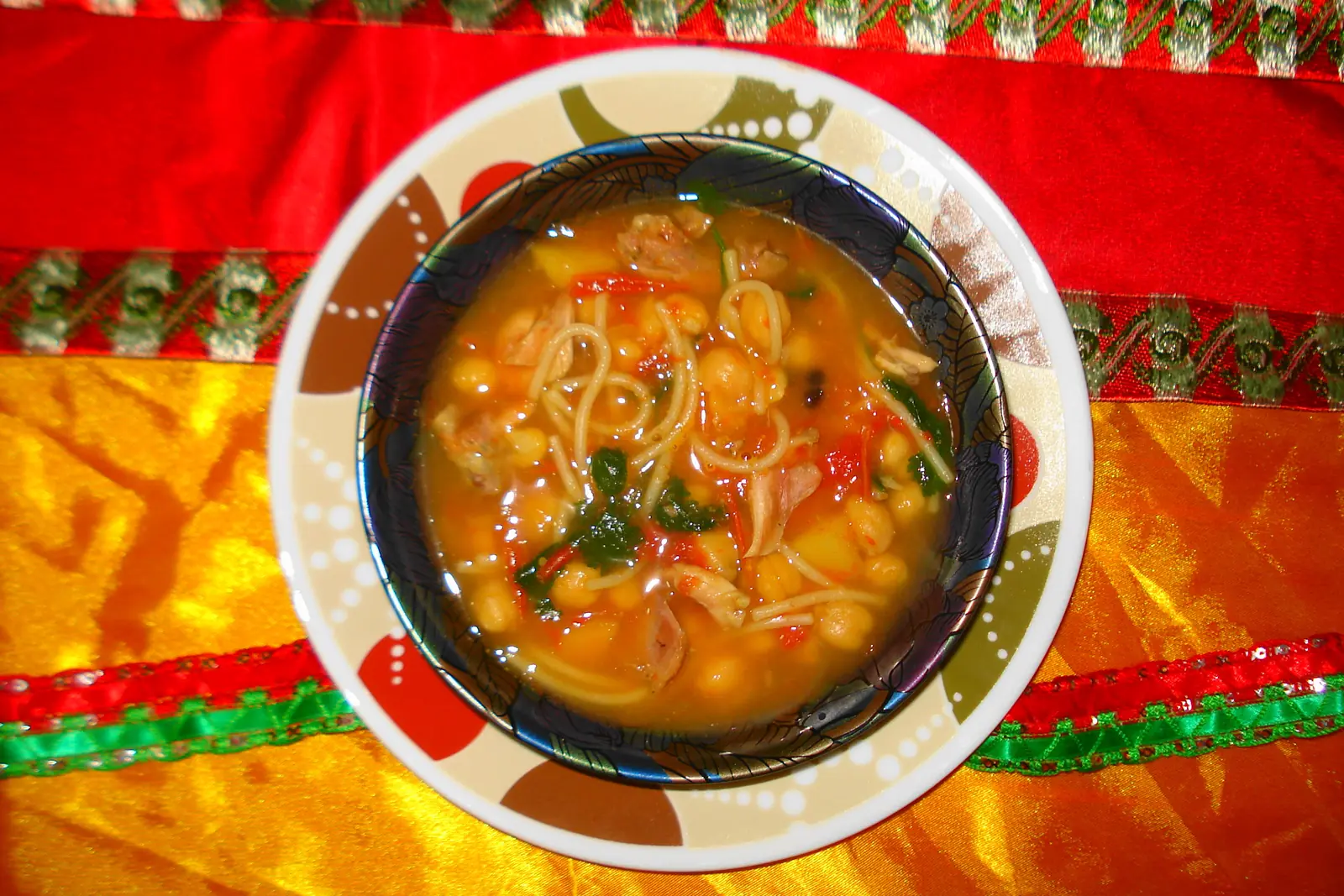
A bowl of Moroccan harira soup with chickpeas, noodles and fresh herbs Morocco flag Morocco 1h 15m
Lunch •Ramadan Iftar Table

Harira Soup

This harira soup recipe simmers lentils, chickpeas, tomatoes and lamb with ginger, cinnamon and fresh herbs, then thickens it the traditional way with a flour slurry. One serving is about 450 g.

Comfort & Warmth

A thick, warming tomato and lentil soup, the soup Moroccans break their fast with.

Pairs Well With
Dates, chebakia and mint tea
Soups & Broths • High Protein
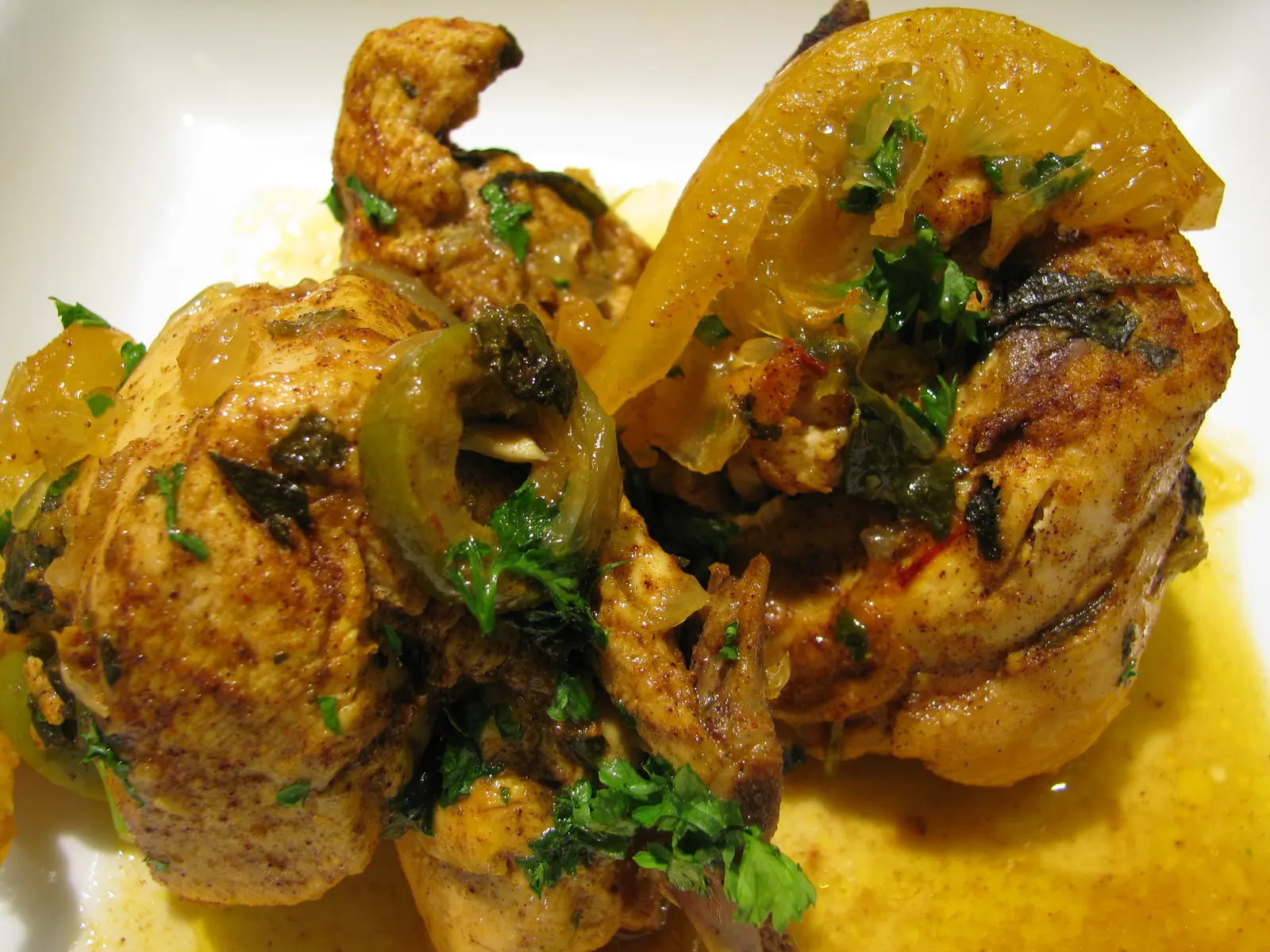
Moroccan chicken tagine with preserved lemon slices, green olives and fresh parsley Morocco flag Morocco 1h 15m
Dinner •Moroccan Heritage

Moroccan Chicken Tagine

Moroccan chicken tagine is the dish Morocco is best known for: chicken braised slowly with onions, ginger and saffron, then finished with salty preserved lemon and green olives. This moroccan chicken tagine recipe uses a heavy pot instead of a clay tagine, so anyone can make it — the conical lid's job is done by a tight-fitting lid and a gentle flame. One serving is about 315 g.

Slow-Cooked Comfort

Chicken braised slowly with ginger, saffron, preserved lemon and green olives until the meat falls from the bone.

Pairs Well With
Couscous, khobz bread and mint tea.
High Protein

The Dinner Gazette

Never wonder what’s for dinner again

One email a week with easy dinner ideas from around the world — ingredients, steps and nutrition, tested in our kitchen first.

Delivered every Thursday morning. Unsubscribe anytime.