-
1
Wilt the Leaves
1–2 Days • Wilting
Room temperature, about 18°C (64°F)
Spread the washed mustard and radish leaves on a clean cloth in the sun or a warm room and leave them to wilt for 1–2 days, until they are soft and limp but still green. This wilting step is what lets the leaves pack tightly without bruising.
Do not skip the wilt — fresh, stiff leaves trap air in the jar and ferment unevenly.
Done when: The leaves are limp and pliable, like soft cloth.
-
2
Shred and Pack
10 Mins • Hands On
Room temperature
Shred the wilted leaves with a knife and pack them tightly into a clean glass or earthenware jar, pressing down hard to squeeze out air pockets. Pour in warm water at about 30°C (86°F) until the leaves are fully submerged, then weigh them down with a clean stone or a small plate and cover the jar loosely.
Pack it tight — air is the enemy of a good ferment.
Done when: The leaves are fully submerged under warm water with no air pockets.
-
3
Ferment for a Week
7 Days • Fermenting
Warm place, about 18°C (64°F)
Keep the jar in a warm place for about a week. The water will turn cloudy and the leaves will develop a mild, pleasantly acidic taste — that sourness means the ferment is done. Lactic-acid bacteria do the work, and the pH falls to about 4.0.
Taste on day 6: it should be tangy like a mild pickle, not sharp or rotten.
Done when: The leaves taste mildly sour and smell clean and tangy.
-
4
Dry in the Sun
1–2 Days • Sun-Drying
Full sun
Lift the fermented leaves out, squeeze them gently, and spread them in the sun to dry for 1–2 days until crisp and dry to the touch. This is how gundruk keeps for months without a fridge — about 700 g of dried gundruk comes from the 1 kg of fresh leaves. Store it in a sealed jar; use 200 g for this sadeko and keep the rest.
Dry them fully — any dampness left in the jar will spoil the batch.
Done when: The leaves are dry, crisp and dark green, with a sharp sour smell.
-
5
Soak and Squeeze
30 Mins • Soaking
Room temperature
Soak 200 g of the dried gundruk in warm water for 30 minutes until soft, then squeeze it dry in handfuls. This is the point where the sour leaves turn back into food — taste a pinch; it should be tangy and salty-sour, not bitter.
Squeeze hard; water left in the leaves dilutes the sadeko.
Done when: The leaves are soft, dark and springy, with most of the water squeezed out.
-
6
Toss the Sadeko
10 Mins • Hands On
Mustard oil heated to smoking, ~200°C (390°F), then cooled
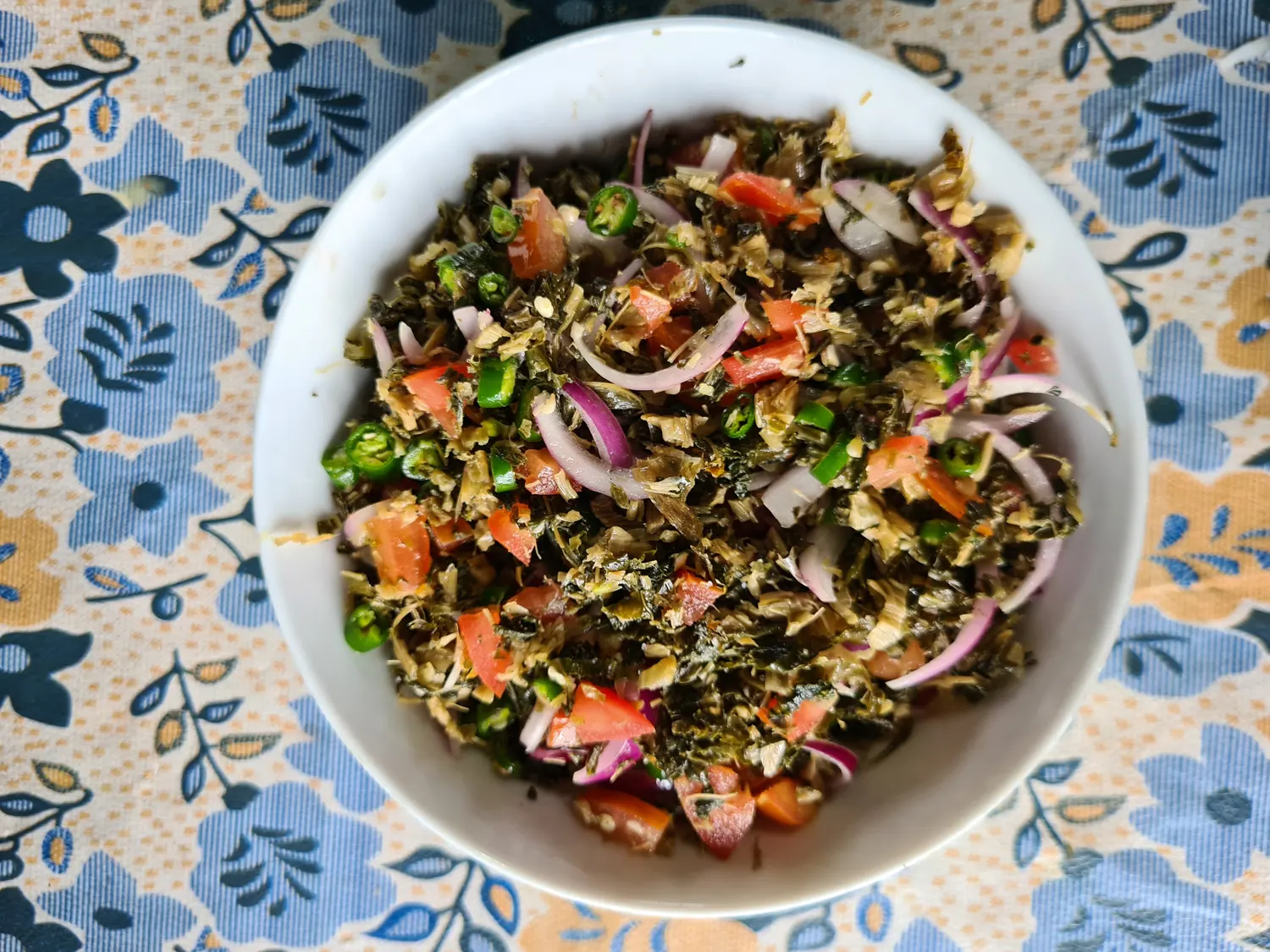
Heat the mustard oil until it just smokes, then take it off the heat and let it cool completely — this tames its bite. Toss the squeezed gundruk with the diced tomato, sliced red onion, green chilli rings, cooled oil, lemon juice and salt. Serve at room temperature as a side with rice and dal.
Do not pour hot oil over the leaves — it wilts the tomato and dulls the fresh colours.
Done when: The sadeko is bright and colourful, the greens glossy with oil, and the flavour is sour, sharp and fresh.
auto_awesome Finishing Touches & Plating
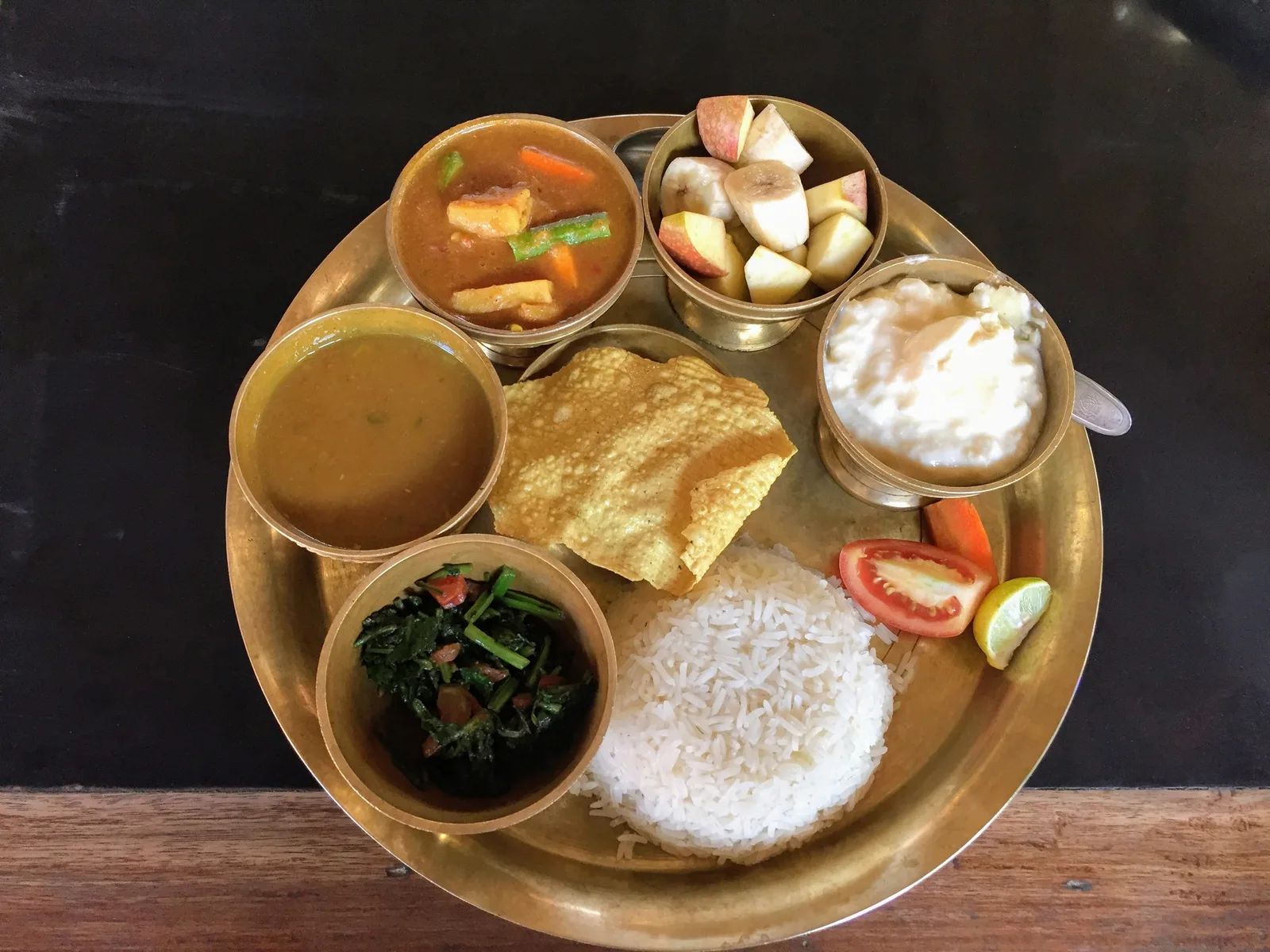
Serve the sadeko at room temperature beside steamed rice and dal — it is a side dish, not a main, and a little goes a long way. Keep the rest of the dried gundruk in a sealed jar for the next rice-and-dal day.

 Nepal
1h 25m