-
1
Heat the Oven and Line the Tray
5 Mins
200°C (400°F)
Heat the oven to 200°C (400°F) and line a baking tray with baking paper. A hot oven from the start is what gives scones their sudden rise — a lukewarm oven makes them spread instead.
Put the tray in the oven to heat if you like; scones rise best when they hit a hot surface.
Done when: Oven at 200°C (400°F); tray lined and ready.
-
2
Rub the Butter Into the Flour
5 Mins
Room temperature
Sift the flour, baking powder, salt, mustard powder and cayenne into a large bowl. Add the cold butter cubes and rub them into the flour with your fingertips, lifting the mixture up as you go, until it looks like coarse breadcrumbs with a few pea-sized bits of butter still visible. Stir in most of the grated cheese, keeping a small handful aside for the tops.
Use your fingertips, not your palms — palms are warm and melt the butter. Those little visible bits of butter are the secret to a flaky crumb.
Done when: Coarse, crumbly mix with visible butter pieces and cheese stirred through.
-
3
Add the Wet Ingredients
5 Mins
Room temperature
Make a well in the centre of the flour and pour in the milk-and-egg mixture all at once. Stir with the blade of a broad knife, cutting through the mixture in a folding motion, just until it comes together into a soft, slightly sticky dough. Stop the moment there is no dry flour left — a few seconds more and the scones turn tough.
A knife, not a spoon, and no kneading. Scone dough should be handled as little as possible.
Done when: A soft, shaggy dough with no dry flour, still slightly sticky.
-
4
Shape and Cut the Scones
5 Mins
Room temperature
Turn the dough onto a lightly floured bench and pat it — do not roll it — into a round about 3 cm thick. Dip a round cutter about 7 cm across in flour and cut straight down, without twisting, to make 8 scones. Place them close together on the lined tray, almost touching, and sprinkle the reserved cheese over the tops. Gather the scraps gently, pat them out once more, and cut the last scones.
Cut straight down and lift straight up. Twisting the cutter seals the edges and stops the scone rising evenly.
Done when: 8 tall rounds on the tray, almost touching, cheese on top.
-
5
Bake Until Tall and Golden
15–18 Mins
200°C (400°F)
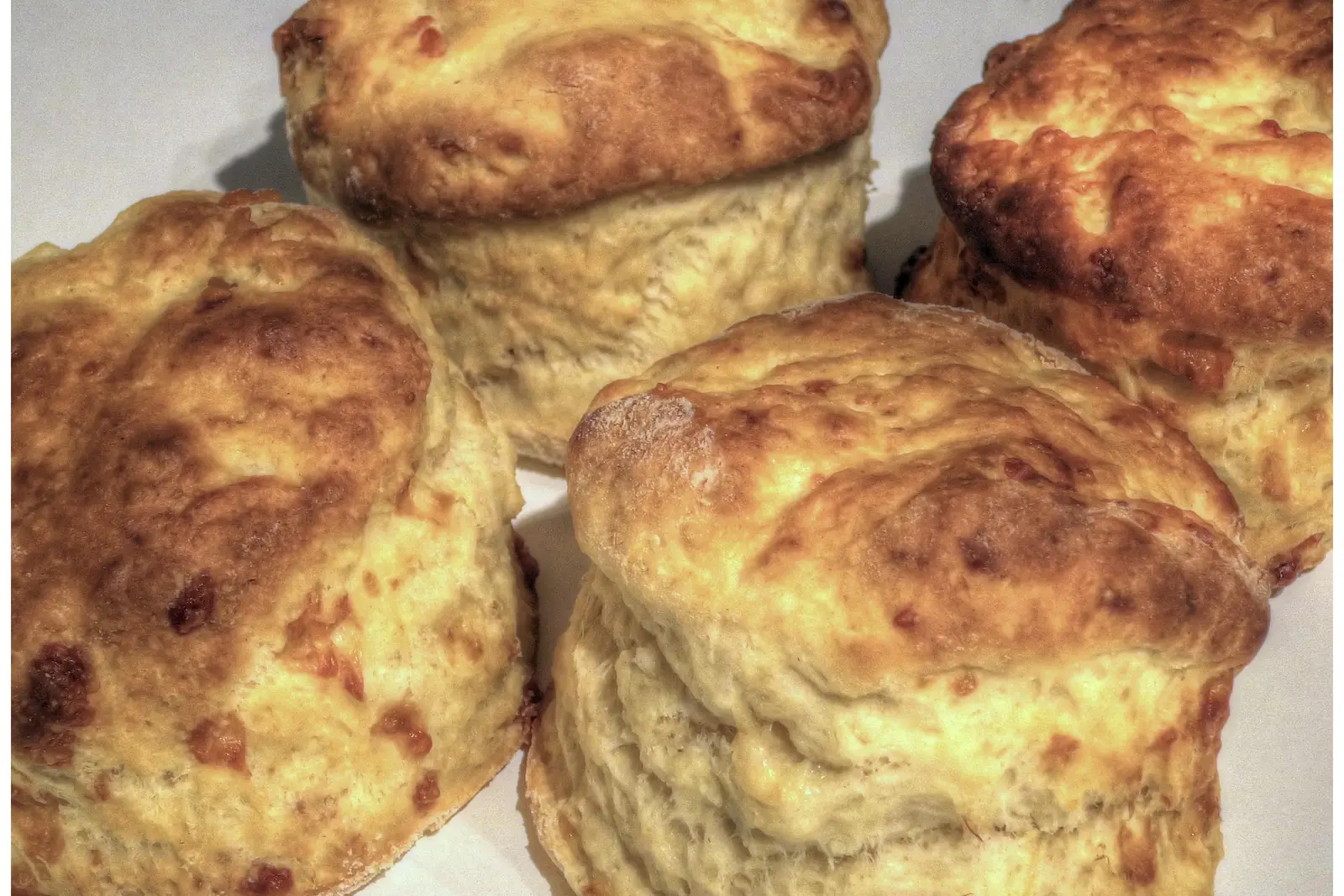
Bake for 15–18 minutes until the scones have risen tall, split a little at the top, and turned deep golden brown with the cheese bubbling on top. They should sound hollow when you tap the bottom of one. If the tops brown too fast, move the tray to a lower shelf for the last few minutes.
Do not open the oven door for the first 10 minutes — the rush of cool air can make them sink.
Done when: Tall, golden scones with split tops and bubbling cheese.
-
6
Cool Briefly and Serve Warm
5 Mins
Room temperature
Leave the scones on the tray for 5 minutes, then move them to a wire rack. Serve warm, split open with a knob of butter melting inside. They are at their best within an hour of baking.
Split with a fork, not a knife — a fork keeps the crumb fluffy instead of squashing it.
Done when: Warm scones, crisp outside, soft and steamy inside.
auto_awesome Finishing Touches & Plating
Serve the scones warm from the oven, split and buttered. If they have gone cold, warm them for 5 minutes in a 160°C (320°F) oven — never the microwave, which makes them rubbery.

 New Zealand
4h