Curated recipes from 193 countries  •  New seasonal Mediterranean issue out now

Overview

Pacoca

Paçoca, paçoca de amendoim

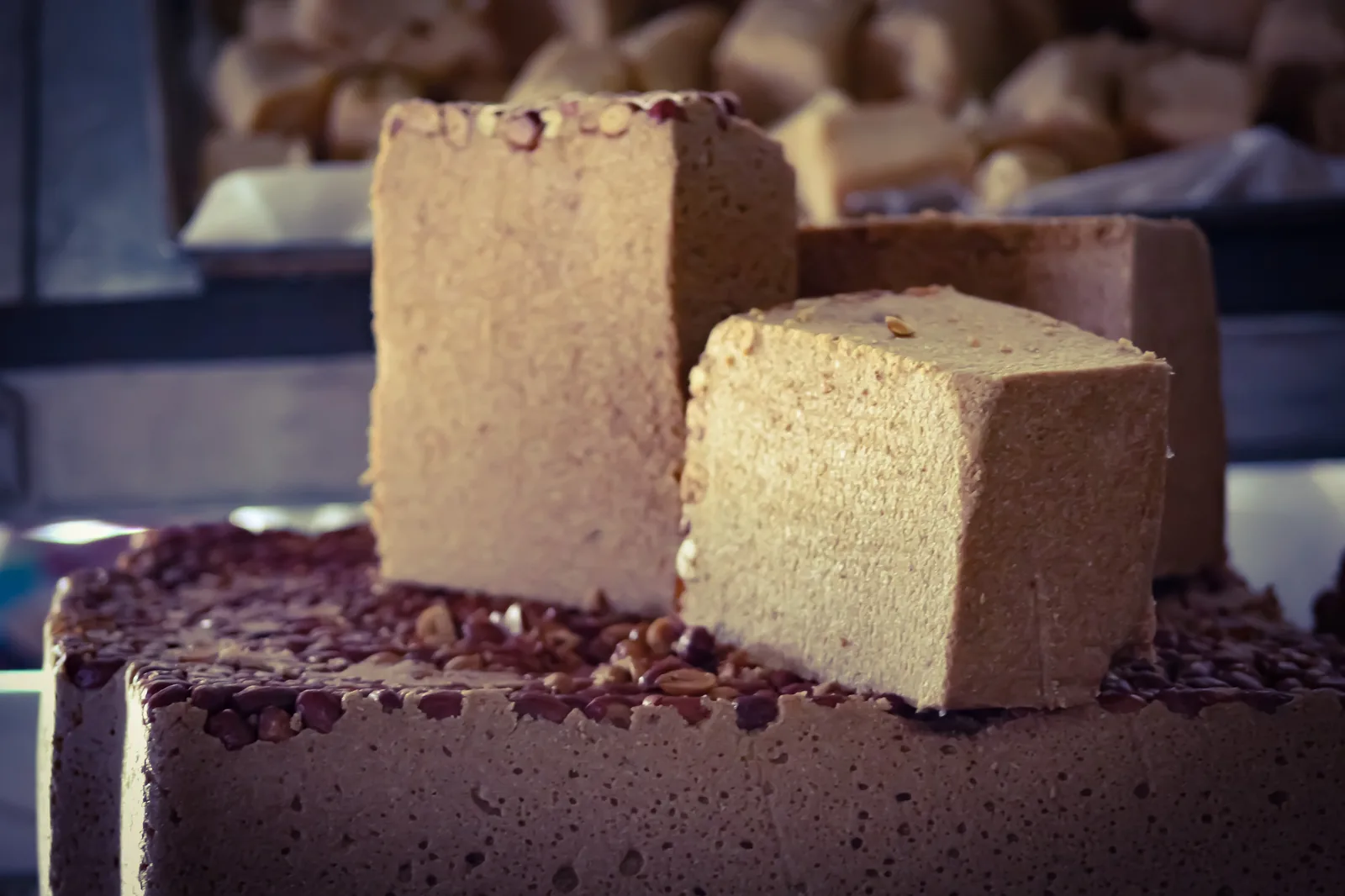
This pacoca recipe turns roasted peanuts, sugar and cassava flour into Brazil's beloved crumbly peanut candy. The peanuts are ground coarse, mixed with sugar until it holds together, and pressed into bars that melt on the tongue — sweet, nutty and a little salty. One piece is about 40 g.

Paçoca is one of Brazil's oldest sweets. The name comes from the Tupi word pa'soka, meaning to crush or pound, because the candy was first made by pounding roasted peanuts with cassava flour in a mortar. It became the sweet of Festa Junina, the June festivals, where it is sold in markets and eaten with corn cakes and coconut sweets.

Pairs well with: Serve with strong coffee or tea — the bitterness balances the sweet, nutty candy.

Provenance

Brazil flag Brazil

Brazilian Festa Junina Sweet

Latin America & Caribbean

Time Dedication

25m

15m prep • 10m cook

Batch Yield

12 Servings

197 kcal per serving

1 serving ≈ 40 g

Technical Skill

Easy

Easy (No Baking)

Meal Timing & Digestive Fit

Breakfast

Not Advised

Lunch

Inappropriate

Dinner

Inappropriate

Snack & Tea

Ideal Light Bite

Occasions: Festa Junina, picnics, coffee breaks, lunchbox treats Cost: Low — about $0.50 per piece at home
Large blocks of paçoca, the crumbly Brazilian peanut candy, stacked at a market stall

Brazilian Festa Junina Sweet

Photo: Márcia Cristina Machado, CC BY-SA 4.0, via Wikimedia Commons

The Heritage Formulary

Measured Ingredients

Estimated cost: Low — about $0.50 per piece at home (USD)

Good pacoca is crumbly and dry, not sticky — it should hold its shape as a bar but fall apart softly when you bite it.

Execution Methodology & Culinary Technique

Step-by-Step Cooking Guide

Active 25m
P

Prep Stage: Line the Tin, Ready the Processor

10 Mins • Food Processor & Square Tin

Line a small square tin, about 20 cm, with baking paper before you start — the mixture must be pressed while it is still warm from the peanuts, and you do not want to be hunting for the tin. Have the food processor, sugar and cassava flour ready beside it.

Maestro Tip: Toast the cassava flour in a dry pan for 2 minutes first if it smells raw — it should smell nutty, not starchy.

  1. 1

    Roast the peanuts

    10 minutes Oven 180°C (350°F)

    Spread the shelled peanuts (300 g) in a single layer on a baking tray and roast in a preheated oven at 180°C (350°F) for 10 minutes, shaking the tray once halfway, until they are golden and smell nutty. Tip them into a clean tea towel and rub off the papery skins.

    Watch the peanuts after 8 minutes — they go from golden to burnt very fast.

    Done when: Peanuts golden, skins loose, nutty smell.

  2. 2

    Grind the peanuts

    3 minutes Room temperature, about 20°C (68°F)

    Put the warm, skinned peanuts in a food processor and pulse in short bursts until they are a coarse, crumbly meal — not a smooth paste. Stop as soon as the pieces are about the size of coarse sand.

    Pulse, do not run the processor — 10 short pulses are enough, and over-grinding makes peanut butter.

    Done when: Coarse crumbly meal, no smooth paste, no whole peanuts left.

  3. 3

    Mix in the sugar and flour

    2 minutes Room temperature, about 20°C (68°F)

    Tip the ground peanuts into a bowl and stir in the sugar (120 g), cassava flour (60 g) and salt (2 g) until everything is evenly mixed. Squeeze a handful — it should just hold together when pressed, and fall apart when you poke it.

    If it will not hold together at all, add 1 tsp of water; if it is sticky, add 1 tbsp more cassava flour.

    Done when: Evenly mixed, holds together when squeezed, crumbles when poked.

  4. 4

    Press into the tin

    4 minutes Room temperature, about 20°C (68°F)

    Tip the mixture into the lined tin and press it down hard and evenly with the back of a spoon or a flat glass, until it is about 2 cm thick and firmly packed. Press the edges well so the bars do not crumble at the corners.

    Press harder than you think — a loosely pressed slab falls apart when you cut it.

    Done when: Firm, even slab about 2 cm thick, edges packed.

  5. 5

    Cut and rest

    6 minutes Room temperature, about 20°C (68°F)

    Leave the slab to rest for 5 minutes so it firms up, then lift it out by the paper and cut it into 12 bars. Eat at room temperature, or wrap the bars in baking paper to keep them.

    A sharp knife and one clean cut per bar — sawing back and forth crumbles the edges.

    Done when: 12 firm bars, crumbly but holding their shape.

Finishing Touches & Plating

Let the pressed paçoca rest for 5 minutes so it firms up, then cut it into bars and eat it at room temperature — it should crumble softly when you bite it, not bend or stick.

Nutritional Physiology & Benefits

Nutrition

Energy

197

kcal / serving

Protein

7g

Complete AA

Carbs

18g

Complex

Fats

12g

Healthy

Per serving (12 servings · 1 serving ≈ 40 g)
Energy197 kcal
Protein7 g
Carbohydrates18 g
Fat12 g
Fibre2.3 g
Sugar11.2 g
Sodium70 mg
Per 100g
Energy493 kcal
Protein16.2 g
Carbohydrates45.4 g
Fat30.8 g
Fibre5.8 g
Sugar27.9 g
Sodium175 mg

Nutrition values are estimated — calculated from USDA FoodData Central values for the listed ingredients.

Vitamins & minerals: Vitamin E and magnesium from the peanuts, B vitamins from the cassava flour, and folate from the peanuts. Nutrition values are estimated.

Plant-based protein

Peanuts bring plant protein, fibre and vitamin E, and the candy needs no butter, milk or egg to hold together.

Quick energy

At about 197 kcal a piece, paçoca is a quick, compact source of energy — the reason it is a festival and hiking snack in Brazil.

Good fats and magnesium

Peanuts supply monounsaturated fats and magnesium, and cassava flour keeps the candy naturally gluten-free. Nutrition values are estimated.

Food Pairings

What to Eat With

To optimize nutrient absorption and elevate the sensory depth, pair with these authentic accompaniments:

Drinks

Strong black coffee

Strong, unsweetened Brazilian coffee is the classic partner — its bitterness cuts the sweetness and the hot drink softens the crumbly candy.

Unsweetened iced tea

Unsweetened iced tea is a light, cooling drink with paçoca on a hot day, without adding more sugar.

Sides

Dark chocolate

A small square of dark chocolate beside paçoca is a Festa Junina pairing — the bitter chocolate and the sweet peanut candy balance each other.

Fresh fruit

Fresh fruit, especially banana or papaya, gives a juicy, fresh contrast to the dry, crumbly candy.

Complete menu

Serve pacoca with a small cup of strong Brazilian coffee after lunch, or pack a few bars with fresh fruit for a picnic — finish with a glass of cold water to clear the sweetness.

Digestive Guardrails

What NOT to Combine

To prevent digestive distress, sluggishness, or palate clash, avoid pairing the dish with these elements:

Over-grinding the peanuts

Paçoca is crumbly because the peanuts are only lightly bound — grinding them to a smooth paste makes a peanut butter that will not hold its shape as a candy. Grind in short pulses and stop while it is still crumbly. This is general information, not medical advice.

Eating it with sugary drinks

Paçoca is already sweet, so do not serve it with sugary drinks such as soda — the sugar adds up fast. Coffee or unsweetened tea is the better partner. This is general information, not medical advice.

General information only, not medical advice — consult a doctor for personal dietary decisions.

Who Should Eat It

Who Should Eat

  • General adultsA sweet, energy-dense snack — one piece with coffee is the usual portion, not a whole box.
  • ChildrenChildren love paçoca, but it is a choking risk for very young children and it is high in sugar, so one small piece at a time and only for children over 3.
  • ElderlySoft and easy to chew, but the sugar means portions should stay small for anyone watching blood sugar.
  • Pregnant womenFine in a small portion; peanuts are a good source of folate, but keep the sugar in mind. Ask your clinician if unsure.
  • Breastfeeding womenFine in a normal portion; the peanuts bring protein and healthy fats, which suit a nursing mother's diet.
  • AthletesA handy quick energy snack before or after training, with 6.5 g of protein a piece — but it is mostly sugar and fat, not a meal.
  • Weight gainAt 197 kcal a small 40 g piece, paçoca adds energy easily — a useful snack if you need extra calories.
  • Weight lossVery energy-dense for its size, so stick to one piece and eat it slowly with a drink rather than grazing from the box.

Health Conditions — Adjust or Avoid

Conditions

  • DiabetesOne piece carries about 18.2 g of carbohydrate, mostly sugar, so it raises blood sugar quickly — keep to one piece and eat it with a meal. Ask your clinician about portion size.
  • High blood pressureAt about 70 mg of sodium per piece this is low in salt. Ask your clinician.
  • Kidney diseasePeanuts are fairly high in potassium and phosphorus, so paçoca may not fit a restricted diet. Ask your clinician or dietitian before eating it regularly.
  • GoutPeanuts are moderately high in purines, so keep the portion small if you have gout. Ask your clinician if you have gout.
  • Stomach issuesPeanuts and sugar can feel heavy for some people. Eat one piece slowly with a drink, and ask your clinician if symptoms persist.
  • Cardiovascular diseaseThe fats in peanuts are mostly unsaturated, which fits a heart-friendly pattern, but the sugar is the part to watch. Ask your clinician about how often it fits your diet.
  • Fatty liverHigh in sugar and energy, so keep to one piece — the sugar is the part that matters most here. Ask your clinician for personalised advice.
  • Food allergiesContains peanuts — do not eat this dish if you have a peanut allergy. It is also made in the same way as other nut candies, so check for cross-contact. Ask your clinician if you have a food allergy.
  • Special therapeutic dietsSuitable for vegan and gluten-free diets as written; not suitable for a low-sugar diet. Ask your clinician or dietitian before adapting it.

If you have a medical condition, consult your doctor before changing your diet.

Storage & Use

Storage & Use

How to store
Store the bars in an airtight container with baking paper between the layers.
In the fridge
Keeps 2 weeks in an airtight container at room temperature, or 3 weeks in the fridge at 4°C (40°F) or below.
In the freezer
Freeze the bars for up to 3 months in a sealed bag; thaw at room temperature for 20 minutes before eating.
How to reheat
Do not reheat; paçoca is eaten at room temperature.
Freezing recommended
Yes — the bars freeze well.
Signs it has spoiled
A rancid or stale smell from the peanuts, or any mould — discard if any appear.

More recipes to explore

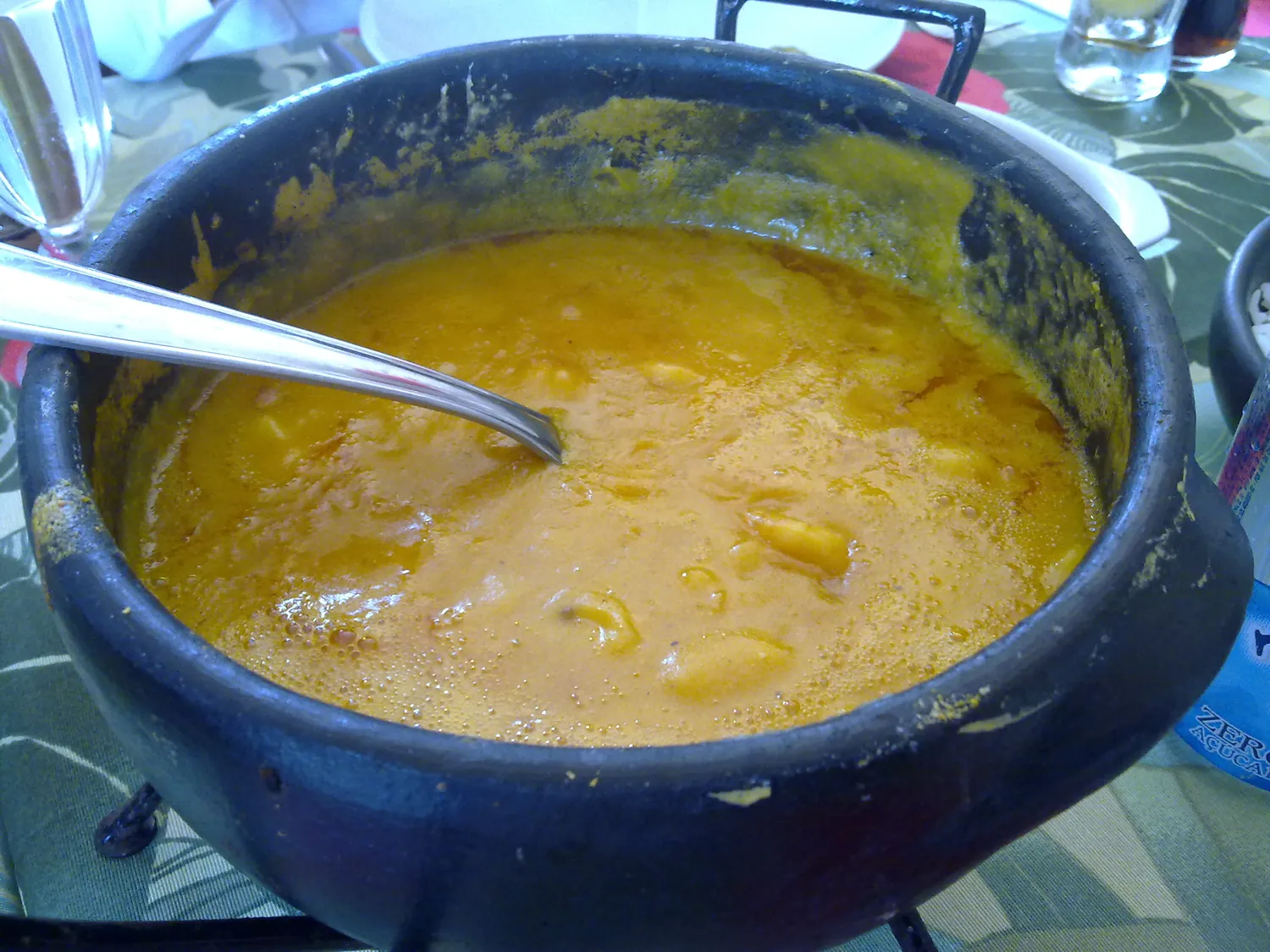
A black clay pot of golden-orange bobó de camarão, a thick cassava cream with shrimp, with a serving spoon Brazil flag Brazil 1h 5m
Dinner •Bahian Cassava Cream

Bobó de Camarão

This bobo de camarao recipe is Bahia's creamy shrimp dish: fresh shrimp folded into a thick purée of boiled cassava blended with coconut milk, coloured golden-orange with dendê oil and finished with lime and cilantro. Unlike a stew, the cassava is blended smooth, so the whole dish eats like a rich, spoonable cream. One serving is about 470 g.

Rich & Comforting

Shrimp folded into a thick, smooth cassava cream made with coconut milk and red palm oil, served hot with rice.

Pairs Well With
Steamed white rice, farofa and a crisp green salad
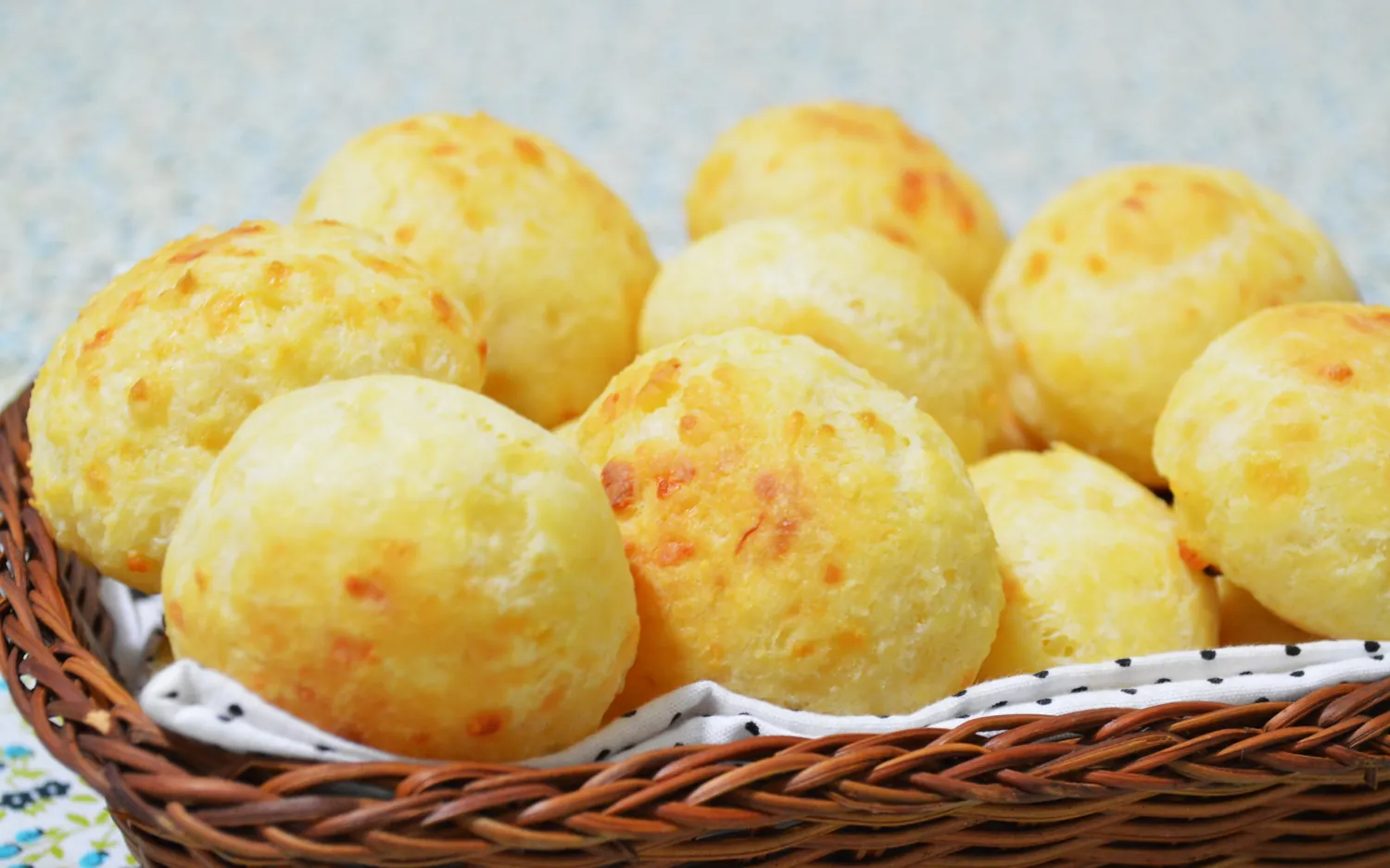
A basket of golden, round pão de queijo, Brazilian cheese bread rolls Brazil flag Brazil 45m
Snack & Tea •Minas Gerais Cheese Bread

Pão de Queijo

This pao de queijo recipe makes Brazil's famous cheese bread: small, golden rolls with a crisp shell and a soft, stretchy, chewy centre, made from tapioca starch, milk, oil, eggs and cheese. There is no wheat flour and no yeast — the rolls puff up on steam in a hot oven. One serving is 4 rolls, about 134 g.

Warm & Chewy Snack

Golden tapioca cheese rolls with a crisp shell and a soft, stretchy centre, baked in under half an hour.

Pairs Well With
Black coffee, fresh fruit, or a light soup
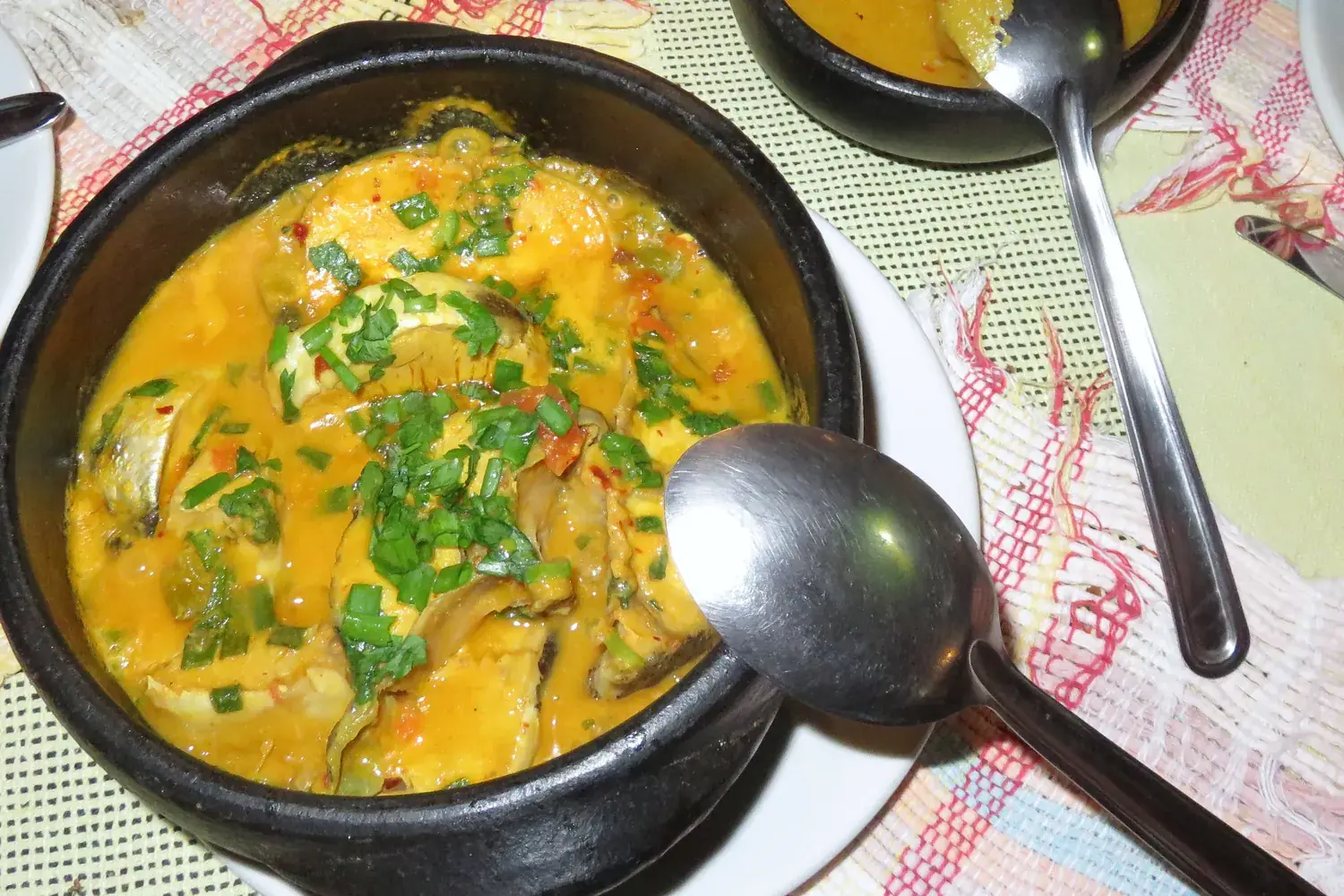
A black clay pot of moqueca baiana, fish chunks in a golden-orange coconut sauce with fresh herbs, beside rice and pirão Brazil flag Brazil 55m
Dinner •Bahian Fish Stew

Moqueca Baiana

This moqueca baiana recipe is Bahia's famous fish stew: thick fillets of white fish layered with onion, peppers and tomato, then simmered gently in coconut milk with dendê oil until the sauce turns golden-orange. The fish stays in whole, flaky pieces in a fragrant broth — a stew, not a purée. One serving is about 450 g.

Coastal & Aromatic

Firm white fish simmered in coconut milk and red palm oil with peppers and tomato, served hot in its clay pot.

Pairs Well With
Steamed white rice, pirão and farofa
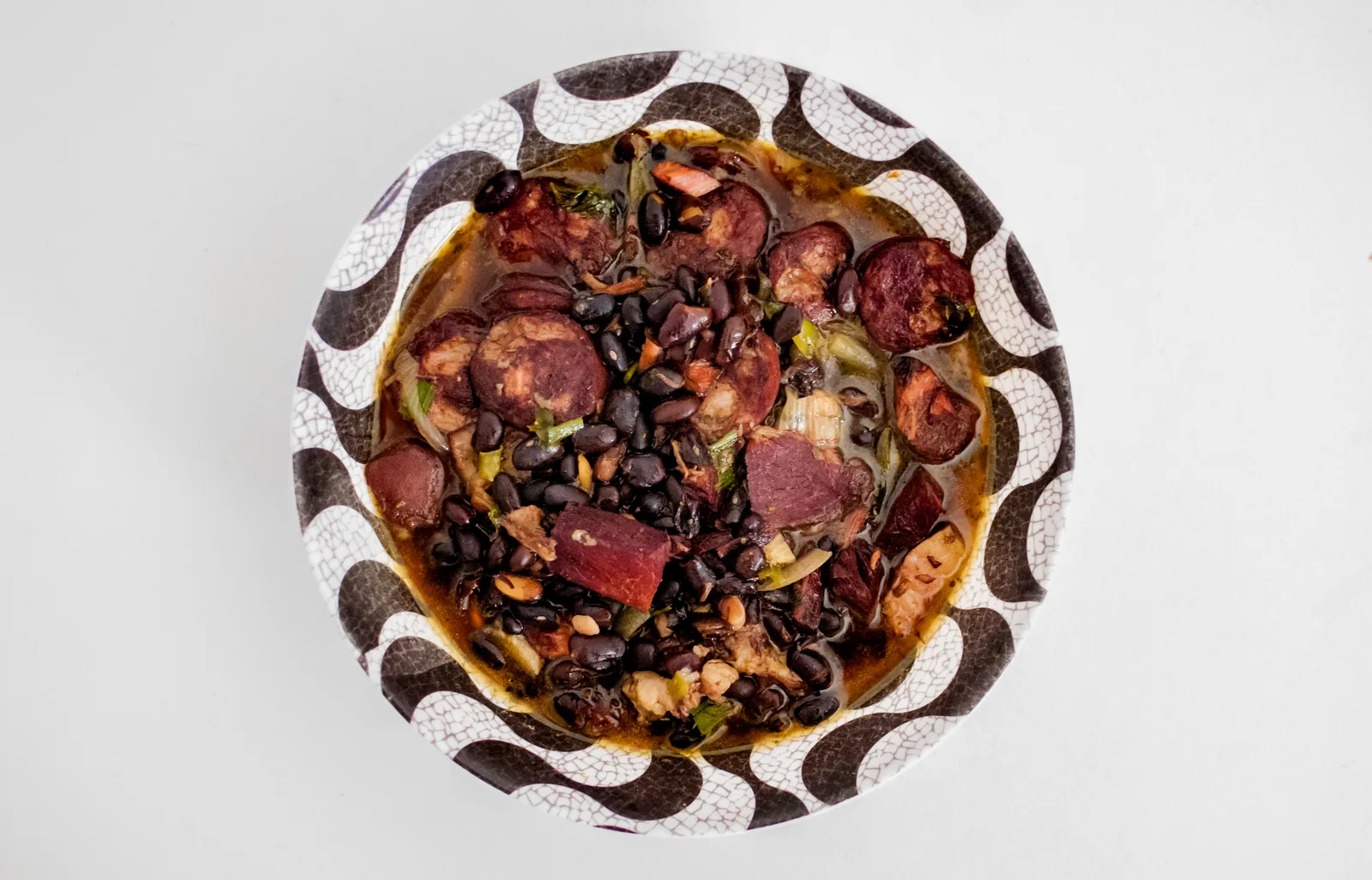
A bowl of Brazilian feijoada — black beans with rounds of sausage and pieces of pork Brazil flag Brazil 3h 30m
Dinner •Brazilian National Dish

Brazilian Feijoada

This Brazilian feijoada recipe is the real Saturday lunch: black beans simmered for hours with pork shoulder, smoky linguiça, bacon and beef until the broth turns thick and dark, then served with white rice, garlicky collard greens, orange slices and farofa. It is a slow, generous pot built for sharing. One serving is about 450 g.

Rich & Hearty

Brazil's national dish — black beans slow-cooked with pork, sausage and beef, served with rice, greens and orange.

Pairs Well With
Serve with white rice, sautéed collard greens, orange slices and farofa.

The Dinner Gazette

Never wonder what’s for dinner again

One email a week with easy dinner ideas from around the world — ingredients, steps and nutrition, tested in our kitchen first.

Delivered every Thursday morning. Unsubscribe anytime.