Curated recipes from 193 countries  •  New seasonal Mediterranean issue out now

Overview

Palauan Tinola

Palau's Tinola, Chicken Tinola, Chicken Papaya Soup

This palauan tinola recipe simmers bone-in chicken in a clear, gingery broth until the meat is falling off the bone, then adds green papaya and moringa leaves that turn tender and sweet in the hot soup. It is the kind of bowl Palauan families put on the table on a rainy evening: light, warming and deeply savoury, with the ginger doing most of the talking. One serving is about 515 g of soup, and the pot is ready in 65 minutes.

Tinola travelled to Palau from the Philippines, where chicken simmered with ginger, green papaya and leafy greens is a classic home soup. In Palau it was adopted as a local favourite — Moments Log calls it Palau's Tinola, a nourishing chicken soup made with bone-in chicken, green papaya, ginger and leafy greens such as spinach or moringa, served with rice. The same dish appears in the Hawaii Pacific Islands Cookbook as Chicken Tinola, or chicken papaya soup, with boneless chicken thighs, green papaya and malunggay leaves. The Palauan version keeps the bone-in chicken, which gives the clear broth its depth, and the green papaya, which stays savoury where a ripe papaya would turn the soup sweet.

Pairs well with: Steamed rice, calamansi or lime wedges & a cold drink

Provenance

Palau flag Palau

Palau's Island Chicken Soup

Oceania & Pacific

Time Dedication

1h 5m

20m prep • 45m cook

Batch Yield

6 Servings

359 kcal per serving

1 serving ≈ 515 g

Technical Skill

Easy

Easy (One Pot)

Meal Timing & Digestive Fit

Breakfast

Not Advised

Lunch

Hearty Midday Main

Dinner

Ideal Hearty Main

Snack & Tea

Inappropriate

Soups & BrothsHigh Protein Occasions: Family dinner, Rainy day, Comfort food, Weeknight dinner Cost: Low — about $3–4 per serving at home
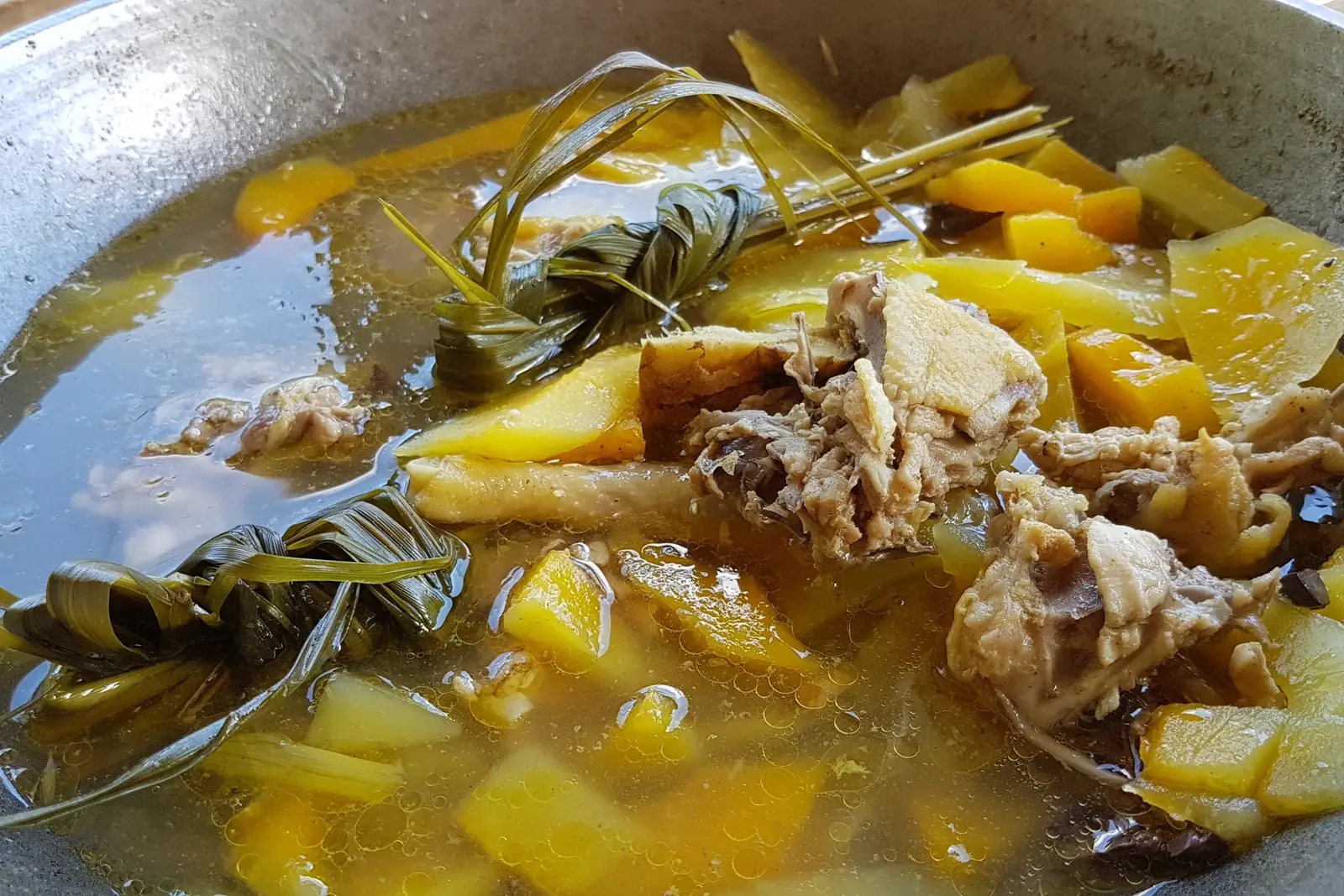
A pot of chicken tinola with bone-in chicken pieces, chunks of green papaya and knotted lemongrass stalks in a clear golden ginger broth

Palau's Island Chicken Soup

Photo: Obsidian Soul, CC0, via Wikimedia Commons

The Heritage Formulary

Measured Ingredients

Estimated cost: Low — about $3–4 per serving at home (USD)

Made with bone-in chicken, fresh ginger and a fully green papaya, simmered gently so the broth stays clear and the chicken stays tender.

Execution Methodology & Culinary Technique

Step-by-Step Cooking Guide

Active 1h 5m
P

Prep Stage: Cut the Chicken & Papaya, Strip the Greens

20 Mins • Cutting, Peeling & Rinsing

Rinse the bone-in chicken pieces, pat them dry and cut any large thighs in half at the joint. Peel the ginger and slice it into thin coins, crush the garlic, and slice the onion into half-moons. Peel the green papaya, halve it, scoop out the seeds and cut the flesh into 3 cm cubes. Strip the moringa leaves from their stems, rinse them and drain. Bruise the lemongrass stalk and tie it in a loose knot. Measure out the water, oil, fish sauce and salt so everything is within reach when the pot is hot.

Maestro Tip: Choose a papaya that is fully green and hard — the moment it shows orange, it turns sweet, and a sweet tinola is a different soup altogether.

  1. 1

    Sauté the Ginger, Garlic & Onion

    5 Mins Medium heat, about 175°C (350°F) in the pot

    Heat the vegetable oil in a large heavy pot over medium heat. Add the ginger, crushed garlic and sliced onion and cook for 3 to 5 minutes, stirring, until the onion turns soft and translucent and the ginger smells sharp and warm. Do not let the garlic brown.

    Sautéing the ginger first is what makes the broth taste like tinola — raw ginger added to water gives a much flatter soup.

    Done when: The onion is soft and see-through, the garlic is pale gold, and the kitchen smells of ginger.

  2. 2

    Brown the Chicken Lightly

    8 Mins Medium-high heat, about 190°C (375°F) in the pot

    Add the chicken pieces to the pot in a single layer and let them sit without stirring for 3 to 4 minutes so the skin picks up a little colour, then turn and brown the other side for 3 to 4 minutes more. Stir in the fish sauce and black pepper and cook for 1 minute so the chicken takes on the seasoning.

    Do not stir the chicken the moment it goes in — leaving it alone is what lets the skin colour instead of steam.

    Done when: The chicken is lightly golden in patches and the fish sauce smells savoury, not raw.

  3. 3

    Add Water & Simmer Until Tender

    25 Mins Gentle simmer, about 95°C (200°F) — never a rolling boil

    Pour in the cold water and drop in the knotted lemongrass. Bring to a gentle simmer, then skim off any grey foam that rises. Cover the pot with the lid slightly ajar and simmer for 25 minutes, keeping the heat low so the broth stays clear, until the chicken is tender and the thickest piece reads at least 74°C (165°F) on a thermometer.

    Skim the foam in the first 5 minutes and keep the simmer gentle — a hard boil clouds the broth and toughens the chicken.

    Done when: The chicken pulls easily from the bone and the broth is clear and golden, not cloudy.

  4. 4

    Add the Green Papaya

    10 Mins Gentle simmer, about 95°C (200°F)

    Lift the lid and add the green papaya cubes. Simmer for 8 to 10 minutes until the papaya is tender but still holds its shape — a fork should slide in with a little resistance. Taste the broth and add salt a pinch at a time, or a splash more fish sauce, until it tastes savoury and bright with ginger.

    Papaya goes from tender to mushy quickly, so start checking at 8 minutes and take the pot off the heat as soon as it yields to a fork.

    Done when: The papaya is pale, almost translucent at the edges, and tender without falling apart.

  5. 5

    Wilt the Moringa Leaves

    2 Mins Gentle simmer, about 95°C (200°F), then off the heat

    Stir in the moringa leaves and simmer for 1 to 2 minutes only, just until they wilt and turn a deeper green. Lift out the lemongrass knot and discard it. Take the pot off the heat at once — the leaves keep cooking in the hot broth.

    The leaves need almost no time; overcooking turns them dark and bitter, so this is the last thing that goes in.

    Done when: The leaves are wilted and bright green, not dark or slimy.

  6. 6

    Rest & Serve with Rice

    5 Mins Serve hot, above 63°C (145°F)

    Let the soup rest for 5 minutes so the flavours settle, then ladle it into deep bowls with two or three pieces of chicken, papaya and plenty of broth in each. Serve at once with steamed rice on the side and lime or calamansi wedges for squeezing over the bowl.

    Spoon a little broth over the rice in the bowl — that is how the soup is eaten in Palau, with the rice soaking up the ginger broth.

    Done when: The bowl is steaming, the chicken is hot through to the bone, and the rice is on the table.

Finishing Touches & Plating

Ladle the hot soup into deep bowls with chicken, papaya and plenty of broth, and serve with steamed rice and lime wedges — the rice is for soaking up the ginger broth.

Nutritional Physiology & Benefits

Nutrition

Energy

359

kcal / serving

Protein

26g

Complete AA

Carbs

13g

Complex

Fats

22g

Healthy

Per serving (6 servings · 1 serving ≈ 515 g)
Energy359 kcal
Protein26 g
Carbohydrates13 g
Fat22 g
Fibre2.0 g
Sugar6.4 g
Sodium466 mg
Per 100g
Energy70 kcal
Protein5.1 g
Carbohydrates2.6 g
Fat4.3 g
Fibre0.4 g
Sugar1.2 g
Sodium90 mg

Nutrition values are estimated — calculated from USDA FoodData Central values for the listed ingredients.

Vitamins & minerals: Vitamin C and vitamin A from the green papaya and moringa leaves, vitamin B6 and niacin from the chicken, and iron, calcium and vitamin K from the moringa leaves. Nutrition values are estimated.

High in Protein

Each serving carries about 26.2 g of protein from the bone-in chicken, which helps the soup feel like a real dinner rather than a light starter.

Ginger, Papaya & Leafy Greens

Fresh ginger, green papaya and moringa leaves bring vitamin C, vitamin A, iron and calcium to the bowl, along with about 2.0 g of fibre per serving.

Light, Clear Broth

The broth is water-based and seasoned with fish sauce rather than cream or coconut milk, so the soup stays light at about 359 calories per serving.

Food Pairings

What to Eat With

To optimize nutrient absorption and elevate the sensory depth, pair with these authentic accompaniments:

Sides

Steamed Rice

Rice is the essential partner — spooned into the bowl, it soaks up the ginger broth and turns a light soup into a filling dinner, which is exactly how tinola is eaten in Palau.

Vegetables

Cucumber & Tomato Salad

Cool, crisp cucumber and tomato with a little vinegar reset the palate between spoonfuls of hot, gingery broth and add freshness without competing with the soup.

Drinks

Calamansi or Lime Drink

A cold, tart citrus drink echoes the lime squeezed over the bowl and cuts through the richness of the chicken skin, which is why sour drinks are the usual partner for this soup.

Full Menus

Grilled Fish & Tropical Fruit

Add a piece of grilled reef fish before the soup and fresh papaya or banana after it, and the meal becomes a full Palauan dinner — the mild fish and sweet fruit frame the savoury, gingery soup.

Complete menu

Start with grilled reef fish, follow with palauan tinola, steamed rice and a cucumber-tomato salad, and finish with fresh papaya or banana.

Digestive Guardrails

What NOT to Combine

To prevent digestive distress, sluggishness, or palate clash, avoid pairing the dish with these elements:

A Ripe, Sweet Papaya

A papaya with any orange in it turns the broth sweet and changes the dish into something else; tinola needs a hard, fully green papaya for its savoury, slightly tart bite. This is general information, not medical advice.

Boiling the Soup Hard

A rolling boil clouds the broth, toughens the chicken and turns the papaya to mush, so keep the pot at a gentle simmer from start to finish. This is general information, not medical advice.

Eating It Lukewarm or Reheated Too Many Times

Soup left standing in the warm danger zone or reheated again and again loses flavour and can become unsafe; reheat only what you will eat, to 74°C (165°F). This is general information, not medical advice.

General information only, not medical advice — consult a doctor for personal dietary decisions.

Who Should Eat It

Who Should Eat

  • General adultsA light but filling dinner soup — hot, gingery and savoury, best eaten with rice.
  • ChildrenChildren usually like the mild, savoury broth and the tender papaya; serve the chicken off the bone for small children and skip the pepper in their bowl.
  • ElderlySoft chicken, tender papaya and a warm broth are easy to eat and easy to digest, but serve the chicken off the bone and keep the portion modest if salt is a concern.
  • Pregnant womenChicken cooked through to at least 74°C (165°F) and served hot in a modest portion is fine; the ginger in the broth may even help settle a queasy stomach.
  • Breastfeeding womenA warm, protein-rich soup with plenty of liquid that suits breastfeeding; the flavours are mild and the chilli heat is absent.
  • AthletesGood protein for recovery plus fluid and salt after training, especially with a generous serving of rice on the side.
  • Weight gainEasy to eat in a large portion with extra rice, and the chicken and broth add both energy and protein.
  • Weight lossAt about 359 calories a serving it fits a lighter dinner well — keep the rice portion modest and eat plenty of the papaya and greens.

Health Conditions — Adjust or Avoid

Conditions

  • DiabetesThe soup itself is low in carbohydrate at about 13.3 g per serving, but the rice on the side adds a lot, so measure the rice portion and count it; ask your clinician about portions.
  • High blood pressureThis serving carries about 466 mg of sodium, mostly from the fish sauce and salt, so people watching salt should use less fish sauce and skip extra salt at the table; ask your clinician about portions.
  • Kidney diseaseHigh in protein and moderate in sodium and potassium from the chicken, papaya and greens; people with kidney disease should watch portions and ask their clinician before eating it regularly.
  • GoutChicken is moderate in purines, so a large portion of meat-heavy soup may not suit people prone to gout; eat more broth, papaya and greens and less meat. Ask your clinician about portions.
  • Stomach issuesGinger is traditionally used to settle the stomach, but a large bowl of hot, savoury soup can still be too much on a bad day; eat a small portion and avoid extra pepper. Ask your clinician if symptoms persist.
  • Cardiovascular diseaseThe chicken skin adds saturated fat, so remove the skin before eating if you are watching fat, and keep the rice portion moderate; ask your clinician about portions.
  • Fatty liverA light, water-based soup that is low in added fat, but the chicken skin adds fat and energy, so remove it and balance the plate with vegetables. Ask your clinician about portions.
  • Food allergiesContains fish (fish sauce). People with a fish allergy must not eat this dish unless the fish sauce is replaced with soy sauce — and people with a soy allergy must then avoid that version too.
  • Special therapeutic dietsNaturally gluten-free and dairy-free; for a low-sodium therapeutic diet, cut the fish sauce and salt and season with lime and extra ginger instead. Ask your clinician or dietitian before adapting it.

If you have a medical condition, consult your doctor before changing your diet.

Storage & Use

Storage & Use

How to store
Cool the soup within 2 hours, then store in a sealed container with the chicken submerged in the broth so it does not dry out.
In the fridge
3 to 4 days.
In the freezer
Up to 3 months (the papaya softens a little on thawing).
How to reheat
Reheat gently on the stove until the soup is simmering and the chicken is steaming hot throughout, to 74°C (165°F); add the greens fresh if you have them, as reheated leaves go dark.
Freezing recommended
Yes, up to 3 months; freeze the soup without the moringa leaves and add fresh leaves when reheating.
Signs it has spoiled
Sour smell, cloudy or slimy broth, or mould on the surface.

More recipes to explore

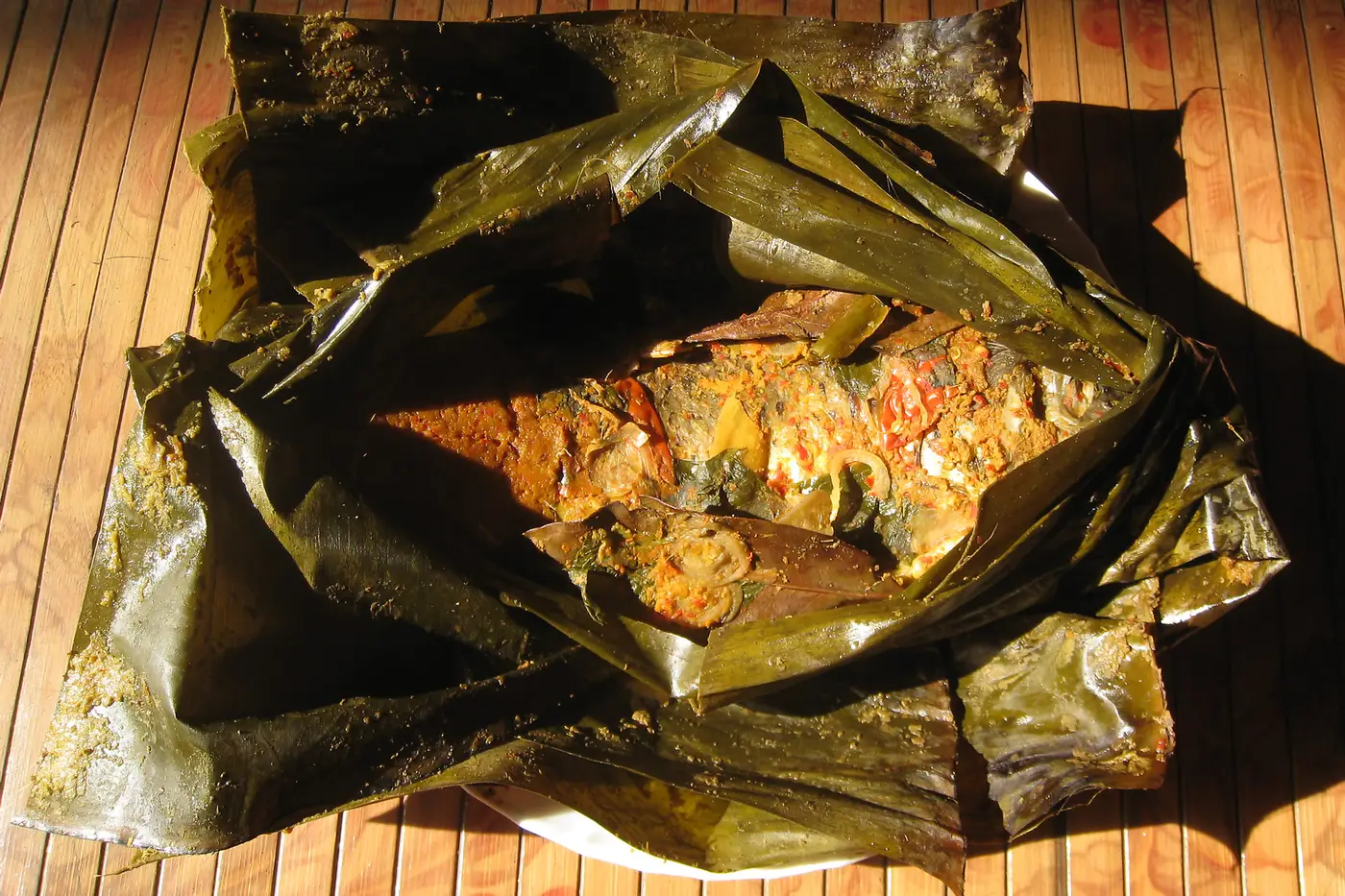
A whole fish cooked in an opened banana-leaf parcel, coated in spice paste Palau flag Palau 55m
Dinner •Koror's Banana-Leaf Grill

Palauan Grilled Fish

This palau grilled fish recipe glazes a whole red snapper with dark mushroom soy sauce, sesame oil, ginger, garlic and kaffir lime leaf, wraps it in a banana leaf and grills it in the parcel over coals. The fish steams in its own juices inside the leaf — soft and fragrant, with no crisp skin — and it is served with mashed taro enriched with coconut cream. One serving is about 350 g.

Smoky & Tender

A whole snapper glazed with dark soy, sesame and ginger, steamed inside a banana leaf over coals, served with mashed taro.

Pairs Well With
Mashed taro, lime wedges and a cucumber salad
High Protein
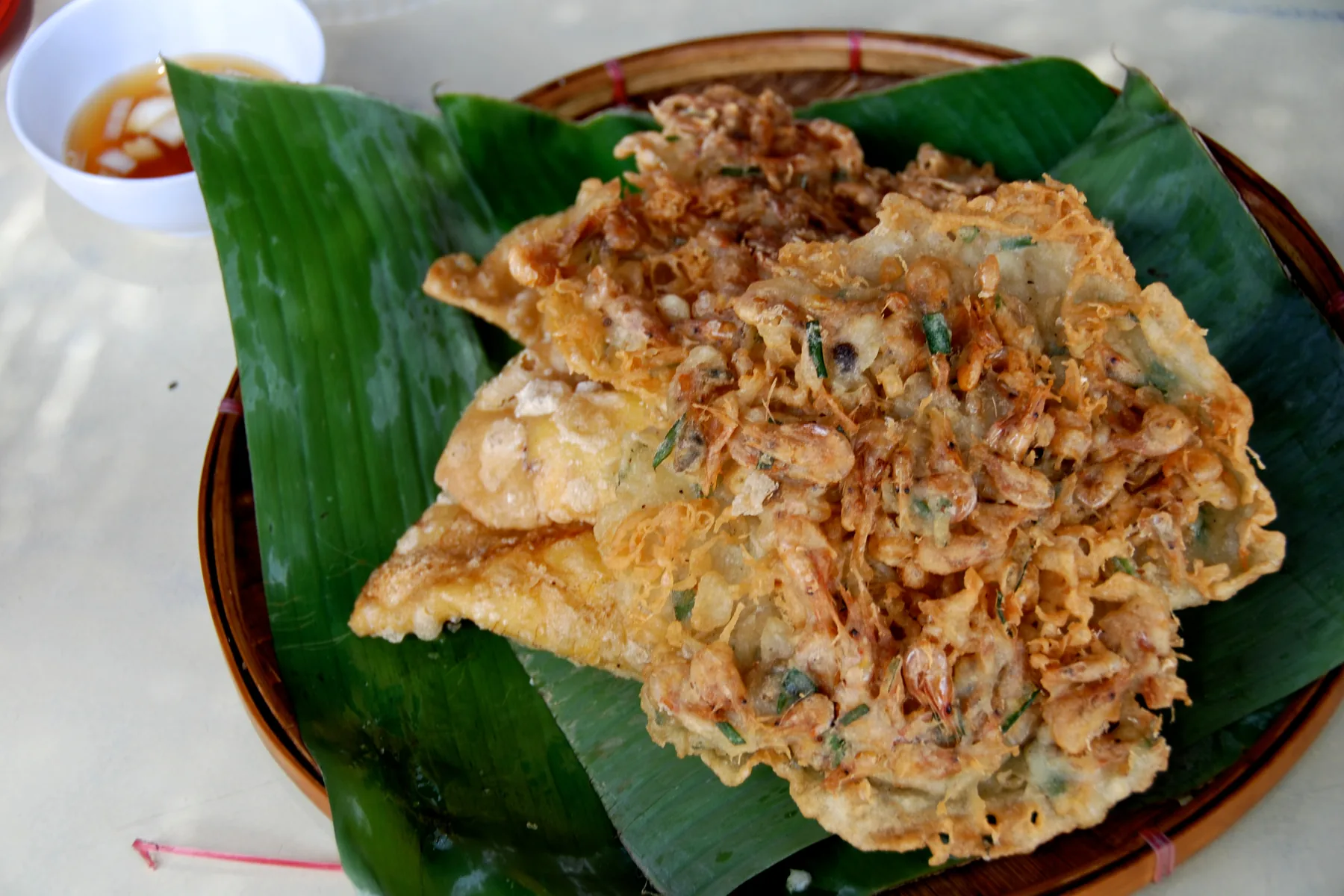
Golden, crispy shrimp fritters served on a banana leaf in a woven basket, with a small bowl of dipping sauce — ukoy photographed in Vigan, Philippines, the same shrimp-fritter dish known as ulkoy in Palau Palau flag Palau 40m
Snack & Tea •Palau's Island Snack

Palauan Ulkoy

This palauan ulkoy recipe turns small shrimp and grated squash into crisp, golden fritters with a light, lacy edge. The squash keeps the inside soft and faintly sweet while the shrimp on top fry up crunchy, and a sharp vinegar-soy dip cuts through the richness. One serving is about 245 g — three fritters with dipping sauce — and the whole batch is ready in 40 minutes.

Crisp Snack & Sharing

Crisp shrimp and squash fritters with a sharp vinegar dip, made for sharing hot from the pan.

Pairs Well With
Sharp vinegar-soy dipping sauce, lime wedges & a cold drink
Bœuf bourguignon — French beef braised in red wine France flag France 4h
Dinner •Burgundy Terroir

Bœuf Bourguignon

Beef braised gently in red wine until the connective tissue melts into a velvet, gelatin-rich sauce — the classic Burgundy Sunday dinner.

Cellular Repair

Beef braised in red wine until spoon-tender, with mushrooms and pearl onions.

Pairs Well With
Parsnip Purée & Steamed French Haricots Verts
High Protein
Vietnamese braised pork belly with golden eggs in caramel sauce Vietnam flag Vietnam 1h 45m
Dinner •One Pot

Vietnamese Braised Pork and Eggs

Pork belly slowly braised in coconut water and caramel until meltingly tender, with golden eggs that soak up the sweet-savoury sauce — the Vietnamese family dish that tastes better the next day.

Comfort & Sustained Energy

Slow-braised pork belly and eggs in coconut water and caramel.

Pairs Well With
Steamed rice & pickled mustard greens
High Protein

The Dinner Gazette

Never wonder what’s for dinner again

One email a week with easy dinner ideas from around the world — ingredients, steps and nutrition, tested in our kitchen first.

Delivered every Thursday morning. Unsubscribe anytime.