Curated recipes from 193 countries  •  New seasonal Mediterranean issue out now

Overview

Pamonha

Pamonha Doce, Brazilian Sweet Corn Parcel

This pamonha recipe grates fresh sweetcorn, blends it with coconut milk, sugar and a little butter, then wraps the batter in its own corn husks and steams it into soft, sweet parcels. One serving is about 154 g (one parcel). It is not a tamale: pamonha is made from fresh grated sweetcorn with no nixtamalized masa harina, it is typically unfilled, and it is Brazilian — tamales are built on masa dough wrapped around a filling. This pamonha recipe makes 8 parcels in about 1 hour 20 minutes.

Pamonha is a June festival (Festa Junina) favourite across rural Brazil, especially in São Paulo, Minas Gerais and Goiás, where it is sold from street stalls during the winter corn harvest. Its name is often traced to the Tupi word pa'muñã, meaning sticky — a nod to the soft, spoonable texture of the steamed corn. Unlike the savoury cheese pamonha served alongside it, the sweet version is made with sugar and coconut milk. It is also different from canjica, the other Brazilian sweet-corn classic: canjica is a porridge eaten from a bowl, while pamonha is a parcel you unwrap and eat by hand.

Pairs well with: Strong black coffee, the way it is served at a Festa Junina stall.

Provenance

Brazil flag Brazil

Brazilian June Festival Food

Latin America & Caribbean

Time Dedication

1h 20m

35m prep • 45m cook

Batch Yield

8 Servings

221 kcal per serving

1 serving ≈ 154 g

Technical Skill

Intermediate

Medium (Wrapping)

Meal Timing & Digestive Fit

Breakfast

Not Advised

Lunch

Inappropriate

Dinner

Inappropriate

Snack & Tea

Ideal Light Bite

Occasions: Festa Junina (June festivals), afternoon snacks, street-food days, family gatherings Cost: Low — about $1–2 per serving at home
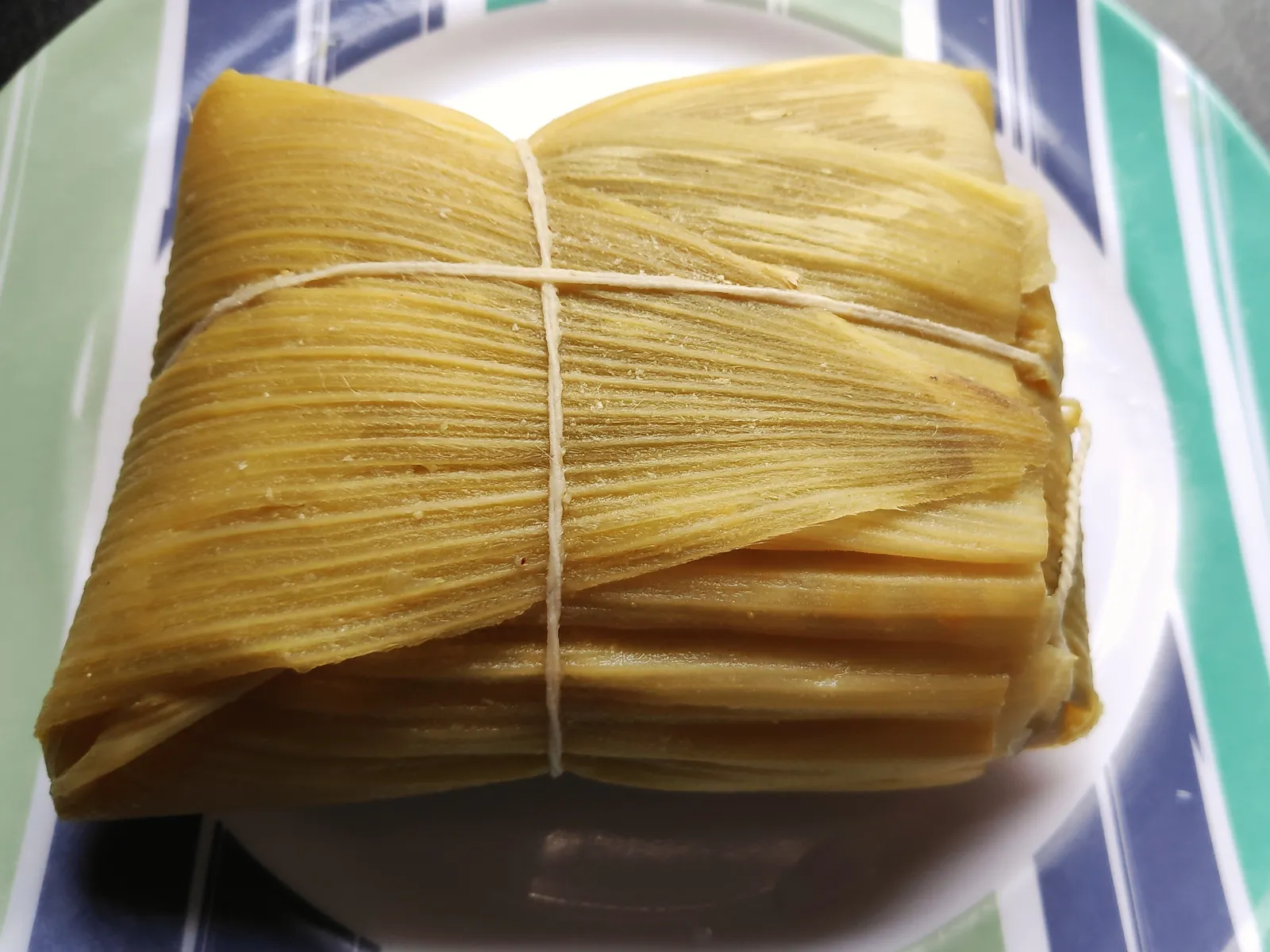
A golden pamonha parcel of fresh corn wrapped in its own corn husk and tied with string, on a striped plate

Brazilian June Festival Food

Photo: Melsj, CC BY-SA 4.0, via Wikimedia Commons

The Heritage Formulary

Measured Ingredients

Estimated cost: Low — about $1–2 per serving at home (USD)

Made the street-stall way: corn grated fresh from the cob, blended with coconut milk, wrapped in its own husks and steamed until set.

Execution Methodology & Culinary Technique

Step-by-Step Cooking Guide

Active 1h 20m
P

Prep Stage: Strip, Grate & Blend

35 Mins • Husks & Batter

Peel the husks off the cobs and save the 8 largest, un-torn ones for wrapping. Cut the kernels off the cobs, then blend them with the coconut milk, sugar, melted butter and salt into a thick, pourable batter. Lay out the husks and the string so wrapping goes quickly.

Maestro Tip: Use the milkiest, freshest corn you can find — starchy, old corn makes a dry, crumbly pamonha, and no amount of coconut milk fixes it.

  1. 1

    Prepare the Husks

    10 Mins Room temperature, ~20°C (68°F)

    Peel the husks back from each cob and pull off the 8 largest, widest, un-torn ones. Rinse them, pat them dry and trim the tough base. Keep the rest aside — a spare husk patches a torn one. Rinse the cobs and strip off all the silk.

    If a husk tears, overlap two smaller ones — a patch is invisible once the parcel is tied.

    Done when: 8 clean, pliable husks, dry enough to hold a fold.

  2. 2

    Grate and Blend the Corn

    10 Mins Room temperature, ~20°C (68°F)

    Stand each cob upright in a bowl and cut the kernels off with a sharp knife, getting as close to the cob as you can — you need about 900 g of kernels. Tip the kernels into a blender with the coconut milk, sugar, melted butter and salt, and blend for 1–2 minutes until thick, smooth and pourable, like a loose pancake batter.

    Do not over-blend into a thin juice — a thick batter sets into a soft, spoonable parcel; a thin one leaks through the husk.

    Done when: A thick, creamy batter that ribbons off a spoon and holds its shape for a second.

  3. 3

    Fill and Tie the Parcels

    15 Mins Room temperature, ~20°C (68°F)

    Lay a husk flat, wide end towards you, and spoon about 150 g of batter (roughly 2/3 cup) into the centre. Fold the sides over the batter, then fold the narrow tip up and the wide end down to make a neat parcel. Tie it snugly with a length of string, crossing the string both ways so the parcel cannot open in the steamer. Repeat for all 8 parcels.

    Leave a little slack in the tie — the batter swells slightly as it steams, and a tie pulled drum-tight can split the husk.

    Done when: 8 firm, sealed parcels with no batter leaking at the folds.

  4. 4

    Steam Until Set

    40 Mins Steaming, ~100°C (212°F)

    Set the parcels seam-side down in a steamer basket over boiling water, leaving gaps so the steam can circulate. Cover and steam for 40 minutes, topping up the water if the pot runs low. The parcels are done when they feel firm and the batter inside has set — a skewer pushed into the centre should come out clean and hot, and the centre should reach at least 74°C (165°F).

    Keep the lid on and the water topped up — every time the lid lifts, the steamer loses heat and the parcels need longer.

    Done when: Firm parcels that hold their shape, with a skewer coming out clean from the centre.

  5. 5

    Rest and Serve

    5 Mins Warm, ~60°C (140°F)

    Lift the parcels out of the steamer and rest them for 5 minutes so the corn sets fully and the parcels hold their shape when unwrapped. Cut the string, peel the husk back and eat warm, with strong black coffee.

    Resting matters — unwrapping straight from the steamer makes the soft corn slump out of the husk.

    Done when: A warm, golden parcel that unwraps cleanly and holds a soft, sliceable shape.

Finishing Touches & Plating

Unwrap at the table and eat warm, straight from the husk, with strong black coffee. The husk is not eaten — peel it back and compost it.

Nutritional Physiology & Benefits

Nutrition

Energy

221

kcal / serving

Protein

4g

Complete AA

Carbs

34g

Complex

Fats

10g

Healthy

Per serving (8 servings · 1 serving ≈ 154 g)
Energy221 kcal
Protein4 g
Carbohydrates34 g
Fat10 g
Fibre2.8 g
Sugar20.0 g
Sodium166 mg
Per 100g
Energy144 kcal
Protein2.7 g
Carbohydrates22.2 g
Fat6.4 g
Fibre1.8 g
Sugar13 g
Sodium108 mg

Nutrition values are estimated — calculated from USDA FoodData Central values for the listed ingredients.

Vitamins & minerals: Fresh sweetcorn supplies thiamine, folate and magnesium, coconut milk adds manganese and iron, and butter adds a little vitamin A.

Fibre from Fresh Corn

Each parcel carries 2.8 g of fibre from the fresh sweetcorn, which slows the sweetness down and keeps the snack satisfying.

Steady Snack Energy

At 221 kcal with 34.2 g of carbohydrate per parcel, one pamonha is a real afternoon snack, not a nibble.

Naturally Gluten-Free

Corn, coconut milk, sugar and butter contain no wheat or gluten, so the recipe suits a gluten-free table as written.

Food Pairings

What to Eat With

To optimize nutrient absorption and elevate the sensory depth, pair with these authentic accompaniments:

Drinks

Strong Black Coffee

Bitter cafezinho is the classic partner — its bitterness cuts the sweetness of the corn and coconut milk.

More Pairings

Fresh White Cheese

A slice of mild queijo minas adds salt and a little protein, balancing the sweet, soft parcel.

Vegetables

Fresh Papaya

Cool, juicy papaya cleanses the palate after the warm, creamy corn.

Full Menus

Festa Junina Spread

Serve pamonha alongside canjica and sweet corn cake at a June festival table — three different ways of celebrating the same corn harvest.

Complete menu

Serve one warm pamonha per person with strong black coffee and a slice of fresh white cheese, then fresh papaya — the coffee and cheese balance the sweetness of the corn.

Digestive Guardrails

What NOT to Combine

To prevent digestive distress, sluggishness, or palate clash, avoid pairing the dish with these elements:

Eating the Corn Husk

The husk is a wrapper, not food — it is tough, fibrous and indigestible, so always peel it off completely before eating. This is general food information, not medical advice.

Sugary Drinks on the Side

One parcel already carries 20.0 g of sugar, so a sweetened soft drink or sugary juice with it stacks sugar on sugar — black coffee or water is the better partner. This is general food information, not medical advice.

General information only, not medical advice — consult a doctor for personal dietary decisions.

Who Should Eat It

Who Should Eat

  • General adultsA sweet, filling snack at 221 kcal per parcel — best eaten warm, fresh from the steamer.
  • ChildrenChildren love the sweet corn, but unwrap it for them and check the temperature — the centre stays very hot.
  • ElderlySoft and easy to chew, and the parcel is easy to hold — a good gentle snack, eaten slowly.
  • Pregnant womenFine when freshly steamed and served hot; one parcel is a sensible portion. Ask your clinician about portions.
  • Breastfeeding womenA filling, energy-rich snack; the carbohydrate and fibre are useful, and one parcel is enough.
  • AthletesA useful pre-training snack at 221 kcal with 34.2 g of carbohydrate — good fuel, eaten an hour or two before exercise.
  • Weight gainEnergy-dense and easy to eat, so it suits weight gain when eaten as an extra snack.
  • Weight lossAt 221 kcal per parcel, one is a whole snack — do not eat two, and skip the sugary drink.

Health Conditions — Adjust or Avoid

Conditions

  • DiabetesOne parcel carries 34.2 g of carbohydrate and 20.0 g of sugar, so keep to one and fit it into your plan. Ask your clinician about portions.
  • High blood pressureSodium is low at 166 mg per parcel, so this fits a lower-sodium meal — just keep other salty foods out of the same snack. Ask your clinician about portions.
  • Kidney diseaseModerate in protein at 4.2 g per parcel; keep to one portion. Ask your clinician about portions.
  • GoutLow in purines, so this is a suitable sweet snack in a gout-friendly pattern. Ask your clinician about portions.
  • Stomach issuesSoft and steamed, so it is usually gentle, but the fibre and coconut milk can feel heavy — eat slowly and keep to one parcel if you have a sensitive stomach. Ask your clinician if unsure.
  • Cardiovascular diseaseCoconut milk and butter make this rich in saturated fat, so keep to one parcel and balance the day with lighter food. Ask your clinician about portions.
  • Fatty liverSweet and energy-dense, so one parcel is the sensible portion. Ask your clinician about portions.
  • Food allergiesContains milk (butter) and coconut, which the US FDA classifies as a tree nut — both must be declared. Use coconut oil instead of butter for a dairy-free version, and check every label.
  • Special therapeutic dietsNot suitable for a low-sugar or low-carbohydrate therapeutic diet as written; a version with less sugar would be needed, agreed with a clinician.

If you have a medical condition, consult your doctor before changing your diet.

Storage & Use

Storage & Use

How to store
Cool, keep wrapped in their husks, and refrigerate in a sealed container.
In the fridge
3 days in the fridge at 4°C (40°F) or below.
In the freezer
Up to 2 months, wrapped tightly in the husk and then in a freezer bag.
How to reheat
Steam for 15 minutes until hot through, to 74°C (165°F); do not microwave unwrapped or the corn dries out.
Freezing recommended
Yes — freeze the day they are made.
Signs it has spoiled
Sour smell, slimy corn, or mould on the husk.

More recipes to explore

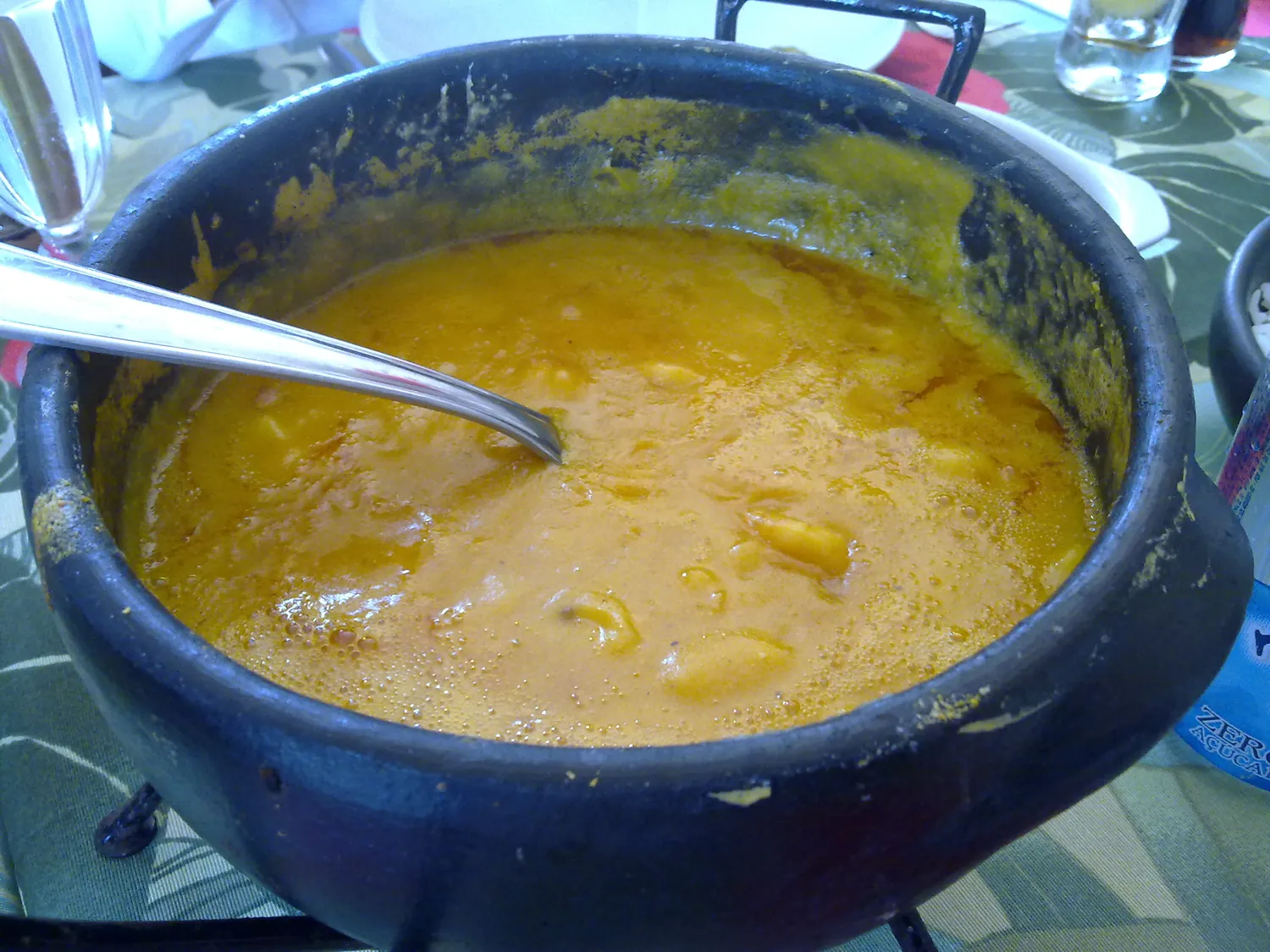
A black clay pot of golden-orange bobó de camarão, a thick cassava cream with shrimp, with a serving spoon Brazil flag Brazil 1h 5m
Dinner •Bahian Cassava Cream

Bobó de Camarão

This bobo de camarao recipe is Bahia's creamy shrimp dish: fresh shrimp folded into a thick purée of boiled cassava blended with coconut milk, coloured golden-orange with dendê oil and finished with lime and cilantro. Unlike a stew, the cassava is blended smooth, so the whole dish eats like a rich, spoonable cream. One serving is about 470 g.

Rich & Comforting

Shrimp folded into a thick, smooth cassava cream made with coconut milk and red palm oil, served hot with rice.

Pairs Well With
Steamed white rice, farofa and a crisp green salad
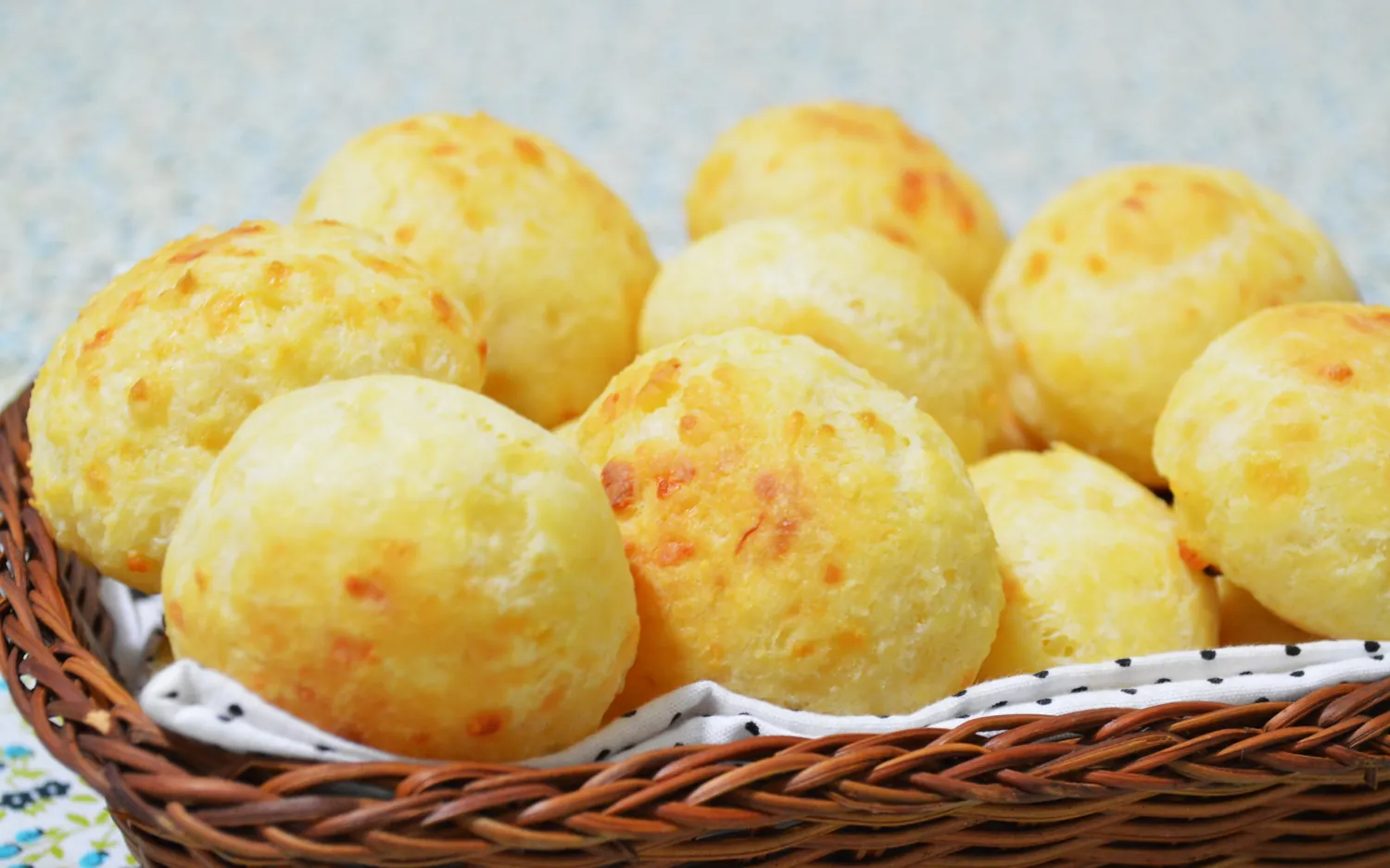
A basket of golden, round pão de queijo, Brazilian cheese bread rolls Brazil flag Brazil 45m
Snack & Tea •Minas Gerais Cheese Bread

Pão de Queijo

This pao de queijo recipe makes Brazil's famous cheese bread: small, golden rolls with a crisp shell and a soft, stretchy, chewy centre, made from tapioca starch, milk, oil, eggs and cheese. There is no wheat flour and no yeast — the rolls puff up on steam in a hot oven. One serving is 4 rolls, about 134 g.

Warm & Chewy Snack

Golden tapioca cheese rolls with a crisp shell and a soft, stretchy centre, baked in under half an hour.

Pairs Well With
Black coffee, fresh fruit, or a light soup
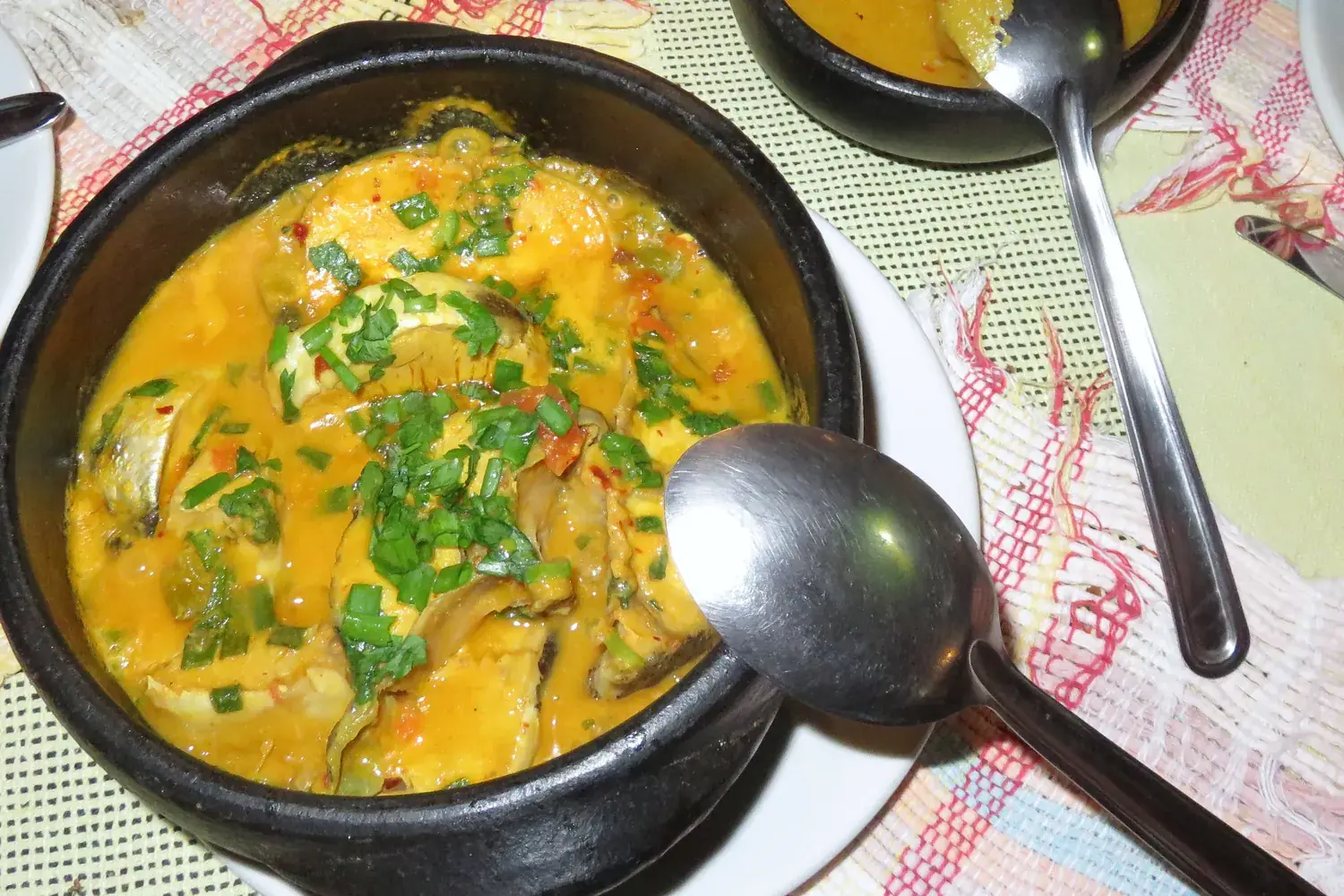
A black clay pot of moqueca baiana, fish chunks in a golden-orange coconut sauce with fresh herbs, beside rice and pirão Brazil flag Brazil 55m
Dinner •Bahian Fish Stew

Moqueca Baiana

This moqueca baiana recipe is Bahia's famous fish stew: thick fillets of white fish layered with onion, peppers and tomato, then simmered gently in coconut milk with dendê oil until the sauce turns golden-orange. The fish stays in whole, flaky pieces in a fragrant broth — a stew, not a purée. One serving is about 450 g.

Coastal & Aromatic

Firm white fish simmered in coconut milk and red palm oil with peppers and tomato, served hot in its clay pot.

Pairs Well With
Steamed white rice, pirão and farofa
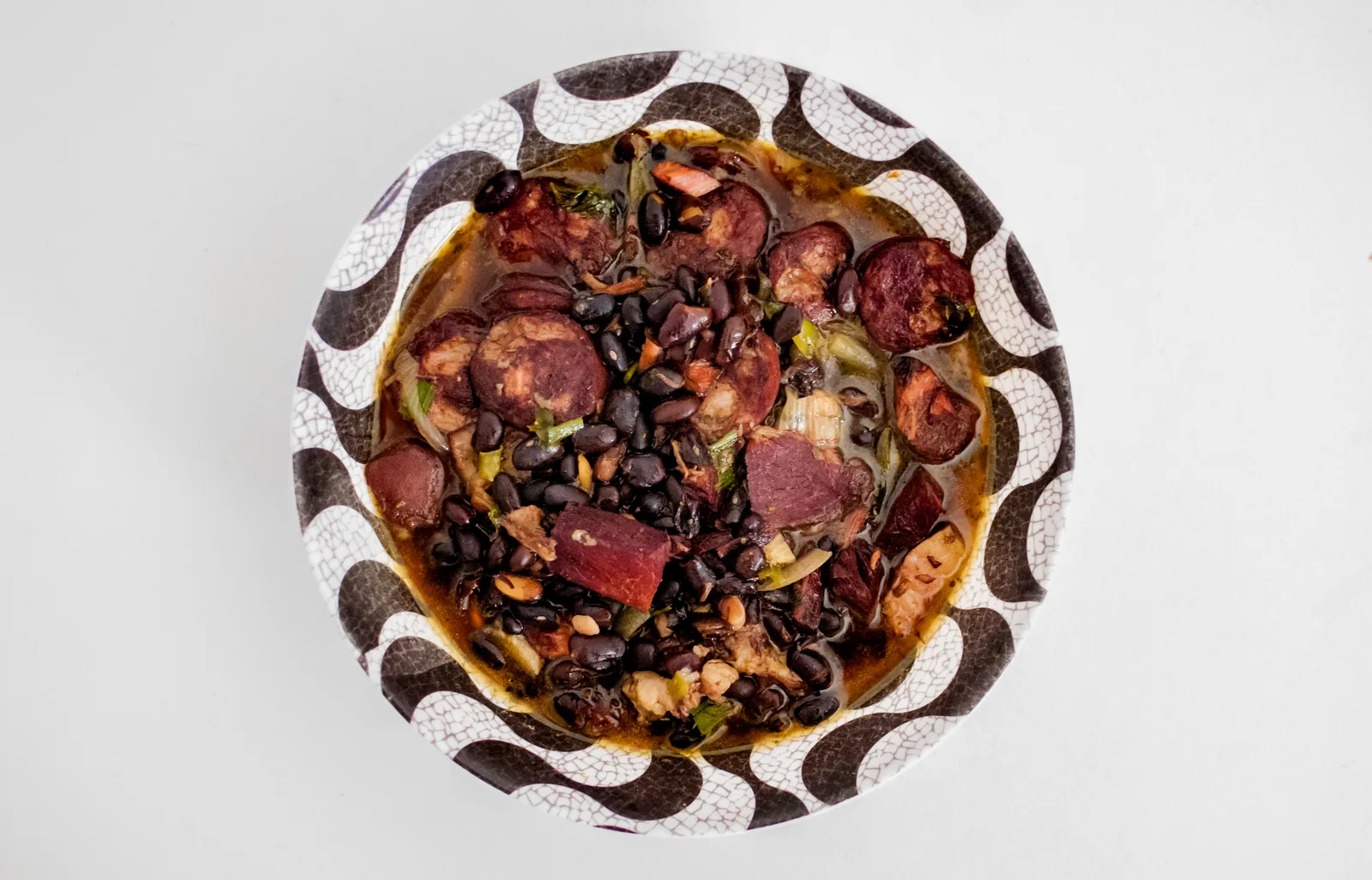
A bowl of Brazilian feijoada — black beans with rounds of sausage and pieces of pork Brazil flag Brazil 3h 30m
Dinner •Brazilian National Dish

Brazilian Feijoada

This Brazilian feijoada recipe is the real Saturday lunch: black beans simmered for hours with pork shoulder, smoky linguiça, bacon and beef until the broth turns thick and dark, then served with white rice, garlicky collard greens, orange slices and farofa. It is a slow, generous pot built for sharing. One serving is about 450 g.

Rich & Hearty

Brazil's national dish — black beans slow-cooked with pork, sausage and beef, served with rice, greens and orange.

Pairs Well With
Serve with white rice, sautéed collard greens, orange slices and farofa.

The Dinner Gazette

Never wonder what’s for dinner again

One email a week with easy dinner ideas from around the world — ingredients, steps and nutrition, tested in our kitchen first.

Delivered every Thursday morning. Unsubscribe anytime.