
Curated recipes from 193 countries  •  New seasonal Mediterranean issue out now

Overview

Pe de Moleque

Pé de Moleque, Brazilian Peanut Brittle

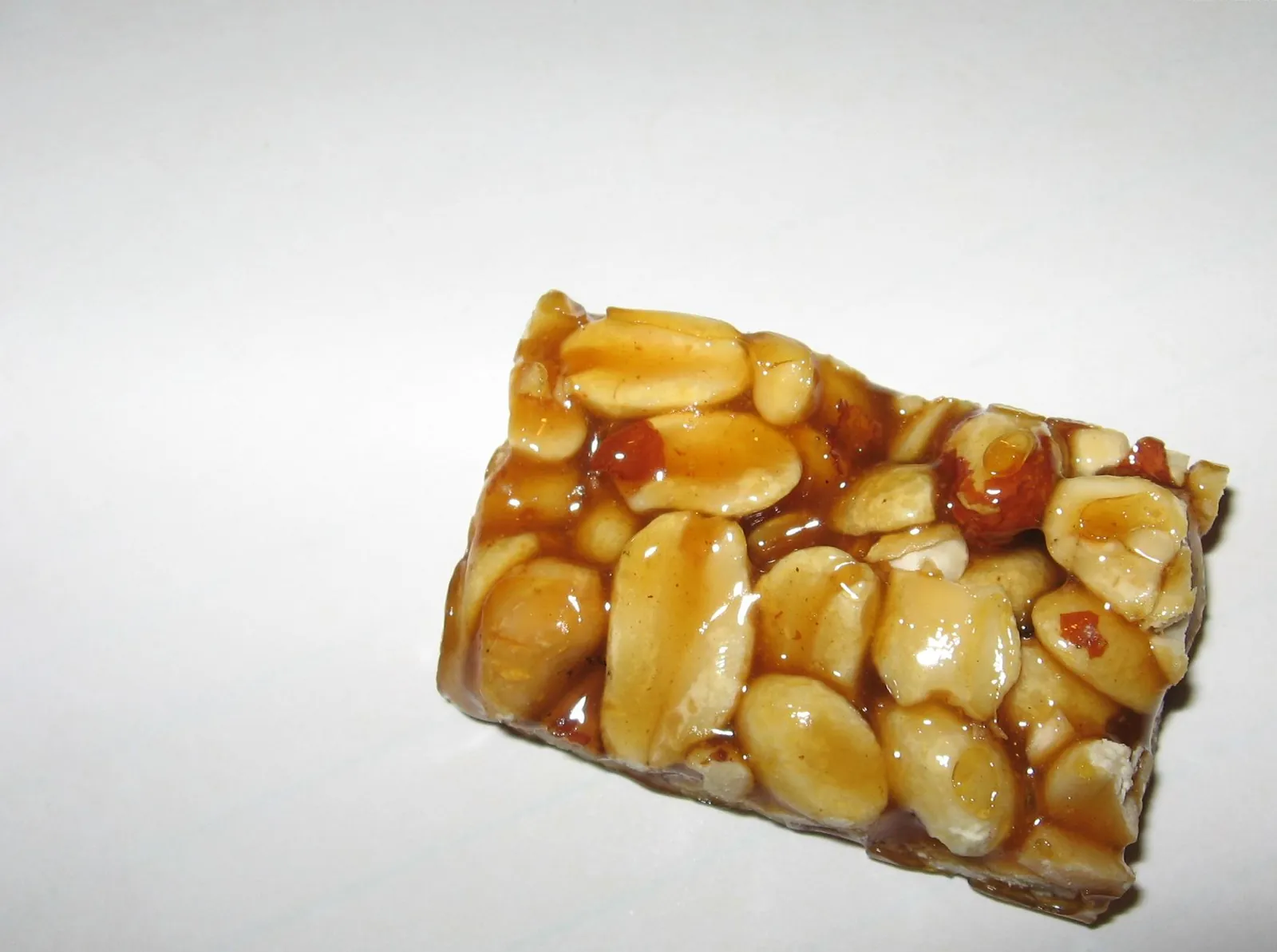
This pe de moleque recipe is the Brazilian peanut brittle of the June festivals: roasted peanuts folded into a dark, molasses-rich rapadura caramel, pressed flat and cut into bars while still warm. It snaps when it cools, tastes of toasted peanut and brown sugar, and keeps for weeks in a jar. One serving is about 55 g, one bar.

Pe de moleque — 'lad's foot' — is the sweet of the Festa Junina, the June festivals that mark the harvest across Brazil, and its name is said to come from the rough, lumpy shape of the bars, like a boy's bare foot pressed in the dirt. It arrived with the sugarcane economy: rapadura, the unrefined cane sugar of the northeast, and peanuts, brought from the Andes and grown everywhere in Brazil, cooked together in one pot. It is still made the same way in festival kitchens — a big pan of dark caramel, a sack of peanuts, and hands that know exactly when the sheet is ready to cut.

Pairs well with: Black coffee & June-festival sweets

Provenance

Brazil flag Brazil

Festa Junina Sweet

Latin America & Caribbean

Time Dedication

25m

10m prep • 15m cook

Batch Yield

12 Servings

268 kcal per serving

1 serving ≈ 55 g

Technical Skill

Intermediate

Easy (Stovetop Candy)

Meal Timing & Digestive Fit

Breakfast

Not Advised

Lunch

Inappropriate

Dinner

Inappropriate

Snack & Tea

Ideal Light Bite

Occasions: Festa Junina, June festivals, coffee breaks, gifts and party favours Cost: Low — about $1 per serving at home
Pe de moleque — a glossy bar of Brazilian peanut brittle with whole roasted peanuts in dark caramel

Festa Junina Sweet

Photo: Meksyk, Public domain, via Wikimedia Commons

The Heritage Formulary

Measured Ingredients

Estimated cost: Low — about $1 per serving at home (USD)

A good pe de moleque is judged by its snap: hard and glassy, packed with whole peanuts, never sticky or soft.

Execution Methodology & Culinary Technique

Step-by-Step Cooking Guide

Active 25m
P

Prep Stage: Shell the Peanuts & Oil the Tray

10 Mins • Shelling & Setting Up

Shell the peanuts and rub off the loose skins, break the rapadura into small pieces, and lightly oil a baking tray or marble slab — the caramel sets fast, and there is no time to hunt for the tray once it is ready. Keep the peanuts warm in a low oven so they do not cool the caramel when they go in.

Maestro Tip: Have everything within arm's reach before the pot goes on the heat — hot caramel waits for no one.

  1. 1

    Melt the Rapadura

    8 Mins Medium heat, about 160°C (320°F)

    Put the rapadura, water and lime juice in a heavy pan and cook over medium heat, stirring, until the sugar dissolves and the syrup turns dark amber and thick. Do not stir once it boils — swirl the pan instead, or the caramel crystallises.

    Watch the colour, not the clock: dark amber means ready, pale gold means too soon, smoke means too late.

    Done when: Syrup is dark amber, thick, and smells of molasses; a drop in cold water forms a hard ball.

  2. 2

    Stir in the Peanuts

    2 Mins Medium heat, about 160°C (320°F)

    Take the pan off the heat and stir in the warm peanuts and the pinch of salt until every nut is coated in caramel. Work fast — the mixture stiffens within a minute.

    Warm peanuts keep the caramel fluid a little longer; cold peanuts seize it instantly.

    Done when: Every peanut is glossy and coated; the mixture is thick and sticky.

  3. 3

    Press and Shape

    3 Mins Off the heat

    Scrape the mixture onto the oiled tray and press it flat with an oiled spatula or rolling pin to about 1 cm thick. Work quickly and evenly — the brittle sets as it cools, and you cannot re-shape it once it hardens.

    Oil the spatula too, or the caramel will stick to it and pull the sheet apart.

    Done when: Even sheet, about 1 cm thick, peanuts packed tight.

  4. 4

    Cut and Cool

    2 Mins plus cooling Room temperature, about 25°C (77°F)

    While the sheet is still warm and slightly soft, score it into 12 bars with an oiled knife. Leave it to cool completely — about 20 minutes — then snap the bars apart along the scores.

    Cut while warm: cold brittle shatters into crumbs instead of bars.

    Done when: Bars snap cleanly with a sharp crack; the caramel is hard and glassy.

Finishing Touches & Plating

Let the pe de moleque cool completely until it snaps cleanly, then store the bars in a dry jar — they keep for weeks, and one bar with a cup of black coffee is the classic way to eat them.

Nutritional Physiology & Benefits

Nutrition

Energy

268

kcal / serving

Protein

9g

Complete AA

Carbs

25g

Complex

Fats

16g

Healthy

Per serving (12 servings · 1 serving ≈ 55 g)
Energy268 kcal
Protein9 g
Carbohydrates25 g
Fat16 g
Fibre2.8 g
Sugar20.3 g
Sodium43 mg
Per 100g
Energy488 kcal
Protein15.6 g
Carbohydrates45.9 g
Fat29.8 g
Fibre5.2 g
Sugar37 g
Sodium78 mg

Nutrition values are estimated — calculated from USDA FoodData Central values for the listed ingredients.

Vitamins & minerals: Vitamin E and niacin from the peanuts, magnesium and iron from the rapadura. Nutrition is estimated.

Mostly Peanuts

At 268 kcal a bar, this pe de moleque recipe is built on 400 g of roasted peanuts — the bars are mostly nuts, with just enough caramel to hold them together, and they bring 8.6 g of protein each.

Energy That Lasts

Peanuts are rich in healthy fats and fibre, so one small bar keeps you going far longer than a piece of plain candy — which is why it is festival food, made to be carried and shared.

Five Ingredients, Nothing Artificial

Peanuts, rapadura, water, lime and salt — no glucose syrup, no preservatives, no flavourings. The dark, molasses taste comes from the unrefined sugar itself.

Food Pairings

What to Eat With

To optimize nutrient absorption and elevate the sensory depth, pair with these authentic accompaniments:

Drinks

Black Coffee

Strong black coffee is the classic partner for pe de moleque — the bitterness cuts the sweetness of the caramel and the hot drink softens the crunch.

Full Menus

Other Festa Junina Sweets

At a June festival, pe de moleque sits beside paçoca, cocada and corn cake — the peanut, coconut and corn sweets share the same harvest-season table.

Sides

Fresh Fruit

A few slices of orange or pineapple add fresh acidity that balances the rich caramel, and the fruit cleans the palate between bars.

More Pairings

Vanilla Ice Cream

Crumbled over vanilla ice cream, pe de moleque turns into a crunchy topping — the cold cream against the hard, nutty caramel is a simple, excellent dessert.

Complete menu

Serve the pe de moleque with black coffee and fresh fruit at a June-festival table, beside paçoca and cocada; or crumble a bar over vanilla ice cream for dessert.

Digestive Guardrails

What NOT to Combine

To prevent digestive distress, sluggishness, or palate clash, avoid pairing the dish with these elements:

Cooking the Caramel Too Dark

Rapadura caramel goes from dark amber to burnt in seconds, and burnt caramel tastes bitter all through the batch. Pull the pan off the heat the moment it smells of molasses and turns dark amber. This is general cooking guidance, not medical advice.

Eating a Whole Jar at Once

Each bar carries 20.3 g of sugar and 268 kcal — it is festival food, not an everyday snack. One bar with coffee is the portion; the jar is for sharing. This is general food-safety information, not medical advice.

General information only, not medical advice — consult a doctor for personal dietary decisions.

Who Should Eat It

Who Should Eat

  • General adultsA sweet snack for festivals and coffee breaks — one bar is the portion, not the jar.
  • ChildrenChildren love the crunch, but the bars are very hard and very sweet — break them into small pieces for younger children and keep it occasional.
  • ElderlyHard to chew and very sweet — break into small pieces and eat with coffee or fruit; keep it occasional.
  • Pregnant womenGenerally suitable in a small portion, but the sugar is high — one small piece, and ask your clinician if you are watching blood sugar.
  • Breastfeeding womenGenerally suitable in a small portion; the peanuts add protein and healthy fats — watch the sugar.
  • AthletesA handy pocket snack for long training days: energy-dense, portable and slow to spoil.
  • Weight gainA good choice — the energy density is high, and two bars add a useful amount of calories.
  • Weight lossAt 268 kcal a bar with 20.3 g of sugar, this is a treat, not a diet food — one small piece, shared, and only occasionally.

Health Conditions — Adjust or Avoid

Conditions

  • DiabetesAbout 25.2 g of carbohydrate and 20.3 g of sugar a bar — a high-sugar food; keep the portion small and occasional; ask your clinician.
  • High blood pressureVery low in sodium at about 43 mg a bar — the sugar, not the salt, is the concern; ask your clinician.
  • Kidney diseaseLow in sodium and potassium — the sugar is the main concern; ask your clinician.
  • GoutPeanuts are moderate in purines — eat occasionally and in small portions if you have gout; ask your clinician.
  • Stomach issuesVery sweet and hard — it can irritate a sensitive stomach and is hard on the teeth; eat a small piece with coffee; ask your clinician if symptoms persist.
  • Cardiovascular diseaseThe fats are mostly unsaturated from the peanuts, but the sugar is high — keep it occasional; ask your clinician.
  • Fatty liverHigh in sugar, which is unhelpful for fatty liver — keep it rare and small; ask your clinician.
  • Food allergiesContains peanuts — a peanut allergy means this dish is not suitable at all. Also made in kitchens that handle tree nuts.
  • Special therapeutic dietsSuitable for a gluten-free and vegan diet as written; there is no low-sugar version that is still pe de moleque; ask your clinician or dietitian.

If you have a medical condition, consult your doctor before changing your diet.

Storage & Use

Storage & Use

How to store
Cool completely, then store in an airtight jar or tin at room temperature, layered with baking paper.
In the fridge
Not needed — the fridge makes the caramel sticky.
In the freezer
3 months in a sealed bag; thaw at room temperature.
How to reheat
No reheating — eat at room temperature.
Freezing recommended
Yes — it freezes well and thaws crisp.
Signs it has spoiled
Sticky or soft bars, white sugar bloom, or a rancid smell from the peanuts.

More recipes to explore

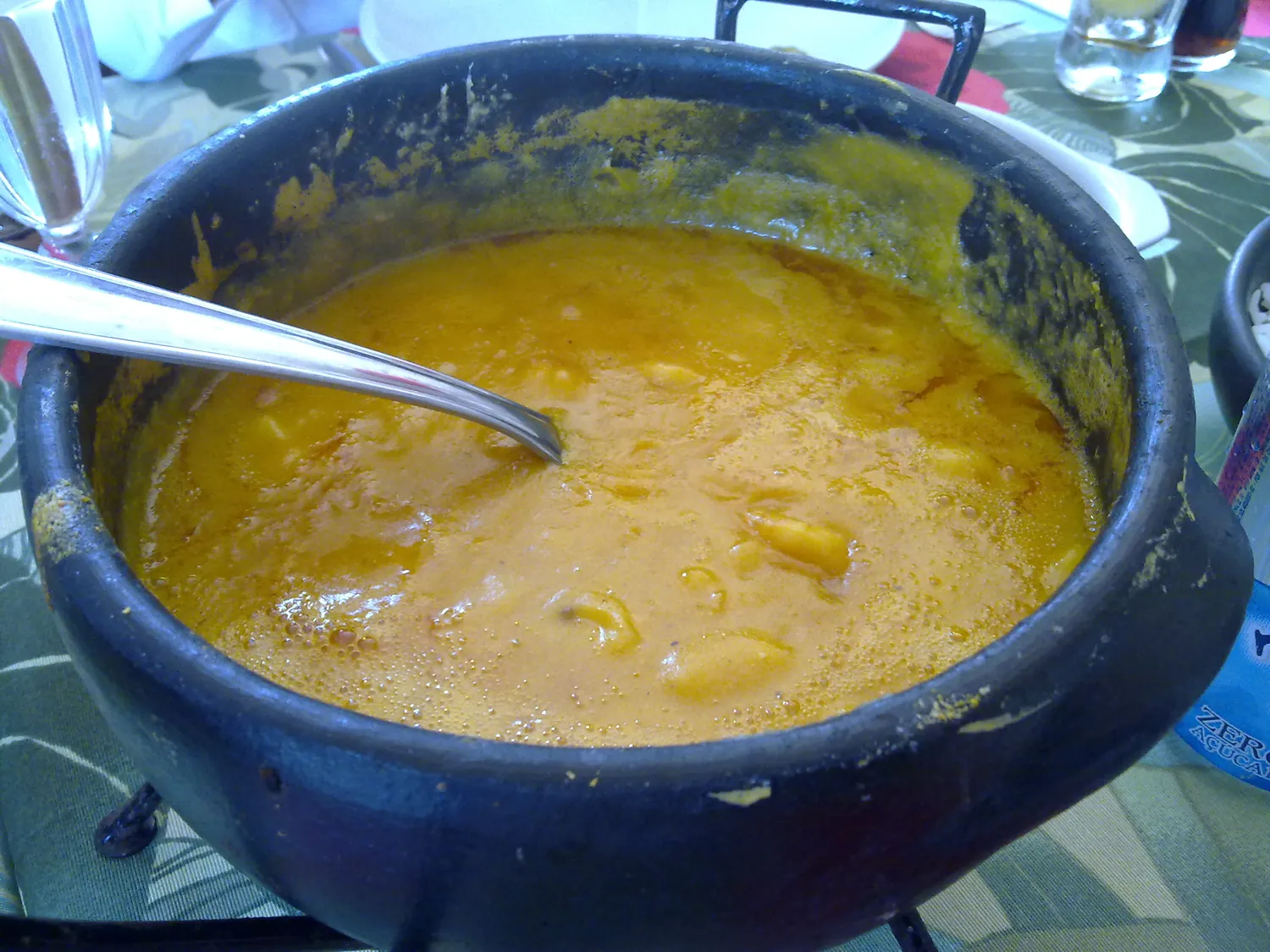
A black clay pot of golden-orange bobó de camarão, a thick cassava cream with shrimp, with a serving spoon Brazil flag Brazil 1h 5m
Dinner •Bahian Cassava Cream

Bobó de Camarão

This bobo de camarao recipe is Bahia's creamy shrimp dish: fresh shrimp folded into a thick purée of boiled cassava blended with coconut milk, coloured golden-orange with dendê oil and finished with lime and cilantro. Unlike a stew, the cassava is blended smooth, so the whole dish eats like a rich, spoonable cream. One serving is about 470 g.

Rich & Comforting

Shrimp folded into a thick, smooth cassava cream made with coconut milk and red palm oil, served hot with rice.

Pairs Well With
Steamed white rice, farofa and a crisp green salad
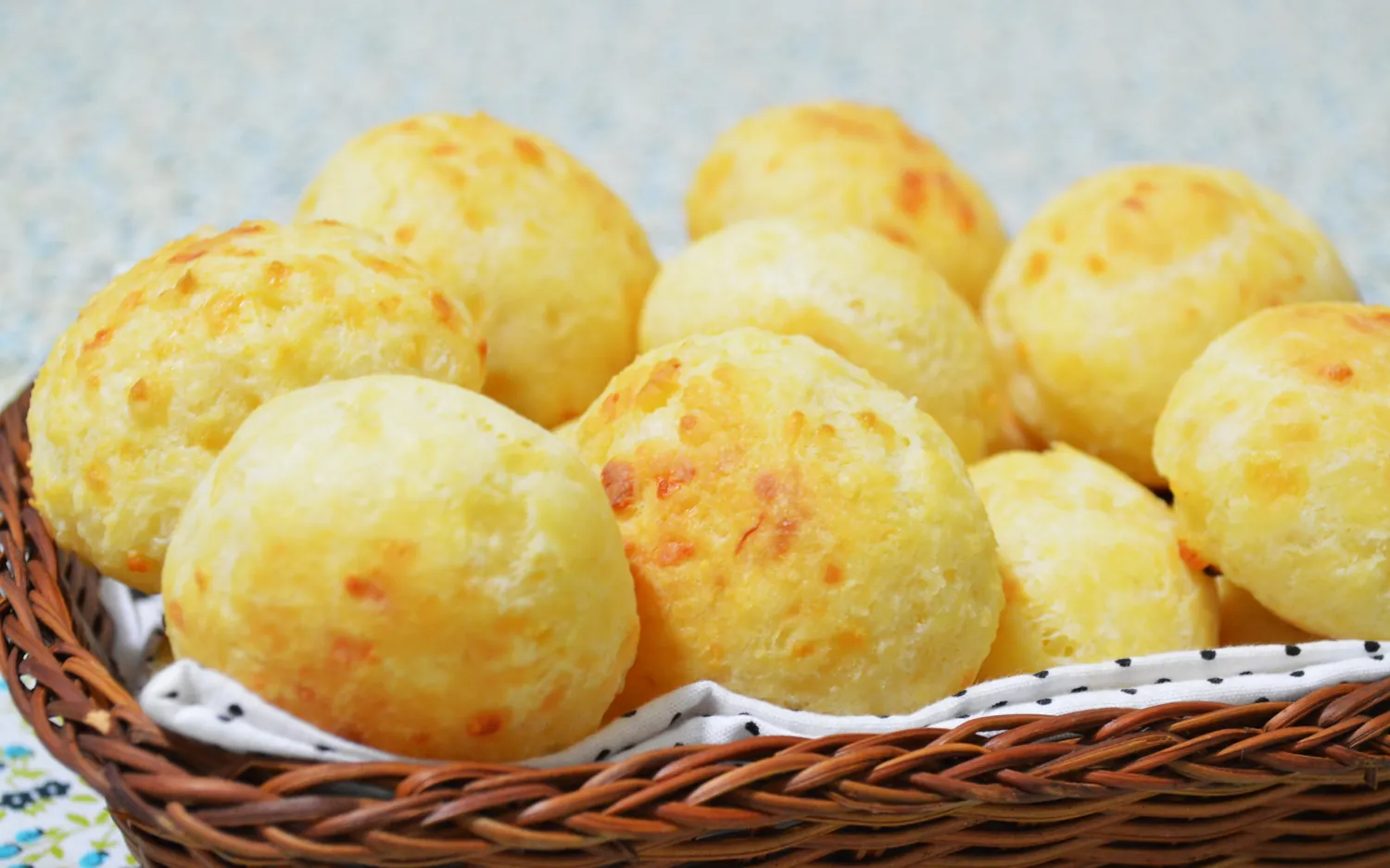
A basket of golden, round pão de queijo, Brazilian cheese bread rolls Brazil flag Brazil 45m
Snack & Tea •Minas Gerais Cheese Bread

Pão de Queijo

This pao de queijo recipe makes Brazil's famous cheese bread: small, golden rolls with a crisp shell and a soft, stretchy, chewy centre, made from tapioca starch, milk, oil, eggs and cheese. There is no wheat flour and no yeast — the rolls puff up on steam in a hot oven. One serving is 4 rolls, about 134 g.

Warm & Chewy Snack

Golden tapioca cheese rolls with a crisp shell and a soft, stretchy centre, baked in under half an hour.

Pairs Well With
Black coffee, fresh fruit, or a light soup
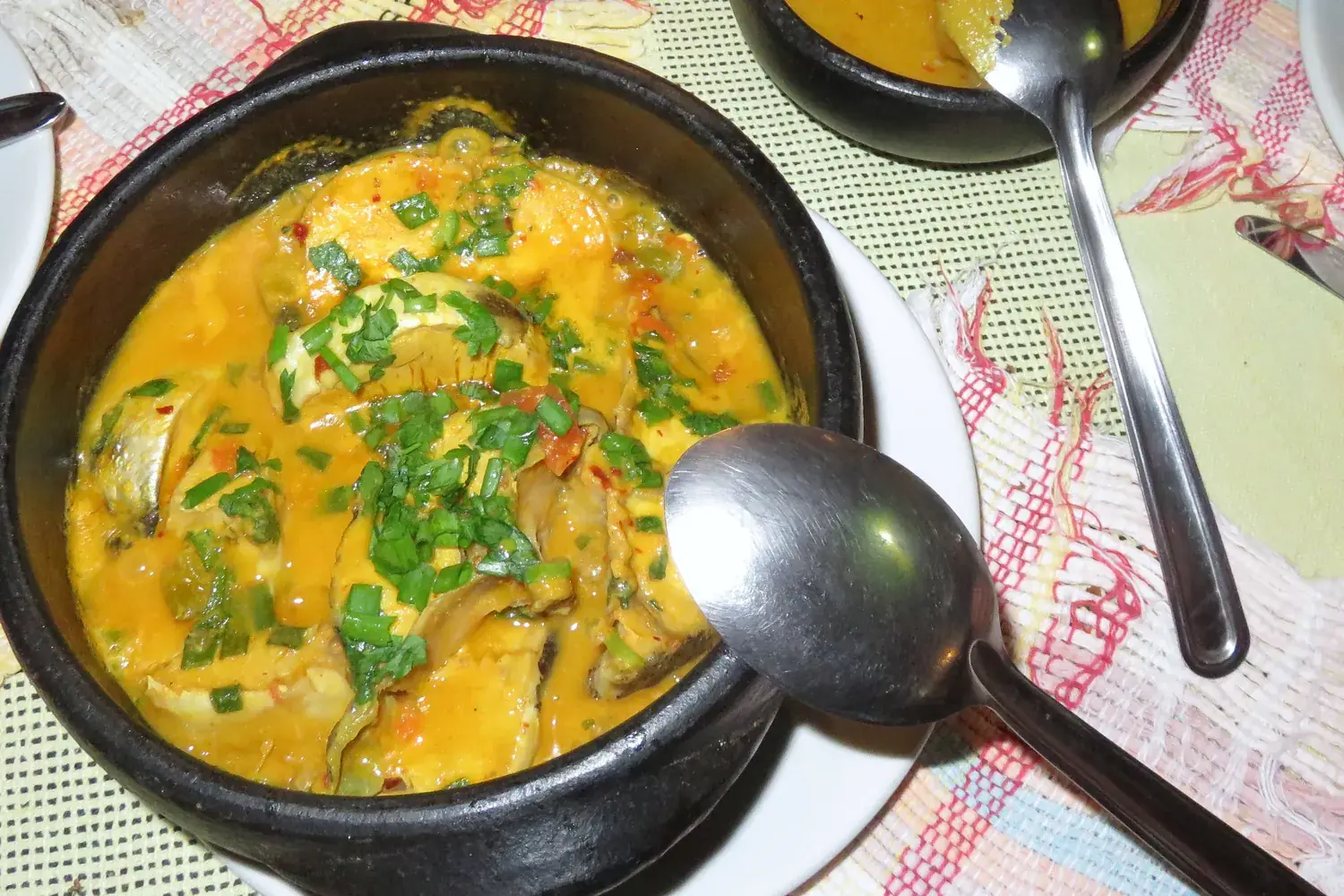
A black clay pot of moqueca baiana, fish chunks in a golden-orange coconut sauce with fresh herbs, beside rice and pirão Brazil flag Brazil 55m
Dinner •Bahian Fish Stew

Moqueca Baiana

This moqueca baiana recipe is Bahia's famous fish stew: thick fillets of white fish layered with onion, peppers and tomato, then simmered gently in coconut milk with dendê oil until the sauce turns golden-orange. The fish stays in whole, flaky pieces in a fragrant broth — a stew, not a purée. One serving is about 450 g.

Coastal & Aromatic

Firm white fish simmered in coconut milk and red palm oil with peppers and tomato, served hot in its clay pot.

Pairs Well With
Steamed white rice, pirão and farofa
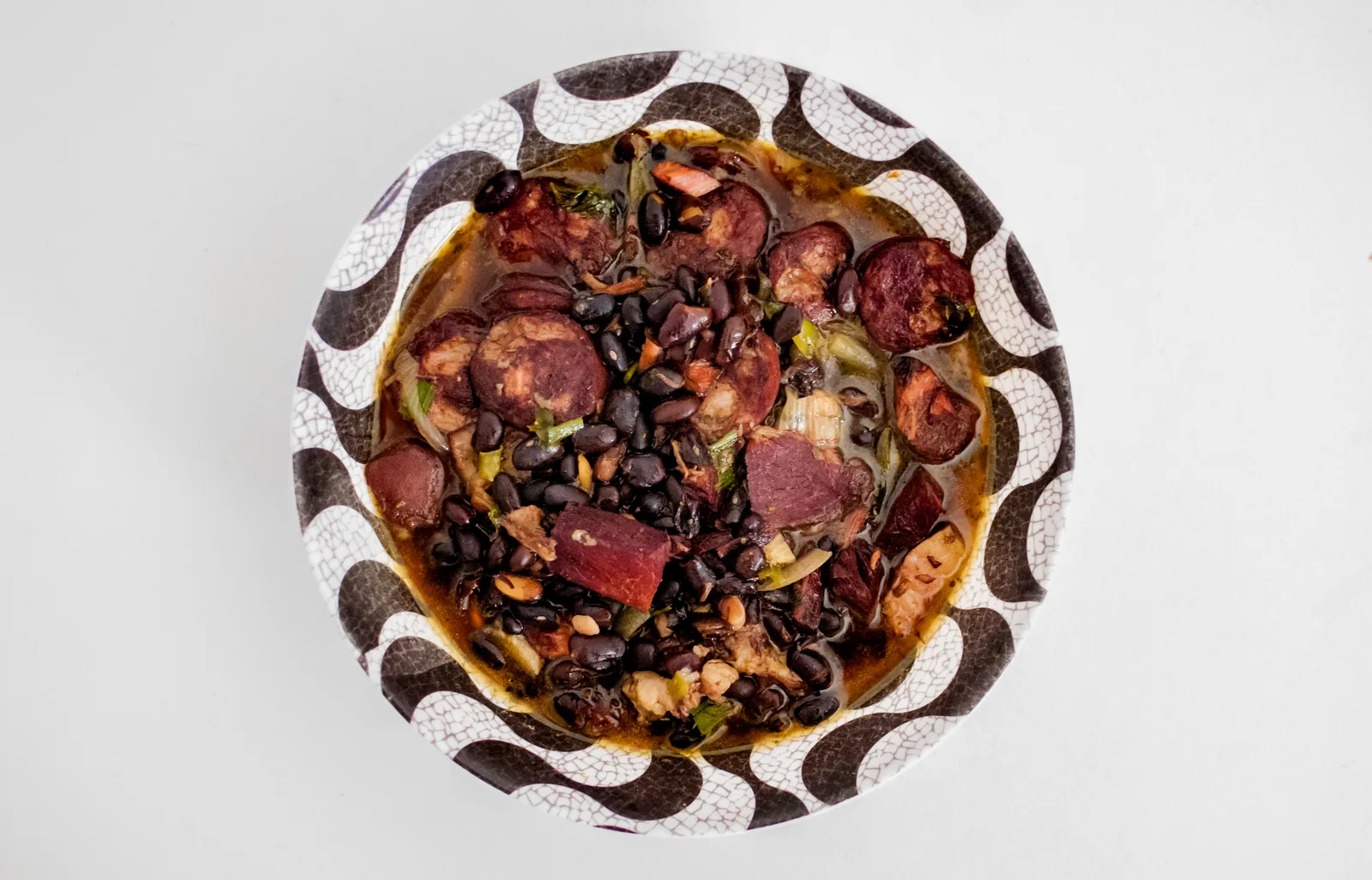
A bowl of Brazilian feijoada — black beans with rounds of sausage and pieces of pork Brazil flag Brazil 3h 30m
Dinner •Brazilian National Dish

Brazilian Feijoada

This Brazilian feijoada recipe is the real Saturday lunch: black beans simmered for hours with pork shoulder, smoky linguiça, bacon and beef until the broth turns thick and dark, then served with white rice, garlicky collard greens, orange slices and farofa. It is a slow, generous pot built for sharing. One serving is about 450 g.

Rich & Hearty

Brazil's national dish — black beans slow-cooked with pork, sausage and beef, served with rice, greens and orange.

Pairs Well With
Serve with white rice, sautéed collard greens, orange slices and farofa.

The Dinner Gazette

Never wonder what’s for dinner again

One email a week with easy dinner ideas from around the world — ingredients, steps and nutrition, tested in our kitchen first.

Delivered every Thursday morning. Unsubscribe anytime.