Curated recipes from 193 countries  •  New seasonal Mediterranean issue out now

Overview

Poulet en Sauce

Poul nan Sòs, Haitian Chicken in Sauce, Poulet Creole

This poulet en sauce recipe is the Haitian Sunday chicken: bone-in pieces marinated in epis, the green herb seasoning that is the backbone of Haitian cooking, browned hard, then braised slowly in a tomato sauce with onions, peppers, thyme and a whole Scotch bonnet. The sauce turns rich and glossy, and the chicken goes tender enough to pull apart with a fork. One serving is about 470 g, chicken and sauce.

Poulet en sauce — poul nan sòs in Haitian Kreyòl — is the everyday Sunday chicken of Haiti, and it is built on epis, the green seasoning of parsley, scallions, garlic, peppers and thyme that flavours almost every Haitian savoury dish. The chicken is washed with lime, marinated in epis, browned hard, then braised in a tomato sauce that is fried dark first — a step called sòf — so the sauce turns deep red and savoury. It is the dish Haitian families cook in a big pot and serve over rice, with fried plantains and bean sauce alongside.

Pairs well with: White rice, sauce pois (bean sauce) and fried plantains.

Provenance

Haiti flag Haiti

Haitian Heritage

Latin America & Caribbean

Time Dedication

1h 30m

30m prep • 60m cook

Batch Yield

4 Servings

813 kcal per serving

1 serving ≈ 470 g

Technical Skill

Intermediate

Medium (One-Pot Braise)

Meal Timing & Digestive Fit

Breakfast

Not Advised

Lunch

Hearty Midday Main

Dinner

Ideal Hearty Main

Snack & Tea

Inappropriate

High Protein Occasions: Sunday dinner, family gathering, festive dinner, cold evening Cost: Low — about $3–4 per serving at home
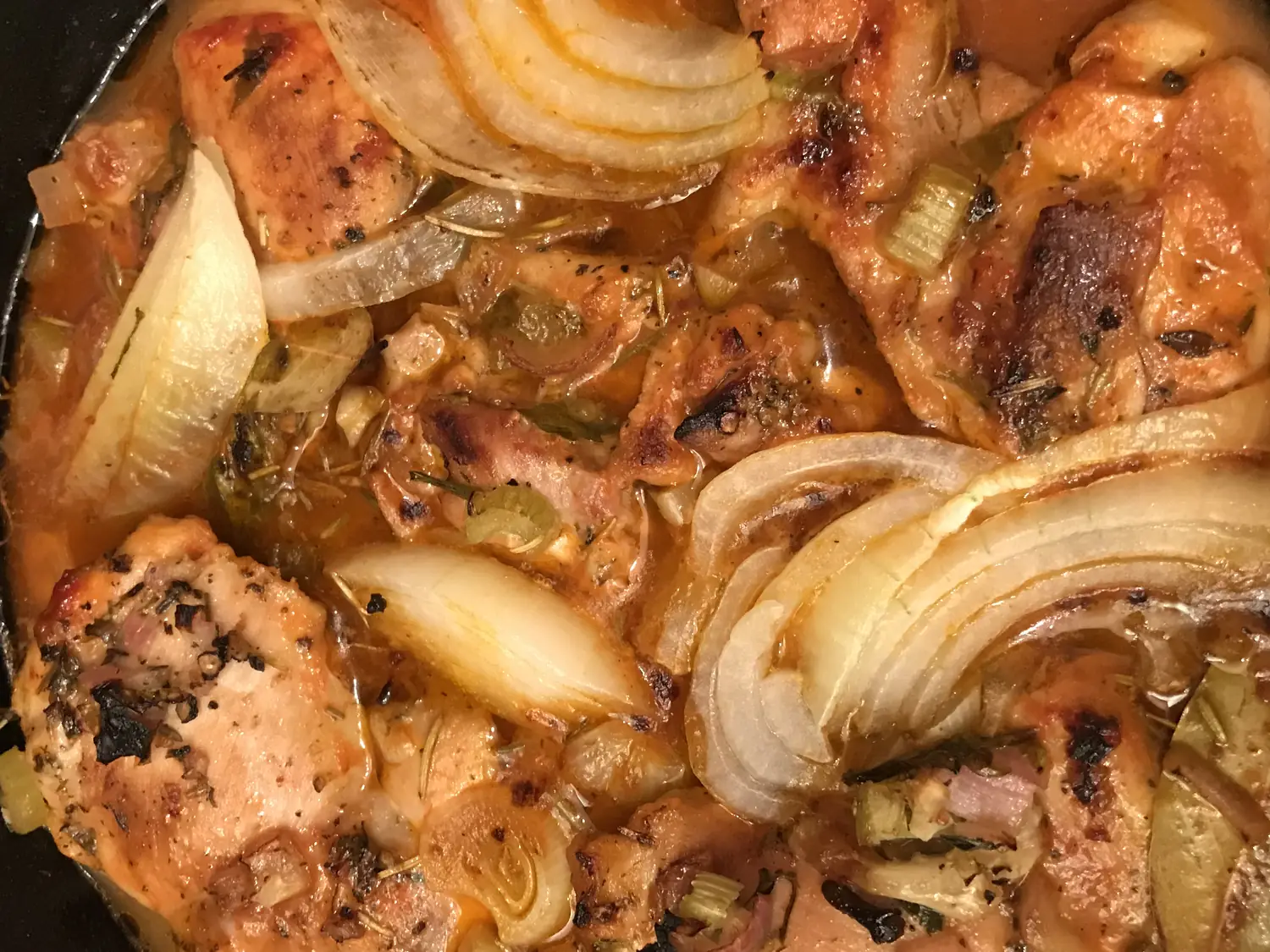
Haitian poulet en sauce: browned chicken pieces simmered in a rich orange-red tomato and epis sauce with onion wedges in a pot

Haitian Heritage

Photo: Aliceba, CC BY-SA 4.0, via Wikimedia Commons

The Heritage Formulary

Measured Ingredients

Estimated cost: Low — about $3–4 per serving at home (USD)

A good poulet en sauce is judged by its sauce: deep red, glossy, and thick enough to coat the chicken.

Execution Methodology & Culinary Technique

Step-by-Step Cooking Guide

Active 1h 30m
P

Prep Stage: Wash, Blend the Epis & Marinate

30 Mins • Cleaning & Marinating

Wash the chicken pieces with the lime juice, rubbing each piece with a squeezed lime half, then rinse under cold water and pat completely dry. Blend the parsley, scallions, garlic, bell pepper and the 80g onion with a splash of water into a coarse green paste — that is the epis. Massage the epis, salt and pepper into the chicken, getting it under the skin, and leave it to marinate for at least 30 minutes, or overnight in the fridge for the deepest flavour.

Maestro Tip: Dry chicken browns; wet chicken steams. Pat every piece properly dry before it goes near the pot.

  1. 1

    Clean & Marinate the Chicken

    30 Mins Room temperature, about 20°C (68°F)

    Rub the chicken pieces with the lime juice and the squeezed lime halves, rinse under cold running water and pat completely dry with paper towels. Blend the parsley, scallions, garlic, bell pepper and 80g onion into a coarse paste, then massage it into the chicken with the salt and pepper. Cover and marinate for at least 30 minutes.

    Marinating overnight in the fridge gives the deepest flavour — take the chicken out 15 minutes before cooking.

    Done when: Chicken evenly coated in green epis, with no pools of liquid in the bowl.

  2. 2

    Brown the Chicken (Sòf)

    10 Mins Medium-high heat, about 200°C (400°F)

    Heat the olive oil in a heavy pot or Dutch oven until it shimmers. Shake the excess marinade off the chicken pieces and brown them skin-side down, in batches, for 4–5 minutes a side until deeply golden. Lift them out and set aside.

    Do not crowd the pot — crowded chicken steams instead of browning, and browning is where the flavour comes from.

    Done when: Deep golden-brown skin with crisp edges.

  3. 3

    Fry the Tomato Paste

    5 Mins Medium heat, about 180°C (350°F)

    Lower the heat to medium and add the sliced onion wedges and the remaining epis to the pot, scraping up the browned bits from the bottom. Cook for 3–4 minutes until softened, then add the tomato paste and fry it, stirring constantly, for 2–3 minutes until it darkens to a brick red.

    Frying the paste until it darkens — the sòf — is what gives the sauce its deep, savoury colour; burnt paste turns bitter, so keep stirring.

    Done when: Onions soft, tomato paste dark brick-red and smelling sweet and savoury.

  4. 4

    Braise Low & Slow

    45 Mins Low simmer, about 95°C (200°F)

    Pour in the chicken broth, stirring to dissolve the paste, then return the chicken and any juices to the pot. Add the thyme, cloves and the whole Scotch bonnet, bring to a gentle simmer, then cover and cook on low for 40–45 minutes, turning the pieces once, until the chicken is fork-tender and the thickest part reaches 74°C (165°F).

    Keep the Scotch bonnet whole — it perfumes the sauce without making it fiercely hot.

    Done when: Chicken tender enough to pull apart, sauce thickened and glossy, 74°C (165°F) at the centre.

  5. 5

    Reduce & Finish with Butter

    10 Mins Medium heat, about 180°C (350°F)

    Lift the chicken out and keep it warm. Turn the heat up and simmer the sauce uncovered for 5–8 minutes until it coats a spoon, then stir in the butter until it melts and the sauce turns silky. Fish out the Scotch bonnet and return the chicken to the pot, spooning sauce over it.

    The butter is the finish — it gives the sauce shine and rounds off the acidity of the tomato.

    Done when: A thick, glossy sauce that clings to the chicken.

  6. 6

    Rest & Serve

    5 Mins Serving temperature, about 70°C (158°F)

    Rest the pot off the heat for 5 minutes so the sauce settles, then serve the chicken over white rice with plenty of sauce spooned over the top.

    Resting lets the sauce thicken slightly and the flavours come together.

    Done when: Hot chicken in a glossy red sauce, ready for rice.

Finishing Touches & Plating

Serve the poulet en sauce hot over white rice, with the glossy tomato and epis sauce spooned generously over the chicken.

Nutritional Physiology & Benefits

Nutrition

Energy

813

kcal / serving

Protein

54g

Complete AA

Carbs

16g

Complex

Fats

60g

Healthy

Per serving (4 servings · 1 serving ≈ 470 g)
Energy813 kcal
Protein54 g
Carbohydrates16 g
Fat60 g
Fibre3.2 g
Sugar6.5 g
Sodium1062 mg
Per 100g
Energy173 kcal
Protein11.4 g
Carbohydrates3.3 g
Fat12.6 g
Fibre0.7 g
Sugar1.4 g
Sodium226 mg

Nutrition values are estimated — calculated from USDA FoodData Central values for the listed ingredients.

Vitamins & minerals: Chicken supplies niacin, vitamin B6 and phosphorus; the peppers, tomato and parsley add vitamin C and vitamin A, and the thyme adds iron.

High in Protein

One serving carries about 53.8 g of protein from the bone-in chicken, which makes it a deeply filling dinner.

Herbs & Peppers

The epis — parsley, scallions, garlic and peppers — adds vitamin C, vitamin A and fresh flavour with almost no calories.

Slow-Cooked & Tender

A long, gentle braise keeps the chicken moist and makes the meat easy to chew and digest.

Food Pairings

What to Eat With

To optimize nutrient absorption and elevate the sensory depth, pair with these authentic accompaniments:

Sides

White Rice

Plain white rice is the classic base — it soaks up the rich tomato and epis sauce.

Fried Plantains

Sweet fried plantains balance the savoury, lightly spicy sauce and add a soft, golden side.

Sauce Pois (Bean Sauce)

A smooth bean sauce adds more protein and a creamy contrast to the tomato sauce.

Drinks

Fresh Limeade

A cold limeade cuts through the richness of the braised chicken and refreshes the palate.

Complete menu

Serve the chicken over white rice with sauce pois, fried plantains and a cold limeade.

Digestive Guardrails

What NOT to Combine

To prevent digestive distress, sluggishness, or palate clash, avoid pairing the dish with these elements:

Do Not Serve Undercooked Chicken

Chicken must reach 74°C (165°F) at the thickest part — undercooked chicken carries a real risk of food poisoning. Check with a thermometer, not by colour. This is general food information, not medical advice.

Do Not Cut the Scotch Bonnet

Cutting or piercing the Scotch bonnet releases its full heat into the sauce and can make the dish fiercely hot. Leave it whole and remove it before serving. This is general food information, not medical advice.

General information only, not medical advice — consult a doctor for personal dietary decisions.

Who Should Eat It

Who Should Eat

  • General adultsA rich, satisfying Sunday-style dinner — one serving with rice is a full plate.
  • ChildrenChildren usually enjoy the tender chicken; keep the Scotch bonnet whole and serve the sauce mild.
  • ElderlySuitable in a modest portion — the chicken is very tender, but the sauce is salty.
  • Pregnant womenGenerally suitable if the chicken is cooked right through to 74°C (165°F); keep the pepper whole.
  • Breastfeeding womenGenerally suitable; the chicken adds protein and iron — keep the portion modest.
  • AthletesA strong dinner after training: about 53.8 g of protein per serving, with rice for carbs.
  • Weight gainA good choice — the dish is energy-dense, and rice or plantains on the side add more.
  • Weight lossNot the lightest choice — take mostly chicken with less sauce, and fill the plate with salad instead of extra rice.

Health Conditions — Adjust or Avoid

Conditions

  • DiabetesAbout 15.5 g of carbohydrate per serving — low for a main dish. Watch the rice portion instead. Ask your clinician about portion size.
  • High blood pressureAbout 1,062 mg of sodium per serving from the salt and broth. Use low-sodium broth and less salt. Ask your clinician about portion size.
  • Kidney diseaseVery high in protein and fairly salty — keep the portion modest. Ask your clinician about portion size.
  • GoutChicken is low in purines, so a modest portion is usually fine. Ask your clinician about portion size.
  • Stomach issuesThe tomato sauce and chilli can be heavy for a sensitive stomach; keep the portion small and skip the pepper. Ask your clinician about portion size.
  • Cardiovascular diseaseChicken with skin and butter makes this rich in saturated fat — eat it occasionally and favour the leaner pieces. Ask your clinician about portion size.
  • Fatty liverThe dish is energy-dense with skin-on chicken; keep the portion modest and skip the extra butter. Ask your clinician about portion size.
  • Food allergiesContains milk (butter). No gluten, egg, nuts or seafood in the recipe. Ask your clinician about portion size.
  • Special therapeutic dietsIf you follow a prescribed low-sodium plan, the broth and salt are hard to fit — check with your clinician.

If you have a medical condition, consult your doctor before changing your diet.

Storage & Use

Storage & Use

How to store
Store the chicken and sauce together in a covered container.
In the fridge
3 days in the fridge at 4°C (40°F) or below.
In the freezer
Up to 2 months in a sealed container.
How to reheat
Reheat gently in a covered pot over low heat for 10–12 minutes until steaming hot, to 74°C (165°F); add a splash of water if the sauce is too thick.
Freezing recommended
Yes — the braised chicken freezes well in its sauce.
Signs it has spoiled
Sour smell, slimy skin, or a sauce that has gone dull and separated.

More recipes to explore

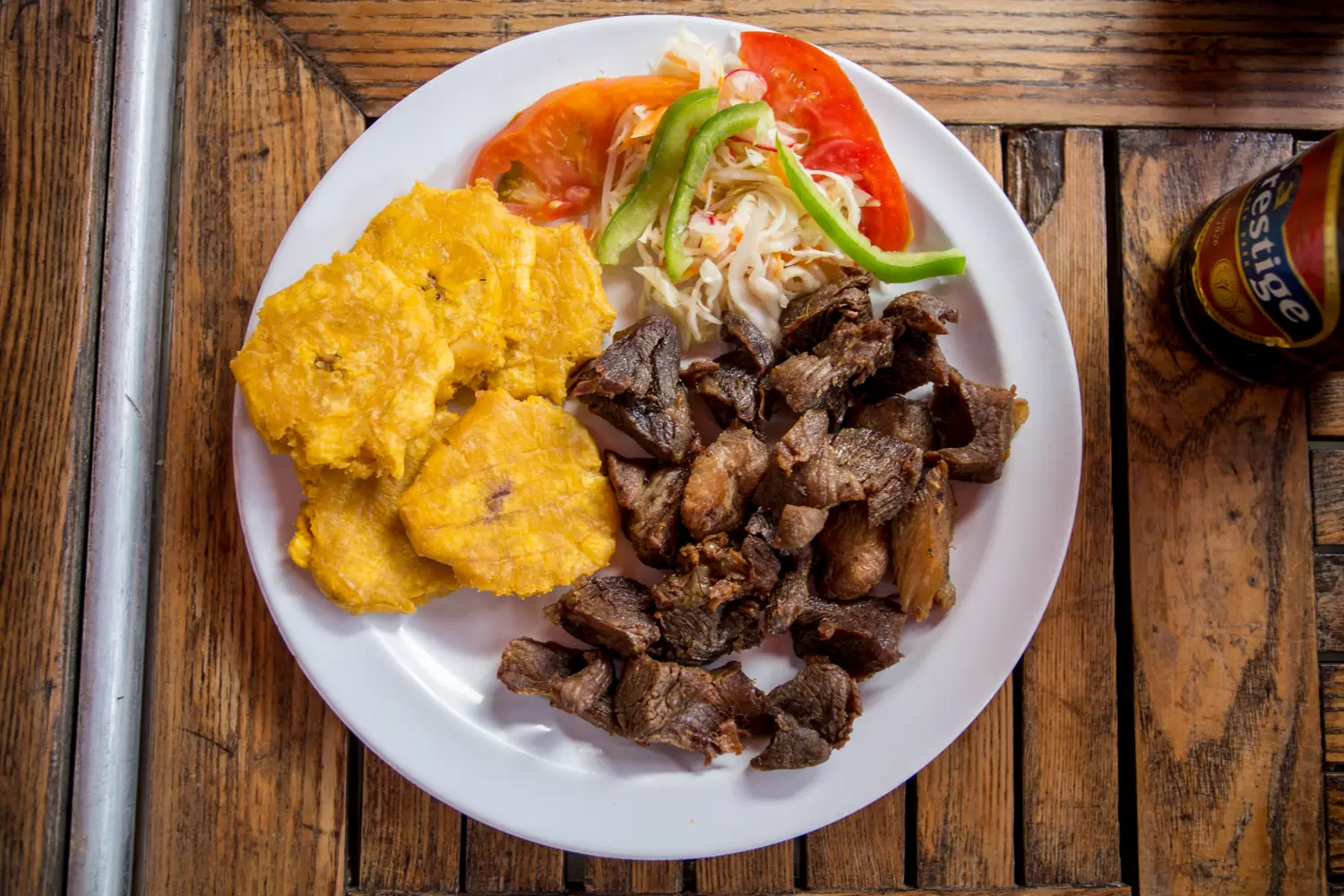
A plate of Haitian griot: dark crisp fried pork cubes with fried plantains and pikliz slaw with tomato and green pepper Haiti flag Haiti 2h 10m
Dinner •Haiti Heritage

Haitian Griot

This Haitian griot recipe starts with pork shoulder rubbed in sour citrus and epis, Haiti's green seasoning paste of scallions, garlic, parsley and Scotch bonnet, then braised in its own marinade until tender and fried in hot oil until the edges turn dark and crisp. It is served with pikliz, a sharp pickled cabbage slaw that cuts through the richness. One serving is about 215 g of crisp fried pork with pikliz.

Hearty & Celebratory

Haiti's most loved party dish: citrus-marinated pork, braised tender, then fried until crisp and served with fiery pickled pikliz.

Pairs Well With
Fried plantains (bannann peze) and rice and beans, with pikliz on the side.
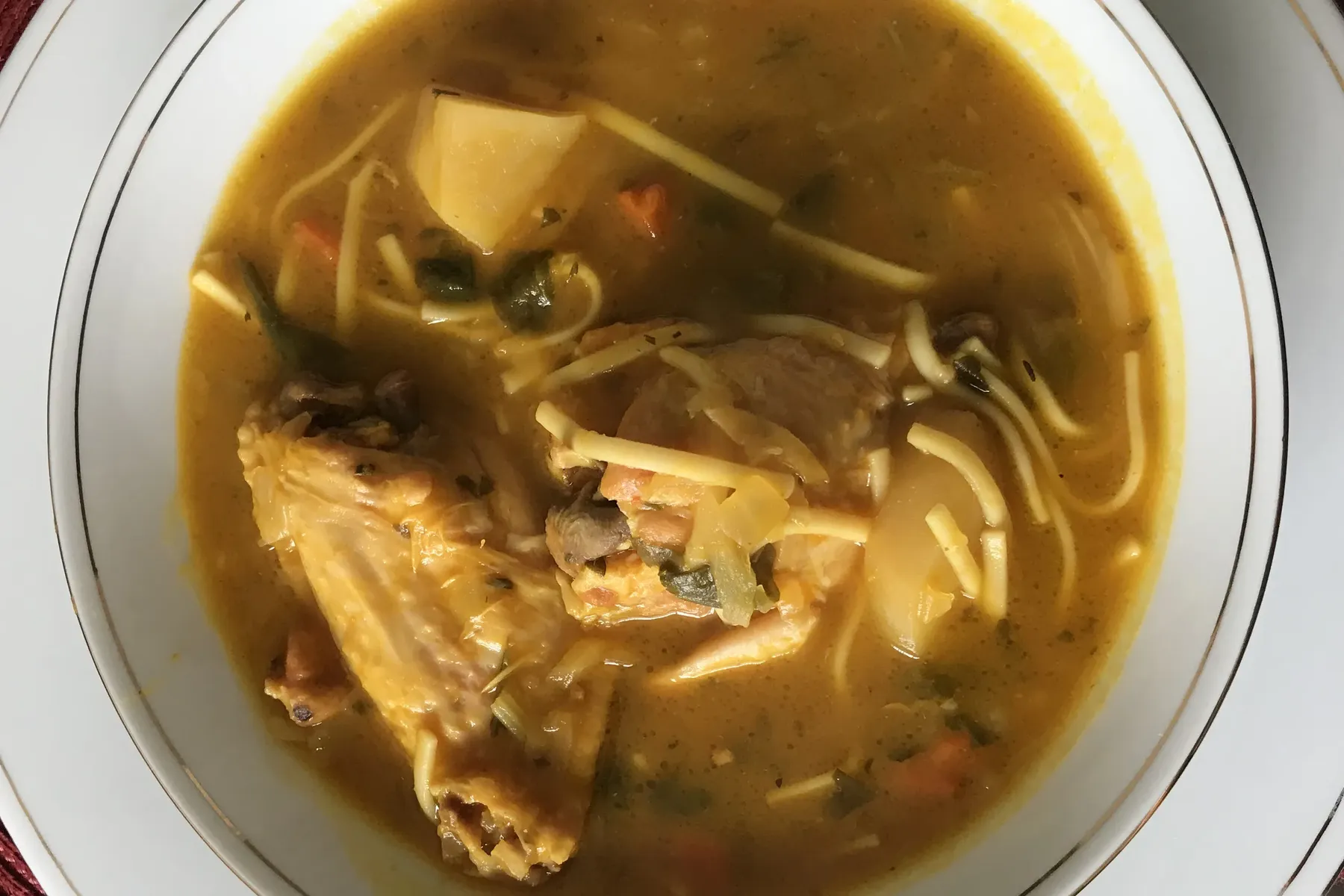
A bowl of Soup Joumou with beef, spaghetti, potato and golden pumpkin broth Haiti flag Haiti 2h 40m
Lunch •Haiti's Independence Soup

Soup Joumou

Soup joumou is Haiti's golden pumpkin soup: tender beef simmered in a thick purée of giraumon squash, with root vegetables, cabbage and spaghetti in a rich, spiced broth. This soup joumou recipe follows the home-cooked method Haitian families use every 1 January, when the soup marks Independence Day. One serving is about 480 g.

Comfort & Warmth

A hot, hearty bowl of pumpkin, beef and vegetables that warms up a family lunch on a cold day or a festive table.

Pairs Well With
Serve hot with crusty French bread for dipping and a spoonful of pikliz on the side.
Soups & Broths
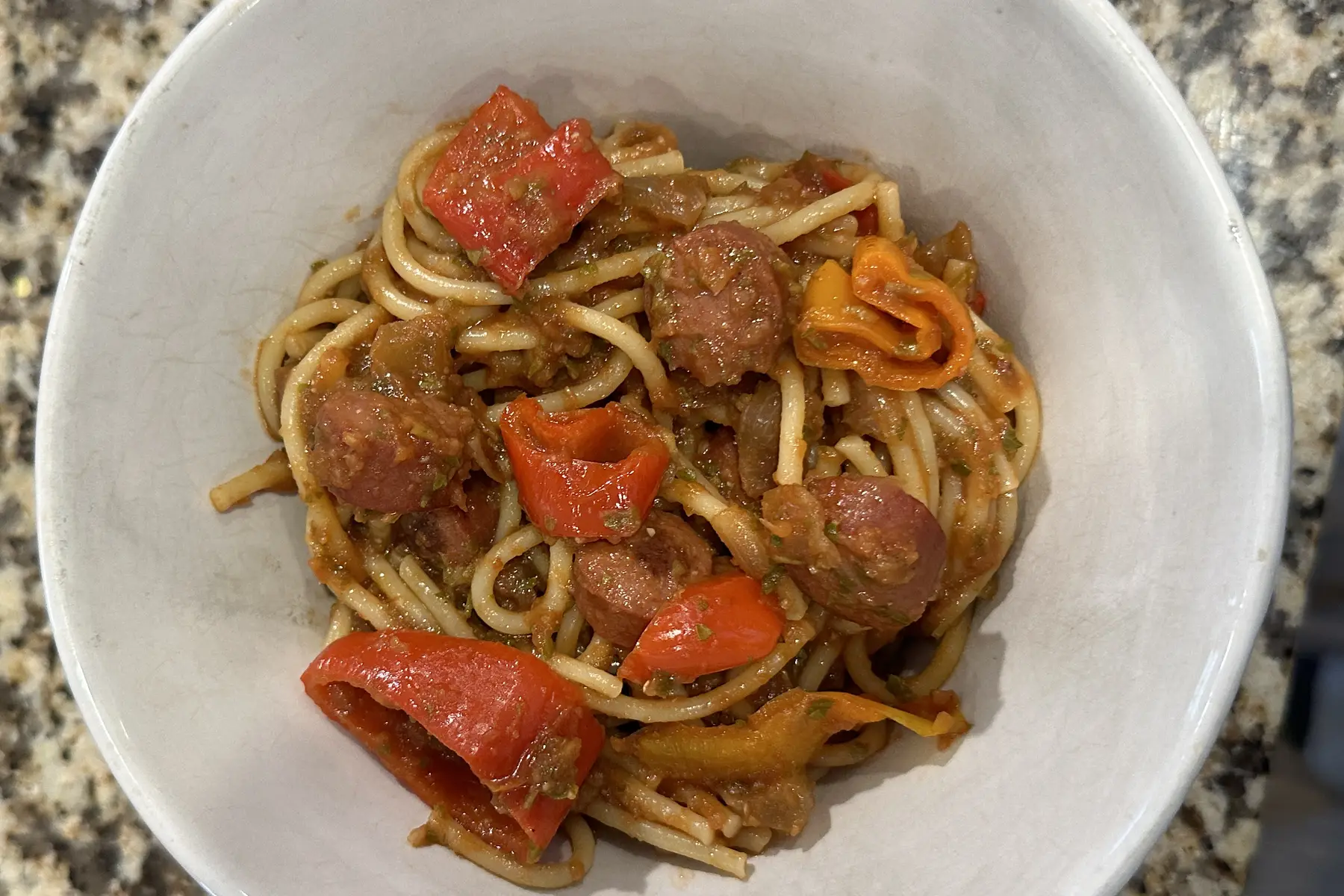
Haitian spaghetti in a white bowl — spaghetti in a rust-red epis and tomato sauce with sliced hot dogs and red peppers Haiti flag Haiti 40m
Breakfast •Haitian Breakfast Espageti

Haitian Spaghetti

This haitian spaghetti recipe is Haiti's beloved breakfast pasta: dried spaghetti cooked in one pot with epis, the green Haitian seasoning base, tomato paste, sweet peppers, onion and sliced hot dogs, until every strand is stained rust-red and full of flavour. It is pantry cooking at its best — cheap, fast and boldly seasoned — and it lands on the table in about 40 minutes. One serving is about 380 g.

Hearty & Comforting

One-pot spaghetti coated in a savoury epis and tomato sauce with sliced hot dogs, peppers and onion — a filling Haitian breakfast.

Pairs Well With
Boiled egg, avocado & pikliz
Pasta & Noodles • Quick Prep (<30m)
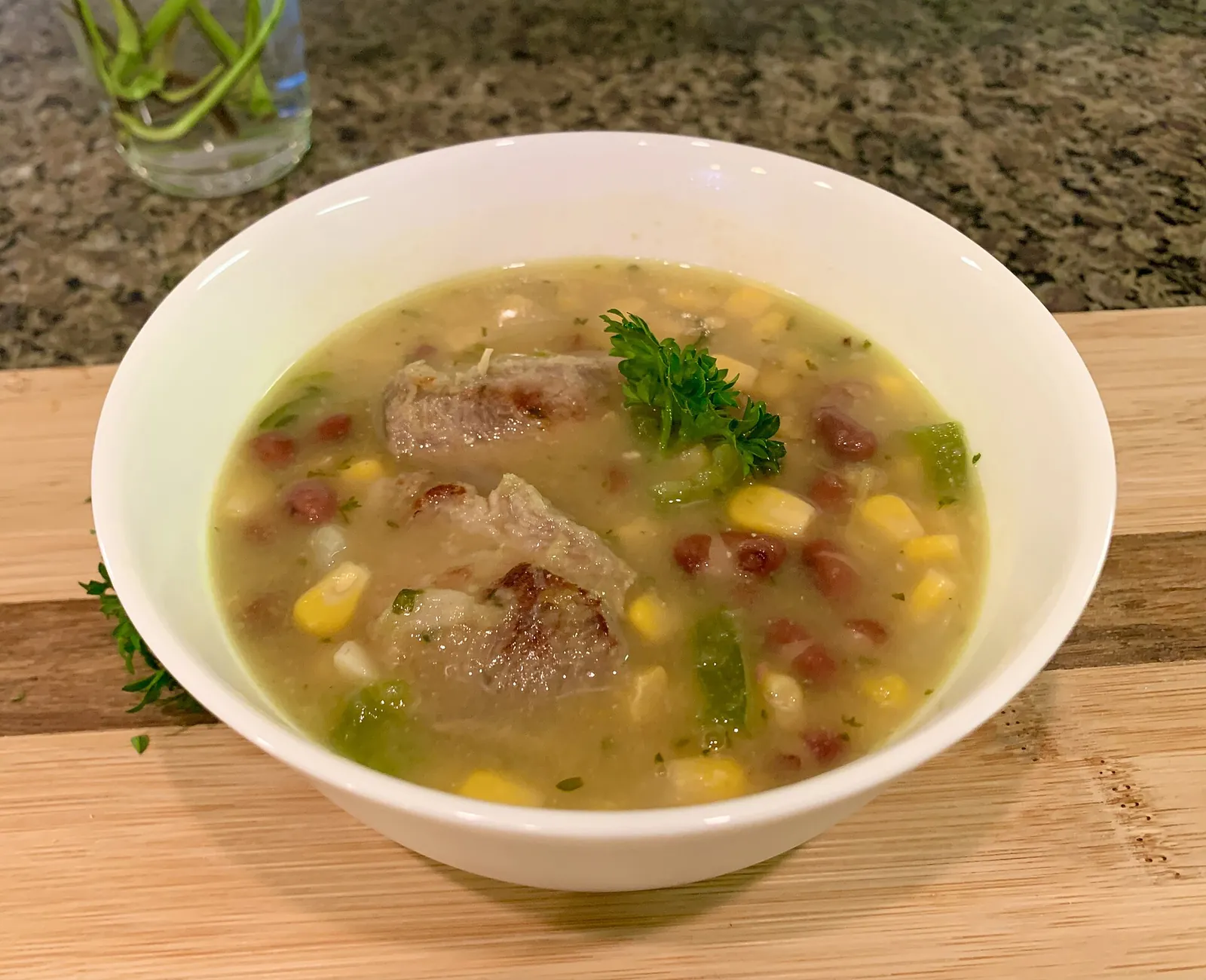
A white bowl of Haitian tchaka with corn kernels, red beans and smoked pork chunks in a light broth, garnished with parsley Haiti flag Haiti 3h 20m
Lunch •Haitian Heritage Stew

Tchaka

This tchaka recipe soaks dried corn and red kidney beans overnight, then simmers them for hours with smoked pork, pumpkin and a fragrant epis of garlic, scallion, parsley and thyme until the pot turns thick and hearty. The smoked pork is what gives tchaka its deep, salty flavour, and the Scotch bonnet — left whole so it perfumes the stew without burning — is the quiet heat underneath it all. One serving is about 400 g.

Comfort & Warmth

Dried corn and red beans simmered for hours with smoked pork, pumpkin and epis until thick — Haiti's slow, hearty celebration stew.

Pairs Well With
Crusty bread, pikliz & avocado
Soups & Broths

The Dinner Gazette

Never wonder what’s for dinner again

One email a week with easy dinner ideas from around the world — ingredients, steps and nutrition, tested in our kitchen first.

Delivered every Thursday morning. Unsubscribe anytime.