Curated recipes from 193 countries  •  New seasonal Mediterranean issue out now

Overview

Pudim de Leite

Brazilian Milk Flan, Pudim de Leite Condensado

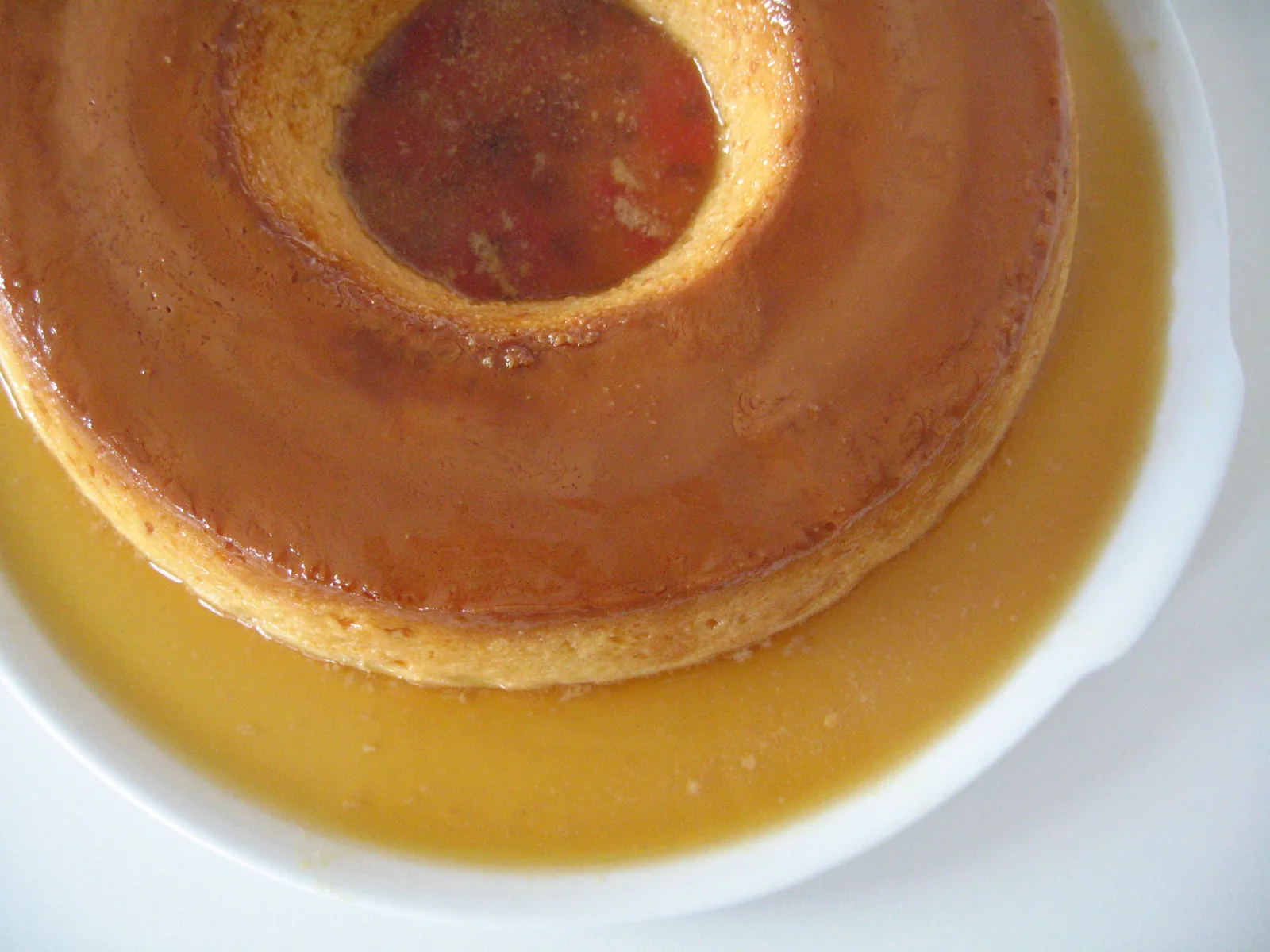
This pudim de leite recipe is Brazil's most-loved dessert: a silky flan of condensed milk, whole milk and whole eggs, baked slowly in a water bath in a caramel-lined ring mould and turned out cold, so the amber caramel runs down over the pale custard. Three ingredients do the work — the condensed milk makes it sweet, smooth and almost impossible to curdle. One serving is about 136 g.

Pudim came to Brazil with Portuguese settlers, whose egg-rich convent sweets met the condensed milk that became a pantry staple in Brazil in the 20th century. The Brazilian version swapped the Portuguese cream for a tin of condensed milk — sweeter, smoother and far more forgiving — and it became the dessert of Sunday lunch, birthdays and family gatherings across the country. The ring mould with a hole in the middle is the shape almost every Brazilian home uses.

Pairs well with: Strong Brazilian coffee, or a spoonful of whipped cream and fresh berries.

Provenance

Brazil flag Brazil

Brazilian Family Classic

Latin America & Caribbean

Time Dedication

1h 20m

20m prep • 60m cook

Batch Yield

8 Servings

290 kcal per serving

1 serving ≈ 136 g

Technical Skill

Intermediate

Intermediate (Caramel & Water Bath)

Meal Timing & Digestive Fit

Breakfast

Not Advised

Lunch

Inappropriate

Dinner

Inappropriate

Snack & Tea

Ideal Light Bite

Occasions: Sunday lunches, birthday parties, family gatherings, afternoon coffee, festive desserts Cost: Low — about $1–2 per serving at home
A golden pudim de leite flan ring with dark caramel sauce pooling on a white plate.

Brazilian Family Classic

Photo: Marcelo Träsel, CC BY-SA 2.0, via Wikimedia Commons

The Heritage Formulary

Measured Ingredients

Estimated cost: Low — about $1–2 per serving at home (USD)

Made with condensed milk, whole milk and whole eggs, baked in a caramel-lined mould in a water bath until silky.

Execution Methodology & Culinary Technique

Step-by-Step Cooking Guide

Active 1h 20m
P

Prep Stage: Butter the Mould and Warm the Oven

10 Mins • Hands-On

Heat the oven to 180°C (350°F). Lightly butter a 20 cm ring mould or a 1.5-litre flan mould — the butter helps the caramel coat evenly and the flan release later. Put a kettle of water on to boil for the water bath, and set a deep roasting tray on the counter ready to hold the mould.

Maestro Tip: A ring mould with a hole in the middle is the traditional Brazilian shape — it cooks more evenly than a solid round mould, so the centre sets at the same time as the edges.

  1. 1

    Make the Caramel

    10 Mins • Hands-On Medium heat; caramel about 170°C (340°F)

    Put the sugar and the 60 ml of water in a small, heavy pan over medium heat. Stir once to dissolve, then stop stirring and let it boil until it turns a deep amber — about 8 minutes. Swirl the pan gently if the colour is uneven, but never stir, or the sugar will crystallise. Working quickly, pour the caramel into the buttered mould and tilt it so the caramel coats the base and a little way up the sides.

    Deep amber, not pale gold and not dark brown: pale caramel tastes only of sugar, and dark caramel tastes bitter. If it smokes, it is burnt — start again.

    Done when: A deep amber caramel coating the base of the mould, beginning to set.

  2. 2

    Blend the Custard — Gently

    5 Mins • Hands-On No heat

    Put the condensed milk, whole milk, eggs and vanilla in a blender and blend for just 30 seconds, or whisk gently by hand until smooth. Do not over-blend: air beaten into the custard becomes bubbles and holes in the finished flan. Strain the mixture through a fine sieve into a jug — this removes any strands of egg white and guarantees a silky texture.

    The sieve is not optional — it is the difference between a silky flan and one with white threads running through it.

    Done when: A smooth, even, pale-yellow liquid with no bubbles and no egg strands.

  3. 3

    Fill the Mould and Build the Water Bath

    5 Mins • Hands-On Oven 180°C (350°F); water boiling

    Pour the custard gently into the caramel-lined mould. Set the mould in the deep roasting tray and pour boiling water into the tray until it comes halfway up the sides of the mould. The water bath cooks the custard gently and evenly — without it, the edges overcook and curdle before the centre sets.

    Pour the boiling water carefully, away from the mould — a splash of water in the custard leaves a pale, weeping patch in the finished flan.

    Done when: Mould filled, sitting in a tray of boiling water halfway up its sides.

  4. 4

    Bake Slowly Until Just Set

    60 Mins • Baking 180°C (350°F)

    Bake at 180°C (350°F) for 55–60 minutes. The pudim is done when the surface is lightly golden and the centre still trembles slightly when you shake the tray — it will firm up as it cools. A skewer pushed into the centre should come out clean. If the top browns too fast, lay a loose sheet of foil over the tray for the last 15 minutes.

    Do not overbake — five minutes too long and the flan turns rubbery and dull. Trembling when it comes out is correct; it sets as it cools.

    Done when: Lightly golden surface, centre set but trembling slightly; a skewer comes out clean.

  5. 5

    Cool, Chill and Turn Out

    5 Mins • Hands-On, Plus 4 Hours Chilling No heat; chill at least 4 hours

    Lift the mould out of the water bath and leave it to cool for 30 minutes, then chill in the fridge for at least 4 hours — overnight is best. Pudim must be cold before it is turned out, or it will break. To unmould, run a thin knife around the edge, set a rimmed plate on top, and flip it over in one quick movement. Lift the mould off slowly so the caramel runs down over the flan.

    If the flan sticks, dip the base of the mould in hot water for 10 seconds and try again — the caramel melts and releases it.

    Done when: A smooth, pale flan with amber caramel running down its sides, served cold.

Finishing Touches & Plating

Turn the chilled pudim out onto a rimmed plate so the caramel pools around it, slice with a hot, wet knife, and serve cold — with strong coffee, the way Brazilian families do.

Nutritional Physiology & Benefits

Nutrition

Energy

290

kcal / serving

Protein

8g

Complete AA

Carbs

48g

Complex

Fats

8g

Healthy

Per serving (8 servings · 1 serving ≈ 136 g)
Energy290 kcal
Protein8 g
Carbohydrates48 g
Fat8 g
Fibre0.0 g
Sugar48.2 g
Sodium111 mg
Per 100g
Energy213 kcal
Protein5.8 g
Carbohydrates35.4 g
Fat5.7 g
Fibre0 g
Sugar35.4 g
Sodium82 mg

Nutrition values are estimated — calculated from USDA FoodData Central values for the listed ingredients.

Vitamins & minerals: Provides calcium and vitamin B12 from the milk and condensed milk, plus choline and vitamin D from the whole eggs.

Calcium from Milk, Twice Over

Condensed milk and whole milk together make this flan a real source of calcium — about a quarter of a day's needs in one slice — along with vitamin B12.

Whole Eggs, Real Nutrients

Three whole eggs bring choline, vitamin D and protein to the custard, which is why pudim is more nourishing than a dessert made from sugar and cream alone.

A Small Slice Goes a Long Way

One slice carries about 290 kcal and is intensely sweet and rich, so a modest portion satisfies — pudim is a dessert of small slices, not large ones.

Food Pairings

What to Eat With

To optimize nutrient absorption and elevate the sensory depth, pair with these authentic accompaniments:

Drinks

Strong Brazilian Coffee

Pudim and cafezinho are inseparable in Brazil — the bitter, strong coffee cuts the sweetness of the flan and cleans the palate between spoonfuls.

A Small Glass of Port

For a dinner-party version, a small glass of tawny port matches the caramel notes of the flan without adding more sweetness.

More Pairings

Whipped Cream and Berries

A spoonful of barely sweetened whipped cream and a few fresh berries lighten the rich caramel flan and add a fresh, tart contrast.

Sides

Toasted Coconut Flakes

A scattering of toasted coconut is a common Brazilian garnish — its crunch and nutty flavour play against the silky custard.

Complete menu

Serve pudim de leite as the cold, sweet finish to a Brazilian Sunday lunch — after feijoada or grilled meat — with strong coffee, or on its own with whipped cream and berries.

Digestive Guardrails

What NOT to Combine

To prevent digestive distress, sluggishness, or palate clash, avoid pairing the dish with these elements:

Large Portions for People Watching Sugar

One slice carries about 48.2 g of sugar — the condensed milk and the caramel together. People with diabetes or anyone watching sugar should eat half a slice or skip it. This is general food-safety information, not medical advice.

Turning It Out Warm

Pudim turned out before it is fully chilled collapses and tears, and the caramel runs off instead of coating the flan. Chill it for at least 4 hours — overnight is best — before unmoulding.

General information only, not medical advice — consult a doctor for personal dietary decisions.

Who Should Eat It

Who Should Eat

  • General adultsA beloved, rich dessert for most adults — one small slice after a meal is the Brazilian way.
  • ChildrenChildren love pudim, and one small slice is fine as an occasional treat — but it is very high in sugar, so keep it to special occasions.
  • ElderlySuitable in a small portion as an occasional dessert; the soft, smooth texture is easy to eat, though the sugar is high.
  • Pregnant womenGenerally safe — the eggs are fully cooked in the oven — but it is very high in sugar, so keep the portion to one small slice.
  • Breastfeeding womenA pleasant occasional treat; the milk brings calcium and the eggs bring choline, but the sugar is high, so one slice is enough.
  • AthletesA quick source of energy after training, with a little protein from the eggs and milk — but it is mostly sugar, so it is a treat, not a recovery meal.
  • Weight gainA good choice — small, sweet and energy-dense, and easy to eat a second slice after a meal.
  • Weight lossBest saved for a special occasion: one slice carries about 290 kcal and 48.2 g of sugar, so it is a lot of energy in a small package.

Health Conditions — Adjust or Avoid

Conditions

  • DiabetesVery high in sugar — one slice carries about 48.2 g. Best avoided, or eaten in half portions only, and ask your clinician.
  • High blood pressureVery low in sodium, so it is not a problem for blood pressure — but the sugar is high, so keep the portion small. Ask your clinician.
  • Kidney diseaseEggs and milk are high in phosphorus; keep portions small and ask your clinician.
  • GoutEggs and milk are low in purines and generally fine in a modest portion — ask your clinician.
  • Stomach issuesRich and very sweet, which can feel heavy on a sensitive stomach — eat a small slice slowly, after a meal, not on an empty stomach.
  • Cardiovascular diseaseHigh in sugar and saturated fat from the condensed milk; keep it to an occasional small slice. Ask your clinician.
  • Fatty liverHigh in sugar and saturated fat, so it is best kept as an occasional treat in a small portion. Ask your clinician.
  • Food allergiesContains egg and milk. People allergic to egg or milk must avoid it — ask your clinician.
  • Special therapeutic dietsIf you follow a prescribed low-sugar or low-fat diet, this dessert is usually not suitable — check with your clinician.

If you have a medical condition, consult your doctor before changing your diet.

Storage & Use

Storage & Use

How to store
Store the unmoulded pudim in a sealed container in the fridge, covered, with its caramel.
In the fridge
Up to 4 days in a sealed container.
In the freezer
Up to 1 month in a sealed container, though the texture softens slightly on thawing.
How to reheat
Do not reheat — pudim is served cold. Let it sit at room temperature for 10 minutes before serving if it is very cold.
Freezing recommended
Not recommended — best eaten fresh within 4 days.
Signs it has spoiled
Sour or off smell, slimy surface, or any mould.

More recipes to explore

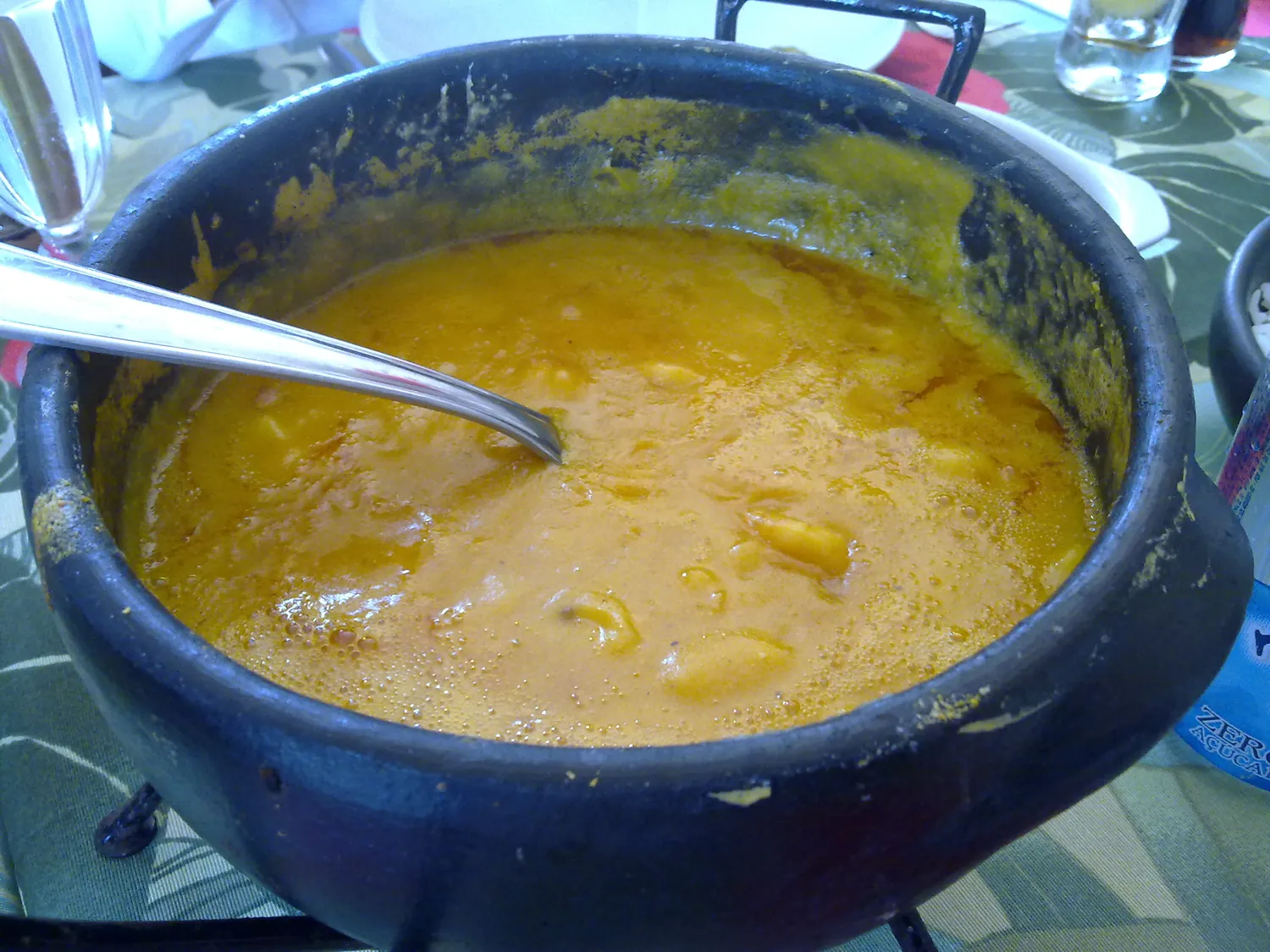
A black clay pot of golden-orange bobó de camarão, a thick cassava cream with shrimp, with a serving spoon Brazil flag Brazil 1h 5m
Dinner •Bahian Cassava Cream

Bobó de Camarão

This bobo de camarao recipe is Bahia's creamy shrimp dish: fresh shrimp folded into a thick purée of boiled cassava blended with coconut milk, coloured golden-orange with dendê oil and finished with lime and cilantro. Unlike a stew, the cassava is blended smooth, so the whole dish eats like a rich, spoonable cream. One serving is about 470 g.

Rich & Comforting

Shrimp folded into a thick, smooth cassava cream made with coconut milk and red palm oil, served hot with rice.

Pairs Well With
Steamed white rice, farofa and a crisp green salad
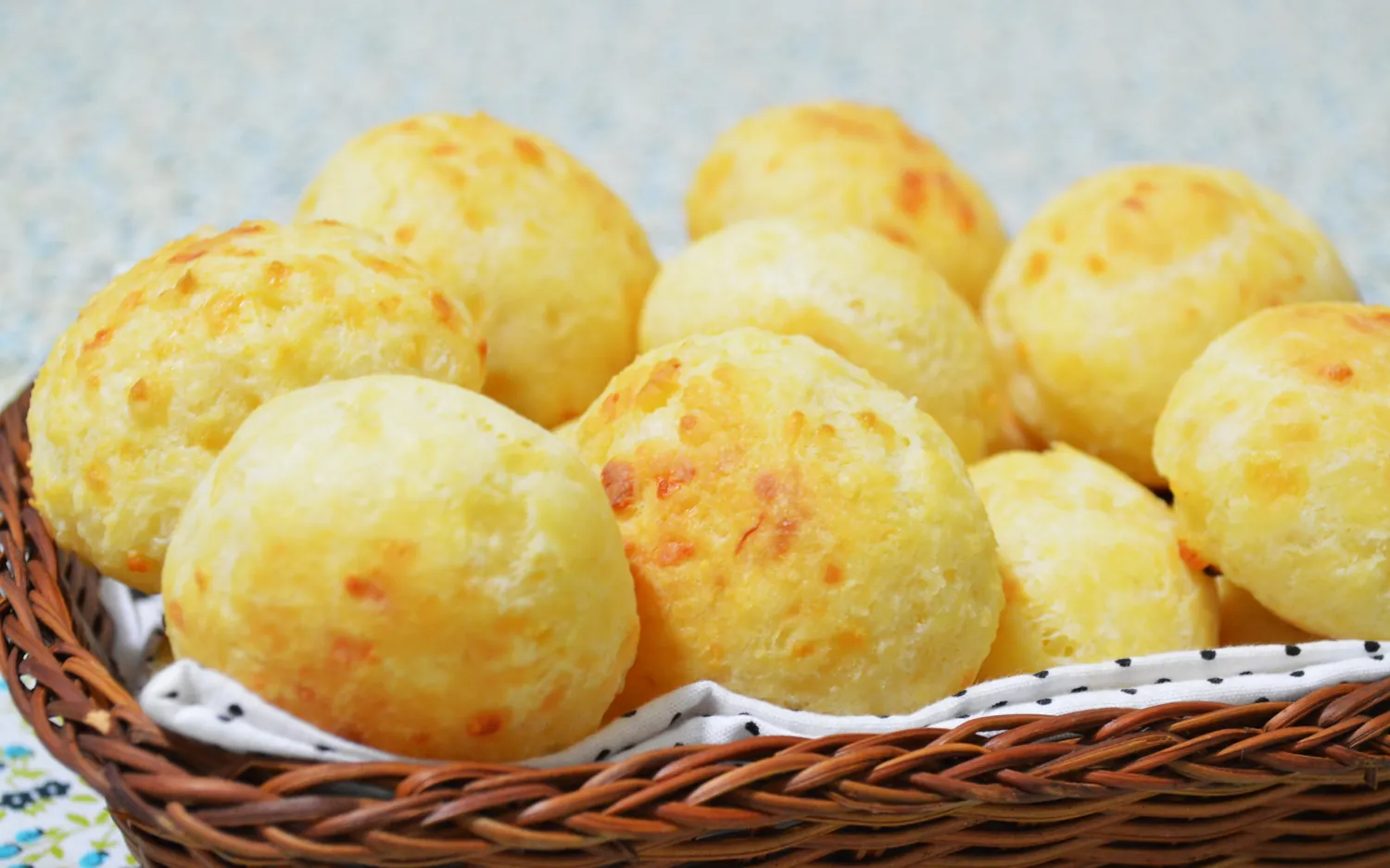
A basket of golden, round pão de queijo, Brazilian cheese bread rolls Brazil flag Brazil 45m
Snack & Tea •Minas Gerais Cheese Bread

Pão de Queijo

This pao de queijo recipe makes Brazil's famous cheese bread: small, golden rolls with a crisp shell and a soft, stretchy, chewy centre, made from tapioca starch, milk, oil, eggs and cheese. There is no wheat flour and no yeast — the rolls puff up on steam in a hot oven. One serving is 4 rolls, about 134 g.

Warm & Chewy Snack

Golden tapioca cheese rolls with a crisp shell and a soft, stretchy centre, baked in under half an hour.

Pairs Well With
Black coffee, fresh fruit, or a light soup
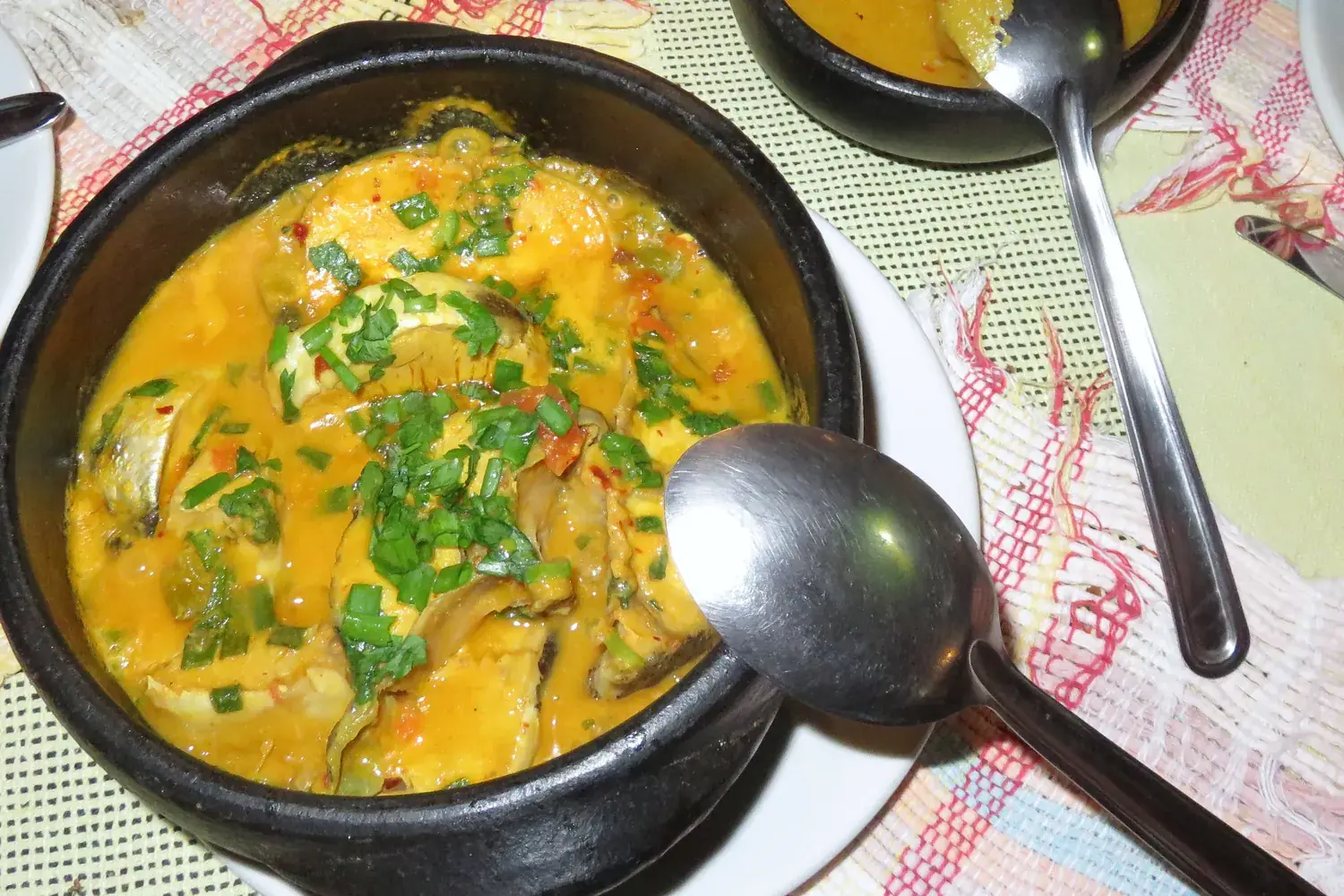
A black clay pot of moqueca baiana, fish chunks in a golden-orange coconut sauce with fresh herbs, beside rice and pirão Brazil flag Brazil 55m
Dinner •Bahian Fish Stew

Moqueca Baiana

This moqueca baiana recipe is Bahia's famous fish stew: thick fillets of white fish layered with onion, peppers and tomato, then simmered gently in coconut milk with dendê oil until the sauce turns golden-orange. The fish stays in whole, flaky pieces in a fragrant broth — a stew, not a purée. One serving is about 450 g.

Coastal & Aromatic

Firm white fish simmered in coconut milk and red palm oil with peppers and tomato, served hot in its clay pot.

Pairs Well With
Steamed white rice, pirão and farofa
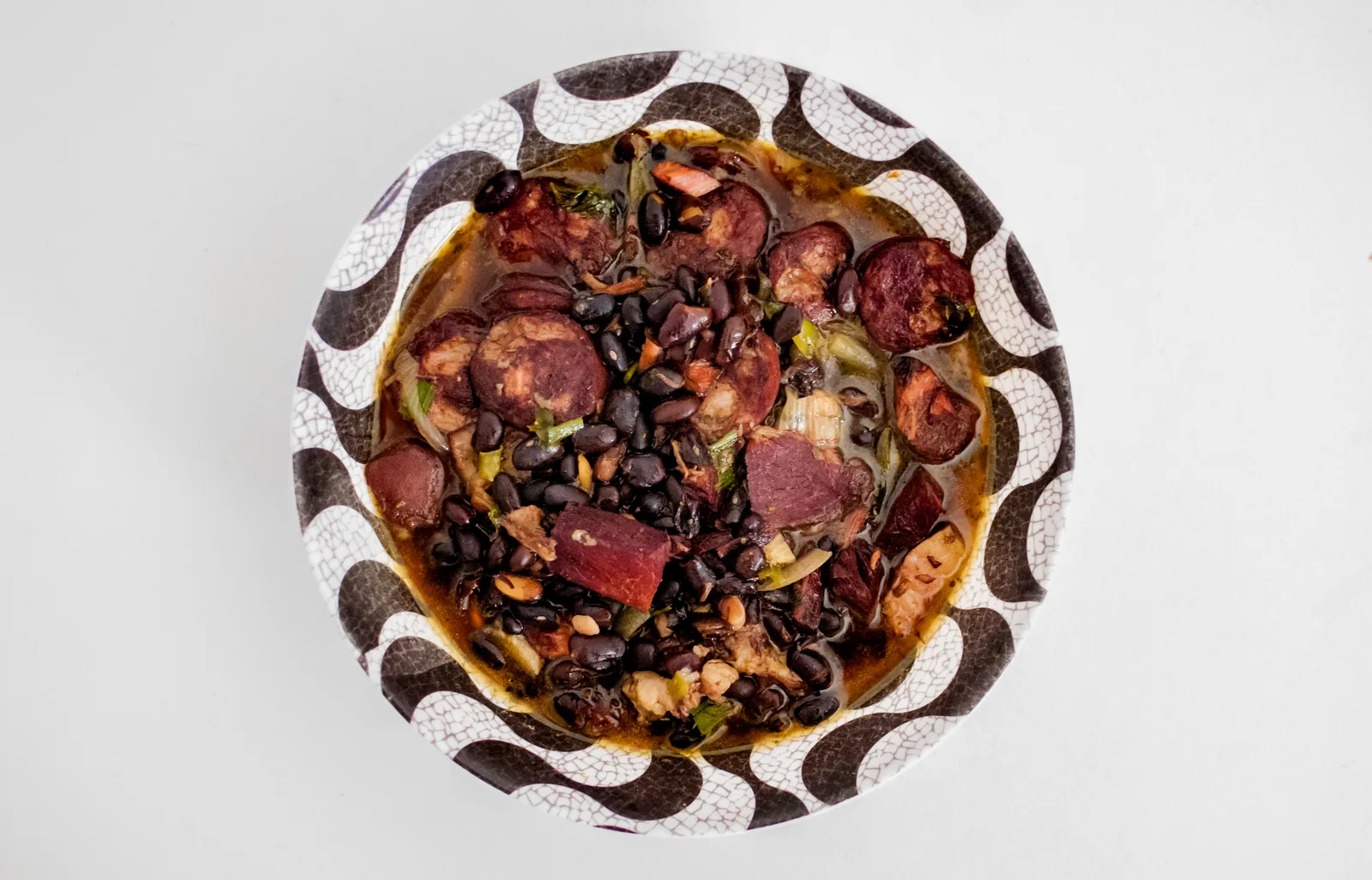
A bowl of Brazilian feijoada — black beans with rounds of sausage and pieces of pork Brazil flag Brazil 3h 30m
Dinner •Brazilian National Dish

Brazilian Feijoada

This Brazilian feijoada recipe is the real Saturday lunch: black beans simmered for hours with pork shoulder, smoky linguiça, bacon and beef until the broth turns thick and dark, then served with white rice, garlicky collard greens, orange slices and farofa. It is a slow, generous pot built for sharing. One serving is about 450 g.

Rich & Hearty

Brazil's national dish — black beans slow-cooked with pork, sausage and beef, served with rice, greens and orange.

Pairs Well With
Serve with white rice, sautéed collard greens, orange slices and farofa.

The Dinner Gazette

Never wonder what’s for dinner again

One email a week with easy dinner ideas from around the world — ingredients, steps and nutrition, tested in our kitchen first.

Delivered every Thursday morning. Unsubscribe anytime.