-
1
Mix the Coconut, Cheese and Condensed Milk
5 Mins • Hands-On
No heat
Put the desiccated coconut, sugar and grated cheese in a large bowl and stir them together so the cheese is evenly spread through the coconut. Add the sweetened condensed milk and the melted butter, and stir until everything is evenly wet — the mix will look thick and sticky, which is exactly right.
Mix the dry ingredients first so the cheese does not clump in one corner of the bowl — a clump of cheese makes one cake far too salty and the rest bland.
Done when: A thick, sticky, even batter with coconut and cheese spread all through it.
-
2
Add the Eggs
3 Mins • Hands-On
No heat
Beat the eggs lightly in their small bowl — just until the yolks and whites are combined — then pour them into the coconut mixture and stir until the batter is smooth and even. Do not whisk hard or beat in air; a few gentle strokes are enough.
Light beating is enough — the eggs are there to bind the cakes, not to make them rise, and too much air makes the tops crack and sink.
Done when: A smooth, even, spoonable batter with no streaks of egg.
-
3
Fill the Muffin Cups
5 Mins • Hands-On
No heat
Spoon the batter into the greased muffin cups, filling each one about three-quarters full. The batter does not rise much, so you can fill them generously, but leave a little room — the tops puff up and crisp as they bake.
Use two spoons — one to scoop, one to push the sticky batter off — or the batter will cling to the spoon and your cups will end up uneven.
Done when: Twelve cups filled three-quarters full, batter level and even.
-
4
Bake Until Golden and Set
25 Mins • Baking
180°C (350°F)
Bake at 180°C (350°F) for 20–25 minutes. The cakes are done when the tops are deep golden brown and crisp, the edges pull slightly away from the tin, and a skewer pushed into the centre comes out clean — the centres must be fully set, with no wet batter, so the eggs are cooked through.
Do not open the oven in the first 15 minutes — the cakes are setting, and a rush of cool air can make them sink. If the tops brown too fast, lay a loose sheet of foil over the tin for the last 5 minutes.
Done when: Deep golden, crisp tops; edges pulling from the tin; skewer comes out clean.
-
5
Cool in the Tin and Unmould
10 Mins • Cooling
No heat; cool 10 minutes in the tin
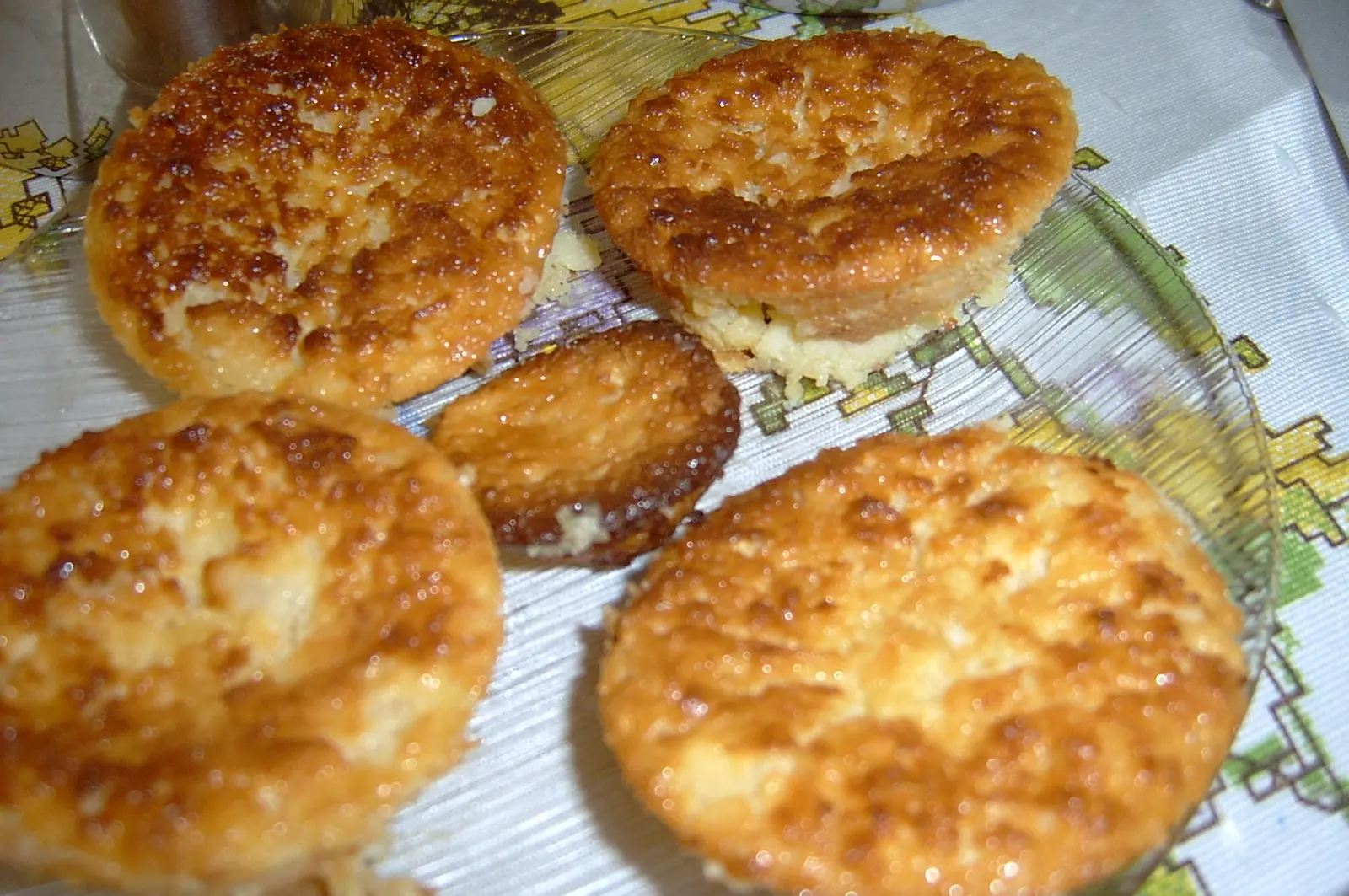
Leave the cakes in the tin for 10 minutes — they firm up as they cool and come out cleanly. Then run a thin knife around each one, lift them out gently, and move them to a wire rack. Serve warm or at room temperature, in paper cups or on a small plate, with strong coffee.
Cooling in the tin is what lets the sugary edges release — try to unmould them hot and they will tear. Ten minutes is enough; longer and they start to stick again as the sugar cools.
Done when: Cakes that hold their shape, crisp on top and soft inside, served warm or at room temperature.
auto_awesome Finishing Touches & Plating
Serve queijadinha warm or at room temperature, in its paper cup or turned out onto a small plate, with a strong cup of coffee alongside. They are at their best the day they are made — crisp on top, soft and chewy inside, with the coconut still fragrant.

 Brazil
1h 5m