Curated recipes from 193 countries  •  New seasonal Mediterranean issue out now

Overview

Sardinhas Assadas

Grilled Sardines, Sardinhas Assadas, Portuguese Grilled Sardines

This sardinhas assadas recipe grills whole sardines over charcoal with nothing but coarse salt, the way Lisbon does it in June. The skin blisters and crisps, the flesh stays moist, and the fish are laid on corn bread or served with boiled potatoes, grilled peppers and a simple salad. One serving is about 450 g.

Sardinhas assadas are the smell of a Lisbon summer. Every June, for the Santos Populares festivals of Santo Antonio, Sao Joao and Sao Pedro, whole neighbourhoods set up charcoal grills on the street and cook hundreds of sardines at a time, salted and nothing else, eaten standing up with bread and beer. The season runs from May to October, when the sardines are at their fattest, and the rule has never changed: coarse salt only, a blistering grill, and lemon squeezed at the table. The grilled pepper salad and boiled potatoes on the side are as much a part of the dish as the fish.

Pairs well with: Boiled potatoes, grilled peppers & vinho verde

Provenance

Portugal flag Portugal

Lisbon Santos Classic

Mediterranean & Italy

Time Dedication

55m

30m prep • 25m cook

Batch Yield

4 Servings

585 kcal per serving

1 serving ≈ 450 g

Technical Skill

Easy

Easy (One Grill)

Meal Timing & Digestive Fit

Breakfast

Not Advised

Lunch

Prime Metabolic Fit

Dinner

Ideal Hearty Main

Snack & Tea

Inappropriate

High Protein Occasions: Santos Populares (June), summer barbecues, Lisbon street festivals Cost: Low — about $3–4 per serving at home
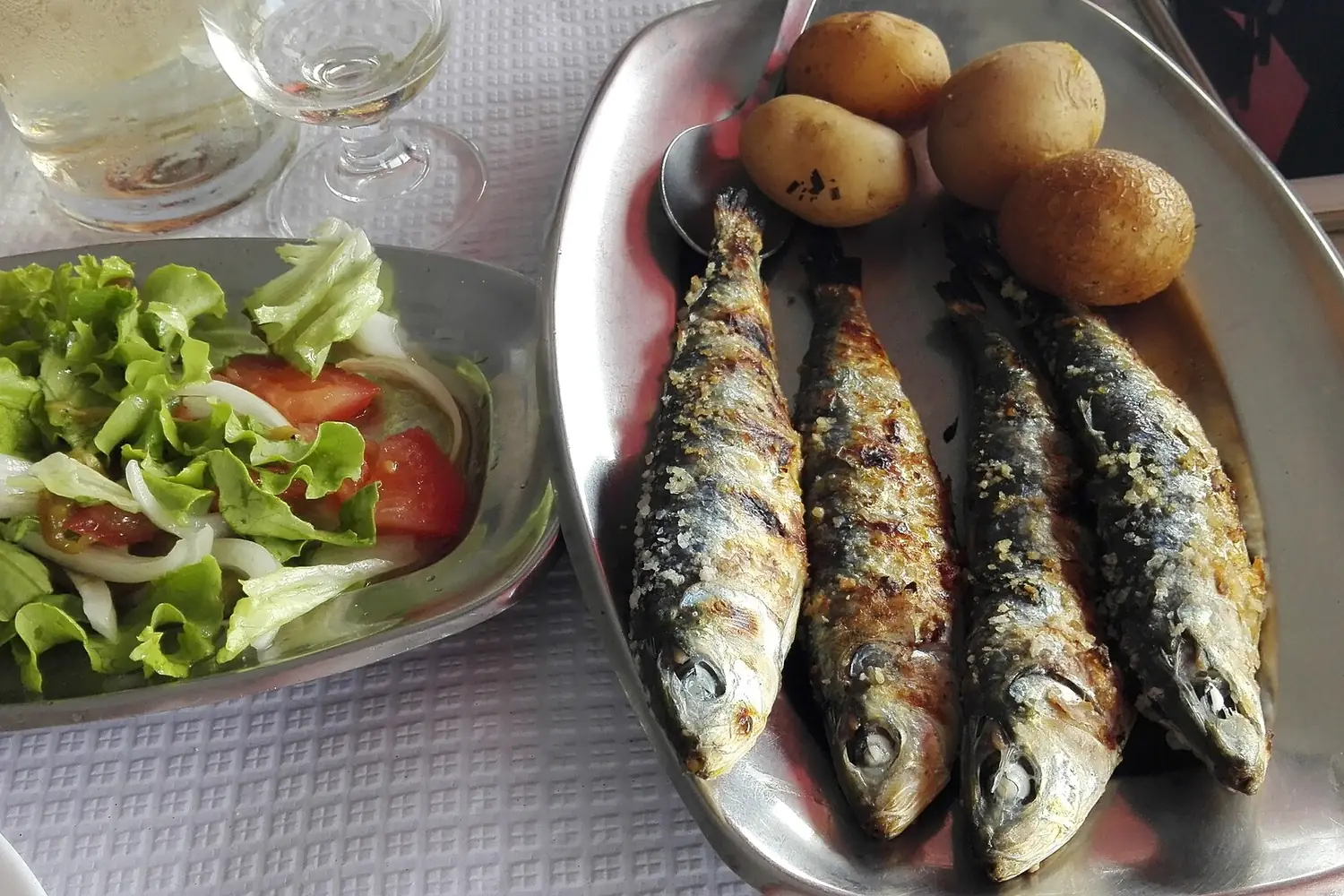
Four charcoal-grilled sardines on a metal platter with boiled potatoes, beside a lettuce and tomato salad

Lisbon Santos Classic

Photo: Duarte Briz, CC BY-SA 4.0, via Wikimedia Commons

The Heritage Formulary

Measured Ingredients

Estimated cost: Low — about $3–4 per serving at home (USD)

A home-grilled sardinhada: salt-only sardines over charcoal, with boiled potatoes and salad.

Execution Methodology & Culinary Technique

Step-by-Step Cooking Guide

Active 55m
P

Prep Stage: Salt the Sardines, Boil the Potatoes

30 Mins • Salt & Boil

Put the baby potatoes on to boil in salted water for about 20 minutes until tender. Meanwhile lay the cleaned sardines in a single layer, scatter the 8 g of coarse salt over both sides and leave for 30 minutes — the salt firms the skin and seasons the fish right through. Make the salad and grill the peppers while you wait.

Maestro Tip: Do not add anything else to the fish: in Portugal the rule is coarse salt only, no marinade, no lemon until the table.

  1. 1

    Salt the Sardines

    30 Mins Room temperature, about 22°C (72°F)

    Lay the 800 g of cleaned sardines in a single layer on a tray, scatter the 8 g of coarse sea salt over both sides and leave for 30 minutes. Do not add oil, garlic or lemon yet.

    Thirty minutes is the sweet spot: less and the skin tears on the grill, more and the fish gets too salty.

    Done when: The skin looks slightly firmed and the salt has mostly dissolved into the surface.

  2. 2

    Boil the Potatoes and Grill the Peppers

    20 Mins Boiling water, 100°C (212°F); grill at about 230°C (450°F)

    Boil the 600 g of baby potatoes in salted water for about 20 minutes until tender, then drain and keep warm. Set the 2 green peppers on the hot grill for about 8 minutes, turning once, until the skins blister, then peel, seed and slice them.

    Boil the potatoes in their skins — they hold together better and taste of more.

    Done when: The potatoes yield to a knife with no resistance; the pepper skins are blackened in patches and slip off.

  3. 3

    Heat the Grill

    5 Mins High heat, about 230°C (450°F)

    Build a hot charcoal fire, or heat a gas grill or grill pan to high heat, about 230°C (450°F). Oil the grill bars lightly with a little of the 30 g of olive oil so the skin does not stick.

    The grill must be properly hot before the fish go on, or the skin sticks and tears.

    Done when: A drop of water flicked on the bars hisses and vanishes at once.

  4. 4

    Grill the Sardines

    8 Mins High heat, about 230°C (450°F); fish to 63°C (145°F)

    Lay the sardines on the hot grill without crowding and cook for 3–4 minutes a side until the skin blisters and chars in spots and the flesh flakes easily. The eyes turn white when the fish is done — check the thickest fish reaches 63°C (145°F) inside.

    Turn each fish once, with tongs, and do not press it down — pressing squeezes the juices out.

    Done when: The skin is blistered and golden in patches, the eyes are white, and the flesh flakes from the bone.

  5. 5

    Make the Salad

    5 Mins Room temperature, about 22°C (72°F)

    Toss the 100 g of lettuce, 200 g of tomato wedges, 80 g of onion rings and the grilled pepper strips with the juice of 1 lemon, the remaining olive oil, the 10 g of parsley and the 1 g of black pepper.

    Dress the salad at the last minute so the lettuce stays crisp.

    Done when: The salad is glossy with oil and lemon, with bright, unwilted leaves.

  6. 6

    Serve on Bread or with Potatoes

    2 Mins Serve hot, about 65°C (150°F)

    Lay the grilled sardines on a platter with the boiled potatoes, or on thick slices of corn bread to catch the juices, with the salad on the side and lemon wedges for squeezing at the table.

    Serve at once, while the skin is still crisp.

    Done when: The sardines are hot and crisp-skinned, the potatoes are steaming, and the lemon is squeezed at the table, not before.

Finishing Touches & Plating

Serve the sardinhas assadas hot off the grill with boiled potatoes, grilled peppers and salad — and eat them with your fingers, the way the Santos festivals do.

Nutritional Physiology & Benefits

Nutrition

Energy

585

kcal / serving

Protein

46g

Complete AA

Carbs

34g

Complex

Fats

29g

Healthy

Per serving (4 servings · 1 serving ≈ 450 g)
Energy585 kcal
Protein46 g
Carbohydrates34 g
Fat29 g
Fibre5.2 g
Sugar4.9 g
Sodium951 mg
Per 100g
Energy130 kcal
Protein10.3 g
Carbohydrates7.6 g
Fat6.4 g
Fibre1.2 g
Sugar1.1 g
Sodium211 mg

Nutrition values are estimated — calculated from USDA FoodData Central values for the listed ingredients.

Vitamins & minerals: Vitamin B12 and vitamin D (sardines), vitamin C (peppers, lemon, salad), potassium (potatoes), calcium (sardine bones).

Serious Protein

About 46.3 g of protein per serving, mostly from the sardines themselves — one of the highest-protein lunches on the site.

Omega-3 and Vitamin D

Sardines are an oily fish, so they bring long-chain omega-3 fats, vitamin D and vitamin B12 that most white fish cannot match.

Whole Fish, Nothing Wasted

Eaten whole, sardines give calcium from their soft bones and need no filleting, no batter and almost no added fat.

Food Pairings

What to Eat With

To optimize nutrient absorption and elevate the sensory depth, pair with these authentic accompaniments:

Sides

Corn Bread (Broa de Milho)

A slice of dense corn bread under the sardines soaks up the juices and the fish oils — the traditional Lisbon serving, and the reason the fish are laid on bread at all.

Vegetables

Grilled Peppers

Sweet, smoky peppers against the salty, charred fish is the classic sardinhada contrast — soft, sweet and smoky next to crisp and salty.

Drinks

Vinho Verde

A light, slightly sparkling vinho verde cuts through the oily richness of the sardines and refreshes the palate.

Sparkling Water with Lemon

Cold sparkling water with lemon does the same job without alcohol, and the citrus echoes the lemon on the fish.

Complete menu

Sardinhas assadas with boiled potatoes, grilled pepper salad and corn bread, with vinho verde to drink.

Digestive Guardrails

What NOT to Combine

To prevent digestive distress, sluggishness, or palate clash, avoid pairing the dish with these elements:

Eating Sardines Every Day

Sardines are low in mercury for an oily fish, but they are rich and salty, and variety matters — once or twice a week is a sensible rhythm for most people. This is general nutrition information, not medical advice.

Grilling on a Cold or Dirty Grill

A cold grill sticks the skin and tears the fish, and old residue gives a bitter, acrid taste — heat the grill fully and brush the bars clean first. This is general cooking information, not medical advice.

General information only, not medical advice — consult a doctor for personal dietary decisions.

Who Should Eat It

Who Should Eat

  • General adultsA generous, high-protein lunch; three sardines with potatoes and salad is a full serving.
  • ChildrenChildren often prefer the filleted flesh without skin and bones — pick the meat off for small children and watch for fine bones.
  • ElderlySoft, flaky fish that is easy to eat; serve the flesh off the bone with potatoes.
  • Pregnant womenA good source of omega-3, vitamin D and calcium, but keep the salt in mind and ask your clinician about portions.
  • Breastfeeding womenRich in the nutrients breastfeeding needs, including omega-3 and B12; keep the portion to one serving.
  • AthletesAbout 46.3 g of protein per serving makes this an excellent post-training lunch.
  • Weight gainAdd extra potatoes or a second slice of corn bread to raise the energy of the meal.
  • Weight lossTwo sardines with plenty of salad and fewer potatoes keeps the meal lighter.

Health Conditions — Adjust or Avoid

Conditions

  • DiabetesAbout 34.2 g of carbohydrate per serving, mostly from the potatoes; choose more salad and fewer potatoes to lower it, and ask your clinician about portion size.
  • High blood pressureAbout 951 mg of sodium per serving, which is high; people watching salt should eat fewer of the salty skins — ask your clinician.
  • Kidney diseaseHigh in protein at about 46.3 g per serving; ask your clinician whether this portion suits your plan.
  • GoutSardines contain purines, so people with gout should keep portions modest and not eat them daily — ask your clinician.
  • Stomach issuesFresh grilled fish is gentle on the stomach, but the bones need care and very oily fish can feel heavy for some people.
  • Cardiovascular diseaseOily fish with omega-3 fats is generally a good choice here; the sodium is the part to watch.
  • Fatty liverA light, grilled fish lunch; keep the potatoes modest and the salad generous.
  • Food allergiesContains fish (sardines) — the main allergen in this recipe; the corn bread option adds gluten.
  • Special therapeutic dietsFollow your clinician's guidance on salt, protein and purine portions; this is general information, not medical advice.

If you have a medical condition, consult your doctor before changing your diet.

Storage & Use

Storage & Use

How to store
Cool the leftover fish quickly and store in a covered container; keep the salad and potatoes separate.
In the fridge
Cooked sardines 1–2 days in the fridge.
In the freezer
Not recommended — grilled sardines turn dry and strongly flavoured when frozen.
How to reheat
Reheat gently in a covered pan over low heat until hot through, about 74°C (165°F); the crisp skin will soften.
Freezing recommended
No — eat grilled sardines the same day for the best flavour and texture.
Signs it has spoiled
Strong ammonia or sour smell, slimy skin, or dull, sunken eyes on leftover whole fish.

More recipes to explore

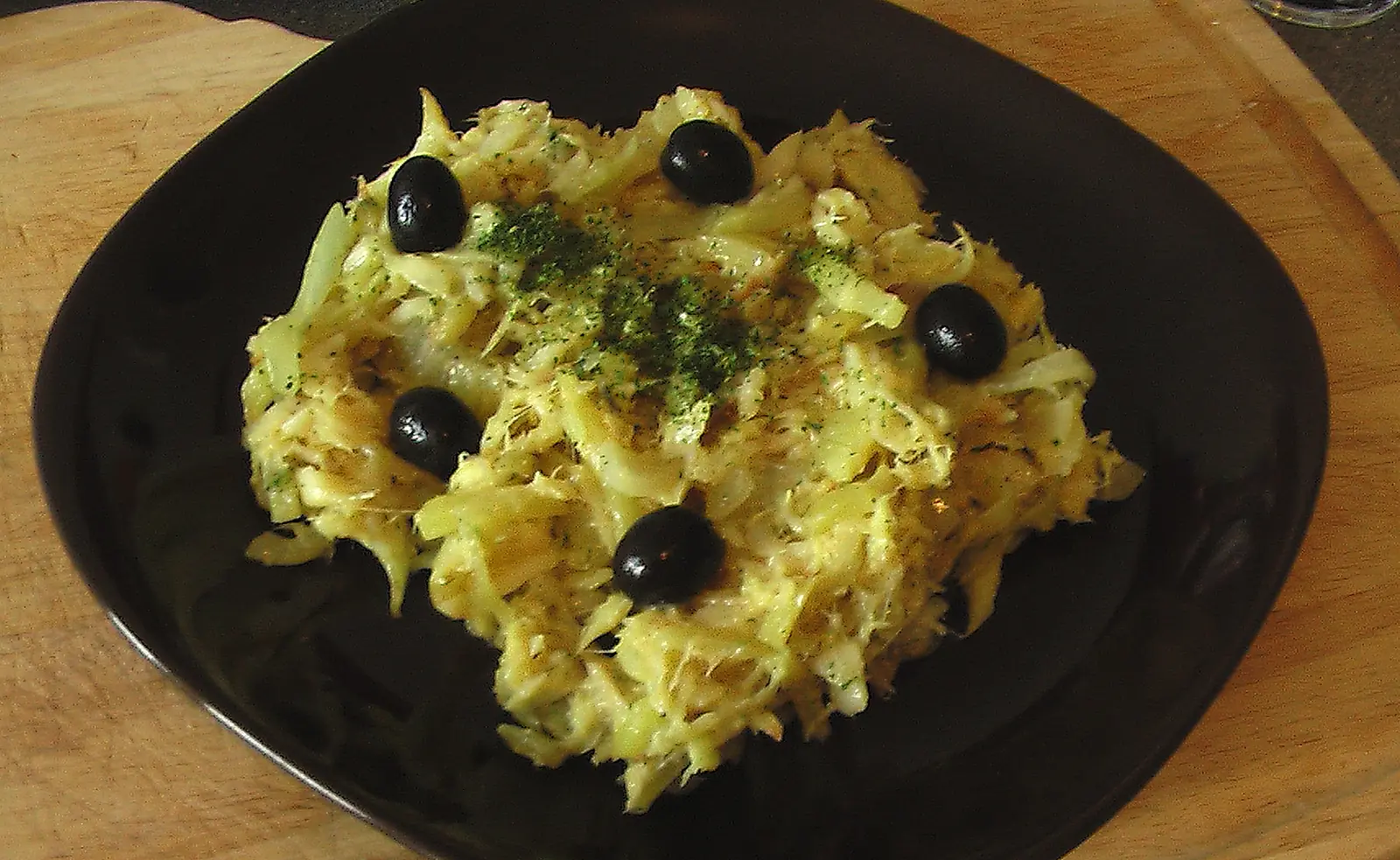
A plate of bacalhau à brás — shredded salt cod with egg and matchstick potatoes, black olives and parsley Portugal flag Portugal 50m
Dinner •Lisbon Tavern Classic

Bacalhau à Brás

Bacalhau à brás recipe: desalted shredded cod, golden matchstick potatoes and softly scrambled egg, finished with black olives and parsley. One serving is about 350 g.

Comfort & Protein

Shredded salt cod folded with egg and crisp matchstick potatoes — a filling, protein-rich Lisbon supper.

Pairs Well With
A simple green salad and a glass of vinho verde
High Protein
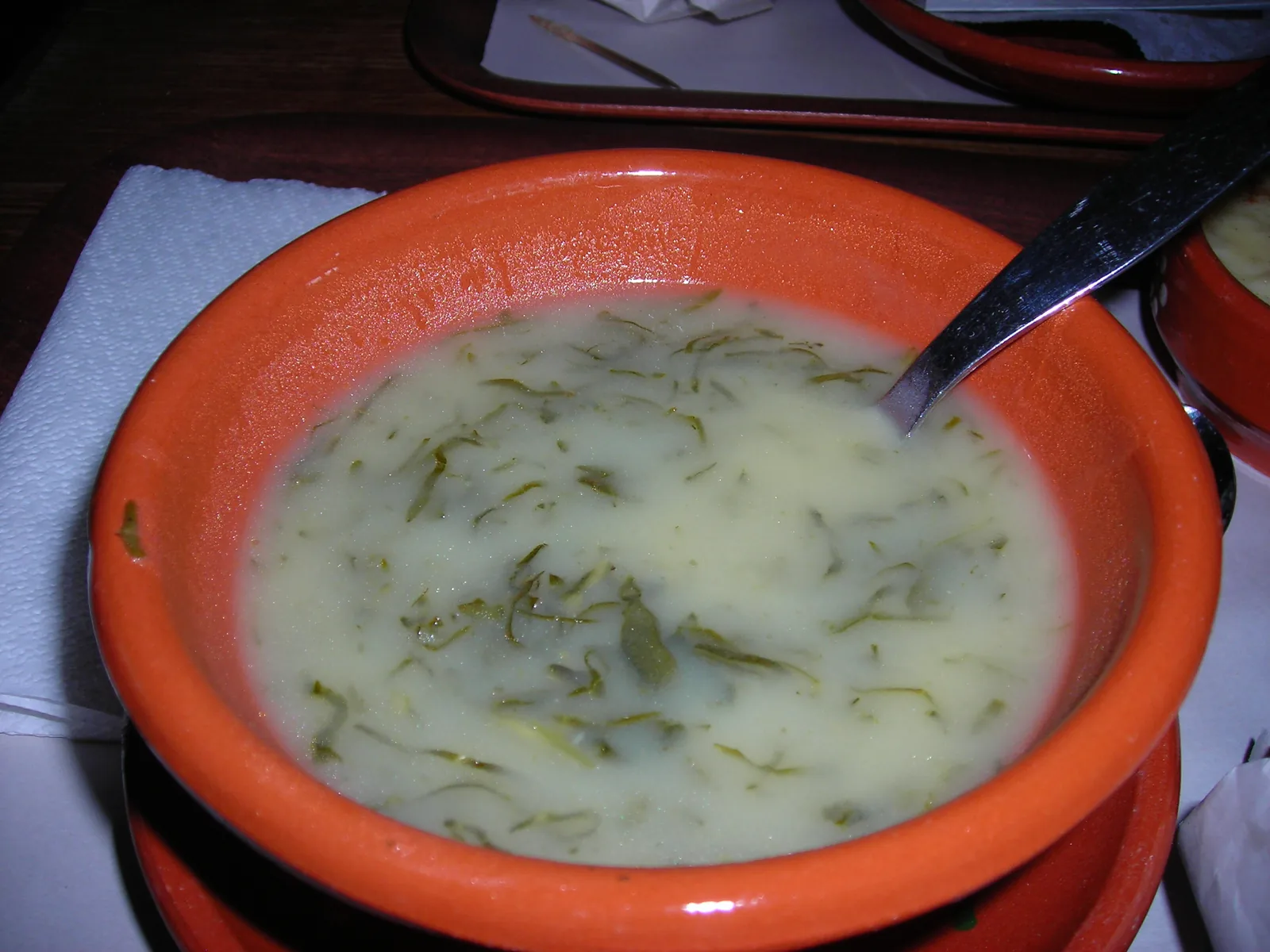
A terracotta bowl of caldo verde — pale potato soup with shredded green kale and a spoon Portugal flag Portugal 50m
Dinner •Minho National Soup

Caldo Verde

Caldo verde recipe: creamy potato soup blended smooth, with ribbons of kale and slices of chouriço, finished with a thread of olive oil. One serving is about 590 g.

Comfort & Warmth

Silky potato soup with finely shredded kale and smoky chouriço — Portugal's best-loved bowl.

Pairs Well With
Crusty broa bread and a glass of vinho verde
Soups & Broths
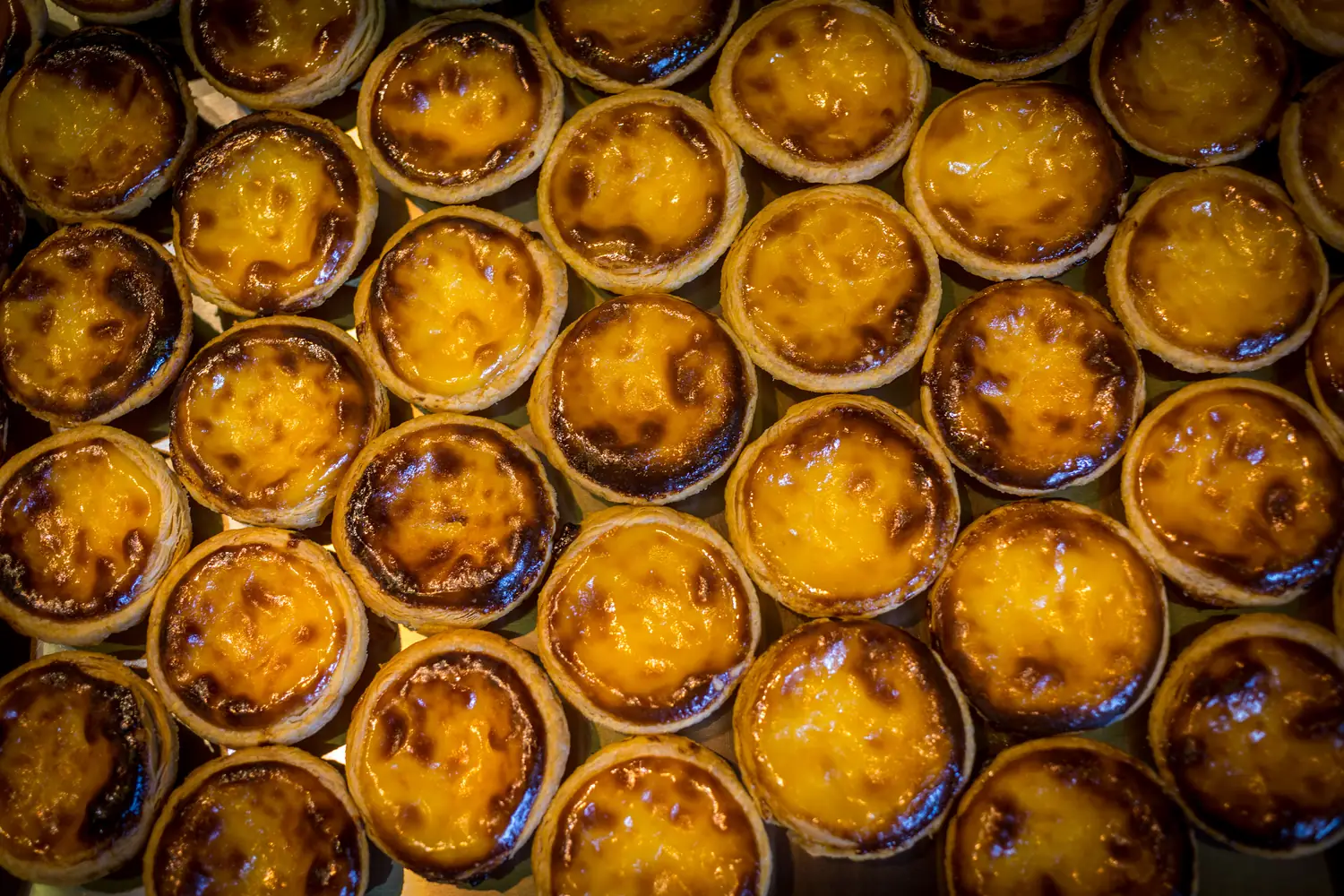
A tray of pastel de nata — golden custard tarts with blistered, caramelised tops in flaky pastry Portugal flag Portugal 50m
Snack & Tea •Belém Monastery Tart

Pastel de Nata

Pastel de nata recipe: shatteringly crisp puff pastry shells filled with warm, vanilla-cinnamon egg custard, baked until blistered on top. One serving is about 187 g (2 tarts).

Sweet Treat

Crisp, flaky pastry cups filled with cinnamon-scented egg custard, blistered in a very hot oven.

Pairs Well With
A small strong coffee (bica) and a dusting of cinnamon
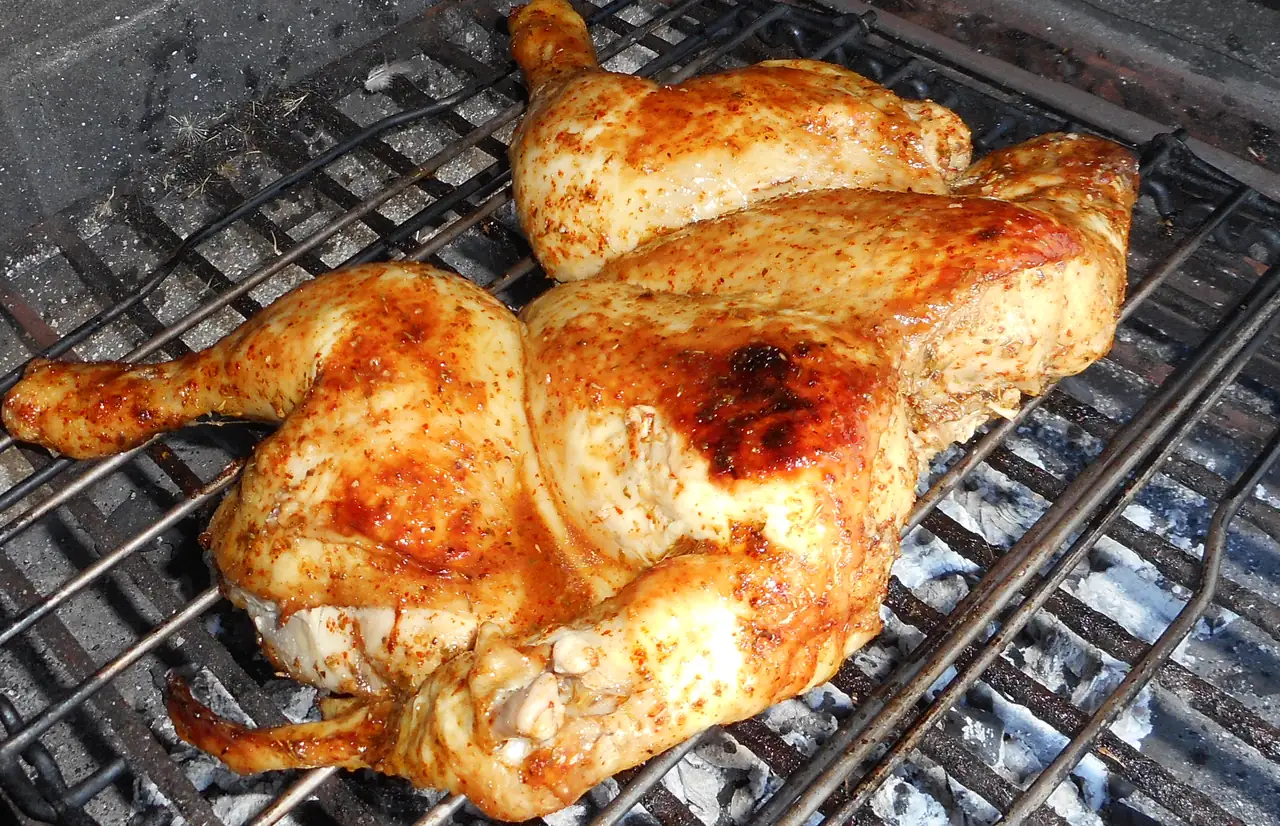
Butterflied piri piri chicken grilling over charcoal, golden-red with chilli spice Portugal flag Portugal 55m
Dinner •Algarve Heritage

Frango Piri Piri

Frango piri piri is Portugal's most famous chicken: a whole bird butterflied flat, rubbed with a fiery paste of piri piri chillies, garlic, lemon and paprika, then grilled over charcoal until the skin turns crisp and red-gold. This piri piri chicken recipe is the Algarve way — an overnight marinade, a hot grill, and a warm butter baste at the end. One serving is about 210 g.

Spicy Char-Grill

A butterflied chicken marinated in piri piri chilli, garlic and lemon, grilled over charcoal until the skin is crisp and reddened.

Pairs Well With
Chips, tomato-onion salad and a cold beer.
High Protein

The Dinner Gazette

Never wonder what’s for dinner again

One email a week with easy dinner ideas from around the world — ingredients, steps and nutrition, tested in our kitchen first.

Delivered every Thursday morning. Unsubscribe anytime.