Curated recipes from 193 countries  •  New seasonal Mediterranean issue out now

Overview

Singapore Hokkien Mee

Singapore Fried Hokkien Mee, Hokkien Char Mee, Rochor Mee

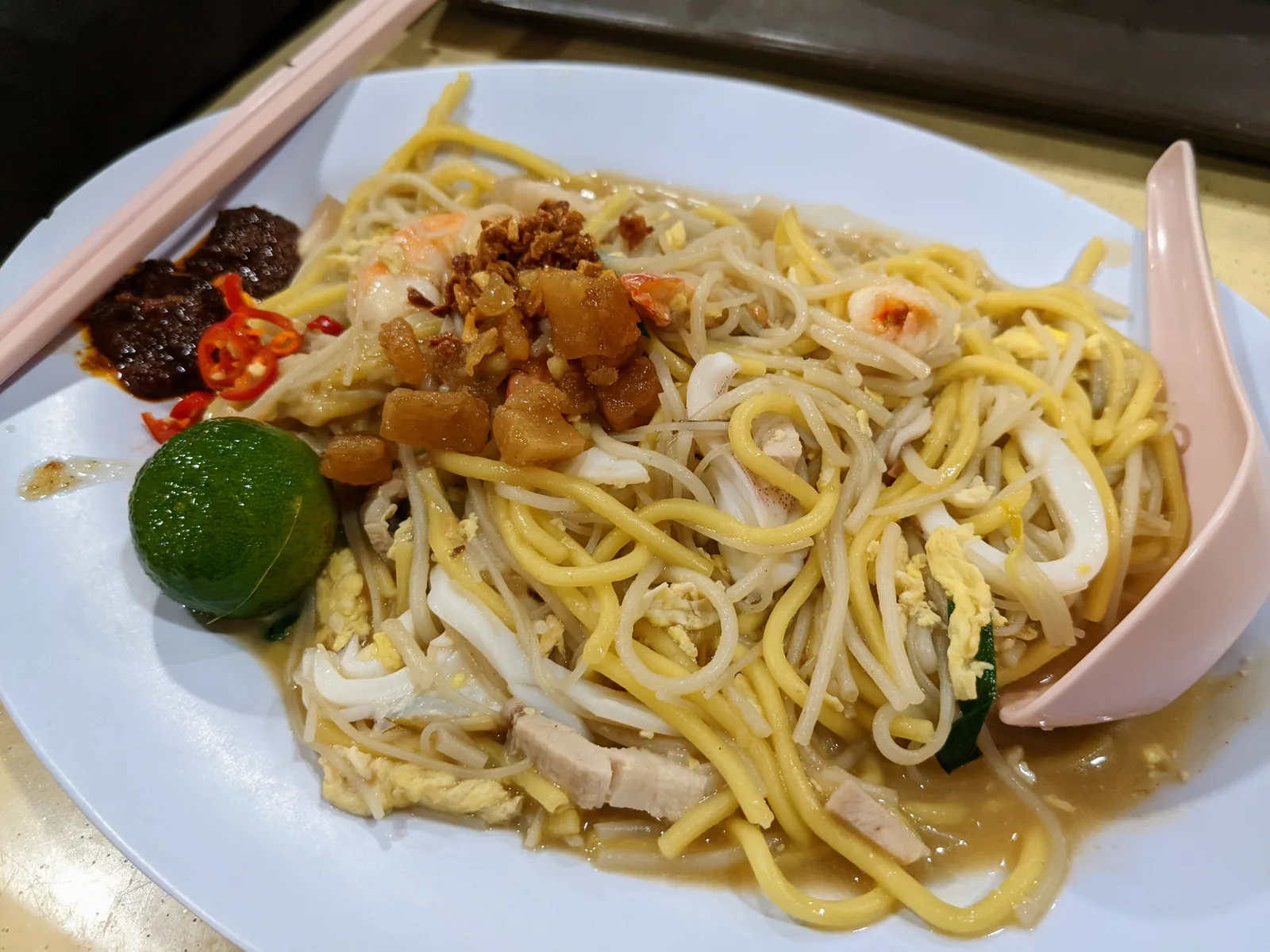
Singapore hokkien mee is yellow egg noodles and thin rice vermicelli stir-fried in a rich prawn stock until the noodles drink it up and turn glossy and wet, loaded with prawns, squid rings, pork belly and bean sprouts. It is finished with a squeeze of calamansi and a spoon of fiery sambal belacan on the side. One serving is about 510 g.

Hokkien mee came to Singapore with migrants from Fujian province in China, and the Singapore version took shape in the city's hawker stalls. One widely told account says that after the Second World War, Fujian sailors working in the noodle factories along Rochor Road would gather and fry surplus noodles over charcoal stoves with leftover stock and seafood — the dish was first known as Rochor mee. Whatever the exact origin, the Singapore style settled into its own form: yellow egg noodles and rice vermicelli braised in a rich prawn stock until wet and saucy, with prawns, squid, pork belly and bean sprouts, finished with sambal belacan and calamansi. It is a different dish from Kuala Lumpur's Hokkien mee, which uses thick noodles braised in dark soy sauce until almost dry.

Pairs well with: Serve with sambal belacan and a calamansi half on the side, and a cold glass of sugarcane juice or iced barley water.

Provenance

Singapore flag Singapore

Rochor Road Hawker Heritage

East & South Asia

Time Dedication

55m

25m prep • 30m cook

Batch Yield

4 Servings

713 kcal per serving

1 serving ≈ 510 g

Technical Skill

Intermediate

Medium (Wok-Fried)

Meal Timing & Digestive Fit

Breakfast

Not Advised

Lunch

Prime Metabolic Fit

Dinner

Ideal Hearty Main

Snack & Tea

Inappropriate

Pasta & NoodlesHigh Protein Occasions: Weekend hawker-style lunches at home, a crowd-pleasing noodle night with friends, a satisfying lunch after a morning at the market Cost: Medium — about $4–5 per serving at home
A plate of Singapore hokkien mee — pale yellow egg noodles and white rice vermicelli in a light prawn stock with prawns, squid rings and pork, topped with crisp lard and fried garlic, with sambal belacan and a whole calamansi lime on the side

Rochor Road Hawker Heritage

Photo: Jpatokal, CC BY-SA 4.0, via Wikimedia Commons

The Heritage Formulary

Measured Ingredients

Estimated cost: Medium — about $4–5 per serving at home (USD)

This recipe follows the Singapore hawker method: noodles braised wet in prawn stock, with sambal belacan and calamansi served on the side.

Execution Methodology & Culinary Technique

Step-by-Step Cooking Guide

Active 55m
P

Prep Stage: Stock, Noodles and Seafood Ready

25 Mins • No Cooking

Peel the prawns and set the heads and shells aside for the stock. Soak the rice vermicelli in warm water for 10 minutes and drain. Rinse and loosen the yellow noodles, slice the squid into rings, rinse the bean sprouts, cut the garlic chives, mince the garlic and beat the eggs. Measure out the fish sauce, soy sauce, sugar, salt and pepper so everything is within reach of the wok.

Maestro Tip: Singapore hokkien mee moves fast once the wok is hot — do all the prep first, because there is no time to peel prawns while the noodles are frying.

  1. 1

    Simmer the Prawn Stock

    25 Mins Gentle simmer, about 95°C (203°F)

    Put the prawn heads and shells in a pot with 1.2 litres of water and bring to a boil, skimming off any foam. Lower the heat, add the whole piece of pork belly, and simmer gently for 20 minutes until the stock turns a pale orange-pink and smells richly of prawn. Lift out the pork belly, cool it slightly and slice it thinly. Strain the stock through a fine sieve and keep about 900 ml — this prawn stock is what makes the Singapore version wet and savoury, not dark soy sauce.

    Press the prawn heads with the back of a ladle as they simmer to squeeze out every bit of flavour, then strain well so no shell shards reach the noodles.

    Done when: Stock is pale orange-pink, fragrant and slightly reduced; pork belly is cooked through and slices cleanly.

  2. 2

    Render the Lard

    8 Mins Medium heat, about 160°C (320°F)

    While the stock simmers, put the diced pork lard in a dry pan over medium heat and cook, stirring now and then, until the cubes shrink, turn golden and crisp and the fat has run out. Lift the crisp pieces out with a slotted spoon and drain on paper; keep the rendered fat in the pan for the wok. You should have about 15 g of crisp golden pieces for scattering over the finished plates.

    Do not rush the lard on high heat — it burns before it crisps. Medium heat and patience give golden pieces, not bitter ones.

    Done when: Lard pieces are deep golden, shrunken and crunchy; the fat in the pan is clear.

  3. 3

    Fry the Garlic and Egg

    3 Mins High heat, about 200°C (400°F)

    Heat the vegetable oil plus 1 tablespoon of the rendered lard in a large wok over high heat until it shimmers. Add the minced garlic and fry for 20 seconds until fragrant, then pour in the beaten eggs and let them set for a few seconds before breaking them into ribbons with the spatula.

    Let the egg sit untouched for a few seconds so it sets into soft sheets, then break it up — stirring at once gives tiny dry crumbs instead of silky ribbons.

    Done when: Egg is just set in soft golden ribbons; garlic is fragrant, not brown.

  4. 4

    Fry the Noodles and Seafood

    4 Mins High heat, about 200°C (400°F)

    Add the loosened yellow noodles, the drained vermicelli, the sliced pork belly and the squid to the wok. Toss hard for 2 minutes so the noodles pick up the egg and garlic, then add the prawns and toss for 1 more minute. The prawns and squid should be just turning opaque — they finish cooking in the stock in the next step.

    Keep the wok as hot as you can and toss constantly; a crowded, lukewarm wok steams the noodles instead of frying them.

    Done when: Prawns are pink at the edges, squid rings are just opaque, noodles are coated and glossy.

  5. 5

    Flood with Prawn Stock and Braise Wet

    6 Mins High heat, then a simmer at about 100°C (212°F)

    Pour in 500 ml of the hot prawn stock with the fish sauce, soy sauce, sugar and white pepper, and toss to coat. Cover the wok with a lid and let the noodles braise for 3 minutes, lifting the lid once to toss, so the noodles drink up the stock. This is the step that defines the Singapore dish: the noodles are braised in prawn stock until they are wet and saucy, never fried dry in dark soy sauce like the Kuala Lumpur version. Add splashes of the remaining stock if the pan dries out — the finished noodles should sit in a shallow pool of stock.

    Do not let the wok go dry. If the noodles start to stick, add stock, not oil — the stock is the flavour.

    Done when: Noodles are tender and glossy, sitting in a shallow pool of prawn stock; prawns are fully pink and curled, squid is tender.

  6. 6

    Fold in Sprouts and Chives, Rest and Serve

    3 Mins Off the heat, then serve at about 70°C (158°F)

    Uncover, scatter in the bean sprouts and garlic chives, and toss for 1 minute until the sprouts are just wilted but still crisp. Taste and add the salt if the stock needs it. Take the wok off the heat, cover and rest for 1 minute so the noodles absorb the last of the stock. Divide between 4 plates, scatter over the crisp lard pieces and fried shallots, and serve at once with a halved calamansi and a spoon of sambal belacan on the side of each plate.

    Squeeze the calamansi over the noodles and stir in a little sambal at the table — the sour heat against the rich prawn stock is the whole point of the dish.

    Done when: Sprouts are bright and crisp, chives are wilted, noodles are wet and steaming, seafood is cooked through (prawns to 63°C / 145°F).

Finishing Touches & Plating

Serve the noodles wet and steaming, with the calamansi and sambal belacan on the side so each person seasons their own plate. Eat it at once — the noodles keep drinking up the stock as they sit.

Nutritional Physiology & Benefits

Nutrition

Energy

713

kcal / serving

Protein

38g

Complete AA

Carbs

58g

Complex

Fats

36g

Healthy

Per serving (4 servings · 1 serving ≈ 510 g)
Energy713 kcal
Protein38 g
Carbohydrates58 g
Fat36 g
Fibre2.9 g
Sugar2.1 g
Sodium1261 mg
Per 100g
Energy140 kcal
Protein7.5 g
Carbohydrates11.4 g
Fat7 g
Fibre0.6 g
Sugar0.4 g
Sodium247 mg

Nutrition values are estimated — calculated from USDA FoodData Central values for the listed ingredients.

Vitamins & minerals: Provides vitamin B12 and selenium from the prawns and squid, iron and zinc from the pork belly, vitamin C from the bean sprouts and calamansi, and vitamin A from the egg.

High in Protein

One serving gives about 38 g of protein from the prawns, squid, pork belly and egg, which helps keep you full well into the afternoon.

Seafood Minerals

Prawns and squid supply selenium, iodine and vitamin B12, nutrients that support normal thyroid function and red blood cell formation.

Fresh Crunch and Vitamin C

Bean sprouts and calamansi add vitamin C and a fresh crunch that balances the rich, savoury noodles without adding many calories.

Food Pairings

What to Eat With

To optimize nutrient absorption and elevate the sensory depth, pair with these authentic accompaniments:

Sauces

Sambal Belacan on the Side

The fiery shrimp-paste sambal is served on the side, not cooked in, so each person stirs in as much heat as they like — the salty-spicy hit cuts through the rich prawn stock.

More Pairings

Calamansi, Squeezed at the Table

A squeeze of calamansi lifts the whole plate: its sharp citrus sourness brightens the savoury stock and balances the fatty pork belly.

Drinks

Sugarcane Juice or Iced Barley Water

A cold, lightly sweet hawker drink cools the palate between bites of sambal-hot noodles and matches how the dish is eaten at a Singapore hawker centre.

Sides

A Small Plate of Ngoh Hiang

Crisp five-spice pork rolls add a crunchy, savoury contrast to the soft, wet noodles, and they share the same hawker-centre table.

Vegetables

Cucumber and Pineapple Pickle

A sharp, vinegary pickle gives a cold, crunchy counterpoint to the hot, rich noodles and resets the palate between mouthfuls.

Complete menu

Serve the hokkien mee as the main lunch plate with sambal belacan and calamansi on the side, a small plate of ngoh hiang to share, and cold sugarcane juice or iced barley water to drink.

Digestive Guardrails

What NOT to Combine

To prevent digestive distress, sluggishness, or palate clash, avoid pairing the dish with these elements:

Letting the Noodles Sit Before Eating

The noodles keep absorbing the stock as they stand, so a plate left for 20 minutes turns dry and claggy instead of wet and saucy. Serve and eat at once. This is general cooking guidance, not medical advice.

Reheating Leftover Prawns and Squid Twice

Seafood spoils fast and reheating it more than once raises the risk of food poisoning, so only reheat leftovers once, to 74°C (165°F) throughout, and throw away anything that smells off. This is general food-safety guidance, not medical advice.

Eating It with a Very Salty Side

The noodles are already salty from the fish sauce, soy sauce and sambal, so pairing them with another salty dish such as salted fish or extra soy sauce can push sodium very high in one meal. This is general nutrition guidance, not medical advice.

General information only, not medical advice — consult a doctor for personal dietary decisions.

Who Should Eat It

Who Should Eat

  • General adultsA hearty hawker lunch — rich, savoury and filling, best as an occasional treat rather than an everyday meal because of the sodium and fat.
  • ChildrenChildren usually love the noodles and prawns; serve the sambal on the side and keep it away from young children, and cut the squid rings smaller.
  • ElderlySoft noodles and tender seafood are easy to chew, but the dish is salty and the pork lard is high in fat, so a smaller portion suits most older diners.
  • Pregnant womenThe prawns and squid are fully cooked, which is the safe way to eat seafood in pregnancy, but keep the portion moderate and skip any raw garnish. Ask your clinician about seafood portions.
  • Breastfeeding womenA protein-rich, satisfying meal; the chilli and sambal can pass flavour into breast milk, so keep the sambal light if your baby is fussy after spicy food.
  • AthletesAbout 38 g of protein and 58 g of carbohydrate per serving make it a solid post-training lunch, though the sodium is high and the fat slows digestion a little.
  • Weight gainAt about 713 kcal with plenty of protein and carbohydrate, one full serving is a practical way to add energy to the day.
  • Weight lossThe portion is large and energy-dense, so take a half serving with extra bean sprouts and cucumber, skip the crisp lard, and go easy on the sambal.

Health Conditions — Adjust or Avoid

Conditions

  • DiabetesTwo kinds of noodles make this a high-carbohydrate plate (about 58 g per serving), so take a smaller portion and add extra bean sprouts and cucumber to slow the rise in blood sugar. Ask your clinician about portion size.
  • High blood pressureOne serving carries about 1,336 mg of sodium from the fish sauce, soy sauce and sambal, so keep the portion small, skip extra soy sauce at the table and go light on the sambal. Ask your clinician about sodium limits.
  • Kidney diseaseThe dish is high in both sodium and protein, which many kidney diets limit, so this is a dish to discuss with your clinician or dietitian before eating it.
  • GoutPrawns, squid and pork belly are all rich in purines, so people prone to gout should eat this only occasionally and in a small portion. Ask your clinician if you are unsure.
  • Stomach issuesThe sambal, white pepper and lard can irritate a sensitive stomach; eat the noodles plain with the calamansi and skip the sambal if you are prone to heartburn. Ask your clinician if symptoms persist.
  • Cardiovascular diseasePork belly and crisp lard make this high in saturated fat, so treat it as an occasional meal and ask your clinician whether the fat and sodium fit your diet.
  • Fatty liverThe pork belly and lard add a lot of saturated fat, so a smaller portion without the crisp lard pieces is the safer choice. Ask your clinician about fat intake.
  • Food allergiesContains shellfish (prawns), mollusc (squid), egg, wheat and gluten (egg noodles and soy sauce), fish (fish sauce) and pork. The sambal contains shrimp paste, so shellfish-allergic diners must avoid it entirely. If you have any of these allergies, do not eat this dish.
  • Special therapeutic dietsThe dish is not suitable for low-sodium, low-purine or low-fat therapeutic diets as written; a clinician or dietitian can advise on a modified version. Ask your clinician before adapting it.

If you have a medical condition, consult your doctor before changing your diet.

Storage & Use

Storage & Use

How to store
Cool the noodles quickly and store in a sealed container in the fridge; keep the sambal, calamansi and crisp lard separate so they stay fresh.
In the fridge
Cooked noodles with seafood keep 1 day in the fridge at 4°C (39°F) or below — no longer, because the prawns and squid spoil fast.
In the freezer
Do not freeze the finished noodles; the noodles turn mushy and the seafood becomes rubbery. The prawn stock alone freezes well for up to 3 months.
How to reheat
Reheat in a wok with a splash of water or stock over medium heat until steaming hot throughout, to 74°C (165°F). Reheat only once.
Freezing recommended
No — the finished dish does not freeze well; only the stock freezes.
Signs it has spoiled
Sour or ammonia smell from the prawns, slimy noodles, squid that smells strongly fishy, or any mould — throw the whole portion away.

More recipes to explore

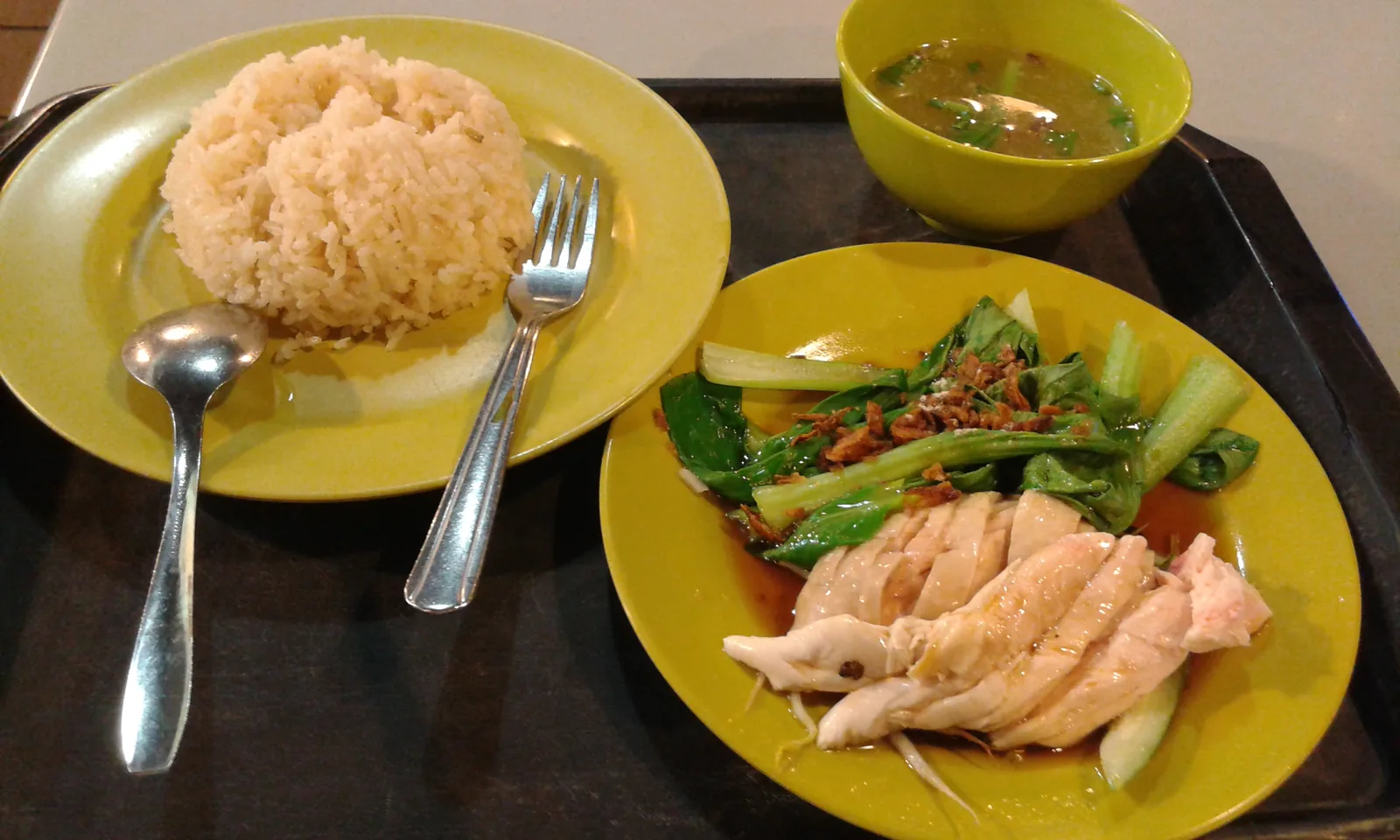
A hawker-centre tray of Hainanese chicken rice with sliced poached chicken, a mound of fragrant rice, greens and a bowl of clear soup Singapore flag Singapore 1h 30m
Dinner •Singaporean Heritage

Hainanese Chicken Rice

This hainanese chicken rice recipe poaches a whole chicken at a bare simmer, then cooks jasmine rice in the fragrant stock with chicken fat, ginger and pandan. It is served with fresh chilli sauce, ginger-scallion sauce and dark soy, plus cucumber and a bowl of the poaching broth. One serving is about 660 g.

Nourishing & Satisfying

Silky poached chicken with fragrant stock-cooked rice, fresh sauces and cucumber — a complete one-plate dinner.

Pairs Well With
Cucumber, a bowl of the poaching broth, and iced lime tea
High Protein
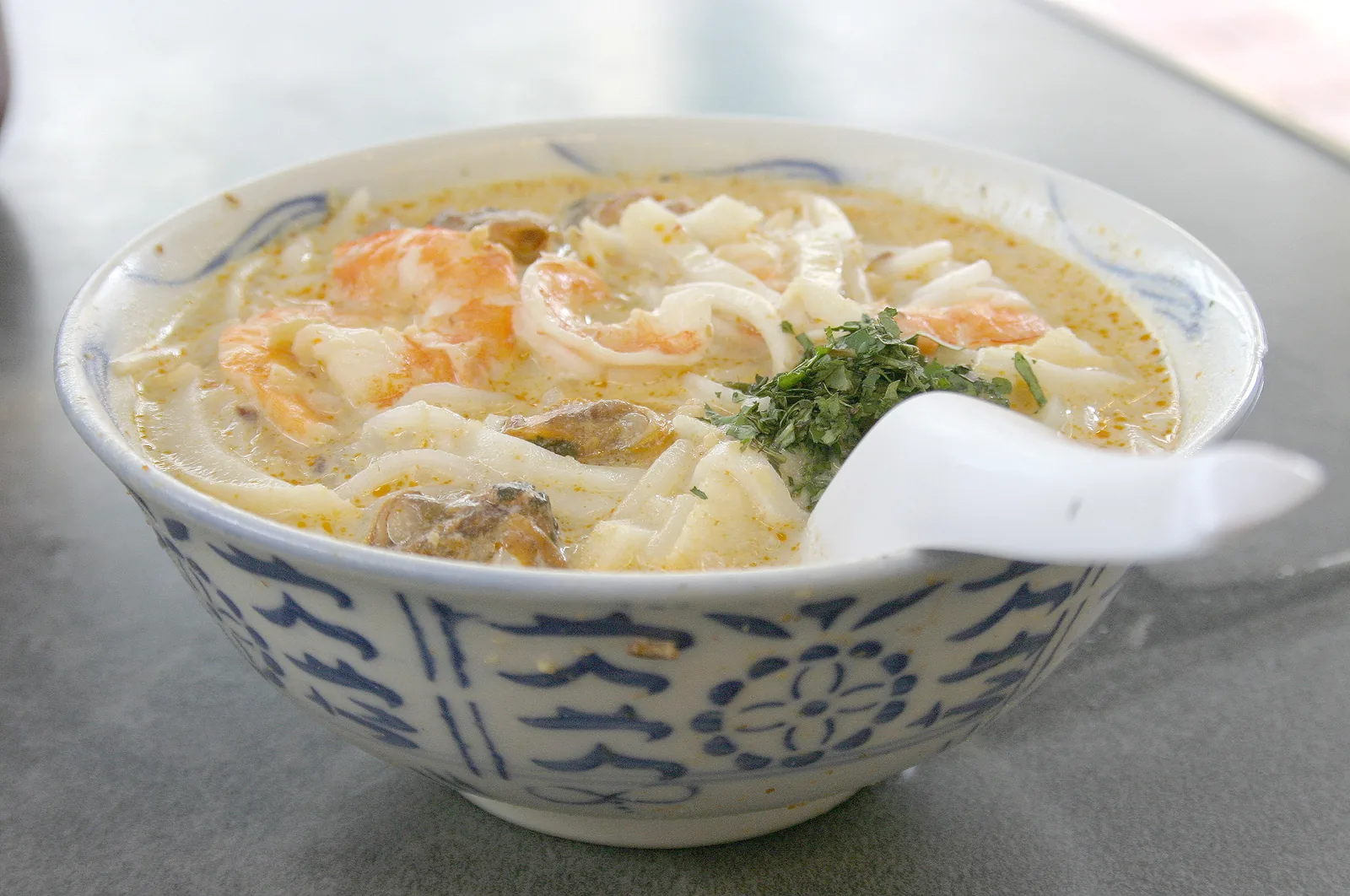
A bowl of Katong laksa with short-cut rice noodles in a creamy coconut broth, topped with prawns, cockles and chopped laksa leaf, with a spoon Singapore flag Singapore 1h
Lunch •Katong Laksa Heritage

Singapore Laksa

This singapore laksa recipe makes Katong-style laksa: thick rice noodles cut short so the bowl is eaten with a spoon, in a rich coconut broth thickened with ground dried shrimp, with prawns, cockles and fish cake. One serving is about 620 g.

Comfort & Warmth

A rich coconut laksa broth with short-cut noodles, prawns and cockles — a warming, spoon-only bowl.

Pairs Well With
Otah, cucumber salad and iced lime tea
Soups & Broths • Pasta & Noodles
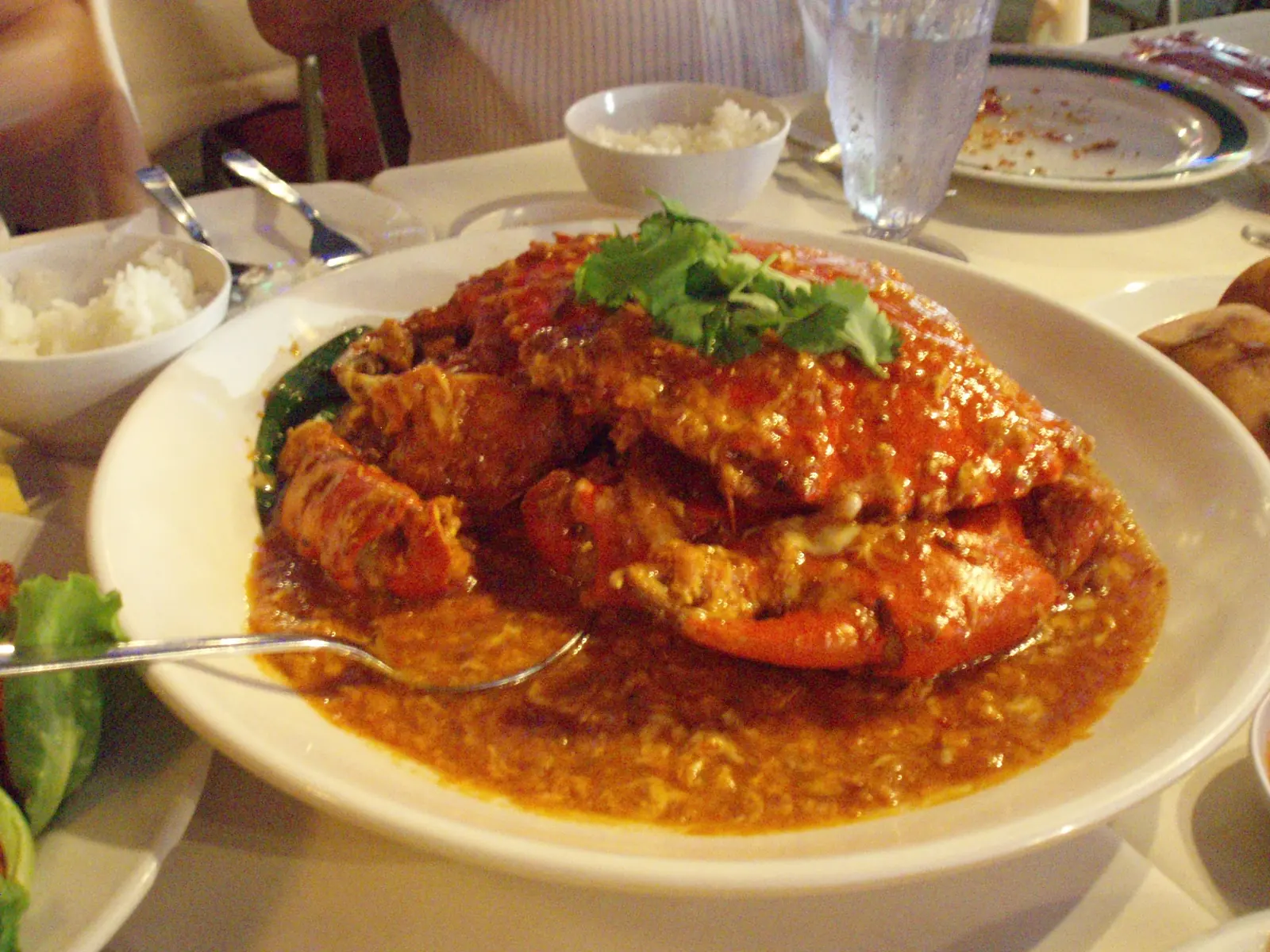
A whole chilli crab in a glossy red-orange tomato-chilli sauce with egg ribbons and coriander, served with mantou buns Singapore flag Singapore 55m
Dinner •Singaporean Heritage

Chilli Crab

This chilli crab recipe stir-fries mud crab in a sweet-spicy tomato-chilli sauce, finished with beaten egg ribbons, and serves it with steamed and fried mantou buns for mopping up the sauce. One serving is about 420 g.

Celebration & Sharing

Whole mud crab in a sweet-spicy tomato-chilli sauce with egg ribbons — a hands-on feast built for sharing.

Pairs Well With
Mantou buns, steamed rice and iced lime tea
High Protein
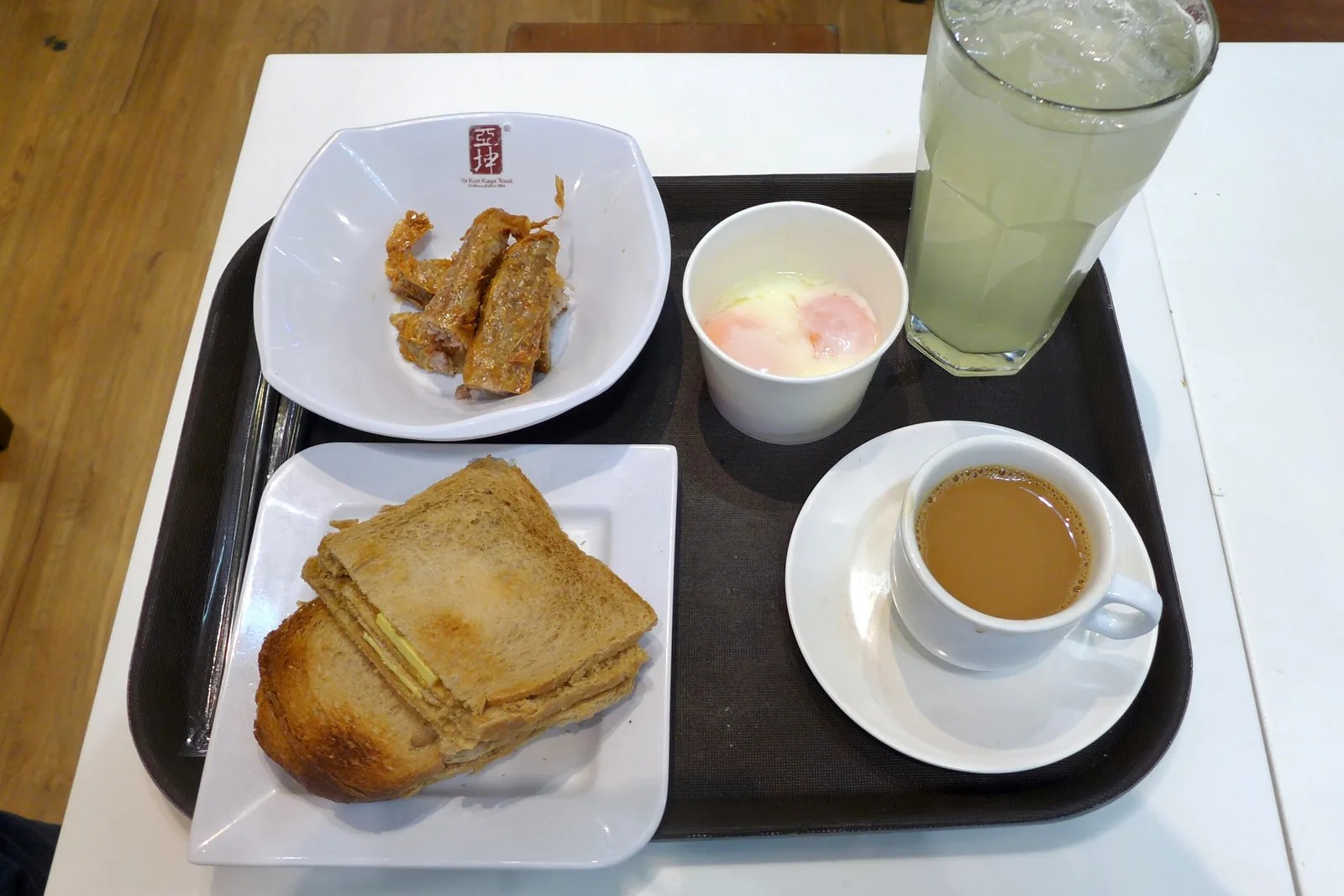
A Ya Kun kaya toast breakfast set on a tray: kaya and butter toast on a white plate, a cup of soft-boiled eggs, a cup of kopi, with ngo hiang and a glass of iced lemon tea beside them Singapore flag Singapore 15m
Breakfast •Kopitiam Breakfast Heritage

Singapore Kaya Toast

This singapore kaya toast recipe makes the classic kopitiam breakfast set: thin white bread toasted until crisp, spread thick with pandan-scented kaya (coconut-egg jam) and a cold slab of salted butter, served with two soft-boiled eggs cracked into a bowl with dark soy sauce and white pepper, and a cup of kopi sweetened with condensed milk. One serving is about 381 g.

Quick & Comforting

Crisp charcoal-style toast with sweet coconut-egg kaya and cold butter, served with soft-boiled eggs and kopi — a light, warming start to the day.

Pairs Well With
Soft-boiled eggs with dark soy sauce and white pepper, and hot kopi
Quick Prep (<30m)

The Dinner Gazette

Never wonder what’s for dinner again

One email a week with easy dinner ideas from around the world — ingredients, steps and nutrition, tested in our kitchen first.

Delivered every Thursday morning. Unsubscribe anytime.