
Curated recipes from 193 countries  •  New seasonal Mediterranean issue out now

Overview

Tiradito

Tiradito de Pescado, Peruvian Raw Fish in Aji Sauce

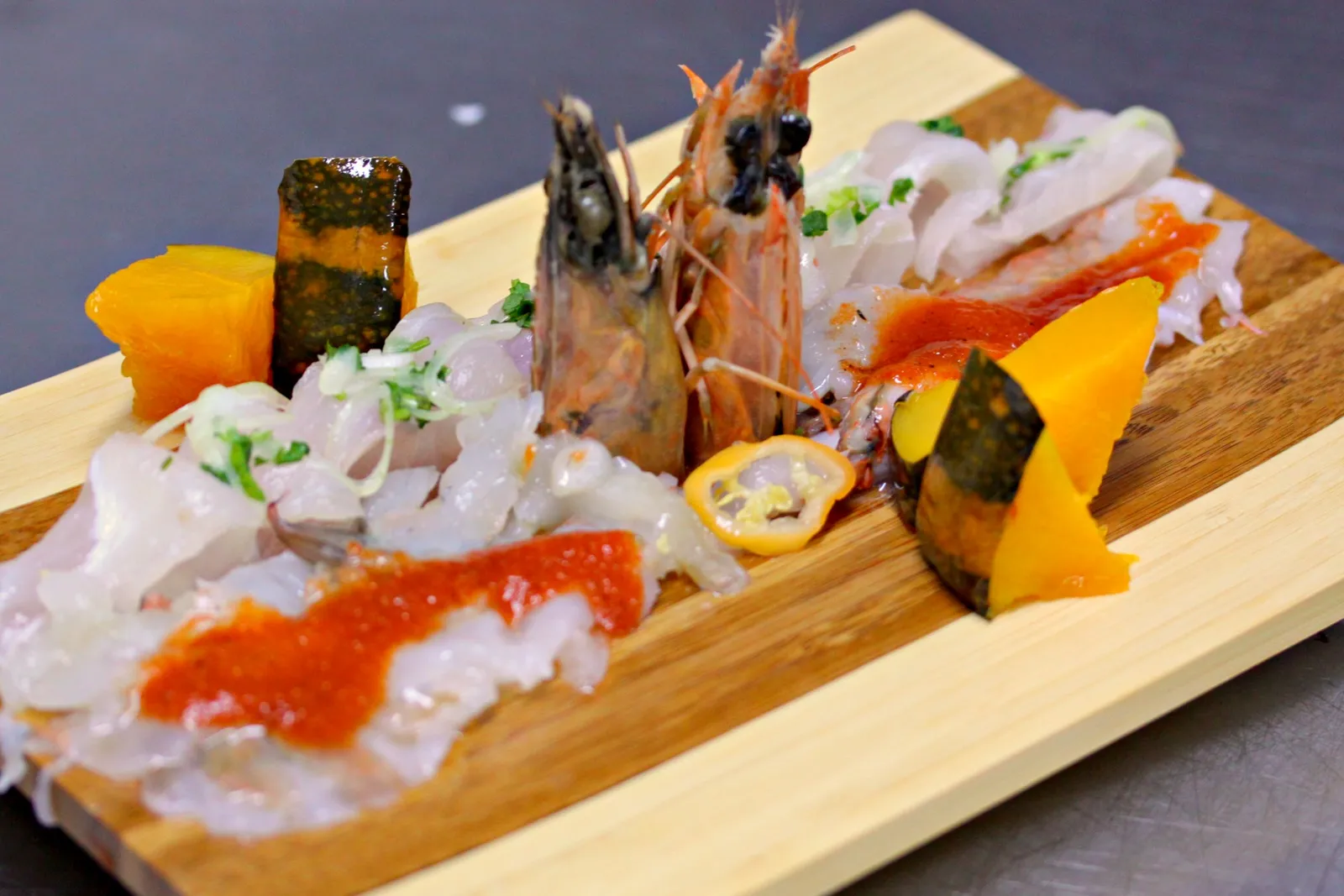
This tiradito recipe lays paper-thin slices of very fresh white fish on a cold plate and pours a fiery aji amarillo sauce over them just before serving. One serving is about 172 g. Unlike Peruvian ceviche, the fish is never marinated — there is no onion in a cure and no lime bath — and unlike aguachile, the sauce is poured over sliced fish rather than curing shrimp in a blended chile water.

Tiradito is Peru's Nikkei-influenced answer to sashimi: Japanese immigrants in Lima began slicing the day's catch thin and dressing it with Peruvian aji chillies instead of soy and wasabi. Unlike ceviche, where cubed fish cures in lime juice with onion, tiradito is sliced thin and the sauce is poured over at serving, so the fish stays essentially raw. The classic sauce is aji amarillo with lime, garlic and ginger; the Nikkei version at restaurants like Maido adds soy and sesame notes.

Pairs well with: Ice-cold beer or a pisco sour, with boiled sweet potato and corn on the side

Provenance

Peru flag Peru

Peruvian Coastal Classic

Latin America & Caribbean

Time Dedication

25m

25m prep • 0m cook

Batch Yield

4 Servings

170 kcal per serving

1 serving ≈ 172 g

Technical Skill

Intermediate

Medium (Raw Fish & Knife Work)

Meal Timing & Digestive Fit

Breakfast

Not Advised

Lunch

Prime Metabolic Fit

Dinner

Ideal Hearty Main

Snack & Tea

Inappropriate

Occasions: Hot days, seafood lunches, Peruvian coastal dinners, summer starters Cost: Medium — about $5–6 per serving at home
Two tiraditos on a wooden board: thin slices of raw white fish with red aji sauce, prawns and squash

Peruvian Coastal Classic

Photo: franzconde, CC BY 2.0, via Wikimedia Commons

The Heritage Formulary

Measured Ingredients

Estimated cost: Medium — about $5–6 per serving at home (USD)

True tiradito is sliced, never cubed, and sauced at the table, never marinated — the fish must stay raw and the sauce must be poured over, not cured in.

Execution Methodology & Culinary Technique

Step-by-Step Cooking Guide

Active 25m
P

Prep Stage: Chill Everything and Make the Sauce

25 Mins • Slice & Blend

Chill the plates in the fridge and the fish in the freezer for 15 minutes so it slices thin and stays cold. Blend the aji amarillo paste, lime juice, garlic, ginger, salt and olive oil until smooth, then taste — it should be fiercely sour, salty and hot. Slice the onion paper-thin and soak it in ice water.

Maestro Tip: Food safety first: this dish is never cooked, so only use very fresh, sushi-grade fish from a trusted source, keep it chilled at all times, and serve the tiradito within minutes of saucing. Raw fish carries a risk for children, pregnant women, older adults and anyone with a weakened immune system.

  1. 1

    Chill the Fish and the Plates

    15 Mins Chilled, about 4°C (39°F) — no heat

    Put the serving plates in the fridge and the fish fillet in the freezer for 15 minutes. Cold fish slices thinly and cleanly; warm fish tears and turns mushy under the knife.

    Do not freeze the fish solid — 15 minutes just firms the outside so the knife glides through.

    Done when: The fish is firm and cold to the touch, the plates ice-cold.

  2. 2

    Blend the Aji Amarillo Sauce

    5 Mins No heat — blend cold, about 4°C (39°F)

    Blend the aji amarillo paste, lime juice, garlic, ginger, salt and olive oil until completely smooth, about 1 minute. Taste and adjust the salt — the sauce should be bright, fruity, hot and well salted, because it is the only seasoning the fish gets.

    If the sauce is too thick to pour, loosen it with a spoonful of cold water — it should flow in a ribbon, not sit in a lump.

    Done when: The sauce is smooth, vivid orange-yellow and pourable.

  3. 3

    Slice the Fish Paper-Thin

    5 Mins Sliced cold, about 4°C (39°F) — no heat

    With a long, sharp knife, slice the chilled fillet across the grain into thin, even slices about 3 mm thick. Lay the slices in a single layer on the cold plates, overlapping them slightly like roof tiles.

    Draw the knife through the fish in one long stroke — sawing back and forth shreds the slices. Wipe the blade clean between cuts.

    Done when: Even, translucent slices in a single neat layer.

  4. 4

    Sauce, Garnish and Serve at Once

    2 Mins Served cold, about 4°C (39°F)

    Spoon the aji sauce over the fish in a thin, even layer — enough to coat, not to drown. Scatter over the drained onion slivers and cilantro leaves, and serve immediately. The fish is not marinated: the sauce meets the fish at the table, and the plate should be eaten within minutes.

    Sauce at the last possible second. If the sauce sits on the fish, the acid starts to cure it and the tiradito turns into ceviche.

    Done when: Glossy orange sauce over pale fish, cold plate, ready to eat now.

Finishing Touches & Plating

Serve the tiradito ice-cold with boiled sweet potato and corn on the side if you like, and eat it within minutes — this is a dish of the moment, and the contrast between cold raw fish and hot, sour sauce fades fast.

Nutritional Physiology & Benefits

Nutrition

Energy

170

kcal / serving

Protein

24g

Complete AA

Carbs

4g

Complex

Fats

6g

Healthy

Per serving (4 servings · 1 serving ≈ 172 g)
Energy170 kcal
Protein24 g
Carbohydrates4 g
Fat6 g
Fibre0.5 g
Sugar1.4 g
Sodium379 mg
Per 100g
Energy99 kcal
Protein13.7 g
Carbohydrates2.4 g
Fat3.5 g
Fibre0.3 g
Sugar0.8 g
Sodium220 mg

Nutrition values are estimated — calculated from USDA FoodData Central values for the listed ingredients.

Vitamins & minerals: Vitamin D and selenium (sea bass), vitamin C (lime, aji), vitamin A (aji amarillo). Nutrition is estimated.

Lean Protein, No Cooking

At about 23.6 g of protein and 170 kcal a serving, tiradito is a light, high-protein lunch — the fish is sliced, never fried or buttered.

Fresh, Raw Ingredients

Fish, lime, chilli and herbs reach the plate raw, so their texture and vitamin C arrive untouched.

Bright Heat, Light Plate

Aji amarillo brings fruity heat with almost no calories, so the dish feels bold and satisfying without being heavy.

Food Pairings

What to Eat With

To optimize nutrient absorption and elevate the sensory depth, pair with these authentic accompaniments:

Sides

Boiled Sweet Potato and Corn

Sweet potato and large-kernel corn are the classic Peruvian balance — their sweetness and starch soften the lime and chilli.

Drinks

Ice-Cold Beer

A cold lager tames the aji heat and matches the chilled fish without competing with the lime.

Pisco Sour

A pisco sour echoes the lime in the sauce and turns the tiradito into a proper Peruvian coastal lunch.

Full Menus

Peruvian Coastal Lunch

Serve tiradito as a starter or light lunch, then follow with grilled fish or arroz con mariscos — the same coastal register, from raw to cooked.

Complete menu

Serve tiradito as a starter or light lunch with boiled sweet potato, corn and an ice-cold beer, followed by arroz con mariscos.

Digestive Guardrails

What NOT to Combine

To prevent digestive distress, sluggishness, or palate clash, avoid pairing the dish with these elements:

Eating It Warm or Late

Raw fish must stay chilled and be eaten promptly — warm or long-stored raw fish raises the risk of foodborne illness. This is general information, not medical advice.

Using Fish That Is Not Very Fresh

Because nothing is cooked, any staleness in the fish cannot be fixed by heat — only use fish you trust, and skip the dish if it smells at all fishy.

General information only, not medical advice — consult a doctor for personal dietary decisions.

Who Should Eat It

Who Should Eat

  • General adultsA light, high-protein lunch at about 170 kcal a serving — enjoy it freshly made and ice-cold.
  • ChildrenRaw fish is not recommended for children — their immune systems are more vulnerable to foodborne illness, so serve children a cooked fish dish instead.
  • ElderlyRaw fish carries a higher risk for older adults — choose a cooked version of the dish instead.
  • Pregnant womenRaw fish is not recommended during pregnancy — the risk of foodborne illness is higher, so enjoy a cooked fish dish instead.
  • Breastfeeding womenRaw fish is not recommended while breastfeeding — choose cooked fish to be safe.
  • AthletesA lean, high-protein lunch, but keep portions moderate — the salt and chilli can be a lot after a hard session.
  • Weight gainToo light to drive weight gain on its own — add sweet potato, corn and a second helping for more calories.
  • Weight lossAn excellent weight-loss choice: high protein, low calories, and only about 170 kcal a serving.

Health Conditions — Adjust or Avoid

Conditions

  • DiabetesVery low in carbs and sugar, which helps; keep the salt modest and ask your clinician about a suitable portion.
  • High blood pressureWatch the salt — about 379 mg of sodium a serving — and ask your clinician about a suitable portion.
  • Kidney diseaseHigh in protein, so keep portions modest and ask your clinician.
  • GoutFish is a source of purines, so keep portions small and occasional; ask your clinician if you are unsure.
  • Stomach issuesThe raw chilli and lime can irritate a sensitive stomach — eat a small portion and ask your clinician about your triggers.
  • Cardiovascular diseaseLow in saturated fat and high in lean protein, which fits well; the main concern is the salt, so ask your clinician.
  • Fatty liverLow in fat and sugar as written; keep the portion moderate. Ask your clinician.
  • Food allergiesContains fish — a major allergen. Free from gluten, egg, milk, peanut and tree nuts.
  • Special therapeutic dietsNot suitable as written for diets that require fully cooked fish; ask your clinician or dietitian before adapting it.

If you have a medical condition, consult your doctor before changing your diet.

Storage & Use

Storage & Use

How to store
Tiradito is best eaten the moment it is made. If you must hold it, keep the sliced fish and the sauce separate in the coldest part of the fridge, covered.
In the fridge
Unsauced sliced fish: up to 4 hours, chilled. Once sauced, eat within 15 minutes — the acid starts to cure the fish.
In the freezer
Do not freeze the finished dish. Raw fish for tiradito should be bought fresh, not defrosted.
How to reheat
Do not reheat — this dish is served cold. The 63°C (145°F) minimum for cooked fish does not apply to a raw dish; instead, rely on sushi-grade sourcing, freshness and chilling.
Freezing recommended
No — tiradito does not freeze well.
Signs it has spoiled
Any fishy or ammonia smell, slimy fish, or cloudy sauce — discard at once.

More recipes to explore

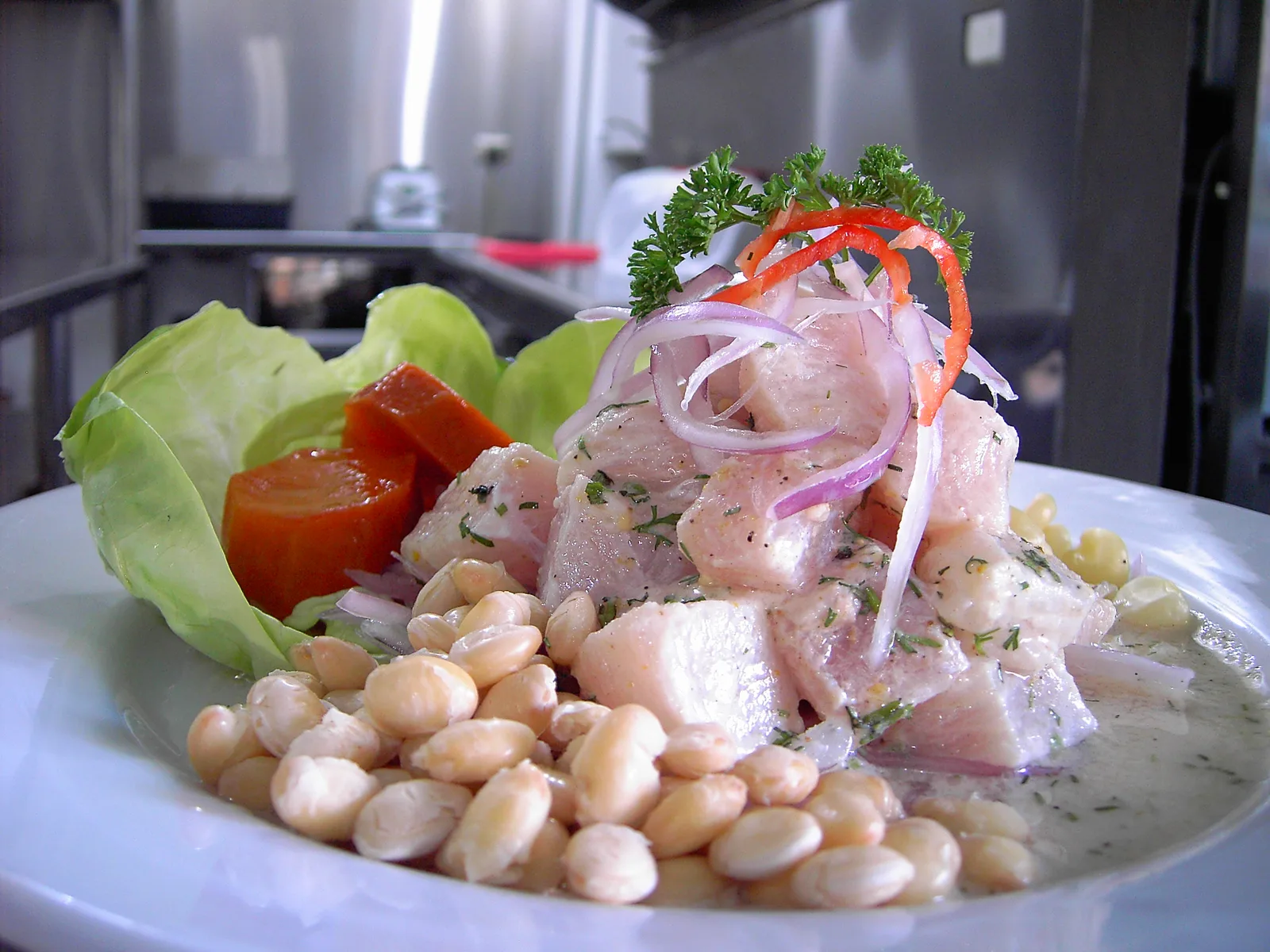
A plate of cebiche de corvina with lime-cured white fish cubes, red onion, ají strips, lettuce, sweet potato and choclo corn Peru flag Peru 35m
Lunch •Coastal Peru

Peruvian Ceviche

Peruvian ceviche is the national dish of Peru: cubes of very fresh sea bass cured in lime juice with red onion, ají limo and cilantro, with the milky, spicy marinade it leaves behind — leche de tigre — spooned over the top. It arrives with boiled sweet potato and big-kernel choclo corn, the sweet and starchy balance to all that citrus and heat. One serving is about 371 g.

Light & Fresh

Fresh sea bass cured in lime juice with red onion, ají limo and leche de tigre, served with sweet potato and choclo.

Pairs Well With
Boiled sweet potato, choclo corn and cancha
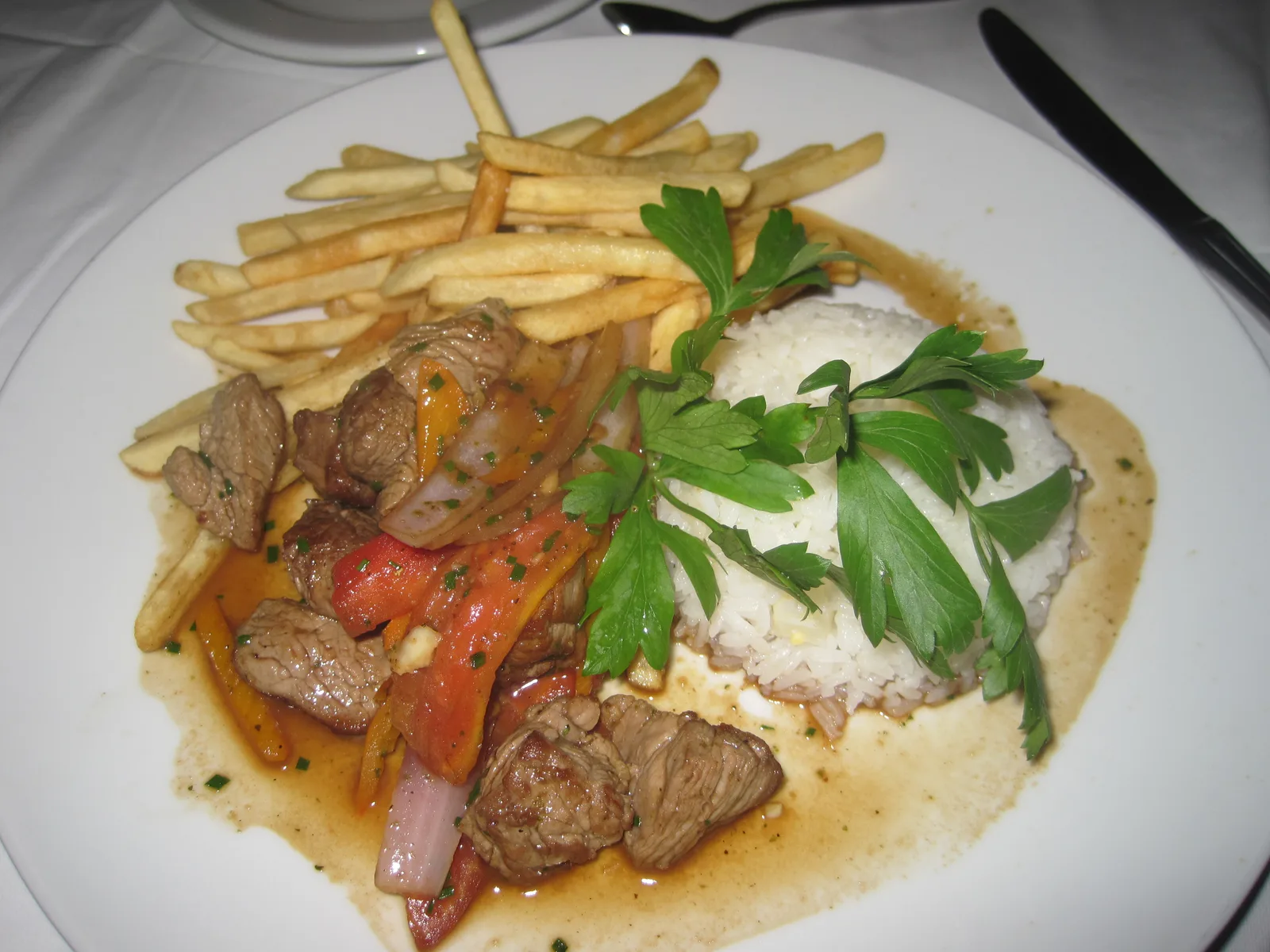
A plate of lomo saltado with seared beef strips, tomato and onion, French fries and a mound of white rice Peru flag Peru 40m
Dinner •Lima Heritage

Lomo Saltado

Lomo saltado is Peru's beloved Chifa stir-fry: strips of sirloin seared at screaming heat in a wok, tossed with red onion, tomato, soy sauce and red wine vinegar, then folded with crisp French fries and served beside white rice. It is the meeting of Cantonese wok cooking and Peruvian ingredients on one plate — smoky, salty, tangy and completely moreish. One serving is about 579 g.

Comfort & Energy

Sirloin seared at high heat with onion, tomato, soy and vinegar, tossed with fries and served with rice.

Pairs Well With
French fries, white rice and salsa criolla
Quick Prep (<30m)
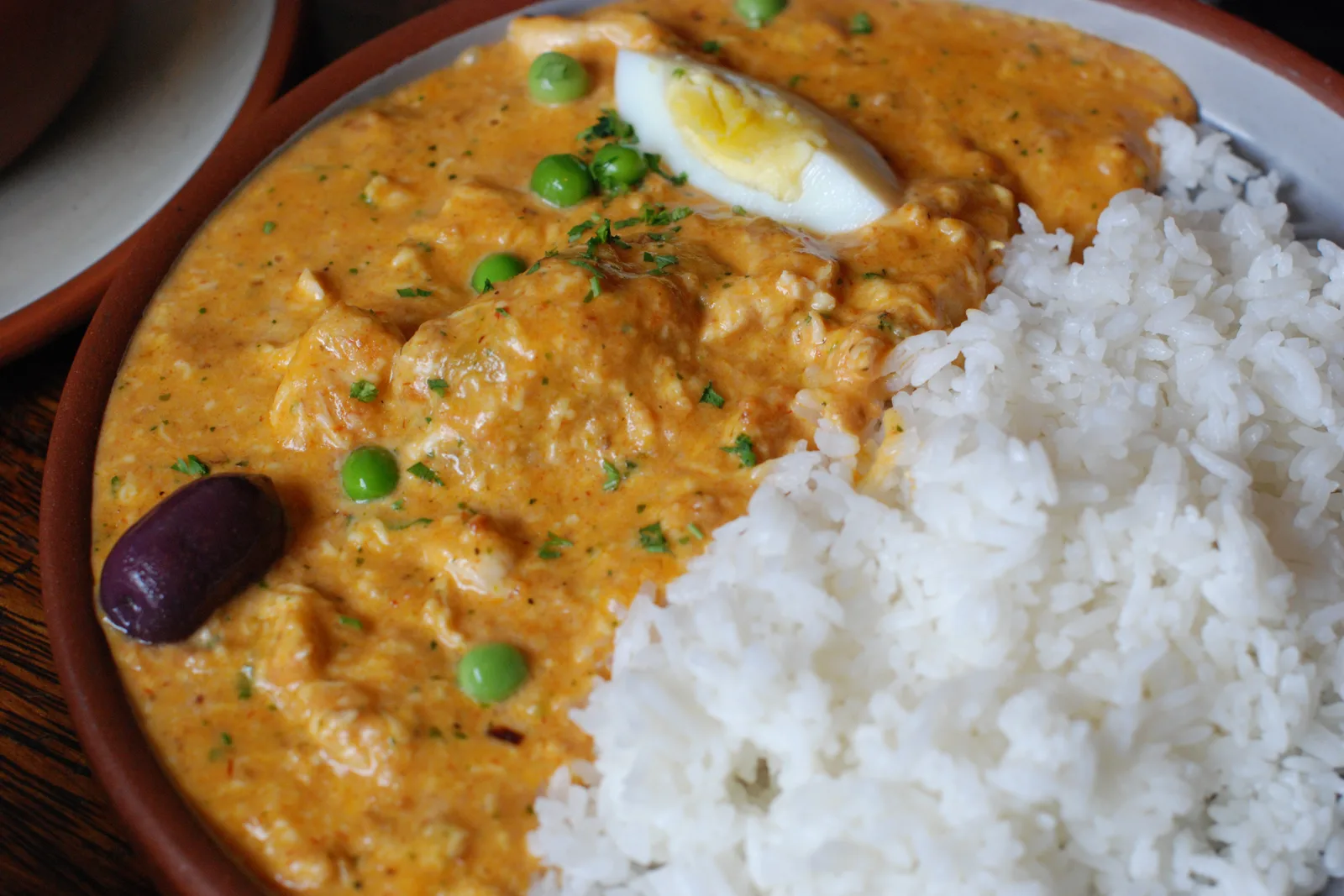
A bowl of ají de gallina with creamy golden chicken sauce, white rice, a boiled egg, peas and a black olive Peru flag Peru 1h
Dinner •Lima Heritage

Ají de Gallina

Ají de gallina is Lima's great comfort stew: poached chicken shredded into a velvety golden sauce of ají amarillo, bread soaked in evaporated milk, ground walnuts and Parmesan, served over white rice with a boiled egg, black olives and boiled potato. It is creamy, nutty, gently spicy and deeply filling — the dish Peruvians ask for when they come home. One serving is about 574 g.

Comfort & Warmth

Poached chicken in a creamy ají amarillo sauce thickened with bread, evaporated milk, walnuts and Parmesan.

Pairs Well With
White rice, boiled potato, boiled egg and black olives
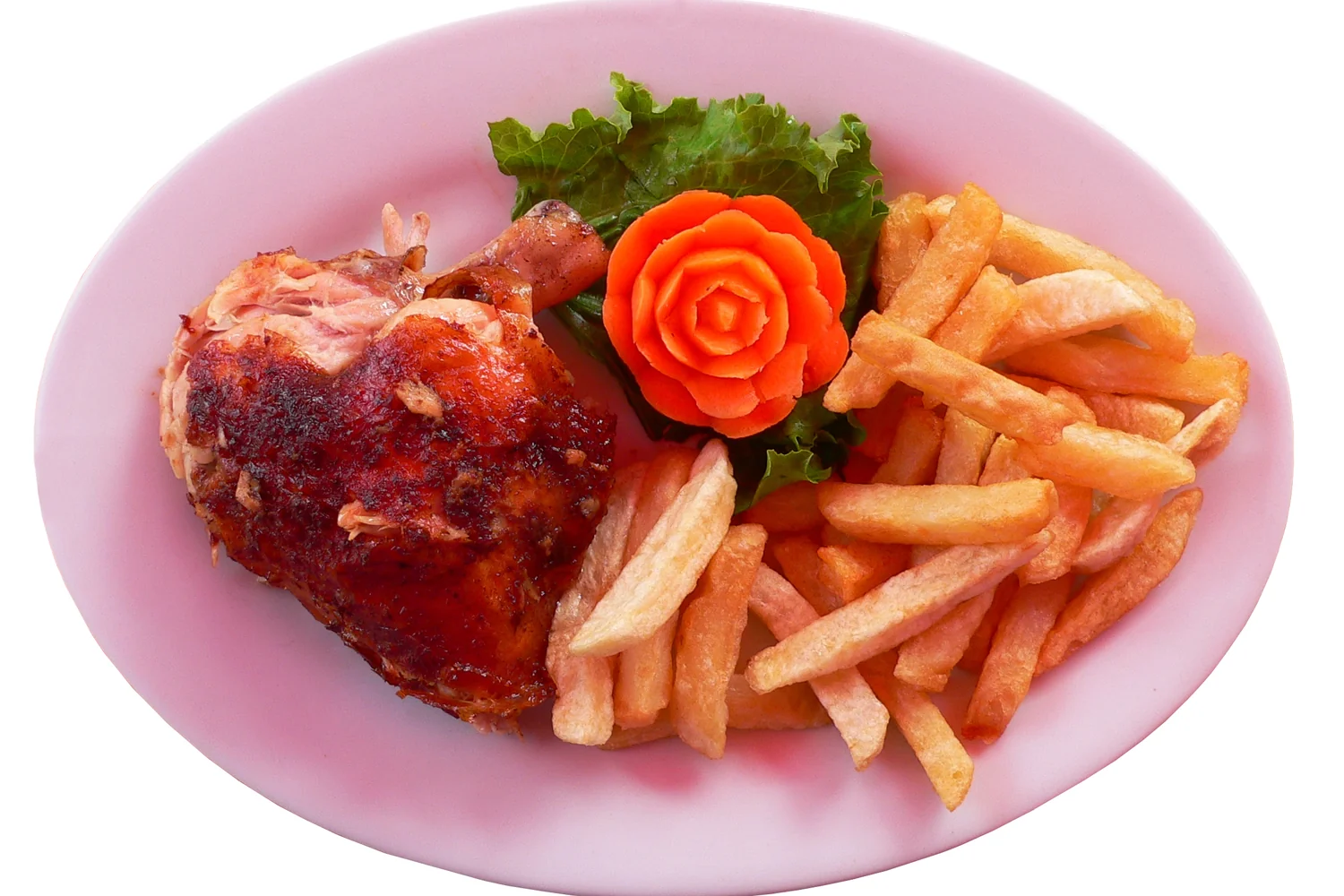
A glossy roasted chicken leg quarter with golden fries, lettuce and a carved carrot rose on a pink plate Peru flag Peru 1h 40m
Dinner •Lima Polleria Heritage

Pollo a la Brasa

This pollo a la brasa recipe marinates a whole chicken overnight in soy sauce, beer, lime, garlic, cumin and paprika, then roasts it slowly until the skin turns dark and crisp and the meat stays juicy. It is served the way every polleria in Lima serves it: a quarter chicken with thick-cut fries, a fresh salad and the two essential sauces, green aji verde and yellow aji amarillo. One serving is about 514 g.

High-Protein & Satisfying

Charcoal-roasted chicken with dark, crisp skin and juicy meat, served the polleria way with thick fries, salad and two aji sauces.

Pairs Well With
Aji verde, fries & salad
High Protein

The Dinner Gazette

Never wonder what’s for dinner again

One email a week with easy dinner ideas from around the world — ingredients, steps and nutrition, tested in our kitchen first.

Delivered every Thursday morning. Unsubscribe anytime.