Curated recipes from 193 countries  •  New seasonal Mediterranean issue out now

Overview

Uzbek Shivit Oshi

Khorezm Lagman, Shivit Osh, Khivan Green Noodles

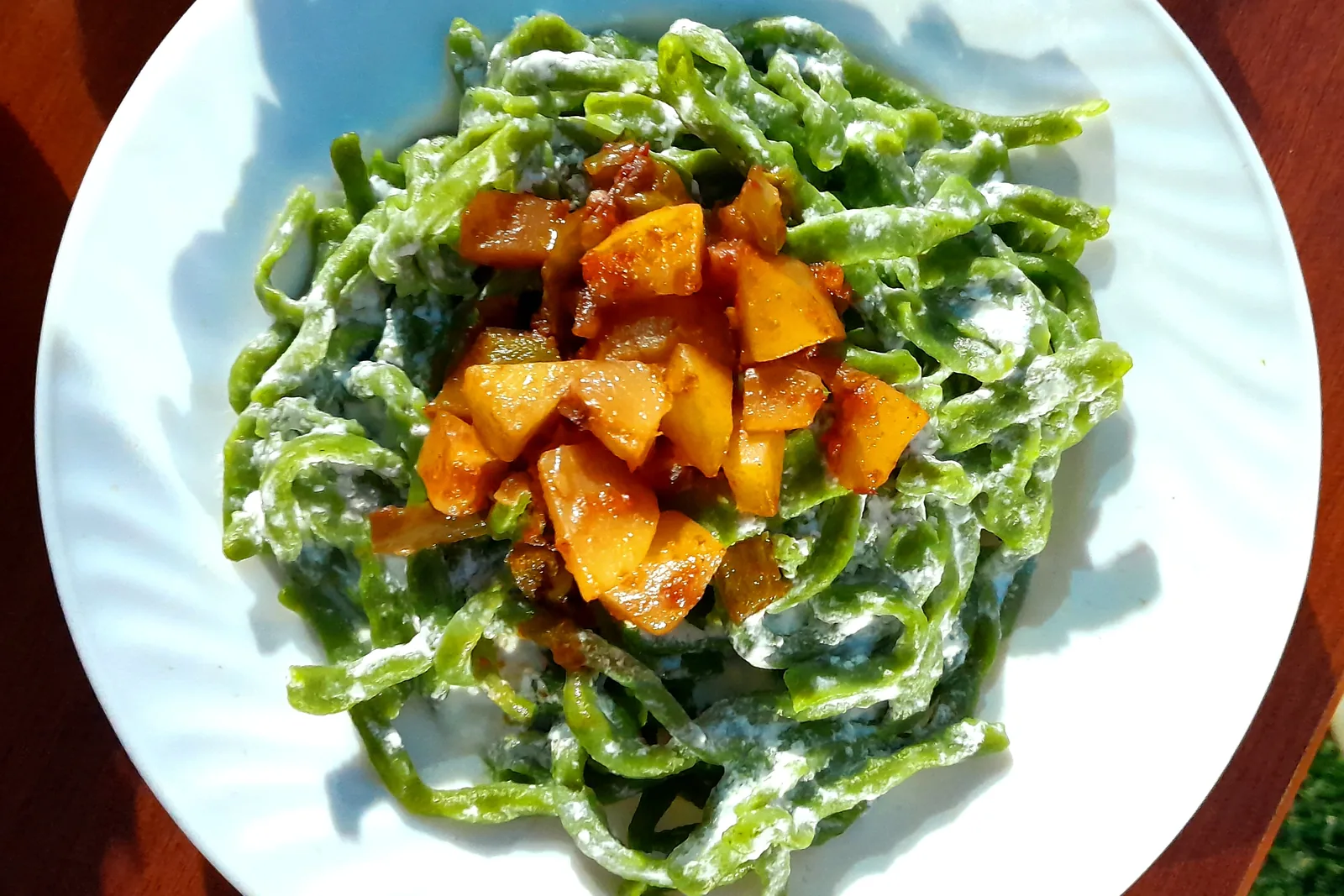
This uzbek shivit oshi recipe comes from Khiva, in Uzbekistan's western Khorezm region: handmade noodles coloured a vivid green by fresh dill, served on a plate (never in soup) under a tomato-rich beef and vegetable stew called vaju, with a dollop of tangy yogurt. The green noodles, the dry plated form and the yogurt sauce are what set it apart from lagman, the plain-noodle dish it is often confused with. One serving is about 500 g.

Shivit oshi belongs to Khiva, the old Silk Road city in Uzbekistan's Khorezm region, and it is found almost nowhere else in the country. Local cooks blend fresh dill into the noodle dough itself, so the noodles come out bright green and dill-perfumed, then plate them dry with a beef and vegetable stew and a spoonful of sour milk or yogurt. Anna Ansari, who learned the dish in Khiva for her cookbook Silk Roads (2025), writes that no one she asked could explain why dill, or why only Khiva — the answer was always simply that it is an old dish from Khiva. It is easy to confuse with lagman, but the two are different dishes: lagman uses plain wheat noodles served in or with broth, while shivit oshi is defined by its green dill dough, its dry plated form and its yogurt sauce.

Pairs well with: Achik-chuchuk tomato and onion salad, warm non (flatbread) & green tea

Provenance

Uzbekistan flag Uzbekistan

Khiva Heritage

East & South Asia

Time Dedication

3h

60m prep • 120m cook

Batch Yield

4 Servings

851 kcal per serving

1 serving ≈ 500 g

Technical Skill

Advanced

Challenging (Handmade Green Noodles)

Meal Timing & Digestive Fit

Breakfast

Not Advised

Lunch

Hearty Midday Main

Dinner

Ideal Hearty Main

Snack & Tea

Inappropriate

Pasta & Noodles Occasions: Family dinners, cold-weather suppers, weekend cooking projects, Silk Road-themed meals Cost: Medium — about $4–5 per serving at home
A white plate of Uzbek shivit oshi: vivid green dill noodles drizzled with white yogurt and topped with a golden beef, potato and vegetable stew

Khiva Heritage

Photo: Miss Kamola, CC BY-SA 4.0, via Wikimedia Commons

The Heritage Formulary

Measured Ingredients

Estimated cost: Medium — about $4–5 per serving at home (USD)

Khivan home cooking: dill-green handmade noodles plated dry with a slow-simmered beef, potato and vegetable vaju, finished with plain yogurt.

Execution Methodology & Culinary Technique

Step-by-Step Cooking Guide

Active 3h
P

Prep Stage: Dill Water Blending, Beef and Vegetables Cut

60 Mins • Blending, Infusing & Chopping

Start the dill water first: blend 75 g of dill with 180 ml of water until smooth, then leave it to infuse for 1 hour while you work — the liquid turns a shocking green and that colour is the whole point of the dish. Meanwhile pat the beef dry and cut it into 2 cm cubes, season with 1 tsp of the salt and the black pepper, slice the onion into half-moons, mince the garlic and chilli, cut the pepper, potato and carrot into 2 cm pieces, dice the tomatoes, and measure out the tomato paste, cumin, paprika, milk and yogurt into small bowls. Keep the remaining 10 g of dill fronds aside for serving. The stew simmers for a long time, so nothing should still be in the chopping pile once the beef goes in.

Maestro Tip: Blend the dill water before anything else — its hour of infusing overlaps with the stew, so it costs no extra time.

  1. 1

    Make the Green Dill Water

    10 Mins + 60 Mins Infusing • Blending Room temperature, about 20°C (68°F)

    Put 75 g of fresh dill and 180 ml of water in a blender and blitz until completely smooth, then pour into a bowl and leave it to infuse for at least 1 hour. Strain through a fine mesh sieve, pressing the pulp, and measure the liquid — you need about 100 ml of bright green dill water for the dough. The colour should be a vivid, almost shocking green; if it looks pale, your dill was old or the blend was too short.

    Save any extra green water in the fridge — it keeps a day and makes a second batch of noodles tomorrow.

    Done when: Bright green liquid, strained smooth, about 100 ml collected.

  2. 2

    Brown the Beef and Build the Vaju

    25 Mins • Browning & Frying High heat, about 200°C (400°F), then medium heat

    Heat 1 tablespoon of the oil in a large frying pan with a lid over high heat. Add the seasoned beef in a single layer without crowding the pan and brown for about 1 minute per side, until it releases easily and is deeply coloured, then lift it out onto a plate. Reduce the heat to medium, add the remaining oil and the onion, and cook for 5–7 minutes until softened and just starting to brown. Add the garlic, bell pepper and chilli (if using) with the remaining salt, stir in the paprika and cumin, then add the tomato paste and stir to coat everything.

    Do not crowd the pan — beef that steams instead of browning never develops the deep flavour the stew needs.

    Done when: Beef deeply browned on both sides; onion soft and just golden.

  3. 3

    Simmer the Vaju Until Tender

    75 Mins • Simmering Low heat, gentle simmer about 95°C (203°F)

    Return the beef and any juices to the pan. Pour in the 250 ml of milk and simmer over medium heat for 13–15 minutes, until the milk has almost completely evaporated and the sauce has turned a dark sienna colour. Add 750 ml of water, reduce the heat to low, cover with the lid slightly ajar and simmer for 1 hour. The beef should be well on its way to tender and the sauce thick and brick-red; check the internal temperature of a piece of beef — it must be at least 74°C (165°F).

    Keep the lid ajar, not sealed — the sauce needs to reduce slowly, and a sealed lid leaves it watery.

    Done when: Beef nearly tender, sauce dark sienna and thickened; beef at least 74°C (165°F) inside.

  4. 4

    Make and Rest the Green Dough

    20 Mins + 30 Mins Rest • Kneading Room temperature, about 20°C (68°F)

    While the stew simmers, whisk the egg with the 100 ml of green dill water. Sift the 300 g of flour and 1/2 tsp of salt into a wide bowl, pour in the egg and dill water a little at a time, and mix with your hands until a firm dough forms. Knead on a floured board for 8 minutes until smooth and pliable, then form into a ball, cover with a towel or cling film and rest for 30 minutes. The dough will be a striking green — that is exactly right, and the colour softens only slightly when the noodles are boiled.

    If the dough feels sticky, add flour a teaspoon at a time; if it cracks, add dill water a teaspoon at a time.

    Done when: Smooth, pliable, vivid green dough that holds its shape.

  5. 5

    Roll and Cut the Noodles

    20 Mins • Rolling & Cutting Room temperature, about 20°C (68°F)

    Lightly dust a baking sheet and your work surface with flour. Cut the rested dough into four pieces, keeping three covered. Roll one piece into a rectangle about 1.5 mm thick, by hand or with a pasta machine, rotating as you work so it stays even. Dust the top lightly, roll it up lengthwise into a tight log, and cut across the log into 6 mm slices for thin noodles. Unfurl each strip as you cut it, shake it out onto the floured sheet and dust with flour so the strands do not stick. Repeat with the remaining dough.

    Roll the log tightly but not so tight that the layers stick together — a loose log gives ragged, uneven noodles.

    Done when: Thin, even green strands, dusted with flour and not stuck together.

  6. 6

    Finish the Vaju with Tomato, Potato and Carrot

    30 Mins • Simmering Low heat, gentle simmer about 95°C (203°F)

    When the hour of simmering is up, add the diced tomatoes and 250 ml of water to the pan, stir, cover again and cook for 20 minutes. Add the potato and carrot, stir to combine, and cook for a final 30 minutes, until the beef is falling apart and the potato and carrot are fork-tender. Taste and adjust the salt. The finished vaju should be thick enough to sit in a mound on the noodles, not runny like soup — if it is too loose, simmer uncovered for a few minutes more.

    Add the potato and carrot only now, at the end — added earlier they would collapse into the sauce during the long simmer.

    Done when: Beef falling apart, potato and carrot fork-tender, sauce thick and glossy.

  7. 7

    Boil the Noodles and Plate the Dish

    10 Mins • Boiling & Plating Boiling water, 100°C (212°F)

    Bring a large saucepan of well-salted water to a rolling boil. Shake the excess flour off a handful of noodles and drop them in; repeat until all the noodles are in the pan. Cook for 2–3 minutes, then lift them out with a slotted spoon or spider and shake off the excess water. Serve immediately on wide plates: a bed of green noodles, a generous ladle of vaju mounded in the middle, a dollop of cold yogurt over the top and the reserved dill fronds scattered over everything. Eat at once, while the noodles are hot and the yogurt is still cool.

    Do not rinse the noodles — the light starch on them helps the yogurt and sauce cling.

    Done when: Noodles tender with a slight bite, still bright green; served steaming hot.

Finishing Touches & Plating

Serve the shivit oshi the moment the plates are built — the contrast of hot green noodles, rich beef vaju and cool yogurt is the whole pleasure of the dish, and it fades if the plates sit. Offer extra yogurt and dill at the table so each person can add more.

Nutritional Physiology & Benefits

Nutrition

Energy

851

kcal / serving

Protein

42g

Complete AA

Carbs

93g

Complex

Fats

34g

Healthy

Per serving (4 servings · 1 serving ≈ 500 g)
Energy851 kcal
Protein42 g
Carbohydrates93 g
Fat34 g
Fibre8.2 g
Sugar15.3 g
Sodium898 mg
Per 100g
Energy170 kcal
Protein8.3 g
Carbohydrates18.7 g
Fat6.8 g
Fibre1.6 g
Sugar3.1 g
Sodium180 mg

Nutrition values are estimated — calculated from USDA FoodData Central values for the listed ingredients.

Vitamins & minerals: Vitamin A (carrot, bell pepper, tomato), vitamin C (bell pepper, tomato, potato), vitamin K and folate (fresh dill), vitamin B12, iron and zinc (beef), and calcium (milk and yogurt). Nutrition is estimated.

A Full, Protein-Rich Dinner

About 851 kcal and 41.7 g of protein per serving make this a complete dinner — one plate is enough on a cold evening.

Vegetables in Every Bite

Potato, carrot, bell pepper, tomato and onion bring vitamin A, vitamin C and about 8.2 g of fibre per serving to a noodle dish.

Fresh Dill, Front and Centre

Fresh dill colours and perfumes the noodles and adds vitamin K and folate — the herb is the ingredient here, not a garnish.

Food Pairings

What to Eat With

To optimize nutrient absorption and elevate the sensory depth, pair with these authentic accompaniments:

Sides

Achik-Chuchuk Tomato and Onion Salad

Thinly sliced tomato and onion with a pinch of salt: its fresh acidity cuts through the rich beef stew and the cool yogurt, and it is the classic Uzbek table salad for noodle dishes.

Warm Non Flatbread

Soft Uzbek non is made for scooping up the last of the vaju sauce from the plate — the noodles alone cannot catch it all.

Drinks

Green Tea

Unsweetened green tea, served in small bowls as in Khiva, cleanses the palate between bites of the rich stew without adding sweetness or weight to the meal.

Vegetables

Pickled Cucumber and Radish

A small dish of sharp pickles adds crunch and brightness against the soft noodles and the long-simmered stew, and their acidity balances the dish's richness.

Complete menu

Serve the green noodles on wide plates with the vaju spooned over the middle, yogurt on top, achik-chuchuk salad and warm non on the side, and finish with green tea — a full Khivan dinner.

Digestive Guardrails

What NOT to Combine

To prevent digestive distress, sluggishness, or palate clash, avoid pairing the dish with these elements:

Very Hot Chilli Sauces on Top

The dish already carries tomato acidity and optional chilli; piling on a fiery sauce can overwhelm the dill flavour and may irritate a sensitive stomach. Keep extra heat on the side so each person can choose. This is general information, not medical advice.

Leaving the Yogurt Sauce Out for Hours

Yogurt and katyk are perishable dairy foods — once served, they should not sit at room temperature for more than 2 hours, as bacteria can grow in the danger zone between 4°C (40°F) and 60°C (140°F). Keep the yogurt cold until serving and refrigerate leftovers promptly. This is general information, not medical advice.

General information only, not medical advice — consult a doctor for personal dietary decisions.

Who Should Eat It

Who Should Eat

  • General adultsA full, warming dinner — one 500 g serving is a complete meal for most adults.
  • ChildrenChildren usually love the bright green noodles; serve a smaller portion and leave the green chilli out of their share of the stew.
  • ElderlySoft noodles and fall-apart beef are easy to eat; make sure the potato and carrot are fully soft before serving.
  • Pregnant womenA nourishing, fully cooked meal; keep the beef cooked through to at least 74°C (165°F) and use pasteurised milk and yogurt.
  • Breastfeeding womenA filling, protein-rich dinner; the chilli is optional and the spices are used in small amounts.
  • AthletesAbout 851 kcal with 41.7 g of protein and 93.4 g of carbohydrate per serving — a solid recovery meal after a hard session.
  • Weight gainAn energy-dense plate that is easy to eat a lot of — add a second helping of noodles and a piece of non.
  • Weight lossKeep to half a portion of noodles and fill the plate with extra vaju vegetables; one full serving is about 851 kcal.

Health Conditions — Adjust or Avoid

Conditions

  • DiabetesAbout 93.4 g of carbohydrate per serving from the noodles and potato — keep to a modest portion of noodles and add more vegetables and beef. Ask your clinician about portion size.
  • High blood pressureAbout 898 mg of sodium per serving — go easy on the added salt and skip extra salty condiments. Ask your clinician about sodium limits.
  • Kidney diseaseHigh in protein and potassium from the beef, potato and tomato — portion size matters. Ask your clinician before making this a regular meal.
  • GoutBeef is a source of purines — keep the portion of beef modest and do not eat this dish very often. Ask your clinician for personal advice.
  • Stomach issuesA rich stew with tomato acidity and optional chilli can irritate a sensitive stomach — eat a smaller portion, skip the chilli, and eat slowly. Ask your clinician if symptoms persist.
  • Cardiovascular diseaseAbout 34.1 g of fat per serving, mostly from the beef and oil — choose lean chuck, trim visible fat and keep the oil to the amount listed. Ask your clinician about your fat intake.
  • Fatty liverA rich, energy-dense plate — keep the portion modest, use lean beef and go easy on the oil. Ask your clinician about portion size and frequency.
  • Food allergiesContains wheat (gluten) in the noodles, egg in the dough, and milk (dairy) in the stew and the yogurt sauce. The dish is free of nuts, peanuts, shellfish and fish as written. Ask your clinician if you are unsure.
  • Special therapeutic dietsNot suitable for gluten-free or low-protein diets as written; a gluten-free noodle swap changes the dish. Ask your clinician or dietitian before adapting it.

If you have a medical condition, consult your doctor before changing your diet.

Storage & Use

Storage & Use

How to store
Cool within 2 hours, then store the noodles, the vaju and the yogurt in separate sealed containers.
In the fridge
3 days, in sealed containers.
In the freezer
2 months for the vaju; the noodles do not freeze well and turn mushy.
How to reheat
Reheat the vaju in a pan until steaming hot all the way through, to 74°C (165°F); warm the noodles briefly in hot water, drain and combine. Add fresh cold yogurt only after reheating.
Freezing recommended
Yes for the vaju; no for the noodles.
Signs it has spoiled
Sour smell in the vaju, slimy noodle surface, or any mould on the yogurt.

More recipes to explore

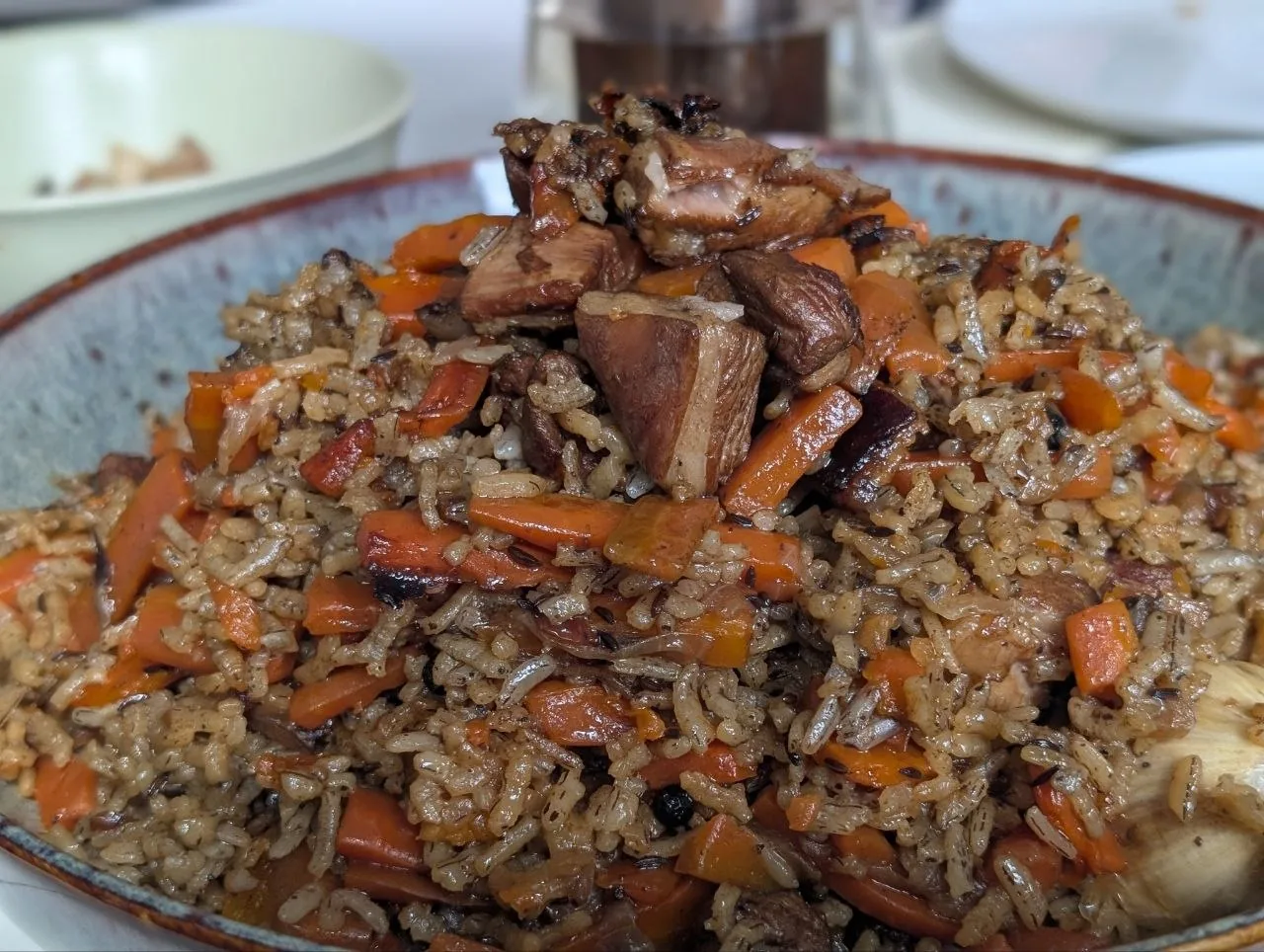
Uzbek plov piled in a ceramic bowl: golden rice with julienned carrots, chunks of lamb and a whole head of garlic Uzbekistan flag Uzbekistan 2h 25m
Dinner •Uzbek Heritage

Uzbek Plov

This uzbek plov recipe is Uzbekistan's national dish: devzira rice steamed over a rich zirvak of browned lamb, sweet yellow carrots, onions, cumin and whole heads of garlic, cooked in a wide kazan and never stirred once the rice goes in. The grains come out separate, glossy and stained golden-orange by the carrots, with tender chunks of lamb and soft, sweet garlic tucked through the pile. One serving is about 470 g.

Celebration Rice

A generous one-pot rice dish built for sharing, with lamb, carrots and rice cooked together in a single kazan.

Pairs Well With
Serve family-style from one big platter with a crisp tomato, onion and cucumber salad and hot green tea.
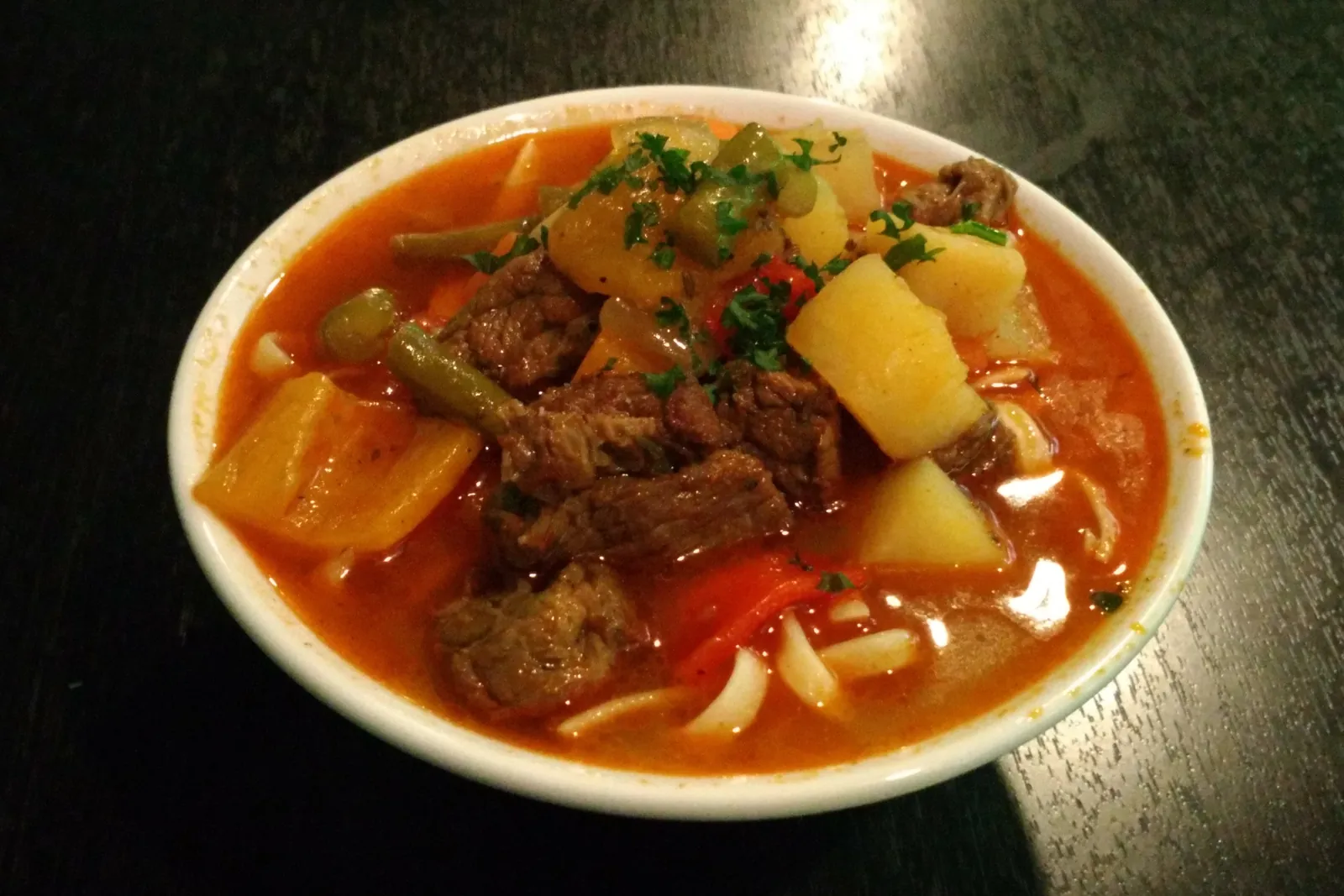
A bowl of Uzbek lagman: hand-pulled noodles in a red tomato broth with beef cubes, potato, green beans and chopped herbs Uzbekistan flag Uzbekistan 1h 55m
Dinner •Uzbek Silk Road Noodles

Uzbek Lagman

This uzbek lagman recipe is Uzbekistan's version of the great Silk Road noodle dish: hand-pulled noodles made with a rich two-egg dough, piled in deep bowls and covered with vaja — a thick, slow-simmered stew of beef cubes, potato, green Margilan radish, green beans, peppers and tomatoes, scented with star anise, cumin and garlic chives. A spoonful of fiery laza-chang on the side lets each person set their own heat. One serving is about 675 g.

Hearty & Warming

Chewy hand-pulled noodles under a thick beef, potato and green radish stew — Uzbekistan's warming Silk Road noodle dish.

Pairs Well With
Tomato and onion salad, non (flatbread) & green tea
Pasta & Noodles
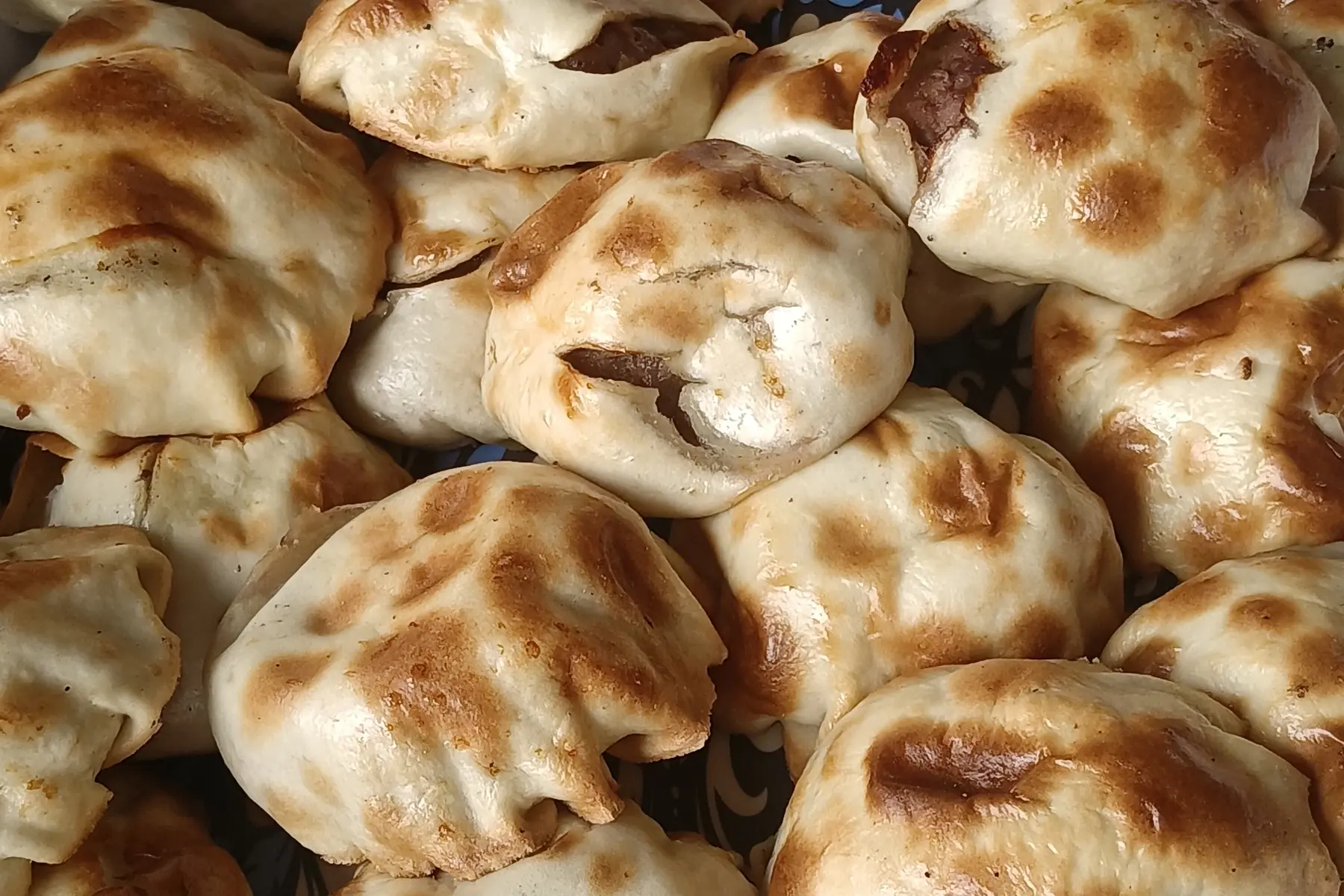
A pile of golden-brown baked Uzbek samsa with blistered flaky pastry, one split open to show the lamb filling Uzbekistan flag Uzbekistan 1h 30m
Snack & Tea •Tashkent Heritage

Samsa

This samsa recipe makes 12 golden, flaky Uzbek lamb pastries: hand-chopped lamb and sweet onion, seasoned with cumin and black pepper, folded into squares of layered pastry and baked until the crust blisters. In Uzbekistan the parcels are pressed onto the hot clay walls of a tandoor; at home a hot oven gives the same crisp, golden finish. One serving is about 225 g (2 samsa).

Hearty & Satisfying

Flaky baked pastry parcels filled with hand-chopped lamb, sweet onion and cumin — a filling, savoury snack from Uzbekistan's tandoor bakeries.

Pairs Well With
Achichuk — a sharp tomato and onion salad — and a pot of green tea.
A bowl of Uzbek shurpa: tender lamb, chickpeas and potatoes in a red tomato broth, topped with onion rings and chopped fresh herbs. Uzbekistan flag Uzbekistan 2h 15m
Lunch •Uzbek Family Heritage

Uzbek Shurpa

This uzbek shurpa recipe simmers boneless lamb shoulder low and slow with chickpeas, potatoes, carrots, tomatoes and sweet pepper, until the meat is tender and the broth turns rich and golden. Cumin and coriander give it its warm Central Asian flavour, and fresh herbs and onion go on top. One serving is about 550 g, served in a deep bowl with flatbread.

Comfort & Warmth

A slow-simmered Uzbek soup of lamb, chickpeas, potatoes and vegetables in a tomato broth, seasoned with cumin and finished with fresh herbs.

Pairs Well With
Warm Uzbek flatbread (non) and green tea or sparkling water.
Soups & Broths

The Dinner Gazette

Never wonder what’s for dinner again

One email a week with easy dinner ideas from around the world — ingredients, steps and nutrition, tested in our kitchen first.

Delivered every Thursday morning. Unsubscribe anytime.