
Curated recipes from 193 countries  •  New seasonal Mediterranean issue out now

Overview

Zaatar Manakish

Manakish Za'atar, Lebanese Za'atar Flatbread, Manousheh Za'atar

Zaatar manakish is Lebanon's breakfast flatbread: a soft, hand-stretched dough brushed with a dark green paste of za'atar herbs and olive oil, baked until the crust is golden and the topping smells warm and nutty. It is eaten folded in half, often with mint tea, olives and fresh vegetables on the side. One serving is about 164 g.

Manakish is the everyday flatbread of the Levant, baked in neighbourhood bakeries and eaten folded in half, often for breakfast. The za'atar version is Lebanon's favourite: wild thyme gathered in the hills, mixed with sumac and sesame, spread over dough with olive oil. In December 2023 UNESCO inscribed Al-Man'ouché, the art of making and eating manoucheh, on the Representative List of the Intangible Cultural Heritage of Humanity, recognising a practice found throughout Lebanon.

Pairs well with: Mint tea, black olives, cucumber and tomato

Provenance

Lebanon flag Lebanon

Beirut Heritage

Middle Eastern

Time Dedication

1h 30m

75m prep • 15m cook

Batch Yield

6 Servings

500 kcal per serving

1 serving ≈ 164 g

Technical Skill

Intermediate

Intermediate (Yeasted Flatbread)

Meal Timing & Digestive Fit

Breakfast

Prime Morning Fit

Lunch

Inappropriate

Dinner

Inappropriate

Snack & Tea

Inappropriate

Occasions: Weekend breakfasts, school mornings, mezze spreads, bakery breakfasts Cost: Low — about $1–2 per serving at home
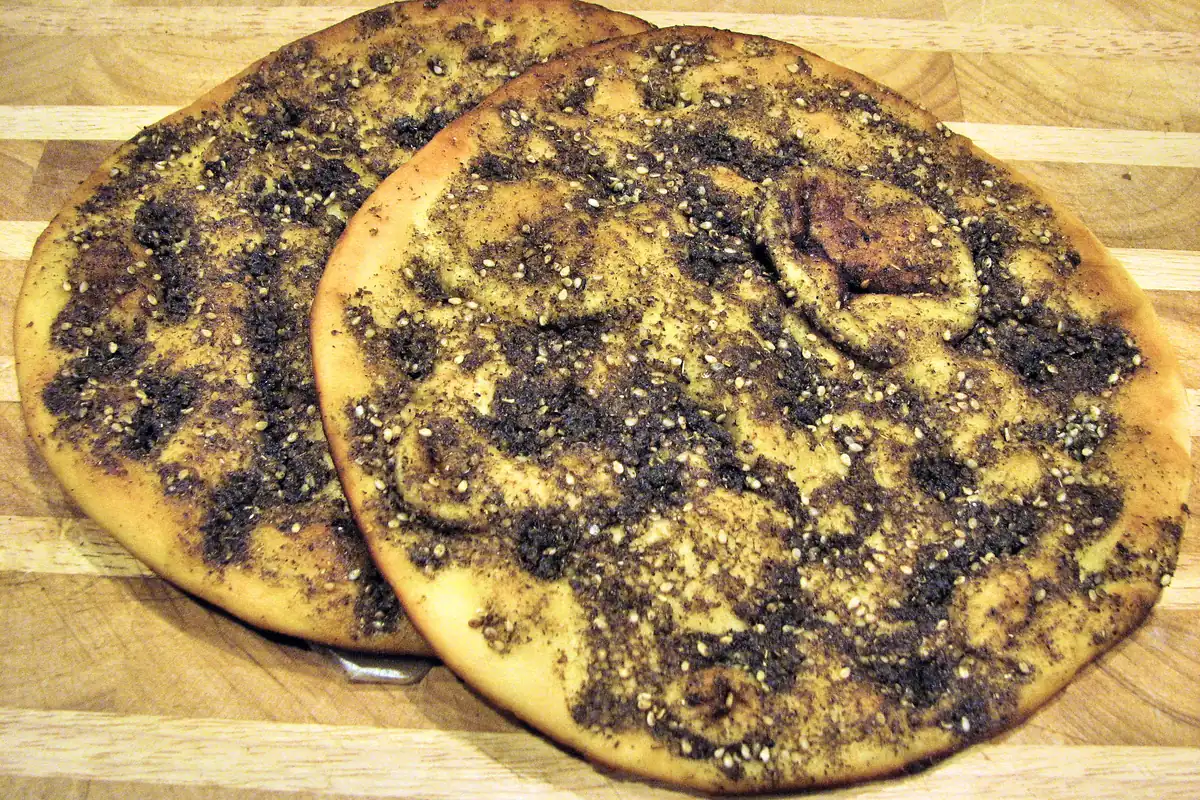
Two round zaatar manakish flatbreads covered in dark za'atar herbs and sesame seeds on a wooden board

Beirut Heritage

Photo: Nsaum75, CC BY-SA 3.0, via Wikimedia Commons

The Heritage Formulary

Measured Ingredients

Estimated cost: Low — about $1–2 per serving at home (USD)

A good zaatar manakish is soft inside with a crisp, golden edge, the topping dark green and glossy with olive oil, never dry or burnt.

Execution Methodology & Culinary Technique

Step-by-Step Cooking Guide

Active 1h 30m
P

Prep Stage: Mix, Knead & Rise

75 Mins • Mixing & Rising

Stir the yeast and sugar into the warm water and leave it 5 minutes until foamy. Mix in the flour, salt and 30 ml of olive oil, knead for 8 minutes until smooth and elastic, then cover and leave in a warm place for 60 minutes until doubled. While it rises, stir the za'atar with the 80 ml of olive oil into a thick paste.

Maestro Tip: If your kitchen is cool, put the covered bowl in an oven with only the light on: the gentle warmth keeps the rise on schedule.

  1. 1

    Mix and Knead the Dough

    15 Mins Warm water about 40°C (104°F)

    Stir the yeast and sugar into the warm water and leave it for 5 minutes until foamy. Tip in the flour and salt, add 30 ml of olive oil, and mix until a shaggy dough forms. Knead on a lightly floured surface for 8 minutes until smooth, soft and elastic, springing back when poked.

    Knead until the dough passes the windowpane test: a small piece stretched thin should not tear.

    Done when: Smooth, elastic dough that springs back when poked.

  2. 2

    Let the Dough Rise

    60 Mins Warm place, about 25°C (77°F)

    Put the dough in a lightly oiled bowl, cover with a damp cloth or cling film, and leave in a warm place for 60 minutes until doubled in size. While it rises, stir the za'atar and the 80 ml of olive oil into a thick, dark green paste.

    A slow rise builds flavour; do not rush it in a hot oven or the yeast will overwork.

    Done when: Dough doubled in size, soft and puffy, with a yeasty smell.

  3. 3

    Shape the Flatbreads

    10 Mins Room temperature

    Heat the oven to 240°C (465°F) with a baking sheet or pizza stone inside. Punch the dough down, divide it into 6 equal pieces and roll each into a ball. On a floured surface, stretch each ball into a round about 20 cm (8 in) across, leaving the edge slightly thicker than the centre.

    Stretch from the centre outwards with your fingertips; a rolling pin can press out the air and make the bread tough.

    Done when: Six even rounds, about 20 cm (8 in) across, edges a little thicker than the middle.

  4. 4

    Top with Za'atar and Bake

    15 Mins 240°C (465°F)

    Spread about 1 tablespoon of the za'atar paste over each round, right to the edge, using the back of a spoon. Slide one or two flatbreads onto the hot baking sheet and bake for 10 to 12 minutes until the edges are golden and the topping is fragrant and dark. Bake the rest the same way.

    The sheet must be properly hot before the dough goes on: that heat is what puffs the bread.

    Done when: Golden edges, topping dark and fragrant, base crisp enough to lift cleanly.

  5. 5

    Rest Briefly and Serve Warm

    5 Mins Serve warm, above 63°C (145°F)

    Let the flatbreads rest for 2 minutes on a wire rack so the base stays crisp, then fold each in half and serve warm with mint tea, olives, cucumber and tomato.

    Serve them within minutes of baking: manakish is at its best warm, when the olive oil is still glossy.

    Done when: Warm, foldable flatbreads with a crisp base and a glossy za'atar topping.

Finishing Touches & Plating

Fold each manakish in half while it is still warm and eat it by hand, with a glass of mint tea and a small plate of olives and sliced vegetables beside it.

Nutritional Physiology & Benefits

Nutrition

Energy

500

kcal / serving

Protein

10g

Complete AA

Carbs

70g

Complex

Fats

20g

Healthy

Per serving (6 servings · 1 serving ≈ 164 g)
Energy500 kcal
Protein10 g
Carbohydrates70 g
Fat20 g
Fibre5.0 g
Sugar2.1 g
Sodium640 mg
Per 100g
Energy304 kcal
Protein6.2 g
Carbohydrates42.6 g
Fat12.4 g
Fibre3 g
Sugar1.3 g
Sodium389 mg

Nutrition values are estimated — calculated from USDA FoodData Central values for the listed ingredients.

Vitamins & minerals: Za'atar brings iron, calcium and vitamin K from thyme and sesame, while the olive oil adds vitamin E. All nutrition values are estimated.

Herbs, Olive Oil and Whole Grains of Flavour

Za'atar is a blend of thyme, sumac and sesame, and the topping is carried by olive oil, so the flavour comes from herbs and plant fats rather than butter or cream.

Baked, Not Fried

The flatbread is baked in a hot oven, so it stays light for a bread: about 500 calories per flatbread with no frying at all.

A Breakfast That Keeps You Going

About 70 g of carbohydrate and 5 g of fiber per flatbread make it a filling start to the day, especially with protein-rich labneh or eggs on the side.

Food Pairings

What to Eat With

To optimize nutrient absorption and elevate the sensory depth, pair with these authentic accompaniments:

Drinks

Mint Tea

Hot, sweet mint tea is the classic partner: its freshness cuts through the salty, oily za'atar and makes the meal feel complete.

Vegetables

Cucumber and Tomato

Cool, crisp cucumber and tomato add crunch and juice against the warm, soft bread, and their mildness balances the sharp sumac in the topping.

Sides

Labneh

A spoonful of thick strained yoghurt adds cool creaminess and protein, and its gentle sourness works with the sumac in the za'atar.

Black Olives

Salty, meaty olives are the traditional nibble alongside manakish, echoing the same Levantine flavours as the topping itself.

Full Menus

Full Menu: Manakish, Tea, Then Fruit

Start with warm zaatar manakish, mint tea and olives, and finish with fresh figs or grapes for a light, classic Lebanese breakfast.

Complete menu

Warm zaatar manakish folded in half, with mint tea, black olives, cucumber and tomato, and a bowl of labneh — a classic Lebanese breakfast.

Digestive Guardrails

What NOT to Combine

To prevent digestive distress, sluggishness, or palate clash, avoid pairing the dish with these elements:

Baking on a Cold Sheet

Putting the dough on a cold baking sheet gives a pale, dense base that sticks. Always preheat the sheet or stone with the oven. This is general food information, not medical advice.

Drowning the Dough in Topping

More than a thin layer of za'atar paste makes the centre soggy and over-salted, since the topping is oil-heavy. One tablespoon per flatbread is enough. This is general food information, not medical advice.

Skipping the Rise

Baking the dough before it has doubled gives a flat, tough bread with a raw, yeasty taste. Give it the full hour. This is general food information, not medical advice.

General information only, not medical advice — consult a doctor for personal dietary decisions.

Who Should Eat It

Who Should Eat

  • General adultsA satisfying, plant-based breakfast for most adults; one flatbread with vegetables and tea is a balanced morning meal.
  • ChildrenKids usually love tearing and folding the warm bread; use a little less za'atar on theirs if the herbal flavour is too strong.
  • ElderlySoft and easy to chew when served warm; the topping is salty, so keep the portion to one flatbread.
  • Pregnant womenBaked through and served hot, with no risky ingredients; eat it freshly made. Ask your clinician if unsure.
  • Breastfeeding womenA filling, energy-rich breakfast for nursing mothers; pair it with labneh or an egg for extra protein.
  • AthletesAbout 70 g of carbohydrate per flatbread makes it good pre-training fuel; add eggs or cheese for the protein a recovery meal needs.
  • Weight gainAn energy-dense bread at 500 calories; a second flatbread with labneh raises it further.
  • Weight lossOne flatbread is a full breakfast on its own; load the plate with cucumber and tomato rather than reaching for a second one.

Health Conditions — Adjust or Avoid

Conditions

  • DiabetesAbout 70 g of carbohydrate per flatbread, mostly from white flour; keep to one flatbread and fill the plate with vegetables. Ask your clinician about portions.
  • High blood pressureSodium is about 640 mg per serving, mostly from the salted za'atar and the dough; use a low-salt za'atar blend if you need to. Ask your clinician about portions.
  • Kidney diseaseWheat bread and salted za'atar are both sources of potassium and sodium; keep the portion small and infrequent. Ask your clinician.
  • GoutNo meat or seafood, so purines are low; the main concern is the salt in the topping. Ask your clinician.
  • Stomach issuesYeasted bread and the sharp sumac in za'atar can bother a sensitive stomach; eat a small portion, well baked. Ask your clinician if unsure.
  • Cardiovascular diseaseThe fat is mostly olive oil, which is kinder than butter, but the bread is salty and refined; treat it as a sometimes breakfast. Ask your clinician about portions.
  • Fatty liverA refined-flour bread with a good deal of oil; keep to one flatbread and add vegetables and protein on the side. Ask your clinician about portions.
  • Food allergiesContains gluten (wheat) and sesame. Do not serve it to anyone with a sesame allergy — the sesame is mixed through the topping and cannot be picked out.
  • Special therapeutic dietsVegetarian as written, but not gluten-free, dairy-free only without labneh, and not sesame-free. A gluten-free flour blend works for the dough, but the topping must be sesame-free too; ask your clinician.

If you have a medical condition, consult your doctor before changing your diet.

Storage & Use

Storage & Use

How to store
Cool completely, then wrap each flatbread in cling film or keep in a sealed bag.
In the fridge
Up to 2 days at 4°C (40°F) or below in a sealed bag; the topping softens as it sits.
In the freezer
Freeze the baked flatbreads, stacked with baking paper between them, for up to 2 months at -18°C (0°F).
How to reheat
Reheat in a hot oven at 200°C (400°F) for 4 to 5 minutes, or in a dry pan over medium heat, until hot and crisp again, reaching 74°C (165°F) throughout.
Freezing recommended
Yes — the baked flatbreads freeze well and reheat crisp.
Signs it has spoiled
Mould, a sour or stale smell, or a slimy topping — throw it away.

More recipes to explore

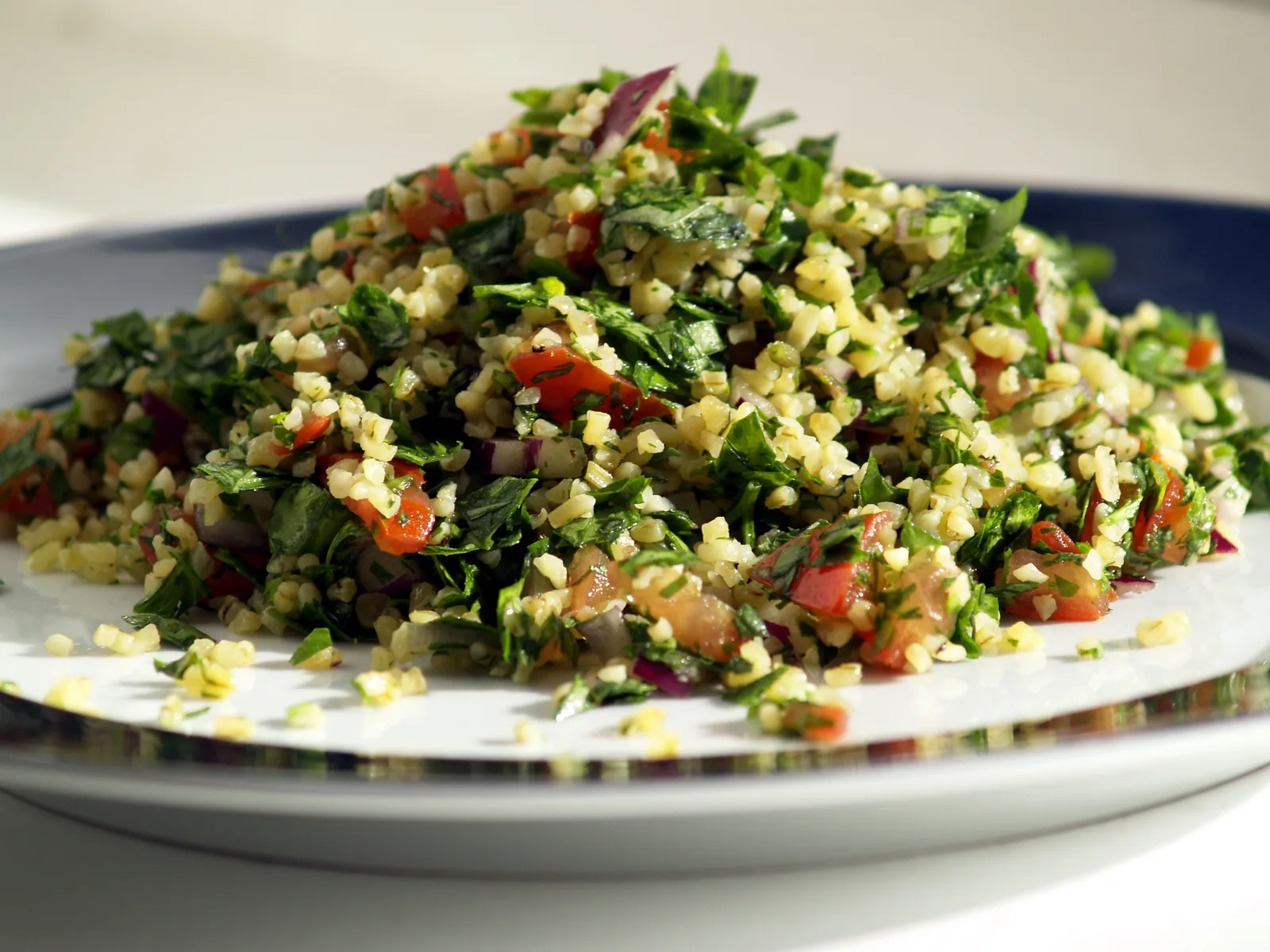
A plate of fresh Lebanese tabbouleh with chopped parsley, tomato and bulgur Lebanon flag Lebanon 25m
Lunch •Levantine Mezze Classic

Lebanese Tabbouleh

Tabbouleh is Lebanon's bright green parsley salad, where the herbs lead and fine bulgur plays a supporting role. Diced tomato, green onion and mint are tossed in lemon juice and olive oil for a fresh, lemony bite that wakes up any mezze table. One serving is about 216 g.

Light & Fresh

Mostly fresh parsley and tomato with a little bulgur, dressed in lemon and olive oil.

Pairs Well With
Warm pita bread, hummus and grilled halloumi
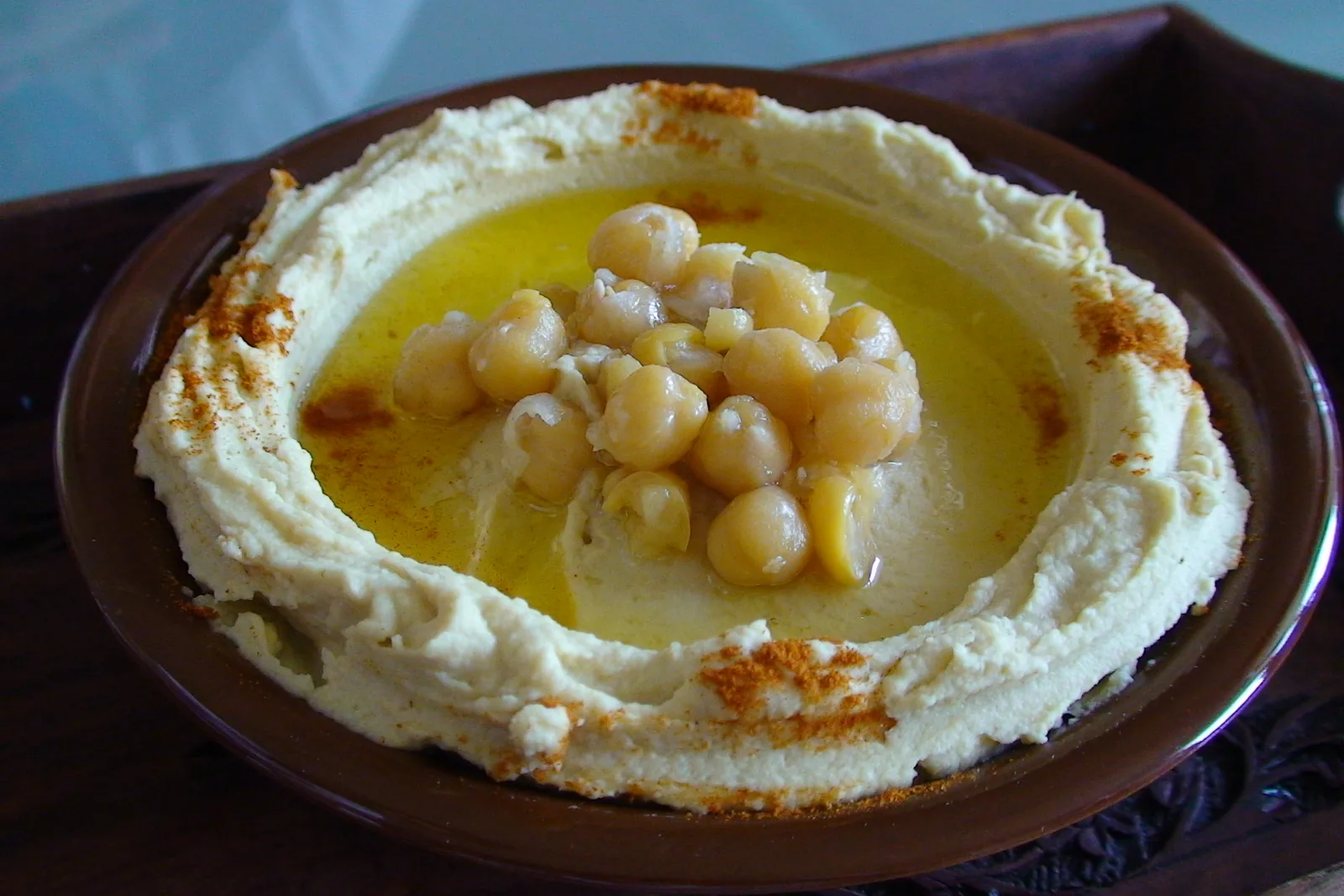
A bowl of cold Lebanese hummus with olive oil, whole chickpeas, paprika and parsley Lebanon flag Lebanon 1h 5m
Snack & Tea •Beirut Mezze Classic

Lebanese Hummus

Lebanese hummus is a cold, silky chickpea and tahini dip, lemon-forward with garlic and a pool of olive oil, topped with pine nuts and parsley. It is served chilled or at room temperature as part of a mezze spread, scooped up with warm pita — never served warm as a main plate. One serving is about 110 g.

Plant Protein Snack

Chickpeas and tahini blended into a smooth dip, with lemon, garlic and olive oil.

Pairs Well With
Warm pita bread, tabbouleh and olives
Quick Prep (<30m)
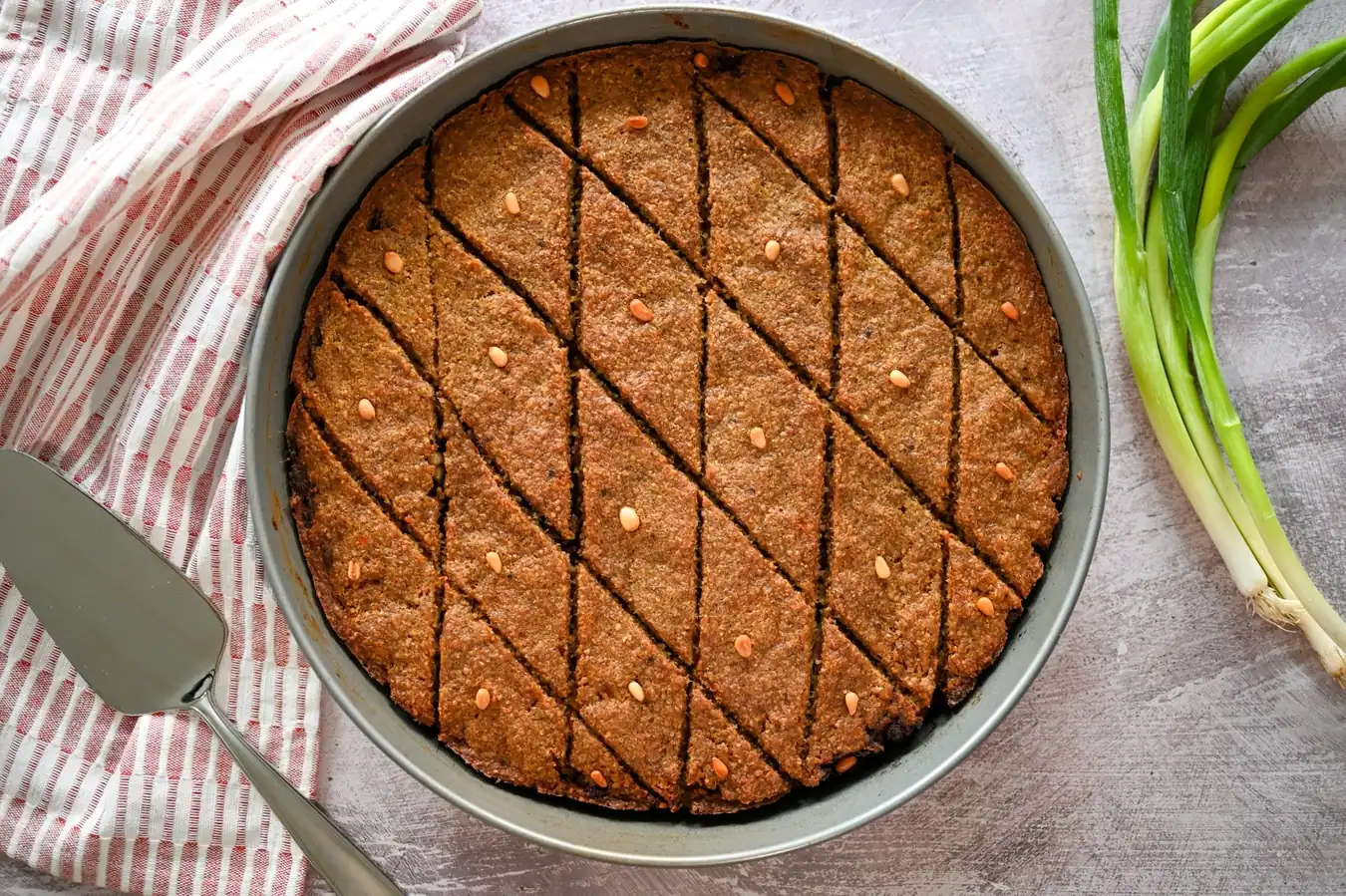
A baked tray of Lebanese kibbeh bil-saniyeh, scored into diamonds with pine nuts Lebanon flag Lebanon 1h 25m
Dinner •Lebanon's National Dish

Lebanese Kibbeh

Kibbeh bil-saniyeh is Lebanon's baked tray kibbeh: two layers of bulgur and lean beef sandwiching a spiced beef and pine-nut filling, scored into diamonds and baked until golden and crisp at the edges. It is the tray-baked form of Lebanon's national dish, made for sharing at the family table. One serving is about 202 g.

Hearty Family Dinner

Layers of bulgur and lean beef around a spiced pine-nut filling, baked until golden.

Pairs Well With
Yogurt, tabbouleh and warm pita bread
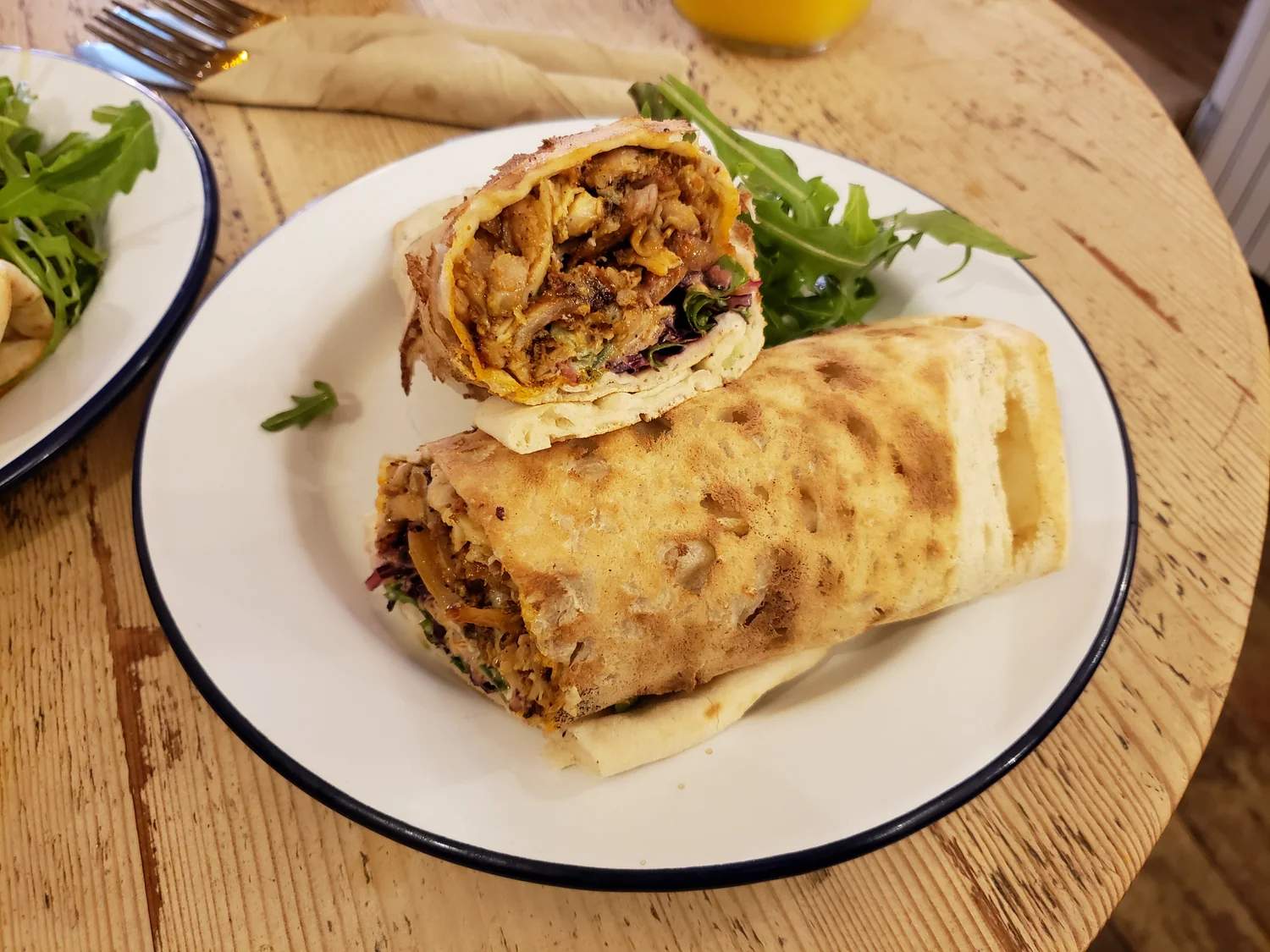
A sliced chicken shawarma wrap in toasted lavash showing spiced chicken, with rocket salad on a white plate Lebanon flag Lebanon 50m
Dinner •Beirut Street-Food Heritage

Lebanese Chicken Shawarma

This lebanese chicken shawarma recipe marinates boneless chicken thighs in yogurt, lemon, garlic and seven warm spices, then grills them until charred at the edges and slices them thin for rolling in soft Lebanese pita with toum, the whipped garlic sauce that defines the Lebanese version. Pickled turnips, dill pickles, tomato and parsley give every bite its sharp, fresh contrast. One serving is about 379 g.

High-Protein & Satisfying

Spice-marinated chicken thighs grilled and rolled in warm pita with toum, pickles and tomato — the Beirut street-food classic, made at home.

Pairs Well With
Toum, pickled turnips & fries
High Protein

The Dinner Gazette

Never wonder what’s for dinner again

One email a week with easy dinner ideas from around the world — ingredients, steps and nutrition, tested in our kitchen first.

Delivered every Thursday morning. Unsubscribe anytime.