Curated recipes from 193 countries  •  New seasonal Mediterranean issue out now

Overview

Cambodian Ginger Chicken

Cha Khnhei Sach Moan, Chha Kh'nhei, Cha Kney, ឆាខ្ញីសាច់មាន់

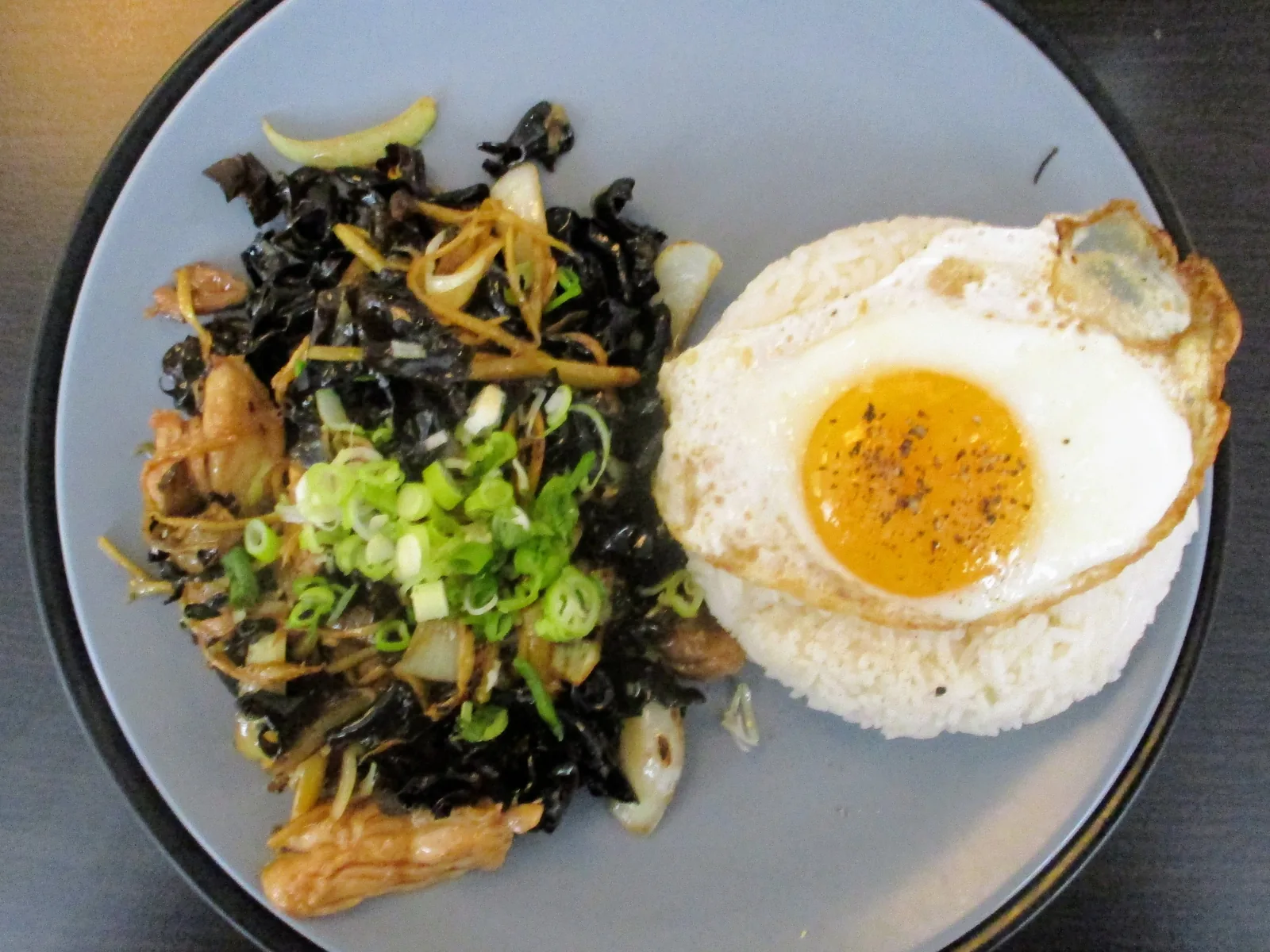
This cambodian ginger chicken recipe is the Khmer home-cooking classic cha khnhei: boneless chicken thighs wok-fried with 100 g of fresh ginger cut into matchsticks, garlic, onion and wood ear fungus, then glazed with soy, fish and oyster sauces, palm sugar and plenty of black pepper. One serving is about 430 g. It is served the Cambodian way, over steamed jasmine rice with a crisp-edged fried egg and a scattering of holy basil.

Cha khnhei — literally ginger stir-fry — is one of Cambodia's best-known home dishes, named after the ingredient that defines it: fresh ginger, peeled and cut into matchsticks and fried until its raw sting mellows into a peppery, sweet-floral heat. Christopher Kimball's Milk Street, which published its own version in April 2022, notes that the ginger figures as prominently as the chicken, and the dish is documented in the Cambodian cookbook Nhum by Rotanak Ros and Nataly Lee (2019). It is everyday food in Phnom Penh — the Phnom Penh Post found a vendor at Central Market frying it fresh each morning in 2014 — and cooks swap the chicken for pork, beef, eel or frog while the ginger stays the star.

Pairs well with: Steamed jasmine rice, a fried egg and a cold lime soda

Provenance

Cambodia flag Cambodia

Khmer Home-Cooking Classic

East & South Asia

Time Dedication

35m

20m prep • 15m cook

Batch Yield

4 Servings

586 kcal per serving

1 serving ≈ 430 g

Technical Skill

Intermediate

Moderate (Wok Stir-Fry)

Meal Timing & Digestive Fit

Breakfast

Not Advised

Lunch

Hearty Midday Main

Dinner

Ideal Hearty Main

Snack & Tea

Inappropriate

High ProteinQuick Prep (<30m) Occasions: Weeknight dinners, family meals, quick dinners with friends, and lunches Cost: Low — about $3–4 per serving at home
Cambodian ginger chicken stir-fry with golden ginger matchsticks and wood ear fungus, served with steamed rice and a fried egg

Khmer Home-Cooking Classic

Photo: Turaids, CC BY 4.0, via Wikimedia Commons

The Heritage Formulary

Measured Ingredients

Estimated cost: Low — about $3–4 per serving at home (USD)

Made the Khmer way: ginger cut into fine matchsticks and fried until it begins to brown, garlic golden first, chicken cooked through, and holy basil kept to a garnish so the ginger leads.

Execution Methodology & Culinary Technique

Step-by-Step Cooking Guide

Active 35m
P

Prep Stage: Soak the Wood Ear and Cut the Ginger

20 Mins • Knife Work

Put the dried wood ear in warm water first — it needs 15 minutes to turn soft and springy while you do everything else. Peel the 100 g of ginger, slice it thinly crosswise into coins, then stack the coins and cut them into fine matchsticks: this is the slowest job and the one that makes the dish, so take your time and keep the matchsticks thin enough to cook through in the wok. Cut the chicken into bite-size pieces and pat it very dry, slice the onion into wedges and the garlic thinly, and stir the soy sauce, fish sauce, oyster sauce, palm sugar and black pepper together in a small bowl so the sauce is ready to pour in one go.

Maestro Tip: Thin ginger is everything — thick chunks stay raw and harsh, while fine matchsticks mellow into a peppery, sweet-floral heat.

  1. 1

    Soak the Wood Ear and Mix the Sauce

    15 Mins Warm water, about 40°C (104°F)

    Put the 15 g of dried wood ear fungus in a bowl of warm water and leave it for 15 minutes until soft and springy. Drain, rinse and tear it into bite-size pieces. While it soaks, stir the 30 g of soy sauce, 15 g of fish sauce, 30 g of oyster sauce, 12 g of palm sugar and 2 g of black pepper together in a small bowl until the sugar dissolves.

    Do the sauce now — once the wok is hot there is no time to measure anything.

    Done when: Wood ear soft, dark and springy; sauce smooth with the sugar fully dissolved.

  2. 2

    Fry the Eggs

    4 Mins High heat, oil about 180°C (350°F)

    Heat 1 tablespoon of vegetable oil in a large frying pan over high heat until it shimmers. Slide in the 4 eggs one at a time and fry for 2–3 minutes until the whites are set and the edges turn golden and crisp, keeping the yolks runny. Lift the eggs out and keep them warm on a plate.

    Hot oil and a confident slide-in give the lacy, crisp edges — cold oil makes pale, rubbery eggs.

    Done when: Whites fully set, edges crisp and golden, yolks still runny.

  3. 3

    Stir-Fry the Garlic, Chicken and Ginger

    8 Mins High heat; chicken to 74°C (165°F)

    Heat the remaining 1 tablespoon of oil in a wok or large frying pan over high heat until it just starts to smoke. Add the 18 g of sliced garlic and fry for 20 seconds until golden, then add the 600 g of chicken pieces in a single layer and leave them for 2 minutes without moving them so they brown. Add the 100 g of ginger matchsticks and the 10 g of sliced red chilli (if using), and stir-fry for 4–5 minutes, tossing constantly, until the chicken is cooked through to at least 74°C (165°F) and the ginger has begun to brown at the edges.

    Do not crowd the wok — chicken piled up steams instead of browning. Work in two batches if your pan is small.

    Done when: Chicken browned outside with no pink inside and juices running clear; ginger matchsticks softened and lightly browned.

  4. 4

    Add Onion, Wood Ear and Sauce

    3 Mins High heat, about 200°C (392°F)

    Add the 120 g of onion wedges and the soaked wood ear to the wok and toss for 1 minute until the onion starts to soften. Pour in the sauce and the 30 g of water, and stir-fry for 1–2 minutes more until the sauce bubbles and glazes every piece. Taste and add a pinch more palm sugar or black pepper if it needs it — the finished stir-fry should be salty-savoury first, with the ginger's peppery heat and a gentle sweetness behind it.

    The sauce should coat, not pool — if it looks watery, give it 30 seconds more on high heat.

    Done when: Sauce glossy and clinging to the chicken and ginger; onion softened but still with bite.

  5. 5

    Plate With Rice, Egg and Holy Basil

    2 Mins Serve hot, above 60°C (140°F)

    Spoon 150 g of hot steamed jasmine rice onto each plate, pile the ginger chicken beside it, and lay a fried egg on top of the rice. Scatter the 10 g of holy basil leaves and the 40 g of spring onions over the stir-fry and serve at once, while the egg yolk is still runny and the ginger is hot and fragrant.

    Break the yolk over the rice at the table — it turns into a rich sauce for the ginger chicken.

    Done when: Plates hot, rice steaming, egg yolk intact and runny, basil still bright green.

Finishing Touches & Plating

Serve each plate at once, hot from the wok, with the fried egg on the rice and the holy basil scattered over the top. The runny yolk, the steamed rice and the peppery ginger chicken are meant to be eaten together in one bite.

Nutritional Physiology & Benefits

Nutrition

Energy

586

kcal / serving

Protein

43g

Complete AA

Carbs

60g

Complex

Fats

19g

Healthy

Per serving (4 servings · 1 serving ≈ 430 g)
Energy586 kcal
Protein43 g
Carbohydrates60 g
Fat19 g
Fibre4.4 g
Sugar6.2 g
Sodium1170 mg
Per 100g
Energy136 kcal
Protein10 g
Carbohydrates13.9 g
Fat4.4 g
Fibre1 g
Sugar1.4 g
Sodium272 mg

Nutrition values are estimated — calculated from USDA FoodData Central values for the listed ingredients.

Vitamins & minerals: Vitamin C (red chilli, spring onions), vitamin B6 and niacin (chicken, ginger), vitamin K and folate (holy basil, spring onions), iron and zinc (chicken, egg). Nutrition is estimated.

High-Protein, Real Fuel

About 42.9 g of protein a serving from the chicken thighs and the fried egg — a proper dinner plate, not a snack.

Ginger Leads the Plate

A full 100 g of fresh ginger per batch gives the dish its peppery warmth and fresh, floral heat, with no heavy cream or deep frying.

Fresh, Simple, Dairy-Free

Chicken, ginger, garlic, onion, wood ear and herbs, with a spoonful of oil — naturally dairy-free and made from whole ingredients.

Food Pairings

What to Eat With

To optimize nutrient absorption and elevate the sensory depth, pair with these authentic accompaniments:

Sides

Steamed Jasmine Rice

The rice is not optional here — it soaks up the salty-sweet glaze and tames the ginger's heat, and the runny egg yolk turns it into a second sauce.

Vegetables

Cucumber and Tomato Salad

Cool, crisp cucumber and tomato with a squeeze of lime cut straight through the ginger heat and the salty sauces.

Drinks

Cold Lime Soda

Icy, sharp and lightly sweet, lime soda refreshes the palate between bites of peppery ginger chicken.

Hot Jasmine Tea

A hot, unsweetened jasmine tea settles the meal and its floral notes sit well beside the ginger and holy basil.

Complete menu

Serve Cambodian ginger chicken over steamed jasmine rice with a fried egg, a cool cucumber and tomato salad on the side, and cold lime soda to drink.

Digestive Guardrails

What NOT to Combine

To prevent digestive distress, sluggishness, or palate clash, avoid pairing the dish with these elements:

Undercooked Chicken

Chicken pieces must reach at least 74°C (165°F) right through — pink centres in a fast stir-fry are a food-safety risk, so cut the thickest piece open to check. This is general food guidance, not medical advice.

Drowning It in Extra Soy Sauce

The dish already carries about 1,170 mg of sodium a serving from the soy, fish and oyster sauces; pouring on more soy sauce at the table pushes the salt up fast without improving the flavour. This is general food guidance, not medical advice.

Thick, Raw Ginger Chunks

Ginger cut thick stays raw and harshly hot in a 5-minute stir-fry and overpowers the chicken; fine matchsticks are what let it mellow into a peppery, sweet heat. This is general food guidance, not medical advice.

General information only, not medical advice — consult a doctor for personal dietary decisions.

Who Should Eat It

Who Should Eat

  • General adultsA bold, satisfying dinner — one plate with rice and egg is a full meal.
  • ChildrenServe a mild portion: leave out the red chilli and use half the black pepper, and cut the ginger matchsticks short so they are easy to chew.
  • ElderlyTender chicken and soft-cooked ginger are easy to eat; serve the egg yolk well set if a runny yolk is a concern.
  • Pregnant womenFine when the chicken is cooked right through to 74°C (165°F) and the egg is freshly fried; keep the chilli modest if it upsets your stomach.
  • Breastfeeding womenA protein-rich dinner; the ginger and garlic are mild at these amounts, but eat a smaller portion if your baby seems unsettled.
  • AthletesAbout 42.9 g of protein and 59.7 g of carbohydrate a serving makes a strong post-training dinner; add an extra bowl of rice for a bigger recovery meal.
  • Weight gainAn easy plate to build up — add a second fried egg and a larger bowl of rice.
  • Weight lossAt 586 kcal a serving it fits a main meal; keep the rice to 150 g and use chicken breast instead of thigh to trim the fat.

Health Conditions — Adjust or Avoid

Conditions

  • DiabetesOne serving carries about 59.7 g of carbohydrate, mostly from the rice, so keep the rice portion modest and skip sweet drinks with it. Ask your clinician if you are unsure.
  • High blood pressureOne serving carries about 1,170 mg of sodium from the soy, fish and oyster sauces, so do not add extra soy sauce at the table. Ask your clinician if you are unsure.
  • Kidney diseaseThe chicken, egg and salty sauces all matter here — keep the portion small and do not eat this dish often. Ask your clinician if you are unsure.
  • GoutChicken and egg are moderate in purines, so a normal portion is usually fine, but a second helping is wiser to skip. Ask your clinician if you are unsure.
  • Stomach issuesFresh ginger in this amount can be strong on a sensitive stomach — eat a small portion, leave out the chilli, and eat it with plenty of rice. Ask your clinician if you are unsure.
  • Cardiovascular diseaseChicken thigh and a fried egg bring saturated fat, so use chicken breast and a poached egg if you eat this often; watch the salt either way. Ask your clinician if you are unsure.
  • Fatty liverA stir-fry with lean chicken, ginger and vegetables fits well; keep the oil to the amount in the recipe and skip sugary drinks with it. Ask your clinician if you are unsure.
  • Food allergiesContains egg, soy and wheat (in standard soy sauce), fish (fish sauce) and shellfish (oyster sauce) — use tamari and vegetarian mushroom oyster sauce if wheat or shellfish is a problem. No nuts or dairy in this recipe. Ask your clinician if you are unsure.
  • Special therapeutic dietsCheck the sodium, carbohydrate and protein against your prescribed plan before eating — and ask your clinician or dietitian if you are unsure.

If you have a medical condition, consult your doctor before changing your diet.

Storage & Use

Storage & Use

How to store
Cool quickly, then store the stir-fry, rice and eggs in separate airtight containers in the fridge.
In the fridge
Stir-fry keeps 2 days in the fridge at 4°C (40°F) or below; rice keeps 2 days; fried eggs are best eaten fresh and do not keep well.
In the freezer
The stir-fry freezes for up to 1 month; rice freezes well for up to 1 month. Do not freeze the fried eggs.
How to reheat
Reheat the stir-fry in a hot wok or pan until steaming hot right through, to 74°C (165°F); reheat rice until steaming hot, to 74°C (165°F). Fry fresh eggs to serve.
Freezing recommended
Yes for the stir-fry and rice — freeze them separately in portions. No for the fried eggs.
Signs it has spoiled
Sour or off smell, slimy chicken or wood ear, or rice that smells stale or feels tacky.

More recipes to explore

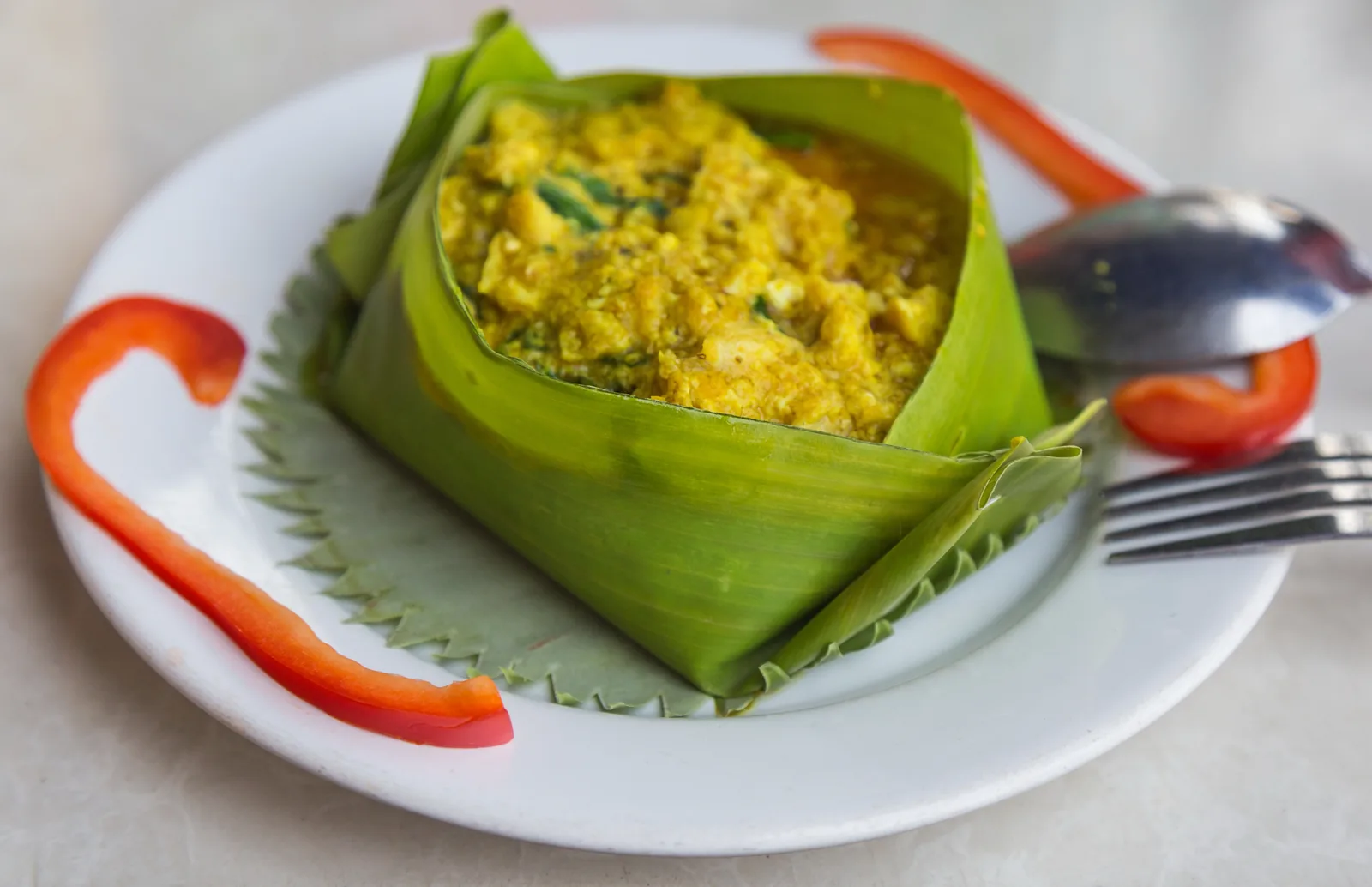
Cambodian fish amok, a yellow steamed fish mousse in a folded banana leaf cup on a white plate Cambodia flag Cambodia 1h
Dinner •Cambodian Heritage

Cambodian Fish Amok

This cambodian fish amok recipe turns fresh white fish, yellow kroeung paste and coconut milk into a silky steamed mousse, set in a banana leaf cup and finished with coconut cream, lime leaf and chilli. It is Cambodia's most loved celebration dish, gentle rather than fiery, and it eats like a savoury custard with rice. One serving is about 240 g, without the rice.

Comfort & Warmth

A steamed fish mousse in a banana leaf cup, fragrant with lemongrass and coconut, served hot with rice.

Pairs Well With
Steamed jasmine rice and a crisp green papaya salad.
High Protein
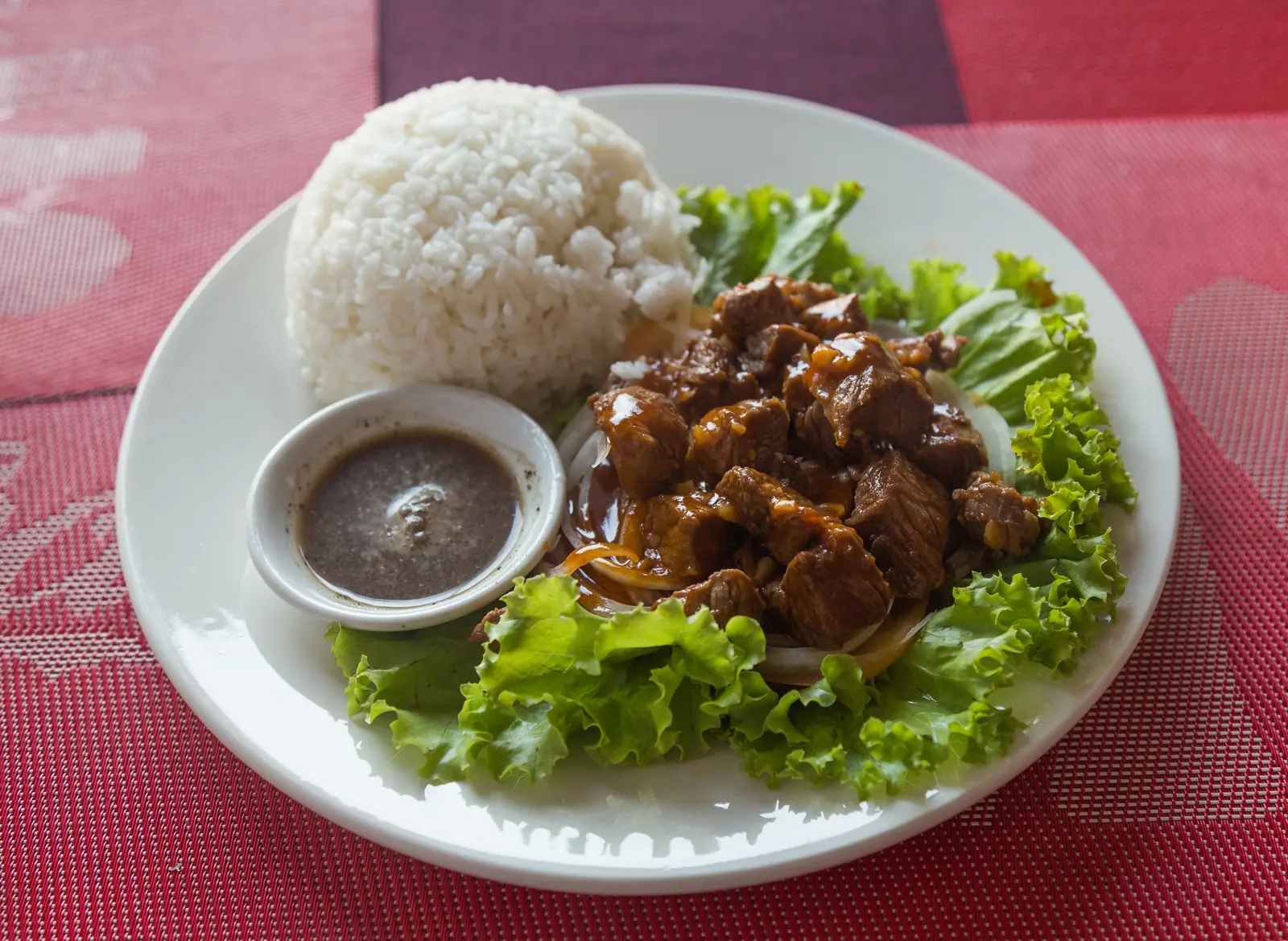
Cambodian lok lak: stir-fried beef cubes on lettuce with rice and a small bowl of lime-pepper dipping sauce Cambodia flag Cambodia 35m
Dinner •Cambodian Heritage

Cambodian Lok Lak

This cambodian lok lak recipe shakes cubes of marinated beef in a very hot wok until browned at the edges, then piles them over crisp lettuce, tomato, onion and cucumber with a fried egg and a bowl of lime-pepper dipping sauce. The dip is the soul of the dish: sharp lime, salt and cracked Kampot pepper cut straight through the rich beef. One serving is about 535 g, with rice.

Hearty & Satisfying

Stir-fried beef cubes over lettuce, tomato and onion, with the sharp lime-and-Kampot-pepper dip that defines the dish.

Pairs Well With
Steamed jasmine rice and the lime-pepper dip.
High Protein
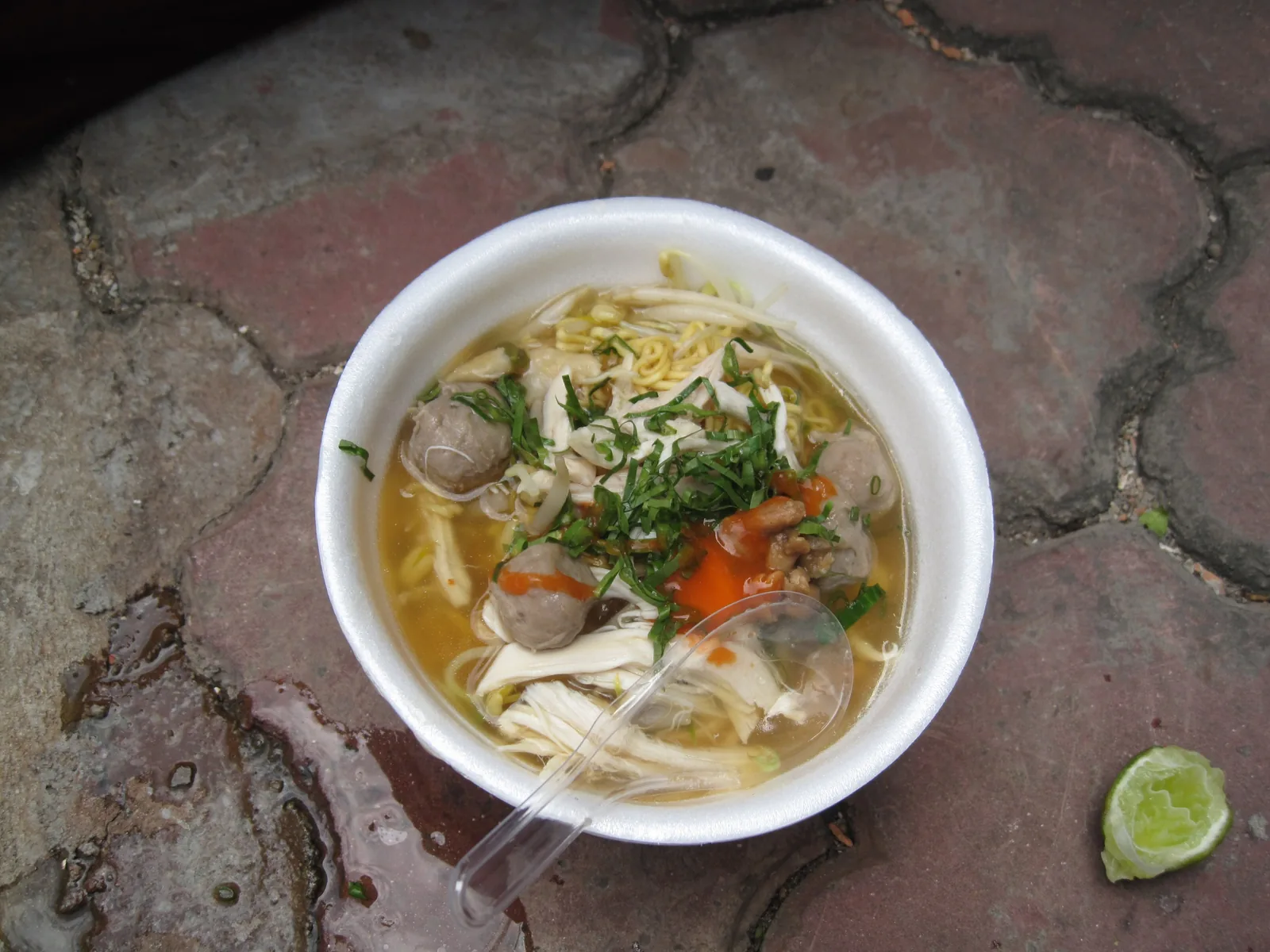
Khmer kuy teav: a street-stall bowl of Cambodian pork noodle soup with meatballs, bean sprouts, herbs and chilli Cambodia flag Cambodia 3h
Breakfast •Cambodian Heritage

Khmer Kuy Teav

This kuy teav recipe simmers pork bones with dried shrimp and squid into a clear, gently sweet broth, then ladles it over rice noodles with seasoned minced pork, sliced liver, shrimp and a soft egg. Bean sprouts, herbs, fried garlic, lime and chilli go on at the table, so every bowl is seasoned to taste. One serving is about 850 g, broth and toppings together.

Warm & Nourishing

A clear pork-bone broth with rice noodles, minced pork, liver, shrimp and a tangle of fresh herbs — Cambodia's classic breakfast bowl.

Pairs Well With
Fried garlic, fresh herbs, lime wedges and chilli sauce at the table.
Soups & Broths • Pasta & Noodles
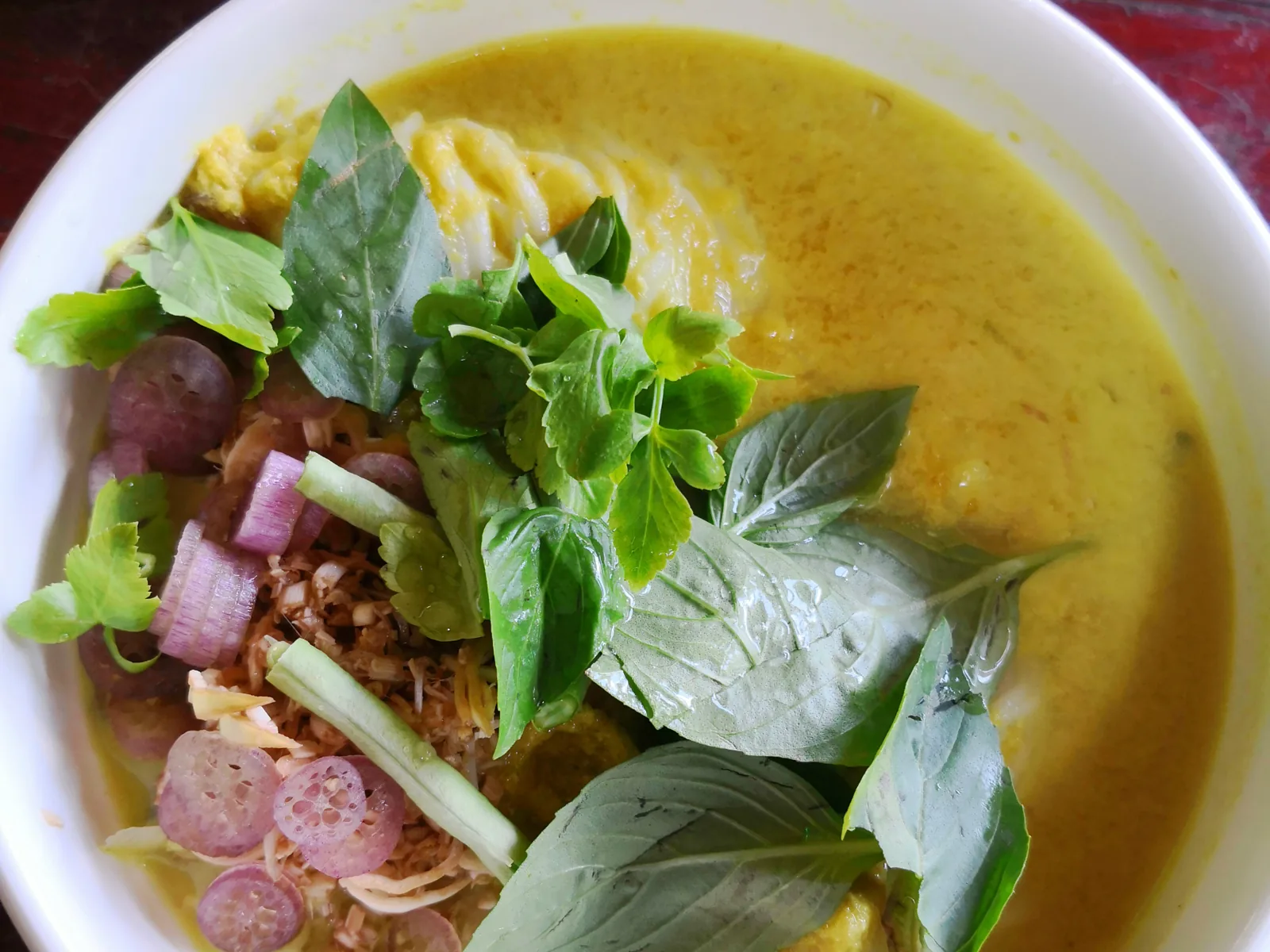
Nom banh chok in a white bowl: yellow fish curry over rice noodles with fresh basil, banana flower and herbs Cambodia flag Cambodia 1h
Breakfast •Cambodian Heritage

Nom Banh Chok

This nom banh chok recipe makes Cambodia's beloved breakfast noodles: soft rice noodles ladled with a fragrant yellow fish curry built on kroeung — lemongrass, galangal, turmeric, garlic and kaffir lime — with coconut milk, then piled high with bean sprouts, cucumber, banana flower, basil and mint. It is often called Khmer noodles, and it is eaten all over Cambodia in the morning. One serving is about 560 g.

Comfort & Warmth

Lightly fermented rice noodles in a fragrant yellow fish curry with kroeung, coconut milk and a pile of fresh herbs and vegetables.

Pairs Well With
Extra herbs and chillies on the side, with a hot Cambodian coffee or iced tea.
Pasta & Noodles

The Dinner Gazette

Never wonder what’s for dinner again

One email a week with easy dinner ideas from around the world — ingredients, steps and nutrition, tested in our kitchen first.

Delivered every Thursday morning. Unsubscribe anytime.