Curated recipes from 193 countries  •  New seasonal Mediterranean issue out now

Overview

Chokola Ayisyen

Haitian Hot Chocolate, Chocolat Haitien, Chokola Peyi

This chokola ayisyen recipe grates Haitian cacao balls into spiced water, then simmers the strained chocolate with evaporated milk, cinnamon, star anise and lime zest until thick and fragrant. One mug is about 265 g.

Chokola ayisyen is Haiti's breakfast chocolate, made from chokola peyi — balls of roasted, ground local cacao, traditionally Criollo and Trinitario beans, pressed by hand. The cacao ball is melted into spiced water with cinnamon, star anise and lime zest, then enriched with evaporated milk — a method that sets it apart from European drinking chocolate, which starts from refined chocolate and cream.

Pairs well with: Haitian bread (pain) or a slice of pain patate for dunking

Provenance

Haiti flag Haiti

Haitian Breakfast Classic

Latin America & Caribbean

Time Dedication

20m

5m prep • 15m cook

Batch Yield

4 Servings

299 kcal per serving

1 serving ≈ 265 g

Technical Skill

Easy

Easy (One Pot)

Meal Timing & Digestive Fit

Breakfast

Not Advised

Lunch

Inappropriate

Dinner

Inappropriate

Snack & Tea

Ideal Light Bite

Occasions: Haitian breakfast, cold mornings, festive mornings, family gatherings Cost: Low — about $1–2 per serving at home
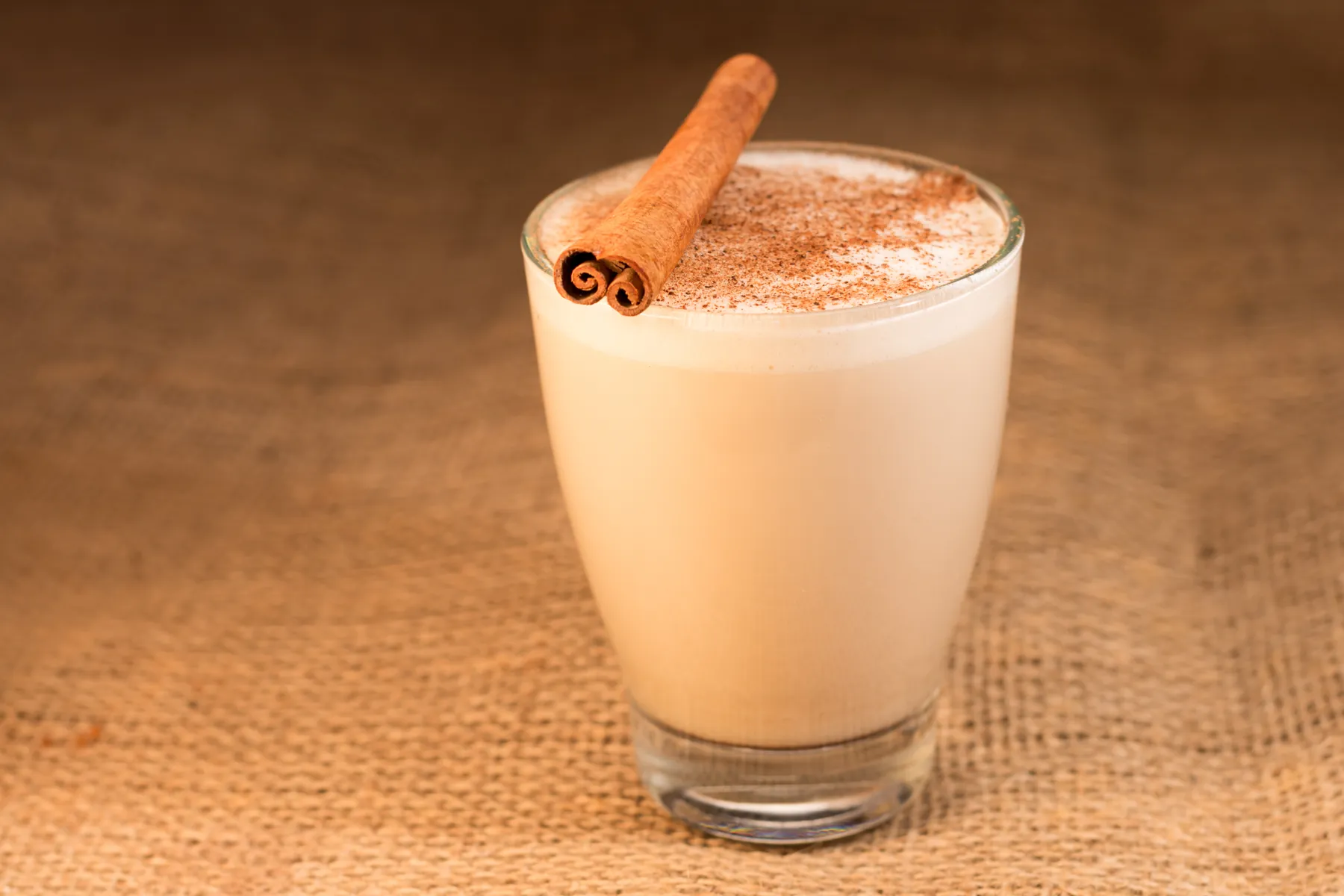
A glass mug of creamy spiced hot chocolate topped with ground cinnamon and a cinnamon stick

Haitian Breakfast Classic

Photo: Theo Crazzolara, CC BY 2.0, via Wikimedia Commons

The Heritage Formulary

Measured Ingredients

Estimated cost: Low — about $1–2 per serving at home (USD)

A good chokola is thick enough to coat a spoon, dark, and fragrant with cinnamon and star anise — never thin or gritty.

Execution Methodology & Culinary Technique

Step-by-Step Cooking Guide

Active 20m
P

Prep Stage: Grate the Cacao, Gather the Spices

5 Mins • Grating and Measuring

Grate the Haitian cacao balls on the coarse side of a box grater until you have fine shavings — a food processor works too. Measure the water, whole milk and evaporated milk, and set the cinnamon sticks, star anise, sugar, vanilla and a strip of lime zest beside the stove.

Maestro Tip: Grate the cacao ball fine: coarse chunks take far longer to melt and leave grit in the finished drink.

  1. 1

    Grate the Cacao and Measure Everything

    3 Mins Room temperature, about 20°C (68°F)

    Grate the cacao balls finely and set them aside. Measure the water, whole milk and evaporated milk, and lay out the cinnamon sticks, star anise, sugar, vanilla, lime zest and salt.

    Fine shavings melt in minutes; coarse chunks can take twice as long and leave grit.

    Done when: The cacao is in fine, even shavings and everything is measured.

  2. 2

    Simmer the Spices in Water

    5 Mins Medium heat, simmer ~95°C (203°F)

    Put the water, cinnamon sticks, star anise and lime zest in a medium saucepan. Bring to a boil, then lower the heat and simmer for 5 minutes so the spices perfume the water.

    Do not let the water boil away — you need it all to melt the cacao.

    Done when: The water smells warmly of cinnamon and liquorice.

  3. 3

    Melt the Cacao and Strain

    5 Mins Medium heat, simmer ~90°C (194°F)

    Add the grated cacao to the spiced water and whisk until it melts completely, about 4–5 minutes. Pour the chocolate through a fine sieve back into the rinsed pot, pressing the solids with a spoon — this is what makes the drink silky.

    Straining is not optional: cacao balls leave fibrous bits behind, and the sieve is what gives chokola its smooth body.

    Done when: The liquid is dark, smooth and free of grit.

  4. 4

    Add the Milks and Sugar

    4 Mins Low heat, gentle simmer ~85°C (185°F) — do not boil

    Stir in the whole milk, evaporated milk and sugar. Simmer gently for 3–4 minutes, stirring often, until the sugar dissolves and the chocolate turns thick and glossy. Do not let it boil.

    If the milk starts to climb the sides of the pot, lift it off the heat for a few seconds.

    Done when: The chokola coats the back of a spoon and the sugar is fully dissolved.

  5. 5

    Finish and Serve Hot

    3 Mins Serve hot, about 65°C (150°F)

    Take the pot off the heat. Fish out the cinnamon sticks and star anise, stir in the vanilla, nutmeg and salt, and taste for sweetness. Pour into warmed mugs and dust with ground cinnamon.

    Warm the mugs with hot water first so the chokola stays hot while you drink it.

    Done when: The drink is thick, dark, fragrant and steaming.

Finishing Touches & Plating

Taste the chokola before you pour it — it should be sweet, warmly spiced and thick enough to coat the back of a spoon. Add a little more sugar if you like it sweeter, then pour into warmed mugs and dust with ground cinnamon.

Nutritional Physiology & Benefits

Nutrition

Energy

299

kcal / serving

Protein

10g

Complete AA

Carbs

33g

Complex

Fats

17g

Healthy

Per serving (4 servings · 1 serving ≈ 265 g)
Energy299 kcal
Protein10 g
Carbohydrates33 g
Fat17 g
Fibre3.5 g
Sugar27.4 g
Sodium213 mg
Per 100g
Energy113 kcal
Protein3.8 g
Carbohydrates12.4 g
Fat6.3 g
Fibre1.3 g
Sugar10.3 g
Sodium80 mg

Nutrition values are estimated — calculated from USDA FoodData Central values for the listed ingredients.

Vitamins & minerals: Calcium and vitamin B12 (milk), iron and magnesium (cacao), vitamin C (lime zest).

Warming Morning Energy

Milk, sugar and cacao give quick, comforting energy, which is why chokola is a Haitian breakfast drink rather than a bedtime one.

Real Cacao, Real Spices

The drink is built on unrefined cacao and whole spices — cinnamon, star anise, nutmeg — with nothing powdered from a packet.

Slow, Soothing Warmth

A hot, thick mug of spiced chocolate is gentle and soothing on a cold morning, and the cinnamon and star anise smell like a bakery.

Food Pairings

What to Eat With

To optimize nutrient absorption and elevate the sensory depth, pair with these authentic accompaniments:

Sides

Haitian Bread for Dunking

Crusty Haitian bread is the classic partner — it soaks up the thick chocolate without falling apart, and the plain bread lets the spices shine.

More Pairings

Pain Patate (Sweet Potato Bread)

A slice of spiced sweet potato bread doubles the warmth: its cinnamon and vanilla echo the spices in the mug.

Drinks

Strong Black Coffee After

A small black coffee after the sweet chocolate resets the palate — the bitterness balances the sugar and milk.

Full Menus

As a Breakfast Opener

Serve the chokola first, with bread and fruit, as the warm opening of a Haitian breakfast — it wakes the appetite without filling you up.

Complete menu

Serve chokola ayisyen hot at breakfast with Haitian bread and fresh fruit, then a small black coffee to finish.

Digestive Guardrails

What NOT to Combine

To prevent digestive distress, sluggishness, or palate clash, avoid pairing the dish with these elements:

Very Sweet Pastries on the Side

The drink is already sweet, so a frosted cake or sweet bun alongside adds a lot of sugar at once — plain bread suits it better. This is general guidance, not medical advice.

Boiling the Milk Hard

Evaporated milk scorches and turns grainy if it boils hard; keep the pot at a gentle simmer and stir often.

General information only, not medical advice — consult a doctor for personal dietary decisions.

Who Should Eat It

Who Should Eat

  • General adultsA warming breakfast drink for most adults — sweet, spiced and satisfying.
  • ChildrenVery suitable in a small mug; the spices are mild and the drink is sweet. Keep the portion small for young children.
  • ElderlyExcellent — warm, soft and easy to enjoy, with calcium from the milk.
  • Pregnant womenGenerally suitable in a small mug; the milk adds calcium. Keep the sugar in mind.
  • Breastfeeding womenGenerally suitable; the milk and cacao give gentle morning energy.
  • AthletesA pleasant warm-up drink before training in cold weather — carbs plus a little protein.
  • Weight gainA good choice — take a full mug with bread for a filling breakfast.
  • Weight lossA good choice in a half mug — the drink is rich and sweet, so a small serving satisfies.

Health Conditions — Adjust or Avoid

Conditions

  • DiabetesThe sugar and evaporated milk are both sources of sugar — keep the mug small and ask your clinician about portion size.
  • High blood pressureMost of the sodium comes from the pinch of salt; keep it small. Ask your clinician about a suitable portion.
  • Kidney diseaseLimit the portion (potassium and phosphorus from milk); ask your clinician about portion size.
  • GoutEat and drink occasionally and in smaller portions — the drink is sweet and rich.
  • Stomach issuesUsually gentle and soothing warm; skip it if chocolate or spices upset your stomach.
  • Cardiovascular diseaseKeep the mug modest — the drink is high in sugar and saturated fat.
  • Fatty liverKeep the portion small and use less sugar in the pot.
  • Food allergiesContains milk. Naturally gluten-free — just check any bread served alongside for wheat.
  • Special therapeutic dietsIf you follow a prescribed low-sugar or low-sodium diet, use less sugar and salt, and check with your clinician.

If you have a medical condition, consult your doctor before changing your diet.

Storage & Use

Storage & Use

How to store
Cool quickly and store in a sealed jug or bottle in the fridge.
In the fridge
2 days.
In the freezer
Not recommended — the milk separates on thawing.
How to reheat
Warm gently in a pan over low heat, stirring, until steaming; reheat to 74°C (165°F). Do not boil.
Freezing recommended
No — the texture turns grainy.
Signs it has spoiled
Sour smell, curdled look, or a skin that will not stir back in.

More recipes to explore

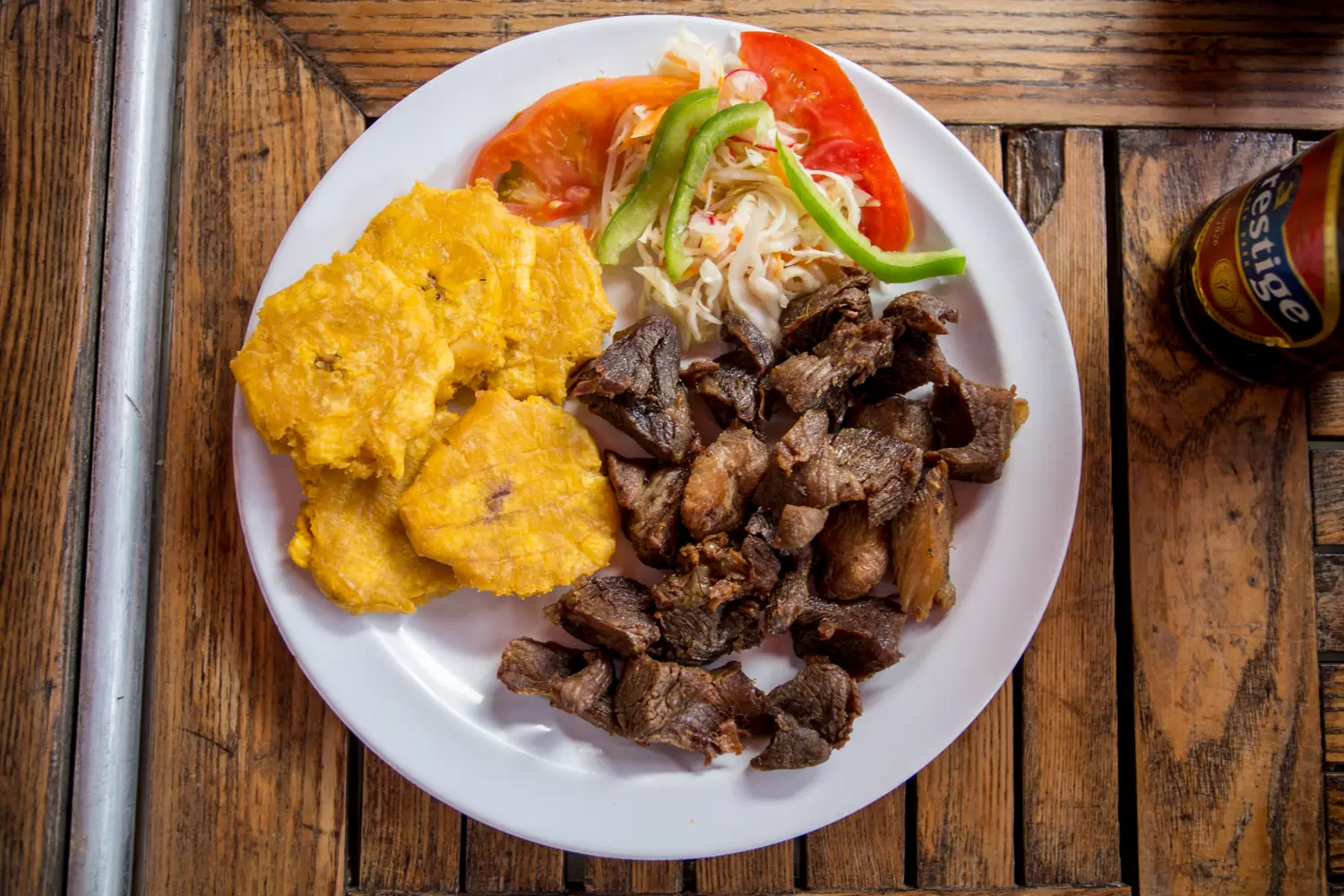
A plate of Haitian griot: dark crisp fried pork cubes with fried plantains and pikliz slaw with tomato and green pepper Haiti flag Haiti 2h 10m
Dinner •Haiti Heritage

Haitian Griot

This Haitian griot recipe starts with pork shoulder rubbed in sour citrus and epis, Haiti's green seasoning paste of scallions, garlic, parsley and Scotch bonnet, then braised in its own marinade until tender and fried in hot oil until the edges turn dark and crisp. It is served with pikliz, a sharp pickled cabbage slaw that cuts through the richness. One serving is about 215 g of crisp fried pork with pikliz.

Hearty & Celebratory

Haiti's most loved party dish: citrus-marinated pork, braised tender, then fried until crisp and served with fiery pickled pikliz.

Pairs Well With
Fried plantains (bannann peze) and rice and beans, with pikliz on the side.
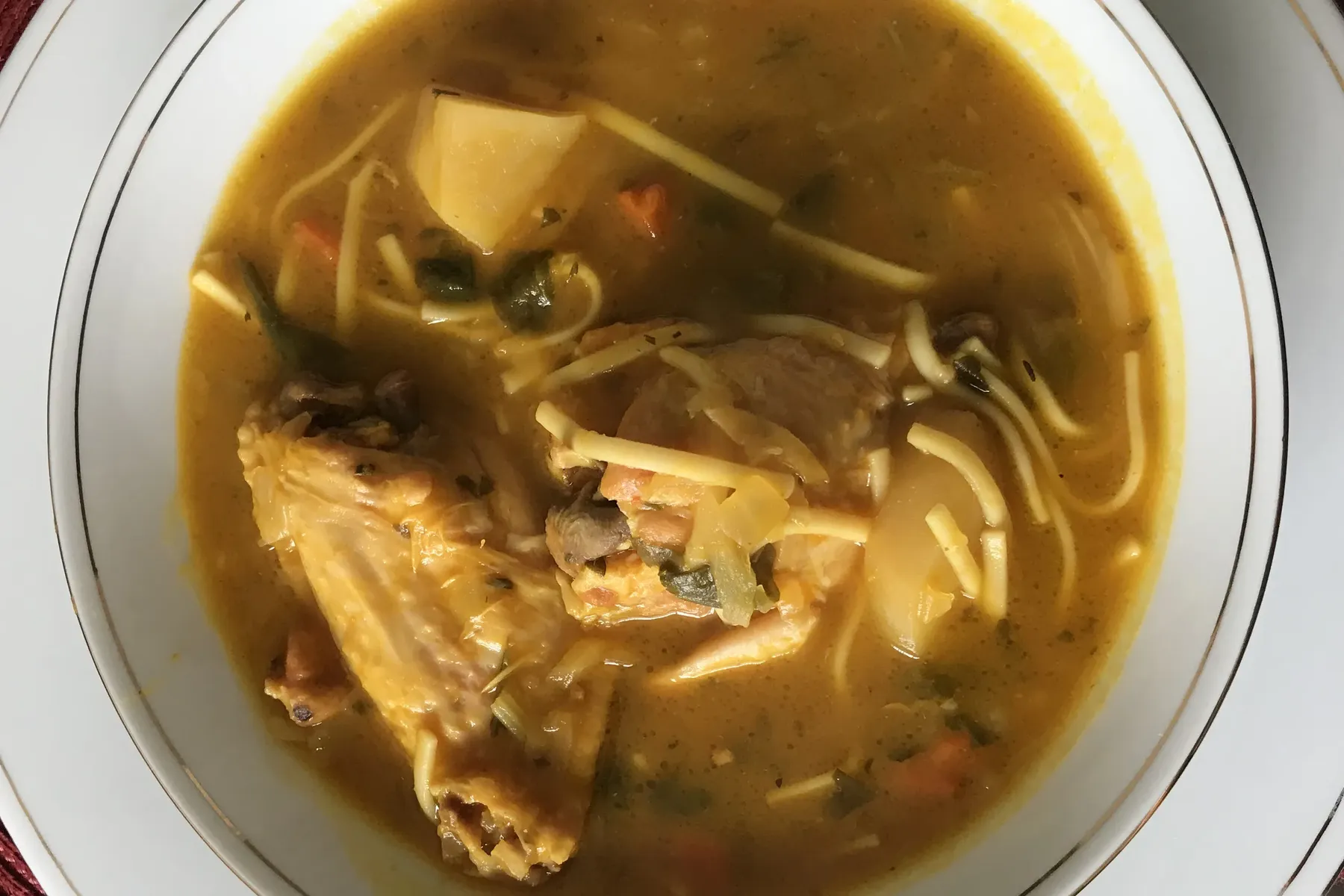
A bowl of Soup Joumou with beef, spaghetti, potato and golden pumpkin broth Haiti flag Haiti 2h 40m
Lunch •Haiti's Independence Soup

Soup Joumou

Soup joumou is Haiti's golden pumpkin soup: tender beef simmered in a thick purée of giraumon squash, with root vegetables, cabbage and spaghetti in a rich, spiced broth. This soup joumou recipe follows the home-cooked method Haitian families use every 1 January, when the soup marks Independence Day. One serving is about 480 g.

Comfort & Warmth

A hot, hearty bowl of pumpkin, beef and vegetables that warms up a family lunch on a cold day or a festive table.

Pairs Well With
Serve hot with crusty French bread for dipping and a spoonful of pikliz on the side.
Soups & Broths
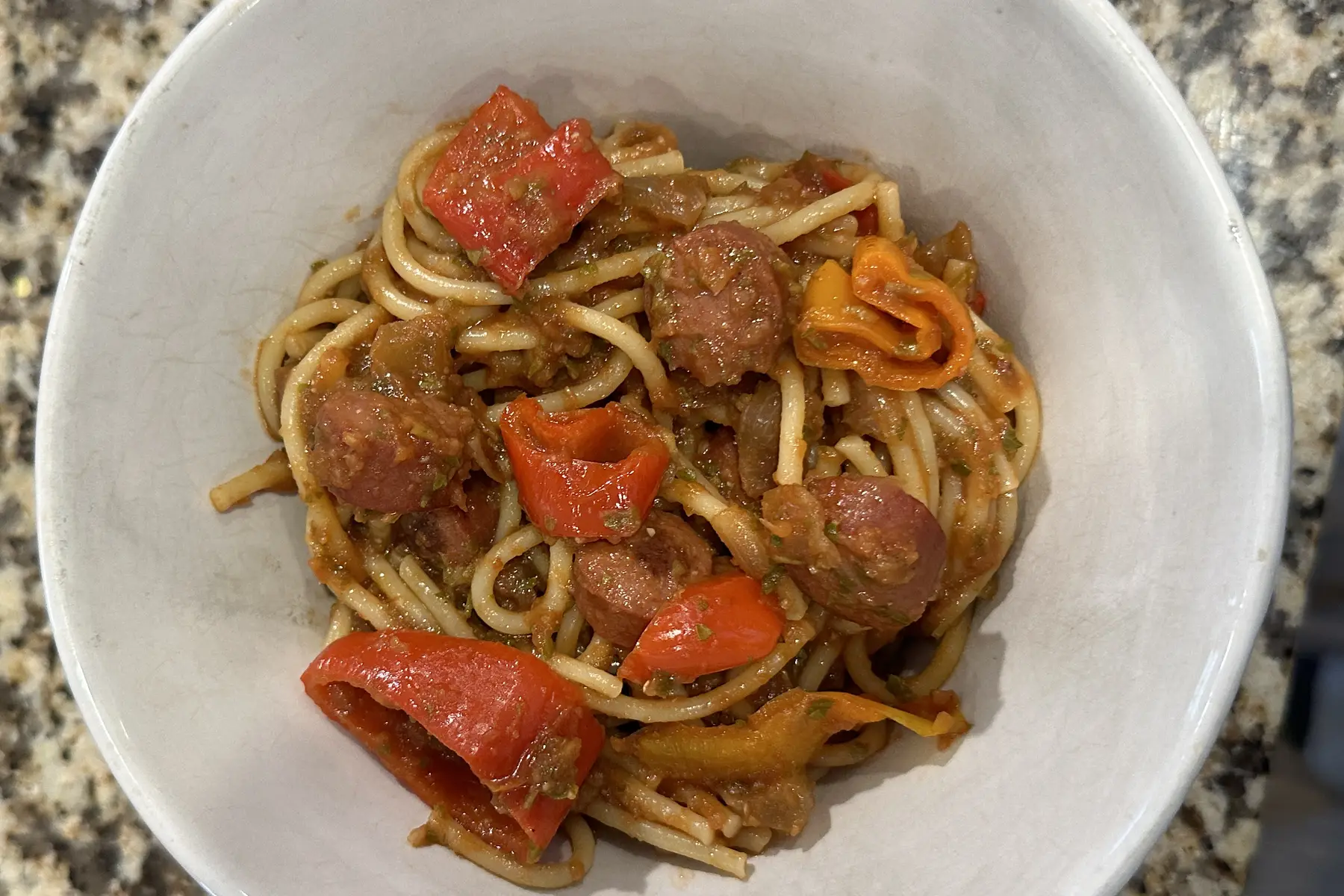
Haitian spaghetti in a white bowl — spaghetti in a rust-red epis and tomato sauce with sliced hot dogs and red peppers Haiti flag Haiti 40m
Breakfast •Haitian Breakfast Espageti

Haitian Spaghetti

This haitian spaghetti recipe is Haiti's beloved breakfast pasta: dried spaghetti cooked in one pot with epis, the green Haitian seasoning base, tomato paste, sweet peppers, onion and sliced hot dogs, until every strand is stained rust-red and full of flavour. It is pantry cooking at its best — cheap, fast and boldly seasoned — and it lands on the table in about 40 minutes. One serving is about 380 g.

Hearty & Comforting

One-pot spaghetti coated in a savoury epis and tomato sauce with sliced hot dogs, peppers and onion — a filling Haitian breakfast.

Pairs Well With
Boiled egg, avocado & pikliz
Pasta & Noodles • Quick Prep (<30m)
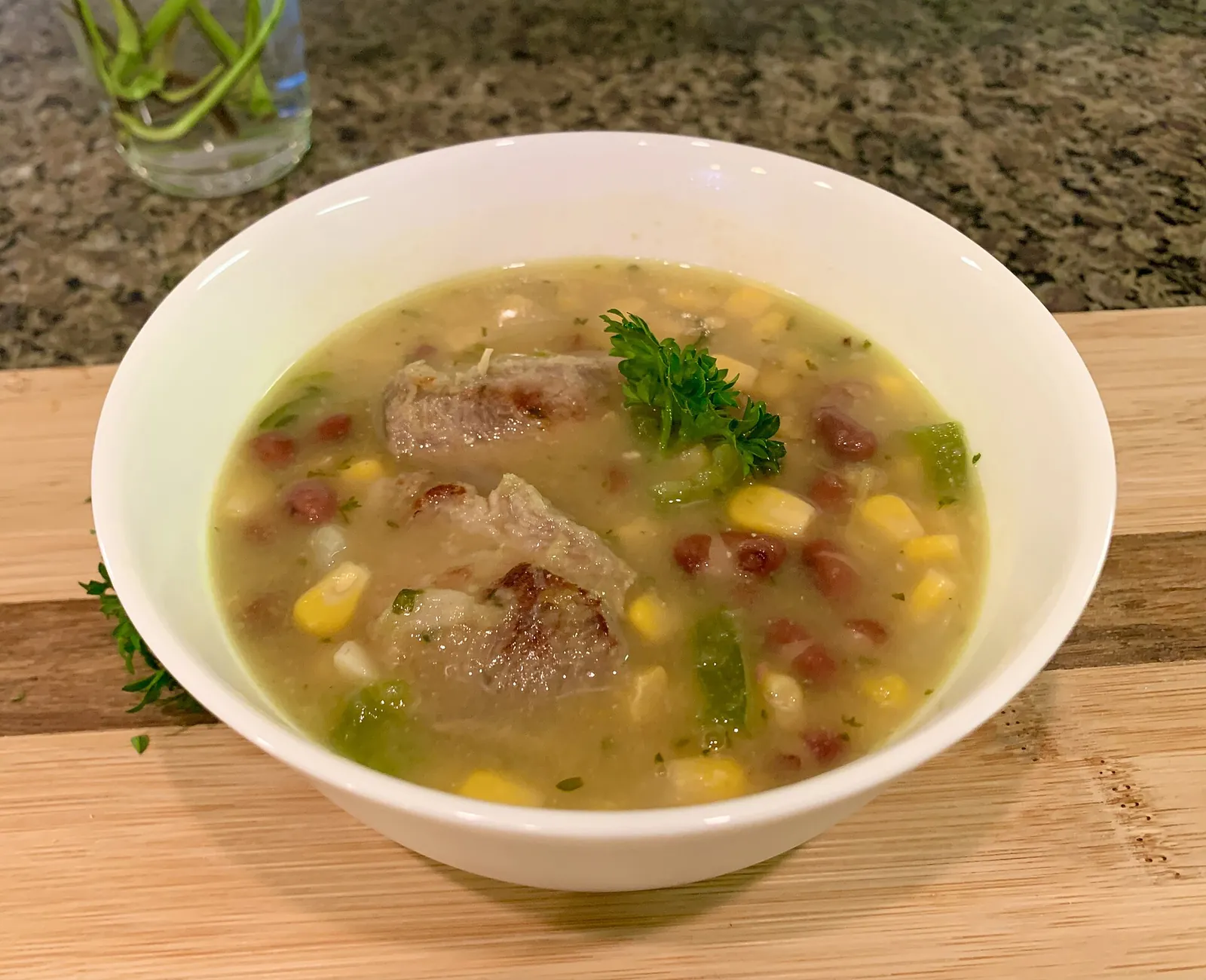
A white bowl of Haitian tchaka with corn kernels, red beans and smoked pork chunks in a light broth, garnished with parsley Haiti flag Haiti 3h 20m
Lunch •Haitian Heritage Stew

Tchaka

This tchaka recipe soaks dried corn and red kidney beans overnight, then simmers them for hours with smoked pork, pumpkin and a fragrant epis of garlic, scallion, parsley and thyme until the pot turns thick and hearty. The smoked pork is what gives tchaka its deep, salty flavour, and the Scotch bonnet — left whole so it perfumes the stew without burning — is the quiet heat underneath it all. One serving is about 400 g.

Comfort & Warmth

Dried corn and red beans simmered for hours with smoked pork, pumpkin and epis until thick — Haiti's slow, hearty celebration stew.

Pairs Well With
Crusty bread, pikliz & avocado
Soups & Broths

The Dinner Gazette

Never wonder what’s for dinner again

One email a week with easy dinner ideas from around the world — ingredients, steps and nutrition, tested in our kitchen first.

Delivered every Thursday morning. Unsubscribe anytime.