Curated recipes from 193 countries  •  New seasonal Mediterranean issue out now

Overview

Dous Kokoye

Douce Kokoye, Haitian Coconut Fudge, Dous au Coco

This dous kokoye recipe cooks coconut milk, evaporated milk and sugar with cinnamon, star anise and lime peel, then stirs in shredded coconut until the mixture turns thick, golden and caramelised. Poured into a pan and cut into squares, it sets into a soft, chewy fudge that tastes of toasted coconut and warm spice. One serving is about 80 g, one square. It is the coconut sweet Haitian bakeries sell beside dous makos, and it keeps for days in a tin.

Dous kokoye is the coconut fudge of Haitian bakeries and family kitchens, cooked in one pot from coconut milk, evaporated milk and sugar until it thickens and caramelises. Haitian food writer Tchakayiti's family recipe — passed down from her great-grandmother — cooks the milks with lime peel, cinnamon and star anise, and adds shredded coconut for texture; she describes the result as sitting somewhere between a tablet, the hard coconut candy, and a douce, the soft milk fudge. It is often confused with dous makos, the striped milk fudge, but the two are different sweets: dous kokoye is built on coconut milk and shredded coconut, while dous makos contains no coconut at all.

Pairs well with: Serve one square with strong Haitian coffee or a glass of cold milk; the coffee's bitterness balances the fudge's sweetness.

Provenance

Haiti flag Haiti

Haitian Heritage

Latin America & Caribbean

Time Dedication

50m

15m prep • 35m cook

Batch Yield

10 Servings

270 kcal per serving

1 serving ≈ 80 g

Technical Skill

Intermediate

Medium (Stirring & Setting)

Meal Timing & Digestive Fit

Breakfast

Not Advised

Lunch

Inappropriate

Dinner

Inappropriate

Snack & Tea

Ideal Light Bite

Occasions: Family parties, Christmas, Haitian celebrations, bakery treats, gifts Cost: Low — about $1–2 per serving at home

Pale coconut fudge bars with a grainy coconut texture, one bar in sharp focus

Haitian Heritage

Photo: Sriki555, CC BY-SA 4.0, via Wikimedia Commons

The Heritage Formulary

Measured Ingredients

Estimated cost: Low — about $1–2 per serving at home (USD)
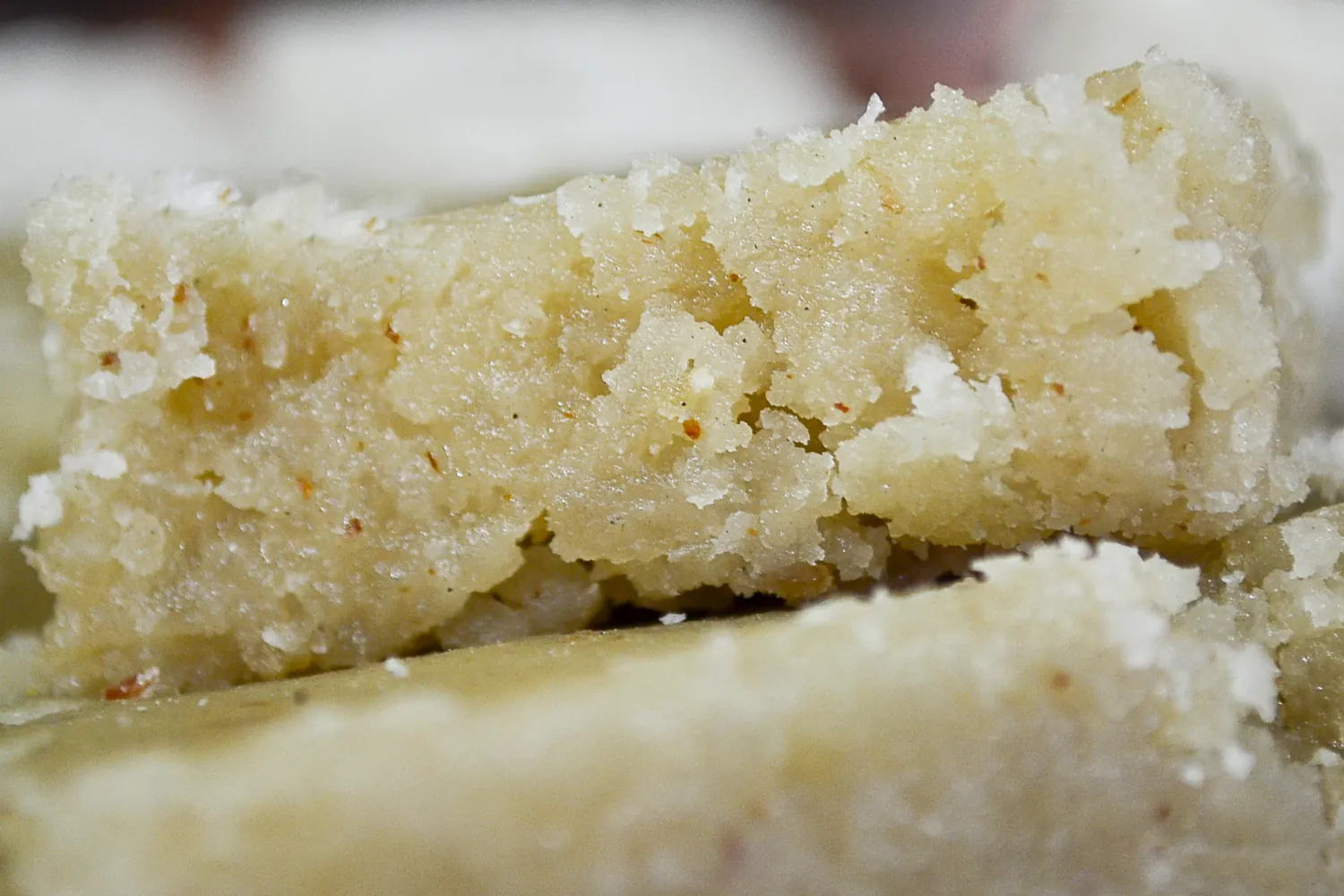
Made the Haitian way: coconut milk and evaporated milk simmered with lime, cinnamon and star anise until thick and caramelised, then set with shredded coconut.

Execution Methodology & Culinary Technique

Step-by-Step Cooking Guide

Active 50m
P

Prep Stage: Line the Pan & Measure the Milks

15 Mins • Lining & Measuring

Line a 20 cm square tin with parchment paper, leaving paper overhanging two sides so the set fudge can be lifted out, and lightly grease the paper. Open both cans, measure the sugar and shredded coconut, and set the cinnamon stick, star anise and lime peel in a small dish so they can go in together.

Maestro Tip: Grease the parchment, not just the tin — the fudge sticks hard to dry paper and tears when you lift it out.

  1. 1

    Simmer the Milks with the Spices

    10 Mins Medium heat, about 160°C (320°F)

    Pour the coconut milk and evaporated milk into a heavy-bottomed saucepan. Add the sugar, cinnamon stick, star anise, lime peel and salt, and stir over medium heat until the sugar dissolves and the milk comes to a gentle simmer, about 10 minutes. Do not let it boil hard — a rolling boil can split the coconut milk.

    A heavy pot matters: thin pans scorch the milk sugars at the edges.

    Done when: Sugar fully dissolved; milk simmering gently with small bubbles at the edges.

  2. 2

    Cook Down Until Thick

    20 Mins Low heat, about 95°C (200°F)

    Turn the heat to low and simmer, stirring often with a wooden spoon, for about 20 minutes. The mixture will slowly thicken, turn pale gold and start to coat the spoon; scrape the bottom and corners so nothing catches. Lift out the cinnamon stick, star anise and lime peel.

    Stir in slow figure-eights so the bottom never sits still long enough to scorch.

    Done when: The mixture coats the spoon and leaves a clear trail when you drag the spoon across the bottom of the pan.

  3. 3

    Stir in the Coconut

    10 Mins Low heat, about 95°C (200°F)

    Add the shredded coconut and keep cooking and stirring for about 10 minutes more. The fudge will turn deeper gold, pull away from the sides of the pan in a soft mass, and smell of toasted coconut. Take the pan off the heat and stir in the vanilla extract.

    The fudge is ready when a spoonful dropped on a cold plate holds its shape instead of spreading.

    Done when: The mass pulls away from the sides of the pan and a dropped spoonful holds its shape on a cold plate.

  4. 4

    Pour, Set & Cut

    10 Mins + 2 Hours Setting Room temperature, about 20°C (68°F)

    Scrape the fudge into the lined tin and press it flat with a greased spatula or the back of a wet spoon. Smooth the top, then leave it to cool completely and set for about 2 hours at room temperature. Lift it out by the parchment overhang and cut into 10 squares with a sharp, lightly oiled knife.

    Oil the knife lightly and wipe it between cuts for clean edges.

    Done when: Fudge is firm enough to lift from the tin and cut cleanly without sticking to the knife.

  5. 5

    Serve the Squares

    5 Mins Room temperature, about 20°C (68°F)

    Arrange the squares on a plate and serve at room temperature, with strong coffee if you like. Any squares not eaten at once go straight into an airtight tin.

    Let the squares sit out for 10 minutes after the fridge so they soften to the right chew.

    Done when: Squares hold their shape on the plate and bend slightly before breaking.

Finishing Touches & Plating

Serve the squares plain — the pale gold fudge and its coconut flecks are the decoration. One square per person is plenty; this is a rich sweet.

Nutritional Physiology & Benefits

Nutrition

Energy

270

kcal / serving

Protein

3g

Complete AA

Carbs

27g

Complex

Fats

18g

Healthy

Per serving (10 servings · 1 serving ≈ 80 g)
Energy270 kcal
Protein3 g
Carbohydrates27 g
Fat18 g
Fibre2.7 g
Sugar24.5 g
Sodium74 mg
Per 100g
Energy338 kcal
Protein4.1 g
Carbohydrates34.1 g
Fat22.3 g
Fibre3.4 g
Sugar30.6 g
Sodium92 mg

Nutrition values are estimated — calculated from USDA FoodData Central values for the listed ingredients.

Vitamins & minerals: Provides calcium from the evaporated milk and coconut milk, plus small amounts of iron and potassium from the coconut.

Quick Energy for Celebrations

One 80 g square gives about 270 kcal, mostly from coconut and milk sugars, so it is a fast, satisfying sweet for parties and festivals rather than an everyday snack.

Calcium from Real Milk

The evaporated milk and coconut milk base means each square carries calcium for bones and teeth — a small nutritional plus in a candy, though the sugar dominates.

Fibre from the Coconut

The shredded coconut adds about 2.7 g of fibre per square, which is more than most sweets manage, and it gives the fudge its chewy bite.

Food Pairings

What to Eat With

To optimize nutrient absorption and elevate the sensory depth, pair with these authentic accompaniments:

Drinks

Strong Haitian Coffee

Bitter, strong coffee cuts through the fudge's intense sweetness, which is why dous kokoye is almost always eaten with coffee in Haiti.

Cold Milk

A glass of cold milk softens the fudge's caramel edge and makes it an easy sweet for children.

Sides

Fresh Mango Slices

Cold, tart-sweet mango refreshes the palate between squares and keeps the rich fudge from feeling heavy.

Full Menus

After Griot & Pikliz

A square of dous kokoye is the classic sweet finish to a salty, spicy Haitian meal of griot and pikliz — the sweetness cools the heat.

Complete menu

One square of dous kokoye with strong Haitian coffee and fresh mango slices is the classic sweet end to a Haitian family meal.

Digestive Guardrails

What NOT to Combine

To prevent digestive distress, sluggishness, or palate clash, avoid pairing the dish with these elements:

Do Not Eat Several Squares at Once

One square carries about 24.5 g of sugar — close to a day's recommended added sugar for most adults — so a second square quickly becomes a very large sugar load. Enjoy one and stop. This is general nutrition guidance, not medical advice.

Do Not Leave the Fudge in a Hot Car or in the Sun

The milk and coconut base softens and weeps in heat, and warm, sugary food left out for hours can grow bacteria. Keep it cool and refrigerated. This is general food-safety guidance, not medical advice.

General information only, not medical advice — consult a doctor for personal dietary decisions.

Who Should Eat It

Who Should Eat

  • General adultsOne square is a treat, not a snack — about 270 kcal and 24.5 g of sugar per 80 g serving.
  • ChildrenFine as an occasional party sweet in small pieces; the high sugar makes it unsuitable as a daily snack.
  • ElderlySoft and easy to chew, but the sugar load matters — one small square is enough, especially with coffee.
  • Pregnant womenSafe in small amounts; keep to one square because of the sugar, and ask your clinician if you have gestational diabetes.
  • Breastfeeding womenOne square is fine as an occasional sweet; the sugar adds up fast, so keep portions small.
  • AthletesA quick source of energy after training, but low in protein — pair it with a protein-rich meal, not as a recovery food on its own.
  • Weight gainUseful for adding energy: one square adds about 270 kcal without filling you up.
  • Weight lossBest skipped or shared — one square is about 270 kcal of mostly sugar and fat, which is hard to fit into a lower-energy day.

Health Conditions — Adjust or Avoid

Conditions

  • DiabetesOne square carries about 27.3 g of carbohydrate and 24.5 g of sugar, so it will raise blood sugar fast — most people with diabetes should skip it or eat only a small piece, and ask your clinician about portions.
  • High blood pressureSodium is low at about 74 mg per square, but the sugar load is high; enjoy rarely and ask your clinician if you are watching sugar as well as salt.
  • Kidney diseaseThe milk base adds potassium and phosphorus, so check your daily limits and ask your clinician before eating it.
  • GoutCoconut itself is low in purines, but large amounts of added sugar can raise uric acid over time — keep portions small and ask your clinician.
  • Stomach issuesThe coconut fat can feel heavy on a sensitive stomach; eat a small piece after food rather than on an empty stomach, and ask your clinician if you are unsure.
  • Cardiovascular diseaseHigh in saturated fat from coconut milk and coconut — about 17.8 g of fat per square — so keep it an occasional treat and ask your clinician about portions.
  • Fatty liverThe sugar and saturated fat load makes this a rare treat, not a regular snack, if you are managing fatty liver — ask your clinician.
  • Food allergiesContains milk and coconut. Coconut is classed as a tree nut by food regulators, so anyone with a tree-nut allergy should check with their clinician before eating it.
  • Special therapeutic dietsHigh in sugar and saturated fat, so it fits few therapeutic diets — ask your clinician or dietitian whether a small piece fits yours.

If you have a medical condition, consult your doctor before changing your diet.

Storage & Use

Storage & Use

How to store
Cool completely, then store in an airtight container in a single layer or between sheets of parchment.
In the fridge
Up to 2 weeks in the fridge at 4°C (39°F).
In the freezer
Up to 3 months, wrapped tightly; thaw in the fridge.
How to reheat
No reheating — serve cold or at room temperature; warming melts the fudge.
Freezing recommended
Yes, up to 3 months; cut into squares before freezing.
Signs it has spoiled
Sticky or weeping surface, sour milk smell, or mould spots.

More recipes to explore

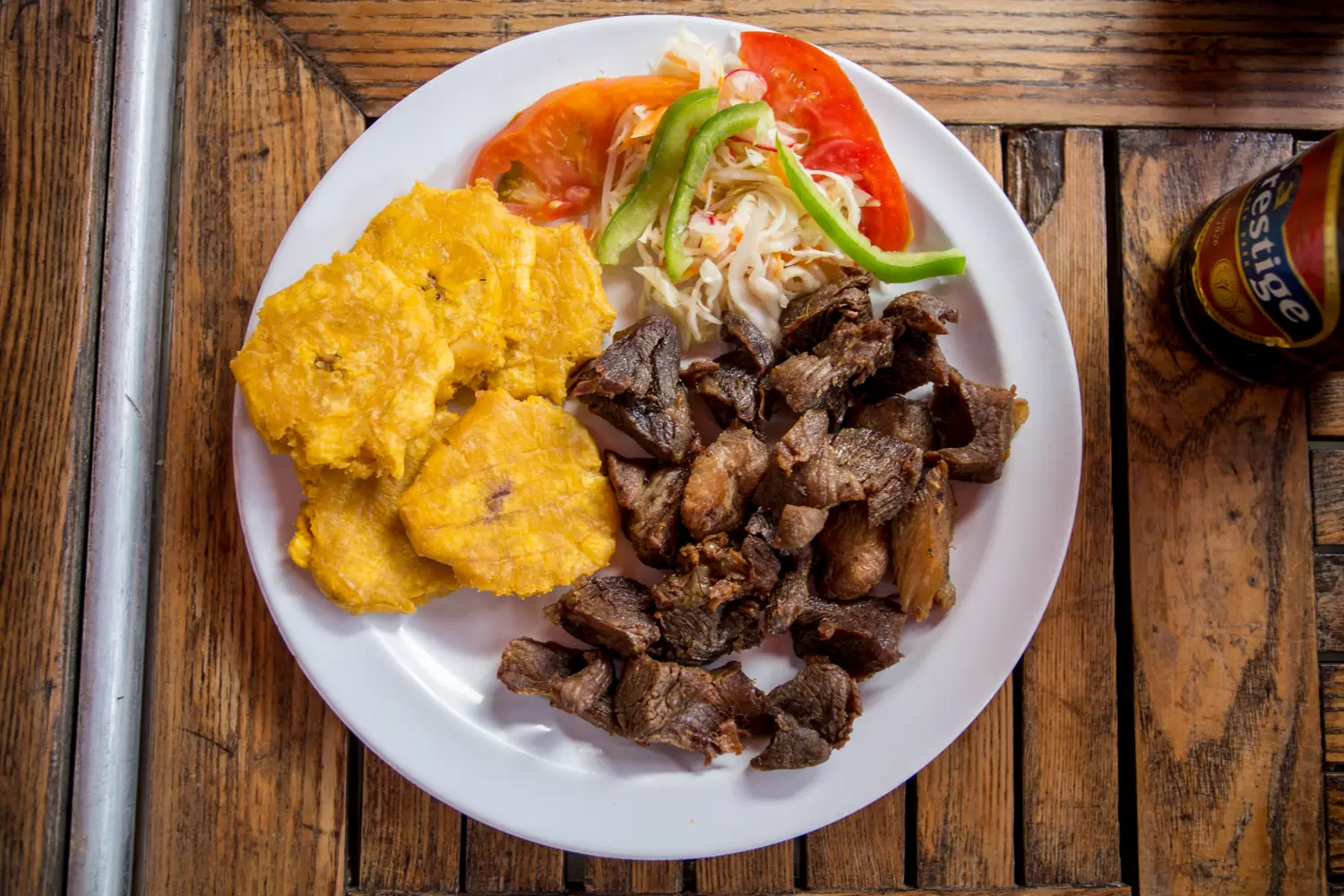
A plate of Haitian griot: dark crisp fried pork cubes with fried plantains and pikliz slaw with tomato and green pepper Haiti flag Haiti 2h 10m
Dinner •Haiti Heritage

Haitian Griot

This Haitian griot recipe starts with pork shoulder rubbed in sour citrus and epis, Haiti's green seasoning paste of scallions, garlic, parsley and Scotch bonnet, then braised in its own marinade until tender and fried in hot oil until the edges turn dark and crisp. It is served with pikliz, a sharp pickled cabbage slaw that cuts through the richness. One serving is about 215 g of crisp fried pork with pikliz.

Hearty & Celebratory

Haiti's most loved party dish: citrus-marinated pork, braised tender, then fried until crisp and served with fiery pickled pikliz.

Pairs Well With
Fried plantains (bannann peze) and rice and beans, with pikliz on the side.
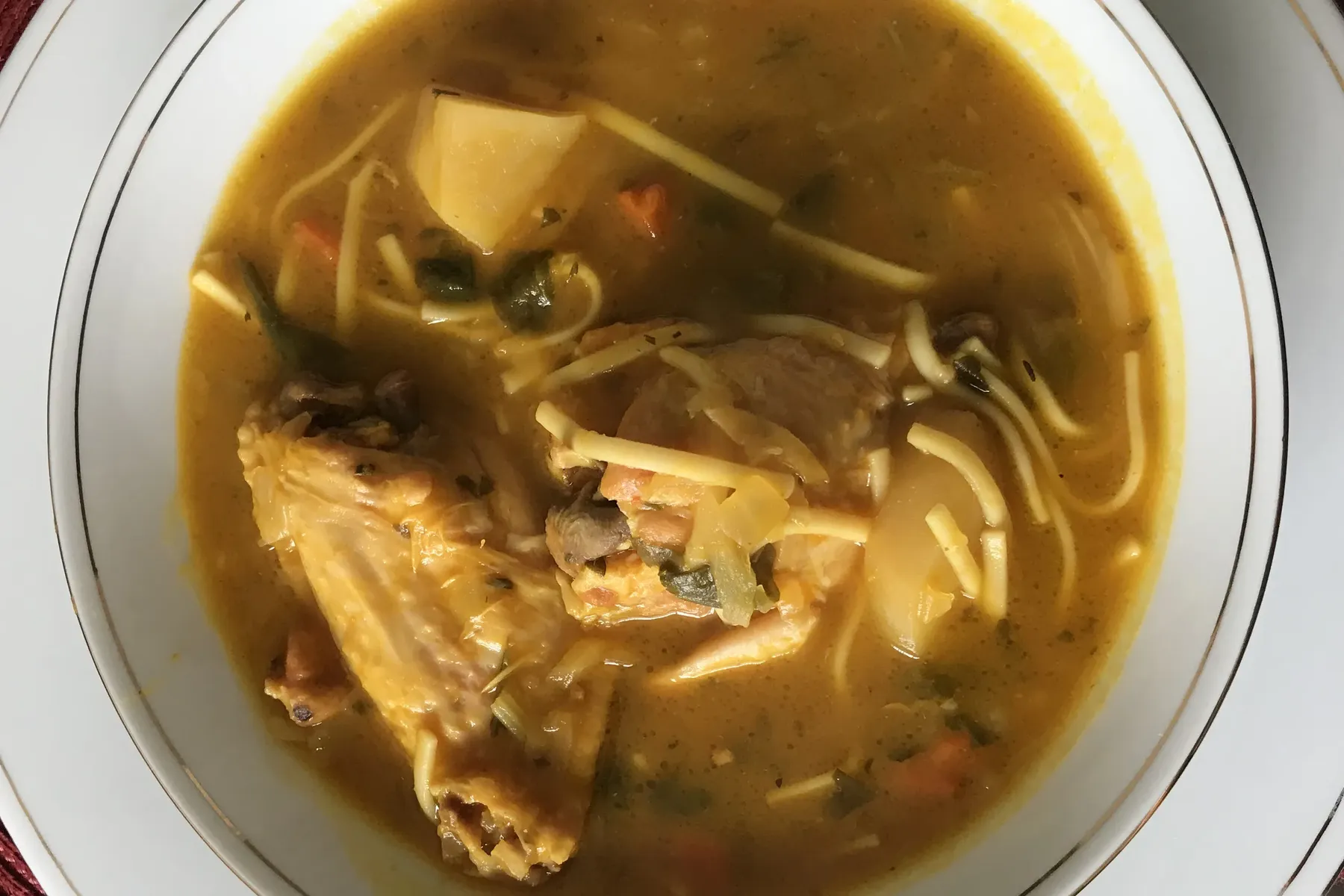
A bowl of Soup Joumou with beef, spaghetti, potato and golden pumpkin broth Haiti flag Haiti 2h 40m
Lunch •Haiti's Independence Soup

Soup Joumou

Soup joumou is Haiti's golden pumpkin soup: tender beef simmered in a thick purée of giraumon squash, with root vegetables, cabbage and spaghetti in a rich, spiced broth. This soup joumou recipe follows the home-cooked method Haitian families use every 1 January, when the soup marks Independence Day. One serving is about 480 g.

Comfort & Warmth

A hot, hearty bowl of pumpkin, beef and vegetables that warms up a family lunch on a cold day or a festive table.

Pairs Well With
Serve hot with crusty French bread for dipping and a spoonful of pikliz on the side.
Soups & Broths
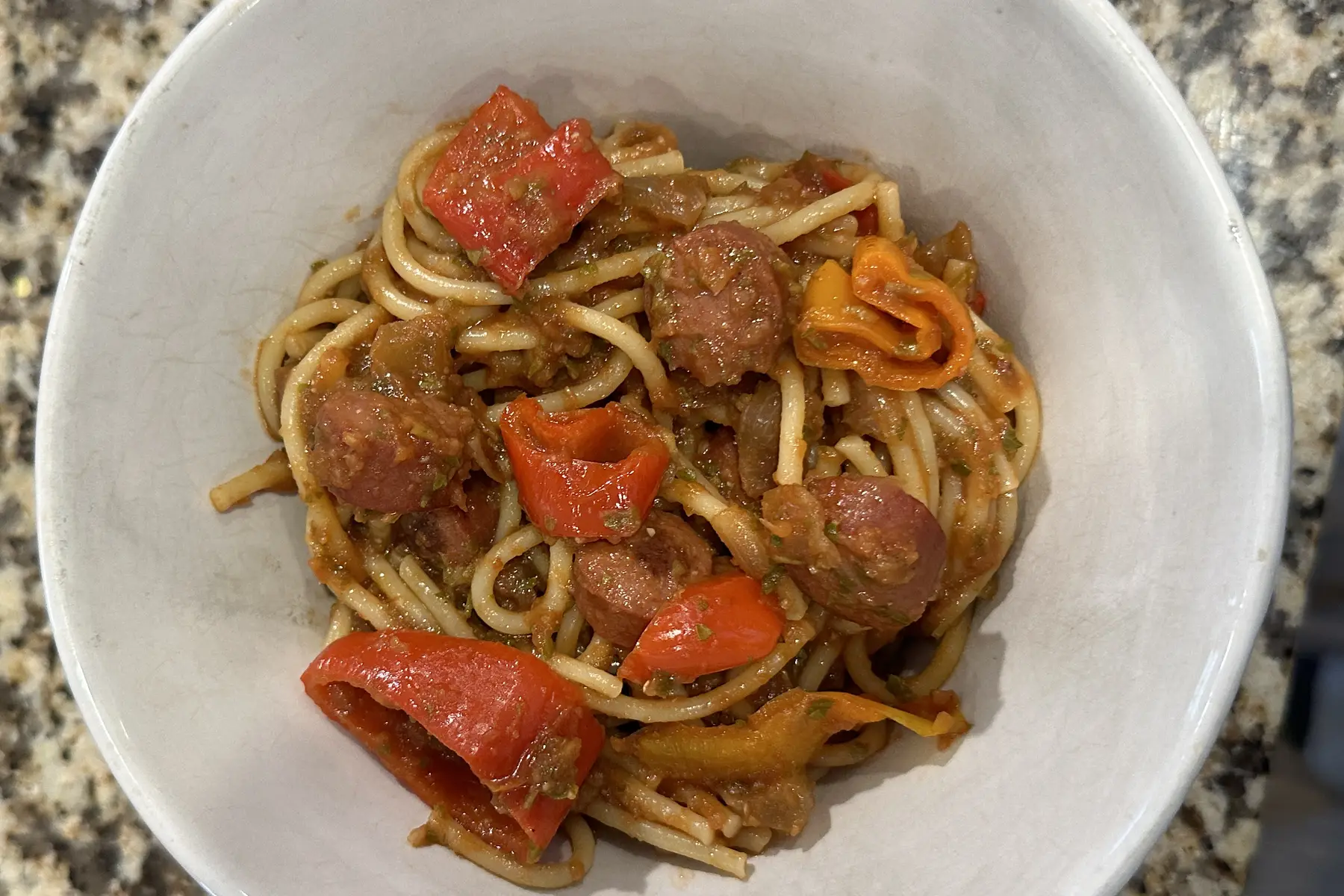
Haitian spaghetti in a white bowl — spaghetti in a rust-red epis and tomato sauce with sliced hot dogs and red peppers Haiti flag Haiti 40m
Breakfast •Haitian Breakfast Espageti

Haitian Spaghetti

This haitian spaghetti recipe is Haiti's beloved breakfast pasta: dried spaghetti cooked in one pot with epis, the green Haitian seasoning base, tomato paste, sweet peppers, onion and sliced hot dogs, until every strand is stained rust-red and full of flavour. It is pantry cooking at its best — cheap, fast and boldly seasoned — and it lands on the table in about 40 minutes. One serving is about 380 g.

Hearty & Comforting

One-pot spaghetti coated in a savoury epis and tomato sauce with sliced hot dogs, peppers and onion — a filling Haitian breakfast.

Pairs Well With
Boiled egg, avocado & pikliz
Pasta & Noodles • Quick Prep (<30m)
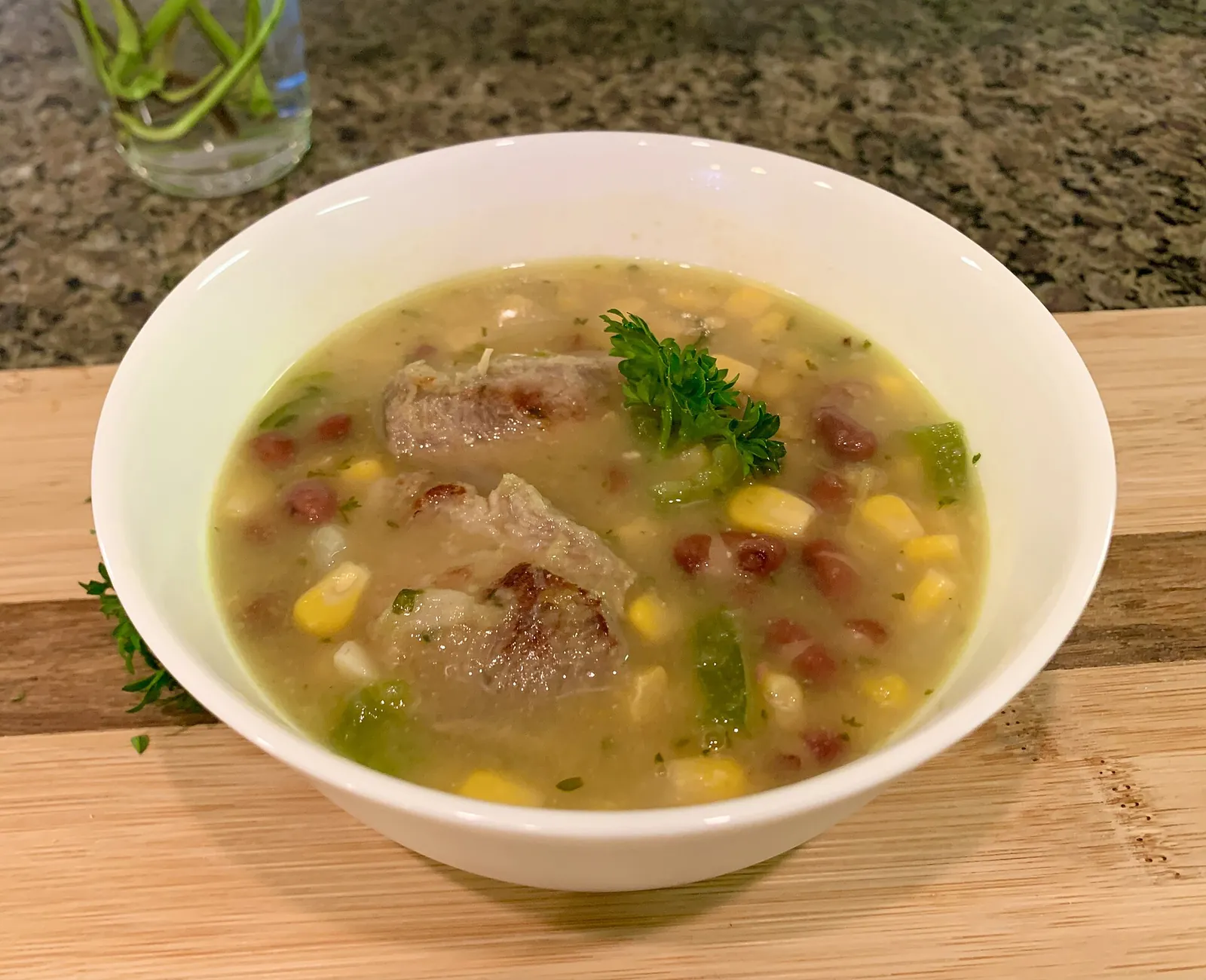
A white bowl of Haitian tchaka with corn kernels, red beans and smoked pork chunks in a light broth, garnished with parsley Haiti flag Haiti 3h 20m
Lunch •Haitian Heritage Stew

Tchaka

This tchaka recipe soaks dried corn and red kidney beans overnight, then simmers them for hours with smoked pork, pumpkin and a fragrant epis of garlic, scallion, parsley and thyme until the pot turns thick and hearty. The smoked pork is what gives tchaka its deep, salty flavour, and the Scotch bonnet — left whole so it perfumes the stew without burning — is the quiet heat underneath it all. One serving is about 400 g.

Comfort & Warmth

Dried corn and red beans simmered for hours with smoked pork, pumpkin and epis until thick — Haiti's slow, hearty celebration stew.

Pairs Well With
Crusty bread, pikliz & avocado
Soups & Broths

The Dinner Gazette

Never wonder what’s for dinner again

One email a week with easy dinner ideas from around the world — ingredients, steps and nutrition, tested in our kitchen first.

Delivered every Thursday morning. Unsubscribe anytime.