Curated recipes from 193 countries  •  New seasonal Mediterranean issue out now

Overview

Haitian Coconut Flan

Flan Kokoye, Flan de Coco, Haitian Flan

This haitian coconut flan recipe bakes coconut milk, shredded coconut and eggs into a silky custard under dark amber caramel, with cinnamon, nutmeg and lime zest. One serving is about 181 g.

Flan came to Haiti with French and Spanish colonial cooking, and Haitian kitchens made it their own with the island's coconut: coconut milk replaces part of the dairy, shredded coconut is folded through the custard, and lime zest and nutmeg — the same spices as chokola — perfume it. It is the dessert of Haitian family celebrations, turned out of its mould so the dark caramel runs down the sides.

Pairs well with: A cup of strong Haitian coffee after the meal

Provenance

Haiti flag Haiti

Haitian Celebration Dessert

Latin America & Caribbean

Time Dedication

1h 20m

20m prep • 60m cook

Batch Yield

8 Servings

427 kcal per serving

1 serving ≈ 181 g

Technical Skill

Intermediate

Medium (Water Bath)

Meal Timing & Digestive Fit

Breakfast

Not Advised

Lunch

Inappropriate

Dinner

Inappropriate

Snack & Tea

Ideal Light Bite

Occasions: Family celebrations, Sunday dinner, festive gatherings, holiday dessert Cost: Low — about $1–2 per serving at home
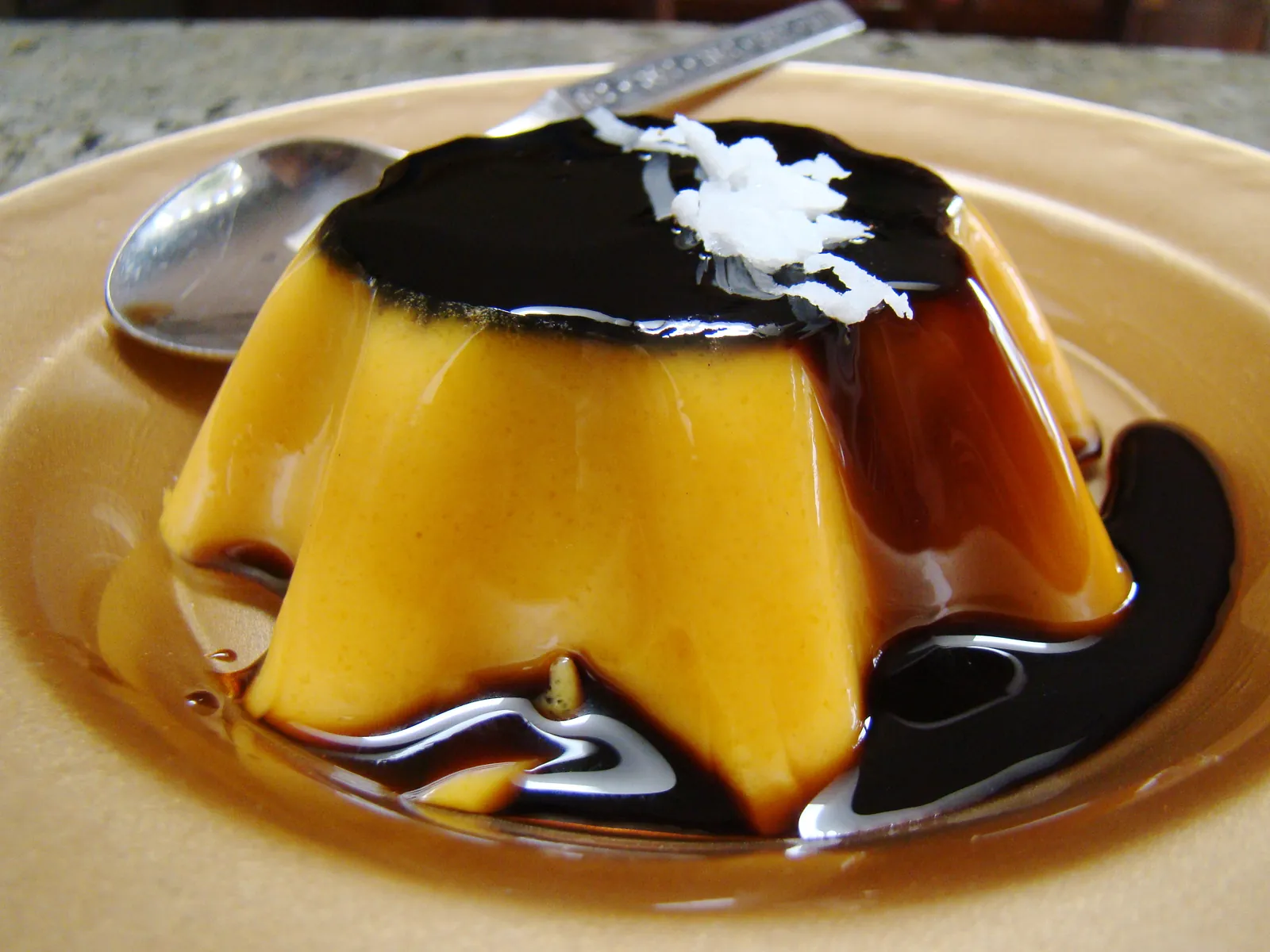
A golden coconut flan with dark caramel sauce and shredded coconut on a plate

Haitian Celebration Dessert

Photo: norwichnuts, CC BY 2.0, via Wikimedia Commons

The Heritage Formulary

Measured Ingredients

Estimated cost: Low — about $1–2 per serving at home (USD)

A good Haitian coconut flan is silky and just set, with visible shreds of coconut and a dark caramel that runs like sauce — never rubbery or dry.

Execution Methodology & Culinary Technique

Step-by-Step Cooking Guide

Active 1h 20m
P

Prep Stage: Measure, Crack, Grate

20 Mins • Measuring and Grating

Measure the sugar for the caramel and the milks for the custard. Crack the eggs into a bowl and set the shredded coconut, vanilla, cinnamon, nutmeg and lime zest beside the stove. Have a 1.5-litre flan mould or round cake tin and a deep roasting pan ready for the water bath.

Maestro Tip: Use room-temperature eggs: cold eggs cool the custard and can make it set unevenly.

  1. 1

    Make the Caramel

    8 Mins Medium heat, caramel ~170°C (338°F)

    Put the sugar and water in a small saucepan over medium heat. Stir once to dissolve, then stop stirring and let it bubble until it turns deep amber — about 6–8 minutes. Immediately pour it into the flan mould and tilt to coat the bottom and a little way up the sides.

    Watch the colour, not the clock: pale gold is too light, black is burnt. Pull it off the heat a shade before you think it is ready — it keeps darkening in the pan.

    Done when: The caramel is deep amber and coats the mould in a thin, even layer.

  2. 2

    Blend the Custard

    5 Mins Room temperature, about 20°C (68°F)

    Whisk the eggs gently in a large bowl — do not whip them, or the flan will be full of bubbles. Whisk in the coconut milk, evaporated milk and condensed milk, then the vanilla, cinnamon, nutmeg, lime zest and salt.

    Gentle whisking matters: beaten-in air makes a spongy flan instead of a silky one.

    Done when: The custard is smooth, pale and streak-free.

  3. 3

    Strain and Add the Coconut

    2 Mins Room temperature, about 20°C (68°F)

    Pour the custard through a fine sieve into a jug to catch any egg strands, then stir in the shredded coconut. The coconut will float — that is fine, it settles into the top of the flan as it bakes.

    Straining is the difference between a silky flan and a lumpy one.

    Done when: The custard is smooth with the coconut evenly stirred through.

  4. 4

    Fill the Mould and Set the Water Bath

    5 Mins Oven preheated to 175°C (350°F)

    Pour the custard into the caramel-lined mould. Set the mould in a deep roasting pan, slide the pan onto the oven rack, and pour boiling water into the pan until it comes halfway up the sides of the mould.

    Pour the water in after the pan is in the oven — carrying a full water bath across the kitchen is how spills happen.

    Done when: The mould sits level in the water, which reaches halfway up its sides.

  5. 5

    Bake Until Just Set

    55 Mins Oven 175°C (350°F); centre set at about 77°C (170°F)

    Bake for 50–55 minutes until the edges are set and the centre barely wobbles when you nudge the pan — like set jelly, not liquid. Take the mould out of the water bath and let it cool on a rack for 1 hour.

    A flan that looks fully firm in the oven is already overbaked; the centre should still tremble a little.

    Done when: The edges are firm, the centre wobbles gently, and a knife comes out clean at the edge.

  6. 6

    Chill and Turn Out

    5 Mins Fridge, about 4°C (40°F)

    Cover and chill the flan for at least 4 hours, or overnight. To serve, run a thin knife around the edge, set the mould in a bowl of hot water for 30 seconds, place a rimmed plate on top and flip it over in one confident motion. Lift the mould off and let the caramel run down the sides.

    The hot-water dip loosens the caramel so the flan drops out cleanly instead of tearing.

    Done when: The flan stands whole on the plate, glossy with dark caramel sauce.

Finishing Touches & Plating

Chill the flan for at least 4 hours — overnight is better — so the caramel melts into a sauce and the custard firms up. Run a thin knife around the edge, set the mould in hot water for 30 seconds, and turn it out onto a rimmed plate so the caramel runs down the sides.

Nutritional Physiology & Benefits

Nutrition

Energy

427

kcal / serving

Protein

11g

Complete AA

Carbs

42g

Complex

Fats

26g

Healthy

Per serving (8 servings · 1 serving ≈ 181 g)
Energy427 kcal
Protein11 g
Carbohydrates42 g
Fat26 g
Fibre2.5 g
Sugar39.2 g
Sodium182 mg
Per 100g
Energy235 kcal
Protein5.9 g
Carbohydrates23.2 g
Fat14 g
Fibre1.4 g
Sugar21.6 g
Sodium100 mg

Nutrition values are estimated — calculated from USDA FoodData Central values for the listed ingredients.

Vitamins & minerals: Calcium and vitamin B12 (milk and eggs), vitamin E (coconut), iron (eggs).

Silky, Gentle Dessert

A baked custard is soft, mild and easy to digest, which makes it a kind dessert after a rich meal.

Real Coconut, Two Ways

Coconut milk gives the custard its richness and shredded coconut gives it texture — no artificial coconut flavouring anywhere.

Protein from Eggs and Milk

Five eggs plus evaporated milk give each slice a useful amount of protein for a dessert.

Food Pairings

What to Eat With

To optimize nutrient absorption and elevate the sensory depth, pair with these authentic accompaniments:

Drinks

Strong Haitian Coffee

Bitter black coffee cuts through the caramel sweetness and makes the coconut taste brighter — the classic Haitian after-dinner pairing.

Sides

Fresh Mango or Pineapple

Tart tropical fruit balances the rich custard and gives the plate colour and acidity.

A Thin Slice of Coconut Bread

Plain coconut bread echoes the flan's flavour without adding more sweetness, and gives something to mop up the caramel sauce.

Full Menus

After Griot or Spicy Stew

The cool, creamy flan calms the palate after Haiti's spicy, savoury dishes — it is the dessert the meal is built around.

Complete menu

Serve Haitian coconut flan chilled after griot or a spicy stew, with strong black coffee and fresh mango on the side.

Digestive Guardrails

What NOT to Combine

To prevent digestive distress, sluggishness, or palate clash, avoid pairing the dish with these elements:

Very Sweet Drinks on the Side

The flan and its caramel are already sweet, so a sugary soda alongside adds a lot of sugar at once — black coffee or water suits it better. This is general guidance, not medical advice.

Skipping the Water Bath

Baking the flan without a water bath makes the outside rubbery and the top cracked — the gentle, even heat of the bath is what keeps it silky.

General information only, not medical advice — consult a doctor for personal dietary decisions.

Who Should Eat It

Who Should Eat

  • General adultsA rich celebration dessert for most adults — one slice is plenty.
  • ChildrenVery suitable in a small slice; soft, mild and easy to eat. Keep the portion small for young children.
  • ElderlyExcellent — soft, cool and easy to chew and digest.
  • Pregnant womenGenerally suitable in a small slice; the eggs and milk add protein and calcium. Keep the sugar in mind.
  • Breastfeeding womenGenerally suitable; the eggs and milk give gentle energy.
  • AthletesA useful post-training dessert — protein from eggs plus quick carbs for recovery.
  • Weight gainA good choice — take a generous slice with an extra spoonful of caramel sauce.
  • Weight lossA good choice in a small slice — the flan is rich and filling, so a half slice satisfies.

Health Conditions — Adjust or Avoid

Conditions

  • DiabetesThe sugar, caramel and condensed milk are all sources of sugar — keep the slice small and ask your clinician about portion size.
  • High blood pressureMost of the sodium comes from the pinch of salt; keep it small. Ask your clinician about a suitable portion.
  • Kidney diseaseLimit the portion (potassium and phosphorus from milk and eggs); ask your clinician about portion size.
  • GoutEat occasionally and in smaller portions — the dish is sweet and rich.
  • Stomach issuesUsually gentle and soothing; eat it cool rather than ice-cold if your stomach is sensitive.
  • Cardiovascular diseaseKeep the slice modest — the dish is high in sugar and saturated fat.
  • Fatty liverKeep the portion small and skip the extra caramel sauce.
  • Food allergiesContains milk, eggs and coconut (tree nut family for some people). Naturally gluten-free.
  • Special therapeutic dietsIf you follow a prescribed low-sugar or low-sodium diet, use less sugar and salt, and check with your clinician.

If you have a medical condition, consult your doctor before changing your diet.

Storage & Use

Storage & Use

How to store
Keep in the mould or on a covered plate; cover tightly so the custard does not pick up fridge smells.
In the fridge
4 days.
In the freezer
Not recommended — the custard turns watery on thawing.
How to reheat
Serve cold or at room temperature; do not reheat a baked flan.
Freezing recommended
No — the texture is best fresh from the fridge.
Signs it has spoiled
Sour smell, weeping liquid, or mould on the surface.

More recipes to explore

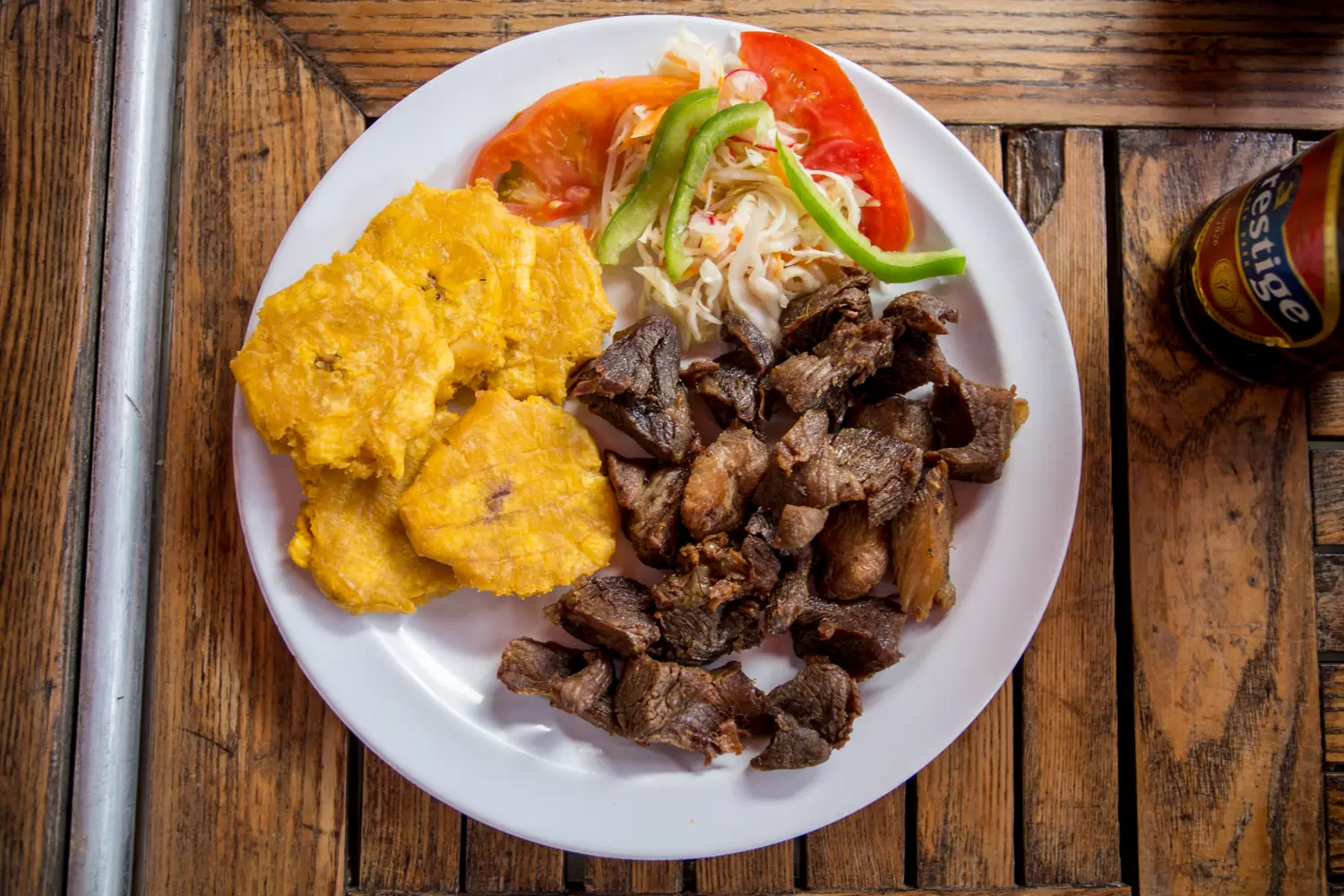
A plate of Haitian griot: dark crisp fried pork cubes with fried plantains and pikliz slaw with tomato and green pepper Haiti flag Haiti 2h 10m
Dinner •Haiti Heritage

Haitian Griot

This Haitian griot recipe starts with pork shoulder rubbed in sour citrus and epis, Haiti's green seasoning paste of scallions, garlic, parsley and Scotch bonnet, then braised in its own marinade until tender and fried in hot oil until the edges turn dark and crisp. It is served with pikliz, a sharp pickled cabbage slaw that cuts through the richness. One serving is about 215 g of crisp fried pork with pikliz.

Hearty & Celebratory

Haiti's most loved party dish: citrus-marinated pork, braised tender, then fried until crisp and served with fiery pickled pikliz.

Pairs Well With
Fried plantains (bannann peze) and rice and beans, with pikliz on the side.
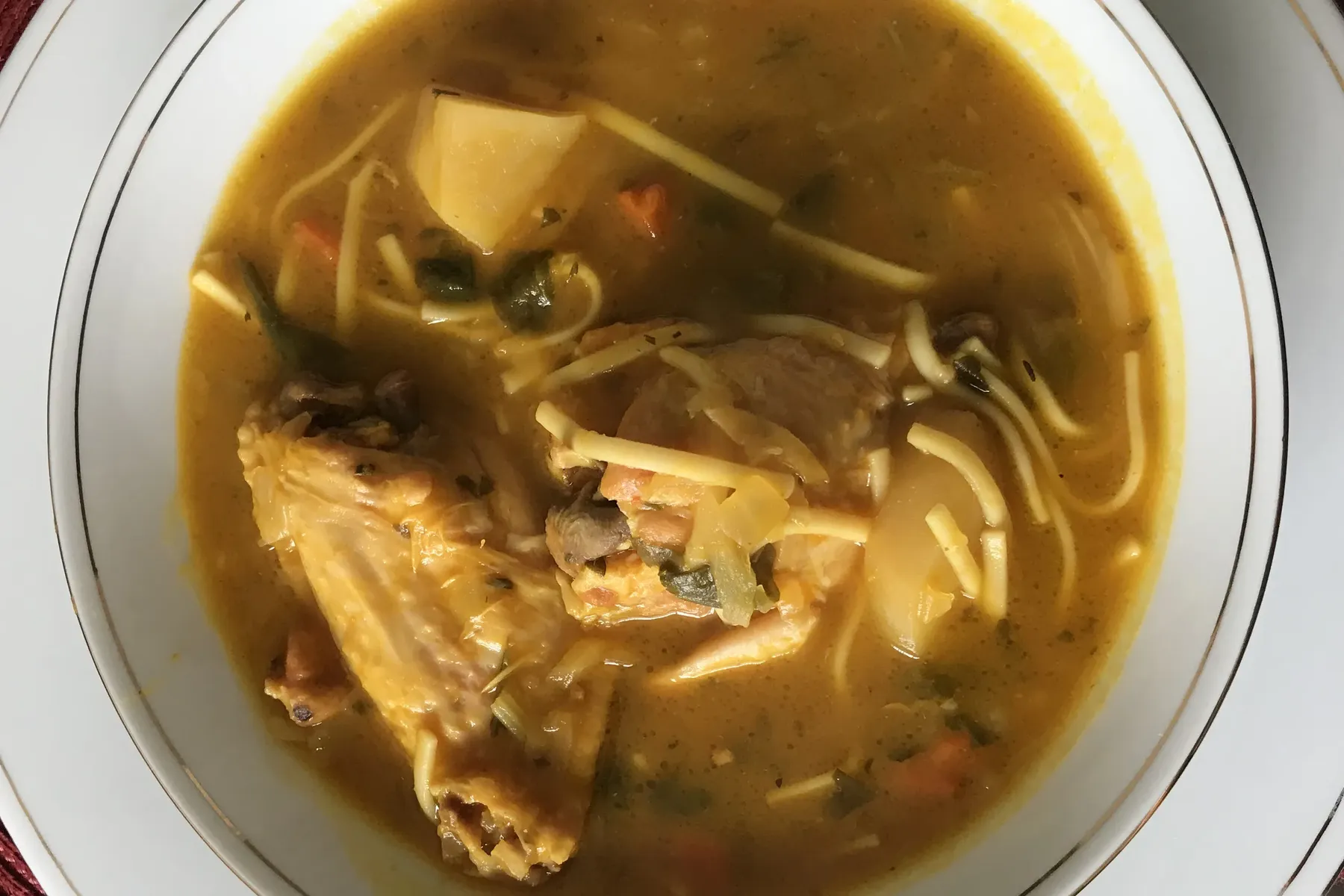
A bowl of Soup Joumou with beef, spaghetti, potato and golden pumpkin broth Haiti flag Haiti 2h 40m
Lunch •Haiti's Independence Soup

Soup Joumou

Soup joumou is Haiti's golden pumpkin soup: tender beef simmered in a thick purée of giraumon squash, with root vegetables, cabbage and spaghetti in a rich, spiced broth. This soup joumou recipe follows the home-cooked method Haitian families use every 1 January, when the soup marks Independence Day. One serving is about 480 g.

Comfort & Warmth

A hot, hearty bowl of pumpkin, beef and vegetables that warms up a family lunch on a cold day or a festive table.

Pairs Well With
Serve hot with crusty French bread for dipping and a spoonful of pikliz on the side.
Soups & Broths
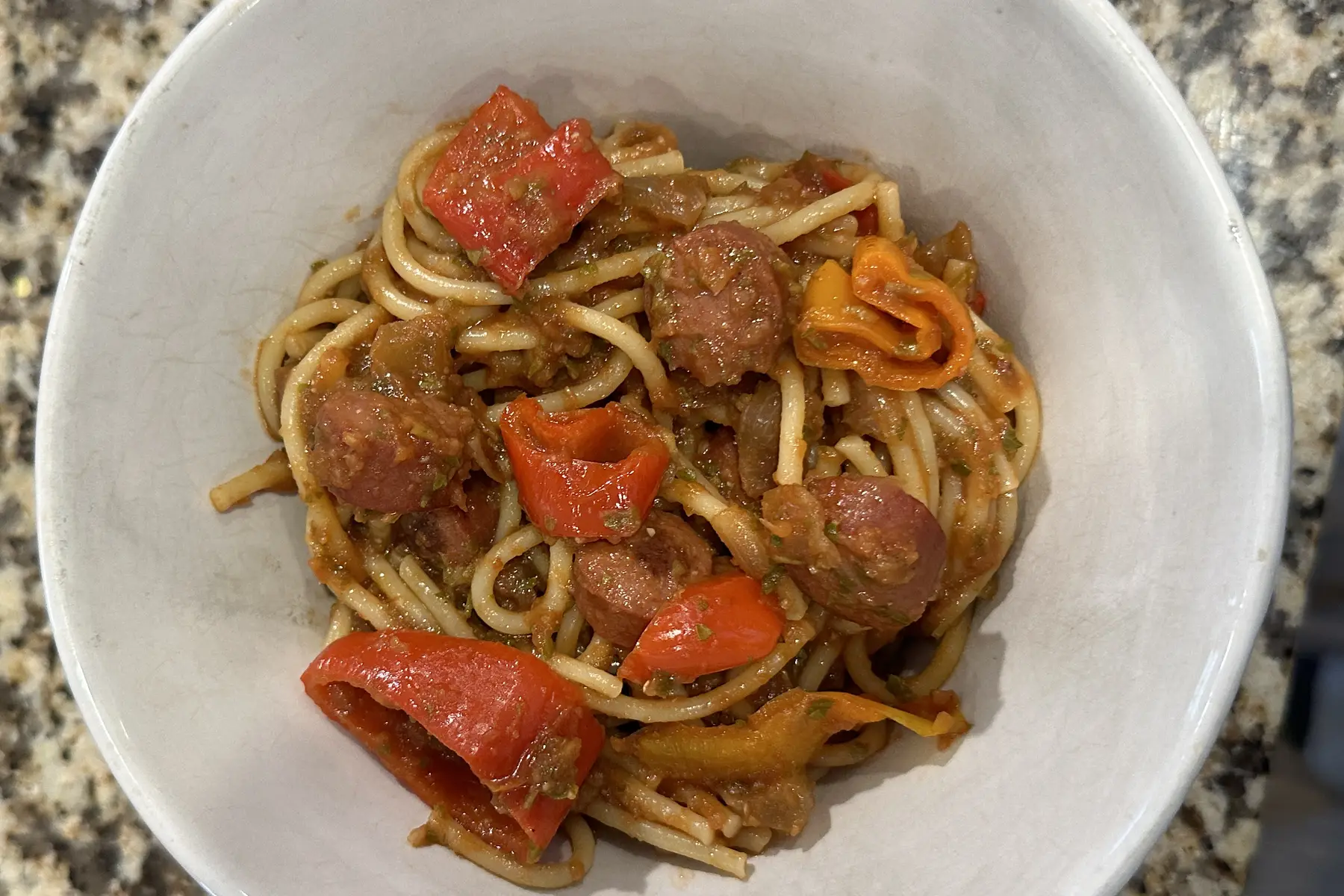
Haitian spaghetti in a white bowl — spaghetti in a rust-red epis and tomato sauce with sliced hot dogs and red peppers Haiti flag Haiti 40m
Breakfast •Haitian Breakfast Espageti

Haitian Spaghetti

This haitian spaghetti recipe is Haiti's beloved breakfast pasta: dried spaghetti cooked in one pot with epis, the green Haitian seasoning base, tomato paste, sweet peppers, onion and sliced hot dogs, until every strand is stained rust-red and full of flavour. It is pantry cooking at its best — cheap, fast and boldly seasoned — and it lands on the table in about 40 minutes. One serving is about 380 g.

Hearty & Comforting

One-pot spaghetti coated in a savoury epis and tomato sauce with sliced hot dogs, peppers and onion — a filling Haitian breakfast.

Pairs Well With
Boiled egg, avocado & pikliz
Pasta & Noodles • Quick Prep (<30m)
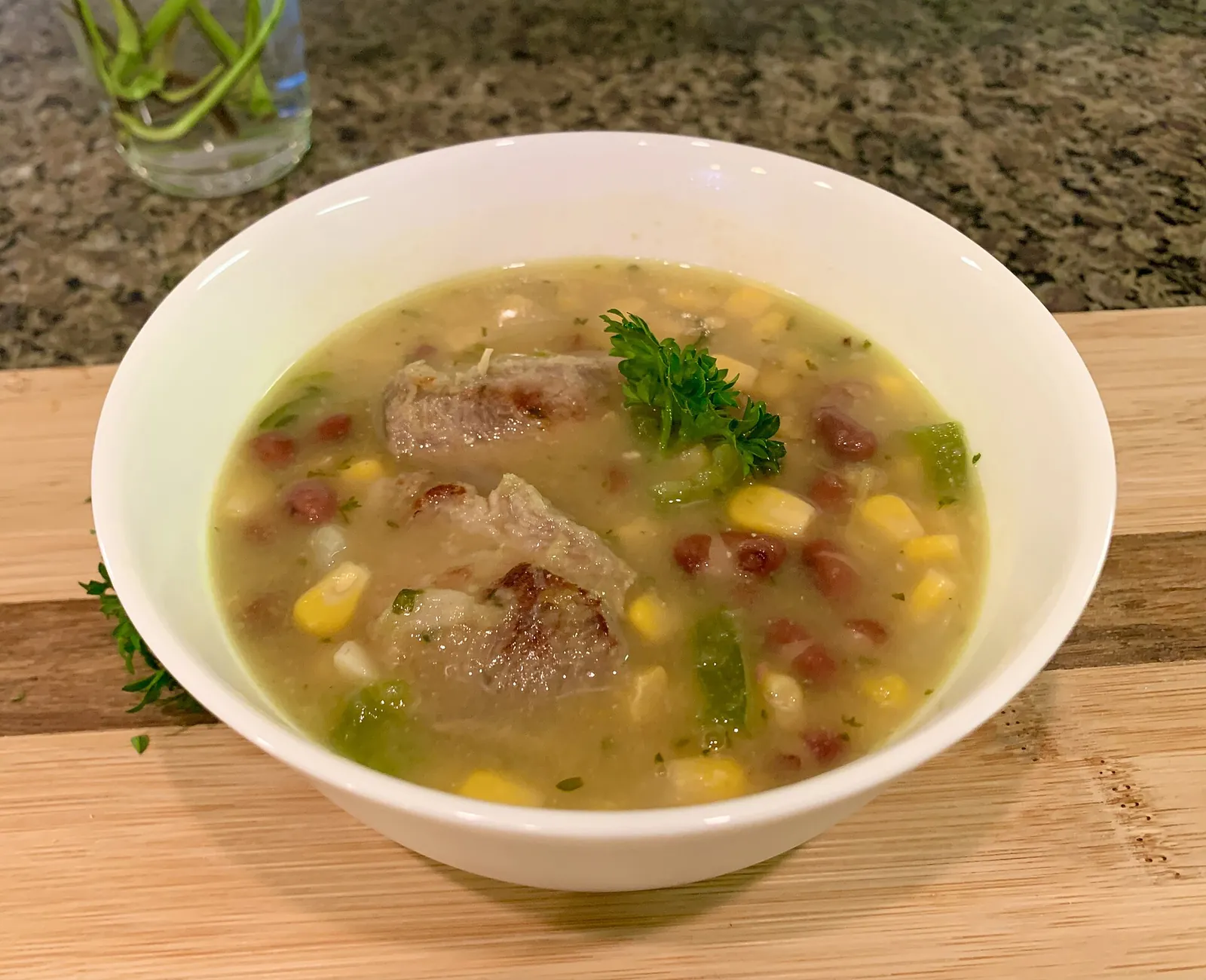
A white bowl of Haitian tchaka with corn kernels, red beans and smoked pork chunks in a light broth, garnished with parsley Haiti flag Haiti 3h 20m
Lunch •Haitian Heritage Stew

Tchaka

This tchaka recipe soaks dried corn and red kidney beans overnight, then simmers them for hours with smoked pork, pumpkin and a fragrant epis of garlic, scallion, parsley and thyme until the pot turns thick and hearty. The smoked pork is what gives tchaka its deep, salty flavour, and the Scotch bonnet — left whole so it perfumes the stew without burning — is the quiet heat underneath it all. One serving is about 400 g.

Comfort & Warmth

Dried corn and red beans simmered for hours with smoked pork, pumpkin and epis until thick — Haiti's slow, hearty celebration stew.

Pairs Well With
Crusty bread, pikliz & avocado
Soups & Broths

The Dinner Gazette

Never wonder what’s for dinner again

One email a week with easy dinner ideas from around the world — ingredients, steps and nutrition, tested in our kitchen first.

Delivered every Thursday morning. Unsubscribe anytime.