
Curated recipes from 193 countries  •  New seasonal Mediterranean issue out now

Overview

Lebanese Basturma

Pastirma, Pastourma, Basterma

This lebanese basturma recipe salts beef, presses it, coats it in a fenugreek-and-garlic cemen paste, then air-dries it into deeply spiced, sliceable cured beef. One serving is about 75 g. It takes patience rather than effort, and the result keeps for weeks in the fridge.

Basturma is the heavily seasoned, air-dried beef of Armenian origin that spread across the Levant — Armenian makers brought it to Lebanon and Syria, where it became a deli and meze staple. The beef is salted, pressed and dried, then sealed under cemen, a paste of fenugreek, garlic and hot paprika that gives basturma its brick-red coat and unmistakable smell. In Lebanon it is sliced paper-thin for meze, tucked into flatbread, or fried with eggs for breakfast.

Pairs well with: Warm flatbread, pickled cucumber, fresh herbs and strong coffee.

Provenance

Lebanon flag Lebanon

Lebanese-Armenian Deli Classic

Middle Eastern

Time Dedication

45m

45m prep • 0m cook

Batch Yield

8 Servings

252 kcal per serving

1 serving ≈ 75 g

Technical Skill

Intermediate

Medium (Slow Cure)

Meal Timing & Digestive Fit

Breakfast

Not Advised

Lunch

Inappropriate

Dinner

Inappropriate

Snack & Tea

Ideal Light Bite

High Protein Occasions: Meze spread, deli snack, weekend breakfast, festive table Cost: Medium — about $4–5 per serving at home
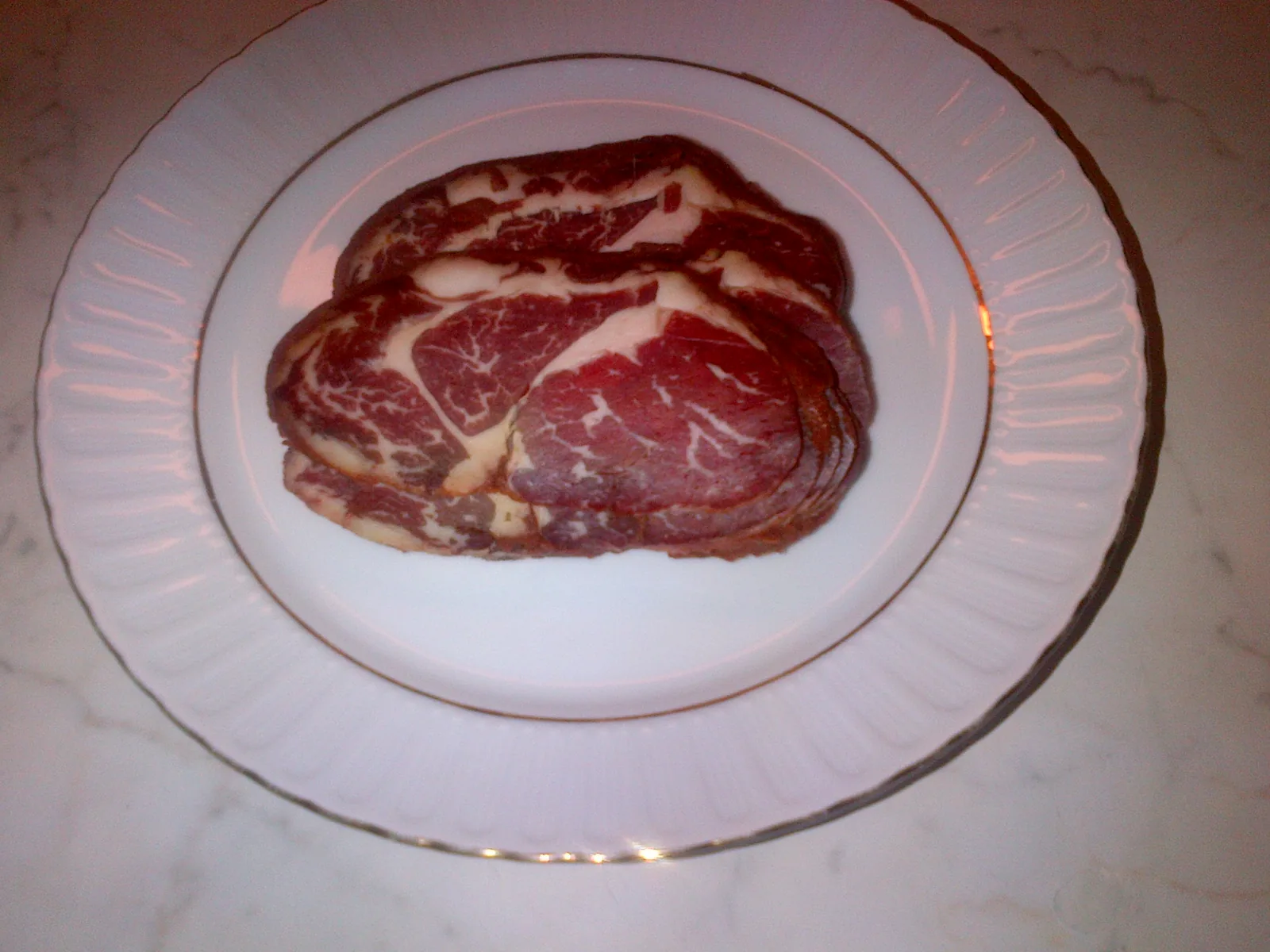
Lebanese Basturma — thin slices of deep-red cured spiced beef on a white plate

Lebanese-Armenian Deli Classic

Photo: E4024, CC BY-SA 4.0, via Wikimedia Commons

The Heritage Formulary

Measured Ingredients

Estimated cost: Medium — about $4–5 per serving at home (USD)

Made from a single cut of beef, salt and a fenugreek cemen coat, air-dried until firm and sliceable.

Execution Methodology & Culinary Technique

Step-by-Step Cooking Guide

Active 45m
P

Prep Stage: Trim, Salt & Mix Cemen

45 Mins • Trimming & Salting

Trim the beef into one even piece, rub it all over with the coarse salt, and set it in a dish in the fridge. While it cures, mix the fenugreek, garlic, paprika, cumin, chili and water into a thick, smooth cemen paste and keep it covered.

Maestro Tip: Keep the beef piece even in thickness — thin edges dry out and turn hard while the middle is still soft.

  1. 1

    Salt & Cure the Beef

    3 Days Fridge, 4°C (40°F)

    Rub the coarse salt all over the beef, set it in a dish, cover, and refrigerate for 3 days, turning it once a day. The salt draws out moisture and firms the meat.

    Pour off the liquid that collects in the dish each day so the beef cures in salt, not in its own brine.

    Done when: Beef firmer and darker, with liquid drawn out each day.

  2. 2

    Rinse, Press & Dry

    2 Days Cool room, about 18°C (65°F)

    Rinse the salt off the beef and pat it dry. Wrap it in clean cloth, set a heavy board on top, and press for 1 day, changing the cloth once. Then hang the beef in a cool, airy place for 1 more day until the surface feels dry.

    Pressing squeezes out the last moisture and gives the finished basturma its dense, sliceable texture.

    Done when: Surface dry to the touch, meat firm and evenly pressed.

  3. 3

    Mix the Cemen Paste

    15 Mins Room temperature, about 22°C (72°F)

    Stir the fenugreek, crushed garlic, paprika, cumin and chili flakes together, then add the water a spoonful at a time until you have a thick paste that spreads like peanut butter.

    Add the water slowly — a runny cemen slides off the meat instead of sealing it.

    Done when: Thick, smooth, brick-red paste that holds its shape on a spoon.

  4. 4

    Coat & Hang to Air-Dry

    10–14 Days Cool, ventilated room, about 18°C (65°F)

    Spread the cemen over the beef in an even layer about 3 mm thick, covering every side with no bare patches. Hang the beef in a cool, ventilated place for 10 to 14 days, until it feels firm all the way through and has lost about a third of its weight.

    The cemen coat is the seal: any bare patch can dry unevenly or pick up mould, so patch gaps as soon as you see them.

    Done when: Firm throughout, dry surface, about 500 g finished weight from 800 g raw.

  5. 5

    Slice Thin & Serve

    10 Mins Room temperature, about 22°C (72°F)

    Slice the basturma paper-thin with a long, sharp knife, cutting straight through the cemen coat. Arrange on a plate with the pickled cucumber and serve with warm flatbread.

    Slice only what you need and keep the rest whole — the cemen coat protects the meat in the fridge.

    Done when: Thin, ruby-red slices with a red spice edge, flexible not crumbly.

Finishing Touches & Plating

Slice only what you need and keep the rest whole — the cemen coat protects the meat. Serve the ruby slices with pickles and warm flatbread.

Nutritional Physiology & Benefits

Nutrition

Energy

252

kcal / serving

Protein

20g

Complete AA

Carbs

5g

Complex

Fats

17g

Healthy

Per serving (8 servings · 1 serving ≈ 75 g)
Energy252 kcal
Protein20 g
Carbohydrates5 g
Fat17 g
Fibre1.4 g
Sugar0.4 g
Sodium1056 mg
Per 100g
Energy336 kcal
Protein26.9 g
Carbohydrates6.5 g
Fat22.7 g
Fibre1.9 g
Sugar0.5 g
Sodium1408 mg

Nutrition values are estimated — calculated from USDA FoodData Central values for the listed ingredients.

Vitamins & minerals: Provides iron, zinc and vitamin B12 from the beef, with a little vitamin C from the pickles. Nutrition is estimated.

Serious Protein

About 252 kcal and 20 g of protein per serving makes a small plate of basturma genuinely filling.

Keeps for Weeks

Salt, pressing and air-drying preserve the beef with no cooking and no preservatives from a packet.

Big Flavour, Small Portion

Fenugreek, garlic and paprika are so intense that a few thin slices are enough to satisfy.

Food Pairings

What to Eat With

To optimize nutrient absorption and elevate the sensory depth, pair with these authentic accompaniments:

Sides

Warm Flatbread

Soft flatbread wraps the salty slices and soaks up the spice, turning a snack into a small meal.

Vegetables

Pickled Cucumber

Sharp, cold pickles cut through the salt and fat and reset the palate between slices.

Fresh Herbs & Tomato

Parsley, mint and tomato add freshness and moisture that the dry, salty meat needs.

Drinks

Strong Coffee or Ayran

Bitter coffee or cool, salty ayran both stand up to the intense spice without competing with it.

Complete menu

Serve thin slices of basturma with warm flatbread, pickled cucumber and fresh herbs, then fresh fruit to finish.

Digestive Guardrails

What NOT to Combine

To prevent digestive distress, sluggishness, or palate clash, avoid pairing the dish with these elements:

Another Very Salty Food

Basturma is already very salty, so pairing it with salted cheese or cured olives can push sodium far higher than intended. This is general information, not medical advice.

Leaving Cured Meat Warm and Damp

Warmth and moisture let mould and bacteria grow on cured meat; keep basturma cool, dry and wrapped, and discard it if it turns slimy or smells sour.

General information only, not medical advice — consult a doctor for personal dietary decisions.

Who Should Eat It

Who Should Eat

  • General adultsA bold, salty snack — a few thin slices with bread and pickles is plenty.
  • ChildrenVery salty and spicy, so serve children a few thin slices with plenty of bread and skip the chili-heavy edge pieces.
  • ElderlyThe meat is chewy and very salty; a small portion of thin slices is wiser, with soft bread.
  • Pregnant womenBasturma is cured, not cooked, so it carries the usual cautions for uncooked cured meats — ask your clinician before eating it.
  • Breastfeeding womenFine in a small portion; the protein is useful, but the salt is high, so drink water alongside.
  • AthletesProtein-rich and salty, so it suits a post-training snack with bread — but it is no substitute for a full meal.
  • Weight gainEnergy-dense and easy to eat, so a full serving with flatbread helps add calories.
  • Weight lossAbout 252 kcal per serving and very salty, so keep the portion small, fill the plate with pickles and herbs, and skip seconds.

Health Conditions — Adjust or Avoid

Conditions

  • DiabetesLow in carbohydrate (about 5 g per serving) but very salty; keep the portion small and ask your clinician.
  • High blood pressureHigh in sodium (about 1,056 mg per serving); a small portion only, and ask your clinician for personal advice.
  • Kidney diseaseHigh in sodium and protein; a small portion only, and ask your clinician.
  • GoutBeef is moderately high in purines; a small portion is wiser — ask your clinician if you are unsure.
  • Stomach issuesFenugreek, garlic and chili can irritate a sensitive stomach; a small portion with bread is gentler. Ask your clinician if symptoms persist.
  • Cardiovascular diseaseHigh in sodium and saturated fat; treat it as an occasional small portion rather than a regular snack. Ask your clinician.
  • Fatty liverThe fat and energy density make large portions unhelpful; keep it occasional and small. Ask your clinician.
  • Food allergiesContains fenugreek (a legume), garlic and chili. Ask your clinician about any allergy concern.
  • Special therapeutic dietsNot suitable for low-sodium therapeutic diets; ask your clinician or dietitian before including it.

If you have a medical condition, consult your doctor before changing your diet.

Storage & Use

Storage & Use

How to store
Keep the basturma whole, wrapped in clean cloth then in a sealed container, in the fridge.
In the fridge
Keeps up to 4 weeks in the fridge at 4°C (40°F) or below.
In the freezer
Freeze whole for up to 3 months; thaw in the fridge before slicing.
How to reheat
Basturma is eaten uncooked; if you fry slices, heat them through to 74°C (165°F).
Freezing recommended
Yes, whole — slice after thawing for the cleanest cuts.
Signs it has spoiled
Slimy surface, sour or ammonia smell, or mould under the cemen coat.

More recipes to explore

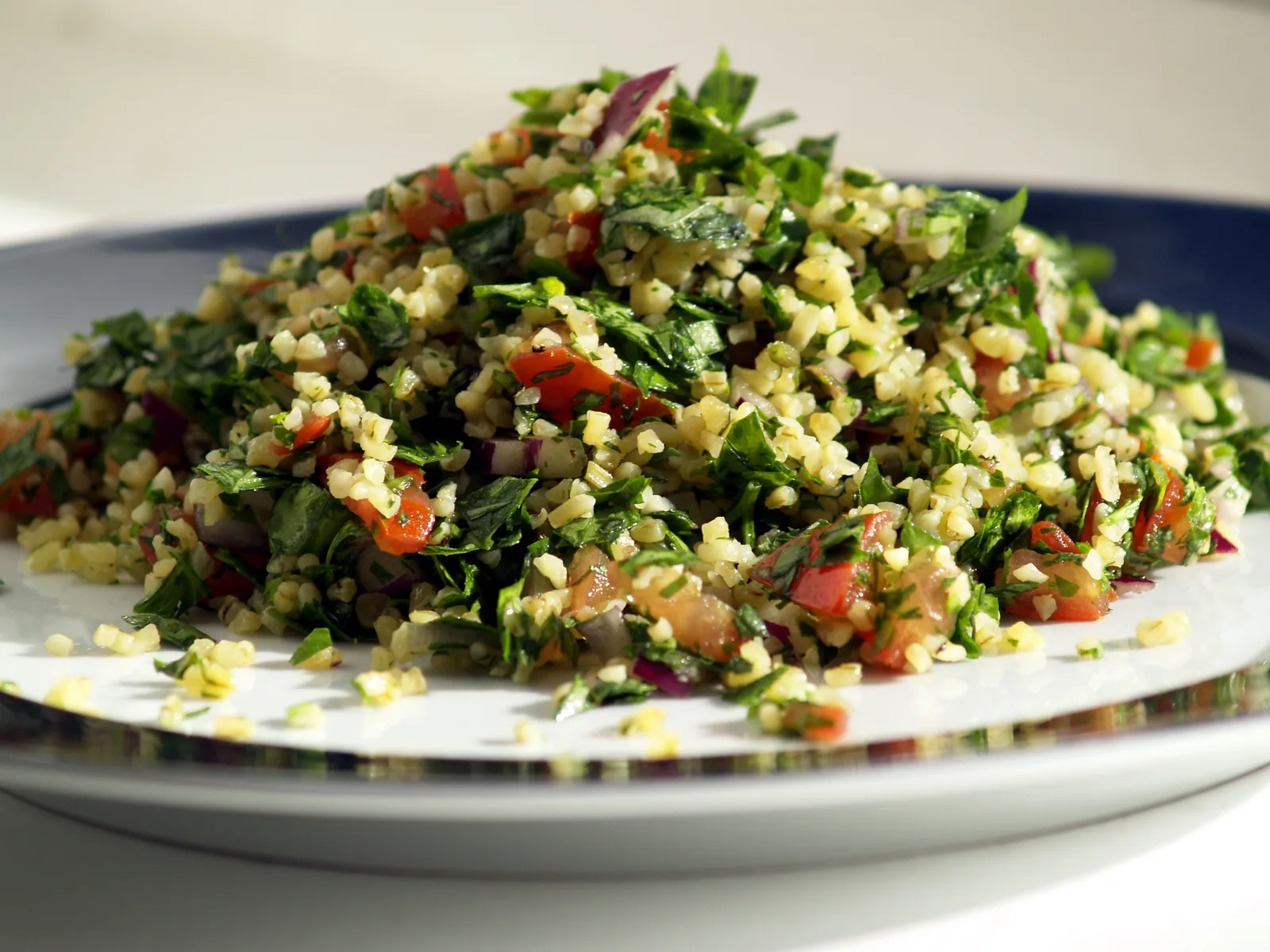
A plate of fresh Lebanese tabbouleh with chopped parsley, tomato and bulgur Lebanon flag Lebanon 25m
Lunch •Levantine Mezze Classic

Lebanese Tabbouleh

Tabbouleh is Lebanon's bright green parsley salad, where the herbs lead and fine bulgur plays a supporting role. Diced tomato, green onion and mint are tossed in lemon juice and olive oil for a fresh, lemony bite that wakes up any mezze table. One serving is about 216 g.

Light & Fresh

Mostly fresh parsley and tomato with a little bulgur, dressed in lemon and olive oil.

Pairs Well With
Warm pita bread, hummus and grilled halloumi
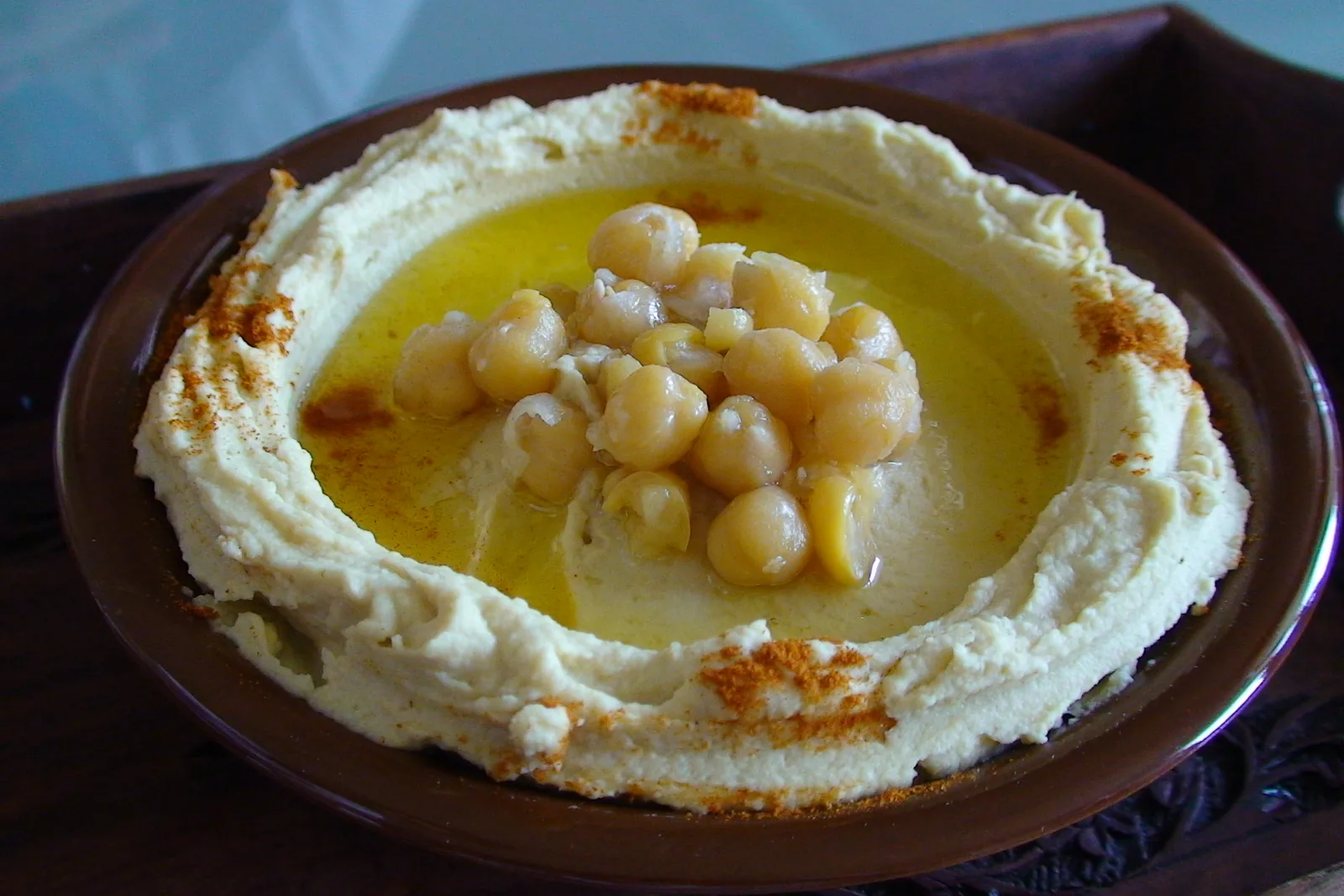
A bowl of cold Lebanese hummus with olive oil, whole chickpeas, paprika and parsley Lebanon flag Lebanon 1h 5m
Snack & Tea •Beirut Mezze Classic

Lebanese Hummus

Lebanese hummus is a cold, silky chickpea and tahini dip, lemon-forward with garlic and a pool of olive oil, topped with pine nuts and parsley. It is served chilled or at room temperature as part of a mezze spread, scooped up with warm pita — never served warm as a main plate. One serving is about 110 g.

Plant Protein Snack

Chickpeas and tahini blended into a smooth dip, with lemon, garlic and olive oil.

Pairs Well With
Warm pita bread, tabbouleh and olives
Quick Prep (<30m)
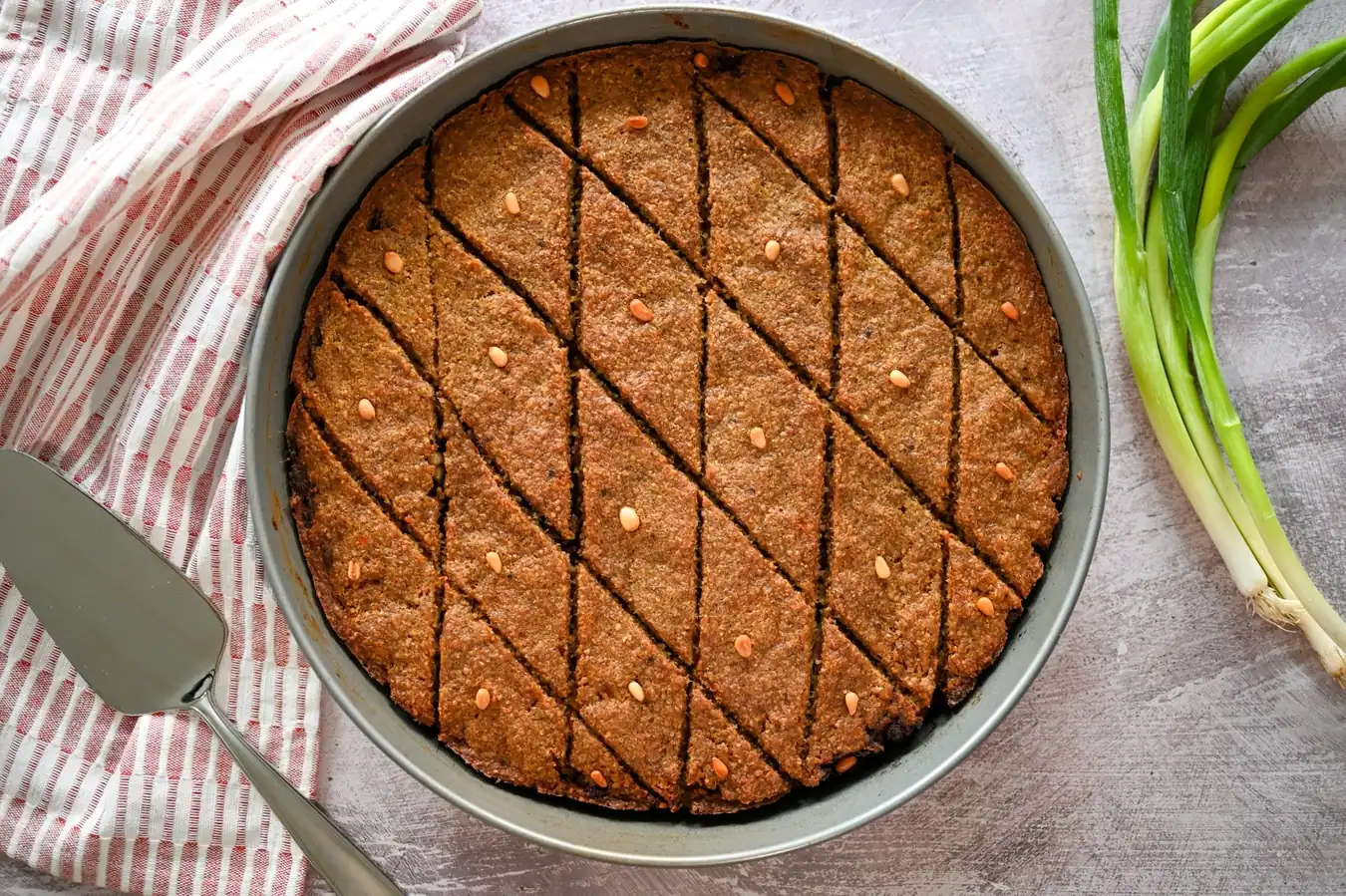
A baked tray of Lebanese kibbeh bil-saniyeh, scored into diamonds with pine nuts Lebanon flag Lebanon 1h 25m
Dinner •Lebanon's National Dish

Lebanese Kibbeh

Kibbeh bil-saniyeh is Lebanon's baked tray kibbeh: two layers of bulgur and lean beef sandwiching a spiced beef and pine-nut filling, scored into diamonds and baked until golden and crisp at the edges. It is the tray-baked form of Lebanon's national dish, made for sharing at the family table. One serving is about 202 g.

Hearty Family Dinner

Layers of bulgur and lean beef around a spiced pine-nut filling, baked until golden.

Pairs Well With
Yogurt, tabbouleh and warm pita bread
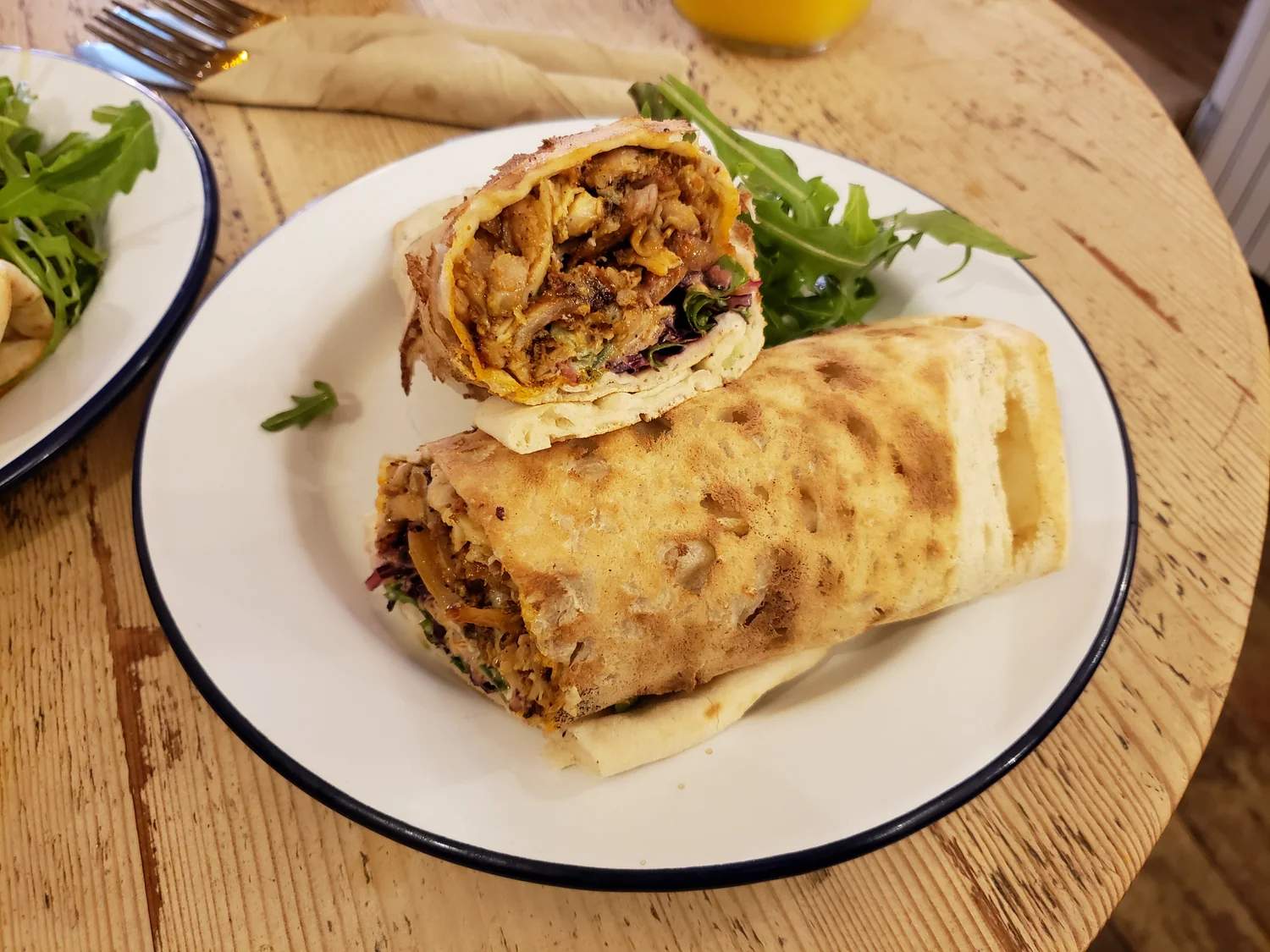
A sliced chicken shawarma wrap in toasted lavash showing spiced chicken, with rocket salad on a white plate Lebanon flag Lebanon 50m
Dinner •Beirut Street-Food Heritage

Lebanese Chicken Shawarma

This lebanese chicken shawarma recipe marinates boneless chicken thighs in yogurt, lemon, garlic and seven warm spices, then grills them until charred at the edges and slices them thin for rolling in soft Lebanese pita with toum, the whipped garlic sauce that defines the Lebanese version. Pickled turnips, dill pickles, tomato and parsley give every bite its sharp, fresh contrast. One serving is about 379 g.

High-Protein & Satisfying

Spice-marinated chicken thighs grilled and rolled in warm pita with toum, pickles and tomato — the Beirut street-food classic, made at home.

Pairs Well With
Toum, pickled turnips & fries
High Protein

The Dinner Gazette

Never wonder what’s for dinner again

One email a week with easy dinner ideas from around the world — ingredients, steps and nutrition, tested in our kitchen first.

Delivered every Thursday morning. Unsubscribe anytime.