Curated recipes from 193 countries  •  New seasonal Mediterranean issue out now

Overview

Lebanese Riz bi Haleeb

Riz bi Haleeb, Riz bil Haleeb, Lebanese rice pudding

This Lebanese riz bi haleeb recipe turns rice, milk and sugar into a cool, creamy pudding scented with orange blossom water and a whisper of mastic, finished with chopped pistachios. The name means rice in milk, and that is exactly what it is: short-grain rice simmered slowly until it melts into a soft, spoonable cream, then chilled in small bowls. One serving is one small bowl, about 200 g.

Riz bi haleeb means rice in milk, and the dish is exactly that: a milk pudding that Lebanese families have kept in the fridge in little bowls for generations, made for family lunches and for breaking the fast in Ramadan. Short-grain rice cooks first in water, then slowly in milk, until the grains melt into a soft cream — a method shared across the Levant, where each household scents it its own way. The Lebanese signature is mastic, the pine-scented resin of a Mediterranean tree, and orange blossom water, the flower water that perfumes so many Lebanese sweets. The pudding is always served cold, often in a small glass, with chopped pistachios scattered on top.

Pairs well with: Arabic coffee, mint tea, or a small plate of fresh fruit

Provenance

Lebanon flag Lebanon

Lebanese Family Dessert

Middle Eastern

Time Dedication

55m

10m prep • 45m cook

Batch Yield

6 Servings

242 kcal per serving

1 serving ≈ 200 g

Technical Skill

Easy

Easy (One Pot)

Meal Timing & Digestive Fit

Breakfast

Not Advised

Lunch

Inappropriate

Dinner

Inappropriate

Snack & Tea

Ideal Light Bite

Occasions: Ramadan iftar, family gatherings, Eid al-Fitr, summer desserts, after-dinner sweet Cost: Low — about $1 per serving at home
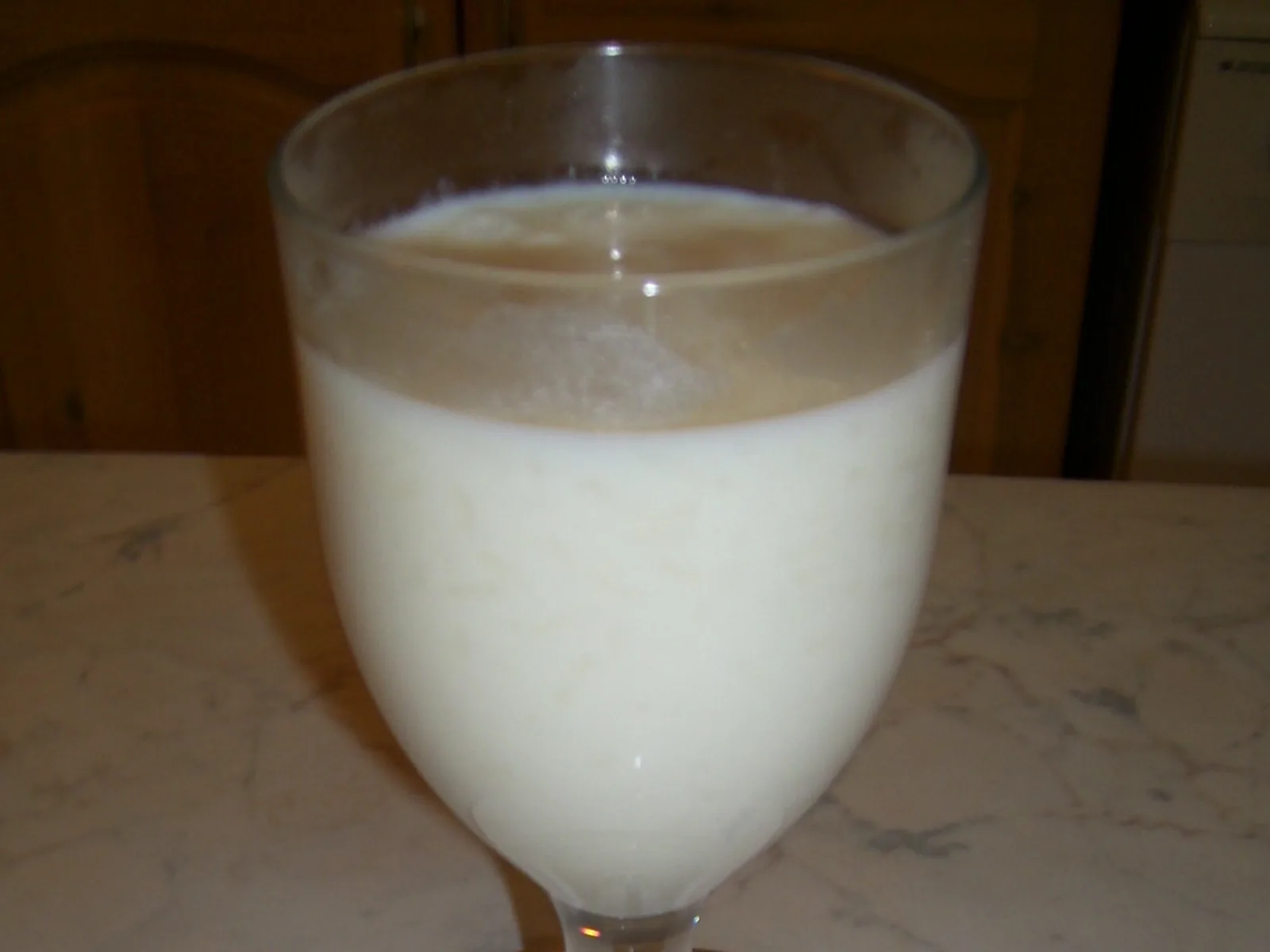
A tall glass of creamy white Lebanese riz bi haleeb rice pudding, served plain without topping, on a marble counter

Lebanese Family Dessert

Photo: Deed89, CC BY-SA 3.0, via Wikimedia Commons

The Heritage Formulary

Measured Ingredients

Estimated cost: Low — about $1 per serving at home (USD)

A good riz bi haleeb is softly set and spoonable, creamy without being stiff, with a faint floral scent — never gluey or runny.

Execution Methodology & Culinary Technique

Step-by-Step Cooking Guide

Active 55m
P

Prep Stage: Rice, Milk & Flower Water

10 Mins + 15 Mins Soak • Rinse & Measure

Rinse the short-grain rice in cold water until the water runs almost clear, then soak it for 15 minutes and drain. Measure the milk, sugar, salt and orange blossom water, and stir the cornstarch into 3 tablespoons of cold milk until smooth. Grind the mastic tears with a pinch of sugar in a mortar until powdery.

Maestro Tip: Rinsing off the loose surface starch keeps the pudding creamy instead of gluey, and soaking helps the grains cook down soft.

  1. 1

    Rinse and Soak the Rice

    15 Mins Room temperature, about 20°C (68°F)

    Rinse the short-grain rice in cold water until the water runs almost clear, then leave it to soak for 15 minutes and drain it well. Rinsing removes the loose surface starch that would make the pudding gluey.

    Do not skip the soak: soaked rice cooks down soft and creamy in half the stirring time.

    Done when: Rice rinsed clean and drained, grains plump from soaking.

  2. 2

    Cook the Rice in Water First

    10 Mins Simmer, about 95°C (203°F)

    Put the drained rice and the 240 ml of water in a heavy saucepan and bring to a boil over medium heat, then turn the heat down and simmer for about 10 minutes until the rice is tender and most of the water is absorbed. Stir once or twice so nothing sticks.

    Cooking the rice in water first is the Lebanese way: it lets the grains soften fully before the milk goes in, so the milk never scorches while the rice is still hard.

    Done when: Rice tender and swollen, with only a spoonful of water left in the pan.

  3. 3

    Simmer in Milk Until Creamy

    30 Mins Gentle simmer, about 85°C (185°F)

    Pour in the litre of whole milk, the sugar and the pinch of salt. Stir in the cornstarch slurry, bring the pan back to a gentle simmer, then turn the heat to low and cook for about 30 minutes, stirring often and scraping the bottom of the pan. The pudding is ready when it coats the back of a spoon and the rice grains have almost melted into the milk.

    Keep the heat low and the spoon moving: milk scorches in seconds on high heat, and a burnt taste cannot be fixed. The pudding thickens more as it cools, so stop while it still pours slowly.

    Done when: Pudding thick, creamy and coating a spoon, with the rice grains soft and barely distinct.

  4. 4

    Stir in Mastic and Orange Blossom Water

    2 Mins Off the heat, cooling from about 85°C (185°F)

    Take the pan off the heat and stir in the ground mastic, then the orange blossom water. Stir for a few seconds until the scent rises — the flower water goes in last so its perfume does not cook away.

    Taste now and add a few more drops of orange blossom water only if you want it stronger; a little goes a long way and too much turns soapy.

    Done when: Pudding fragrant with orange blossom and a faint pine note from the mastic.

  5. 5

    Chill Until Softly Set

    2 Hours Fridge, 4°C (40°F) or below

    Spoon the hot pudding into six small bowls or glasses, smooth the tops, and leave them on the counter until they stop steaming. Cover each bowl loosely and chill in the fridge for at least two hours, until softly set.

    Cover the bowls once they are cool, not while steaming, or condensation drips back and waters the surface.

    Done when: Pudding cool, softly set and holding its shape when tipped gently.

  6. 6

    Top with Pistachios and Serve Cold

    5 Mins Served cold, 4°C (40°F)

    Scatter the chopped pistachios over each cold bowl just before serving, so they stay crisp and green against the white pudding. Serve cold, with a spoon and Arabic coffee.

    Top only the bowls you are serving now: pistachios left on stored bowls go soft in the fridge.

    Done when: Pudding cold and set, pistachios crisp and freshly scattered.

Finishing Touches & Plating

Spoon the pudding into six small bowls, smooth the tops, and chill for at least two hours until softly set. Scatter the chopped pistachios over the top just before serving, and serve cold with a spoon.

Nutritional Physiology & Benefits

Nutrition

Energy

242

kcal / serving

Protein

7g

Complete AA

Carbs

38g

Complex

Fats

7g

Healthy

Per serving (6 servings · 1 serving ≈ 200 g)
Energy242 kcal
Protein7 g
Carbohydrates38 g
Fat7 g
Fibre0.6 g
Sugar22.0 g
Sodium137 mg
Per 100g
Energy121 kcal
Protein3.6 g
Carbohydrates18.9 g
Fat3.5 g
Fibre0.3 g
Sugar11 g
Sodium69 mg

Nutrition values are estimated — calculated from USDA FoodData Central values for the listed ingredients.

Vitamins & minerals: Whole milk provides calcium, vitamin B12 and phosphorus; pistachios add vitamin B6, potassium and a little iron. All nutrition values are estimated.

Milk for Calcium and Protein

Whole milk gives about 7 g of protein and a good share of calcium per bowl, so this sweet snack still contributes something useful to the day.

Rice for Gentle Energy

Short-grain rice cooks down soft and creamy, giving gentle, slow-release energy in a form that is easy on the stomach.

One Pot Covers the Week

One pot makes six small bowls that keep in the fridge for days, so a single quiet afternoon of cooking covers a week of desserts.

Food Pairings

What to Eat With

To optimize nutrient absorption and elevate the sensory depth, pair with these authentic accompaniments:

Drinks

Arabic Coffee

Strong, cardamom-scented Arabic coffee is the classic partner: its bitterness cuts the milky sweetness and makes one small bowl feel like enough.

Fresh Mint Tea

Fresh mint tea cleanses the palate between spoonfuls and its gentle sweetness lets the orange blossom scent stay the star.

Sides

Fresh Fruit on the Side

A few slices of orange or a small bowl of berries add a fresh, sharp contrast to the cool, creamy pudding.

Full Menus

Full Menu: Mezze, Then Riz bi Haleeb

Start with a mezze spread of hummus and tabbouleh, then finish with a chilled bowl of riz bi haleeb and coffee — the Lebanese family meal in miniature.

Complete menu

A mezze lunch of tabbouleh and hummus, then a small chilled bowl of riz bi haleeb with Arabic coffee — the classic Lebanese way to end a family meal.

Digestive Guardrails

What NOT to Combine

To prevent digestive distress, sluggishness, or palate clash, avoid pairing the dish with these elements:

Boiling the Milk Hard

Milk scorches fast on high heat and a burnt taste cannot be fixed once it is in the pudding. Keep the heat low, stir often, and scrape the bottom of the pan as you go. This is general food information, not medical advice.

Adding Flower Water Too Early

Orange blossom water is delicate and its scent cooks away if it boils. Stir it in only after the pan is off the heat, so the floral aroma stays in the finished pudding. This is general food information, not medical advice.

Skipping the Chill

Riz bi haleeb thickens and sets as it cools; served warm from the pan it is loose and soupy. Give it the full two hours in the fridge so it firms into a softly spoonable pudding. This is general food information, not medical advice.

Using Too Much Mastic

Mastic is powerful and turns bitter if you use too much. Two or three small tears, ground with a pinch of sugar, is enough for the whole pot. This is general food information, not medical advice.

General information only, not medical advice — consult a doctor for personal dietary decisions.

Who Should Eat It

Who Should Eat

  • General adultsOne small chilled bowl is a light, satisfying sweet for most adults; the sugar is the main thing to watch, so one bowl is plenty after a meal.
  • ChildrenKids love the cool, creamy pudding; give younger children a half bowl, as it is quite sweet and the pistachio topping is a choking hazard for very small children.
  • ElderlySoft, cool and easy to swallow, with no chewing needed; the sugar is the main thing to watch, so keep to one small bowl.
  • Pregnant womenThe pudding is made from pasteurised milk simmered for a long time, so it is a fine occasional treat in pregnancy. Ask your clinician if unsure.
  • Breastfeeding womenA handy energy-rich snack between feeds, with milk for calcium and rice for gentle energy; keep the portion as stated.
  • AthletesAbout 38 g of carbohydrate per bowl makes this a quick, easy energy snack after training, with a little protein from the milk.
  • Weight gainAt 242 calories a bowl, riz bi haleeb is an easy way to add energy; a second small bowl or a glass of milk alongside raises it further.
  • Weight lossSweet and easy to overeat, so stick to one small bowl and skip the extra sugar on top; save the rest for another day.

Health Conditions — Adjust or Avoid

Conditions

  • DiabetesAbout 38 g of carbohydrate and 22 g of sugar per bowl, mostly added sugar and milk lactose; a half bowl is the safer portion. Ask your clinician about portions.
  • High blood pressureSodium is low at about 137 mg per bowl, so blood pressure is not the main concern here; the sugar is. Ask your clinician about portions.
  • Kidney diseaseMilk adds potassium and phosphorus, so keep the portion small and infrequent if you watch those minerals. Ask your clinician.
  • GoutRiz bi haleeb is low in purines, so gout is not a particular concern; the sugar is the thing to watch. Ask your clinician if unsure.
  • Stomach issuesThe soft, cool pudding is usually gentle, but the milk and sugar can be gassy for some; eat slowly and keep to one small bowl. Ask your clinician if unsure.
  • Cardiovascular diseaseWhole milk makes this a moderately rich dessert, so it is an occasional treat rather than an everyday sweet. Ask your clinician about portions.
  • Fatty liverSugar and whole milk together make this an occasional food; a half bowl with unsweetened tea is a lighter way to enjoy it. Ask your clinician about portions.
  • Food allergiesContains milk (dairy). The optional pistachio topping is a tree nut, so leave it off for anyone with a nut allergy. Ask your clinician if unsure.
  • Special therapeutic dietsVegetarian and naturally gluten-free as written. It is not dairy-free or low-sugar; a dairy-free version needs a different milk, which changes the flavour. Ask your clinician for a version that fits your plan.

If you have a medical condition, consult your doctor before changing your diet.

Storage & Use

Storage & Use

How to store
Store in covered bowls in the fridge once completely cool.
In the fridge
Up to 4 days at 4°C (40°F) or below in covered bowls; keep the pistachio topping off until serving.
In the freezer
Do not freeze — freezing makes the rice grainy and watery when thawed.
How to reheat
Serve cold. If you prefer it warm, reheat gently in a saucepan over low heat, stirring, until steaming at 74°C (165°F) — do not boil.
Freezing recommended
No — the rice turns grainy and the pudding weeps when thawed, so make only what you will eat within a few days.
Signs it has spoiled
Sour smell, watery surface, or any mould — throw it away.

More recipes to explore

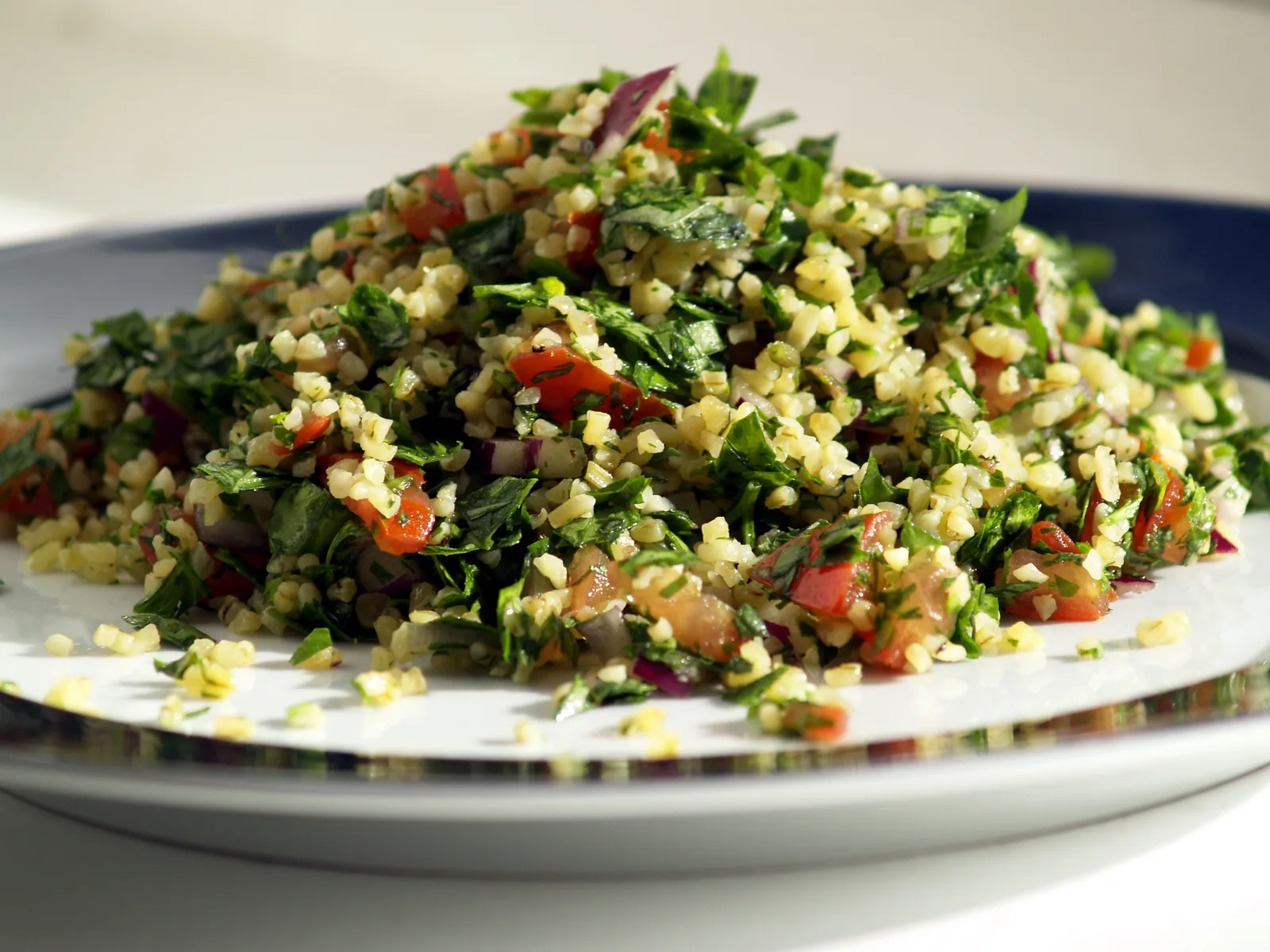
A plate of fresh Lebanese tabbouleh with chopped parsley, tomato and bulgur Lebanon flag Lebanon 25m
Lunch •Levantine Mezze Classic

Lebanese Tabbouleh

Tabbouleh is Lebanon's bright green parsley salad, where the herbs lead and fine bulgur plays a supporting role. Diced tomato, green onion and mint are tossed in lemon juice and olive oil for a fresh, lemony bite that wakes up any mezze table. One serving is about 216 g.

Light & Fresh

Mostly fresh parsley and tomato with a little bulgur, dressed in lemon and olive oil.

Pairs Well With
Warm pita bread, hummus and grilled halloumi
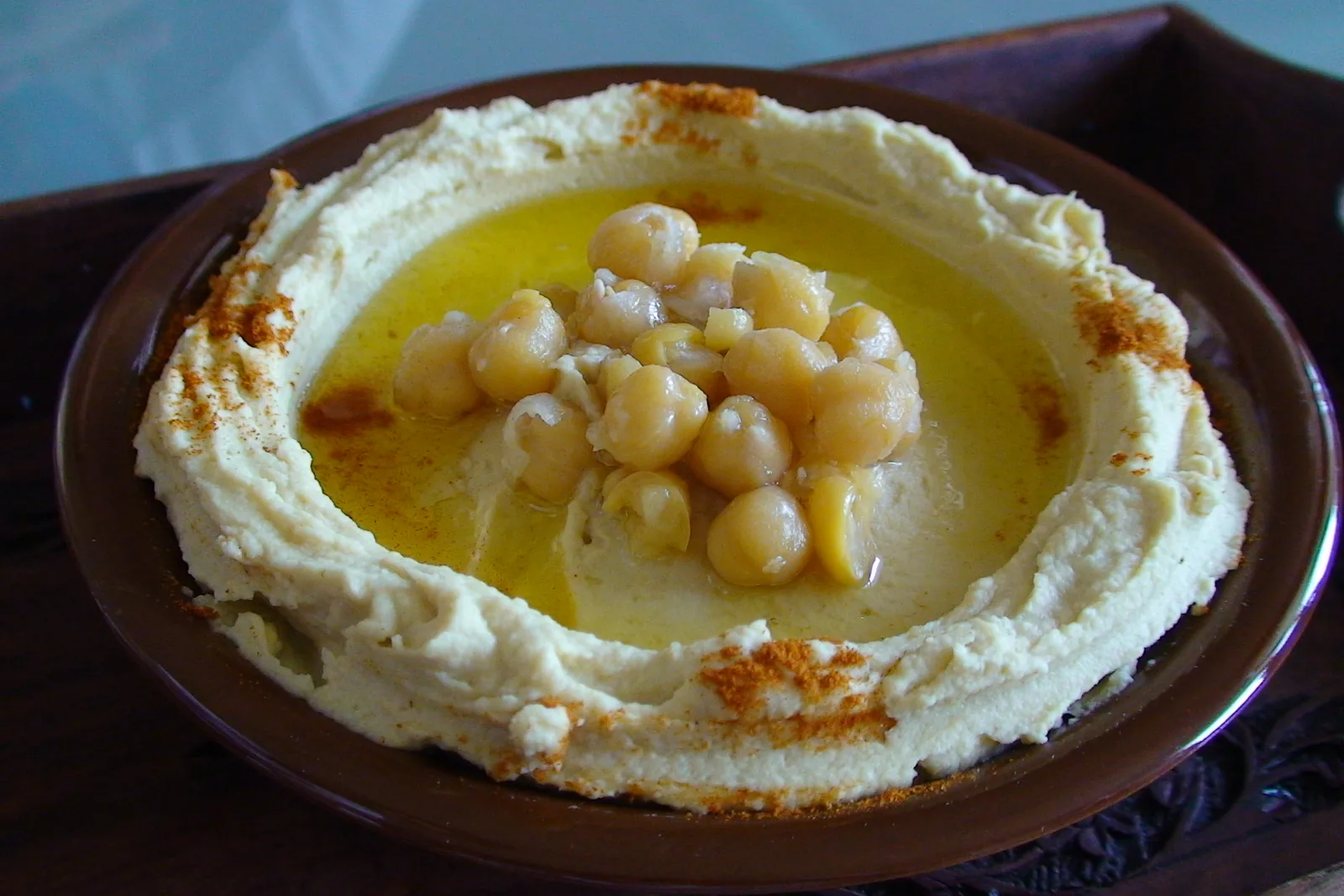
A bowl of cold Lebanese hummus with olive oil, whole chickpeas, paprika and parsley Lebanon flag Lebanon 1h 5m
Snack & Tea •Beirut Mezze Classic

Lebanese Hummus

Lebanese hummus is a cold, silky chickpea and tahini dip, lemon-forward with garlic and a pool of olive oil, topped with pine nuts and parsley. It is served chilled or at room temperature as part of a mezze spread, scooped up with warm pita — never served warm as a main plate. One serving is about 110 g.

Plant Protein Snack

Chickpeas and tahini blended into a smooth dip, with lemon, garlic and olive oil.

Pairs Well With
Warm pita bread, tabbouleh and olives
Quick Prep (<30m)
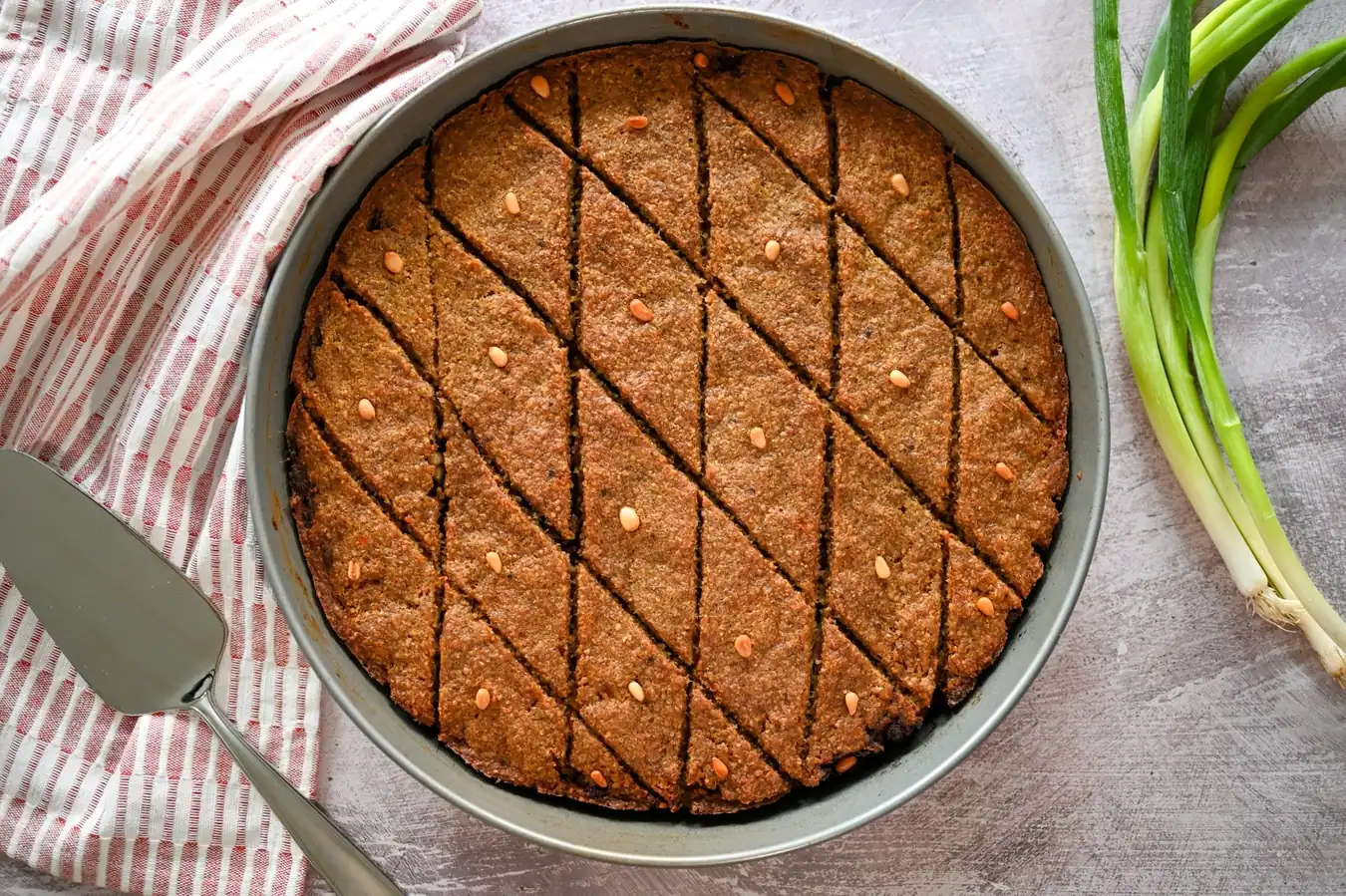
A baked tray of Lebanese kibbeh bil-saniyeh, scored into diamonds with pine nuts Lebanon flag Lebanon 1h 25m
Dinner •Lebanon's National Dish

Lebanese Kibbeh

Kibbeh bil-saniyeh is Lebanon's baked tray kibbeh: two layers of bulgur and lean beef sandwiching a spiced beef and pine-nut filling, scored into diamonds and baked until golden and crisp at the edges. It is the tray-baked form of Lebanon's national dish, made for sharing at the family table. One serving is about 202 g.

Hearty Family Dinner

Layers of bulgur and lean beef around a spiced pine-nut filling, baked until golden.

Pairs Well With
Yogurt, tabbouleh and warm pita bread
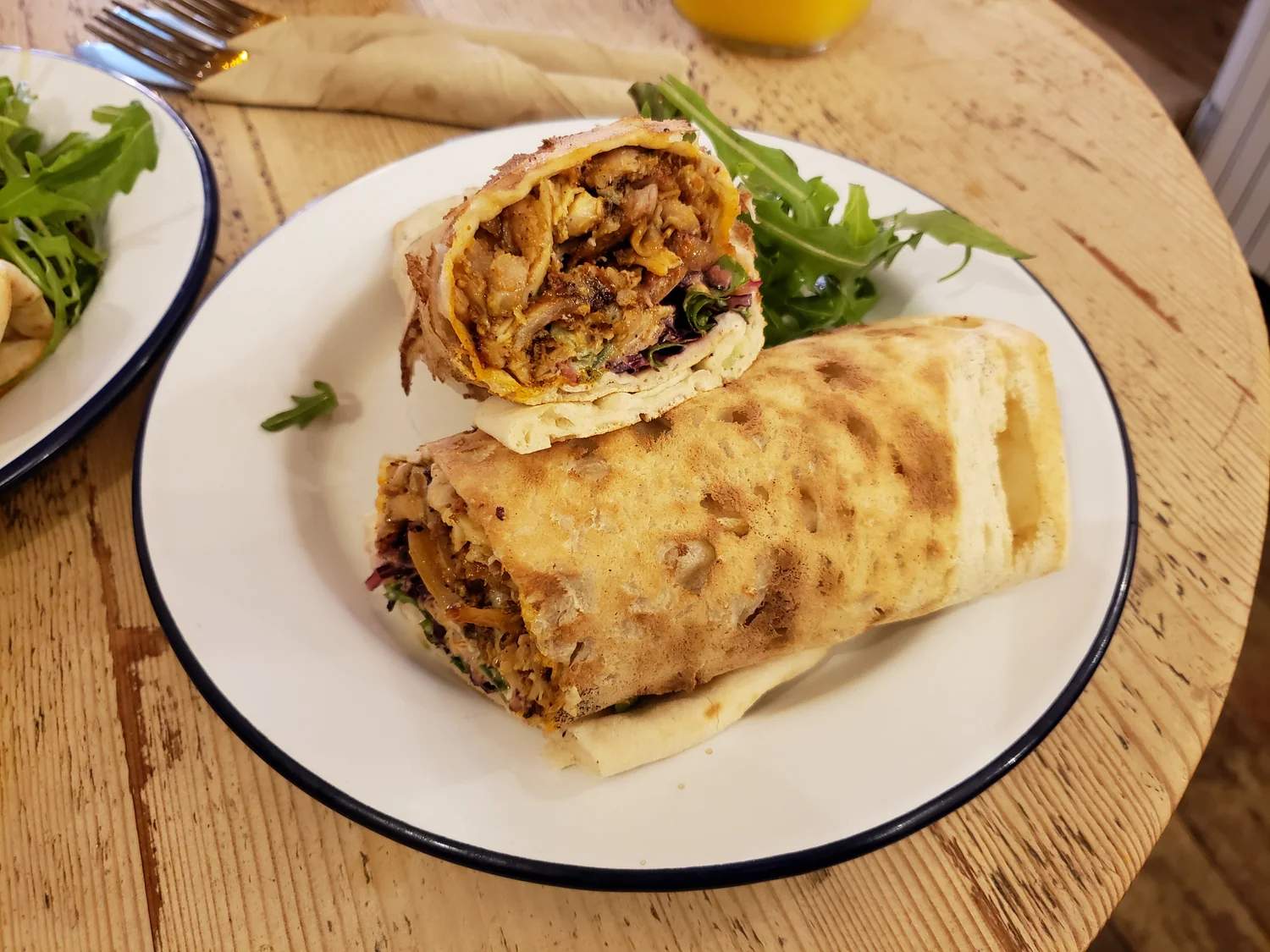
A sliced chicken shawarma wrap in toasted lavash showing spiced chicken, with rocket salad on a white plate Lebanon flag Lebanon 50m
Dinner •Beirut Street-Food Heritage

Lebanese Chicken Shawarma

This lebanese chicken shawarma recipe marinates boneless chicken thighs in yogurt, lemon, garlic and seven warm spices, then grills them until charred at the edges and slices them thin for rolling in soft Lebanese pita with toum, the whipped garlic sauce that defines the Lebanese version. Pickled turnips, dill pickles, tomato and parsley give every bite its sharp, fresh contrast. One serving is about 379 g.

High-Protein & Satisfying

Spice-marinated chicken thighs grilled and rolled in warm pita with toum, pickles and tomato — the Beirut street-food classic, made at home.

Pairs Well With
Toum, pickled turnips & fries
High Protein

The Dinner Gazette

Never wonder what’s for dinner again

One email a week with easy dinner ideas from around the world — ingredients, steps and nutrition, tested in our kitchen first.

Delivered every Thursday morning. Unsubscribe anytime.