-
1
Rub, Knead & Rest the Dough
10 Mins + 30 Mins Rest
Room temperature, ~21°C (70°F)
Mix the flour, 5 g of the salt and the sugar in a bowl. Pour in the 80 ml of oil and rub it in with your fingertips until the flour looks like damp sand, about 2 minutes. Add 120 ml of the lukewarm water and knead for 5 minutes into a smooth, firm dough, adding the extra water a spoonful at a time only if it is too dry to come together. Cover and rest for 30 minutes.
This is a soft oil dough, not a stiff wrapper dough — it should feel pliable and short, closer to a pie crust than to bread. Add water a spoon at a time; too much makes it sticky.
Done when: The dough is smooth, firm and no longer sticky.
-
2
Toast the Pine Nuts & Brown the Beef
15 Mins
Medium heat, ~175°C (350°F)
Heat the olive oil in a frying pan over medium heat. Add the pine nuts and stir for 2 to 3 minutes until golden, then lift them out onto a plate. In the same pan, cook the onion for 5 minutes until soft. Add the ground beef and cook, breaking it up finely, for 6 to 8 minutes until browned and dry. Stir in the baharat, sumac, allspice, cinnamon, black pepper and the remaining salt and cook for 1 minute more.
Keep breaking the beef up small as it cooks — fine, dry crumbles fold neatly into a half-moon and will not tear the pastry.
Done when: The beef is browned all the way through and the pan is dry, with no liquid pooling.
-
3
Finish the Filling & Cool It Completely
5 Mins + 20 Mins Cooling
Off the heat, then room temperature, ~21°C (70°F)
Take the pan off the heat and stir in the pomegranate molasses, the chopped parsley and the toasted pine nuts. Spread the filling on a plate in a thin layer and let it cool completely, about 20 minutes. The filling must be cool to the touch before you start shaping.
Cooling the filling on a plate in a thin layer is faster than leaving it in the pan, and it stops the beef steaming itself soggy.
Done when: The filling is completely cool and holds together in a spoon without dripping.
-
4
Roll, Fill & Crimp the Half-Moons
20 Mins
Room temperature, ~21°C (70°F)
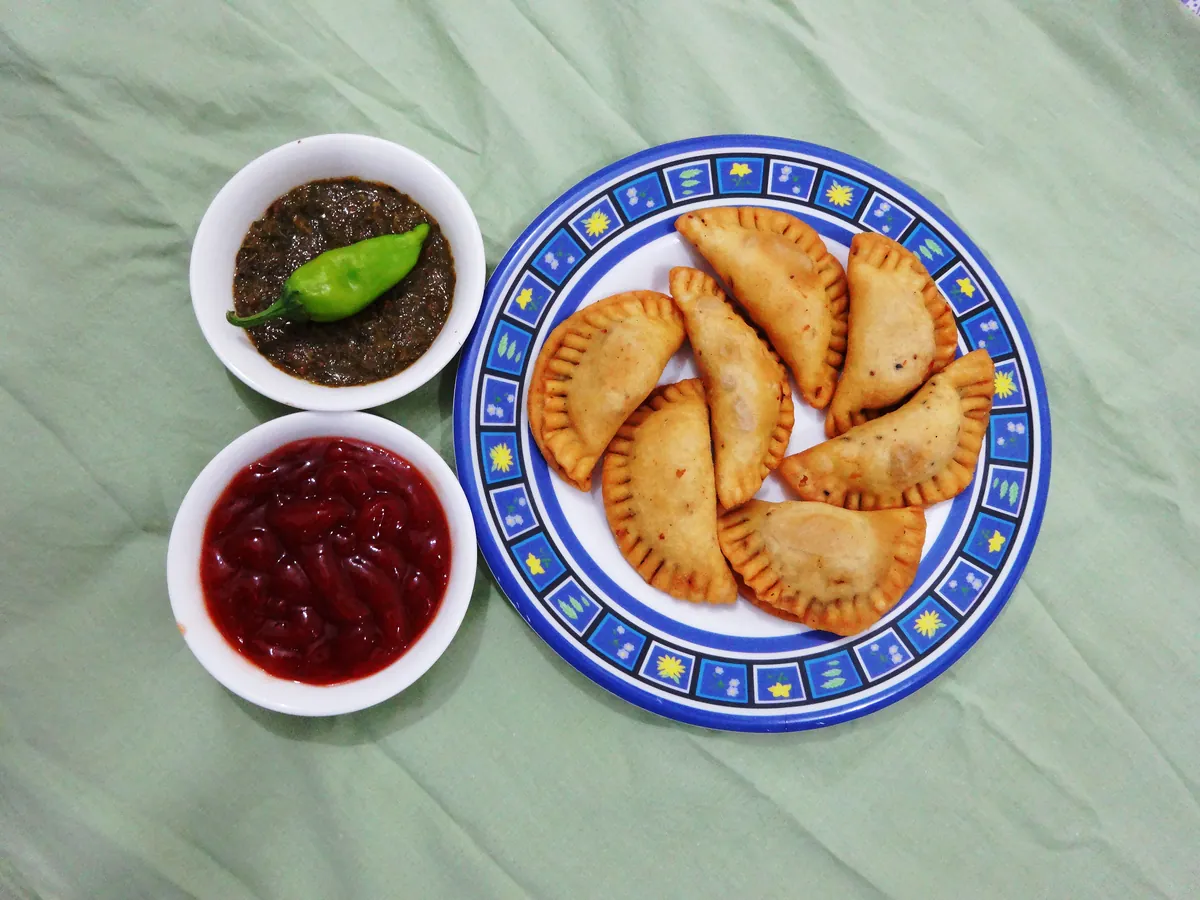
Divide the dough in two and keep one half covered. On a lightly floured surface, roll the other half as thin as you can, about 2 mm. Cut rounds with an 8 cm cutter or a glass. Place a heaped teaspoon of filling on one side of each round, fold the dough over into a half-moon and press the edges firmly together. Seal by pressing with a fork, or by pinching and folding the edge over itself in a rope pattern. Lay the finished pastries on a floured tray, covered with a towel. Repeat with the second half of the dough to make about 30 pastries.
Roll the dough thin — thick dough stays chewy and soaks up oil. Wet the edge with a fingertip of water before folding so the seal holds.
Done when: Each sambousek is a neat crescent with sealed edges and no filling poking out.
-
5
Fry Until Golden & Blistered
20 Mins
Oil at 175°C (350°F)
Heat the frying oil in a deep pot to 175°C (350°F). Fry 6 to 8 pastries at a time for 3 to 4 minutes, turning once, until deep golden and blistered. Lift out with a slotted spoon and drain on a wire rack. Let the oil come back to 175°C (350°F) between batches.
Do not crowd the pot — crowded pastries stick together and the oil cools, which makes them greasy instead of crisp. A thermometer is the surest way to hold the temperature.
Done when: The pastry is deep golden and blistered, and the filling inside is steaming hot, reaching at least 71°C (160°F).
-
6
Drain & Serve Hot
5 Mins
Serve hot, above 63°C (145°F)
Rest the fried sambousek for 2 minutes on the rack, then pile onto a plate with lemon wedges and toum on the side. Serve while hot, as part of a mezze spread.
Drain on a rack, not on paper — paper traps steam and softens the pastry.
Done when: The sambousek are crisp, hot and ready to eat.
auto_awesome Finishing Touches & Plating
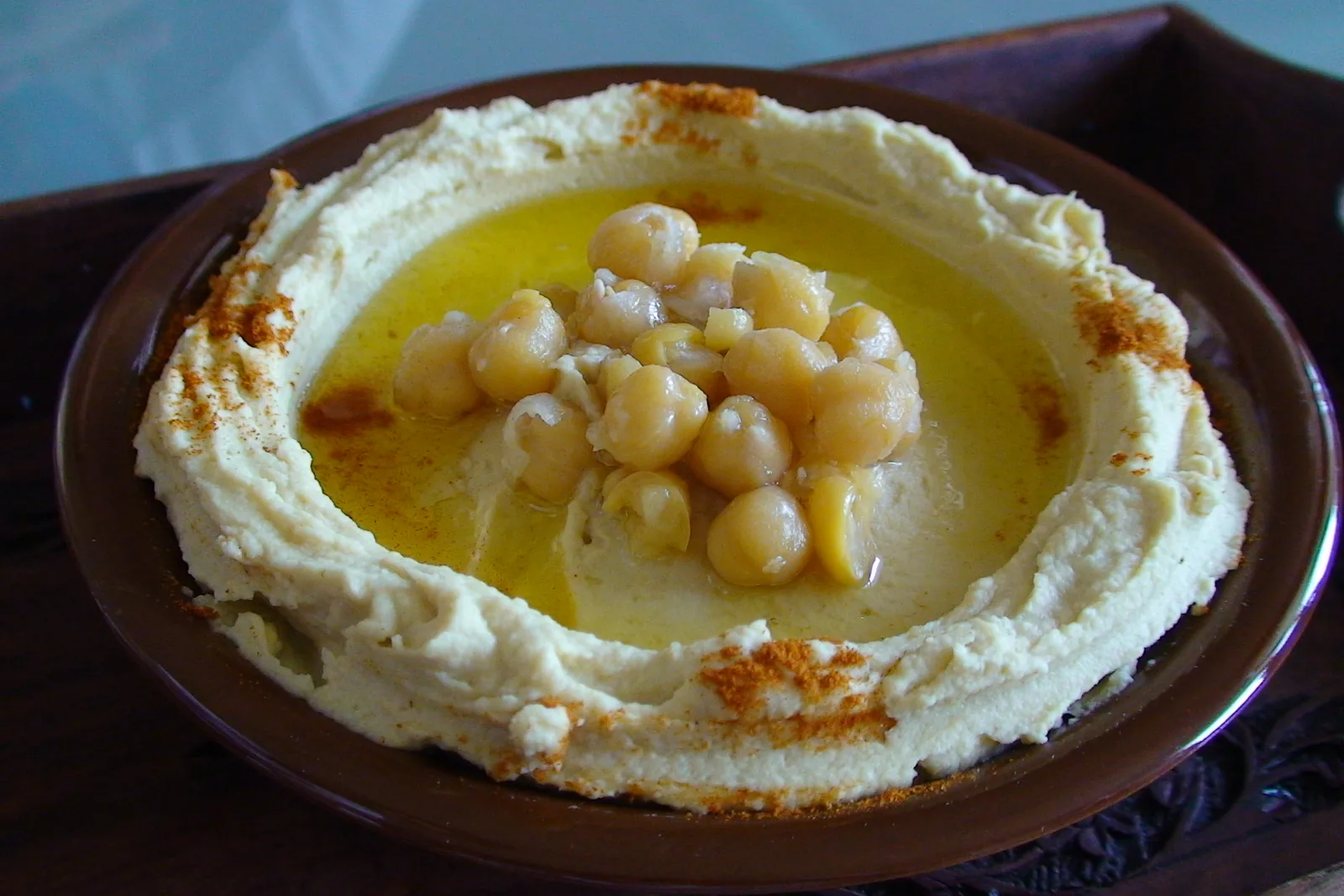
Serve the sambousek piled high, still warm from the oil, with lemon wedges and toum for dipping, as the first plate of a Lebanese mezze.

 Lebanon
25m