
Curated recipes from 193 countries  •  New seasonal Mediterranean issue out now

Overview

Lebanese Stuffed Roast Chicken

Dajaj Mahshi, Djaj Mahshi

This lebanese stuffed roast chicken recipe fills a whole bird with spiced rice, toasted pine nuts and almonds, then roasts it until the skin is crisp and the meat reaches 74°C (165°F). It takes 2 hours 10 minutes, serves 6, and the stuffing soaks up the roasting juices as it cooks. One serving is about 280 g.

Dajaj mahshi — stuffed chicken — is the centrepiece of Lebanese family celebrations, from Sunday gatherings to Eid and Christmas tables. The stuffing, hashweh, is spiced rice with toasted nuts: cinnamon and allspice are the warm signature of Levantine festive cooking, and the rice cooks in the bird so it drinks up the roasting juices. Many families add minced lamb to the stuffing; this version keeps the classic rice and nuts so the chicken itself stays the star.

Pairs well with: Fattoush salad, garlic toum, pickled cucumbers, and mint tea

Provenance

Lebanon flag Lebanon

Lebanese Heritage

Middle Eastern

Time Dedication

2h 10m

30m prep • 100m cook

Batch Yield

6 Servings

662 kcal per serving

1 serving ≈ 280 g

Technical Skill

Intermediate

Medium (Roasting)

Meal Timing & Digestive Fit

Breakfast

Not Advised

Lunch

Hearty Midday Main

Dinner

Ideal Hearty Main

Snack & Tea

Inappropriate

High Protein Occasions: Family celebrations, festive dinner, Sunday lunch, holiday meals Cost: Moderate — about $4–5 per serving at home
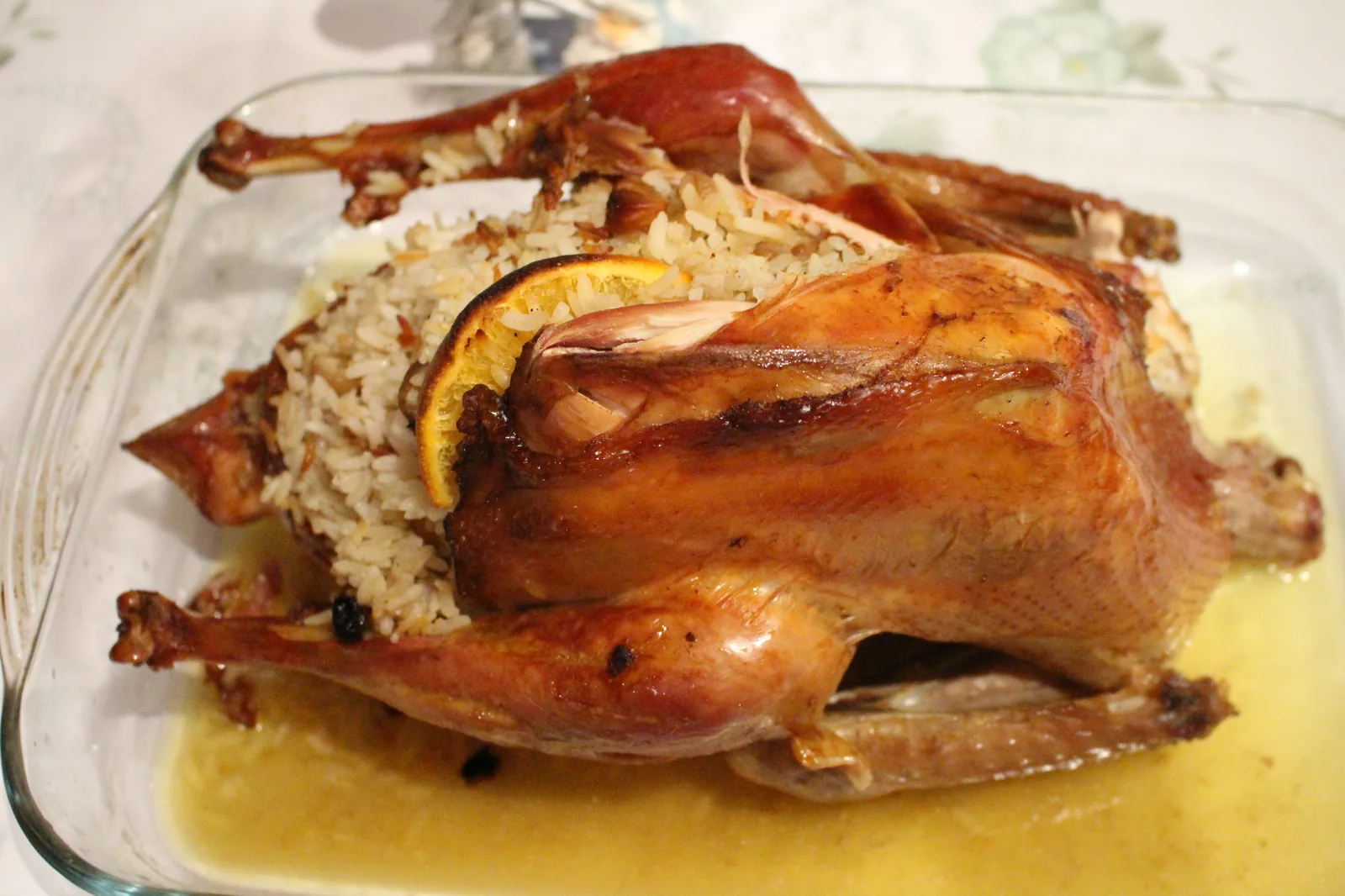
Golden roast chicken with rice stuffing spilling from the cavity in a glass roasting dish

Lebanese Heritage

Photo: Narek75, CC BY-SA 4.0, via Wikimedia Commons

The Heritage Formulary

Measured Ingredients

Estimated cost: Moderate — about $4–5 per serving at home (USD)

A good stuffed roast chicken has crisp, deep-golden skin, juicy meat, and stuffing that is fragrant and hot all the way through — never soggy or undercooked in the middle.

Execution Methodology & Culinary Technique

Step-by-Step Cooking Guide

Active 2h 10m
P

Prep Stage: Stuffing Cooked, Chicken Dry

30 Mins • One Pot, One Pan

Rinse the rice, dice the onion, mince the garlic, and toast the pine nuts and almonds in a dry pan until golden — watch them, they burn fast. Pat the chicken very dry inside and out; a dry bird is what gives crisp skin. Mix the lemon juice, half the olive oil, cinnamon, allspice and half the salt into a rub.

Maestro Tip: Toast the nuts separately from everything else — they go from golden to burnt in under a minute.

  1. 1

    Cook the Rice Stuffing

    20 Mins • Simmering Medium heat, then low simmer, about 95°C (200°F)

    Heat half the olive oil in a pot over medium heat and soften the onion for 4 minutes, then add the garlic and cook 1 minute more. Stir in the rice, cinnamon, allspice, pepper and half the salt, then pour in 300 ml of water. Bring to a boil, cover, and simmer on low for 12 minutes, until the rice is just tender but still firm — it finishes cooking inside the bird. Fold in the toasted pine nuts and almonds and set aside to cool for 10 minutes.

    Undercook the rice slightly on purpose — fully cooked rice turns to mush inside the chicken.

    Done when: Rice is tender with a firm bite; no water left in the pot.

  2. 2

    Season and Stuff the Chicken

    10 Mins • Hands-On Room temperature, about 20°C (68°F)

    Heat the oven to 190°C (375°F). Rub the chicken inside and out with the lemon juice, remaining olive oil and remaining salt. Spoon the cooled stuffing loosely into the cavity — fill it about three-quarters full, never packed tight, because the rice swells as it cooks. Tie the legs together with kitchen twine and tuck the wing tips under the body. Set the bird breast-up in a roasting pan.

    Loose stuffing cooks through safely; packed stuffing stays raw in the middle.

    Done when: Cavity about three-quarters full; legs tied; bird sitting level in the pan.

  3. 3

    Roast Covered

    60 Mins • Roasting Oven at 190°C (375°F)

    Cover the pan loosely with foil and roast for 60 minutes. The foil keeps the skin from darkening too early while the heat works through the bird and the stuffing.

    If the foil touches the skin it can stick — tent it loosely over the pan, not wrapped tight on the bird.

    Done when: Skin pale gold under the foil; juices starting to run into the pan.

  4. 4

    Uncover and Crisp the Skin

    40 Mins • Roasting Oven at 190°C (375°F); chicken cooked to 74°C (165°F)

    Remove the foil, baste the bird with the pan juices, and roast for another 35–40 minutes, basting once halfway, until the skin is deep golden and crisp. Check with a thermometer: the thickest part of the thigh must reach 74°C (165°F), and the centre of the stuffing must also reach 74°C (165°F).

    Baste with the pan juices, not water — the juices carry the spice and lemon flavour back onto the skin.

    Done when: Deep golden, crisp skin; thigh 74°C (165°F); stuffing centre 74°C (165°F); juices run clear.

  5. 5

    Rest, Then Carve

    15 Mins • Resting Rest at room temperature; serve hot, above 60°C (140°F)

    Lift the chicken to a board and rest for 15 minutes so the juices settle and the meat stays moist. Spoon the stuffing from the cavity into a serving bowl. Carve the chicken into 6 portions and serve each with a generous spoonful of stuffing.

    Cutting too soon spills the juices onto the board instead of keeping them in the meat.

    Done when: Meat slices cleanly; stuffing is hot all the way through.

Finishing Touches & Plating

Serve the carved chicken with the warm rice stuffing, a spoonful of pan juices over each portion, and fattoush on the side. The crisp skin, the fragrant rice and the toasted nuts are the whole point — eat it while it is hot.

Nutritional Physiology & Benefits

Nutrition

Energy

662

kcal / serving

Protein

43g

Complete AA

Carbs

32g

Complex

Fats

40g

Healthy

Per serving (6 servings · 1 serving ≈ 280 g)
Energy662 kcal
Protein43 g
Carbohydrates32 g
Fat40 g
Fibre1.9 g
Sugar1.3 g
Sodium672 mg
Per 100g
Energy236 kcal
Protein15.5 g
Carbohydrates11.3 g
Fat14.4 g
Fibre0.7 g
Sugar0.5 g
Sodium240 mg

Nutrition values are estimated — calculated from USDA FoodData Central values for the listed ingredients.

Vitamins & minerals: Niacin and vitamin B6 from the chicken; vitamin E and magnesium from the almonds and pine nuts; iron from the chicken and rice. Nutrition values are estimated.

High in Protein

One serving supplies about 43 g of protein from the chicken, with the rice and nuts making it a filling festive meal.

Nuts Add Healthy Fats

Pine nuts and almonds bring monounsaturated fats, vitamin E and magnesium to a dish that is otherwise lean protein and rice.

One Pan, One Bird

Chicken and stuffing cook together in a single pan, so the rice absorbs the roasting juices and there is little washing up.

Food Pairings

What to Eat With

To optimize nutrient absorption and elevate the sensory depth, pair with these authentic accompaniments:

Vegetables

Fattoush Salad

Crisp lettuce, tomato and sumac-dressed bread cut through the rich roast chicken and refresh the palate between bites.

Pickled Cucumbers

Sharp pickles balance the warm cinnamon and allspice of the stuffing and cleanse the palate.

Sauces

Garlic Toum

A spoonful of sharp, creamy garlic sauce is the classic Lebanese partner for roast chicken — it wakes up every bite.

Drinks

Mint Tea

Hot mint tea after a rich roast settles the meal the Lebanese way and pairs naturally with the warm spices.

Complete menu

Carved roast chicken with its rice stuffing, fattoush salad, garlic toum and pickled cucumbers, with mint tea to finish.

Digestive Guardrails

What NOT to Combine

To prevent digestive distress, sluggishness, or palate clash, avoid pairing the dish with these elements:

Undercooked Chicken or Stuffing

The thigh must reach 74°C (165°F) and the stuffing centre must also reach 74°C (165°F); undercooked poultry and stuffing can carry harmful bacteria. Never serve the bird pink at the bone. This is general food-safety information, not medical advice.

Stuffing Left in the Bird Overnight

Leftover stuffing cools slowly inside the cavity and can grow bacteria. Always spoon it out and refrigerate it separately within 2 hours of cooking.

General information only, not medical advice — consult a doctor for personal dietary decisions.

Who Should Eat It

Who Should Eat

  • General adultsA generous festive dinner; one portion with salad is plenty for most people.
  • ChildrenSuitable from age 2+; serve boneless meat with the soft rice stuffing and check the nuts are chewed well.
  • ElderlyGood choice — soft, moist meat and rice are easy to eat; serve the meat off the bone.
  • Pregnant womenGenerally suitable when the chicken and stuffing are fully cooked to 74°C (165°F); eat it hot and freshly cooked.
  • Breastfeeding womenGenerally suitable; a good source of protein and iron — eat it hot and freshly cooked.
  • AthletesExcellent after training: about 43 g of protein per serving with rice for energy.
  • Weight gainA good choice — rich, filling and high in protein; add an extra spoonful of stuffing.
  • Weight lossEnjoy a smaller portion: choose breast meat without the skin and keep the stuffing to a few spoonfuls with a big salad.

Health Conditions — Adjust or Avoid

Conditions

  • DiabetesThe rice stuffing adds about 32 g of carbohydrate per serving — count it and keep the portion modest; ask your clinician about portions.
  • High blood pressureThe dish is moderately salty; season lightly and skip extra salty pickles.
  • Kidney diseaseHigh in protein and potassium from the nuts; keep the portion modest and ask your clinician.
  • GoutChicken and nuts are moderate in purines; keep to one portion and avoid eating the skin every day.
  • Stomach issuesWell-cooked chicken and rice are usually gentle; skip the garlic toum if raw garlic upsets your stomach.
  • Cardiovascular diseaseThe skin and nuts add saturated fat; choose breast meat without skin and keep the nuts to the serving given.
  • Fatty liverRich and high in fat for one meal; take a smaller portion with plenty of salad and skip second helpings of skin.
  • Food allergiesContains tree nuts (pine nuts, almonds). For a nut-free version, leave the nuts out and use toasted sesame seeds. Ask your clinician about any nut allergy.
  • Special therapeutic dietsIf you follow a prescribed low-sodium or low-fat diet, season lightly and choose skinless breast meat — check with your clinician.

If you have a medical condition, consult your doctor before changing your diet.

Storage & Use

Storage & Use

How to store
Spoon the stuffing out of the cavity, cool within 1 hour, and store meat and stuffing in separate airtight containers in the fridge.
In the fridge
3 days, in airtight containers.
In the freezer
2 months for the carved meat; the stuffing freezes well for 1 month.
How to reheat
Reheat meat and stuffing separately in a covered dish in the oven at 180°C (350°F) until hot all the way through, to 74°C (165°F); add a splash of stock so the rice does not dry out.
Freezing recommended
Yes for the meat; the skin loses its crispness on reheating.
Signs it has spoiled
Sour smell, slimy skin, or grey flesh.

More recipes to explore

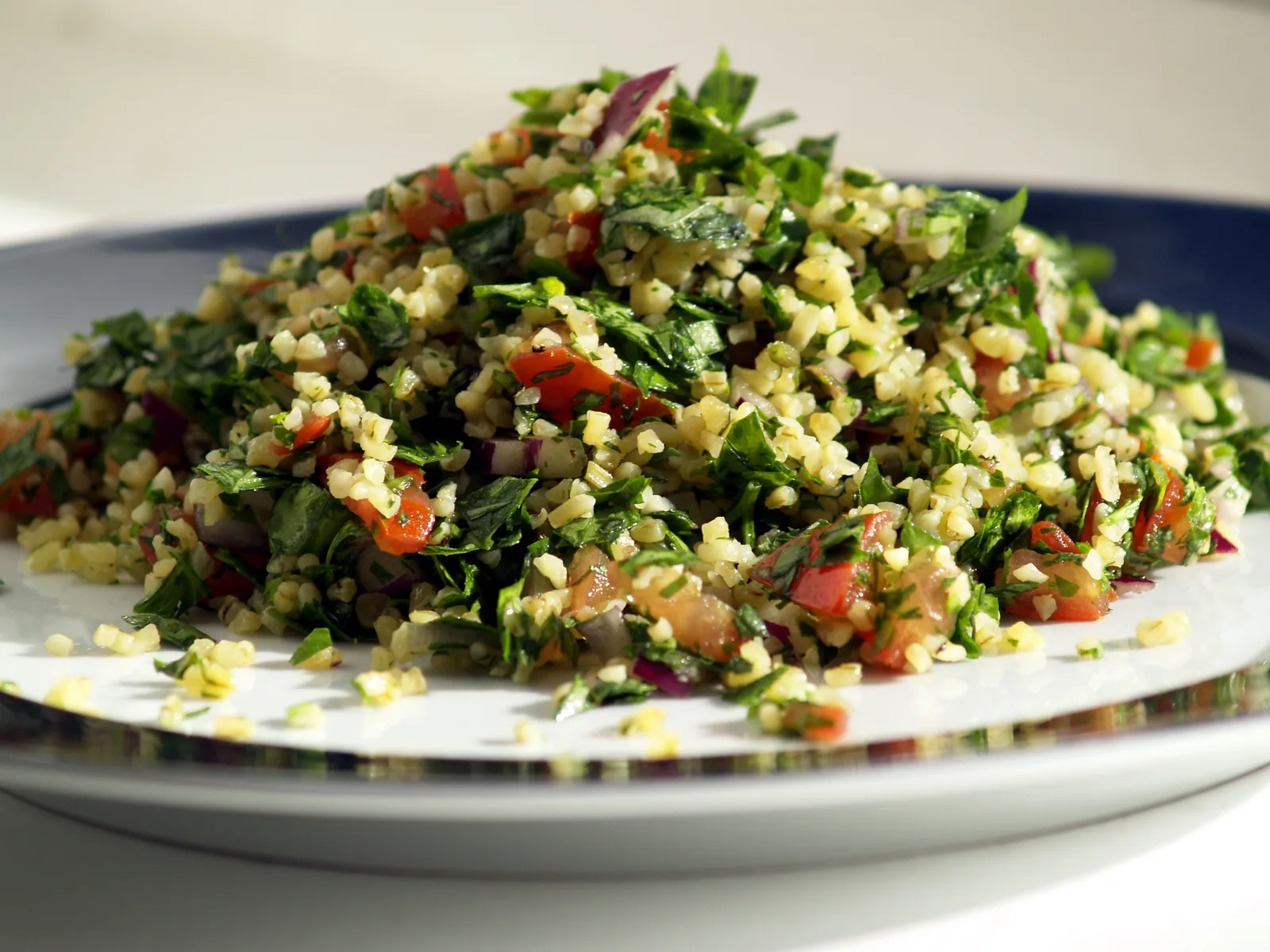
A plate of fresh Lebanese tabbouleh with chopped parsley, tomato and bulgur Lebanon flag Lebanon 25m
Lunch •Levantine Mezze Classic

Lebanese Tabbouleh

Tabbouleh is Lebanon's bright green parsley salad, where the herbs lead and fine bulgur plays a supporting role. Diced tomato, green onion and mint are tossed in lemon juice and olive oil for a fresh, lemony bite that wakes up any mezze table. One serving is about 216 g.

Light & Fresh

Mostly fresh parsley and tomato with a little bulgur, dressed in lemon and olive oil.

Pairs Well With
Warm pita bread, hummus and grilled halloumi
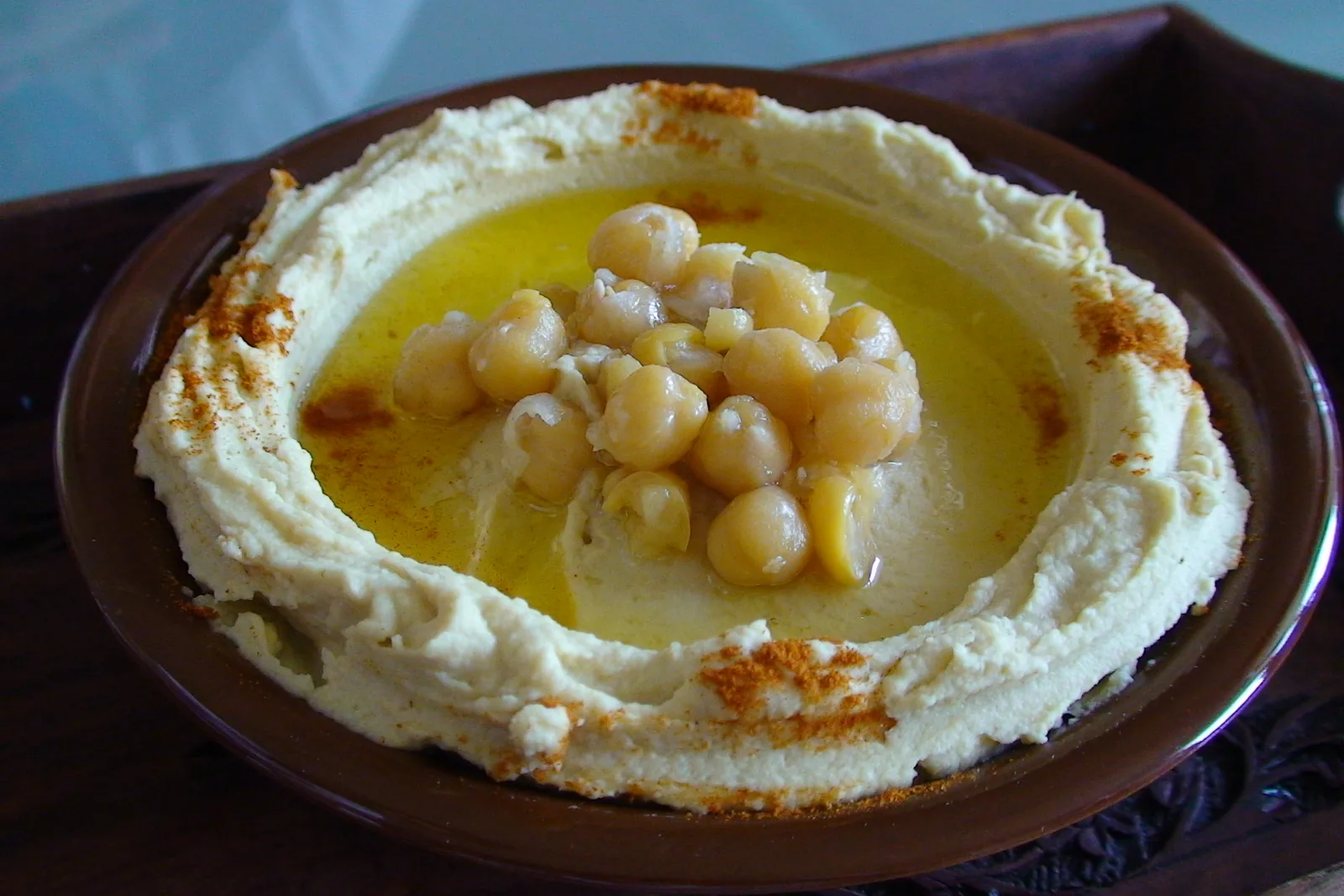
A bowl of cold Lebanese hummus with olive oil, whole chickpeas, paprika and parsley Lebanon flag Lebanon 1h 5m
Snack & Tea •Beirut Mezze Classic

Lebanese Hummus

Lebanese hummus is a cold, silky chickpea and tahini dip, lemon-forward with garlic and a pool of olive oil, topped with pine nuts and parsley. It is served chilled or at room temperature as part of a mezze spread, scooped up with warm pita — never served warm as a main plate. One serving is about 110 g.

Plant Protein Snack

Chickpeas and tahini blended into a smooth dip, with lemon, garlic and olive oil.

Pairs Well With
Warm pita bread, tabbouleh and olives
Quick Prep (<30m)
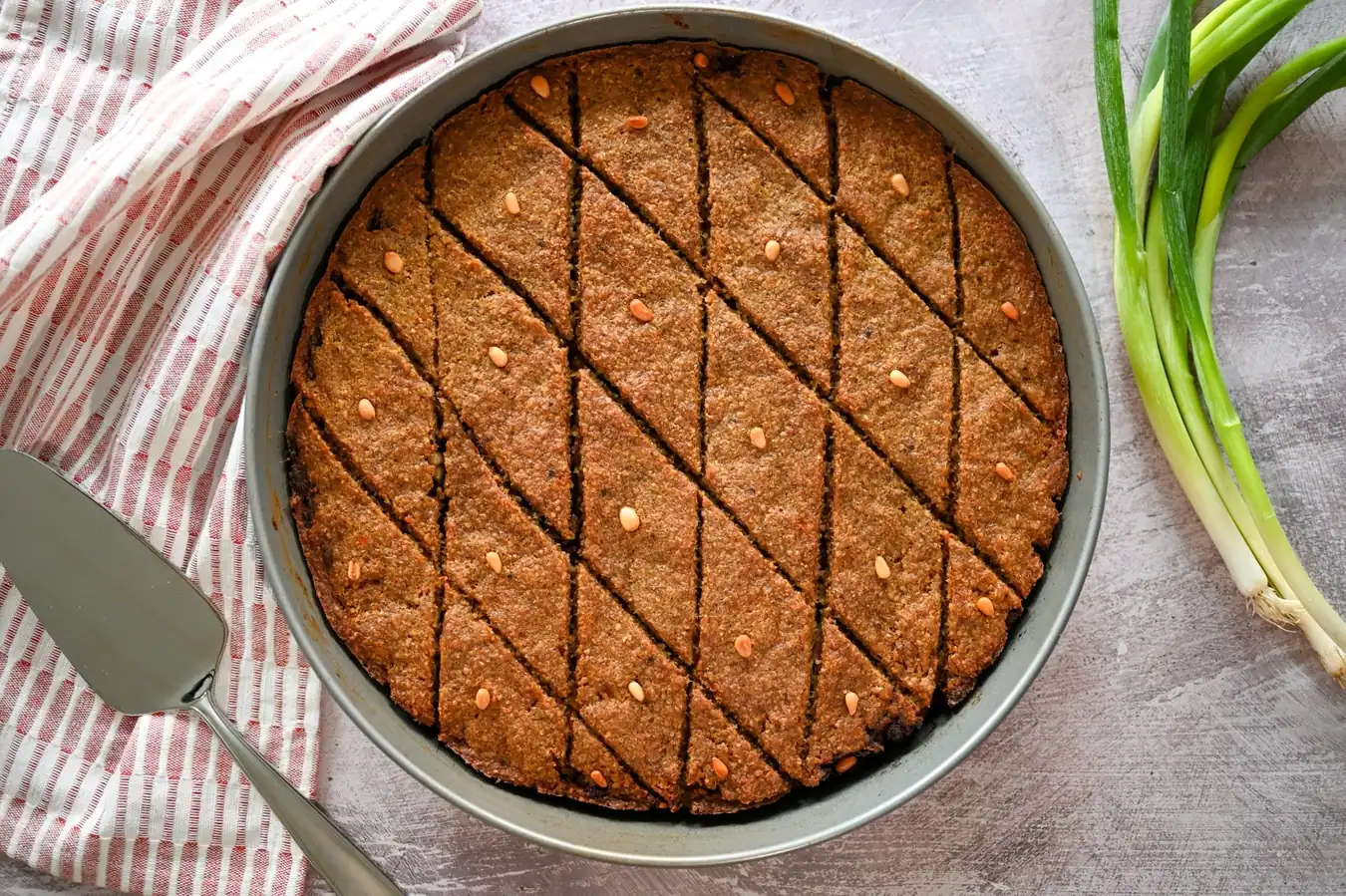
A baked tray of Lebanese kibbeh bil-saniyeh, scored into diamonds with pine nuts Lebanon flag Lebanon 1h 25m
Dinner •Lebanon's National Dish

Lebanese Kibbeh

Kibbeh bil-saniyeh is Lebanon's baked tray kibbeh: two layers of bulgur and lean beef sandwiching a spiced beef and pine-nut filling, scored into diamonds and baked until golden and crisp at the edges. It is the tray-baked form of Lebanon's national dish, made for sharing at the family table. One serving is about 202 g.

Hearty Family Dinner

Layers of bulgur and lean beef around a spiced pine-nut filling, baked until golden.

Pairs Well With
Yogurt, tabbouleh and warm pita bread
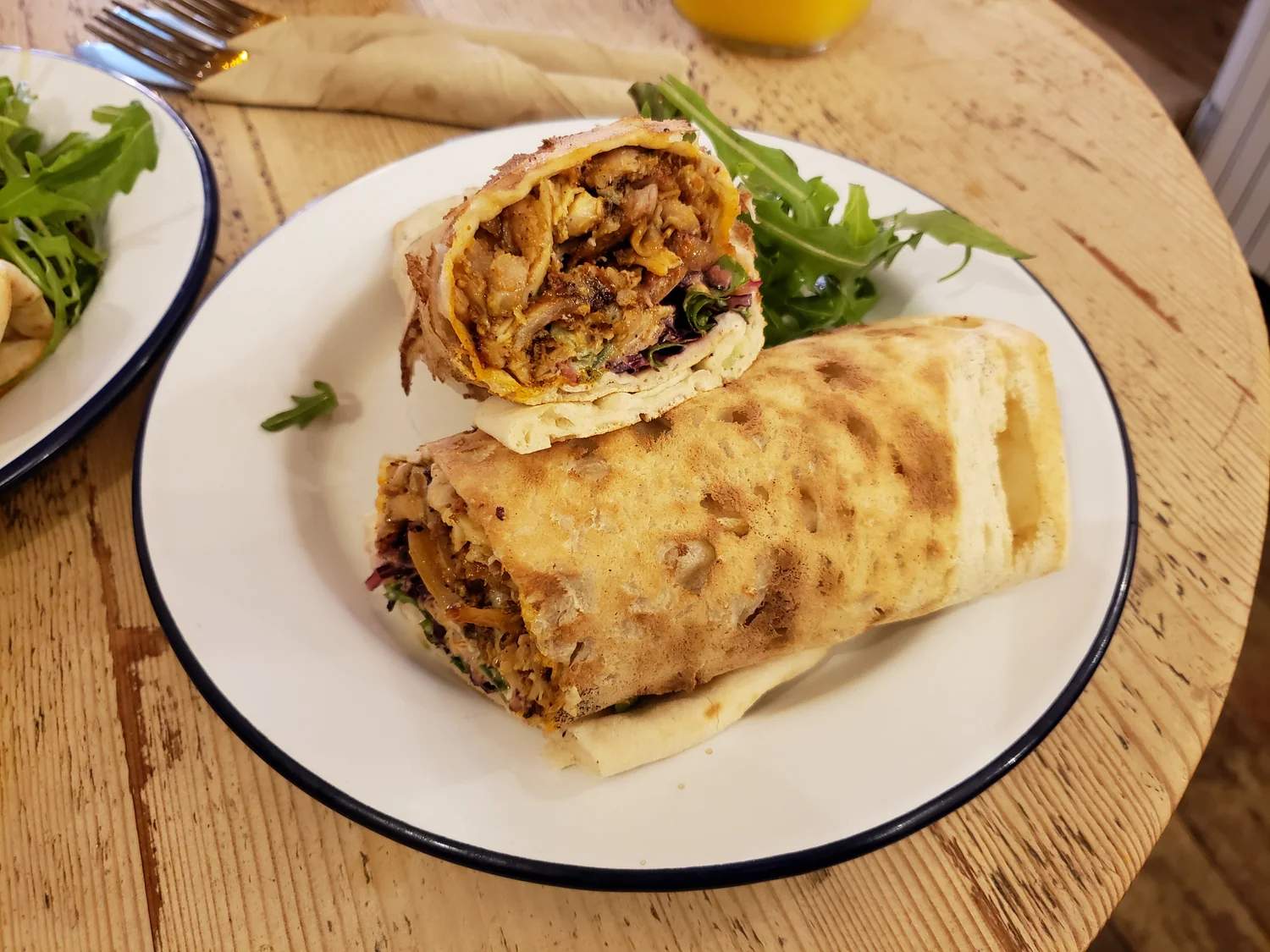
A sliced chicken shawarma wrap in toasted lavash showing spiced chicken, with rocket salad on a white plate Lebanon flag Lebanon 50m
Dinner •Beirut Street-Food Heritage

Lebanese Chicken Shawarma

This lebanese chicken shawarma recipe marinates boneless chicken thighs in yogurt, lemon, garlic and seven warm spices, then grills them until charred at the edges and slices them thin for rolling in soft Lebanese pita with toum, the whipped garlic sauce that defines the Lebanese version. Pickled turnips, dill pickles, tomato and parsley give every bite its sharp, fresh contrast. One serving is about 379 g.

High-Protein & Satisfying

Spice-marinated chicken thighs grilled and rolled in warm pita with toum, pickles and tomato — the Beirut street-food classic, made at home.

Pairs Well With
Toum, pickled turnips & fries
High Protein

The Dinner Gazette

Never wonder what’s for dinner again

One email a week with easy dinner ideas from around the world — ingredients, steps and nutrition, tested in our kitchen first.

Delivered every Thursday morning. Unsubscribe anytime.