Curated recipes from 193 countries  •  New seasonal Mediterranean issue out now

Overview

Njeguški Pršut

Njeguško Pršut, Njegusi Prosciutto

Njeguški pršut is Montenegro's famous dry-cured ham from the mountain village of Njeguši: a pork leg salted with sea salt, pressed flat, lightly smoked over beechwood and left to mature in the mountain air for about a year. This njeguski prsut recipe is the home part of that story — how to choose a good piece, trim it, slice it paper-thin and serve it the Montenegrin way, with Njeguši cheese, kajmak and warm crusty bread. One serving is about 206 g.

Njeguši is a small mountain village under Mount Lovćen, near the old capital Cetinje, and the birthplace of the Petrović-Njegoš dynasty that ruled Montenegro from the late 17th century until 1918. Its ham is made from a pig's hind leg, salted with sea salt, pressed flat under weight, lightly cold-smoked over beechwood and dried in the cool mountain air, with the whole cycle taking about a year. The ham now holds protected geographical indication status, which limits production to the Cetinje area and nearby municipalities and requires the traditional method — sea salt only, beechwood smoke and air-drying.

Pairs well with: Serve the sliced ham with Njeguši cheese, kajmak, warm crusty bread and a glass of Vranac red wine.

Provenance

Montenegro flag Montenegro

Njeguši Classic

Mediterranean & Italy

Time Dedication

30m

20m prep • 10m cook

Batch Yield

4 Servings

552 kcal per serving

1 serving ≈ 206 g

Technical Skill

Easy

Easy (Slice & Serve)

Meal Timing & Digestive Fit

Breakfast

Not Advised

Lunch

Prime Metabolic Fit

Dinner

Ideal Hearty Main

Snack & Tea

Inappropriate

High Protein Occasions: Long lunches, sharing platters, festive gatherings, wine evenings, picnics Cost: Moderate — about $6–7 per serving at home
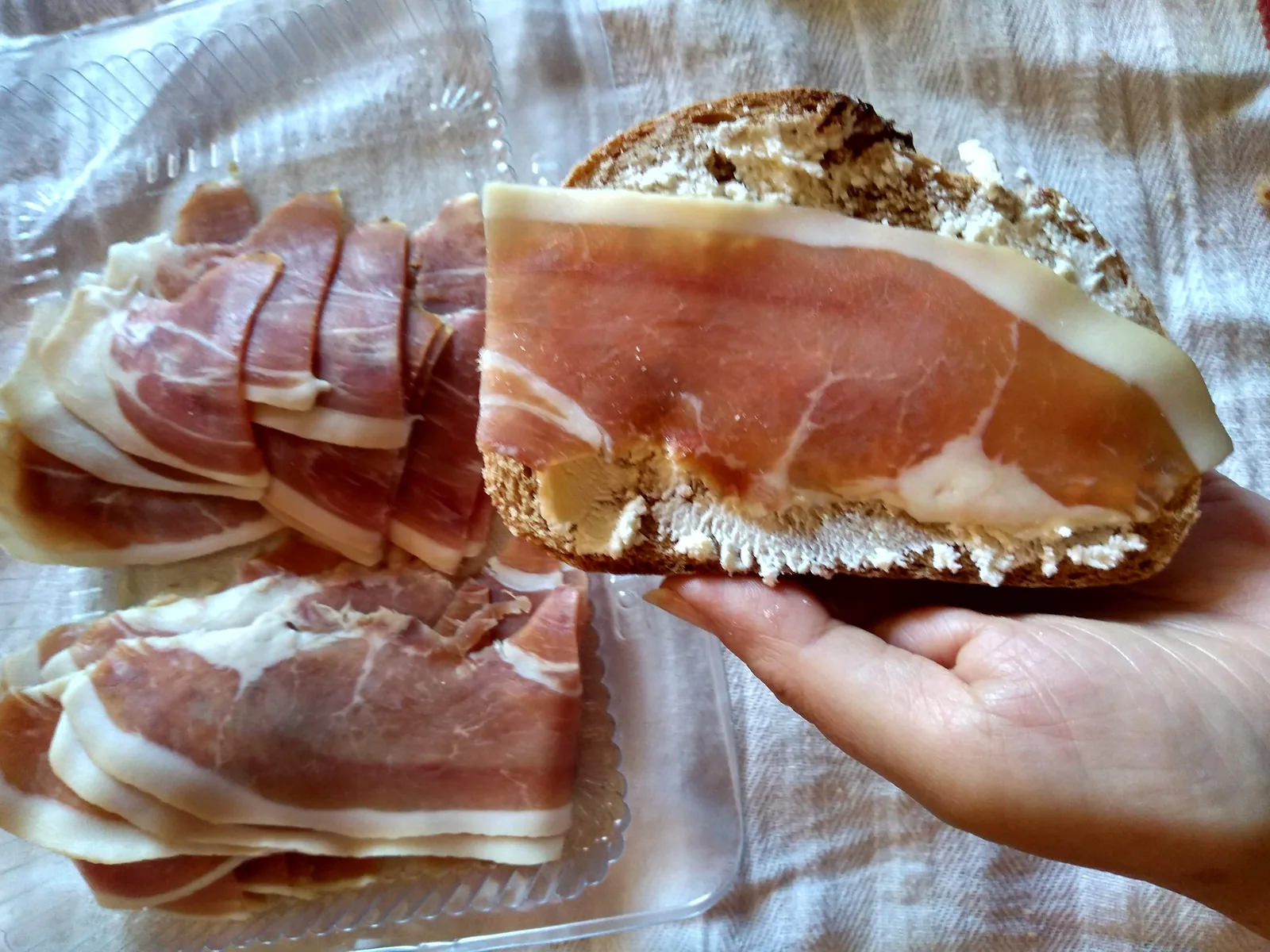
Thin slices of Njeguški pršut on a tray beside a slice of bread spread with kajmak, held in a hand

Njeguši Classic

Photo: Milica Buha, CC BY-SA 4.0, via Wikimedia Commons

The Heritage Formulary

Measured Ingredients

Estimated cost: Moderate — about $6–7 per serving at home (USD)

This recipe follows the traditional Montenegrin serving: paper-thin slices of beech-smoked cured ham with Njeguši cheese, kajmak and warm crusty bread.

Execution Methodology & Culinary Technique

Step-by-Step Cooking Guide

Active 30m
P

Prep Stage: Temper the Cheese, Trim the Ham

20 Mins (Mostly Hands-Off Tempering)

Take the cheese and kajmak out of the fridge 20 minutes before serving so they soften and taste of something. While they warm up, trim the hard rind and any dried dark edge from the ham, and slice the bread thick. A cold ham straight from the fridge tastes flat, and cold cheese crumbles instead of slicing — this short wait is what makes the plate work.

Maestro Tip: Set a timer for the 20 minutes: it is easy to forget the cheese in the fridge and serve it fridge-cold.

  1. 1

    Choose the Ham and Know Its Cure

    5 Mins Room temperature, about 20°C (68°F)

    Buy a piece cut from a cured leg, or ready-sliced pršut from a Montenegrin producer. A good piece is deep rose-red with creamy white fat and smells gently of beech smoke. The ham you are holding is the end of a cure that takes about a year: the pork leg is salted with sea salt for about three weeks, pressed under weight for about three weeks to squeeze out moisture, lightly cold-smoked over beechwood and dried in the cool mountain breeze for about three months, then left to mature. Curing a leg from scratch is a year-long project for a producer in Njeguši, not a home afternoon — this recipe is the choosing, slicing and serving of a ham that has already been cured that way.

    If the label names Njeguši or the Cetinje area and a maturing time of about a year, you are buying the real thing; a pale, wet or sour-smelling piece is not.

    Done when: The ham smells clean and smoky, the fat is white rather than yellow, and the cut face is an even rose-red with no grey patches.

  2. 2

    Trim and Slice Paper-Thin

    10 Mins Room temperature, about 20°C (68°F)

    Lay the ham on a board and cut away the hard outer rind and any dark, dried edge with a sharp knife, keeping as much of the white fat as you can — the fat carries the flavour. Slice across the grain into the thinnest slices you can manage, about 1 mm (1/25 in) thick, using long, smooth strokes and letting the knife do the work. If you bought ready-sliced pršut, separate the slices gently and let them come to room temperature for 10 minutes. Fold or loosely roll each slice rather than laying them flat in a stack, so they do not stick together.

    A long, thin, very sharp knife is the whole secret: a short or blunt blade tears the meat and makes thick, chewy slices. Chill the ham for 10 minutes first if your knife keeps dragging.

    Done when: The slices are thin enough to see light through, bend without snapping, and show a clean rose-red face with a white fat edge.

  3. 3

    Warm the Bread and Temper the Cheese

    10 Mins Oven 180°C (350°F)

    Heat the oven to 180°C (350°F). Lay the bread slices directly on the oven rack and warm them for 8 to 10 minutes until the crust crackles and the middle is warm through. While the bread warms, the cheese and kajmak finish coming to room temperature — the cheese should slice cleanly and the kajmak should spread like soft butter. Do not put the ham in the oven: pršut is served uncooked, and heat would melt its fat and turn the slices greasy.

    Warm bread is not a garnish here — it is what the kajmak spreads on and what the ham is eaten with, so serve it while it is still warm.

    Done when: The bread crust is crisp and crackling, the crumb is warm to the touch, and the cheese yields slightly when pressed.

  4. 4

    Plate and Serve

    5 Mins Serve at room temperature, about 20°C (68°F)

    Spread each warm bread slice with kajmak and lay one folded slice of pršut on top. On a large board or plate, arrange the remaining ham slices in loose, overlapping folds, the cheese in thin triangles beside them, and the kajmak in a small bowl. Drizzle the olive oil lightly over the ham and dust with a little black pepper. Put the board in the middle of the table and let everyone build their own bites — ham on kajmak bread, ham with a piece of cheese, or ham on its own.

    Serve the board the moment it is built: the warm bread softens the kajmak, the ham warms just enough to release its smoke, and nothing has time to dry out.

    Done when: The plate looks generous and loose rather than stacked tight; the ham glistens slightly from the oil and the bread is still warm.

Finishing Touches & Plating

Serve the board at room temperature at once, with the warm kajmak bread beside it, and let everyone build their own bites at the table.

Nutritional Physiology & Benefits

Nutrition

Energy

552

kcal / serving

Protein

35g

Complete AA

Carbs

33g

Complex

Fats

33g

Healthy

Per serving (4 servings · 1 serving ≈ 206 g)
Energy552 kcal
Protein35 g
Carbohydrates33 g
Fat33 g
Fibre1.7 g
Sugar5.2 g
Sodium2727 mg
Per 100g
Energy269 kcal
Protein17.1 g
Carbohydrates15.9 g
Fat15.8 g
Fibre0.8 g
Sugar2.5 g
Sodium1327 mg

Nutrition values are estimated — calculated from USDA FoodData Central values for the listed ingredients.

Vitamins & minerals: Vitamin B12, thiamine and iron (cured ham), calcium (cheese and kajmak), iron and thiamine (bread). Nutrition values are estimated.

High in Protein

About 35.1 g of protein per serving, mostly from the cured ham and the cheese, which makes a small plate surprisingly filling.

Simple, Unprocessed Plate

The plate is built from a handful of foods — cured ham, cheese, kajmak, bread and olive oil — with nothing fried and no sauce to hide behind.

Calcium and Iron Together

The cheese and kajmak supply calcium while the ham and bread supply iron and thiamine, so the plate covers several nutrients in one lunch.

Food Pairings

What to Eat With

To optimize nutrient absorption and elevate the sensory depth, pair with these authentic accompaniments:

Sides

Green Olives

Briny olives echo the salt of the ham and give a firm, sharp bite that resets the palate between rich, fatty slices.

Fresh Figs

Sweet, soft figs against salty, smoky ham is the classic cured-meat pairing: the sweetness makes the salt taste deeper instead of harsher.

Vegetables

Pickled Peppers

A little vinegar heat cuts through the fat of the ham and the richness of the kajmak, which is why pickled things sit beside cured meat all over the Balkans.

Drinks

Vranac Red Wine

Montenegro's own dark red wine has enough body and tannin to stand up to the salt and smoke of the ham without washing the flavour away.

Full Menus

Full Menu: Pršut Plate, Kačamak, Grilled Fish

Start with the pršut plate and bread, follow with kačamak — Montenegro's cornmeal, potato and cheese porridge — and finish with grilled fish, a progression from salty and rich to soft and fresh.

Complete menu

Start with the pršut plate, olives and pickled peppers, follow with kačamak, and finish with grilled fish and a glass of Vranac.

Digestive Guardrails

What NOT to Combine

To prevent digestive distress, sluggishness, or palate clash, avoid pairing the dish with these elements:

Eating a Large Portion at Once

One serving carries about 2,727 mg of sodium, more than a full day's recommended amount, because the ham is salt-cured. A modest plate shared between four is the way it is traditionally eaten, not a large solo portion. This is general information, not medical advice.

Serving It Fridge-Cold

Cold fat has almost no aroma, so pršut eaten straight from the fridge tastes flat and waxy. Letting the slices reach room temperature for 10 minutes lets the fat soften and the beech-smoke flavour come through. This is general information, not medical advice.

Slicing It Thick

Thick slices of dry-cured ham are chewy and overwhelmingly salty, because the salt is concentrated in a dense, dry meat. Paper-thin slices are not presentation — they are how the ham is meant to be eaten. This is general information, not medical advice.

General information only, not medical advice — consult a doctor for personal dietary decisions.

Who Should Eat It

Who Should Eat

  • General adultsA satisfying shared lunch as written — one plate between four with bread and cheese is a full meal for most adults.
  • ChildrenGive children a small portion only: the ham is very salty and the plate is rich, so a couple of thin slices with bread and cheese is enough.
  • ElderlySuitable in a small portion; the slices are soft and easy to eat, but the sodium is very high, so keep the ham modest and fill up on bread and cheese.
  • Pregnant womenCured meats such as pršut are often advised against during pregnancy because they are served uncooked; ask your clinician before eating it.
  • Breastfeeding womenGenerally suitable in a modest portion; the protein and calcium are useful, but the high sodium means a small plate with plenty of bread is wiser. Ask your clinician about portion size.
  • AthletesA useful post-training plate — about 35.1 g of protein and 32.6 g of carbohydrate per serving, and the salt helps replace what was lost in sweat.
  • Weight gainA good choice — the plate is energy-dense at 552 kcal a serving, so an extra slice of bread with kajmak adds calories easily.
  • Weight lossKeep to a small plate with one slice of bread and extra pickled vegetables; at 552 kcal and 2,727 mg of sodium a serving, portion size matters.

Health Conditions — Adjust or Avoid

Conditions

  • DiabetesThe ham itself has no carbohydrate, but the bread supplies most of the 32.6 g per serving; one slice of bread instead of two keeps the meal lighter. Ask your clinician about portions.
  • High blood pressureOne serving has about 2,727 mg of sodium, above a full day's recommended amount, so keep the ham to a few thin slices and skip extra salt. Ask your clinician about your daily sodium limit.
  • Kidney diseaseThe plate is high in protein, sodium and potassium, so keep the portion small if your clinician has advised limits, and ask about portion size.
  • GoutCured pork is moderately high in purines; a small serving with plenty of bread, vegetables and water is a safer way to enjoy it. Ask your clinician about how often cured meat fits your diet.
  • Stomach issuesSmoked, salty, fatty meat can be heavy for a sensitive stomach; a few thin slices with plain bread, eaten slowly, is usually easier. Ask your clinician if symptoms persist.
  • Cardiovascular diseaseThe plate is rich in sodium and saturated fat from the cured ham, cheese and kajmak; a small portion with olives and pickled vegetables lightens it. Ask your clinician about your overall sodium and fat intake.
  • Fatty liverProcessed, fatty cured meat is best eaten rarely and in small amounts; a thin-sliced portion with salad and plain bread is lighter. Ask your clinician about dietary changes.
  • Food allergiesContains pork and milk (cheese, kajmak), and wheat (gluten) in the bread. The ham itself contains only pork and salt. Ask your clinician before serving to someone with a food allergy.
  • Special therapeutic dietsNot suitable as written for low-sodium, dairy-free or gluten-free diets; the ham cannot be made low-sodium, though gluten-free bread can be used. Ask your clinician or dietitian before adapting it.

If you have a medical condition, consult your doctor before changing your diet.

Storage & Use

Storage & Use

How to store
Keep sliced pršut wrapped tightly in cling film or in an airtight container; keep a whole piece wrapped in cloth or paper in a cool, dark place. Keep cheese and kajmak in their own sealed containers.
In the fridge
Sliced pršut: 3–5 days in the fridge. A whole vacuum-sealed piece: several weeks. Cheese and kajmak: 5–7 days.
In the freezer
Whole vacuum-sealed piece: up to 3 months; sliced ham: up to 1 month, though the texture softens.
How to reheat
Do not reheat the ham — pršut is served uncooked at room temperature. Leftover bread can be rewarmed in the oven at 180°C (350°F) for 5 minutes; bring leftover ham back to room temperature for 10 minutes before serving.
Freezing recommended
Only for a whole vacuum-sealed piece, up to 3 months; freezing sliced ham is not recommended, as it dries the slices and dulls the flavour.
Signs it has spoiled
Sour or rancid smell, slimy or sticky surface, grey or green mould on the cut face, or fat that has turned yellow and smells stale.

More recipes to explore

A mound of golden kačamak cornmeal porridge on a white plate, with a bowl of sour milk and a slab of white cheese on a wooden board Montenegro flag Montenegro 1h
Dinner •Montenegrin National Dish

Montenegrin Kačamak

Montenegrin kačamak is a soft, creamy porridge made by stirring fine cornmeal into mashed boiled potatoes, then beating in butter, milk, sour cream and crumbled feta until it turns smooth and rich. Unlike the stiff maize porridges of southern Africa, which are sliced and eaten by hand, kačamak is soft enough to eat with a spoon, straight from the bowl. One serving is about 415 g.

Comfort & Warmth

A soft, spoon-eaten porridge of cornmeal and potato, enriched with butter and crumbled white cheese for a rich, warming dinner.

Pairs Well With
Serve with a bowl of cold sour milk, a cucumber and tomato salad, and extra crumbled white cheese on the side.
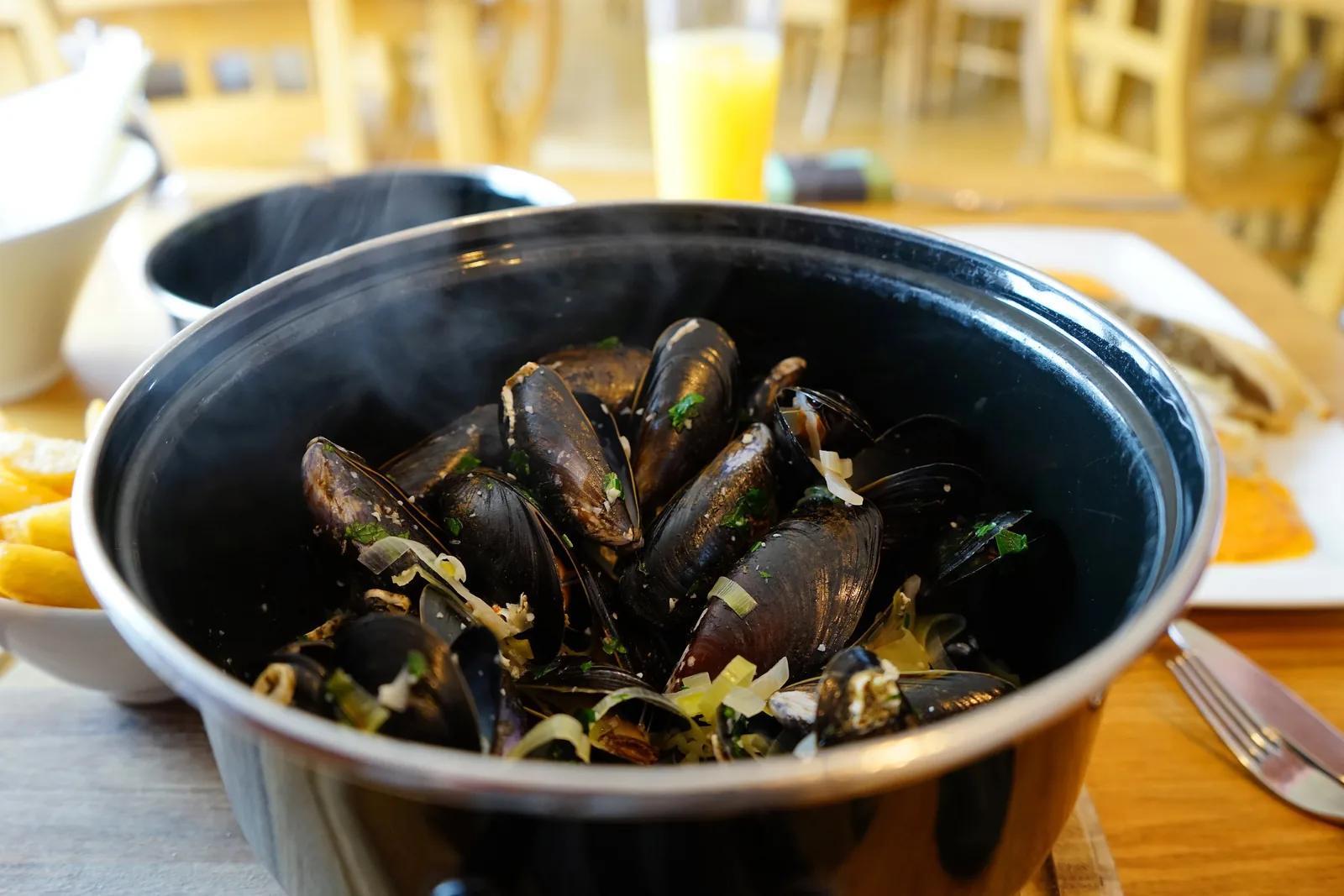
A steaming black pot of opened mussels in white wine broth, sprinkled with chopped parsley and garlic Montenegro flag Montenegro 32m
Dinner •Montenegrin Coastal Classic

Montenegrin Buzara

Montenegrin buzara is a pot of fresh mussels steamed in white wine with garlic, olive oil and parsley, finished with breadcrumbs and lemon. The mussels open in the fragrant broth, and that broth is the best part — soak it up with crusty bread. One serving is about 565 g.

Light & Fresh

Fresh mussels steamed in white wine, garlic and parsley — a light, briny Adriatic dinner with crusty bread for the broth.

Pairs Well With
Serve with crusty bread for the broth and a glass of the same dry white wine.
Tagliatelle al ragù Bolognese in a bowl with Parmigiano-Reggiano Italy flag Italy 4h 25m
Lunch •Emilia-Romagna

Tagliatelle al Ragù Bolognese

Slow-braised soffritto and coarse ground heritage meats layered over handmade egg yolk dough for mid-day stamina.

Lean Protein

Slow-simmered beef ragù tossed through fresh egg tagliatelle.

Pairs Well With
Bitter Radicchio & Aged Balsamico di Modena
Pasta & Noodles • High Protein
Pad kra pao gai — Thai holy basil chicken with fried egg and rice Thailand flag Thailand 30m
Lunch •Bangkok Street Flame

Pad Kra Pao Gai

High-heat wok flash of holy basil and crushed chillies over minced chicken, served over jasmine rice with a crispy-edged fried egg.

High Energy

Capsaicin brings the heat; holy basil adds a peppery, clove-like aroma.

Pairs Well With
Chilled Cucumber Salad & Fish Sauce Lime Dip
High Protein • Quick Prep (<30m)

The Dinner Gazette

Never wonder what’s for dinner again

One email a week with easy dinner ideas from around the world — ingredients, steps and nutrition, tested in our kitchen first.

Delivered every Thursday morning. Unsubscribe anytime.