
Curated recipes from 193 countries  •  New seasonal Mediterranean issue out now

Overview

Pikliz

Picklese, Haitian Pickled Slaw, Haitian Spicy Pickles

This pikliz recipe packs shredded cabbage, carrot, onion, bell pepper and fiery Scotch bonnet into a jar with white vinegar, lime juice and a pinch of cloves. After two days in the fridge it turns into Haiti's essential condiment — crunchy, sour and hot — spooned over griot, tassot and rice and beans. One serving is about 110 g.

Pikliz (pronounced PEE-kleez) is the pickled condiment of Haitian cuisine, its name drawn from the French word piquer, meaning to sting. Its base is cabbage, carrots, bell peppers, garlic, onion and Scotch bonnet peppers, pickled in white vinegar and citrus juice. It can be eaten fresh or left to ferment for a deeper taste, and it sits on the table at almost every Haitian meal, above all with griot and tassot.

Pairs well with: Griot and fried plantains, with a cold limeade on the side.

Provenance

Haiti flag Haiti

Haiti Heritage

Latin America & Caribbean

Time Dedication

25m

25m prep • 0m cook

Batch Yield

12 Servings

31 kcal per serving

1 serving ≈ 110 g

Technical Skill

Easy

Easy (No Cooking)

Meal Timing & Digestive Fit

Breakfast

Not Advised

Lunch

Inappropriate

Dinner

Inappropriate

Snack & Tea

Ideal Light Bite

Fermented / Gut Health Occasions: Everyday Haitian meals, barbecues, fried-food feasts, parties Cost: Low — about $0.40–0.50 per serving at home
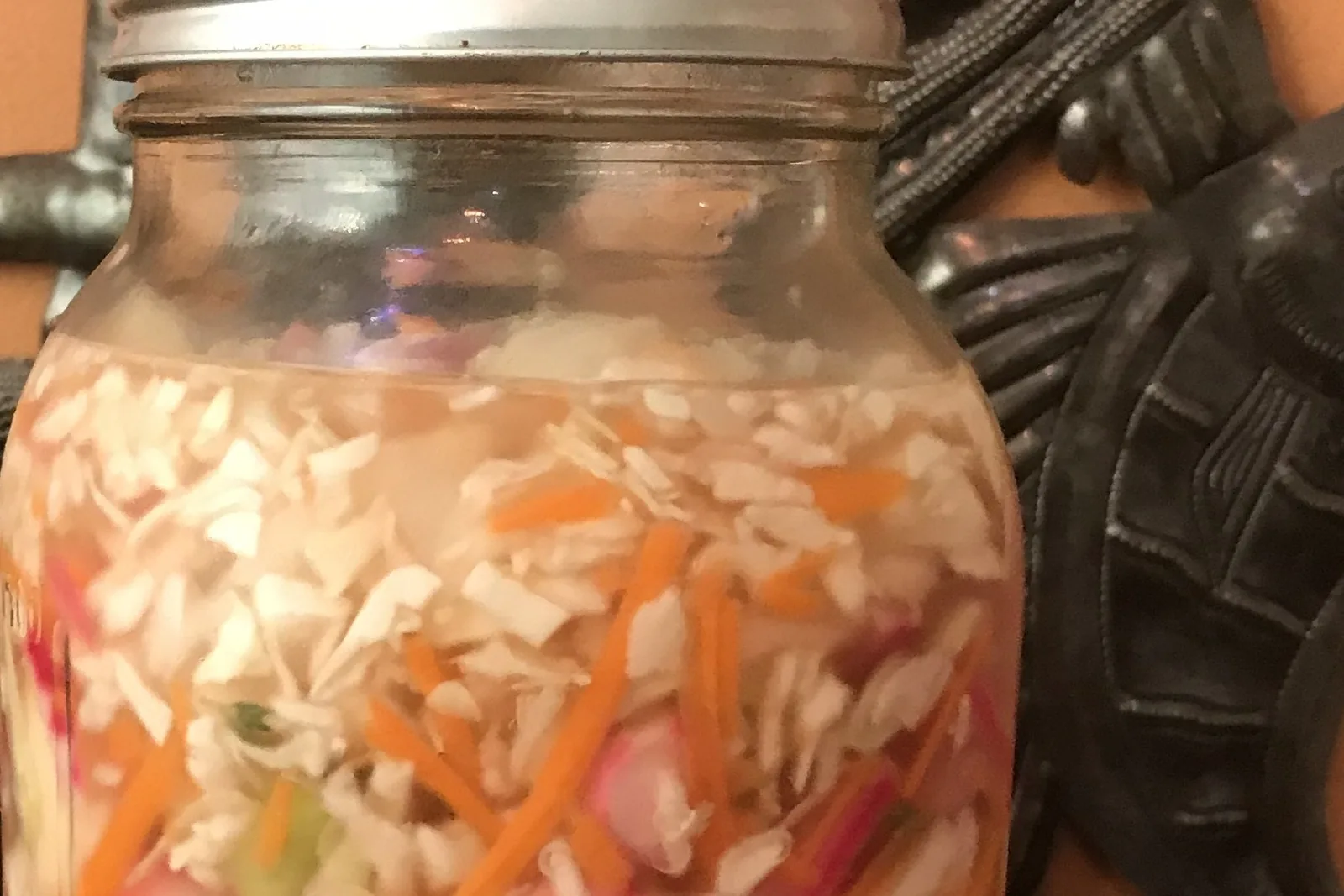
A glass jar of pikliz, shredded cabbage, carrot and red peppers pickled in vinegar

Haiti Heritage

Photo: Aliceba, CC BY-SA 4.0, via Wikimedia Commons

The Heritage Formulary

Measured Ingredients

Estimated cost: Low — about $0.40–0.50 per serving at home (USD)

Made the Haitian way: finely shredded cabbage, carrot and Scotch bonnet packed into a jar with white vinegar, lime juice and a pinch of cloves, then chilled for at least 48 hours.

Execution Methodology & Culinary Technique

Step-by-Step Cooking Guide

Active 25m
P

Shred & Salt the Vegetables

15 minutes

Shred the cabbage finely, julienne the carrots and slice the onion, pepper and garlic. Toss everything in a large bowl with the salt and let it sit for 10 minutes — the salt draws out moisture and starts to soften the vegetables, which helps them pack tightly into the jar.

Maestro Tip: Cut everything thin and even: fine shreds pickle faster and stay crunchy longer than thick chunks.

  1. 1

    Shred the Vegetables

    15 Mins Room temperature, 20°C (68°F)

    Remove the cabbage core and shred the leaves finely. Peel the carrots and julienne or coarsely grate them. Halve the onion and slice it thinly, slice the bell pepper and garlic, and stem the Scotch bonnets — wear gloves, and leave the peppers whole for medium heat or slice one open for a hotter jar.

    Wear gloves for the Scotch bonnets and keep your hands away from your eyes — the oils are fierce.

    Done when: A large bowl of fine, even shreds and slices; no thick chunks.

  2. 2

    Salt and Rest

    10 Mins Room temperature, 20°C (68°F)

    Sprinkle the salt and ground cloves over the vegetables and toss well with clean hands or tongs. Leave the bowl for 10 minutes: the salt pulls moisture out of the cabbage and onion, which softens them just enough to pack tightly without going limp.

    Do not rinse the vegetables after salting — that liquid is flavour and it joins the brine.

    Done when: Vegetables slightly softened and glistening, a little liquid at the bottom of the bowl.

  3. 3

    Pack into the Jar

    10 Mins Room temperature, 20°C (68°F)

    Whisk the vinegar and lime juice together, then pour over the vegetables and toss until everything is coated. Pack the mixture firmly into a clean 1-litre glass jar, pressing down with a spoon so the brine rises and covers the vegetables. Leave about 2 cm (3/4 inch) of headspace.

    Press firmly as you pack — trapped air pockets are what make pickles go soft or spoil.

    Done when: Jar packed full, vegetables submerged under the brine.

  4. 4

    Chill for 48 Hours

    48 Hours Fridge, 4°C (40°F) or below

    Seal the jar tightly and refrigerate at 4°C (40°F) or below for at least 48 hours before eating. The vegetables stay crunchy while the vinegar, lime and Scotch bonnet heat slowly work through them; the flavour keeps developing for up to two weeks, and the pikliz can be left to ferment lightly in that time.

    Taste after 2 days and again after a week — the heat and sourness build, so you can pick your favourite day.

    Done when: Jar sealed, labelled and in the fridge; brine clear and covering the vegetables.

  5. 5

    Serve by the Spoonful

    2 Mins Fridge, 4°C (40°F) or below

    Spoon pikliz over griot, tassot, fried fish or rice and beans, straight from the jar with a clean spoon. A tablespoon or two per person is plenty — this is a condiment, and its job is to wake the plate up, not to be the plate.

    Always use a clean spoon: introducing crumbs or oil shortens the jar's life.

    Done when: Crunchy, sour and fiery; brine still covering the rest in the jar.

Finishing Touches & Plating

Spoon pikliz over fried pork, chicken or fish, or alongside rice and beans — a little goes a long way.

Nutritional Physiology & Benefits

Nutrition

Energy

31

kcal / serving

Protein

1g

Complete AA

Carbs

6g

Complex

Fats

0g

Healthy

Per serving (12 servings · 1 serving ≈ 110 g)
Energy31 kcal
Protein1 g
Carbohydrates6 g
Fat0 g
Fibre1.8 g
Sugar2.8 g
Sodium343 mg
Per 100g
Energy28 kcal
Protein0.8 g
Carbohydrates5.5 g
Fat0.1 g
Fibre1.6 g
Sugar2.5 g
Sodium312 mg

Nutrition values are estimated — calculated from USDA FoodData Central values for the listed ingredients.

Vitamins & minerals: Cabbage and peppers supply vitamin C and vitamin K, carrots add vitamin A, and the garlic adds small amounts of B vitamins. All nutrition values are estimated.

Fibre for Digestion

Cabbage and carrot give about 1.8 g of fibre per serving, which supports normal digestion and helps you feel full.

Vitamins C and A

The cabbage, carrot and peppers supply vitamin C and vitamin A, which support normal immune function and healthy skin.

Big Flavour, Almost No Calories

At only 31 kcal per serving, pikliz delivers fiery, tangy flavour for almost no energy — a rare combination.

Food Pairings

What to Eat With

To optimize nutrient absorption and elevate the sensory depth, pair with these authentic accompaniments:

Sides

Haitian Griot (Fried Pork)

Pikliz was made for griot: its vinegar bite cuts the rich fried pork and its crunch contrasts the soft meat.

Diri Kole (Rice and Beans)

The sharp, hot slaw wakes up plain rice and beans and turns a humble bowl into a full meal.

Drinks

Cold Limeade

A cold, tart limeade cools the Scotch bonnet heat between spoonfuls.

More Pairings

Grilled Fish or Chicken

Spooned over grilled fish or chicken, pikliz adds acidity and heat that the plain protein needs.

Complete menu

Serve pikliz on the side of Haitian griot with bannann peze (fried plantains) and diri kole (rice and beans), with a cold limeade to drink.

Digestive Guardrails

What NOT to Combine

To prevent digestive distress, sluggishness, or palate clash, avoid pairing the dish with these elements:

Vinegar and chilli on an empty stomach

The vinegar and Scotch bonnet can sting an empty or irritated stomach, and may trigger heartburn or reflux. Eat it with food, never on its own. This is general information, not medical advice — ask a clinician if you have ulcers or reflux.

Watch the sodium

One serving already carries about 343 mg of sodium, so spooning it over salted meats or salty snacks can make a meal very salty overall. This is general information, not medical advice.

General information only, not medical advice — consult a doctor for personal dietary decisions.

Who Should Eat It

Who Should Eat

  • General adultsA spoonful or two with rich or fried food is the classic way to enjoy it; it is a condiment, not a side dish to eat by the bowlful.
  • ChildrenThe Scotch bonnet heat is usually too much for children — offer them a mild version made without the hot peppers.
  • ElderlyThe crunch and acidity are refreshing, but the salt and heat can be strong; a small spoonful is enough.
  • Pregnant womenVinegar pickles are generally safe in pregnancy, but the chilli heat and acidity can worsen heartburn — take a small amount and skip it if it bothers you.
  • Breastfeeding womenNo special restriction; the heat does not pass into breast milk, though very spicy food can upset some babies' stomachs indirectly.
  • AthletesAt 31 kcal per serving it adds big flavour for almost no energy; the salt can even help replace sodium lost in sweat.
  • Weight gainVery low in energy, so it will not help gain weight — use it to make richer foods more enjoyable instead.
  • Weight lossAn excellent flavour tool: fiery, crunchy and only 31 kcal per serving, it makes plain grilled chicken or fish taste exciting without adding fat.

Health Conditions — Adjust or Avoid

Conditions

  • DiabetesVery low in sugar (about 2.8 g per serving) and carbohydrate, so it barely affects blood sugar; it is a good flavour booster for plain protein and vegetables. Ask your clinician about your overall meal plan.
  • High blood pressureSodium is about 343 mg per serving, so keep to a spoonful or two and go easy on other salty foods at the same meal. Ask your clinician whether this fits your sodium target.
  • Kidney diseaseThe salt load matters more than the vegetables here — small amounts only, and ask your clinician before eating it regularly.
  • GoutPikliz itself is low in purines and is not a gout trigger; the rich meats it usually accompanies are the bigger concern. Ask your clinician for personal guidance.
  • Stomach issuesVinegar and Scotch bonnet can irritate gastritis, ulcers or reflux — skip pikliz during a flare-up and reintroduce only a little at a time. Ask your clinician if symptoms persist.
  • Cardiovascular diseaseThe vegetables are heart-friendly, but watch the sodium; a small spoonful with grilled fish or chicken is a good balance. Ask your clinician about your sodium target.
  • Fatty liverLow in fat and sugar, so pikliz itself is not a problem; it pairs well with lean protein. Ask your clinician for personal advice.
  • Food allergiesContains no common allergens — no gluten, dairy, egg, nuts or seafood. The only caution is the chilli heat itself.
  • Special therapeutic dietsVegan, gluten-free and very low in energy; check the sodium and chilli heat against your prescribed diet with your clinician.

If you have a medical condition, consult your doctor before changing your diet.

Storage & Use

Storage & Use

How to store
Store in a sealed glass jar in the fridge, always keeping the vegetables submerged under the brine.
In the fridge
Keeps up to 1 month in a sealed jar in the fridge at 4°C (40°F) or below; the flavour is best in the first two weeks.
In the freezer
Not recommended — freezing destroys the crunch and the vegetables turn limp when thawed.
How to reheat
No reheating needed — pikliz is served cold, straight from the fridge.
Freezing recommended
No — keep refrigerated only.
Signs it has spoiled
Mould on the surface, slimy vegetables, or a foul or yeasty smell.

More recipes to explore

A plate of Haitian griot: dark crisp fried pork cubes with fried plantains and pikliz slaw with tomato and green pepper Haiti flag Haiti 2h 10m
Dinner •Haiti Heritage

Haitian Griot

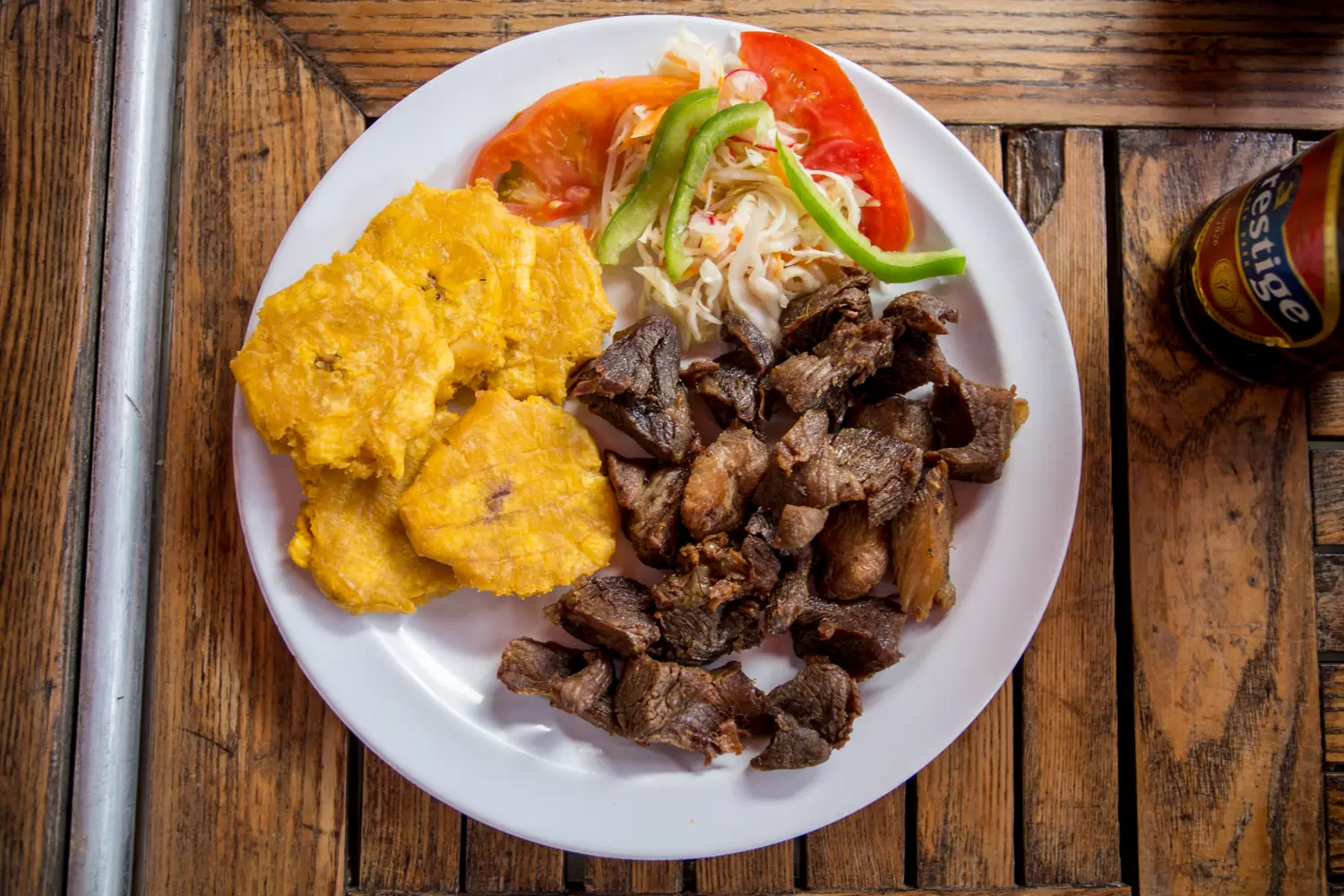
This Haitian griot recipe starts with pork shoulder rubbed in sour citrus and epis, Haiti's green seasoning paste of scallions, garlic, parsley and Scotch bonnet, then braised in its own marinade until tender and fried in hot oil until the edges turn dark and crisp. It is served with pikliz, a sharp pickled cabbage slaw that cuts through the richness. One serving is about 215 g of crisp fried pork with pikliz.

Hearty & Celebratory

Haiti's most loved party dish: citrus-marinated pork, braised tender, then fried until crisp and served with fiery pickled pikliz.

Pairs Well With
Fried plantains (bannann peze) and rice and beans, with pikliz on the side.
A bowl of Soup Joumou with beef, spaghetti, potato and golden pumpkin broth Haiti flag Haiti 2h 40m
Lunch •Haiti's Independence Soup

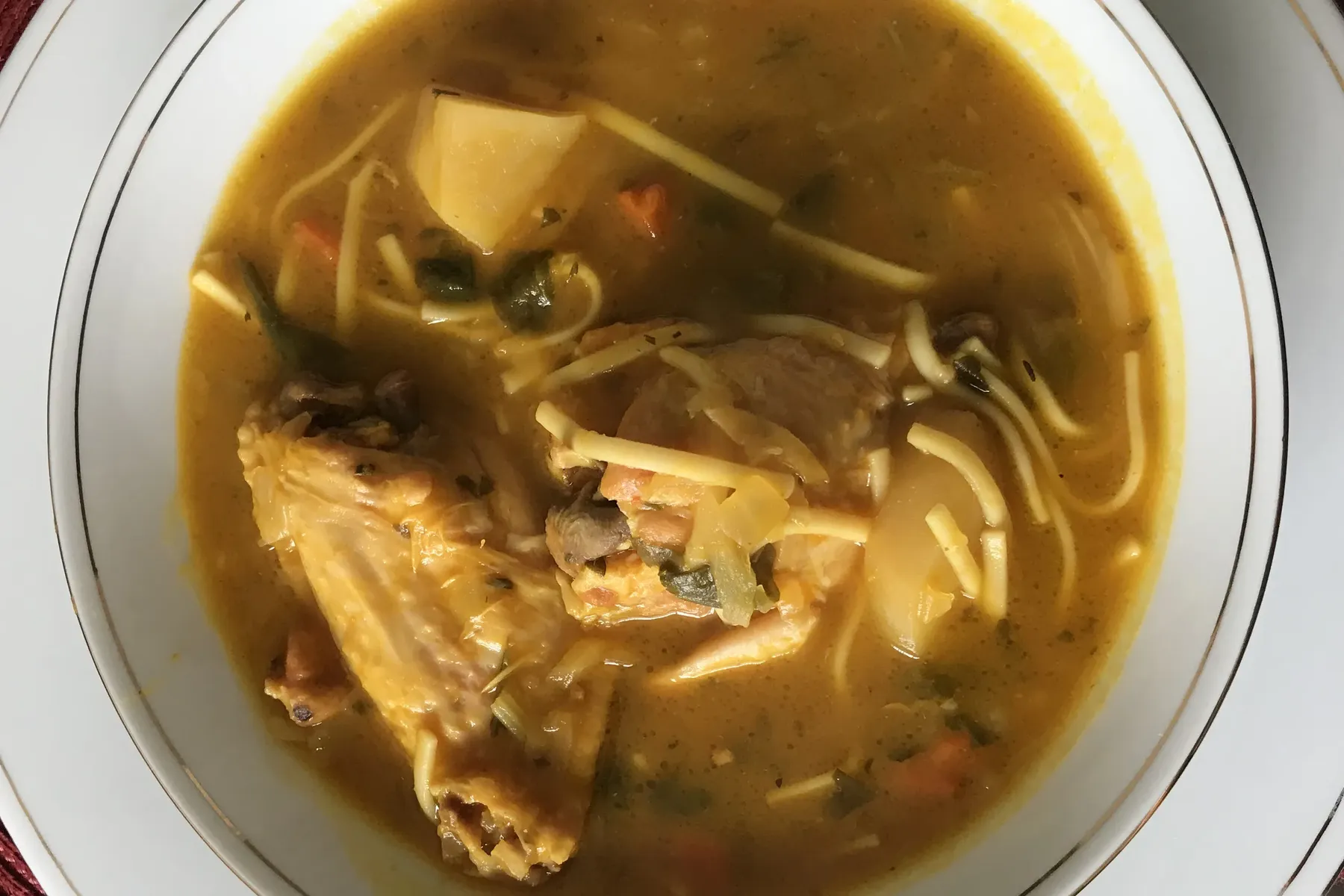
Soup Joumou

Soup joumou is Haiti's golden pumpkin soup: tender beef simmered in a thick purée of giraumon squash, with root vegetables, cabbage and spaghetti in a rich, spiced broth. This soup joumou recipe follows the home-cooked method Haitian families use every 1 January, when the soup marks Independence Day. One serving is about 480 g.

Comfort & Warmth

A hot, hearty bowl of pumpkin, beef and vegetables that warms up a family lunch on a cold day or a festive table.

Pairs Well With
Serve hot with crusty French bread for dipping and a spoonful of pikliz on the side.
Soups & Broths
Haitian spaghetti in a white bowl — spaghetti in a rust-red epis and tomato sauce with sliced hot dogs and red peppers Haiti flag Haiti 40m
Breakfast •Haitian Breakfast Espageti

Haitian Spaghetti

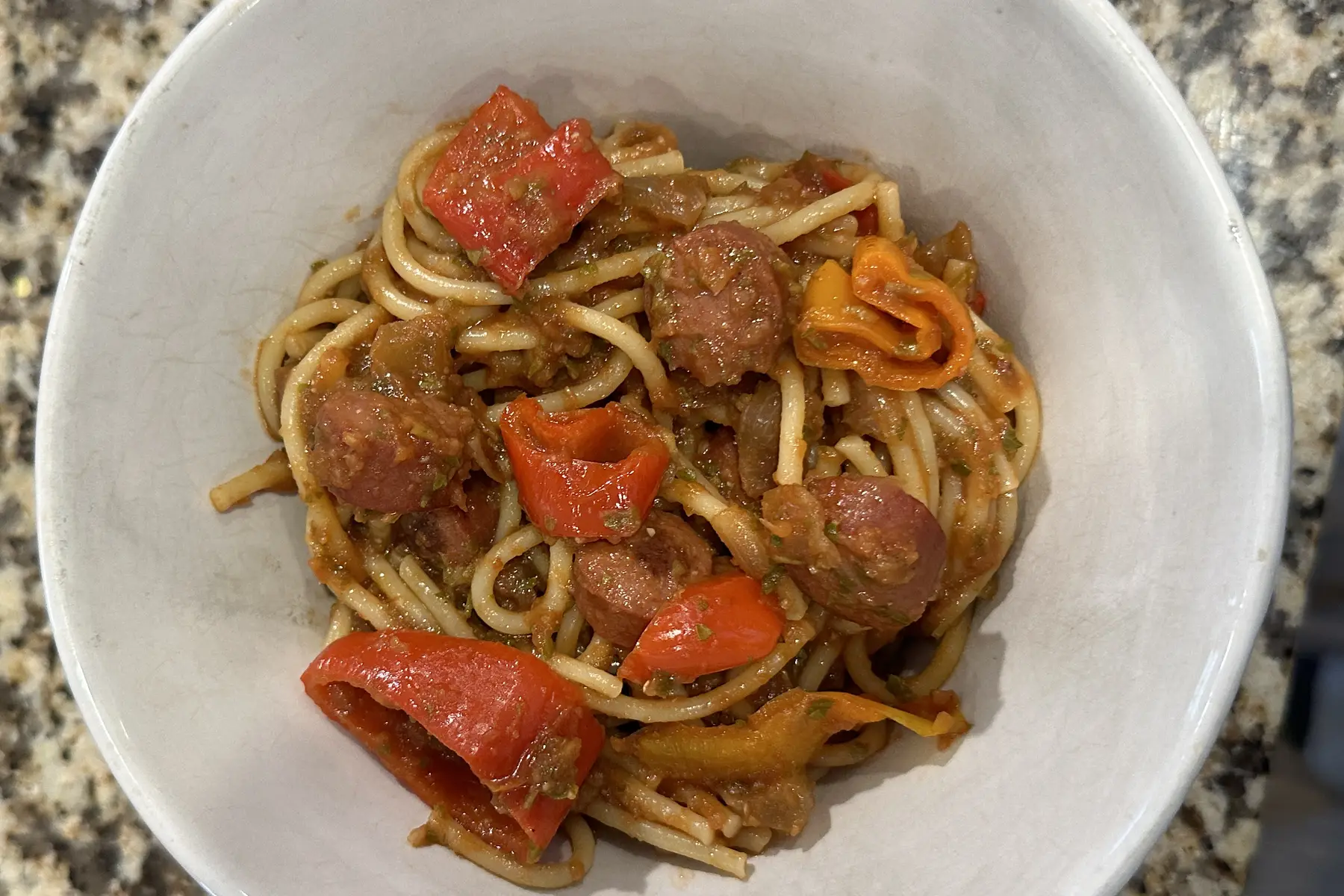
This haitian spaghetti recipe is Haiti's beloved breakfast pasta: dried spaghetti cooked in one pot with epis, the green Haitian seasoning base, tomato paste, sweet peppers, onion and sliced hot dogs, until every strand is stained rust-red and full of flavour. It is pantry cooking at its best — cheap, fast and boldly seasoned — and it lands on the table in about 40 minutes. One serving is about 380 g.

Hearty & Comforting

One-pot spaghetti coated in a savoury epis and tomato sauce with sliced hot dogs, peppers and onion — a filling Haitian breakfast.

Pairs Well With
Boiled egg, avocado & pikliz
Pasta & Noodles • Quick Prep (<30m)
A white bowl of Haitian tchaka with corn kernels, red beans and smoked pork chunks in a light broth, garnished with parsley Haiti flag Haiti 3h 20m
Lunch •Haitian Heritage Stew

Tchaka

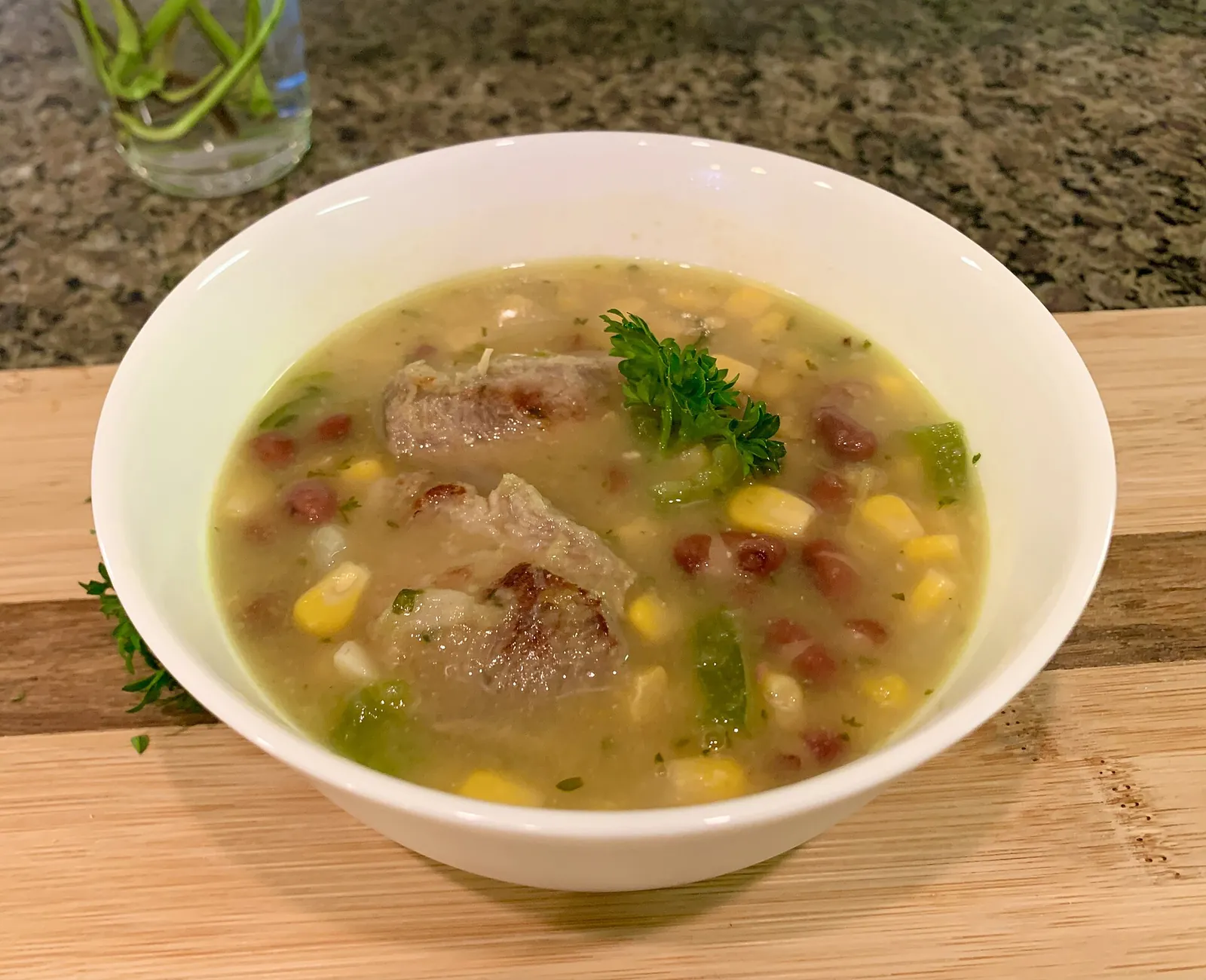
This tchaka recipe soaks dried corn and red kidney beans overnight, then simmers them for hours with smoked pork, pumpkin and a fragrant epis of garlic, scallion, parsley and thyme until the pot turns thick and hearty. The smoked pork is what gives tchaka its deep, salty flavour, and the Scotch bonnet — left whole so it perfumes the stew without burning — is the quiet heat underneath it all. One serving is about 400 g.

Comfort & Warmth

Dried corn and red beans simmered for hours with smoked pork, pumpkin and epis until thick — Haiti's slow, hearty celebration stew.

Pairs Well With
Crusty bread, pikliz & avocado
Soups & Broths

The Dinner Gazette

Never wonder what’s for dinner again

One email a week with easy dinner ideas from around the world — ingredients, steps and nutrition, tested in our kitchen first.

Delivered every Thursday morning. Unsubscribe anytime.