
Curated recipes from 193 countries  •  New seasonal Mediterranean issue out now

Overview

Sachertorte

Sacher Torte, Viennese Chocolate Cake, Chocolate Apricot Torte

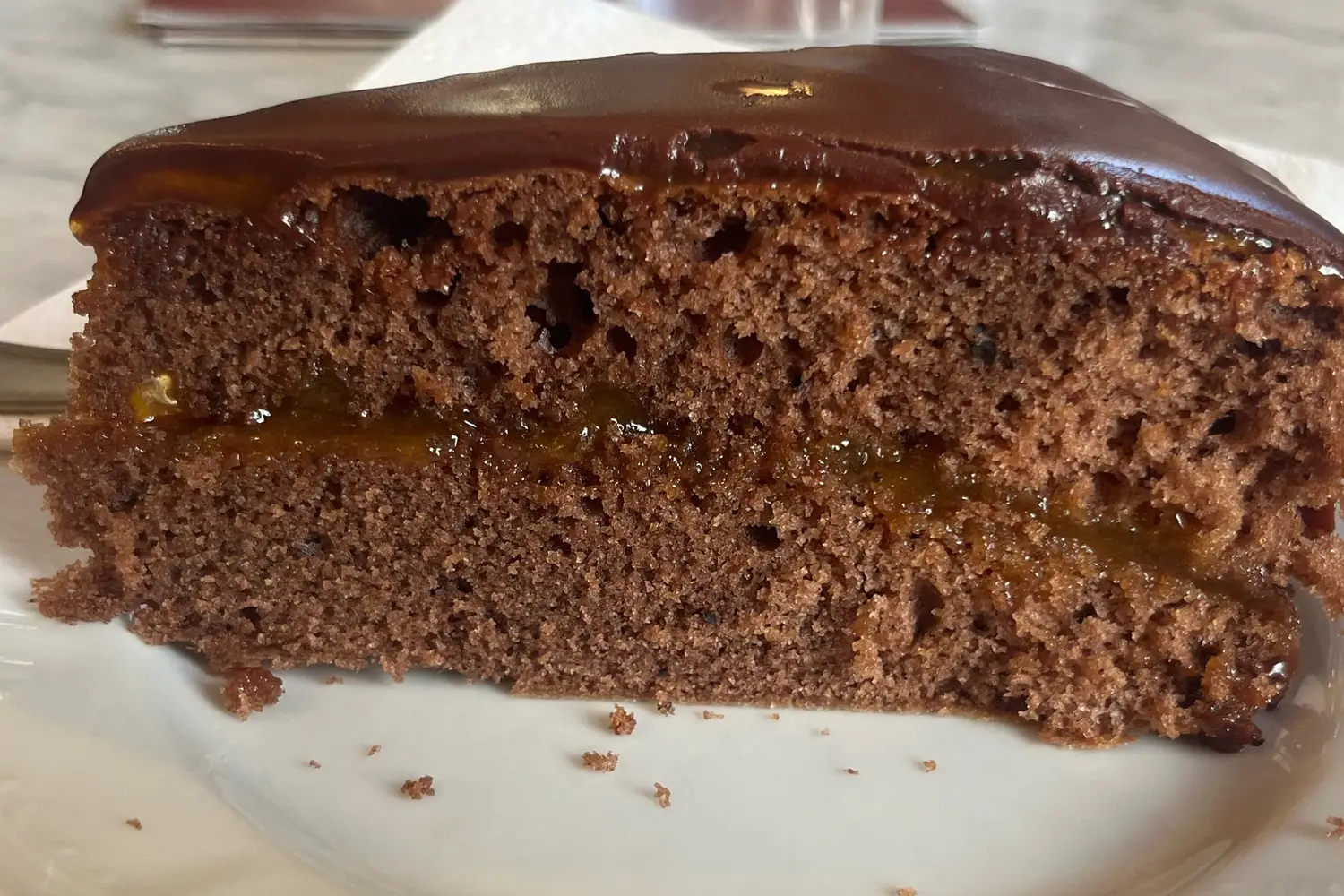
Sachertorte is Vienna's most famous cake: a dense, dark chocolate sponge split and spread with apricot jam, then coated in a mirror-smooth chocolate glaze. A slice is rich, not too sweet, and always served with a cloud of unsweetened whipped cream. One serving is about 130 g.

Sachertorte was created in 1832 in Vienna by the young apprentice Franz Sacher, who was asked to improvise a dessert for Prince Metternich's guests when the court chef fell ill. His chocolate cake with apricot jam became the house speciality of the Hotel Sacher, founded by his son Eduard, and Vienna's coffee houses have served it with whipped cream ever since.

Pairs well with: Unsweetened whipped cream & black coffee

Provenance

Austria flag Austria

Viennese Coffee House

Europe

Time Dedication

1h 30m

40m prep • 50m cook

Batch Yield

12 Servings

565 kcal per serving

1 serving ≈ 130 g

Technical Skill

Advanced

Advanced (Chocolate & Glaze)

Meal Timing & Digestive Fit

Breakfast

Not Advised

Lunch

Inappropriate

Dinner

Inappropriate

Snack & Tea

Ideal Light Bite

Occasions: Birthdays, coffee-house afternoons, celebrations, gifts Cost: Medium — about $2–3 per serving at home
A slice of sachertorte with glossy chocolate glaze and a visible apricot jam layer on a white plate

Viennese Coffee House

Photo: Max263, CC BY-SA 4.0, via Wikimedia Commons

The Heritage Formulary

Measured Ingredients

Estimated cost: Medium — about $2–3 per serving at home (USD)

A good sachertorte is judged by its glaze: mirror-smooth, dark and glossy, with a clean apricot line at the cut.

Execution Methodology & Culinary Technique

Step-by-Step Cooking Guide

Active 1h 30m
P

Prep Stage: Chocolate, Eggs & Tin

40 Mins • Weighing & Whipping

Heat the oven to 180°C (350°F) and line a 23 cm springform tin. Melt the sponge chocolate with 150 g butter, separate the eggs, whip the whites to soft peaks, and have the sifted flour, sugar and sieved jam ready — the sponge comes together fast once the chocolate is melted.

Maestro Tip: Room-temperature eggs whip higher; cold whites stay flat.

  1. 1

    Make the Sponge Batter

    15 Mins Oven 180°C (350°F)

    Beat the soft butter with the sugar and vanilla until pale and fluffy. Beat in the yolks one at a time, then fold in the melted chocolate. Fold in the sifted flour and salt, then gently fold in the whipped egg whites in two additions, keeping as much air as possible.

    Fold, do not stir — stirring knocks the air out and the cake turns heavy.

    Done when: The batter is light, mousse-like and evenly chocolate-coloured.

  2. 2

    Bake the Sponge

    45 Mins • Bake 180°C (350°F)

    Pour the batter into the lined tin, smooth the top, and bake for 40–45 minutes until a skewer comes out with only a few moist crumbs. Leave the cake in the tin for 10 minutes, then turn it out onto a rack to cool completely.

    Do not open the oven in the first 25 minutes or the sponge may sink.

    Done when: The top springs back when pressed and the skewer is nearly clean.

  3. 3

    Layer with Apricot Jam

    10 Mins Room temperature, about 20°C (68°F)

    When the cake is fully cold, slice it horizontally into two even layers. Warm the sieved apricot jam until it runs, brush half over the bottom layer, set the top layer on, and brush the rest over the top and sides in a thin, even coat.

    The jam layer must be thin and smooth — it is the seal that lets the glaze sit perfectly flat.

    Done when: The cake is evenly coated with a glossy apricot film, no bare sponge showing.

  4. 4

    Glaze with Chocolate

    15 Mins • Pour & Set Glaze about 35°C (95°F)

    Melt the glaze chocolate with the cream and 20 g butter until smooth and glossy, then let it cool to about 35°C (95°F). Set the cake on a rack over a tray and pour the glaze over the centre in one steady stream, letting it flow over the sides. Smooth once with a palette knife and leave to set for at least 1 hour.

    Pour in one go and resist re-spreading — every extra stroke leaves a mark in the glaze.

    Done when: The glaze is mirror-smooth, sets firm to the touch, and shows the apricot layer at the cut edge.

  5. 5

    Whip the Cream & Serve

    5 Mins Cream chilled, about 4°C (39°F)

    Whip the remaining 240 ml cream until it holds soft peaks — no sugar, as tradition demands. Cut the torte with a hot, dry knife, wiping the blade between slices, and serve each slice with a generous spoonful of whipped cream.

    A hot knife cuts the glaze cleanly instead of cracking it.

    Done when: Clean slices with a visible apricot line; cream in soft, billowy peaks.

Finishing Touches & Plating

Serve each slice with unsweetened whipped cream and a cup of black coffee. The cake keeps for 3–4 days at room temperature under a dome, and the glaze stays glossy if it is never refrigerated.

Nutritional Physiology & Benefits

Nutrition

Energy

565

kcal / serving

Protein

8g

Complete AA

Carbs

47g

Complex

Fats

39g

Healthy

Per serving (12 servings · 1 serving ≈ 130 g)
Energy565 kcal
Protein8 g
Carbohydrates47 g
Fat39 g
Fibre4.0 g
Sugar29.3 g
Sodium120 mg
Per 100g
Energy434 kcal
Protein6 g
Carbohydrates36.4 g
Fat30.1 g
Fibre3 g
Sugar22.5 g
Sodium92 mg

Nutrition values are estimated — calculated from USDA FoodData Central values for the listed ingredients.

Vitamins & minerals: Iron and magnesium (dark chocolate), vitamin A (butter, cream), B12 (eggs), small amounts of potassium (apricot jam).

Dark Chocolate, in Moderation

Dark chocolate brings cocoa flavanols, iron and magnesium — a small, rich slice satisfies more than a large, sweet one.

Real Celebration Energy

Butter, eggs and chocolate make this a genuinely filling treat, best enjoyed slowly as an afternoon pause rather than on the run.

Apricot, Not Just Sugar

The apricot jam layer adds fruit acidity and potassium, and its tartness is what keeps the cake from tasting one-note sweet.

Food Pairings

What to Eat With

To optimize nutrient absorption and elevate the sensory depth, pair with these authentic accompaniments:

Drinks

Black Coffee

Unsweetened coffee is the classic Viennese partner — its bitterness balances the rich glaze and resets the palate between bites.

Hot Black Tea

Strong unsweetened tea works like coffee here, cutting the richness without adding sweetness.

More Pairings

Unsweetened Whipped Cream

Cold, plain cream against warm-spiced chocolate is the whole point of the serving ritual — it cools, lightens and carries the flavour.

Sides

A Second Thin Slice

Sachertorte is served in thin slices for a reason: a second small slice with coffee is more enjoyable than one oversized piece.

Complete menu

Serve a thin slice of sachertorte with unsweetened whipped cream and black coffee as the finish to a light Viennese-style lunch.

Digestive Guardrails

What NOT to Combine

To prevent digestive distress, sluggishness, or palate clash, avoid pairing the dish with these elements:

Refrigerating the Finished Cake

The fridge dulls the chocolate glaze and dries the sponge; keep the glazed torte at cool room temperature under a dome instead. This is general information, not medical advice.

Sweetened Cream or Ice Cream

Extra sweetness fights the cake's balance — the apricot and dark chocolate are designed to be offset by plain, unsweetened cream.

General information only, not medical advice — consult a doctor for personal dietary decisions.

Who Should Eat It

Who Should Eat

  • General adultsA rich occasional treat — one thin slice with coffee is the classic serving.
  • ChildrenSuitable from age 3+ in a small slice; the cake contains egg, milk, wheat and no alcohol.
  • ElderlyEnjoy a small slice; the soft sponge is easy to eat, but the cake is rich, so keep portions small.
  • Pregnant womenGenerally suitable in a small portion; the cake is fully baked and contains no raw egg.
  • Breastfeeding womenGenerally suitable in a small portion; keep it an occasional treat rather than a daily one.
  • AthletesA dense source of quick energy, best after training rather than before; keep the slice thin.
  • Weight gainA good choice for extra calories — a full slice with cream adds up fast.
  • Weight lossChoose the thinnest slice you can cut, skip the cream, and enjoy it slowly with black coffee.

Health Conditions — Adjust or Avoid

Conditions

  • DiabetesThis is a high-sugar, high-fat cake — keep it to a thin slice on an occasional basis; ask your clinician if you count carbohydrates.
  • High blood pressureA small slice is fine occasionally, but the cake is rich in saturated fat and sugar; skip the cream.
  • Kidney diseaseThe cake is high in sugar and fat; keep portions small and infrequent; ask your clinician about portion size.
  • GoutEat rarely and in a small portion — chocolate and sugar are best kept occasional.
  • Stomach issuesUsually fine in a small portion, but the richness can sit heavily; eat slowly and avoid eating it on an empty stomach.
  • Cardiovascular diseaseA small, occasional slice is acceptable; the saturated fat and sugar make it a treat, not a regular food.
  • Fatty liverKeep it rare and the slice thin; the combination of sugar, butter and cream is heavy for the liver.
  • Food allergiesContains egg, milk (butter, cream) and wheat (gluten). Not suitable for egg, milk or gluten allergy without a reformulated recipe.
  • Special therapeutic dietsIf you follow a prescribed low-sugar or low-fat diet, keep the slice very thin and skip the cream, and check with your clinician.

If you have a medical condition, consult your doctor before changing your diet.

Storage & Use

Storage & Use

How to store
Keep under a cake dome at cool room temperature; do not refrigerate the glazed cake.
In the fridge
Not recommended for the glazed cake; unglazed sponge 3 days wrapped.
In the freezer
Unglazed sponge up to 2 months, well wrapped; do not freeze the glazed cake.
How to reheat
Not reheated — serve at room temperature.
Freezing recommended
Only the unglazed sponge freezes well.
Signs it has spoiled
Dry, stale sponge, dull or weeping glaze, or any off smell in the cream.

More recipes to explore

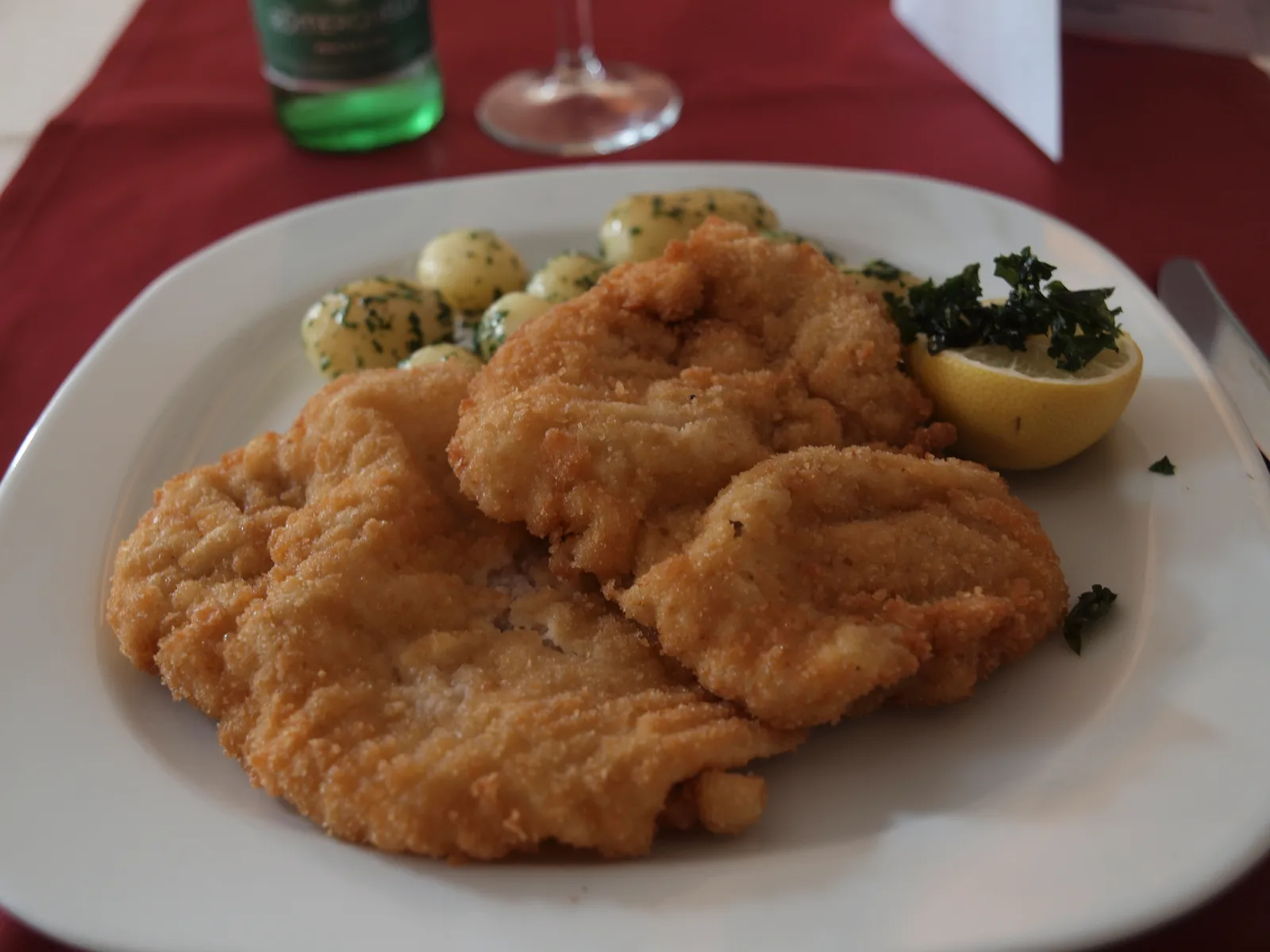
Two golden breaded Wiener schnitzel cutlets on a white plate with parsley potatoes, a lemon half and fresh parsley Austria flag Austria 35m
Dinner •Vienna Heritage

Wiener Schnitzel

Wiener schnitzel is Austria's most famous plate: a veal cutlet pounded paper-thin, coated in flour, egg and breadcrumbs, and fried in butter until it puffs up golden and crisp. This wiener schnitzel recipe follows the Viennese rules — real veal, a loose crumb that billows away from the meat, and a wedge of lemon on the side. One serving is about 175 g.

Classic Comfort

A golden, crisp veal cutlet with lemon and parsley potatoes — a satisfying, protein-rich Viennese dinner.

Pairs Well With
Serve with parsley potatoes or Viennese potato salad and a crisp green salad; a squeeze of lemon over the top just before eating.
High Protein
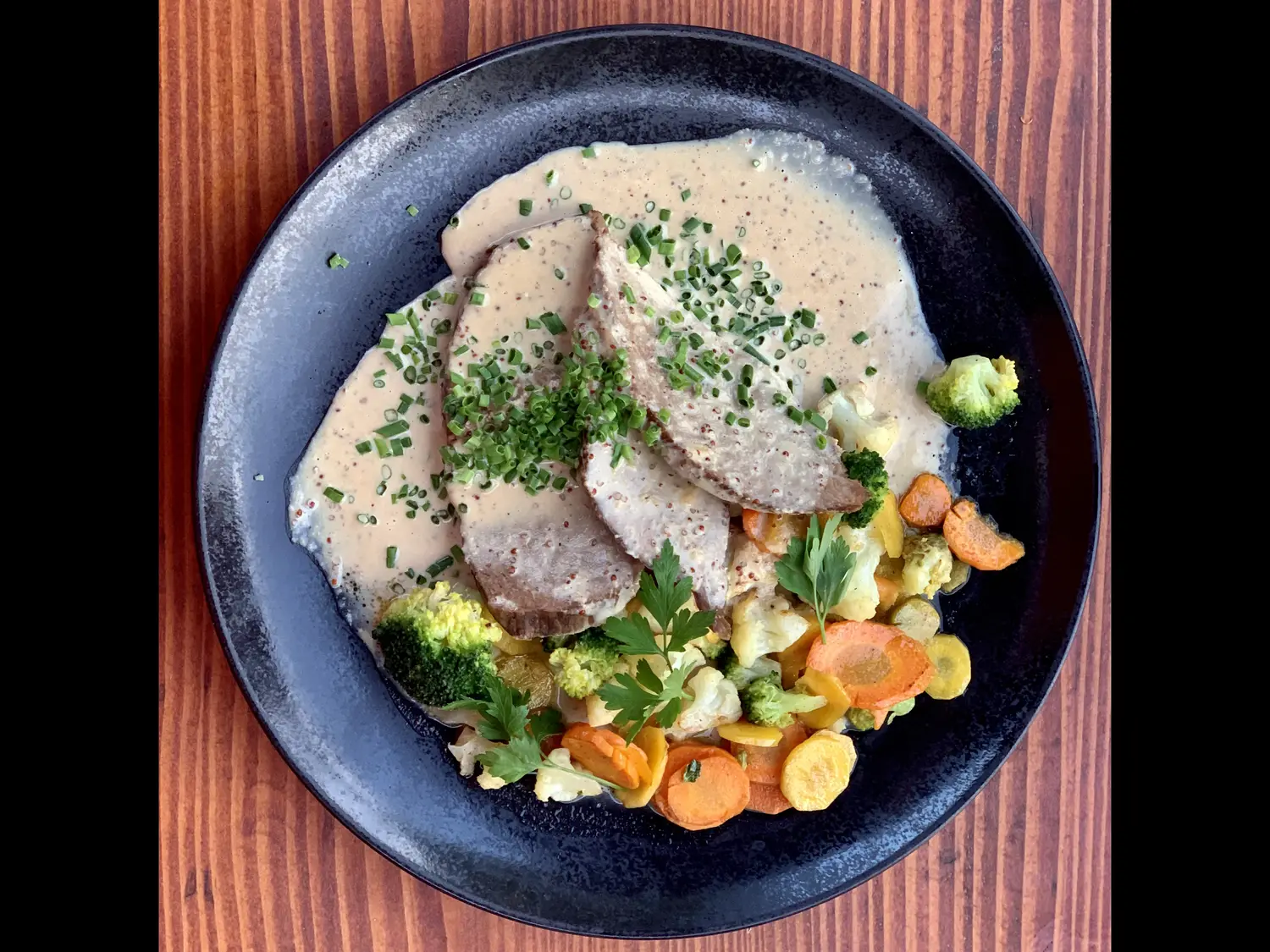
Slices of boiled beef in horseradish sauce with chives, served with carrots, cauliflower and broccoli on a dark plate Austria flag Austria 3h
Dinner •Vienna Heritage

Tafelspitz

Tafelspitz is Vienna's quiet masterpiece: a whole piece of beef simmered gently in broth with root vegetables until it is tender enough to slice with a spoon, then served with apple-horseradish sauce and chive sauce. This tafelspitz recipe is not a stew — the beef is boiled, sliced, and served with its sauces, the way Vienna has done it for generations. One serving is about 370 g.

Comfort & Warmth

Tender simmered beef with root vegetables, apple-horseradish and chive sauce — a gentle, warming Viennese dinner.

Pairs Well With
Serve with roasted potato slices, the simmered root vegetables, and both sauces — apple-horseradish and chive sour cream — with a cup of the clear broth to start.
High Protein
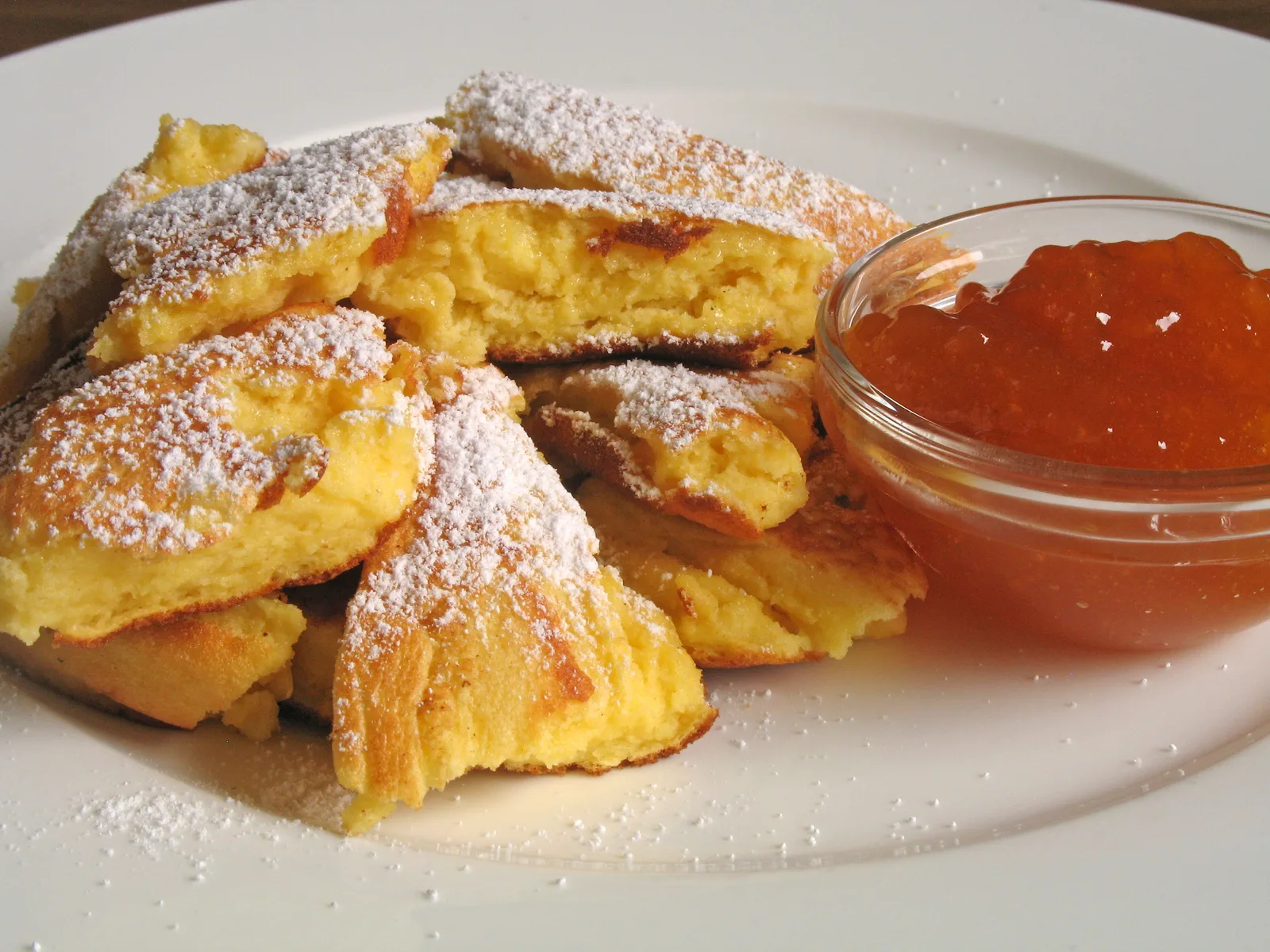
Golden shredded Kaiserschmarrn pieces dusted with icing sugar on a white plate, with a small bowl of plum compote Austria flag Austria 35m
Snack & Tea •Vienna Heritage

Kaiserschmarrn

Kaiserschmarrn is Austria's most charming dessert: a thick, fluffy pancake fried in butter, torn into golden shreds in the pan, dusted with icing sugar and served with warm plum compote. This kaiserschmarrn recipe keeps the classic raisins, the whipped egg whites that make it so light, and the plum compote that every Viennese coffee house serves beside it. One serving is about 290 g.

Sweet Comfort

Fluffy torn pancake with raisins and warm plum compote — a light, sweet Austrian treat.

Pairs Well With
Serve with warm plum compote and a pot of coffee or a glass of milk; a dollop of whipped cream is the traditional coffee-house extra.
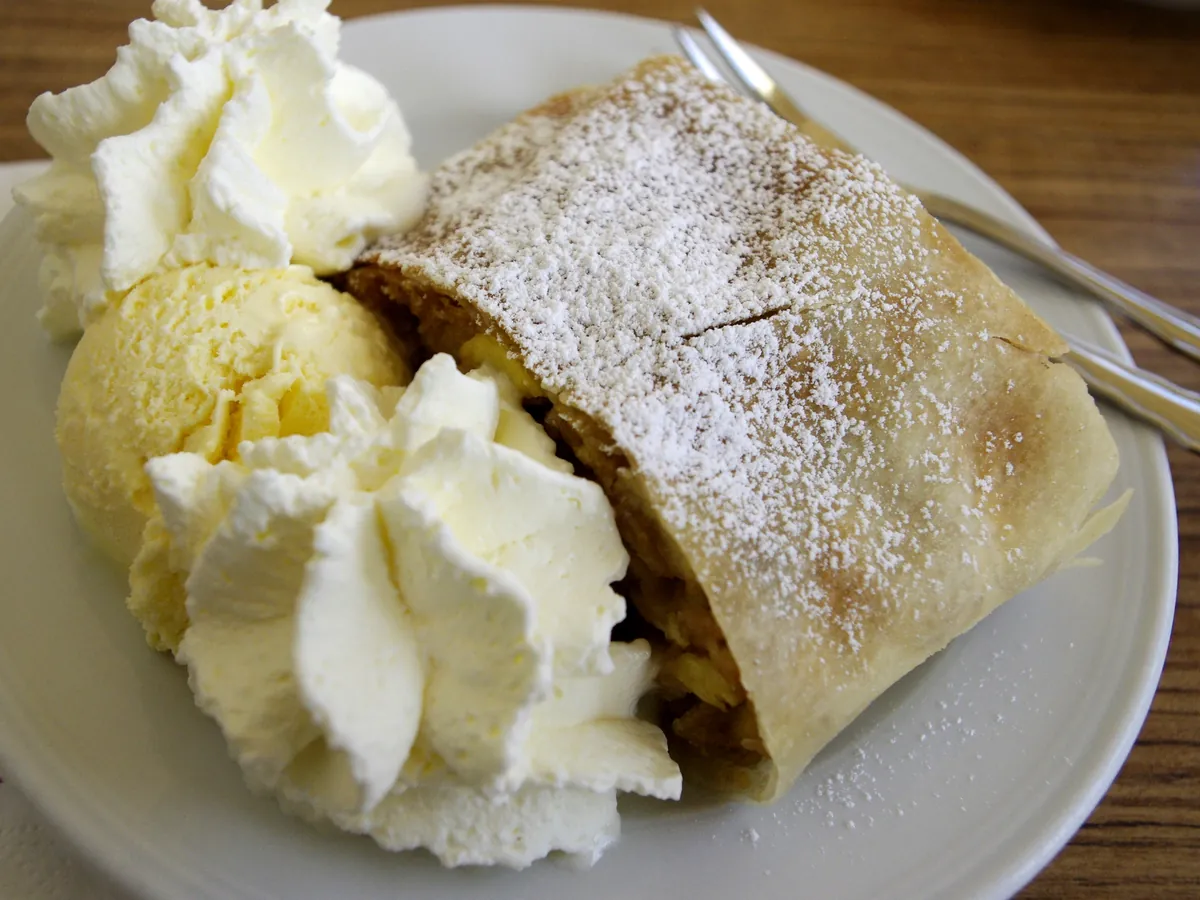
A slice of golden apfelstrudel dusted with icing sugar, served with whipped cream and vanilla ice cream on a white plate Austria flag Austria 1h 30m
Snack & Tea •Viennese Heritage

Apfelstrudel

This apfelstrudel recipe stretches a soft flour dough until it is paper-thin, fills it with sliced apples, raisins, walnuts and cinnamon, and bakes it until the pastry is crisp and golden. It is the Viennese coffee-house classic, best served warm with whipped cream. One serving is about 208 g.

Sweet & Comforting

Paper-thin strudel pastry wrapped around cinnamon apples, raisins and walnuts, baked golden and dusted with icing sugar.

Pairs Well With
Cinnamon apples, whipped cream & vanilla ice cream

The Dinner Gazette

Never wonder what’s for dinner again

One email a week with easy dinner ideas from around the world — ingredients, steps and nutrition, tested in our kitchen first.

Delivered every Thursday morning. Unsubscribe anytime.